
REVIEW · ARCHITECTURE TOURS
Private Personalized Architecture Tour of Rome with an Architect
Rome rewards anyone who looks up. This private walking tour links famous sights with lesser-known church interiors, and I like its architect-led focus and the freedom to shape the route around your interests. I also like the personal attention of a private guide, though the long list of stops can feel ambitious in roughly four hours.
Guide Bado receives especially warm praise for his architectural skill and friendly manner. You can expect strong explanations at the Pantheon, churches, ancient monuments, and the Colosseum, but you should confirm the Colosseum ticket details before booking because the tour description gives conflicting information about entry.
The tour costs $113.56 per person, includes an English-speaking guide, and starts at the Spanish Steps before ending near the Colosseum. It suits you best if buildings, church art, and Rome’s layers of old and new matter more than spending long periods inside each major monument.
Key points to know before booking
- An architect leads the walk: The guide’s specialty is architecture, with particular strength in Rome’s churches and historic buildings.
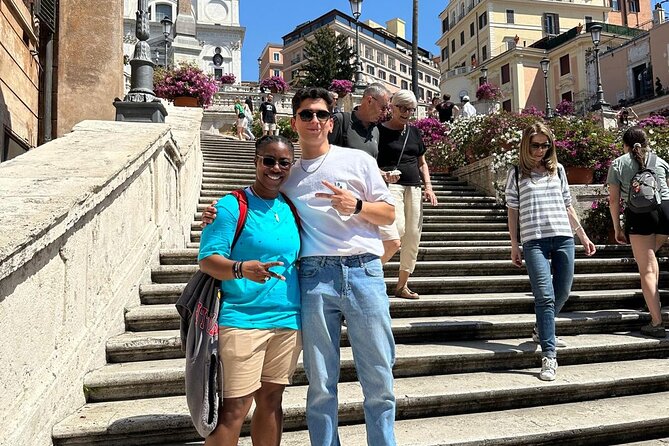
- The route covers ten major stops: You see the Spanish Steps, Pantheon, Trevi Fountain, Vittorio Emanuele II Monument, Colosseum, Portico of Octavia, Teatro di Marcello, and two important basilicas.
- It is private and personalized: Only your group takes part, so you can ask questions and adjust the emphasis to match your interests.
- The Pantheon costs extra: Entry is not included and costs €5, with a possible long wait at the entrance.
- The Colosseum information needs checking: The inclusions mention an €18 entrance ticket and €2 reservation fee, but the route description says you will not enter the arena.
- The tour ends in a useful location: Finishing at Piazza del Colosseo puts you near several transport options.
Why an architect changes the way you see Rome
Many Rome walks focus on dates, emperors, and famous names. This one gives you a different way to read the city. An architect can point out how arches carry weight, how churches changed over time, and how ancient Roman forms influenced later buildings.
That approach matters because Rome can feel visually crowded. A column may belong to an ancient temple, a medieval church, or a nineteenth-century monument built to imitate older styles. Without help, the city’s layers can blur together. With a specialist beside you, you get a clearer sense of how one period borrowed from another.
Bado is the named guide connected with this experience, and his strongest praise centers on his architectural skill and personal manner. One detailed account describes learning new things at the Pantheon even after having visited before. That is a useful sign for repeat visitors: this tour is not only for a first look at Rome.
The private format also changes the pace. You can ask why a church uses a certain design or request more attention to ancient theaters, Baroque fountains, or Christian art. A group tour usually has to move on when the schedule says so. Here, you have more room to shape the conversation.
More private tours in Italy:
- City Walk with Architect: Private walking tour of Rome
★ 5.0 · 22 reviews - Private Tour: Venice Art and Architecture Walking Tour
★ 4.0 · 22 reviews - Venice Art and Architecture Private Walking Tour
★ 4.5 · 11 reviews
From the Spanish Steps to Trinità dei Monti
The meeting point is Piazza di Spagna, at the Spanish Steps. The tour begins near the top, under the obelisk, then takes in the view from Trinità dei Monti.
This is a good opening because you get your bearings quickly. The steps provide a natural introduction to Rome’s hills, grand stairways, and carefully framed city views. You have about 20 minutes here, enough for photographs and a short explanation rather than a long architectural study.
The starting point is central and easy to recognize, but it can be crowded. Keep the meeting instructions handy and confirm the exact spot with the guide. Pickup may be offered, and the guide says they will contact you one hour and one day before the pickup time.
The first stop sets the tone: this is a walking tour with photo pauses, not a seated lecture. Wear shoes suited to Rome’s uneven streets and expect to move between districts.
The Pantheon, with an extra ticket and possible wait
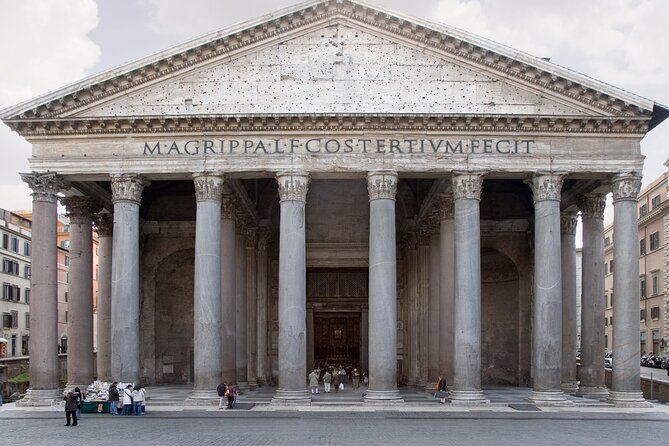
The Pantheon receives about 20 minutes. That is enough to look at the building’s main features and hear how its design works, but it may feel short if you want a slow visit inside.
The guide specifically warns that the line can be long. Entry costs €5 and is paid at the ticket area, not included in the tour price. If seeing the interior matters to you, ask at the start how much time the schedule allows and how the ticket process will affect the route.
This is one of the most valuable stops for an architecture-focused walk. The Pantheon gives you a chance to connect technical design with Roman history. Your guide can explain the structure’s unusual form and point out details that are easy to miss when you simply step inside, take a photograph, and leave.
If you have already seen it, Bado’s explanations may give the building new interest. One strong account specifically notes learning many new details during a return visit.
Sant’Ignazio and Rome’s theatrical church interiors
The Chiesa di Sant’Ignazio di Loyola gets about ten minutes. That is a brief stop, but it includes one of the tour’s most unusual visual details: a famous mirror used for photographs and video.
There is often a line for the mirror. Your guide can explain the church’s architectural and artistic features, but you should not expect an extended church visit at this pace. The stop works best if you want a sharp introduction and a memorable image rather than a full examination of every chapel.
This is also where the guide’s church specialty becomes important. The route includes several basilicas, and the experience is likely to suit you if religious architecture interests you. If churches are not your main reason for visiting Rome, tell the guide early. The private format gives you a better chance to adjust the balance.
A few more architecture tours in Italy worth a look
- Lecce: Baroque Architecture and Underground Walking Tour
★ 4.6 · 1,248 reviews - Experience Florence’s Art and Architecture on a Walking Tour
★ 5.0 · 318 reviews - Palermo: Art and Architecture Walking Tour
★ 4.7 · 136 reviews - Caprarola: Villa Farnese, masterpiece of Renaissance architecture
★ 4.5 · 28 reviews
Trevi Fountain and the Vittorio Emanuele II Monument
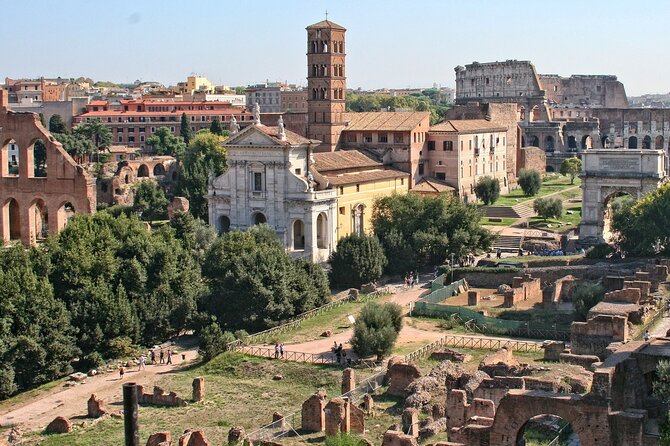
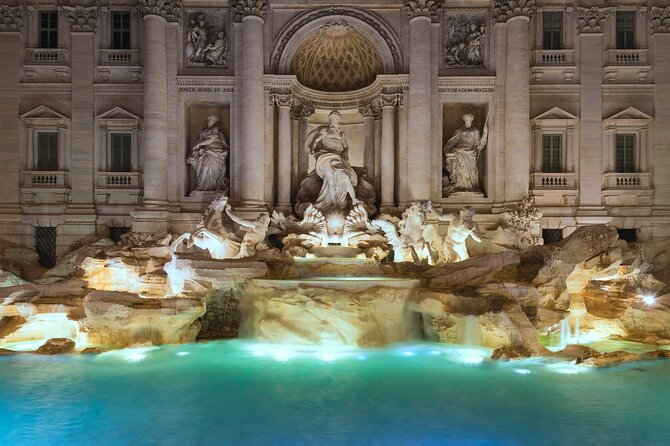
At Trevi Fountain, the allotted time is about ten minutes. You can admire the Baroque sculpture, cascading water, and crowded setting, then take the traditional coin-toss photograph.
Ten minutes will not give you much quiet time here. The fountain is one of Rome’s busiest sights, so the stop is best treated as a guided orientation and photo break. Your guide can help you notice the design rather than seeing only a wall of people and phones.
The Monumento a Vittorio Emanuele II receives 20 minutes on Nazionale Avenue in Piazza Venezia. Its huge white structure, columns, and sculptures offer a sharp contrast to the ancient ruins nearby. The guide explains its connection to Italy’s first king and its place in the city center.
Some people find the monument too grand and formal, while others appreciate its scale and clear view across Rome’s central streets. An architect can help you understand why it looks so different from the older buildings around it. This stop also gives you a useful visual bridge between ancient Rome, papal Rome, and the modern Italian state.
The Colosseum: excellent context, unclear entry details
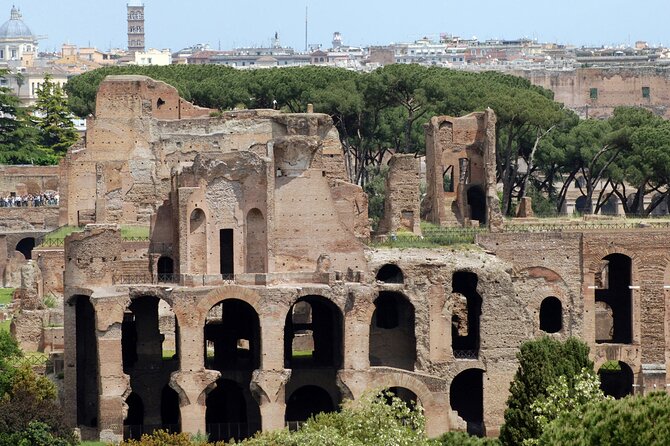
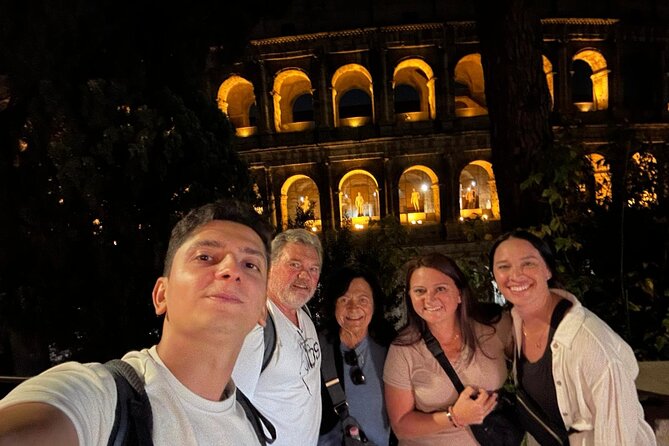
The tour allows about 30 minutes at the Colosseum. The route description says the group will not enter the arena, but the inclusion list says an €18 Colosseum entrance ticket and a €2 reservation fee are included.
That contradiction is the most important practical issue in the whole experience. Before paying, ask the operator whether the price includes interior entry on your date, or whether the listed ticket is simply part of a separate arrangement. Do not assume you will walk inside based only on the inclusion list.
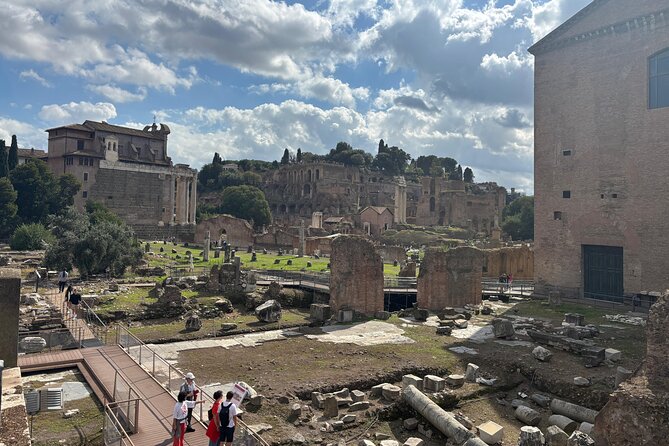
Even from outside, the Colosseum gives an architect plenty to explain. You can study its repeated arches, multiple levels, and enormous scale while learning how its design influenced later buildings, including Teatro di Marcello. The guide can also place the amphitheater within the wider story of Roman public life and engineering.
If entering the Colosseum is your main goal, this may not be the right product unless the operator confirms access in writing. If you mainly want strong context and a convenient finish near the monument, the stop still works well.
Portico of Octavia and Teatro di Marcello
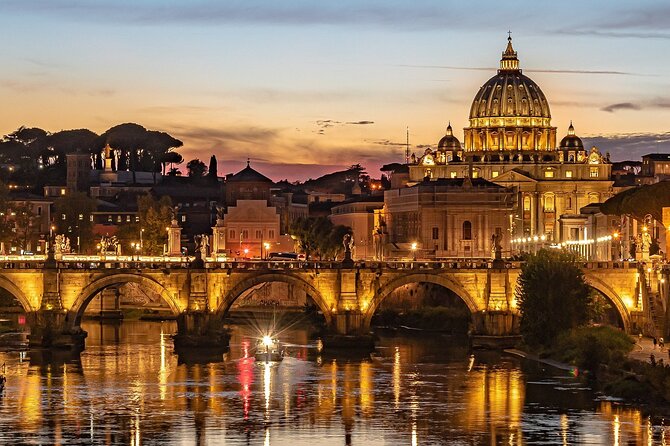
The Portico of Octavia receives 20 minutes and adds a quieter, more layered side of Rome. The ancient monument dates to the second century BC and once formed the entrance to a large temple complex.
You can see ancient Corinthian columns and hear how the site later became part of the medieval Jewish Ghetto. The stop shows how Roman structures were reused rather than simply preserved as frozen ruins. A marketplace once operated here, adding another chapter to the site’s long public life.
Nearby Teatro di Marcello receives another 20 minutes. Built under Julius Caesar and Augustus, it was an open-air theater whose arches influenced the later design of the Colosseum. The building also changed function over time and became a medieval residence.
These two stops are especially useful for anyone who wants more than Rome’s headline monuments. They show how the city’s buildings survived by changing purpose. You are not just looking at ruins. You are seeing structures adapted to new social, religious, and domestic needs.
Santa Maria in Aracoeli on Capitoline Hill
The Basilica di Santa Maria in Aracoeli is another 20-minute stop. It sits on Capitoline Hill and combines ancient Roman origins with its later life as a medieval church.
Inside, your guide can point out frescoes and the revered Santo Bambino statue. The basilica gives the tour a different mood after the open spaces of the Colosseum and ancient theaters. It is a place where Rome’s religious past is presented through art, architecture, and ceremony.
Again, 20 minutes is an introduction rather than a full church visit. If you want time to study every fresco or sit quietly, you may need to return on your own. The advantage of a private tour is that you can tell the guide which details matter most to you.
Santa Maria in Trastevere and the final church visit
The final listed stop is Basilica di Santa Maria in Trastevere, with about 20 minutes inside. It is one of Rome’s oldest churches and is known for its golden mosaics, Romanesque design, and early Christian roots.
This stop broadens the tour beyond imperial Rome. You see how Christian buildings became central to the city’s identity, and how older Roman materials and forms continued to influence later construction.
The church is in Trastevere, while the stated endpoint is the Colosseum. That suggests the route includes significant movement between stops, and the exact order may change to fit traffic, opening conditions, or your interests. Ask the guide to confirm how the Trastevere visit connects with the final drop-off, especially if you have a dinner reservation or train to catch.
Timing, walking, and the private format
The advertised duration is approximately 3 hours and 40 minutes. The ten listed stops add up to roughly 190 minutes before allowing for walking, explanations, photographs, lines, and any pickup. In practical terms, the schedule is full.
That can be a strength if you have limited time in Rome. You see a wide range of buildings without giving up an entire day. It can also feel rushed if you want to enter several churches, wait at the Pantheon, and linger at the Colosseum.
A private group gives you the best chance of managing that trade-off. You can ask for more time at one site and less at another. The experience is offered in English, and group discounts may be available. Most people can participate, and service animals are allowed. The tour runs near public transportation, with the ending near the Colosseum offering several ways to continue your day.
The route is not presented as a food tour, and meals are not included. Bring water and plan food separately rather than expecting a café stop to be built into the schedule.
Is $113.56 per person good value?
At $113.56 per person, this is not the cheapest way to see Rome. The value rests in the private guide and specialist angle, not in admission tickets. Most listed stops are free, while the Pantheon costs an extra €5.
The price makes more sense if you are two or more people who want direct attention and can use the guide to connect many sites in a short period. It is also appealing if you have already seen the standard sights and want a more informed look at buildings, churches, and urban design.
The value is weaker if you mainly want interior access to the Colosseum or long, relaxed visits. The unclear Colosseum wording must be settled before booking. If entry is not included, budget separately for any visit you want to arrange.
Cancellation is free up to 24 hours before the start time for a full refund. Changes or cancellations inside that 24-hour window are not accepted for a refund.
Who should book this architecture walk?
I would recommend it to you if you like asking why a building looks the way it does. It is a strong match for repeat visitors, architecture students, photographers, church-art fans, and anyone with only one open morning or afternoon in Rome.
Families or mixed-interest groups may also benefit because the route includes fountains, ancient ruins, churches, and famous monuments. Tell Bado what your group wants before setting off. The private format is most valuable when you use it to shape the experience.
I would be cautious if your top priority is the Colosseum interior, a slow visit to the Pantheon, or an itinerary with plenty of rest. The route covers a lot, and several stops are brief.
Should you book it?
Book this tour if you want Rome explained through buildings rather than rushed from one photo stop to the next. Bado’s architectural specialty, warm manner, and ability to add fresh detail to familiar places are the main reasons to choose it.
Before booking, confirm two things: exactly where pickup will occur and whether the Colosseum ticket includes entry inside. If those details are clear, the tour offers a useful, personal way to connect Rome’s ancient theaters, imperial monuments, Baroque center, medieval churches, and Christian art in one compact outing.
FAQ
How long does the tour last?
The experience lasts approximately 3 hours and 40 minutes.
Where does the tour begin?
The stated starting point is Piazza di Spagna, at the Spanish Steps in Rome.
Where does the tour end?
The tour ends at the Colosseum, at Piazza del Colosseo, 1.
Is the tour private?
Yes. Only your group participates in this private tour or activity.
Is the tour offered in English?
Yes. An English-speaking guide is included.
Is Pantheon entry included?
No. Pantheon admission is not included and costs €5. The entrance may also involve a long line.
Will the tour enter the Colosseum?
The information is inconsistent. The inclusion details list a Colosseum ticket valued at €18 and a €2 reservation fee, while the route description says the group will not enter the arena. Confirm this directly before booking.
Can I cancel for a full refund?
Yes, if you cancel at least 24 hours before the local start time. Cancellations or changes made less than 24 hours before the start time are not refunded or accepted.
Just added in Italy
- Vicenza: Palladian Architecture Private Walking Tour★ 3.3 · 3 reviews
- Architectural Milan: Private Tour with a Local Expert★ 4.5 · 2 reviews
- The Architect’s Water★ 4.5 · 11 reviews
- Architectural Florence: Private Tour with a Local Expert★ 5.0 · 3 reviews
- Rione Sanità: tour among street art, architecture, folklore★ 4.5 · 2 reviews
- Palermo Tour: Magnificent Mixture Of Architectural Styles★ 4.2 · 6 reviews
- Discover Coppedè in Rome: Liberty architecture, symbols, and jewels★ 5.0 · 2 reviews
- Borgo Parrini Gaudí-style: a walking tour in a colorful art village★ 4.8 · 9 reviews
Architecture Tours, compared.
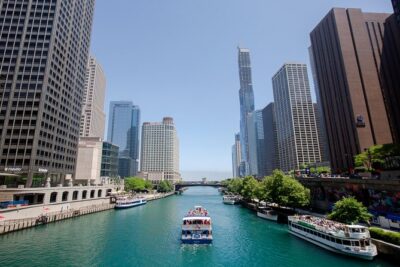
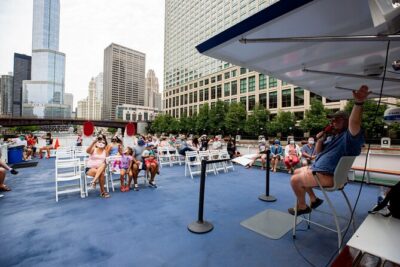

Chicago River: 1.5-Hour Guided Architecture Cruise
Read our review →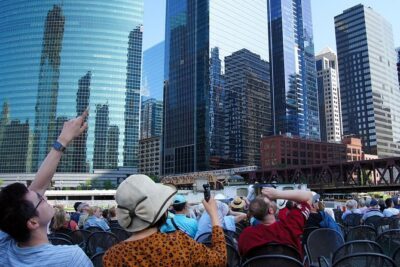
Chicago Architecture Center River Cruise aboard First Lady
Read our review →
Architecture River Cruise Skip-the-Ticket Line
Read our review →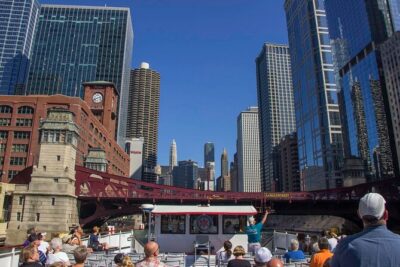
Chicago River 45-Minute Architecture Tour from Magnificent Mile
Read our review →
Browse the lists this tour appears in