
REVIEW · WALKING TOURS
City Walk with Architect: Private walking tour of Rome
Rome rewards a slower look. This private architecture walk links major sights with the buildings and design details you might otherwise pass without noticing. I like the freedom to shape the route around your interests, and I like having a professional guide who can explain why Rome looks the way it does. The main drawback is simple: you walk a lot, and most interiors are viewed from outside.
The two-and-a-half-hour route can include the Trevi Fountain, Spanish Steps, Piazza Navona, the Pantheon, and Piazza Venezia, along with less obvious architectural stops. Guide Bado has earned special praise for his patience, picture-taking help, local suggestions, and strong grasp of Roman architecture and history. At $118.82 per person, the price makes the most sense for a small private group that will ask questions and make use of the flexible itinerary.
What makes this Rome walk worth considering
- A route shaped around your interests: You are not locked into a single script, and the guide can discuss the buildings or periods that matter most to you.
- Bado’s personal approach: He has been praised for patience with late arrival, thoughtful answers, photographs, and practical tips for the rest of your time in Rome.
- Ten central stops: The walk connects Piazza della Minerva, the Trevi Fountain, the Spanish Steps, Piazza del Popolo, Piazza Navona, the Pantheon, and Piazza Venezia.
- Architecture rather than only sightseeing: You get context about columns, fountains, façades, monuments, and urban spaces, not just a roll call of famous names.
- A true private experience: Only your own group takes part, which gives you room to stop, ask questions, and adjust the pace.
- A serious walking workout: Small breaks are included, but this is not a gentle ride-by tour. You should be comfortable walking for at least an hour.
Starting at Piazza della Minerva
The walk begins in Piazza della Minerva, in central Rome. The square is a smart starting point because it immediately puts you in front of one of Rome’s contrasts: a compact urban space shaped by centuries of religious, artistic, and civic building.
The first scheduled stop is brief, about five minutes. Think of it as your orientation rather than a major visit. Your guide can use the square to set up the architectural themes of the walk and explain how Rome layers different periods within a short distance.
The meeting point is in the center of the piazza, or another place agreed upon if your route changes. That flexibility matters in Rome, where a street closure, crowd, or group interest can affect the best way forward.
More walking tours in Italy:
- Lecce: Baroque Architecture and Underground Walking Tour
★ 4.6 · 1,248 reviews - Experience Florence’s Art and Architecture on a Walking Tour
★ 5.0 · 318 reviews - Palermo: Art and Architecture Walking Tour
★ 4.7 · 136 reviews
Trevi Fountain and the Column of the Immaculate Conception
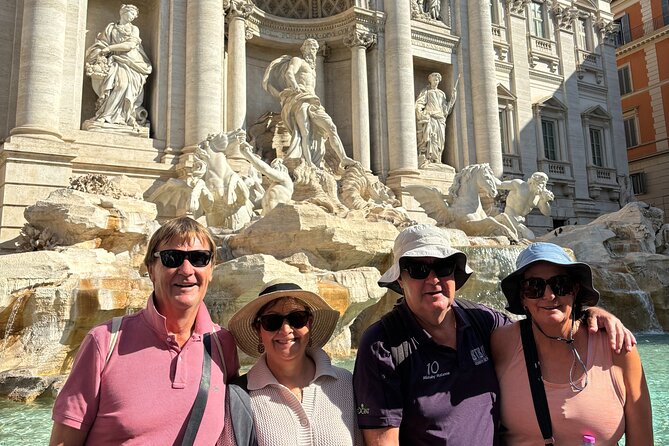
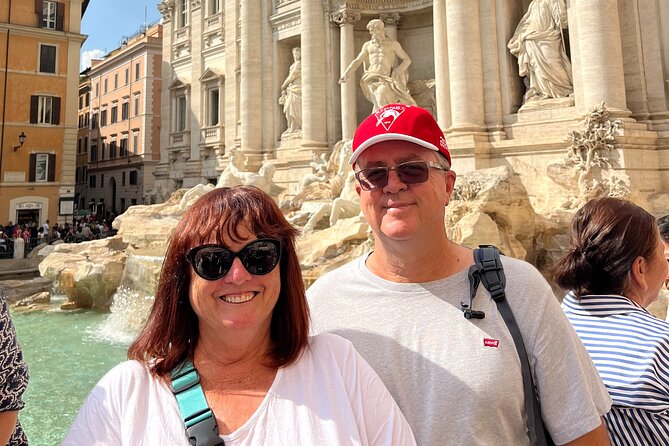
From Piazza della Minerva, the route moves to the Trevi Fountain for about 15 minutes. The fountain is famous for its scale and theatrical design, but an architecture-focused guide gives you a reason to look beyond the usual coin toss and photo.
You can ask about the relationship between water, stone, sculpture, and the surrounding buildings. The stop is free to enter, though the space can feel crowded, so do not expect a quiet lecture at the edge of the basin.
The next stop is the Column of the Immaculate Conception, also called La Colonna. The visit lasts about 15 minutes. This is the kind of stop that benefits from explanation because the monument can be easy to pass without understanding its purpose or design.
I like this pairing. The Trevi Fountain is a grand public display, while the column offers a more focused look at a single monument. Together, they show how Rome uses streets and piazzas as outdoor rooms filled with sculpture, symbolism, and visual drama.
Spanish Steps and Piazza del Popolo
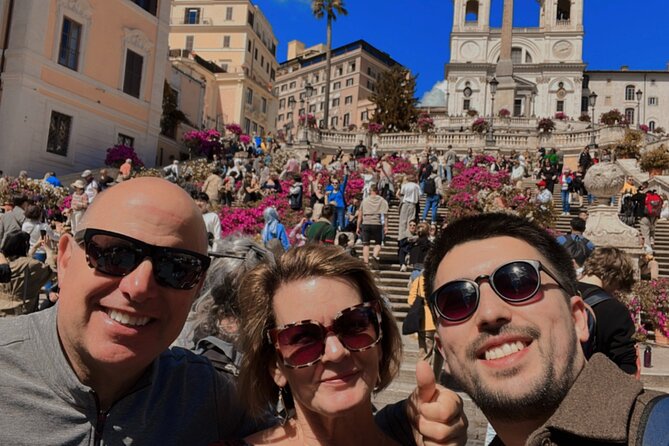
The Spanish Steps receive another 15-minute visit. You will see one of Rome’s best-known meeting places and one of its most recognizable stairways, but the architectural discussion can help turn a familiar photo stop into a lesson in proportion, movement, and urban planning.
The steps are not a private attraction, and no admission fee is required. You should expect people sitting, walking, and taking pictures. If you want detailed explanations, stay close to the guide and ask questions while the group is still gathered.
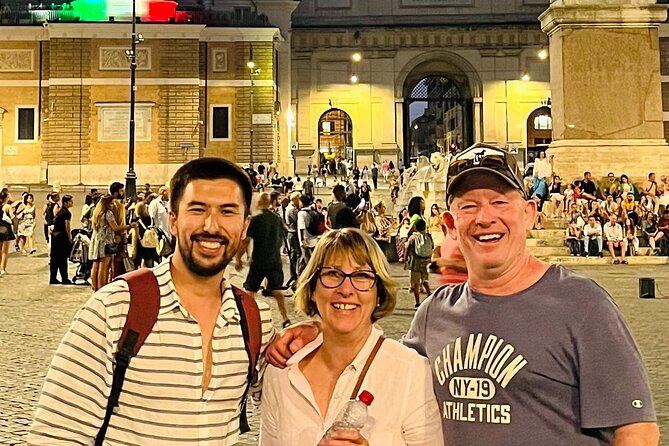
The route then reaches Piazza del Popolo for about 15 minutes. This broad square gives the guide more room to explain how an open urban space works. Compared with the tight setting around Trevi, Piazza del Popolo lets you take in the relationship between the square, its monuments, and the surrounding streets.
This is also where the flexible format can help. If you are most interested in public spaces, monumental planning, or the way Rome directs movement through the city, tell the guide early. The tour is designed to respond to those interests rather than simply march through a fixed checklist.
Piazza Colonna and the Temple of Hadrian
Piazza Colonna provides a different architectural lesson. The stop centers on the Column of Marcus Aurelius and lasts about 15 minutes. A column may look straightforward at first, but it carries political, historical, and artistic meaning that is difficult to read without guidance.
This is one of the places where a professional architecture guide can add real value. You can ask how a monument communicates power, how relief decoration works, and how an ancient object fits into a modern city square. The supplied information does not promise a specialist lecture on every detail, but the format gives you time to ask for one.
The Temple of Hadrian follows, also for about 15 minutes. Its surviving columns offer a direct connection with ancient Rome, while its position in the modern city shows how old structures have been absorbed into later streets and buildings.
I would not expect a complete archaeological visit here. This is a walking tour, not an excavation tour or museum program. The strength is the comparison between places: a Roman column, a temple remnant, a Baroque fountain, and a modern city block can all appear within the same afternoon.
More private tours in Italy:
- Private Tour: Venice Art and Architecture Walking Tour
★ 4.0 · 22 reviews - Venice Art and Architecture Private Walking Tour
★ 4.5 · 11 reviews - Private Personalized Architecture Tour of Rome with an Architect
★ 5.0 · 5 reviews - Vicenza: Palladian Architecture Private Walking Tour
★ 3.3 · 3 reviews
Piazza Navona and the Pantheon
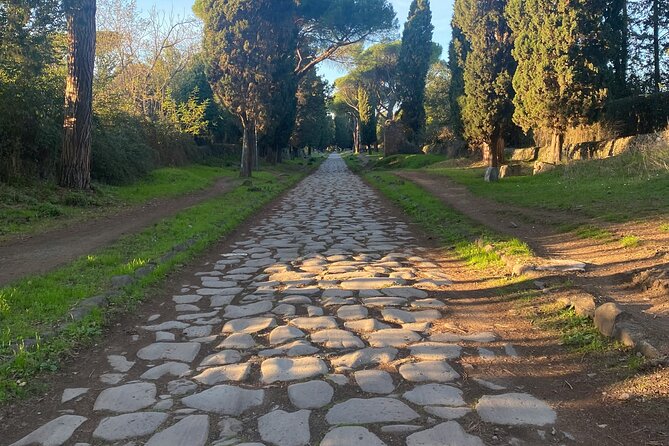
Piazza Navona is scheduled for about 15 minutes. Its long shape and monumental decoration make it one of the most rewarding public spaces on the route. You can look at how the piazza is organized, how fountains anchor the space, and how architecture guides your eye from one end to the other.
The stop should suit anyone who wants to understand Rome as a city of public rooms. You are not just checking off a square. You are seeing how a large open area can function as a gathering place, a stage, and a display of civic ambition.
The Pantheon receives about 15 minutes. This is one of the most important stops for anyone drawn to architecture. The building’s fame comes from its ancient design and remarkable interior, but this tour should be understood as an exterior-focused walk unless your guide arranges otherwise.
One practical limitation deserves attention: the tour price includes an English-speaking guide, but not a separate admission package for site interiors. One person who enjoyed the walk wished there had been more opportunities to go inside the monuments. If entering the Pantheon is a top priority, check the current access rules and plan a separate visit rather than assuming this walking tour includes it.
Piazza Venezia and the Vittoriano terrace
The final scheduled stop is Piazza Venezia, with about 25 minutes devoted to the Vittoriano building and access to its terrace. This is the longest stop, and it gives the route a strong finish.
The terrace is valuable because it changes your view of central Rome. Instead of studying one façade at street level, you can look across the city from above and connect the monuments you have seen during the walk. The experience is still architectural, but it also helps you understand Rome’s scale and layout.
The walk ends at Piazza Venezia. That is useful for continuing your day, though private transportation is not included. You finish in a central area rather than being driven back to your hotel, so plan your next step using public transportation, a taxi, or another walk.
Why the private format matters
The private setup is the biggest difference between this and a standard group stroll. Only your group participates, so you can ask direct questions without waiting for a large crowd to settle down or worrying that the guide is rushing to satisfy several unrelated interests.
This matters especially for architecture. One person may want to focus on ancient Roman structures, another on Baroque design, and another on how Rome’s piazzas function today. A fixed group tour usually has to keep moving. Here, the guide can adapt the discussion and may adjust the route.
The experience is offered in English. Bado has been praised for taking pictures, offering suggestions for other places in Rome, and remaining patient when the group arrived late. Those details suggest a guide who treats the walk as a conversation, not just a speech delivered at ten stops.
Still, private does not mean slow. Ten stops in roughly 150 minutes leaves limited time at each place. If you want a long lecture at every monument, you may need to choose fewer stops with the guide at the beginning.
Price, timing, and walking effort
At $118.82 per person, this is not a budget sightseeing walk. Its value depends heavily on group size. For one or two people, the cost is substantial. For a private group dividing the price among several participants, the guide’s time and flexibility make the fee easier to justify.
The walk averages about 39 days of advance booking, which suggests you should not leave it until the last moment if the timing matters to you. Confirmation arrives at booking, and the experience is available with a mobile ticket.
The advertised duration is approximately two hours and 30 minutes. The listed stops add up to about 145 minutes, leaving a little room for movement and short pauses. That is enough time for a useful overview, but not enough to linger at every sight.
You should be comfortable walking for at least one hour, with small breaks along the way. Most people can participate, and service animals are allowed. The tour is near public transportation, but there is no private vehicle included. Wear sensible shoes and think of this as an active introduction to central Rome, not a seated sightseeing activity.
How to make the most of your time
Start by telling the guide what you care about. If you want ancient Roman structures, ask for more explanation at the Temple of Hadrian, the Column of Marcus Aurelius, and the Pantheon. If you prefer grand urban design, give more time to Piazza Navona, Piazza del Popolo, and Piazza Venezia.
You can also ask about the practical side of Rome. Bado has offered suggestions for other places in the city, so use the final part of the walk to ask what deserves your attention next. This is one of the private format’s best advantages.
Keep your expectations clear about interiors. The tour takes you to major monuments and includes access to the Vittoriano terrace, but the listed stops do not promise entry into every building. If the Pantheon interior is essential, treat this walk as a companion to a separate visit.
The published rating is 4.9 from 22 reviews, with 100 percent recommending the experience. That is a small sample, but the praise is consistent in the areas that matter most: Bado’s patience, his ability to answer questions, his architecture and history background, and his willingness to offer useful Rome tips.
Who should book this private Rome walk
I would recommend it most to architecture lovers, first-time visitors who want context, and families or friends who prefer a private pace. It also suits you if you have already seen the major monuments and want to understand how they relate to one another.
It is less suitable if you dislike walking, need frequent extended rests, or want extensive interior visits. It may also feel expensive for a solo visitor who only wants quick photos of the main sights.
Cancellation is free up to 24 hours before the start time. Within 24 hours, the amount paid is not refunded, and changes are not accepted, so make sure your schedule is firm before the cutoff.
Should you book it?
Book this tour if you want Rome explained through buildings, monuments, and public spaces rather than simply photographed. The private format, flexible route, and highly praised guide make the price reasonable for a group that will ask questions and shape the conversation.
Skip it if you want a low-cost overview, a vehicle-based tour, or guaranteed interior access to several monuments. For the right group, this is a thoughtful way to connect Rome’s famous sights with the architectural details that make the city worth walking.
FAQ
How long is the City Walk with Architect?
The tour lasts approximately two hours and 30 minutes.
Where does the tour start?
It starts at Piazza della Minerva in central Rome. The meeting point is in the center of the piazza, or it may vary depending on the itinerary.
Where does the tour end?
The scheduled ending point is Piazza Venezia, near the Vittoriano building.
Is the tour private?
Yes. Only your group participates in the private activity.
Is transportation included?
No. Private transportation is not included. The tour is near public transportation.
Can I cancel for a full refund?
Yes, if you cancel at least 24 hours before the experience start time. Cancellations made within 24 hours are not refunded.
Just added in Italy
- Vicenza: Palladian Architecture Private Walking Tour★ 3.3 · 3 reviews
- Private Personalized Architecture Tour of Rome with an Architect★ 5.0 · 5 reviews
- Architectural Milan: Private Tour with a Local Expert★ 4.5 · 2 reviews
- The Architect’s Water★ 4.5 · 11 reviews
- Architectural Florence: Private Tour with a Local Expert★ 5.0 · 3 reviews
- Rione Sanità: tour among street art, architecture, folklore★ 4.5 · 2 reviews
- Palermo Tour: Magnificent Mixture Of Architectural Styles★ 4.2 · 6 reviews
- Discover Coppedè in Rome: Liberty architecture, symbols, and jewels★ 5.0 · 2 reviews
Walking Tours, compared.

The Official Art Deco Walking Tour by The Miami Design Preservation League
Read our review →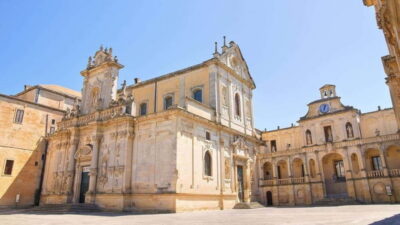
Baroque Architecture and Underground Walking Tour
Read our review →
Chicago in a Day: Food, History & Architecture Walking Tour
Read our review →

Ramblas, Old Town, Gothic and Gaudi Architecture Walking Tour
Read our review →
Chicago’s Secret Interiors Architectural Walking Tour
Read our review →
Browse the lists this tour appears in