
REVIEW · ARCHITECTURE TOURS
Caprarola: Villa Farnese, masterpiece of Renaissance architecture
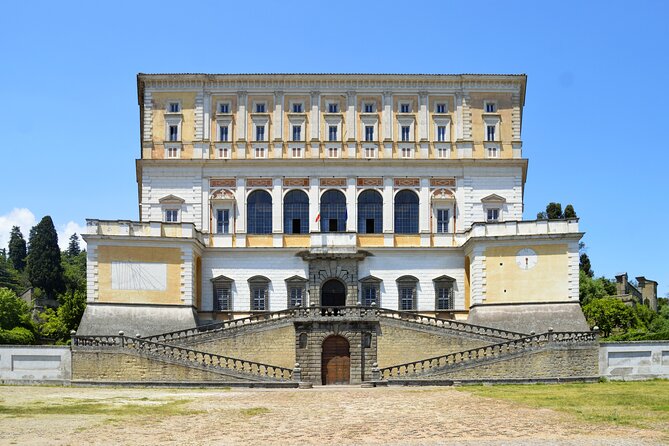
Caprarola rewards the extra effort. This private English tour takes you through Palazzo Farnese, a remarkable pentagonal palace filled with enormous 16th-century frescoes, grand stairways, and clever architectural surprises. I especially like the guide-led explanation of the paintings and the chance to finish among the fountains, statues, chestnut woods, and cypress trees of the Renaissance gardens. The main catch is location: this is in Caprarola near Viterbo, not Rome, and the price is high at $138.16 per person.
I also like the small-scale format, since only your group takes part. That matters in a palace where a guide can point out why the rooms were arranged as they were, explain the political meaning of the artwork, and help you make sense of subjects ranging from classical mythology to religious scenes and old maps. The visit lasts about 90 minutes, though you may want extra time for the gardens.
Key points to know before you go
- The palace is in Caprarola, near Viterbo: It is about 60 kilometers from Rome, so check the destination carefully before booking.
- The pentagonal design is the star: Palazzo Farnese began with the look of a fortress and was transformed into a grand Renaissance residence.
- The frescoes cover nearly everything: Walls, ceilings, staircases, and reception rooms carry paintings in bold colors and elaborate patterns.
- The Hall of Maps is a highlight: Its 16th-century maps show how geography was understood around 1573.
- The gardens reward extra time: The official tour ends there, but the upper gardens and smaller villa require additional walking.
- It is a private English-language activity: Your own group participates, with group discounts available and admission included.
Why Caprarola is worth the trip from Rome
Palazzo Farnese is not a quick city-center sight. It sits in Caprarola, a town near Viterbo in the Tuscia area of Lazio. That distance is both the inconvenience and part of the appeal. You leave the usual Rome circuit behind and reach a palace that many visitors never fit into their Italian itinerary.
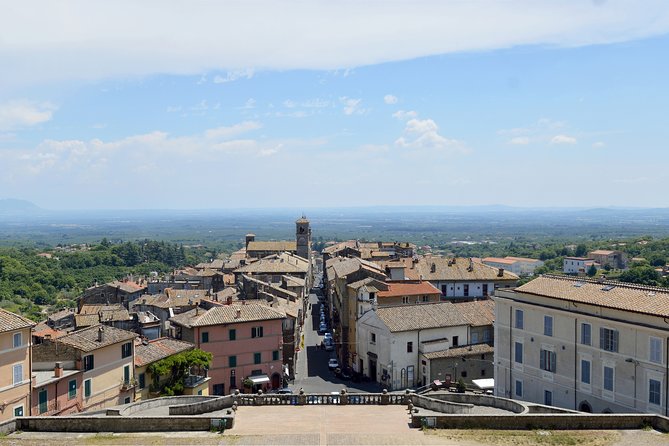
The building dominates the town from its hillside position. From the entrance terrace, you can look over Caprarola and the surrounding countryside before entering the palace. That first view helps explain why the site was chosen. This was meant to be more than a comfortable country house. It was a display of Farnese power.
You should take the location seriously. The meeting point is Via Filippo Nicolai 1, 01032 Caprarola, Viterbo. The activity does not include transport, so you need to arrange your own way there. Caprarola has narrow streets, and the site is not in Rome despite the fact that many visitors base themselves there.
If you are already visiting Viterbo or exploring northern Lazio by car, the palace fits naturally into your plans. If you are staying in central Rome and have only one free afternoon, the journey requires more thought. The building is excellent, but the trip is not a casual add-on.
A few more architecture tours in Italy worth a look
- Lecce: Baroque Architecture and Underground Walking Tour
★ 4.6 · 1,248 reviews - Experience Florence’s Art and Architecture on a Walking Tour
★ 5.0 · 318 reviews - Palermo: Art and Architecture Walking Tour
★ 4.7 · 136 reviews
The fortress shape that became a palace
The first surprise is the exterior. Palazzo Farnese has the imposing pentagonal form of a military fortress, complete with a strong, geometric presence. Yet the interior is designed for ceremony, art, and political theater rather than defense.
That contrast gives the visit its rhythm. You enter a building that looks severe from outside, then move into rooms filled with painted ceilings, decorative grotesques, classical references, and carefully planned movement. The Farnese family did not treat decoration as an afterthought. The architecture and artwork work together to impress you at every turn.
The palace is linked with Cardinal Alessandro Farnese, who later became Pope Paul III. The Farnese family produced several powerful churchmen, and their status is written into the building. Rooms are not simply pretty spaces. Their size, order, and subjects reflect ambition, education, religion, and authority.
The palace has few furnishings today. That can disappoint anyone expecting rooms arranged as they were during the Farnese period. I find the emptiness useful, though, because it puts the frescoes and architecture first. You notice the shape of the rooms, the painted ceilings, the stonework, and the way one grand space leads into another.
Vignola’s Scala Regia
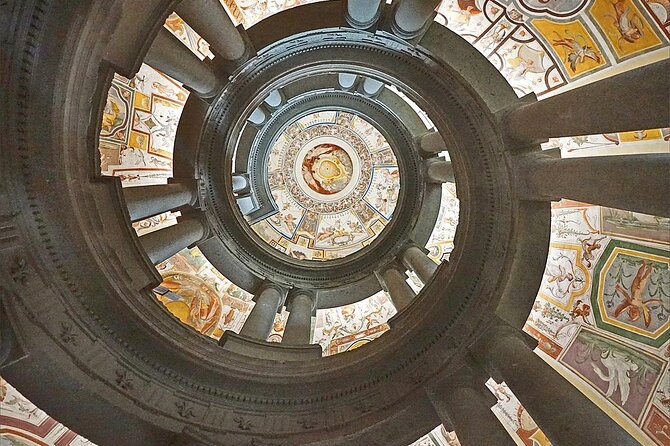
The Scala Regia, or Royal Staircase, is one of the clearest reasons to take a guided visit. It was designed by Jacopo Barozzi da Vignola, one of the leading architects of the Italian Renaissance and the creative force behind the palace’s design.
This is not a plain staircase built only to get you upstairs. It was a ceremonial route for Cardinal Alessandro Farnese to reach the main apartments. The scale, decoration, and movement turn an ordinary practical feature into a statement of power.
The staircase is also associated with fresco decoration and architectural planning that make the climb feel theatrical. A guide can show you how the staircase fits into the larger design of the palace rather than treating it as a photo stop.
You may also encounter an unusual spiral staircase elsewhere in the building. The route through the palace connects grand ceremonial rooms with clever circulation spaces. Pay attention to how the architects control your direction and view. This is a palace designed to reveal itself in stages.
Frescoes from floor to ceiling
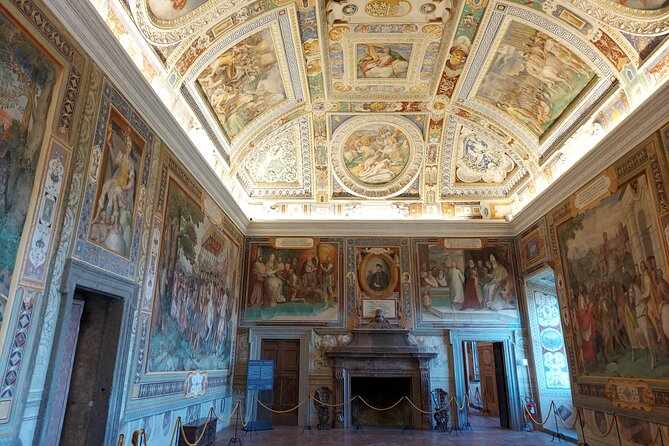
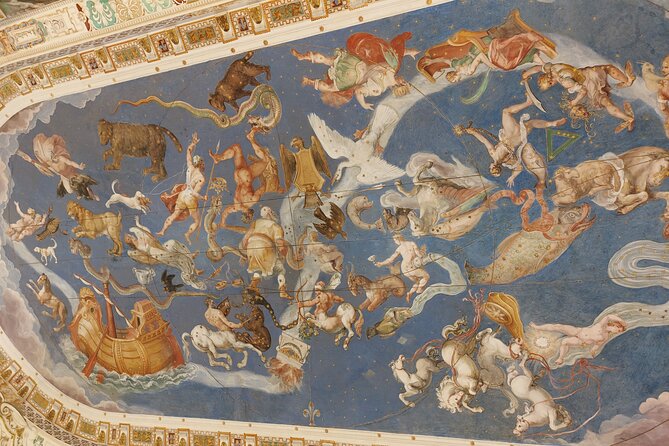
The paintings are the main event. Rooms are decorated with scenes from classical mythology, religion, history, geography, and the symbolic world of Renaissance politics. The scale is impressive because the artwork does not sit in a few framed panels. It surrounds you.
Even the ceilings carry elaborate decoration. Painted borders, figures, architectural illusions, and ornamental patterns make each room different from the next. You might begin by admiring the colors, then notice that a ceiling or wall contains a carefully arranged argument about the family, the church, or the wider world.
This is where a guide adds real value. Without context, you can still appreciate the craftsmanship. With a strong explanation, you start to understand why particular figures appear, how the scenes relate to Renaissance learning, and what the family wanted visitors to think.
Serena is specifically praised for explaining the history and small details in clear, accessible English. If she is leading your visit, expect a guide who can connect the art with its political and religious setting rather than simply naming the rooms.
The palace is best for people who enjoy looking closely. You do not need a background in art history, but you should be ready to slow down. The paintings reward attention more than a hurried sweep through the building.
Same city, a different building to stand in front of:
- Best of Bologna in one day : Food, architecture, art and history
★ 5.0 · 27 reviews - Private Tour: Venice Art and Architecture Walking Tour
★ 4.0 · 22 reviews - City Walk with Architect: Private walking tour of Rome
★ 5.0 · 22 reviews - Basilica San Marco and the Pala d’Oro with Architect Guide
★ 4.5 · 19 reviews
The Hall of the Angels and the globe room
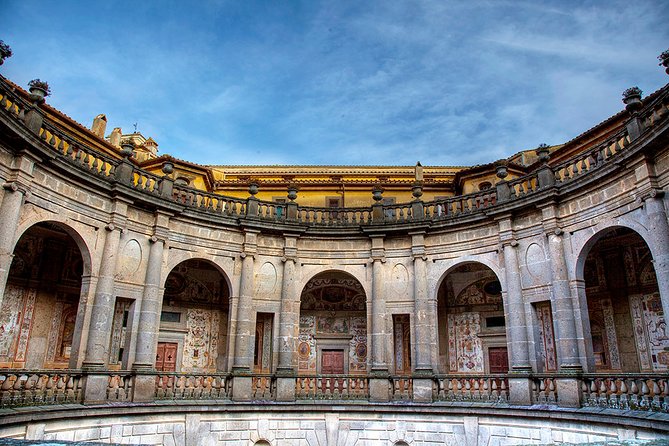
The Hall of the Angels brings a playful touch to the grandeur. Its famous echo gives the room an acoustic quality that you can hear as you move through it. This is one of those small physical details that makes the palace memorable. The building is not only something to look at. Its shape and surfaces affect what you hear.
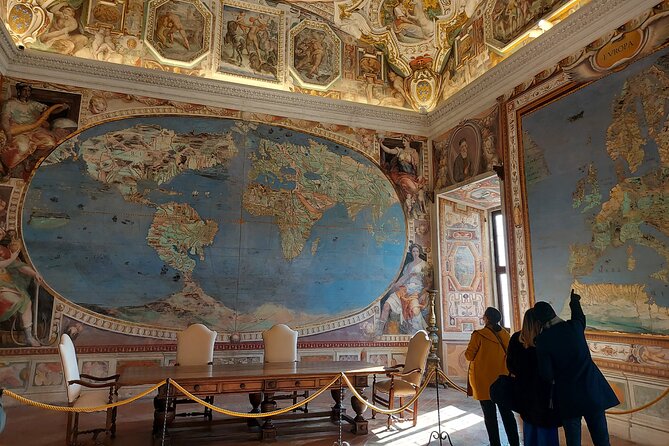
Another high point is the Hall of the Globe, also called the room of maps. The maps date from around 1573 and show the geographical knowledge available at the time. You can see how the room connects exploration, cartography, papal authority, and Renaissance curiosity.
The maps are valuable because they put the palace in its period. They are not modern geographical references, and they should not be judged by today’s accuracy. Instead, they show how the world was pictured in the late 16th century and how much importance powerful people placed on controlling and displaying knowledge.
Allow time here. The map room can seem like one more decorated chamber if you rush. Once you look at the continents and the room’s overall design, it becomes one of the most revealing spaces in the palace.
Reception rooms and the Farnese message
The state rooms and reception hall were built for formal visits. Their decoration tells you how the Farnese wanted to be seen: educated, powerful, connected to the church, and familiar with the classical world.
The subjects are broad. Religious scenes sit alongside classical references, historical imagery, allegorical figures, and decorative grotesques. This variety can make the visit feel visually crowded, but it also gives the palace its character. Every room has another layer to inspect.
A private tour is useful here because you can ask questions about details that would otherwise blur together. If you want a quiet look at the painting technique, the family’s rise, or the meaning of the room sequence, say so at the start. The format is better suited to conversation than a large group tour.
Do not expect a palace filled with original furniture. The rooms are largely bare. If furnishings are essential to your enjoyment of historic houses, this may feel incomplete. If architecture and wall painting matter most, the lack of furniture keeps the focus on the building itself.
Walking through the Renaissance gardens
The formal visit ends in the gardens, and that is a good choice. After the close, richly decorated rooms, the open air provides a change of pace.
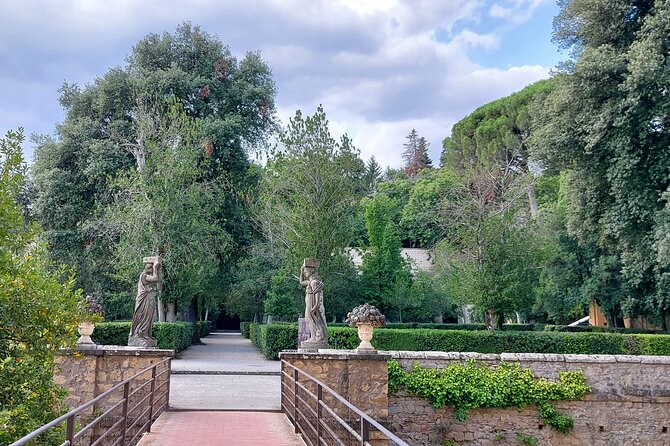
The gardens include statues, fountains, chestnut woods, cypress trees, and an upper section with a smaller villa or hunting lodge. A climb through the garden is worth the effort if you have the time and energy. The upper area gives you another perspective on the complex and helps show how the palace was connected to leisure as well as ceremony.
The gardens are not always in perfect condition. Some statues need better care, parts of the upper garden may be closed for restoration, and fountains or water features may not be working. These problems do not erase the value of the setting, but they do temper expectations.
Plan for more than the advertised 90 minutes if you want to wander independently after the guided portion. The palace itself can fill the scheduled time, while the garden route adds walking and some uphill effort. Comfortable shoes are sensible, especially if you want to reach the smaller villa.
What the $138.16 price means
At $138.16 per person, this is not a budget palace admission. The value depends on how much you want from the visit and how many people are in your group.
Admission to Palazzo Farnese is included, and the activity is private. You are paying not only to enter but also for a personal English-language explanation of a complicated building. That can be worthwhile here because the palace contains so many layers of art, family politics, architecture, and geography.
The price makes more sense for a small group that wants flexibility and direct access to a guide. Group discounts may improve the value for several people booking together. For one person or a couple, the cost is harder to justify if you are comfortable reading signs and exploring without much interpretation.
Some visitors find the lack of a standard audio guide frustrating. If a self-guided visit suits you better, the ticket price at the palace itself may be far lower than this experience. The paid tour earns its keep through explanation, not through luxury transport or extra attractions.
Timing, meeting point, and who should book
The tour lasts about 1 hour and 30 minutes and is offered in English. It ends back at the meeting point after the palace and garden visit. Since the format is private, your group takes part without being combined with other participants.
This is a strong choice for:
- People interested in Renaissance architecture and painting
- Visitors already touring Viterbo or northern Lazio
- Families or friends who want a private guide
- Anyone who prefers explanations over a silent walk through museum rooms
- Repeat visitors to Rome looking for an important site outside the usual route
It is less suitable if you want a Rome-based activity, dislike narrow town streets, or have no practical plan for reaching Caprarola. Read the address carefully. A previous missed visit happened because the participant went to Rome instead of Caprarola, even though the destination and meeting point specified Caprarola.
Confirmation normally arrives at booking. For reservations made within two days of the visit, confirmation can take up to 48 hours and remains subject to availability. You can cancel for a full refund up to 24 hours before the start time. Changes or cancellations inside that window are not accepted.
Should you book Palazzo Farnese in Caprarola?
Yes, if you care about Renaissance art and can arrange the journey to Caprarola. The palace has an unusual exterior, remarkable fresco cycles, Vignola’s grand staircase, the echoing Hall of the Angels, and a map room that gives the whole visit historical meaning.
I would book the private tour rather than visit without a guide if you want to understand what you are seeing. The paintings are impressive on their own, but the right explanation turns a series of beautiful rooms into a coherent story about the Farnese family, the church, and Renaissance power.
I would skip it only if your schedule is tightly confined to Rome or if the price is beyond your comfort level. For everyone else, this is a worthwhile excursion to a palace that feels genuinely different from Italy’s better-known stops.
FAQ
Where is Palazzo Farnese in Caprarola?
It is at Via Filippo Nicolai 1, 01032 Caprarola, in the province of Viterbo, Italy. It is not in Rome.
How far is Caprarola from Rome?
Caprarola is about 60 kilometers from Rome. You need to arrange your own transportation to the meeting point.
How long does the tour last?
The scheduled experience lasts approximately 1 hour and 30 minutes.
Is the tour offered in English?
Yes. The experience is offered in English.
Is this a private tour?
Yes. Only your group participates in the private activity.
What is included in the price?
Entry tickets to Palazzo Farnese in Caprarola are included.
Does the tour include the gardens?
Yes. The tour ends in the Renaissance gardens, which include statues, fountains, chestnut woods, and cypress trees.
Can I see the smaller villa or hunting lodge?
The gardens lead toward a smaller villa or hunting lodge, and you may explore that area independently. Some upper garden sections may be closed for restoration.
Is the palace furnished?
The palace has few furnishings. Its main attractions are the architecture, frescoes, staircases, decorated rooms, and gardens.
What is the cancellation policy?
You can cancel up to 24 hours before the start time for a full refund. Cancellations or changes made less than 24 hours before the experience are not accepted.
Just added in Italy
- Vicenza: Palladian Architecture Private Walking Tour★ 3.3 · 3 reviews
- Private Personalized Architecture Tour of Rome with an Architect★ 5.0 · 5 reviews
- Architectural Milan: Private Tour with a Local Expert★ 4.5 · 2 reviews
- The Architect’s Water★ 4.5 · 11 reviews
- Architectural Florence: Private Tour with a Local Expert★ 5.0 · 3 reviews
- Rione Sanità: tour among street art, architecture, folklore★ 4.5 · 2 reviews
- Palermo Tour: Magnificent Mixture Of Architectural Styles★ 4.2 · 6 reviews
- Discover Coppedè in Rome: Liberty architecture, symbols, and jewels★ 5.0 · 2 reviews
Architecture Tours, compared.
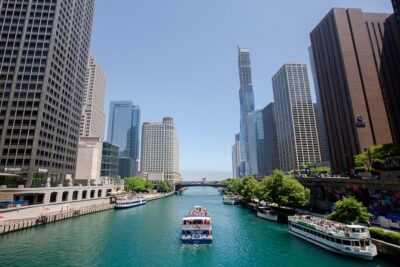
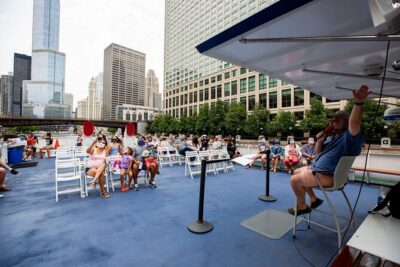

Chicago River: 1.5-Hour Guided Architecture Cruise
Read our review →
Chicago Architecture Center River Cruise aboard First Lady
Read our review →
Architecture River Cruise Skip-the-Ticket Line
Read our review →
Chicago River 45-Minute Architecture Tour from Magnificent Mile
Read our review →
Browse the lists this tour appears in