
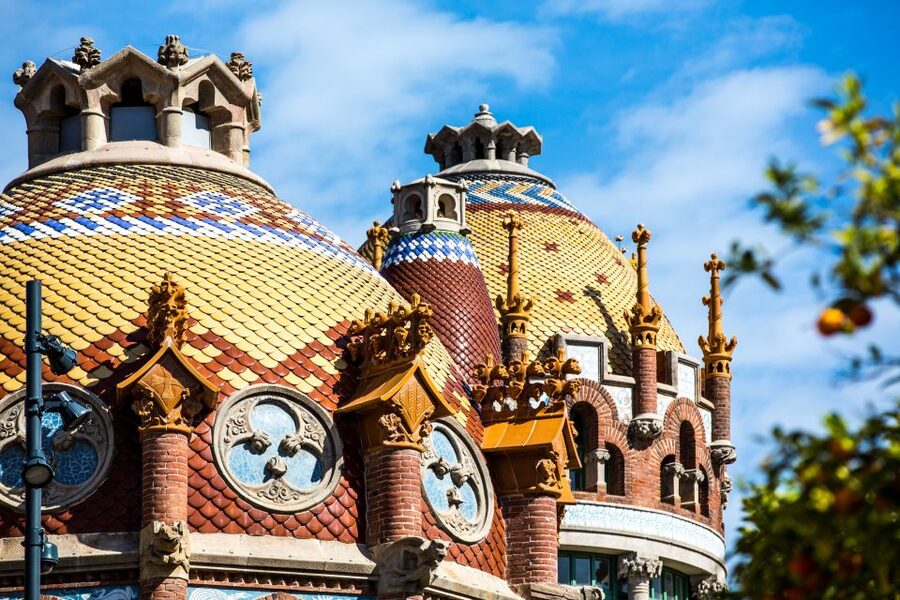
REVIEW · BARCELONA ARCHITECTURE TOURS
Barcelona: Sant Pau Recinte Modernista Entry Ticket
Barcelona hides a hospital palace in plain sight. Sant Pau Recinte Modernista gives you ornate pavilions, gardens, mosaics, and stained glass without the crush of Barcelona’s biggest sights. I like the calm layout and the way the site connects architecture with early 20th-century healthcare. The main drawback is that the ticket is self-guided, so you may want an audio guide or extra reading to make sense of every detail.
I also like the unusual story behind the place: this was designed as a charitable hospital for the poor, not as a royal residence or private showpiece. You can walk through former hospital spaces, underground passages, and carefully restored courtyards at your own pace. At $21, it is a fair buy for architecture fans and medical professionals, though casual visitors may find the price harder to justify if they rush through in less than an hour.
Key points to know before you go
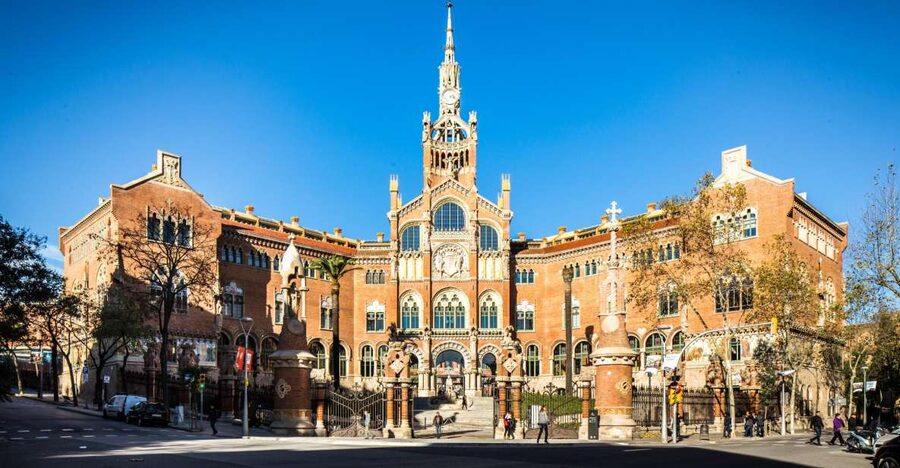
- Designed by Lluís Domènech i Montaner: The complex was built from 1905 to 1930 and is one of Barcelona’s finest Modernista works.
- A hospital built like a garden city: Pavilions, gardens, fresh air, light, and underground connections were all part of the healthcare plan.
- Plan for 1.5 to 2 hours: The official visit takes about 1.5 hours, but you can spend longer studying the decoration and exhibitions.
- Self-guided entry: The ticket includes admission, not a guided tour, so an audio guide or careful reading improves the visit.
- A quieter alternative to Gaudí’s headline sights: Sant Pau is close to the Sagrada Família, but usually feels calmer and less hurried.
- Easy for many visitors: The site is wheelchair accessible, children under 12 enter free with a parent or guardian, and lockers are available.
Why Sant Pau belongs on your Barcelona list
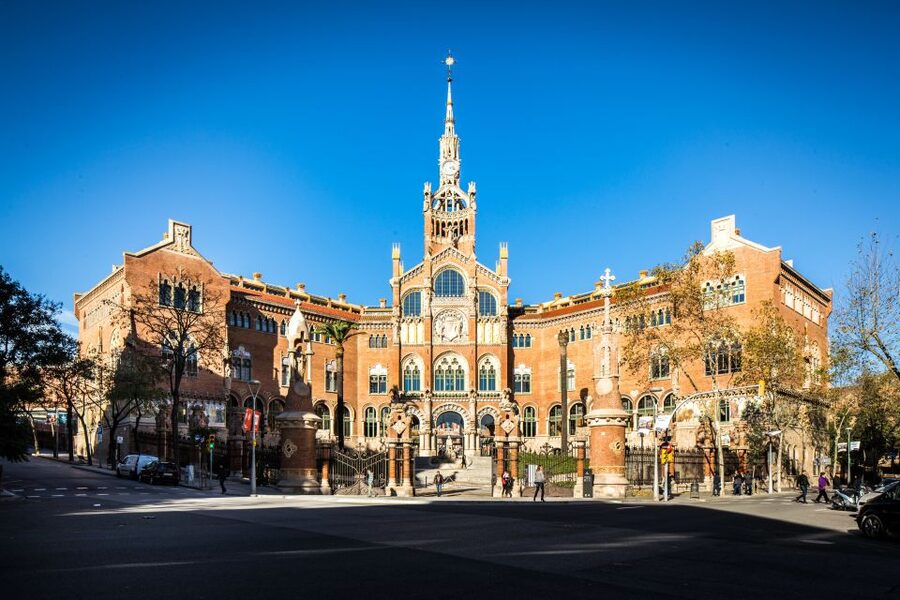
Barcelona is full of Modernista buildings, but Sant Pau gives you a different angle on the movement. Instead of a private home, church, or civic building, you are looking at a complete hospital complex planned around care, hygiene, light, and recovery.
Lluís Domènech i Montaner designed the site between 1905 and 1930. The old Hospital de la Santa Creu in El Raval had become too small, so the institution moved to a new location with room for a large, carefully organized medical campus.
The result was not a single hospital block. It was a garden city of separate pavilions, linked by underground passageways. Each building had a role, while the open spaces gave patients light, air, and a more pleasant place to recover.
That idea matters when you visit. The decoration is not simply there to impress you. The colors, natural forms, gardens, and bright interiors were tied to a broader belief that surroundings could support healing.
I find the combination unusually effective. You can appreciate Sant Pau as architecture, but you can also think about how healthcare was changing at the start of the 20th century. It was built for charitable work and public welfare, with care for poor patients at its center.
More tickets in Barcelona:
- Barcelona: Park Güell and Gaudí House Museum Entry Ticket
★ 4.5 · 6,326 reviews - Barcelona: Gaudí’s Park Güell Tour with Fast-Track Ticket
★ 4.8 · 4,512 reviews - Sagrada Familia & Gaudi Tour Private or Small Group with Tickets
★ 4.5 · 1,188 reviews
The first courtyard reveals the scale
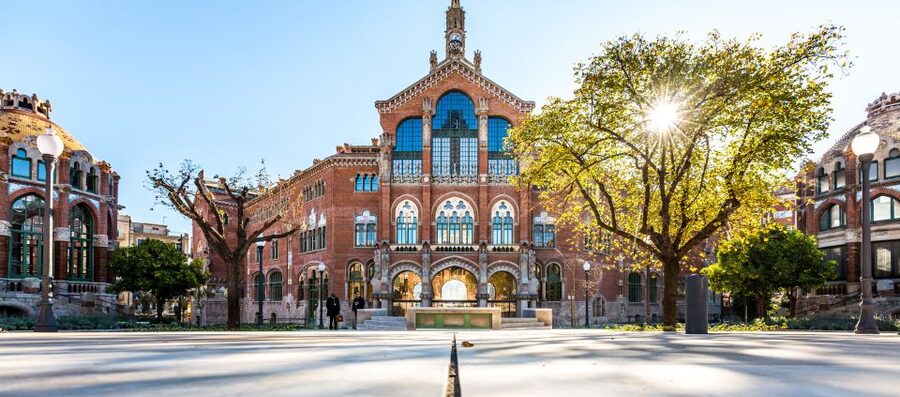
Your first strong impression comes from seeing the complex as a whole. The buildings are richly decorated, but they are arranged with space between them. That gives Sant Pau a more open feeling than many Barcelona monuments.
Take a few minutes before rushing inside. Look across the courtyard, then turn your attention upward. Ceramic details, sculpted figures, patterned brickwork, and colorful surfaces reward slow looking.
Several visitors have found that the front buildings are only the beginning. Walk around their sides, too, because the mural mosaics and smaller decorative details are easy to miss from the central approach.
The scale can be surprising. This was a working hospital for roughly a century, yet parts of it feel closer to an art museum than a medical institution. That contrast is one of the reasons I think the visit works so well.
You may hear comparisons with Gaudí’s architecture. The comparison is understandable because both men worked in Barcelona’s Modernista tradition, but Sant Pau has its own identity. Domènech i Montaner uses decoration, symbolism, craft, and structure in a way that serves a complete institutional plan.
The pavilions show a kinder hospital design
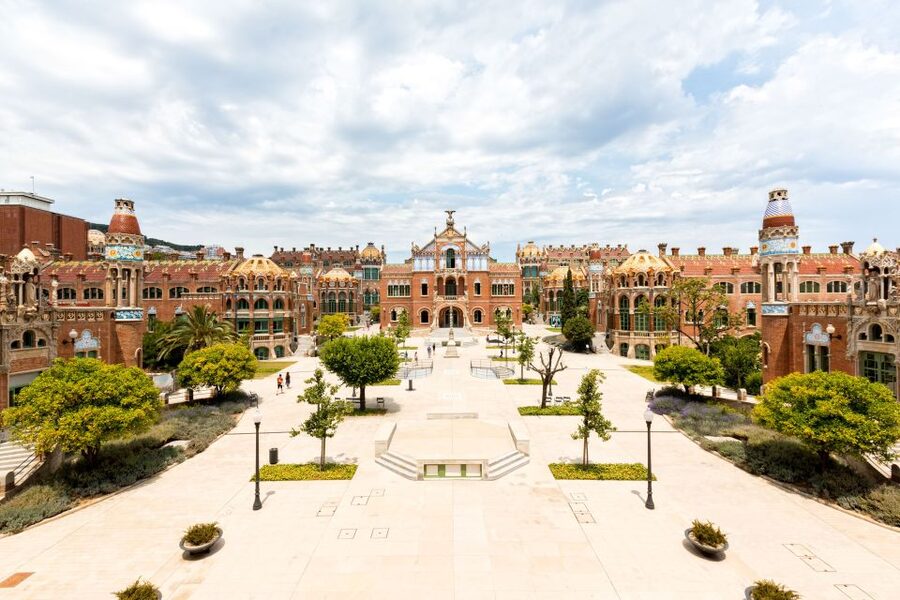
As you move among the restored pavilions, pay attention to the relationship between buildings and gardens. The design was meant to avoid the dark, crowded hospital model common in earlier periods.
The hospital’s plan separated buildings rather than placing every function under one roof. That created room for air and daylight, while underground passageways allowed staff and services to move between areas.
The pavilions are the heart of the visit. Their exteriors carry the strongest Modernista decoration, while their interiors help explain how the hospital operated. Depending on what is open during your visit, you may see former patient areas, displays, and medical objects from the period.
One restored hospital room is presented as it was arranged in 1932. That detail helps bridge the gap between the grand architecture and daily medical life. You are not just looking at an empty monument. You are seeing a place that continued to function until relatively recently.
I especially value this sense of time. Sant Pau only became a museum site after its hospital role ended, so the buildings do not feel like stage sets created solely for visitors. Their original purpose remains clear.
The medical displays are particularly worthwhile if you work in healthcare, nursing, or science. The changing relationship between doctors, nurses, hospital administration, and patients gives the visit another layer. You can also see how ideas about natural surroundings and medical treatment developed over time.
Look down into the underground passages
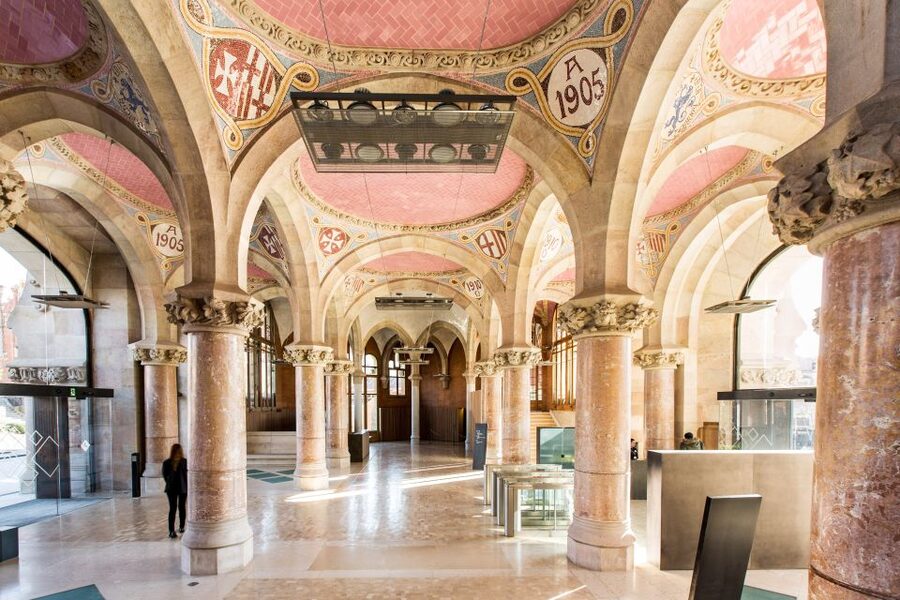
The underground connections are easy to underestimate. Above ground, the pavilions look separate and almost village-like. Below ground, the passages explain how the hospital functioned as one institution.
Walking through them gives you a practical sense of the original plan. Staff could connect the buildings without crossing the open courtyards, and the separate pavilions could still operate as part of one hospital.
These passages also change the mood. The gardens and facades are open and decorative, while the underground areas feel more functional. Together, they show that Sant Pau was designed as a working medical system, not simply as a collection of pretty buildings.
I would not rush this section. If the site provides interpretive material along the route, take time to read it. The architectural details are memorable, but the underground plan is what makes the complex easier to understand.
A few more architecture tours in Barcelona worth a look
- Barcelona: Sagrada Familia, Modernism, and Old Town Tour
★ 4.7 · 1,621 reviews - Ramblas, Old Town, Gothic and Gaudi Architecture Walking Tour
★ 5.0 · 723 reviews - Historical and Modernist Bike Tour Barcelona
★ 5.0 · 262 reviews - Sant Pau Recinte Modernista Entrance Ticket in Barcelona
★ 4.5 · 230 reviews
Gardens, mosaics, and stained glass reward slow looking
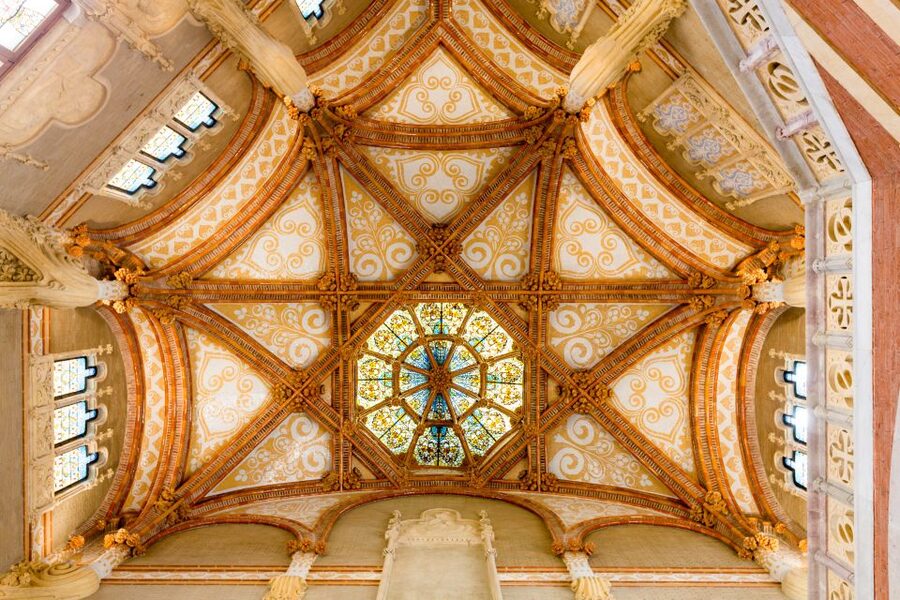
Sant Pau is best visited with your eyes moving in several directions. Look at the buildings, then the ground, then the ceilings and windows. The decoration is spread across the site rather than concentrated in one famous room.
The gardens provide breathing space between the pavilions. They also help explain the original medical idea behind the complex. Patients were not meant to be shut away from nature, and the setting was part of the hospital’s approach to recovery.
The stained glass adds color indoors, while mosaics and ceramic work bring the same care to walls, floors, and exterior surfaces. Natural motifs appear throughout the complex, linking the architecture to the garden setting.
You may want to allow more than the advertised 1.5 hours if you enjoy decorative arts. Two hours gives you time to pause, read, and revisit details without turning the experience into a race.
A useful habit is to stop in each courtyard before moving on. Sit for a moment if the space allows it. One of the pleasures of Sant Pau is that you can admire the buildings without constantly being pushed along by a tight group schedule.
What the self-guided format means
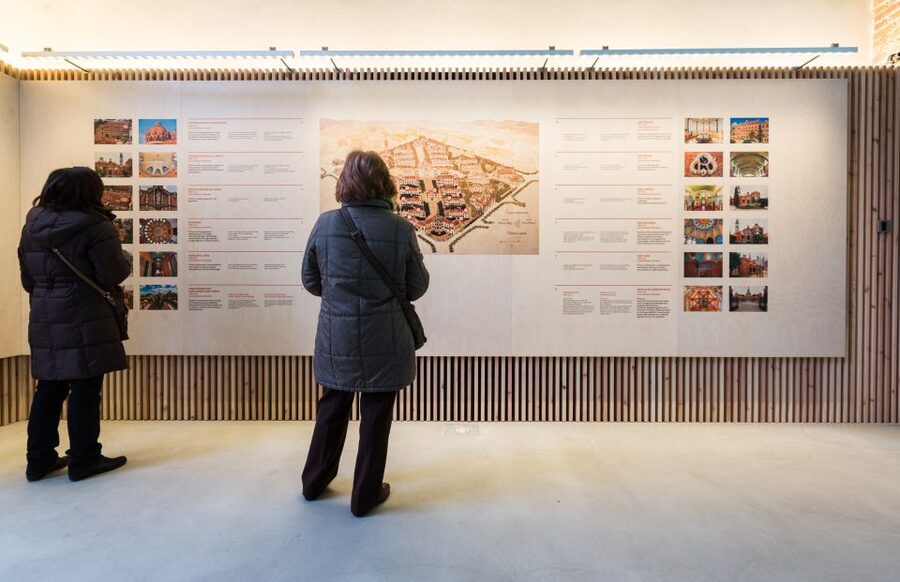
The ticket includes entrance to Sant Pau Recinte Modernista, but it does not include a guided tour. You are free to move at your own pace, which is a real advantage if you want to photograph details, skip displays, or linger in a favorite courtyard.
The tradeoff is context. Without a guide, you may understand the broad story but miss some of the symbolism, architectural choices, or hospital routines. An audio guide is a sensible addition if one is available when you visit. Several people have found that it adds useful background.
A printed pamphlet or site information may be enough for you if you prefer a quiet visit. The complex is visually strong, so you can still enjoy it without expert commentary. I would choose the audio option if Sant Pau is one of your main Barcelona interests, especially if you care about architecture, nursing, or medical history.
Signage has not always felt perfectly clear, particularly outdoors. Take a moment to check your route rather than assuming the next building is obvious. This is a sprawling complex, and the entrance sequence can feel less direct than a standard museum.
How Sant Pau compares with nearby Barcelona sights
Sant Pau is a natural partner for the Sagrada Família. The two sites are close, and both help you understand Barcelona’s Modernista period, but they offer different experiences.
The Sagrada Família gives you a monumental church interior and Gaudí’s distinctive vision. Sant Pau gives you a complete institutional campus, with courtyards, pavilions, hospital rooms, gardens, and underground connections.
If you have already seen the Sagrada Família and Park Güell, Sant Pau can add welcome variety. It feels less like another major crowd attraction and more like a place you can explore at a steady pace.
Some people use Sant Pau as a final Barcelona stop before leaving the city. The nearby metro connection makes that practical, and lockers can hold small bags, including carry-on-sized luggage. Do not assume every large suitcase will fit, so travel light if you plan to store belongings.
The site can also work well during a hot afternoon. The gardens and spacious courtyards offer a calmer setting than crowded central streets, although you should still plan your visit around the available entry time.
Price, timing, and practical value
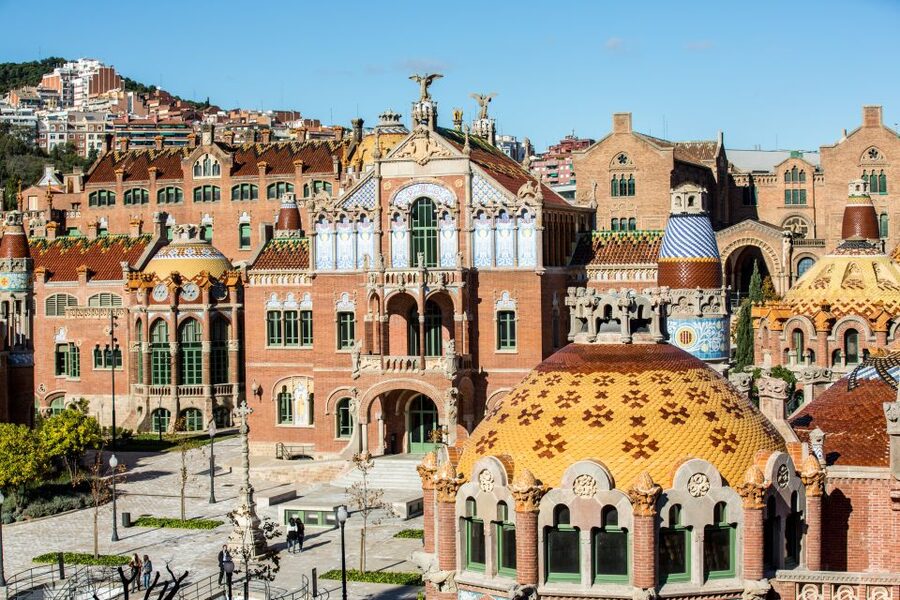
The listed price is $21 per person. I consider that reasonable if you spend the full 1.5 hours exploring the pavilions, passages, gardens, and exhibits.
The value is strongest for three kinds of visitor: architecture fans, people working in medicine or nursing, and anyone who wants a less predictable Barcelona sight. The hospital story gives the building a purpose that many decorative monuments lack.
The value is weaker if you plan to walk through quickly for a few photos. Sant Pau is not a single viewpoint. Its best features are spread across the site, and you need time to notice the details.
Your ticket is valid for one day, with starting times based on availability. You can reserve now and pay later, and cancellation is free up to 24 hours in advance. Those terms help if your Barcelona schedule is still shifting.
The address is Calle Sant Antoni Maria Claret, 167, 08025 Barcelona. A metro stop is nearby, and the location works well with a visit to the Sagrada Família.
The complex is wheelchair accessible. Children aged 11 and under are allowed to attend free of charge, but a parent or guardian must be present. On the first Sunday of each month, visitors over 65 can enter free of charge.
Pets, smoking, alcohol, and drugs are not allowed. Those rules are straightforward, but remember that this remains a carefully preserved cultural site, not an ordinary public park.
Who will enjoy Sant Pau most
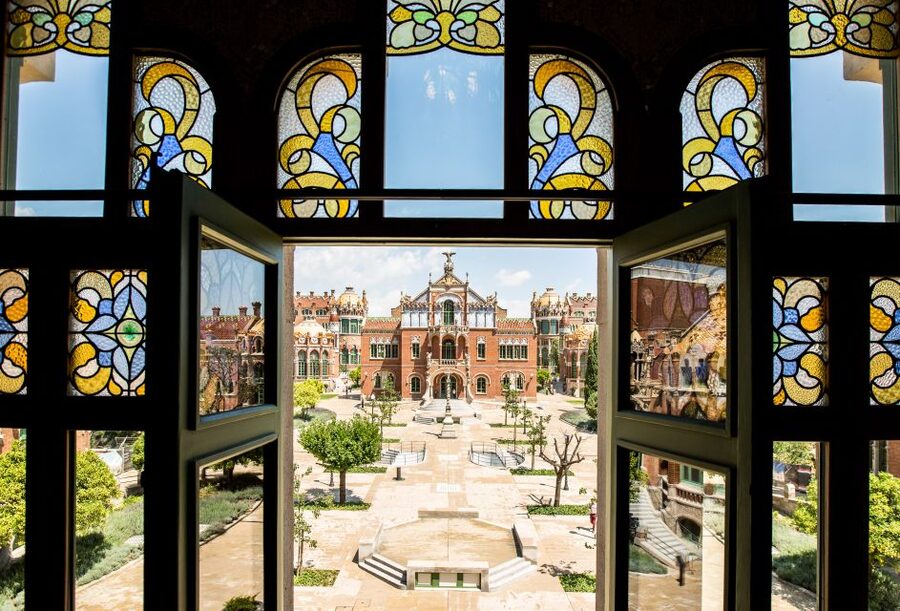
You should make time for Sant Pau if you enjoy buildings that tell a social story. The architecture is beautiful, but the reason for its existence makes it more meaningful.
Medical professionals may find the hospital displays especially interesting. The site shows how treatment, hygiene, hospital design, and patient care were being reconsidered more than a century ago.
Families can also manage the visit, particularly because children under 12 enter free. Younger children may respond more to the colors, sculptures, and gardens than to the historical material, so keep your explanation simple and allow them to look around.
Sant Pau is less suited to anyone who wants a short, guided highlight tour with constant commentary. The ticket does not include a guide, and the complex rewards independence.
It is also not the best choice if you have only a few minutes between major bookings. The layout deserves time, and the most interesting details are easy to miss when you hurry.
Should you book the Sant Pau ticket?
I would book it if you have already planned the Sagrada Família and want to see another side of Barcelona’s Modernista tradition. I would also book it if hospitals, public welfare, architecture, or medical history interest you.
The strongest reason to go is the complete idea behind the place. You see a hospital designed as a garden city, with separate pavilions, underground passages, decorative art, and patient care woven into one plan.
The main caution is simple: this is self-guided. Bring curiosity, allow at least 1.5 hours, and consider an audio guide if you want more explanation.
At $21, Sant Pau offers a substantial visit rather than a quick photo stop. Arrive with time, look up often, walk around the sides of the front buildings, and give the hospital’s social purpose as much attention as its beautiful decoration.
FAQ
Where is Sant Pau Recinte Modernista?
Sant Pau Recinte Modernista is at Calle Sant Antoni Maria Claret, 167, 08025 Barcelona, in Catalonia, Spain.
How long does the visit take?
The experience is described as a 1.5-hour visit, but you may want to allow closer to two hours if you plan to study the pavilions, gardens, mosaics, stained glass, and hospital displays.
Is a guided tour included?
No. The entrance ticket includes admission only. A guided tour is not included.
Is Sant Pau Recinte Modernista wheelchair accessible?
Yes, the site is wheelchair accessible.
Are children allowed to visit?
Yes. Children aged 11 and under are permitted to attend, and participants under 12 receive free admission. A parent or guardian must be present.
Do visitors over 65 receive free admission?
Visitors over 65 can enter free on the first Sunday of each month.
Can I cancel my booking?
Yes. You can cancel up to 24 hours in advance for a full refund.
Can I reserve now and pay later?
Yes. The booking terms allow you to reserve your place and pay later.
Are pets allowed?
No. Pets are not allowed at Sant Pau Recinte Modernista.
Can I smoke or bring alcohol and drugs?
No. Smoking, alcohol, and drugs are not allowed at the site.
Just added in Barcelona
- Self-Guided Audio Tour-The Surrealist Barcelona of Dalí and Gaudí★ 3.5 · 8 reviews
- Visit to the Modernist houses of the Americans★ 5.0 · 2 reviews
- Roman & Gotic & Gaudi in Barcelona: private walking tour★ 4.5 · 2 reviews
- Barcelona Gaudi Tour: Sagrada Familia, Casa Batllo & Casa Mila★ 5.0 · 4 reviews
- Barcelona Street Escape: Gaudi and the Hidden Treasure★ 5.0 · 17 reviews
- Gaudi’s Casa Batlló and La Pedrera with Chocolate Tasting★ 5.0 · 5 reviews
- Gaudí & Catalan Modernism Private Walking Tour★ 5.0 · 11 reviews
- Sagrada Familia Private Tour – Unlock the mysteries of Gaudi★ 5.0 · 10 reviews
Barcelona Architecture Tours, compared.
Park Güell and Gaudí House Museum Entry Ticket
Read our review →
Gaudí’s Park Güell Tour with Fast-Track Ticket
Read our review →
Sagrada Familia, Modernism, and Old Town Tour
Read our review →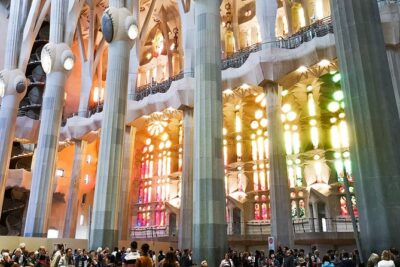
Sagrada Familia & Gaudi Tour Private or Small Group with Tickets
Read our review →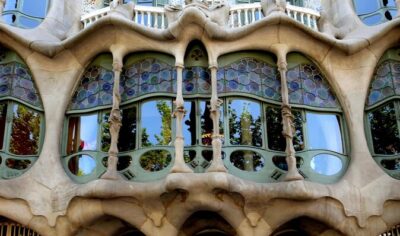
Complete Gaudi Tour: Casa Batllo, Park Guell & Sagrada Familia
Read our review →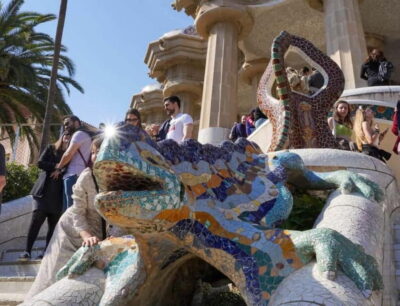
Park Güell: Guided Tour with Optional Gaudí Experience Entry
Read our review →
Barcelona e-Bike Tour: Gaudí & Old Town Small Group
Read our review →
Ramblas, Old Town, Gothic and Gaudi Architecture Walking Tour
Read our review →Browse the lists this tour appears in