
REVIEW · CHICAGO ARCHITECTURE TOURS
Chicago River 90-Minute Architecture Tour
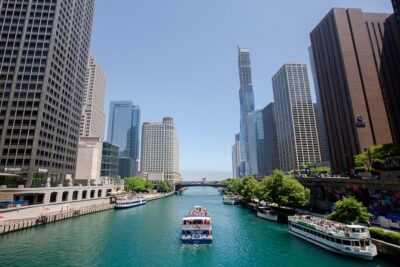
Chicago’s best building views come from the water. This 90-minute Wendella cruise gives you a broad, entertaining look at Chicago’s skyline, from the Wrigley Building and Marina City to the Willis Tower and Merchandise Mart. I like the three-branch river route and the way a trained guide connects architecture with Chicago’s unusual river history. I also like having both an outdoor deck and an enclosed lower lounge.
The main catch is simple: the best views are outside, and the river can be bitterly cold. Indoor seating is climate controlled but limited, and it may not give you the same clear look at the buildings. In winter, dress for wind, not just the temperature shown on your weather app.
Key Things to Know Before You Go
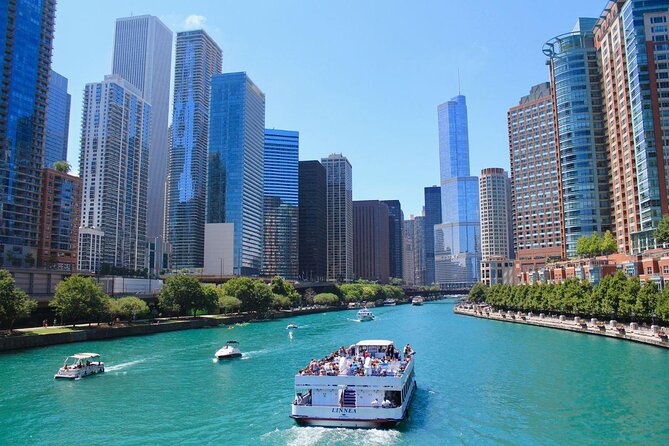
- Three river branches in 90 minutes: You cover a large stretch of central Chicago without taxis or trains.
- The upper deck has the clearest views: Outdoor seating is exposed, while the indoor lounge offers warmth but fewer unobstructed sightlines.
- Wendella departs below the Wrigley Building: The dock is at 400 North Michigan Avenue, near the northwest corner of the DuSable Bridge.
- The guide makes the difference: Guides such as Lucas, Jack, and Alyssa have been praised for humor, clear explanations, and lively delivery.
- Winter requires serious layers: Temperatures around 10 degrees Fahrenheit, combined with river wind, can make the upper deck uncomfortable.
- The $45 price is fair for the route: You get 90 minutes, an onboard guide, indoor and outdoor seating, a restroom, and a large slice of Chicago in one ride.
Why the Chicago River Is the Best Classroom
Chicago architecture makes more sense from the river than from a sidewalk. Looking upward from Michigan Avenue, you see only one face of a building at a time. From the boat, you get full walls, rooftop details, setbacks, balconies, bridges, and the way each structure meets the water.
That wider view matters because Chicago’s buildings were shaped by changing technology and changing needs. The cruise covers more than 130 years of architectural development, and the guide explains how the skyline grew around the river corridor.
I especially like the fact that this is not just a ride past famous facades. The river itself is part of the story. Chicago reversed the flow of the river in 1900, a major engineering project tied to sanitation and the city’s growth. You hear how that decision affected the city while seeing the buildings that rose around it.
The cruise also saves your feet. In 90 minutes, you cover far more ground than you could on foot, with no need to navigate city traffic or figure out which train gets you closest to each building. For a first visit, this is a smart way to get your bearings before choosing which places deserve a closer look.
A few more architecture tours in Chicago worth a look
- Chicago Architecture River Cruise
★ 5.0 · 15,756 reviews - Chicago River: 1.5-Hour Guided Architecture Cruise
★ 4.8 · 8,046 reviews - Chicago Architecture Center River Cruise aboard First Lady
★ 5.0 · 5,536 reviews
Finding the Wendella Dock at 400 North Michigan Avenue
The departure point is at the historic Wrigley Building, at 400 North Michigan Avenue. Wendella’s docks extend west from the Michigan Avenue, or DuSable, Bridge toward Wabash Avenue.
Give yourself extra time. The boarding area is below street level, and the dock can be harder to spot than the address suggests. Look for the Wendella sign and follow the access route toward the river. If you have someone who needs an elevator, call ahead for detailed directions. Staff can explain the accessible route.
The company advises arriving 30 minutes before departure. Boarding begins about 15 to 30 minutes ahead of time, and indoor and outdoor seats are first come, first served. Arriving early is especially useful if you want a particular outdoor position or need a little help getting down to the dock.
The experience accepts mobile tickets. Confirmation is normally sent within 48 hours, subject to availability. Public transportation is nearby, and two listed parking garages are AMA Plaza at 401 North State Street and InterPark Public Parking at 430 North Rush Street. Parking fees apply, so public transit may be the simpler choice.
Choosing Between the Outdoor Deck and Indoor Lounge
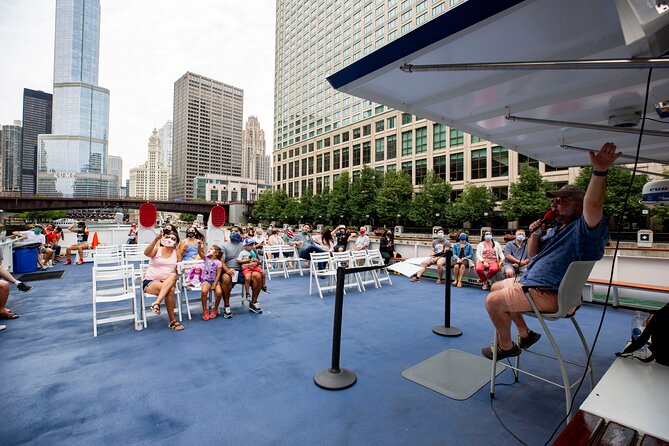
Your seat can shape the whole tour. The upper outdoor deck gives you the clearest sightlines and the best chance to photograph both sides of the river. You can see the buildings rise directly from the water, rather than looking through windows or around other passengers.
The downside is exposure. Even on a pleasant day, the wind over the river can make the ride feel cooler than the city streets. In January, some people found the outdoor deck too cold to enjoy for the full 90 minutes. At temperatures near 10 degrees Fahrenheit with a windchill below zero, the issue is not comfort alone. Fingers can go numb quickly while you hold a phone or camera.
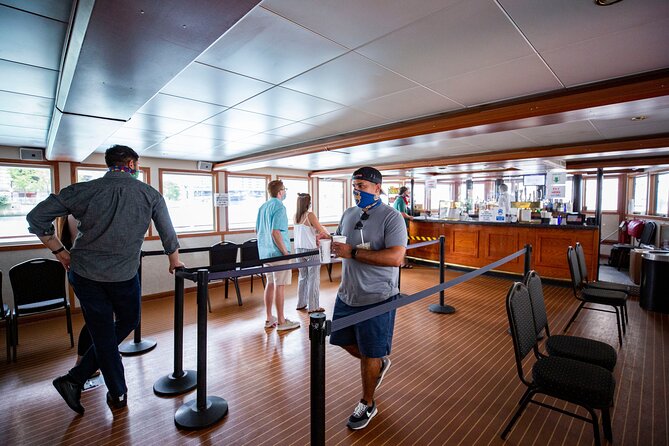
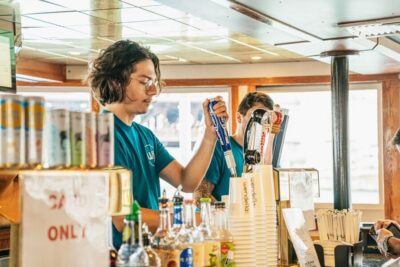
The lower deck is climate controlled on most vessels and has speakers so you can still follow the narration. It also has the restroom, changing tables, and a bar selling drinks and snacks. But indoor seats are limited, and the windows can be partly blocked by people sitting near them.
My practical advice is to treat the indoor area as a warming station, not necessarily your main viewing position. Dress warmly, claim an outdoor seat if conditions are reasonable, then step inside when you need to thaw out. A warm coat, hat, gloves, and layers matter more than a stylish outfit on this boat.
The cruise operates in rain unless severe conditions force cancellation. Sheltered areas are available, and ponchos can be purchased onboard. A rainy day may still work, but bring proper protection. The dock itself may not provide a dry waiting area, so do not assume you will be covered before boarding.
The Wrigley Building and Michigan Avenue Start
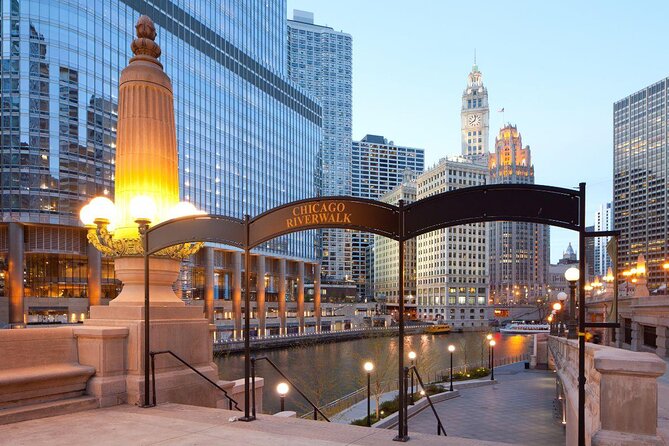
The trip begins near the Wrigley Building, an ideal opening landmark. Its white terra-cotta exterior was completed in 1922 for the Wrigley chewing gum company. From the river, you can appreciate the building’s bright surface and decorative detail better than you can while walking along Michigan Avenue with traffic and pedestrians around you.
This location also puts you beside one of Chicago’s most important streets. Michigan Avenue leads toward the Chicago Water Tower, the Art Institute of Chicago, Millennium Park, and the shops of the Magnificent Mile.
The guide uses this early part of the cruise to set up the city’s architectural story. You are not simply ticking off buildings. You are learning how commercial power, engineering, and city planning shaped the river corridor.
Same city, a different building to stand in front of:
- Chicago: Architecture River Cruise Skip-the-Ticket Line
★ 4.8 · 4,325 reviews - Chicago River 45-Minute Architecture Tour from Magnificent Mile
★ 4.5 · 2,924 reviews - Chicago Lake and River Architecture Tour
★ 4.5 · 2,308 reviews - Chicago: 45-Minute Family-Friendly Architecture River Cruise
★ 4.7 · 2,304 reviews
Marina City, the City Within a City
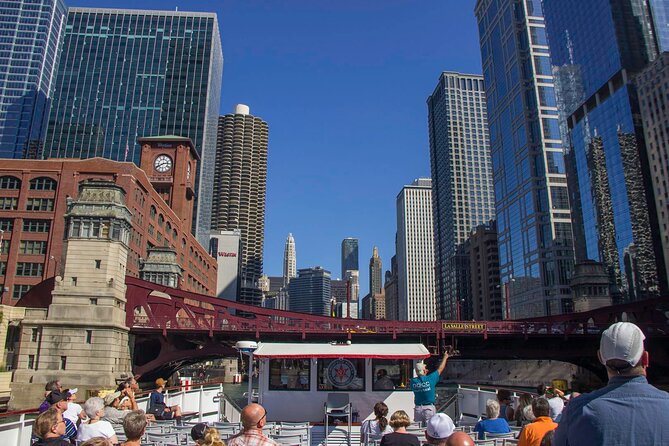
One of the most memorable sights is Marina City, the pair of mixed-use apartment buildings with their distinctive corn-cob shape. Their rounded balconies give them an instantly recognizable profile, and they look particularly striking from the river.
The guide explains the idea behind the complex as a city within a city. That phrase makes sense when you see how the towers were designed as more than apartment buildings. Their unusual form and mixed-use plan reflect an effort to keep urban life concentrated in a compact part of the city.
This is one of the cruise’s best examples of why the river viewpoint matters. On land, Marina City can feel squeezed between streets and neighboring buildings. From the boat, the towers open up and their full curves are easier to understand.
Merchandise Mart and Chicago’s Commercial Scale
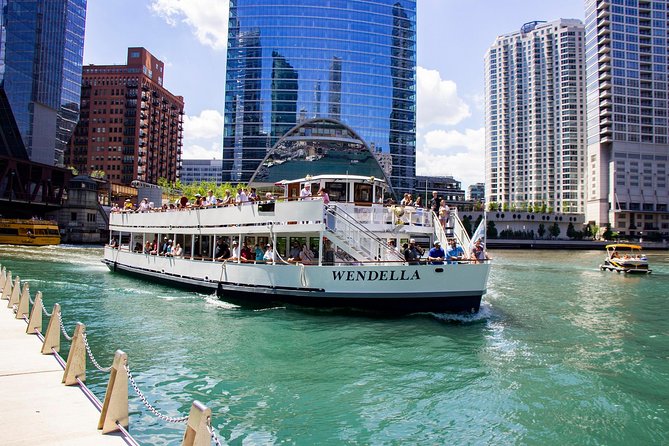
The cruise passes Merchandise Mart, described as the largest commercial building in the world. Its size is difficult to grasp from a single street corner. The water gives you a long, uninterrupted view of the facade, making the building’s scale much easier to read.
This is where the guide’s commentary adds real value. A large building can look impressive but remain anonymous without context. The narration helps explain why such a huge commercial structure made sense in Chicago and how it fits into the city’s changing business center.
I like this part of the ride for another reason: it shows that Chicago architecture is not limited to decorative landmarks. Some of the most important buildings are powerful because of their size, purpose, and role in the city’s working life.
The Riverwalk and the City’s Second Waterfront
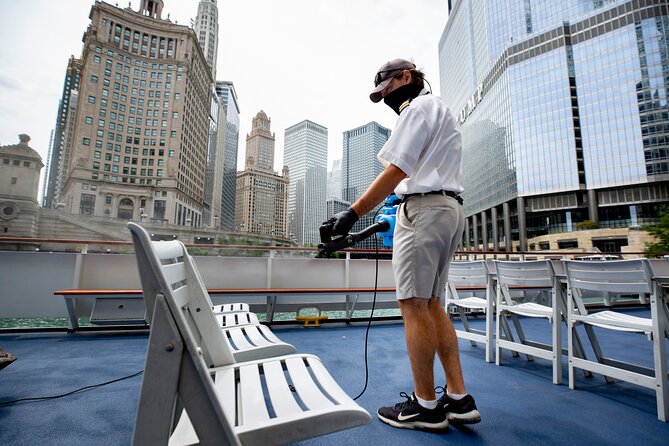
The Chicago Riverwalk appears as an open pedestrian waterfront, sometimes called the city’s Second Lakefront. From the boat, you can see how the walkway brings people close to the water and changes the feel of the river corridor.
The view is different from a walk along the Riverwalk. You see the full relationship between the path, the bridges, the buildings, and the water. The route also reminds you that Chicago’s riverfront was not always a place for relaxed strolls and outdoor seating. Its public use has changed along with the city.
If you plan to visit the Riverwalk afterward, the cruise gives you a useful preview. You can spot sections that appeal to you and return later on foot. That makes the boat ride a good starting point for building the rest of a downtown day.
Willis Tower and the Expanding Skyline
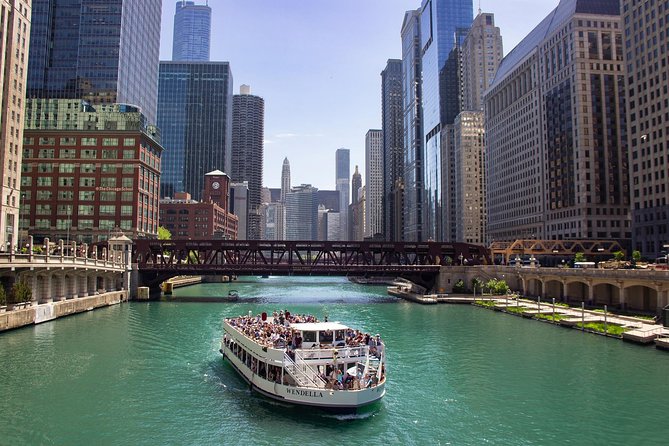
The boat also passes Willis Tower, one of Chicago’s most recognizable high-rises. From the river, you see it as part of a larger group rather than as an isolated observation deck or postcard image.
That perspective is useful. Chicago’s skyline is not one era repeated over and over. The cruise shows how older commercial buildings, mid-century structures, modern apartments, and later towers share the same tight river corridor.
The guide’s explanations help you notice details that are easy to miss from the ground. A change in materials, a building’s upper profile, or the way it fits between older neighbors can tell you when and why it was built.
The Lyric Opera and the Route’s Cultural Side
The Lyric Opera of Chicago adds a different note to the route. The auditorium is the second-largest opera auditorium in North America, and its interior has an Art Deco design.
You will not get the same interior experience from the boat as you would from attending a performance, but the exterior helps broaden the tour beyond offices and apartment towers. The guide places the opera house within the city’s cultural life and points out how its design differs from the commercial buildings along the river.
This variety keeps the 90 minutes moving. One moment you are looking at a massive business complex, and the next you are passing a performance venue or a public waterfront. The cruise works best when you pay attention to those contrasts.
The Centennial Fountain and the Reversed River
The route includes a view of the fountain dedicated in 1989 to mark the 100th anniversary of the Metropolitan Water Reclamation District of Greater Chicago. The district is closely tied to the reversal of the Chicago River in 1900.
For the first five minutes of each hour, the fountain sends a water arc across the river from a tiered waterfall. Timing may determine whether you see the full display, so treat it as a bonus rather than a guaranteed part of the ride.
The more important point is the engineering story. Chicago’s river was altered to move water away from the city and toward the Des Plaines River system. That unusual piece of civic engineering helps explain why the river became such an important part of the city’s development.
How Good Is the Commentary?
The guide is one of the strongest parts of the experience. The best guides combine facts, humor, and a clear voice that carries across the boat. Lucas has been praised for keeping the ride entertaining, while Jack and Alyssa have been described as funny, engaging, and able to answer questions.
A good guide turns a slow cruise into a story. The buildings are impressive on their own, but the background gives them meaning. You learn why a structure matters, how it changed the city, and what to watch for in the next stretch of the route.
The quality of any live presentation can vary, of course. Still, the high overall rating of 4.7 from more than 9,600 ratings, along with a 92 percent recommendation rate, points to a consistently well-received experience. A small number of complaints focus on rude dock staff or an unhelpful attitude, so service on land may not match the best commentary on the boat.
Food, Drinks, Restrooms, and Comfort
A restroom is available on the lower deck, and the toilets are ADA compliant. Each restroom has a changing table. A full-service bar sells alcoholic and non-alcoholic drinks along with snacks such as chips, candy, and packaged Garrett popcorn. Bar purchases require a credit card.
Outside alcohol is not allowed, and bags may be searched under Coast Guard rules. You can bring luggage aboard, but there is no storage area at the dock, so large bags may be inconvenient.
The boat has a smooth ride, which helps if you are concerned about motion sickness. The route is slow enough to let you follow the commentary and take photographs without the hurried feel of a fast sightseeing boat.
Is $45 a Good Value?
At $45 per person, the cruise is not the cheapest way to see downtown buildings, but I think the price is fair. You get 90 minutes on the water, a professional guide, views from all three river branches, indoor and outdoor seating, and a restroom.
A self-guided walk costs less, but it requires more time and planning. You would need to move between separate river sections, find the right viewpoints, and read up on the buildings in advance. A taxi tour would cover some of the same ground but would not give you the river-level view.
The price makes the most sense if you value context. If you only want photographs and plan to leave the moment the boat returns, a shorter outing may suit you. If you want to understand why the skyline looks the way it does, 90 minutes gives you enough time to connect the pieces.
The tour is often booked about nine days ahead, so reserve in advance during busy periods. Free cancellation is available until 24 hours before the start time. Within 24 hours, changes and refunds are not accepted. If severe weather cancels the cruise, you can receive a new date or a full refund.
Who Should Book This Cruise?
I would recommend it for first-time visitors, architecture fans, families, couples, and anyone who wants a broad view of Chicago without a complicated day of transit. It is also useful for repeat visitors who know the downtown streets but have never seen the river from the water.
It suits people who enjoy listening while they sightsee. The guide does most of the work, and the ride gives you a clear structure for understanding the city.
I would be cautious about booking it in extreme cold unless you are comfortable spending much of the ride indoors. I would also avoid arriving at the last minute, especially if you need an elevator or want an outdoor seat.
Final Verdict: Book It for the River View and the Stories
Yes, I would book the Chicago River 90-Minute Architecture Tour, especially on a mild day. The route covers a huge amount of downtown, the views are unusually clear from the water, and the narration gives the buildings a reason to matter.
Choose an early arrival, plan on layers, and expect the outdoor deck to be the star of the experience. If the forecast is freezing, wait for a warmer departure if your schedule allows. In good conditions, this is one of the most efficient and enjoyable ways to understand Chicago’s skyline.
FAQ
Where does the 90-minute Chicago River Architecture Tour meet?
The tour meets at 400 North Michigan Avenue, at the historic Wrigley Building. Wendella’s docks are near the northwest corner of the Michigan Avenue, or DuSable, Bridge, below street level.
How early should I arrive?
Plan to arrive 30 minutes before departure. Boarding begins about 15 to 30 minutes before the scheduled time, and seating is first come, first served.
Is there indoor seating on the boat?
Yes. Indoor seating is available in a climate-controlled lower lounge on most vessels. Outdoor seating is also available, but indoor seats are limited and the clearest views are usually from outside.
Does the tour operate in bad weather?
The cruise normally operates rain or shine, with sheltered areas and climate-controlled lounges available. In severe weather, the cruise may be canceled and you will be offered a different date or a full refund.
Is the tour wheelchair accessible?
Wendella operates three boats with wheelchair lifts between decks. All boats can accommodate wheelchairs and have ADA-compliant toilets. A written narration script is available at the ticket office for people who are deaf or hard of hearing.
Are food and drinks available onboard?
Yes. A full-service bar sells alcoholic and non-alcoholic beverages and snacks. Bar purchases are credit card only, and outside alcohol is prohibited.
Just added in Chicago
- Private Frank Lloyd Wright Architectural Tour by Luxury Vehicle★ 3.5 · 7 reviews
- Private Chicago Architecture Tour★ 5.0 · 5 reviews
- Chicago Luxury Minibus City Tour and Architecture River Cruise★ 4.5 · 8 reviews
- Chicago History and Architecture Walking Tour with Boat Cruise★ 4.5 · 10 reviews
- Private Chicago Architecture Walking Tour★ 5.0 · 6 reviews
- Small Group History And Architecture Walking Tour of Chicago★ 4.5 · 8 reviews
- Chicago: Private Architecture Tour – 3 or 6 Hours★ 4.0 · 6 reviews
- Chicago Walking Tour: See Inside Art Deco Masterpieces★ 4.9 · 8 reviews
Chicago Architecture Tours, compared.
Chicago River: 1.5-Hour Guided Architecture Cruise
Read our review →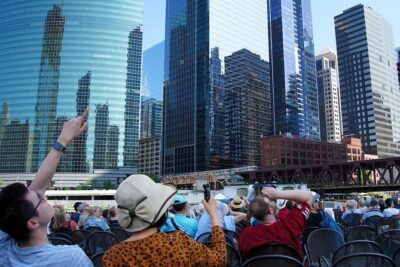
Chicago Architecture Center River Cruise aboard First Lady
Read our review →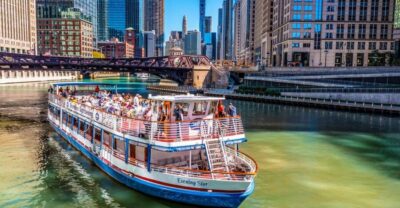
Architecture River Cruise Skip-the-Ticket Line
Read our review →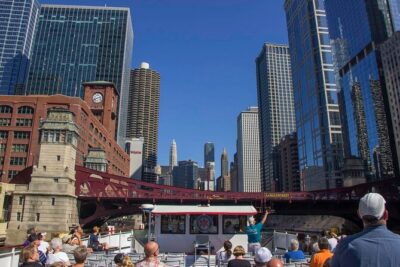
Chicago River 45-Minute Architecture Tour from Magnificent Mile
Read our review →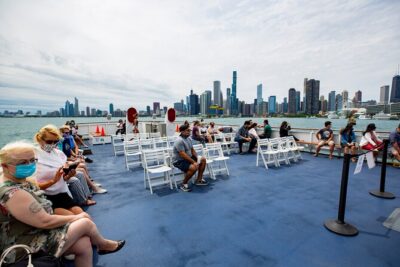
45-Minute Family-Friendly Architecture River Cruise
Read our review →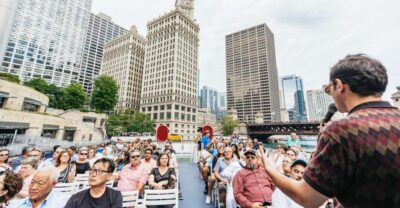
Browse the lists this tour appears in