
REVIEW · WALKING TOURS
Private Tour: Venice Art and Architecture Walking Tour
Venice rewards those who look up. This private two-hour walk takes you beyond St Mark’s Square into quieter lanes, where San Giovanni and Paolo and the jewel-like Miracoli church give the city’s art and architecture room to breathe. I like the personal format, and I like that guides can adjust the conversation to your interests. The main caution is that the tour can lean more toward general Venetian history than art and architecture, depending on your guide.
I also like the route’s ending in Campo dei Santi Giovanni e Paolo, a useful contrast to the crowded center. Guides such as Lucia, Iffygenia, Antonella, and Marie Thérèse have been praised for making the city easier to understand. But at $343.17 per person, this is a serious purchase, especially since church and museum entrance fees are extra.
Key points to know before booking
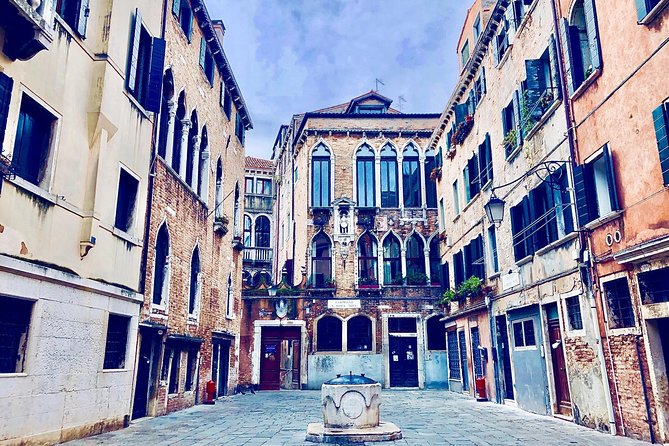
- The route leaves the main tourist flow: You walk through narrow lanes, small squares, canals, and footbridges that many first-time visitors miss.
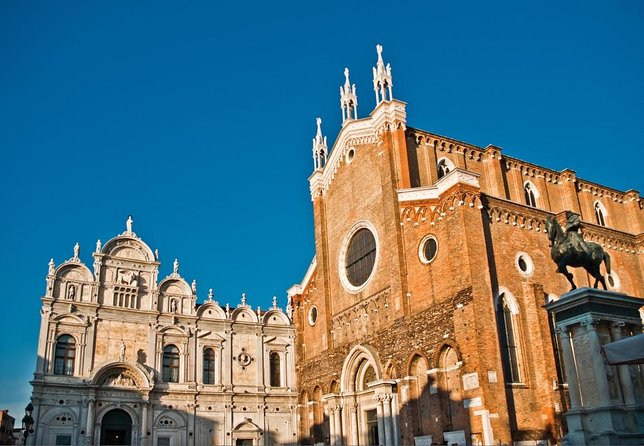
- San Giovanni and Paolo is the main event: Expect Gothic architecture, religious art, sculpture, and Venice’s largest stained-glass window.
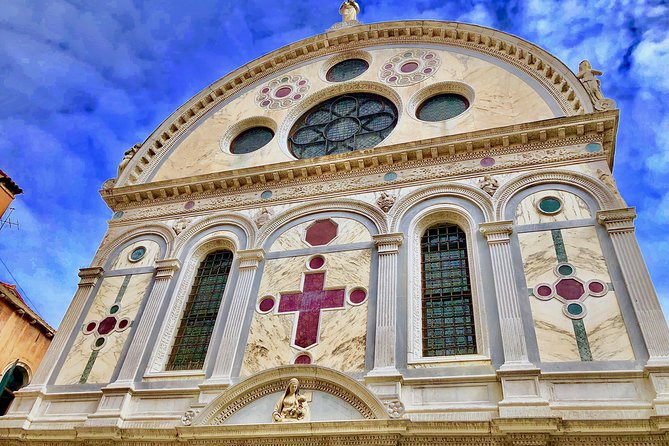
- Miracoli offers a different style: Santa Maria dei Miracoli is a compact early Renaissance church with a carefully restored marble front.
- Private means genuinely private: Only your own group takes part, so you can ask questions and request more or less detail.
- The two-hour length is efficient but limited: It works well as an introduction, though art lovers may want more time inside the churches.
- The meeting point needs attention: Campo San Bartolomeo is central but not as easy to locate as St Mark’s Square, and hotel pickup is offered only in the Rialto area.
A quieter introduction to Venice’s art and buildings
This is not a grand tour of every famous Venetian monument. It is a focused walk through the city’s lesser-seen corners, with four planned stops and a guide who explains how politics, religion, trade, and daily life shaped what you see.
That distinction matters. You will not spend the entire morning studying the palaces along the Grand Canal. One past participant specifically found that the Grand Canal architecture was not included. Instead, you move through the inland neighborhoods around Rialto and Cannaregio, where the city feels more local and less arranged for a quick photograph.
I like this approach for a first or second day in Venice. The walk gives you a framework for noticing details later: a Byzantine curve, a Renaissance façade, a Gothic window, or the way a church fits into an oddly shaped campo.
The experience has a rating of 4 out of 5 from 22 reviews, which reflects the real tradeoff. Several guides made the walk the highlight of a Venice visit, while other participants found the commentary too general or the art discussion too thin. Your guide matters a great deal here.
More walking tours in Italy:
- Lecce: Baroque Architecture and Underground Walking Tour
★ 4.6 · 1,248 reviews - Experience Florence’s Art and Architecture on a Walking Tour
★ 5.0 · 318 reviews - Palermo: Art and Architecture Walking Tour
★ 4.7 · 136 reviews
Starting at Campo San Bartolomeo
The walk begins in Campo San Bartolomeo, near the Rialto area. The square is known for its statue of Carlo Goldoni, the Venetian playwright, and it provides a lively starting point without putting you directly into the crush around St Mark’s.
Allow extra time to find the meeting spot. More than one person found it difficult to locate, even though it is central. I would use a map before setting out and identify a nearby landmark in advance rather than expecting to spot the guide instantly in a maze of similar lanes.
The first half hour helps you read Venice as a working city rather than a collection of famous postcards. Your guide may point out the relationship between the campo, surrounding buildings, and the narrow routes that connect one small square to another.
This is also where the private format begins to earn its keep. If you are curious about Venetian politics, food, building methods, or the city’s current problems with high water and sinking land, you can steer the conversation. Several highly rated tours worked well because the guide answered questions instead of reciting a fixed speech.
Marco Polo’s former home
The next stop is Casa di Marco Polo, identified as the former home of the famous Venetian merchant and explorer. The stop adds a human story to the architectural walk. Venice can feel abstract when you move from church to church, so a house linked to one of the city’s best-known figures gives the route a more personal scale.
Do not assume that a ticketed interior visit is part of the price. Entrance fees are not included, and the listed stop does not promise admission. Treat it as a place connected with Marco Polo and as a chance to discuss the kind of merchant culture that helped Venice grow.
The scheduled time is about 30 minutes for each of the four stops, but the private structure gives the guide some flexibility. If Marco Polo interests you, ask for more context. If your priority is sculpture or church interiors, ask to keep the explanation moving.
This stop also shows why you should tell the guide what you want at the start. Some people want names, dates, and construction details. Others prefer stories about Venetian life. A private walk can serve either style, but only if you speak up.
San Giovanni and Paolo: the artistic centerpiece
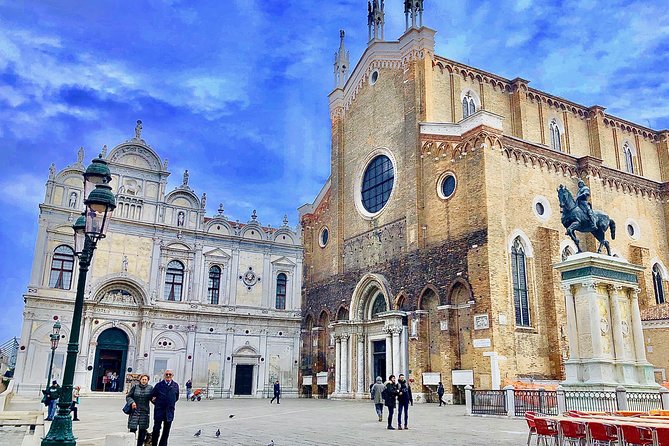
The Basilica dei Santi Giovanni e Paolo, often called San Zanipolo in Venetian speech, is the most important stop on the route. Its Gothic scale and church art give the guide plenty to discuss, and the setting in Campo dei Santi Giovanni e Paolo is one of the more impressive urban spaces in this part of Venice.
The highlight named for the tour is the church’s stained-glass window, described as the largest in Venice. You can also expect attention to sculpture, wall decoration, religious works, and the building’s Gothic structure.
This is where the experience can become excellent or disappointing. Several people spent more than an hour focused on the church and appreciated having a guide point out details they would have missed alone. One architect guide brought books and illustrations to explain how Venetian buildings were constructed. That kind of preparation can turn a church visit from a quick look into a lesson in structure and design.
The less successful version is a long circuit of walls with dates, names, and repeated praise for how beautiful everything is, without explaining why the work matters. One participant felt the visit became dull because the guide concentrated on personal favorites and did not answer questions about other pieces. If you care about a particular artist, sculpture, or period, mention it before entering.
A practical issue is sound. One group of four did not receive audio devices, which made it difficult for a member with hearing loss to follow the guide inside the church. Since no audio equipment is promised, ask in advance if your group needs a voice system or special arrangements.
More private tours in Italy:
- City Walk with Architect: Private walking tour of Rome
★ 5.0 · 22 reviews - Venice Art and Architecture Private Walking Tour
★ 4.5 · 11 reviews - Private Personalized Architecture Tour of Rome with an Architect
★ 5.0 · 5 reviews - Vicenza: Palladian Architecture Private Walking Tour
★ 3.3 · 3 reviews
Santa Maria dei Miracoli and its marble façade
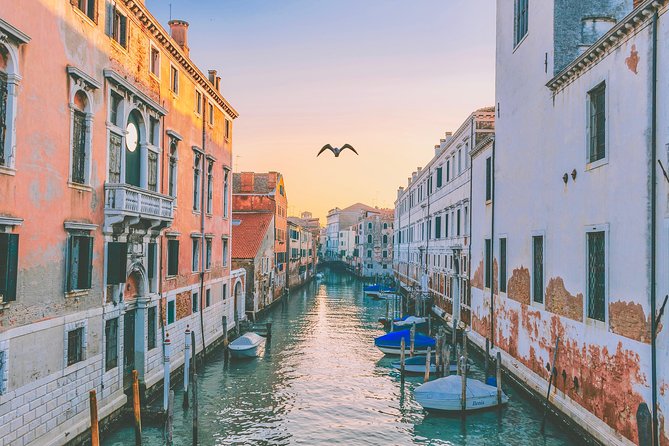
The final scheduled stop is the Church of Santa Maria dei Miracoli, near Campo Santa Maria Nova. It is smaller and more intimate than San Giovanni and Paolo, with an early Renaissance façade that has been carefully restored.
The contrast is useful. San Giovanni and Paolo gives you height, drama, and a large collection of religious art. Miracoli presents a more compact design, with colored marble and a tidy relationship between façade, church, and square.
The narrow church is easy to appreciate as an architectural object. You can study how the exterior presents itself in a confined Venetian setting, where there is rarely enough open ground for a building to be viewed from a long distance.
The stop is also a reminder that Venice’s best buildings are not always the ones on every standard sightseeing route. The walk’s strongest quality is its ability to direct your eyes toward places you might pass without understanding.
As with San Giovanni and Paolo, entrance fees are not included. Ask the guide what can be entered on your date and what the church’s visiting rules are. The tour description promises a stop, not guaranteed admission to every interior.
What the private format adds
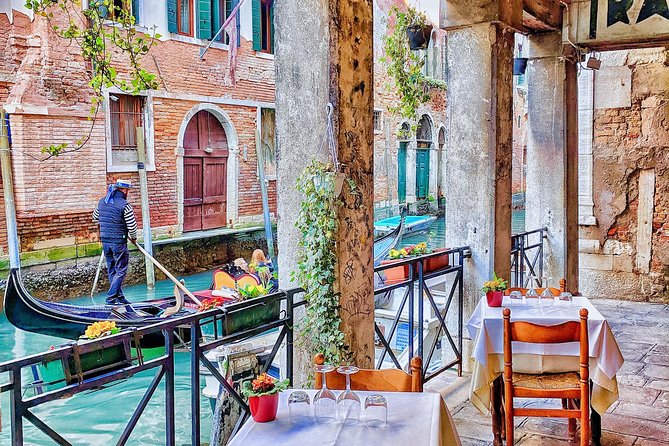
A private tour is only worth its price if you use the freedom it gives you. You can ask the guide to slow down, skip a subject, explain a detail again, or connect the buildings to your own interests.
The best accounts describe guides who adjusted well. Iffygenia adapted the route for an 80-year-old participant. Another guide worked successfully with children aged 8 and 13. Antonella patiently introduced six beginners to Byzantine, Renaissance, Baroque, and Rococo styles without assuming prior study.
That flexibility is especially useful for families and mixed groups. An art student may want technical detail, while a parent may need shorter stops. A private guide can try to keep both people engaged.
The guide quality is not perfectly consistent. Lucia was praised for clear English, humor, and a strong grasp of art, buildings, and food. Other participants found language difficult, with explanations that were hard to follow. The listed guide languages include English, French, German, Italian, and Spanish, but the experience is advertised as offered in English, so confirm your preferred language when booking.
Is $343.17 per person good value?
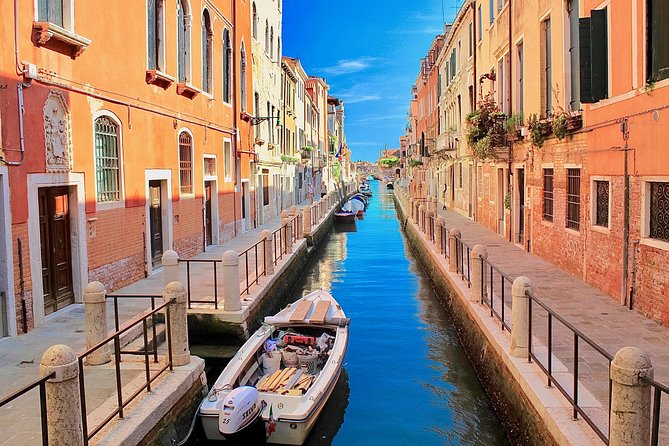
At $343.17 per person, this is expensive for a two-hour walk. The cost makes sense for a small private group that wants direct access to a specialist and does not want to join a large, fixed-paced group.
It is less convincing for a solo visitor or a couple who mainly wants a quick orientation. The route covers four areas in two hours, and church admissions cost extra. You are paying for the guide’s time, private attention, and the chance to shape the conversation, not for a long list of included attractions.
For a group of family or friends, the value improves because everyone shares one guide. The walk may also save you from wandering past important buildings without knowing what you are seeing. Several people described the guide as the reason they noticed details they would otherwise have missed.
I would book it for an architecture-minded group, a family with mixed ages, or someone who has already seen St Mark’s Square and wants a different side of Venice. I would hesitate if your main goal is a detailed academic study of Venetian art. In that case, ask specific questions about the guide’s background and expected church time before paying.
Timing, walking, and practical planning
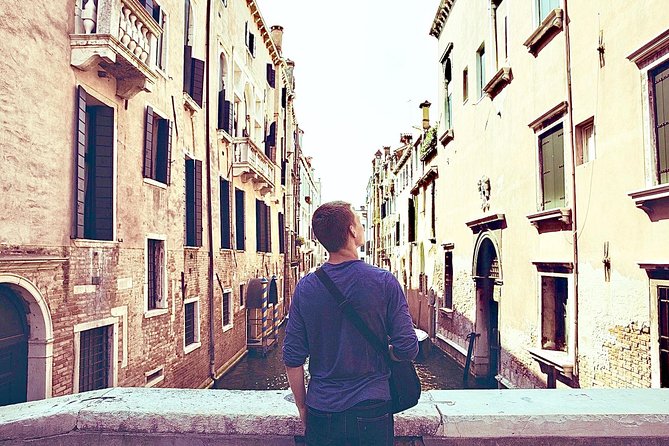
Morning and afternoon departures are available, which makes it easy to fit the walk around a museum visit or gondola ride. The tour lasts about two hours and ends at Campo dei Santi Giovanni e Paolo, not back at the starting point.
That ending can be useful. You will be in a quieter part of Venice, with time to continue exploring at your own pace. One guide also offered suggestions for drinks and meals later in the day. Another helped a participant reach the next destination, which is a small but valuable service in a city where routes can be confusing.
You should expect continuous walking over narrow streets, bridges, and uneven passages. Most people can take part, but tell the guide about mobility or hearing needs before the walk begins. If an older family member is joining, the private format allows the guide to adjust the pace, though the route still includes Venice’s usual bridges and footways.
Hotel pickup is optional only when your hotel is in the Rialto area. Otherwise, you meet at Campo San Bartolomeo. Public transportation is nearby, but the tour itself is on foot.
Day visitors staying outside Venice may need to pay a €5 access fee on certain dates. Check the official Venice access-fee website before your trip, since the rule depends on the date and exemptions may apply.
Who will enjoy this walk most?
I would choose this tour if you:
- Want a private guide rather than a large group
- Have already seen the major sights around St Mark’s Square
- Care about churches, sculpture, façades, or construction methods
- Enjoy asking questions about Venetian culture and city life
- Are traveling with children or older relatives who need a flexible pace
- Prefer quiet lanes and small campos to a standard city circuit
I would look elsewhere if you want the Grand Canal palaces, a broad survey of all Venetian art, or guaranteed admission to every church mentioned. The tour does not cover everything, and its success depends heavily on how well the guide matches your interests.
Should you book the Venice Art and Architecture Walking Tour?
Book it if personal attention matters more to you than a long list of included admissions. The route gives you San Giovanni and Paolo, Santa Maria dei Miracoli, Marco Polo’s former home, and quieter streets that are easy to miss on your own.
Before booking, I would confirm three things: the guide’s language, the expected time inside each church, and whether any audio support is available for your group. Those details could make the difference between a useful private lesson and an expensive walk that feels too general.
The tour is strongest when the guide explains why a building looks the way it does, answers your questions, and connects art to Venetian life. If you get that kind of guide, two hours can sharpen your eyes for the rest of your stay. If you mainly hear dates and descriptions, the price becomes harder to justify.
FAQ
How long is the Venice Art and Architecture Walking Tour?
The private walking tour lasts approximately two hours.
Where does the tour begin?
It begins at Campo San Bartolomeo, Campo S. Bortolomio, in Venice.
Where does the tour end?
The tour ends at Campo dei Santi Giovanni e Paolo.
Is hotel pickup available?
Optional hotel pickup is available when your hotel is in the Rialto area.
Are church and museum entrance fees included?
No. Food, drinks, and entrance fees to churches or museums are not included.
Can I cancel for a full refund?
Yes. You must cancel at least 24 hours before the experience start time for a full refund. Changes or cancellations made less than 24 hours in advance are not accepted for a refund.
Just added in Italy
- Vicenza: Palladian Architecture Private Walking Tour★ 3.3 · 3 reviews
- Private Personalized Architecture Tour of Rome with an Architect★ 5.0 · 5 reviews
- Architectural Milan: Private Tour with a Local Expert★ 4.5 · 2 reviews
- The Architect’s Water★ 4.5 · 11 reviews
- Architectural Florence: Private Tour with a Local Expert★ 5.0 · 3 reviews
- Rione Sanità: tour among street art, architecture, folklore★ 4.5 · 2 reviews
- Palermo Tour: Magnificent Mixture Of Architectural Styles★ 4.2 · 6 reviews
- Discover Coppedè in Rome: Liberty architecture, symbols, and jewels★ 5.0 · 2 reviews
Walking Tours, compared.

The Official Art Deco Walking Tour by The Miami Design Preservation League
Read our review →
Baroque Architecture and Underground Walking Tour
Read our review →
Chicago in a Day: Food, History & Architecture Walking Tour
Read our review →

Ramblas, Old Town, Gothic and Gaudi Architecture Walking Tour
Read our review →
Chicago’s Secret Interiors Architectural Walking Tour
Read our review →
Browse the lists this tour appears in