
REVIEW · WALKING TOURS
Experience Florence’s Art and Architecture on a Walking Tour
Florence rewards a good first walk. This roughly 2-hour-15-minute tour links the city’s grandest churches, squares, palaces, and artworks in one useful morning, giving you a strong sense of direction without a costly private guide. I like the low price of $3.63, and I like the way the route mixes famous sights with small details such as Florence’s wine windows. The main concern is sound: in a larger group, or on a noisy street, you may have trouble hearing the guide.
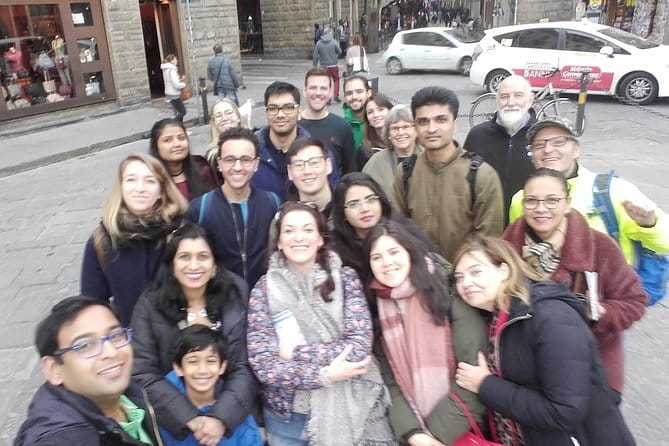
I also like the practical advice built into the experience. Guides such as Ludi and Natalia have been praised for clear English, strong knowledge of Florence, food suggestions, toilet tips, and ideas for sights beyond the usual route. The tour finishes at Santa Croce, so you can continue exploring from one of the city center’s most rewarding squares.
Key points to know before you book
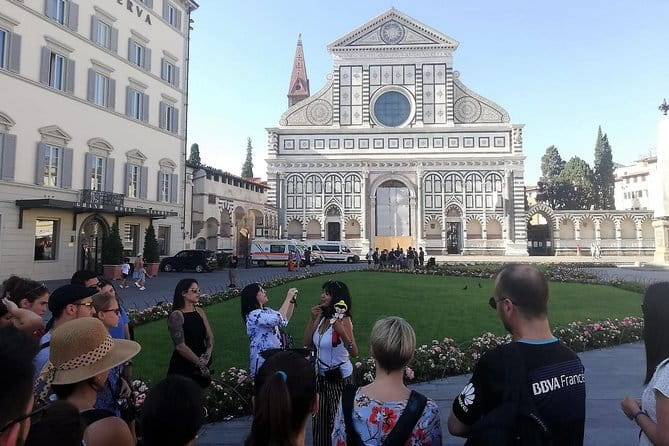
- A fast route through central Florence: In one morning, you see Santa Maria Novella, the Duomo, Orsanmichele, Piazza della Signoria, and Santa Croce.
- A remarkably low-cost introduction: The listed price is $3.63 per person, with the tour operating in a tip-based free-tour style.
- Guides add useful local advice: Ludi and Natalia receive special praise for their history, art, Medici, food, and practical city tips.
- Small details keep the walk fresh: The route can include wine windows and less touristy streets, not just the standard postcard sights.
- Hearing can affect the experience: A small speaker is used, but headsets are not provided, and one very large group had serious sound problems.
- The group is intended to stay manageable: The stated maximum is 20 people, though stricter group control may be needed during busy periods.
Starting at Santa Maria Novella at 10:30
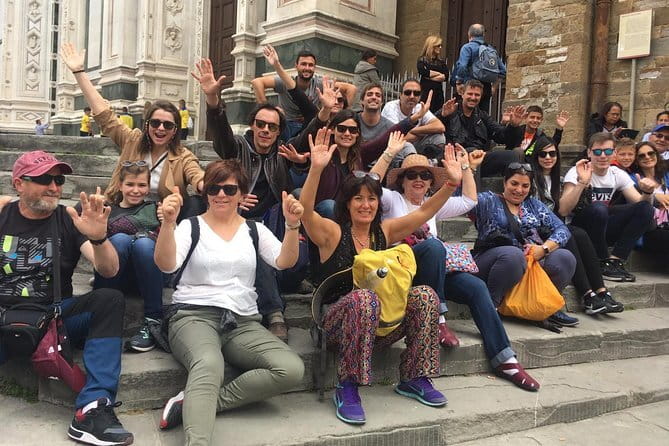
Your meeting point is at Piazza di Santa Maria Novella, 4n, in front of the Basilica of Santa Maria Novella. The start time is 10:30 a.m., a useful hour for settling into Florence after breakfast without losing the whole day.
Santa Maria Novella is an excellent place to begin. It sits close to the main railway station, near public transportation, and gives you an immediate lesson in Florence’s taste for proportion, color, and geometry. The basilica’s history sets the tone for the walk, even though the scheduled stop is brief, about 10 minutes.
The tour stays outside at this point, and admission is free. If you want to visit the church interior later, plan that separately rather than assuming the walking tour includes it. The same rule applies to the cathedral complex: this is an outside orientation walk, not a ticketed museum visit.
Because the route crosses busy central streets, arrive a little early. The stated group limit is 20, which should make it easier to identify your guide and stay close. Still, Florence’s center can become noisy, so stand near the guide when the explanation begins.
More walking tours in Italy:
- Lecce: Baroque Architecture and Underground Walking Tour
★ 4.6 · 1,248 reviews - Palermo: Art and Architecture Walking Tour
★ 4.7 · 136 reviews - City Walk with Architect: Private walking tour of Rome
★ 5.0 · 22 reviews
Via de’ Tornabuoni and the polished face of Florence
From Santa Maria Novella, the walk heads toward Via de’ Tornabuoni, one of Florence’s most elegant streets. The route includes Piazza Antinori, the shopping street, Palazzo Strozzi, and Piazza Santa Trinita, all within a roughly 10-minute stop.
This part of the walk helps you read Florence as more than a museum city. Its palaces, shops, and formal squares show how commerce, old families, art, and public life have long shared the same compact center. Palazzo Strozzi is especially useful as a visual reminder that Florentine power was expressed through architecture as much as through paintings.
You will not have time to study every façade in detail. That is the trade-off of an express tour. The guide’s job here is to give you a framework, then point you toward places worth returning to on your own.
Piazza della Repubblica and Roman Florence
The stop at Piazza della Repubblica lasts only about five minutes, but it adds an important layer. The tour introduces Florence’s Roman origins, a subject that can get lost beneath the Renaissance story.
The square you see today is broad and open, unlike many of Florence’s tight medieval lanes. That contrast helps you understand how the city changed over time. You get a short explanation rather than a long archaeological lesson, but the stop breaks up the parade of Renaissance names and buildings.
This is also a good place to keep your expectations realistic. Five minutes is enough to orient you, take a quick look, and hear the main idea. It is not enough for a detailed architectural study.
The Duomo: Florence’s essential outside view
The Cathedral of Santa Maria del Fiore is the visual center of the morning. The stop covers the cathedral, the Baptistery, Giotto’s Campanile, and Brunelleschi’s dome in about 10 minutes.
This is one of the tour’s strongest moments because you see several major monuments together. The cathedral’s marble exterior, the Baptistery, the bell tower, and the dome tell a story about civic ambition and engineering. The guide can connect the buildings to Florence’s art and architectural development, including Brunelleschi’s role.
Admission is not included. That detail matters. You are not entering the cathedral, climbing the dome, visiting the bell tower, or touring the Baptistery as part of this walk. If those are on your Florence list, arrange their tickets separately and allow much more time.
I find this outside explanation valuable even for someone who plans to visit the complex later. You learn what you are looking at before entering, which makes the paid visit more rewarding. If you have only one day in Florence, the walking tour gives you a quick overview without consuming a large block of time.
A few more architecture tours in Italy worth a look
- Caprarola: Villa Farnese, masterpiece of Renaissance architecture
★ 4.5 · 28 reviews - Best of Bologna in one day : Food, architecture, art and history
★ 5.0 · 27 reviews - Private Tour: Venice Art and Architecture Walking Tour
★ 4.0 · 22 reviews - Basilica San Marco and the Pala d’Oro with Architect Guide
★ 4.5 · 19 reviews
Orsanmichele and the sculpture in plain sight
The Church and Museum of Orsanmichele receives about 10 minutes. This stop is easy to overlook when you are rushing between the Duomo and Piazza della Signoria, which is exactly why it earns its place on the route.
The guide points out work associated with major artists including Donatello, Ghiberti, Giambologna, Brunelleschi, Verrocchio, Sangallo, and Orcagna. Even a short explanation can change how you look at the sculpture and decoration around the building.
The tour lists admission as free for this stop, but the walking format means you should not expect a full museum visit. You get a useful introduction to the church and its artistic details. If a particular sculpture catches your attention, note it and return later with more time.
Piazza della Signoria, the city’s outdoor gallery
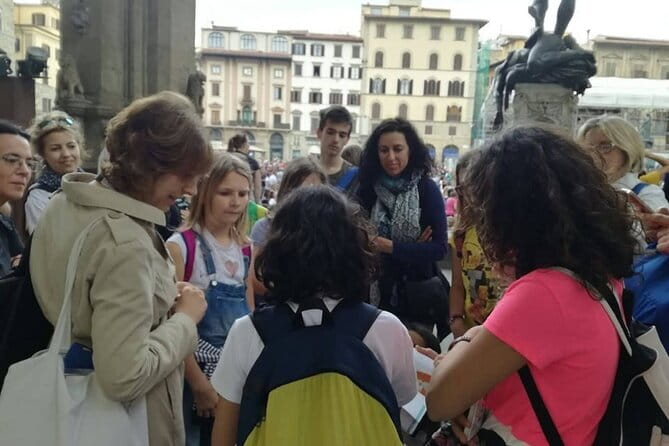
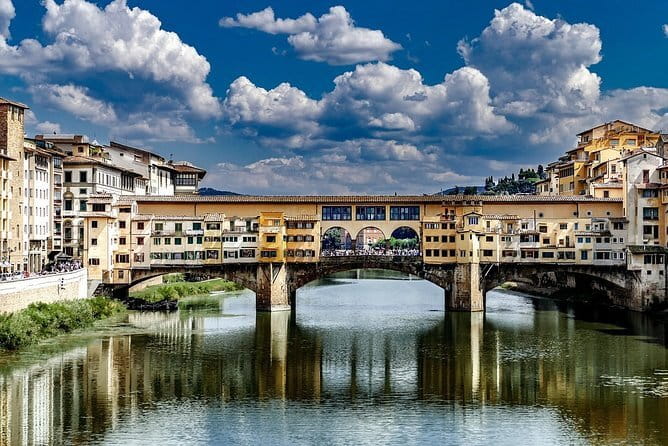
The 15-minute stop at Piazza della Signoria brings together some of Florence’s biggest names and sights. You see Palazzo Vecchio, the Uffizi, the Loggia dei Lanzi, and the direction of the Ponte Vecchio. The guide also covers the Torre di Arnolfo, Michelangelo’s David, the Marzocco, Cosimo de’ Medici, and Cellini’s Perseus.
This square works well on a walking tour because so much history is visible without entering a building. The Loggia dei Lanzi functions like an open-air sculpture display, while Palazzo Vecchio explains the political heart of the city. The Uffizi sits right beside the square, making the connection between government, art, and Medici power easy to grasp.
The famous David here is a copy, not Michelangelo’s original in the Accademia Gallery. That distinction is worth knowing before you arrive. The square lets you see the pose and public symbolism, while the museum visit gives you the original sculpture.
You may also hear about the Medici family, one of the subjects praised most strongly in the tour. Natalia, in particular, has been appreciated for explaining Florence’s art, politics, and Medici connections in a clear, engaging way. If you are new to Florence, this context helps turn a collection of statues into a story about power and public image.
Santa Croce and Dante at the finish
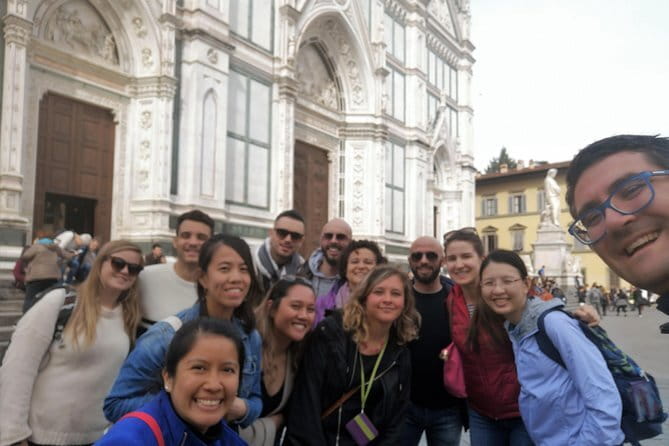
The walk ends at Piazza Santa Croce, in front of the Basilica of Santa Croce. The final stop lasts about 10 minutes and covers the basilica’s story and its monument to Dante.
Santa Croce is a fitting finish. After the Duomo and the political spaces around Palazzo Vecchio, the basilica brings the focus back to religion, memory, and important Florentine figures. The square is also a practical place to end because you can continue exploring on your own rather than being returned to the starting point.
Again, the scheduled tour does not promise an interior visit. If you want to enter Santa Croce, check its opening arrangements separately. The tour gives you the setting and background first, then leaves you free to decide how much more time to spend there.
The finish also makes the route useful for planning the rest of your day. You can visit Santa Croce, eat nearby, or walk back toward the Duomo and the river. Since the route is one-way, it saves you from retracing every step.
What the guides add to a short route
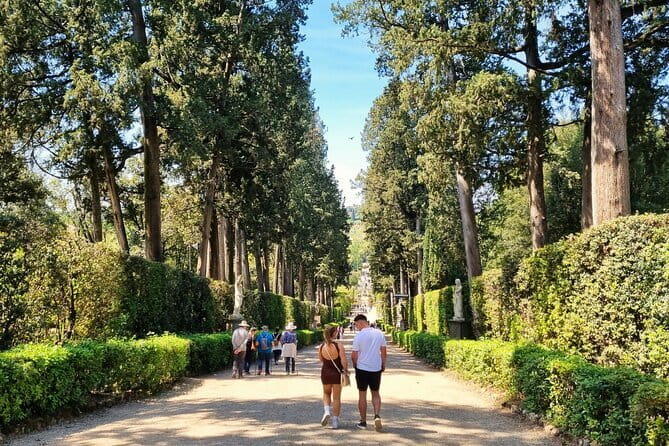
The strongest part of this experience is the guide-led explanation. Ludi has been praised for her passion, clear English, and practical suggestions, including places to eat, toilets, good viewpoints, and less obvious things to see. One especially useful detail is the mention of Florence’s small wine windows, features you might easily pass without understanding.
Natalia is also singled out for her warmth, patience, and ability to explain art, history, and the Medici family. Another guide, identified as Ryan or a similar name, was appreciated for keeping a group moving at a comfortable pace, even during a city marathon.
That range matters. A walking tour can be factually correct but still tiring if the guide rushes, lectures without pause, or loses the group. Here, the best accounts point to guides who connect with people and make room for questions and photos.
The experience is offered in English. You should also expect some variation from one guide to another, since the tone and emphasis may change. One guide might focus on sculpture and political history, while another adds more food advice and local oddities.
The sound issue and the real group-size question
The main practical weakness is hearing the commentary. A small speaker is used, but the tour does not provide individual headsets. In normal conditions, a group of 20 or fewer should be manageable, yet Florence’s traffic, crowds, and hard stone surfaces can make speech difficult.
One especially poor experience involved a group of more than 40 people, with people unable to hear and some leaving early. The stated maximum is 20, and the provider has acknowledged that very large groups can occur during busy periods when people arrive without reservations. That makes your booking confirmation important, but it does not remove the risk completely.
I would stand close to the guide, especially at the Duomo and Piazza della Signoria. If you cannot hear, say so promptly and move nearer rather than waiting until the group is far down the street. This is a simple tip, but it can determine whether the tour feels useful or frustrating.
The walk also requires good weather. Wear shoes suited to about two hours of city walking, bring water in hot weather, and expect little chance to sit. One guide was praised for seeking shade on a very hot day, but that depends on the route and conditions.
Is $3.63 really good value?
At $3.63 per person, this is an unusually inexpensive way to get an introduction to Florence. The fee is low because the experience follows a tip-based free-tour model, so you should understand that the listed price is not the whole social expectation. You pay the small booking amount, then decide what the guide’s work was worth.
That arrangement can be excellent value if you want orientation, not a private lecture. You see the major central sights, hear the basic story behind them, and collect ideas for the rest of your visit. You also avoid paying for monument entry when you only want an outside overview.
The limitations are clear. You do not receive admission to the Duomo complex, Santa Croce, the Uffizi, or other museums. You also do not get the depth or personal pace of a private tour. Think of this as a useful first pass through central Florence, not a replacement for museum time.
The tour is often booked well in advance, with an average booking lead time of about 55 days. That suggests you should reserve ahead if your schedule is fixed, especially during a busy season. Free cancellation is available until 24 hours before the start time. Changes or cancellations inside that window are not accepted, and poor weather or failure to meet the minimum group size can lead to a new date, another experience, or a full refund.
Who will get the most from this Florence walk?
I would choose this tour if you are visiting Florence for the first time and want to understand the city’s layout before choosing museums. It also suits anyone with limited time, since the route covers the main center in one morning.
It is a good fit for you if:
- You want a low-cost introduction to Florence.
- You enjoy history and architecture but prefer short explanations.
- You want food tips, practical advice, and ideas beyond the main sights.
- You plan to return to the Duomo, Uffizi, or Santa Croce later.
- You can stay close to the guide and manage a steady city walk.
I would be more cautious if you need guaranteed audio clarity, dislike group tours, or want detailed interior visits. People with hearing difficulties may find the lack of personal headsets a serious concern. A private guide or a tour with individual audio equipment would be safer for that need.
Should you book it?
Yes, if you want a fast, friendly, very low-cost introduction to Florence. The route is well chosen, the guides can add much more than basic dates, and details such as the wine windows make the walk feel less mechanical.
Book it with sensible expectations. You are paying for an orientation, not entry tickets or a full museum seminar. Arrive early, stay near the guide, confirm the group is not oversized, and keep a little extra money ready as a tip if the experience serves you well.
FAQ
Where does the Florence walking tour start?
It starts at Piazza di Santa Maria Novella, 4n, 50123 Firenze, Italy, near the Basilica of Santa Maria Novella.
What time does the tour begin?
The stated start time is 10:30 a.m.
How long does the walking tour last?
It lasts approximately 2 hours and 15 minutes.
Where does the tour end?
It ends at Piazza di Santa Croce, 18R, in front of the Basilica di Santa Croce.
Which language is offered?
The tour is offered in English.
What sights are included on the route?
The route includes Santa Maria Novella, Via de’ Tornabuoni, Piazza della Repubblica, the Cathedral of Santa Maria del Fiore, Orsanmichele, Piazza della Signoria, and Santa Croce.
Are entrance tickets included?
Admission is listed as free at most stops, but admission to the Cathedral of Santa Maria del Fiore is not included. The tour is primarily an outdoor walking experience.
How many people can join the tour?
The stated maximum is 20 people. Very large groups have occasionally occurred during busy periods, so group size may vary.
Can I cancel for a full refund?
Yes. You can cancel at least 24 hours before the start time for a full refund. Cancellations or changes made less than 24 hours before the start time are not accepted for a refund.
Just added in Italy
- Vicenza: Palladian Architecture Private Walking Tour★ 3.3 · 3 reviews
- Private Personalized Architecture Tour of Rome with an Architect★ 5.0 · 5 reviews
- Architectural Milan: Private Tour with a Local Expert★ 4.5 · 2 reviews
- The Architect’s Water★ 4.5 · 11 reviews
- Architectural Florence: Private Tour with a Local Expert★ 5.0 · 3 reviews
- Rione Sanità: tour among street art, architecture, folklore★ 4.5 · 2 reviews
- Palermo Tour: Magnificent Mixture Of Architectural Styles★ 4.2 · 6 reviews
- Discover Coppedè in Rome: Liberty architecture, symbols, and jewels★ 5.0 · 2 reviews
Walking Tours, compared.

The Official Art Deco Walking Tour by The Miami Design Preservation League
Read our review →
Baroque Architecture and Underground Walking Tour
Read our review →
Chicago in a Day: Food, History & Architecture Walking Tour
Read our review →

Ramblas, Old Town, Gothic and Gaudi Architecture Walking Tour
Read our review →
Chicago’s Secret Interiors Architectural Walking Tour
Read our review →
Browse the lists this tour appears in