
REVIEW · BAUHAUS AND BRUTALIST ARCHITECTURE TOURS
Hidden Tbilisi: A Journey Through Modernism & Brutalism
Concrete can tell surprisingly human stories. This six-hour private tour takes you beyond Tbilisi’s old town to Soviet-era buildings, memorial spaces, and bold experiments in form and function. I like the focus on places most visitors would struggle to find alone, and I like that local guides such as Alex, Khato, and Khatuna connect architecture with everyday Georgian life.
The $176 price covers a private group of up to two people, transport, hotel pickup, and drop-off. That makes the cost easier to justify for a couple or two friends, especially when you want a tailored day rather than a standard city tour. My main caution is that some sites may be unavailable, and the Wedding Palace can only be viewed from outside.
Key points to know before booking
- Six hours beyond the old town: You spend the day visiting Soviet modernist and brutalist sites that rarely appear on a first-time Tbilisi route.
- Private transport for up to two people: Pickup from your Tbilisi address keeps the day practical, especially since the locations are spread around the city.
- Architecture with human stories: Guides explain the ideas, politics, local lives, and difficult past behind the concrete.
- Important access limits: The Wedding Palace interior and grounds are not open during this tour, so you see and discuss it from the outside.
- A stop for Georgian food: A bakery visit for khachapuri has been part of the experience, adding a welcome local taste to a serious architecture day.
- Best for curious adults: The tour is not suitable for children under 12, wheelchair users, or people with mobility limitations.
Why this Tbilisi tour is different
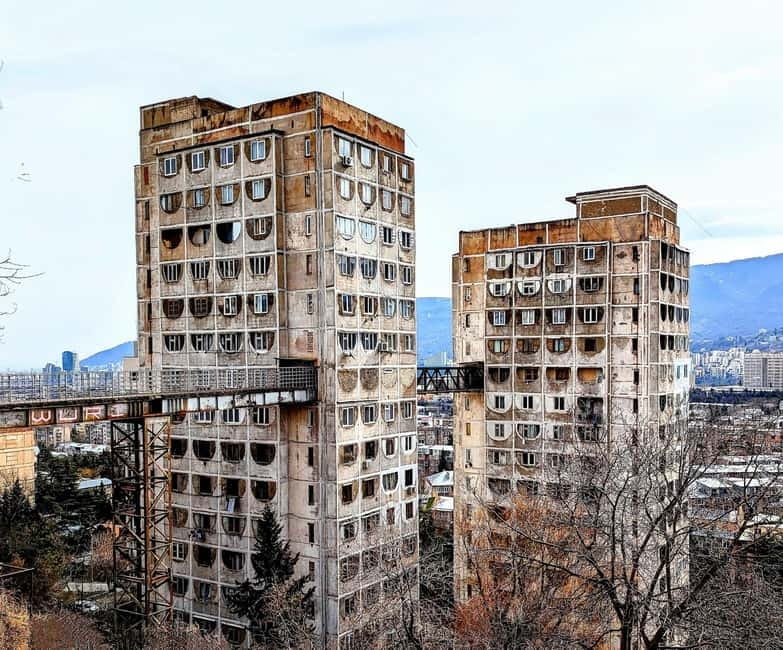
Tbilisi is often introduced through its churches, balconies, sulfur baths, and winding lanes. Those places deserve your time, but they show only one part of the city. This tour turns your attention toward the twentieth century, when Georgian architects worked within the Soviet system and produced buildings that could be daring, strange, elegant, or severe.
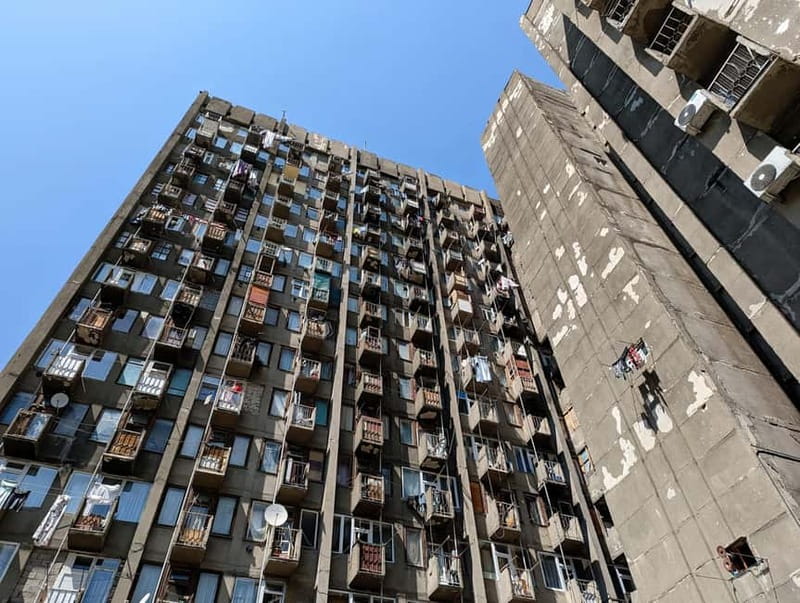
I find the subject especially worthwhile because Soviet architecture is often reduced to gray apartment blocks. Tbilisi offers something more complicated. Its modernist and brutalist buildings can look theatrical, sculptural, or almost futuristic. They also carry stories about ambition, state power, family life, public ceremony, technology, and changing ideas about the city.
The tour is not simply a drive past unusual buildings. Your guide explains how to read them. A projecting shape may suggest movement or progress. A massive concrete form may reflect the political mood of its time. A ceremonial building may reveal how the state wanted people to imagine work, marriage, death, or public life.
That interpretive layer is the main reason to book. Without it, you might photograph an odd-looking structure and move on. With a guide, you begin to notice purpose, symbolism, and the people who designed and used these places.
More Bauhaus and brutalist tours in the world:
- London: Brutalist Architecture & History Walking Tour
★ 4.8 · 42 reviews - Le Corbusier’s Chandigarh : A Complete Architecture Tour
★ 4.7 · 25 reviews - Architecture of New Belgrade – Brutalism Decoded
★ 4.5 · 24 reviews
Starting with Tbilisi’s overlooked Soviet buildings
The exact route can change because access depends on circumstances at each location. The planned visit includes several major examples of Georgian modernism and brutalism, with alternative sites added when necessary.
You should expect a day of looking closely rather than racing through a checklist. The guide may point out shapes, materials, entrances, sight lines, and details that are easy to miss from a car window. This is a useful format for Tbilisi because many of these places are not arranged as a neat walking circuit.
The private setup also matters. You can ask why a building looks the way it does, how it was used, or what happened to it later. Alexander, who booked the tour despite initial doubts about the cost, found that several sites would have been difficult to reach without a guide. That is a fair measure of the tour’s value: you are paying for access, transport, interpretation, and local context rather than for a collection of famous attractions.
The Skybridge and the idea of connection
The Skybridge is one of the tour’s memorable stops. Its name already suggests the central idea: connection, movement, and the hope that architecture can reshape how people relate to a city.
Your guide uses the structure to discuss the ambition behind Soviet public works. These projects were not always modest. They often aimed to make daily life feel organized, progressive, and modern. The Skybridge gives that ambition a physical form, with architecture that asks you to think about how people move through and above the city.
This is also a good place to remember that modernist architecture was designed to serve practical needs, not only to look unusual. The bridge’s value comes from the relationship between structure and movement. You are not just admiring a strange concrete form. You are considering the public purpose behind it and the gap between an architect’s vision and the way a building ages.
Expect photography opportunities, but bring a guidebook-free attitude. The interest here is not a single postcard view. It is the story of a city trying to express a new future through infrastructure.
The Wedding Palace, viewed from outside
The Wedding Palace is one of the most talked-about buildings on the route, but you should understand the access rule before paying. The tour does not include entry to its grounds or interior. You view the building from outside while your guide explains why its design matters.
That limitation is not a minor footnote. If you are booking mainly to walk through the palace, this experience will disappoint you. If you are interested in exterior form, symbolism, and the role of architecture in public ceremonies, the stop can still be rewarding.
The building challenges the usual idea of what a wedding venue should look like. Its design is theatrical and unusual, with a shape that invites questions about celebration, ceremony, and state culture. Alex has singled it out as one of the tour’s strongest architectural subjects, and it is easy to see why it attracts attention.
I would treat this stop as an architectural discussion, not an interior visit. The guide helps you understand the building’s place in Tbilisi, while the outside view gives you time to study its composition and visual drama.
A few more architecture tours in the world worth a look
- Chicago Architecture River Cruise
★ 5.0 · 15,756 reviews - Chicago River 90-Minute Architecture Tour
★ 4.5 · 9,629 reviews - Chicago River: 1.5-Hour Guided Architecture Cruise
★ 4.8 · 8,046 reviews - Chicago Architecture Center River Cruise aboard First Lady
★ 5.0 · 5,536 reviews
A crematorium with an unexpected design
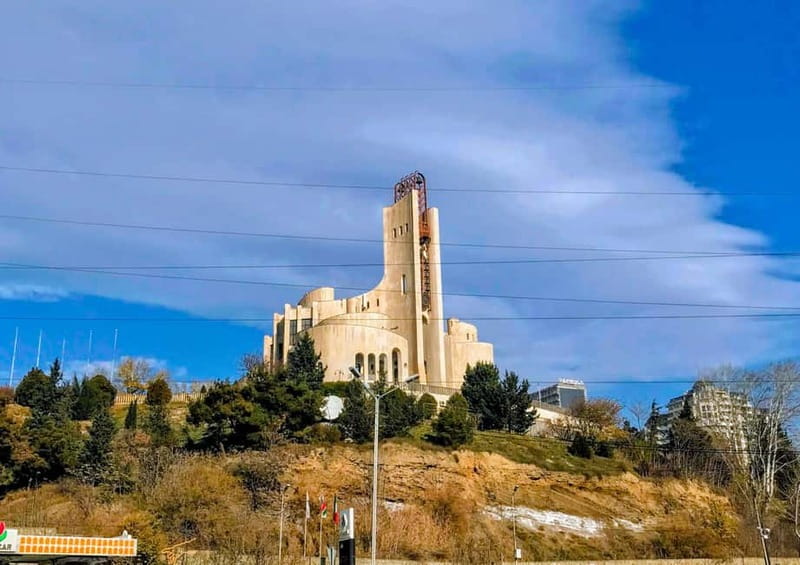
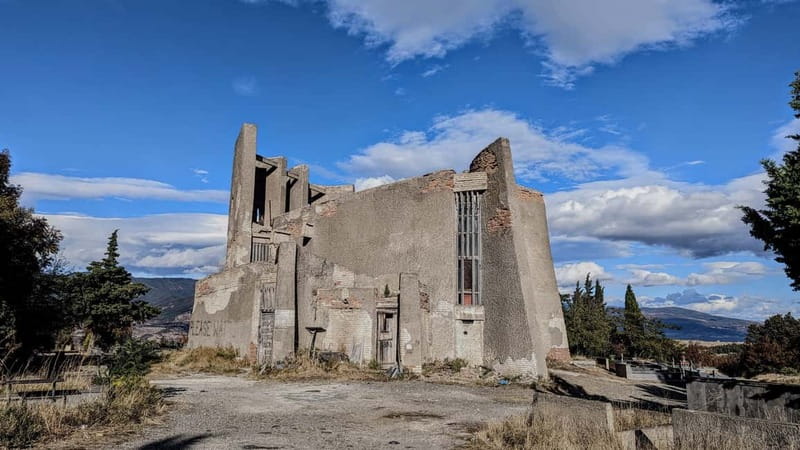
The crematorium, located at a cemetery, brings the tour into a quieter and more serious part of Tbilisi. It is an unusual stop because many city tours avoid places connected with death. Here, the building becomes a way to think about how architecture handles grief, ritual, and public memory.
The design is distinctive enough to make the stop memorable, but the subject also changes the mood of the day. You are not simply collecting photographs of bold structures. You are looking at a place created for one of life’s most difficult moments.
That contrast is valuable. Modernist architecture can seem playful or futuristic at first glance, but it was also used for solemn civic purposes. Your guide connects the building’s form with its function and with the period in which it was created.
You may want comfortable clothing and shoes here, as you should for the full tour. The itinerary can include outdoor areas and places where the ground or surroundings may not feel like a polished museum. Clothing that can get dirty is specifically recommended.
The Ministry of Roads and Soviet ambition
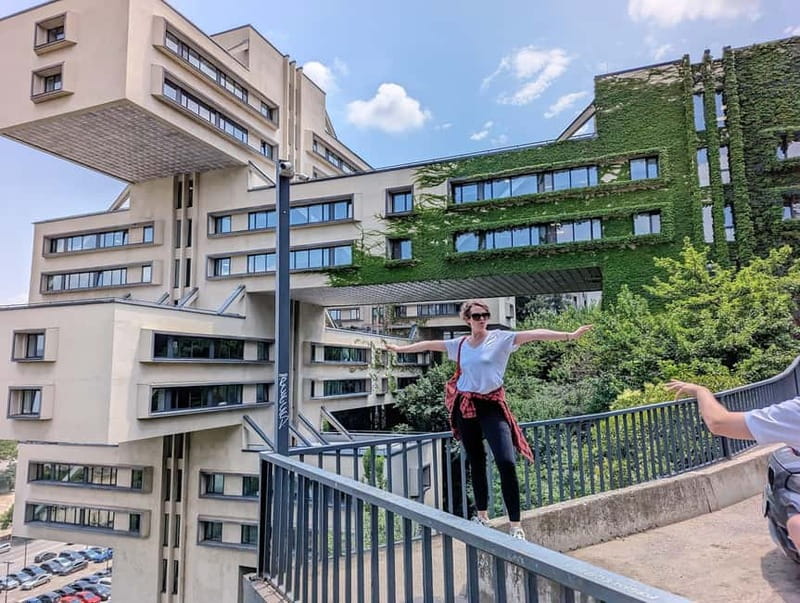
The Ministry of Roads is another major architectural subject. Its futuristic design reflects the confidence of an era that believed technology, planning, and large public structures could shape the future.
This is the kind of building that rewards patience. From a distance, you may first notice the bold massing. With explanation, you begin to think about how the structure sits in its setting, how its parts fit together, and what its original designers wanted people to feel.
The building also helps explain why Tbilisi is important for anyone interested in twentieth-century architecture. Local architects were not merely copying designs from Moscow or elsewhere. They developed their own responses to the materials, terrain, culture, and demands of Georgia.
The tour gives proper attention to these Georgian designers, who are often less familiar internationally than Le Corbusier or other famous European names. Calling one local architect Georgia’s own Le Corbusier is a strong shorthand for the ambition and originality involved, though the guide provides the fuller story behind that comparison.
The archaeological museum and its darker layers
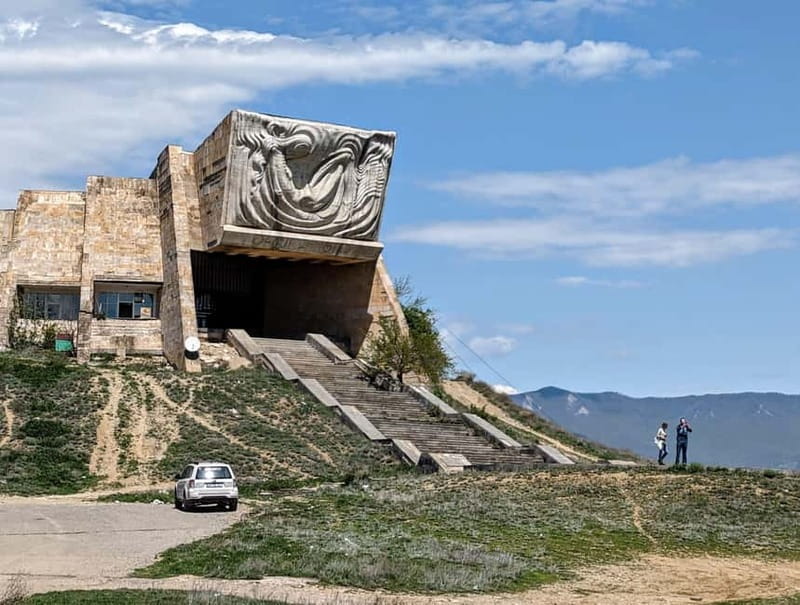
The archaeological museum adds a different kind of historical weight. It connects the city’s ancient past with its Soviet-era public architecture, showing how Tbilisi contains several time periods at once.
The mention of an enigmatic dungeon makes this stop particularly intriguing, though you should keep expectations practical. Access to specific areas can change, and not every part of every site is guaranteed. The appeal lies in the connection between the museum, the city’s older layers, and the later structures built around them.
I like this part of the route because it prevents the tour from becoming a simple parade of concrete. Tbilisi’s architecture makes more sense when you see it as part of a city with a long and complicated past. The museum helps widen the discussion from style to memory, preservation, and what gets kept or erased.
Some buildings visited during the day are at risk of disappearing or being altered. That gives the tour a sense of urgency, but it also raises a useful question: what does a city choose to protect? Your guide can help you think about the conflict between redevelopment, practical needs, architectural value, and public memory.
Local stories, khachapuri, and the best guiding style
The strongest feature of this experience is the guide. Alex has been praised for combining architectural detail with personal stories and local life. Khato brings humor and warmth to the subject, while Khatuna has been described as generous with her knowledge and experiences of Georgia.
Those differences matter because brutalist architecture can become dry if the tour is all dates, names, and design terms. The best moments here seem to come when the guide moves from a building’s structure to the people who lived with it.
A bakery stop for khachapuri adds a simple but smart break. After several hours of concrete, history, and serious themes, a warm Georgian pastry gives the day a more everyday feel. It also helps connect the architecture to the city people actually inhabit.
Do not expect a formal food tour. The bakery visit is a snack break, not the main event. Still, it is a welcome detail, especially if you appreciate a tour that includes ordinary local life instead of keeping you inside an academic bubble.
What the six-hour format feels like
Six hours is a serious block of time. That is a good thing if you want a full architectural study, but it is too long for anyone seeking a quick introduction.
Because transport and pickup are included, the duration is more manageable than it would be if you had to arrange taxis between scattered locations. You can start from your Tbilisi address and return there afterward, which keeps the day focused.
The private group format gives you more control than a large coach tour. You can ask questions, linger over a building, or shift the conversation toward city planning, personal history, or photography. The tradeoff is that the $176 cost covers only up to two people, so a solo traveler pays a relatively high effective rate.
For two people, the price comes to $88 each. That is not cheap, but it is easier to defend when you factor in six hours, private transport, hotel pickup and drop-off, and an English-speaking guide. I would see it as a specialist tour for people who would otherwise spend a day searching for distant sites and trying to understand them without context.
Practical advice before you go
Wear comfortable shoes and clothes suitable for changing weather. You should also bring a camera, though remember that the best photographs will not replace the guide’s explanation.
The operator asks you not to bring large bags or luggage. Pets, baby strollers, alcohol, drugs, and smoking in the vehicle are not allowed. Party groups are also not suitable for this experience.
This is not a good choice if you have mobility limitations, use a wheelchair, or have no experience with this kind of outing. It is not suitable for children under 12, and the information specifically advises against joining if you have a cold.
Some locations may be closed or inaccessible on the day. In that case, an alternative site of equal interest is included. I would regard this as a sensible condition for a tour focused on working, changing, or vulnerable buildings, but you should not book with the expectation that every named stop is guaranteed.
Free cancellation is available up to 24 hours before the tour, and you can reserve now and pay later. Those terms are useful when your Tbilisi plans are still changing.
Who should book Hidden Tbilisi?
I would book this tour if you have already seen the old town and want a different view of the city. It suits people interested in architecture, city planning, Soviet history, photography, and the way public buildings shape daily life.
It is also a good fit if you value conversation. The guides are central to the experience, and the most rewarding parts come from asking questions and listening to the personal stories behind the buildings.
I would skip it if you want a relaxed sightseeing drive, easy access to polished attractions, or a family outing for young children. The subject can be serious, some locations may feel rough around the edges, and the Wedding Palace is exterior-only.
For two people who want an unusual and well-explained day in Tbilisi, the cost is reasonable. You are not buying entry to a long list of attractions. You are buying a private route through parts of the city that are easy to miss, plus the local insight needed to understand why they matter.
FAQ
How long does the Hidden Tbilisi tour last?
The tour lasts six hours.
What is included in the price?
The price includes hotel pickup and drop-off from an address in Tbilisi, transportation, and a live English-speaking guide.
How many people can join the private group?
The $176 price covers a private group of up to two people.
Can I enter the Wedding Palace?
No. Entry to the Wedding Palace grounds and interior is not possible during this tour. You view and discuss its architecture from outside.
What happens if a planned site is not accessible?
If a location cannot be visited, an alternative site of equal interest is included in the route.
What should I bring?
Bring comfortable shoes, comfortable clothes, weather-appropriate clothing, and a camera. Clothing that can get dirty is recommended.
Is the tour suitable for children or wheelchair users?
The tour is not suitable for children under 12, wheelchair users, or people with mobility impairments. It is also not recommended for people with a cold.
Should you book it?
Book it if you want Tbilisi to make you think. The Skybridge, Wedding Palace, crematorium, Ministry of Roads, archaeological museum, and other stops reveal a city far beyond its postcard center.
The best reason to go is the combination of unusual buildings and strong local guiding. Alex, Khato, and Khatuna have shown that the subject can be serious without becoming stiff. If you can accept the six-hour commitment, outdoor conditions, and occasional changes to the route, this is one of the more distinctive ways to understand modern Tbilisi.
Just added in the world
- Wilmington History and Architecture Tour★ 4.8 · 18 reviews
- New Orleans : Garden District Architecture Walking tour★ 4.8 · 5 reviews
- Washington DC: Dupont Circle & Embassy Row Architecture Tour★ 5.0 · 6 reviews
- Washington, DC: Georgetown Architecture Walking Tour★ 5.0 · 8 reviews
- Vicenza: Palladian Architecture Private Walking Tour★ 3.3 · 3 reviews
- Walk & Discover KL’s Architectural and Heritage Gems★ 5.0 · 7 reviews
- Unveiling Brno: History, Culture & Architectural Delights★ 5.0 · 2 reviews
- Private Colonial Williamsburg Architectural Tour★ 5.0 · 5 reviews
Bauhaus and Brutalist Architecture Tours, compared.
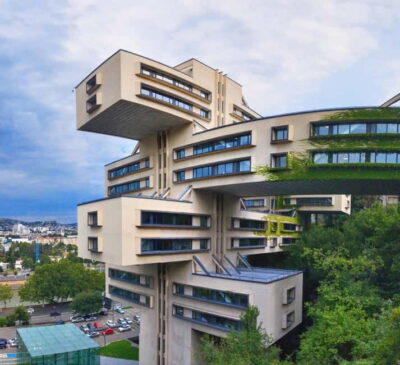
Brutalist Tbilisi: Urban exploration and untold stories
Read our review →
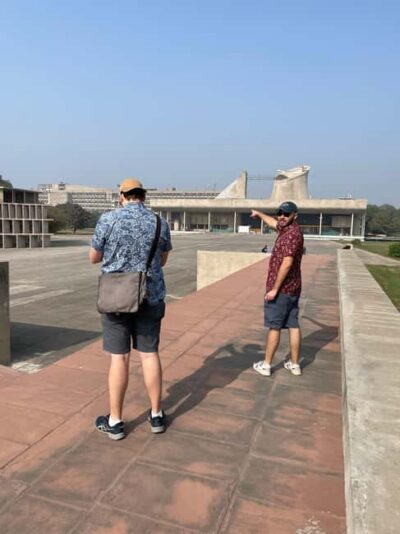
Le Corbusier’s Chandigarh : A Complete Architecture Tour
Read our review →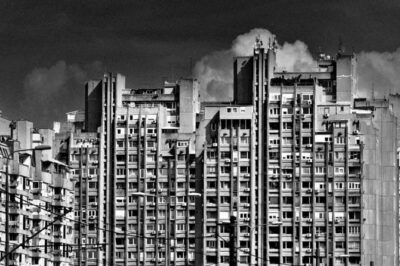
Architecture of New Belgrade – Brutalism Decoded
Read our review →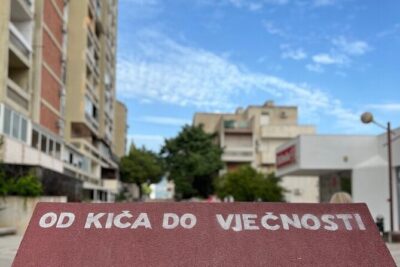
Secret Split: Socialist Architecture & brutalism – Urban Utopia
Read our review →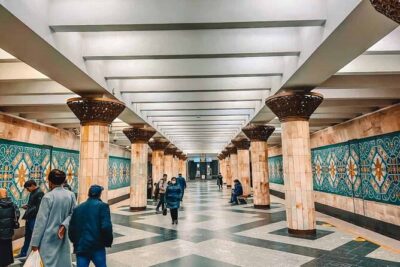
Tashkent Soviet Architecture (Modernism) and Subway station tour.
Read our review →
Belgrade: Space architecture tour – brutalist architecture
Read our review →
Bishkek : USSR History, Soviet Architects ,Statues & Mosaics
Read our review →Browse the lists this tour appears in