
REVIEW · BAUHAUS AND BRUTALIST ARCHITECTURE TOURS
Belgrade: Space architecture tour – brutalist architecture
Modern Belgrade has a concrete story to tell. This four-hour tour links Yugoslav-era architecture with mountain views, and I especially like the ride up Avala Mountain and the chance to see New Belgrade as a planned political project rather than just a collection of big buildings. The small group, limited to 10 people, also gives the experience a more personal feel.
I like the Avala Tower observation deck and the sharp contrast between the Eastern Gate, Western Gate, Sava Center, and Palace of Serbia. The main drawback is that several buildings are viewed from outside, since some are government offices or homes. If you want interiors at every stop, this is not the right outing.
Key points about this Belgrade architecture tour
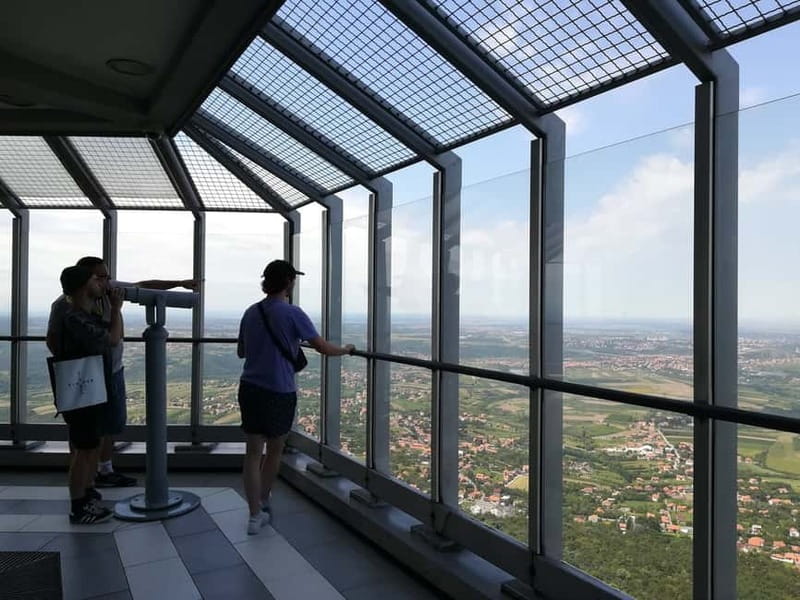
- Avala Tower rises above Belgrade’s tallest mountain, with an observation deck included in the ticket price.
- The tour explains architecture as political messaging, showing how Yugoslavia used huge modern buildings to project unity and power.
- New Belgrade is the main stage, with the Palace of Serbia, Sava Center, Geneks towers, and Rudo buildings.
- The Ada Bridge gives you a quick but striking river crossing, with a single-pylon design over the Sava.
- A four-hour private vehicle tour keeps the route practical, especially because the sights are spread across Belgrade and Avala.
- Guide quality is a major strength, with Nemanja receiving especially warm praise for clear explanations and enthusiasm.
Why Belgrade’s concrete tells a political story
Belgrade is a fine city for architecture that asks big questions. What should a new country look like? How can a building show strength? Can concrete express optimism, order, and modern life?
This tour focuses on the period of socialist Yugoslavia, when architecture was used to represent the power of a newly formed state. You will see brutalist and structuralist designs, but the guide also connects them to ideology. That context matters. Without it, a giant office block can look merely severe. With it, the same building becomes part of a national project.
The experience covers both Avala and the broad urban district of New Belgrade. That mix is useful because you are not looking at one narrow style in one neighborhood. You are comparing a mountain monument, a telecommunications tower, river infrastructure, conference architecture, residential blocks, and government buildings.
You travel in a private vehicle between stops, with short walks and photo breaks along the way. It is a practical arrangement for a route that would be awkward to cover on foot. The tour is in English, and the group is limited to 10 participants.
More Bauhaus and brutalist tours in the world:
- London: Brutalist Architecture & History Walking Tour
★ 4.8 · 42 reviews - Le Corbusier’s Chandigarh : A Complete Architecture Tour
★ 4.7 · 25 reviews - Architecture of New Belgrade – Brutalism Decoded
★ 4.5 · 24 reviews
Avala Mountain and the Monument to the Unknown Hero
The first major stop is Avala Mountain, reached after about 30 minutes in the van from Belgrade. The mountain is home to the Monument to the Unknown Hero, where you have about 30 minutes for a visit, guided explanation, sightseeing, and photographs.
This is an important opening stop because it gives the tour a ceremonial tone before the focus shifts to modern urban buildings. The monument is tied to national memory, while the rest of the day examines how the state expressed itself through architecture. You get a sense of how public symbols and public buildings worked together.
Expect some walking here, so wear shoes that feel secure. The tour takes place rain or shine, and this outdoor stop will feel different in clear weather than in rain. The supplied details do not promise a long hike, so think of this as a guided visit with time to look around, not a mountain trekking trip.
The mountain setting also gives you a break from the dense city. That change of pace is one of the tour’s strengths. You begin with open views and a monument, then move toward the dense concrete forms of Belgrade.
The rebuilt Avala Tower and its observation deck
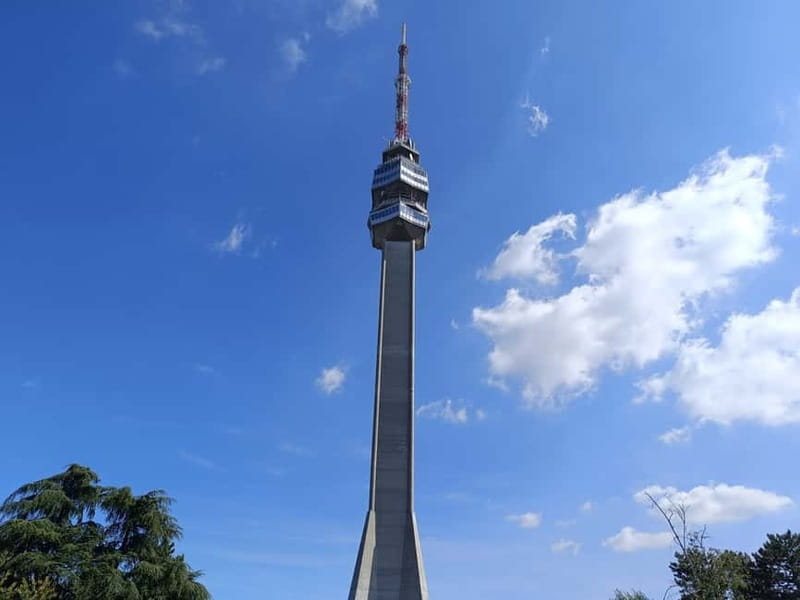
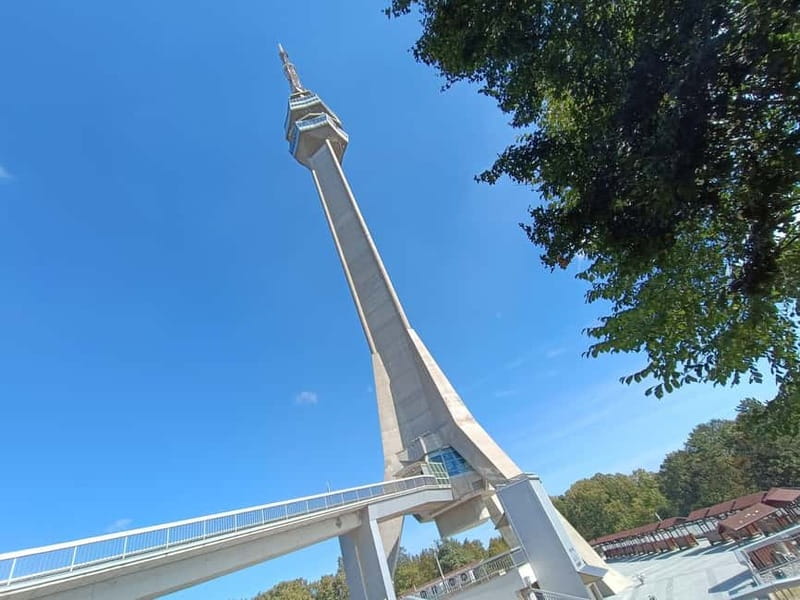
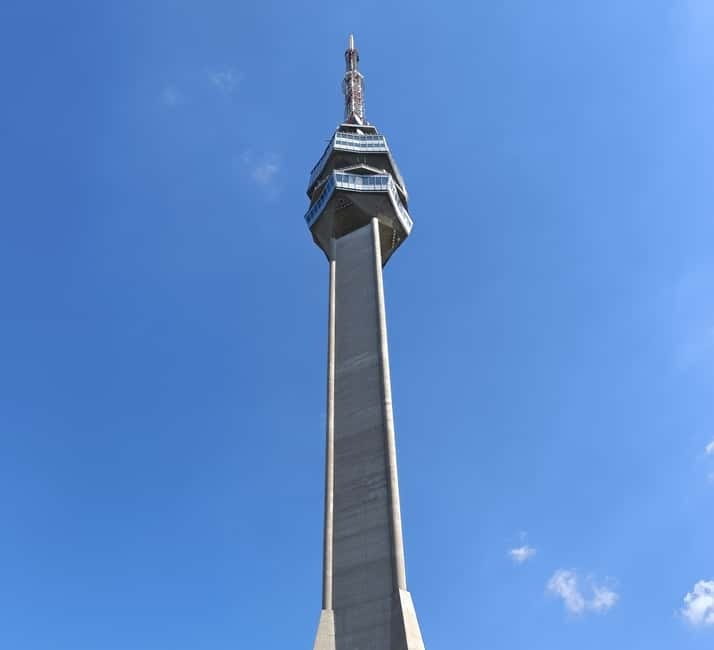
Avala Tower is the tour’s clearest combination of engineering, history, and views. You spend about 30 minutes here, and entry to the tower is included.
The tower was destroyed during NATO bombing in 1999 and rebuilt in 2010. That detail gives the structure more weight than a simple lookout attraction. You are seeing a piece of infrastructure that was lost and then restored, with its return linked to the city’s modern identity.
The observation deck is the main reward. On a clear day, you can look over Belgrade from one of its highest points. The view depends on weather conditions, so keep your expectations flexible. Fog, rain, or low cloud can reduce what you see, and the tour operator is clear that the tower view cannot be guaranteed in every kind of weather.
I would place this stop near the top of the tour’s value. The entry ticket is included, and the elevated view helps you understand the scale of the city before you see New Belgrade from street level. It also gives architecture fans a chance to consider the tower itself, not just the panorama.
The Eastern Gate and Rudo buildings
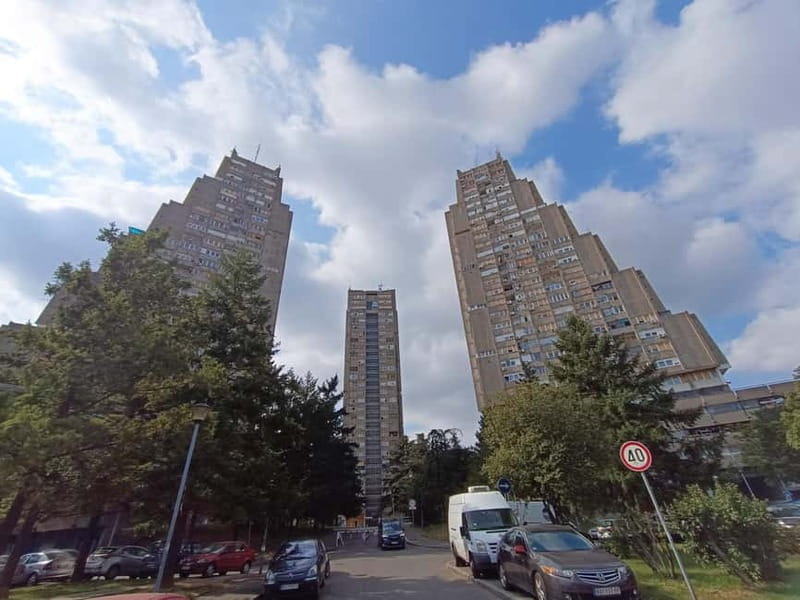
After about 20 minutes in the vehicle, the route reaches the Eastern Gate, known for the Rudo buildings. You have around 20 minutes for a guided photo stop.
These residential towers are a good example of how brutalism can feel monumental even when its purpose is ordinary housing. Their form is not designed to charm you in the usual postcard sense. It is forceful, repetitive, and built to be seen as part of a larger urban idea.
This stop is mainly viewed from outside. That is worth knowing before you book. The tour is about reading the buildings, their shapes, their scale, and their place in Belgrade, not entering every structure.
Your guide is especially important here. Architecture can be hard to interpret from a quick roadside stop, but a good explanation helps you see why these buildings matter. Nemanja has been praised for combining strong historical and architectural knowledge with a friendly manner, which is exactly the sort of guidance this stop needs.
A few more architecture tours in the world worth a look
- Chicago Architecture River Cruise
★ 5.0 · 15,756 reviews - Chicago River 90-Minute Architecture Tour
★ 4.5 · 9,629 reviews - Chicago River: 1.5-Hour Guided Architecture Cruise
★ 4.8 · 8,046 reviews - Chicago Architecture Center River Cruise aboard First Lady
★ 5.0 · 5,536 reviews
Crossing the Sava on the Ada Bridge
The next stretch takes about 20 minutes by van and leads to the Ada Bridge. The bridge stop is shorter, about 10 minutes, and is listed as a photo stop.
Do not expect a long bridge walk or an engineering lecture lasting half an hour. This is a quick chance to see the bridge above the Sava and understand its place in the city. Its single-pylon design is the visual point, and the bridge is described as the largest single-pylon bridge in Europe.
The short timing makes sense in a four-hour tour. You get the image, the river crossing, and a little architectural context before moving on. If bridges are your main interest, you may wish for more time. For a wider architecture tour, the brief stop keeps the day moving.
Sava Center and the architecture of conference power
The Sava Center follows with another 20-minute drive and a 10-minute photo stop. Built for the Conference on European Security and Cooperation held in Belgrade in 1977, it was the first and largest conference center in former Yugoslavia.
This is one of the tour’s most useful examples of architecture serving diplomacy. A conference center is not just a practical hall. It tells visiting officials that a country can host major international events and present itself as modern, organized, and important.
The complex is also valuable for its structural design. You can examine the polyhedral forms of the large building group, which gives the stop a different feel from the tall residential blocks at the Eastern Gate. Here, the focus shifts from vertical mass to a broad, angular complex.
Again, the visit is a photo stop rather than a full interior tour. You should see the Sava Center as part of the city’s public architecture, not expect a museum-style visit with access to every room.
New Belgrade from the van
The route then passes through Novi Beograd, or New Belgrade, on a scenic drive of about 10 minutes. This part can seem less dramatic at first because you are moving through a larger district rather than stopping at one famous monument.
Still, it is essential to the tour. New Belgrade was shaped as a major postwar urban project, and the buildings make more sense when viewed together. The district shows how planning, politics, housing, administration, and transport were brought into one large vision.
The van is a benefit here. New Belgrade is spread out, and the distance between major sites would make a walking tour tiring and slow. From the vehicle, you can see how the individual buildings relate to the wider city.
Pay attention to scale. The tour is not only about unusual facades. It is about the way entire sections of Belgrade were designed to express a new social order.
The Western Gate and Geneks twin towers
The Western Gate is one of the route’s most memorable stops. It comes after another 20-minute drive, followed by about 30 minutes for photographs, a guided visit, and sightseeing.
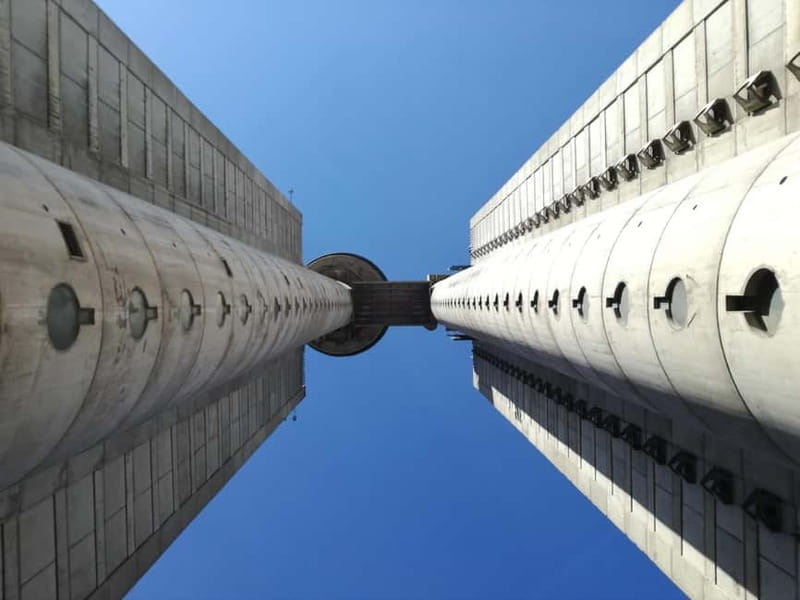
The landmark is made up of the Geneks twin towers, connected by a bridge on the 26th floor. The form is dramatic and easy to remember. It reads as a gateway, fitting the name, but it also shows how late socialist architecture could turn office and residential functions into a city symbol.
This is a good place to look up and study the relationship between the two towers. The bridge connection is the detail that gives the complex its identity. You will likely get stronger photographs here than at some of the more spread-out sites because the shape is so distinct.
The same practical limitation applies: you view the building from outside. The towers include residential and other uses, so interior access is not part of the tour. That may disappoint anyone hoping to visit the bridge level, but the exterior is still the main architectural statement.
Palace of Serbia and the language of late modernism
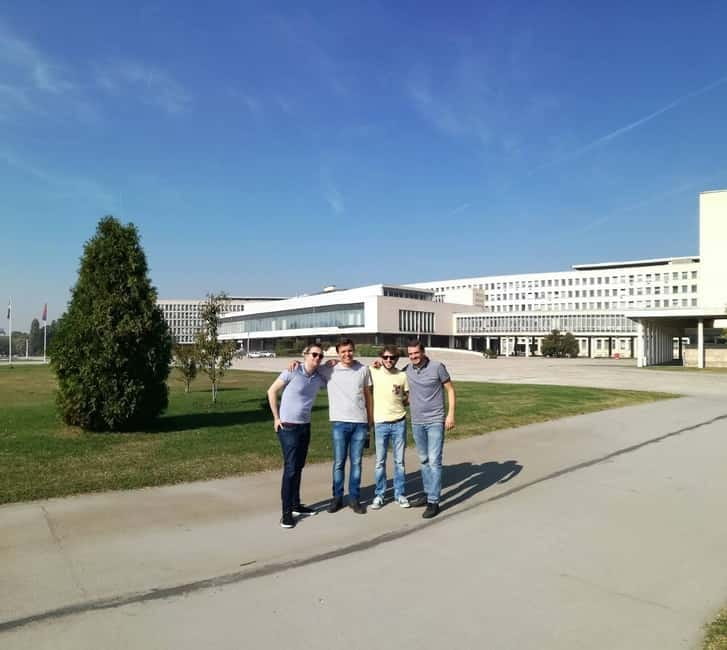
The final major stop is the Palace of Serbia, reached after another scenic drive through New Belgrade. You spend about 20 minutes here with a guided explanation, sightseeing, and photographs.
The building was formerly the Federal Executive Council, and it is described as the first New Belgrade project after World War II. Its huge but elegant form gives the tour a strong closing image. This is not brutalism in exactly the same way as the residential towers or Geneks complex. It belongs to late modernism, with a more formal and ceremonial expression.
The building helps explain how design can represent ruling ideology. Its scale communicates authority, while its orderly form suggests a state that is confident, rational, and built for the long term. The guide can help you connect the visual impression to the political purpose.
As with the other government-related buildings, you should expect an exterior visit. The Palace of Serbia is not presented as a public interior attraction. The value lies in seeing its position, proportion, and relationship to the district around it.
What the four-hour format does well
The tour is priced at $88 per person. That is not the cheapest way to see Belgrade, but the price includes hotel pickup and drop-off, private transportation, a professional English-speaking guide, and the Avala Tower admission.
I think the price makes the most sense for you if you want several distant sites in one outing. Public transport or self-guided sightseeing would require more planning, and the route combines Avala Mountain with multiple New Belgrade stops. The vehicle also protects your time, since the tour lasts four hours rather than taking up most of a day.
The small-group limit of 10 matters. Architecture tours depend heavily on explanation, and a crowded group can make roadside stops awkward. A smaller group gives you a better chance to hear the guide and ask questions, though the exact feel will depend on how many people join your departure.
Food and drinks are not included. The tour is four hours, so plan to eat before or after rather than expecting a meal break. Pickup is included from your hotel in Belgrade, and you should wait in the lobby five minutes before the scheduled time.
Who will enjoy this tour most
I would choose this experience if you like:
- Brutalist, structuralist, or late modernist architecture
- Yugoslav history and the politics of public design
- City planning and postwar urban development
- Engineering landmarks such as towers and bridges
- Guided explanations rather than simply taking photographs
- A compact outing that reaches places outside central Belgrade
You do not need a formal architecture background. The buildings are easy to see, and the historical frame helps explain what you are looking at.
I would hesitate if you want long interior visits, relaxed museum time, or a tour centered only on central Belgrade. The schedule is active, and several stops are short photo visits. You will spend a fair amount of time in the van, but that is part of what makes the route possible.
The guide can shape the day. Nemanja has been singled out for warm, enthusiastic explanations, and other feedback also praises guides who connect history with architecture in a clear way. That is a real strength because the tour works best when the concrete forms are tied to Yugoslavia’s political aims.
Booking advice and final verdict
Book this tour if you want to see Belgrade through its grandest public projects, not just its old streets and cafes. Avala Tower gives you the view, while New Belgrade gives you the political and architectural story on the ground.
The best practical advice is to choose a day with a reasonable weather forecast. The tour runs in rain or shine, but the Avala view depends on visibility. Also wear comfortable shoes because the experience includes walking at outdoor stops, even though transportation handles the long distances.
For $88, I see good value in the combination of private transport, hotel pickup, a small group, a professional guide, and tower admission. The limitation is clear: many buildings can only be admired from outside. If that is acceptable, this is a focused and unusual way to understand Belgrade’s Yugoslav-era architecture.
FAQ
How long does the Belgrade brutalist architecture tour last?
The tour lasts four hours, including transportation between Belgrade, Avala Mountain, and New Belgrade.
Is hotel pickup and drop-off included?
Yes. Pickup and drop-off at your hotel in Belgrade are included. You should wait in the hotel lobby five minutes before the scheduled pickup time.
Is admission to Avala Tower included?
Yes. The entry ticket to Avala Tower is included in the tour price.
Is the tour conducted in English?
Yes. The tour includes a live English-speaking guide.
How large is the group?
The tour is limited to 10 participants and uses private transportation.
Does the tour run in bad weather?
Yes. The tour takes place rain or shine. However, the view from Avala Tower depends on weather conditions.
Just added in the world
- Wilmington History and Architecture Tour★ 4.8 · 18 reviews
- New Orleans : Garden District Architecture Walking tour★ 4.8 · 5 reviews
- Washington DC: Dupont Circle & Embassy Row Architecture Tour★ 5.0 · 6 reviews
- Washington, DC: Georgetown Architecture Walking Tour★ 5.0 · 8 reviews
- Vicenza: Palladian Architecture Private Walking Tour★ 3.3 · 3 reviews
- Walk & Discover KL’s Architectural and Heritage Gems★ 5.0 · 7 reviews
- Private Colonial Williamsburg Architectural Tour★ 5.0 · 5 reviews
- Unveiling Brno: History, Culture & Architectural Delights★ 5.0 · 2 reviews
Bauhaus and Brutalist Architecture Tours, compared.
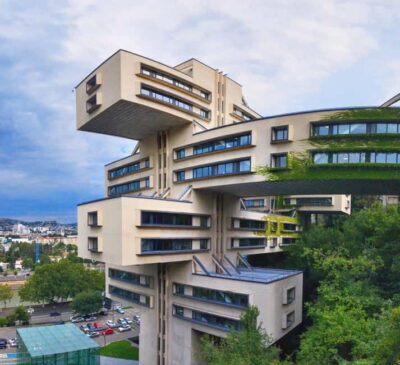
Brutalist Tbilisi: Urban exploration and untold stories
Read our review →
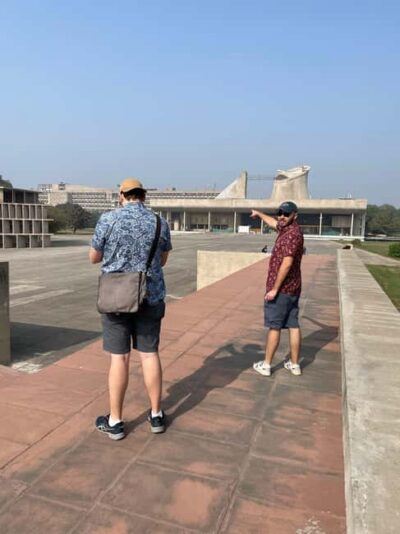
Le Corbusier’s Chandigarh : A Complete Architecture Tour
Read our review →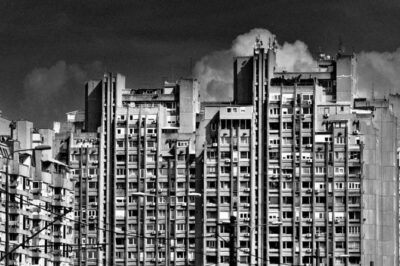
Architecture of New Belgrade – Brutalism Decoded
Read our review →
Secret Split: Socialist Architecture & brutalism – Urban Utopia
Read our review →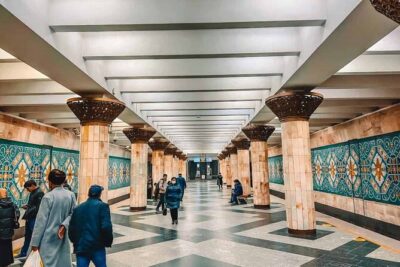
Tashkent Soviet Architecture (Modernism) and Subway station tour.
Read our review →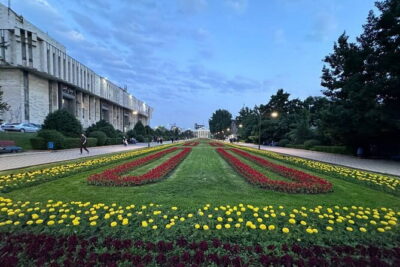
Bishkek : USSR History, Soviet Architects ,Statues & Mosaics
Read our review →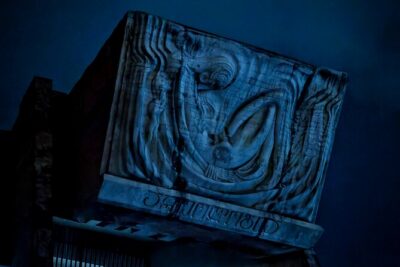
Brutal Tbilisi — Night Edition: Dark Side of Soviet Architecture
Read our review →Browse the lists this tour appears in