
REVIEW · ARCHITECTURE TOURS
Mumbai: Story of Mumbai through its architecture
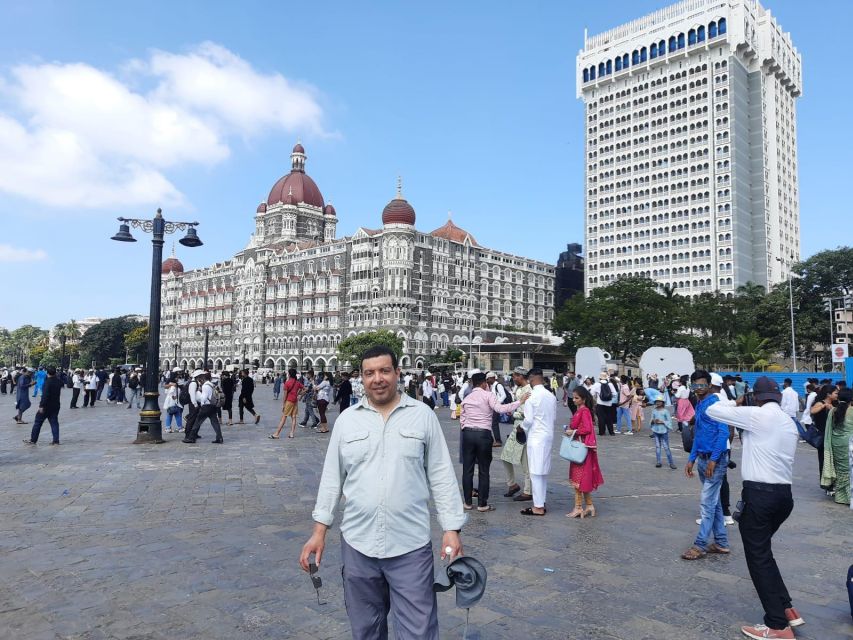
Mumbai’s finest buildings tell competing stories. This 2.5 to 3 hour walk connects grand Gothic stations, Art Deco cinemas, libraries, courts, and the Gateway of India, showing how the city changed under British rule and how Indian patrons later made their own mark.
I like the way the route links Chhatrapati Shivaji Maharaj Terminus with the Oval Maidan and its striking mix of Gothic and Art Deco buildings. I also like the human stories, especially the tale behind Rajabai Tower and the part Indian merchants played in promoting Art Deco. The main drawback is that most buildings are viewed only from the street, so this is best for architecture and storytelling rather than interior visits.
The English-speaking guide is central to the experience. Guide Pankaj received especially strong praise for bringing the buildings to life and explaining how European designs were adapted with Indian motifs. At $32 per person, the tour offers good value if you want context, navigation, and a clear route through central Mumbai rather than simply photographing landmarks on your own.
Key points about the Mumbai architecture tour
- CST is the grand opening act: See one of India’s finest Victorian Gothic buildings, with Indian design details worked into its European form.
- Rajabai Tower has a personal story: Learn how maternal love and a Jewish banker’s gift shaped one of Mumbai’s most recognizable towers.
- The Oval Maidan makes the contrast clear: Gothic buildings line one side, while Art Deco apartments face the other.
- Art Deco was a statement of modern Indian identity: Empress Court and Eros Cinema show how the style became linked with status, wealth, and Indian commercial power.
- The Gateway of India gives the walk a strong finish: Its colonial purpose is tied to the arrival of King George V and the final departure of British troops.
- Most stops are exterior views: Entry charges are included, but only CST and the Gateway of India are specifically visited inside.
Why Mumbai’s architecture works best on foot

Mumbai’s central district can look like a jumble of grand buildings, traffic, open cricket grounds, cinemas, and office blocks. A walking tour gives that jumble a shape. You move from the railway station that served the colonial city to the institutions, homes, and public buildings that followed.
The route also lets you compare styles at close range. Victorian Gothic uses pointed arches, towers, carved details, and dramatic vertical lines. Art Deco favors clean curves, horizontal bands, geometric decoration, and a forward-looking mood. In Mumbai, the two styles sit close together, which makes the city’s architectural shift easy to read.
I find that useful because architecture can otherwise become a parade of unfamiliar names. Here, each building answers a simple question: Who built it, why was it built, and what did it say about the people who used it?
The pace is designed for a half day, not an exhausting full-day outing. You walk between sites, hear the story of each place, and still have time afterward for lunch or further sightseeing around Colaba and Fort.
A few more architecture tours in India worth a look
- British Architecture Walk, an immersive walking tour in Chennai
★ 5.0 · 60 reviews - The Hipster Chandigarh Architecture History Tour
★ 5.0 · 54 reviews - Mumbai heritage walk- Story of Gothic and Art Deco buildings
★ 5.0 · 33 reviews
CST: Mumbai’s Gothic opening scene
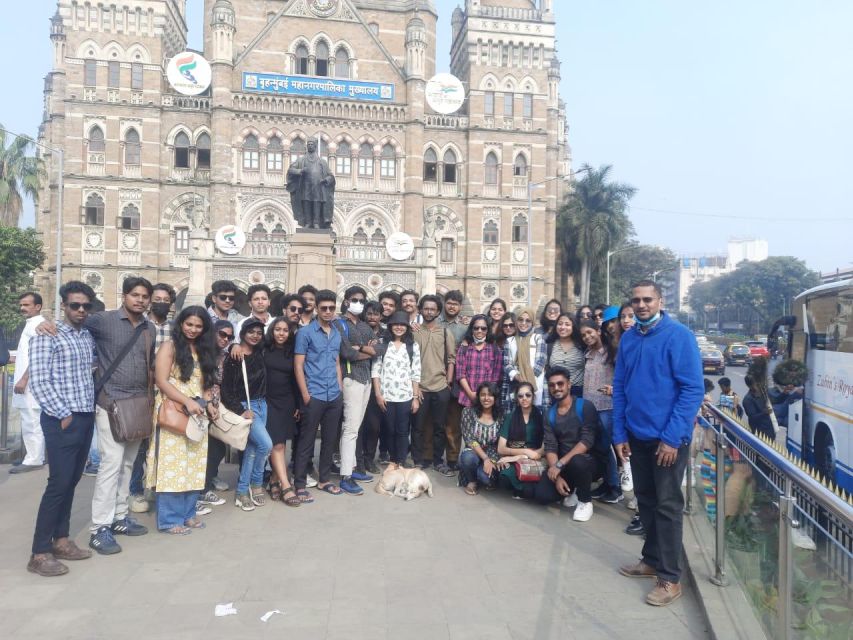
The walk begins at Chhatrapati Shivaji Maharaj Terminus, known during the colonial period as Victoria Terminus. This is the grandest building on the route and one of the most important railway stations in India.
CST is a UNESCO heritage building and a remarkable example of Victorian Gothic Revival architecture. Its pointed arches, stonework, towers, and busy decorative details reflect British design ideas. Yet the building is not simply an English import. Indian architectural themes were blended into the Gothic plan, giving the station a distinctly local character.
That mixture is the point. Mumbai was being presented as an imperial port and modern railway center, but the building also drew from Indian traditions. The result is a station that feels theatrical without being disconnected from its setting.
The scale becomes easier to appreciate when you remember that more than six million people use the station each day. You are not looking at a quiet museum piece. CST remains a working transport hub, and that daily use gives the building a sense of purpose.
The tour includes an interior visit to CST, which matters. From outside, you can admire the silhouette and stonework. Inside, you get a better feel for the building as a railway station, with its original public role still visible. This is the strongest stop for anyone who wants one major architectural experience rather than a long list of façades.
From Sterling Cinema to Flora Fountain
From CST, the route continues on foot past Sterling Cinema and Azad Maidan. These ordinary urban spaces help place the grand buildings in everyday Mumbai.
Azad Maidan is known as a venue for memorable interschool cricket matches. That detail adds a welcome local angle. The city’s open ground is not just empty space between monuments. It is part of Mumbai’s public life, especially for young players and school sports.
Flora Fountain follows. It is one of Mumbai’s best-known fountains, made from Portland stone and decorated with a statue of Flora, the Roman goddess of flowers. The fountain was dedicated to people who died while fighting for an independent state of Maharashtra.
This stop works on two levels. Architecturally, it is a decorative civic landmark. Politically, it carries a regional identity that reaches beyond the British period. You get a reminder that Mumbai’s story did not end with independence, and that public monuments can gather new meanings over time.
The walk through this area can be busy, so you should expect an urban sightseeing experience rather than a quiet stroll. Stay close to the guide and keep your attention on traffic and pavement conditions while listening.
Eros Cinema and the appeal of Art Deco
Eros Cinema was built in 1938 by architect Sorabji Keikhushru Bhedwar, with interior decoration by Fritz von Dreiberg. Its stepped shape rises like a wedding cake, ending in a semi-circular tower.
That description is more useful than a simple label. Art Deco buildings often rely on strong shapes and a sense of movement. Eros Cinema was designed to look modern, glamorous, and made for entertainment. It belonged to a city that was beginning to picture itself as a modern metropolis.
You see the building from outside, so do not expect a cinema visit or a look at the interior decoration. Still, the façade gives you plenty to discuss, particularly when the guide compares it with the older Gothic structures nearby.
The contrast is one of the pleasures of this walk. Gothic buildings suggest civic power, education, law, and empire. Art Deco cinemas suggest leisure, technology, fashion, and a new urban confidence. Mumbai’s architecture changes mood within a few blocks.
Same city, a different building to stand in front of:
- Delhi Hidden Gems: Mehrauli, Lodhi Art & Sunder Nursery
★ 5.0 · 108 reviews - Jaipur City Heritage and Architecture Tour
★ 5.0 · 32 reviews - Le Corbusier’s Chandigarh : A Complete Architecture Tour
★ 4.7 · 25 reviews - Day trip from Bangalore to Lepakshi for Temple architecture & paintings
★ 5.0 · 15 reviews
Empress Court and the status of Art Deco living
Empress Court is a residential Art Deco building and one of the best-preserved examples on the route. It also shows that Art Deco was not limited to cinemas and public buildings.
Living in such buildings once signaled status and wealth. That social detail helps you read the apartment block as more than an attractive façade. Its design expressed a particular lifestyle, one connected with modern city living and the ambitions of Mumbai’s prosperous residents.
The building is viewed from outside, which is important to keep in mind. You will not be touring an apartment or seeing private interiors. The value comes from the explanation of the building’s role in the city and from comparing its design with the nearby Gothic institutions.
For me, this is also where the story becomes less about British architecture. Art Deco was embraced by Indian merchants and patrons, and the style could serve as a way to project a modern Indian identity. The guide’s explanation of Art Deco as a form of resistance to the old British establishment gives the style a sharper edge than its smooth curves might suggest.
The Oval Maidan’s remarkable architectural contrast
The Oval Maidan is one of the most useful points on the walk because you can see two architectural eras facing each other across open space.
One side is lined with Gothic buildings. The other side is known for Art Deco structures. This arrangement turns the maidan into a kind of outdoor lesson in Mumbai’s architectural development.
You do not need to memorize every building to appreciate the effect. Look first at the overall shapes. The Gothic side rises with towers, arches, and ornament. The Art Deco side feels more compact, geometric, and streamlined.
This is also a good place to understand why a guide adds value. A self-guided walk can show you the buildings, but it may not explain why the contrast matters or how Indian merchants helped make Art Deco popular. The architectural styles are visible to everyone. The connection between design, money, politics, and social ambition is harder to spot without context.
Bombay High Court and the symbols of law

The Bombay High Court is one of Mumbai’s finest Gothic buildings. It was designed by Colonel J. A. Fuller and is marked by large towers and broad staircases.
At the top are statues representing Justice and Mercy. Their position gives the building a clear moral message, at least in architectural terms. A court is not just an office. It is meant to project order, authority, and the ideals of law.
You view the High Court from outside, so the stop is brief but visually strong. The building’s broad forms make a good contrast with the more decorative details of CST and the lighter appearance of Art Deco residences.
If you enjoy architecture with civic meaning, this will likely be one of the more satisfying stops. If you prefer entering historic buildings, remember that the exterior-only format limits how much time you spend with the interior spaces.
Rajabai Tower and the story of maternal love
Rajabai Tower is often called the Big Ben of Mumbai. It is located within the University of Mumbai complex and is recognized as a UNESCO heritage site.
The tower is a Revival-Gothic structure, now more than 125 years old, with a blend of Gothic and Art Deco elements. The building’s most appealing story concerns maternal love. A Jewish banker named David Sassoon funded a magnificent Gothic library and reading room, and the Rajabai Tower story is linked to his mother.
That personal connection makes the tower easier to remember than a date or architectural label. Grand buildings are often described through their patrons, architects, and official purpose. A family story gives this one a more human center.
The tower is viewed from outside. You should not expect to climb it or enter the complex as part of this experience. The guide’s explanation is the main benefit, particularly if you want to understand how philanthropy shaped Mumbai’s institutions.
The nearby David Sassoon Library adds another layer. Built in 1862, it was created as a reading room and library and holds a collection of 70,000 rare books. Its Gothic design fits the surrounding district, but its purpose was intellectual rather than governmental.
This part of the walk shows how Mumbai’s public architecture was supported by private wealth. Banks, libraries, universities, and civic buildings all helped create the city’s colonial-era center.
Elphinstone College and the people it educated

Elphinstone College was established in 1856 and is another important Gothic building in the area. Its former students include Bal Gangadhar Tilak, Dr. B. R. Ambedkar, and Jamshedji Tata.
Those names give the building weight. Elphinstone College was not just a handsome institution built in a fashionable style. It educated people who played major roles in Indian politics, social reform, and industry.
You will see the college from outside, but the guide can connect its architecture with its educational purpose. The building belongs to a period when colonial institutions shaped access to higher education, while Indian students and thinkers used those institutions in ways the British establishment could not fully control.
That tension runs through the whole walk. Mumbai’s Gothic buildings were built within a colonial system, but their later meaning was shaped by Indian use, ambition, criticism, and political change.
Regal Cinema and the route toward Colaba
Regal Cinema was the first Art Deco-style cinema hall in Mumbai. It opened in 1933 and was designed by Charles Stevens. His father, Frederick William Stevens, designed Victoria Terminus, where the tour begins.
That family connection ties the two ends of the architectural story together. Father and son worked in different styles and different eras. The father’s station represents the grand Victorian Gothic city, while the son’s cinema reflects the modern entertainment culture that followed.
Again, the building is viewed from outside. The stop is worthwhile because it helps you see Art Deco as part of a wider city change, not as a collection of isolated decorative details.
From here, the route continues toward the Gateway of India. Depending on the selected starting option, the exact order of the walk may vary, so it is sensible to confirm your meeting point when booking. The stated meeting point is at the entrance of McDonald’s, where the guide meets you.
The Gateway of India and the end of British rule
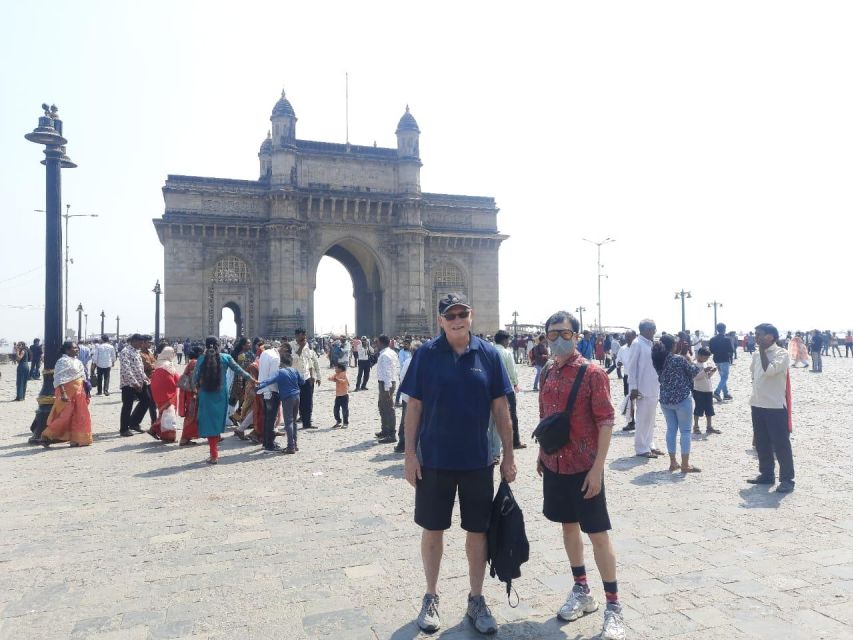
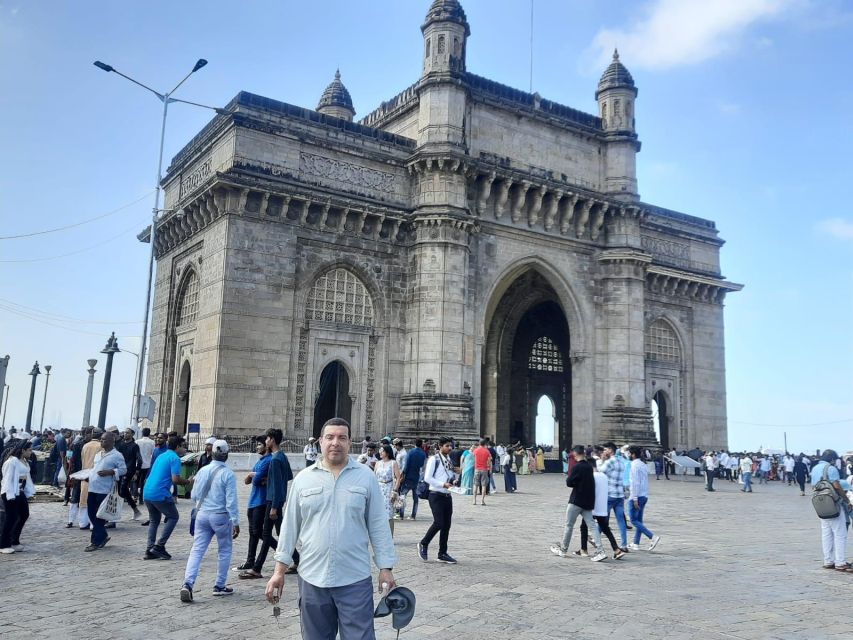
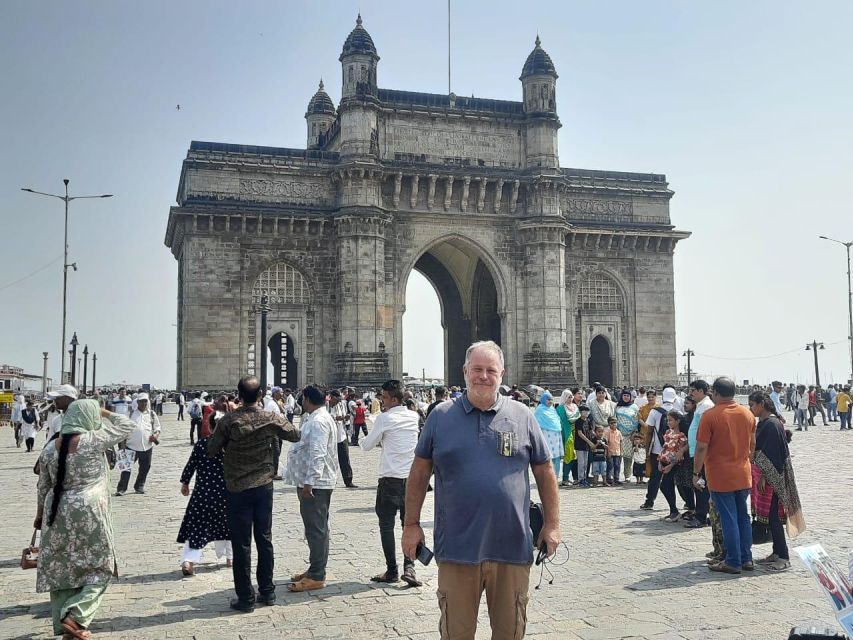
The tour finishes at the Gateway of India, one of Mumbai’s most recognizable landmarks. The structure was built to welcome King George V and Queen Mary in 1911.
Its design is mainly Indo-Saracenic, with Muslim elements worked into the triumphal arch. The building therefore carries a mixed visual language, combining imperial ceremony with architectural references from the region.
The Gateway is more than a grand photo stop. It also marks the end of British rule in a memorable way. On February 28, 1948, the last British troops passed through the arch in a ceremony signaling the end of British rule in India.
The tour includes the Gateway of India, unlike most of the other stops, which are exterior views only. Ending here gives the walk a clear arc: you begin at a railway station that represented imperial modernity and finish at a monument associated with both royal arrival and British departure.
The route has two listed drop-off locations, including the Gateway of India in Mumbai. Pick-up and drop-off transport are not included, so you should arrange your own way to the meeting point and onward destination.
Price, timing, and group size
At $32 per person, the tour is fairly priced for a 2.5 to 3 hour guided walk with entrance charges included. The value comes less from paid admissions and more from the route design and interpretation.
If you already know Mumbai’s architectural history and enjoy reading plaques or guidebooks, you could visit many of these exteriors independently. But you would need to build the route yourself and work out how CST, Flora Fountain, the Oval Maidan, Rajabai Tower, the High Court, Regal Cinema, and the Gateway fit together.
A private or small-group format should suit anyone who wants to ask questions or keep the pace manageable. The listed language is English, and the guide is live rather than audio-recorded.
You should wear comfortable shoes and allow enough time for walking between stops. The experience takes place in central Mumbai, where the streets can be active and crowded. Since most buildings are seen from outside, the tour is best enjoyed as an urban architecture walk, not as a series of long indoor visits.
Free cancellation is available up to 24 hours before the tour for a full refund, and you can reserve now and pay later. Those policies are useful if your Mumbai plans are still shifting, but the key practical point remains simple: confirm the starting option and meeting point before setting out.
Who should book this Mumbai architecture walk?
I would recommend this tour to you if you want a clear introduction to Mumbai’s built environment and prefer stories to a bare list of landmarks. It is especially good for first-time visitors staying near Fort, Colaba, or central Mumbai, and for anyone curious about the overlap between British Gothic design and Indian Art Deco.
You will also get the most from it if you enjoy photography. CST, the Oval Maidan, Eros Cinema, Empress Court, Rajabai Tower, and the Gateway of India each offer different shapes, materials, and views.
I would think twice if your priority is extensive interior access. Only CST and the Gateway of India are specifically entered, while the High Court, Rajabai Tower, David Sassoon Library, Elphinstone College, Eros Cinema, Regal Cinema, and Empress Court are seen from outside.
Guide quality matters here, and Pankaj’s detailed explanations received particularly high praise. His ability to connect design with colonial history, Indian ambition, maternal love, and the rise of Art Deco appears to be a major part of the experience’s appeal.
Should you book it?
Book this walk if you want Mumbai’s architecture explained in a logical story, from Gothic imperial ambition to Art Deco modernity and the Gateway of India’s final colonial chapter. The strongest reasons are the interior access at CST, the Oval Maidan contrast, the Rajabai Tower story, and the guide’s role in making unfamiliar buildings memorable.
Skip it if you want a tour built around indoor access, shopping, food, or transport. At $32, it is a good buy for a focused architectural walk, particularly with a private or small group and an English-speaking guide such as Pankaj.
FAQ
How long does the Mumbai architecture tour last?
The tour lasts approximately 2.5 to 3 hours.
What language is the tour conducted in?
The live tour guide speaks English.
Which sites can I enter?
Chhatrapati Shivaji Maharaj Terminus and the Gateway of India are included as visits. All other listed sites are seen from outside.
Is transportation included?
No. Pick-up and drop-off transportation are not included.
Where does the guide meet me?
The stated meeting point is at the entrance of McDonald’s, where the guide will meet you. The exact starting location can depend on the option selected.
Can I cancel the tour for a refund?
Yes. You can cancel up to 24 hours in advance for a full refund. You can also reserve now and pay later.
Just added in India
- Victorian Gothic Heritage Quarter and Art Deco Walking Tour★ 4.9 · 14 reviews
- New Delhi: Mughal’s architecture tour with transfers★ 4.0 · 7 reviews
- Victorian Gothic Heritage Quarter and Art Deco Walking Tour★ 4.5 · 13 reviews
- 2 day tour from Mumbai to architectural wonder of Mandu★ 5.0 · 2 reviews
- Goa Walking tour: History, Culture, Art and architecture★ 4.5 · 2 reviews
- British Architecture Walk in Chennai by Wonder tours★ 5.0 · 10 reviews
- South India Tour- Temple Architecture and Backwaters★ 5.0 · 7 reviews
- Day trip from Bangalore to Lepakshi for Temple architecture & paintings★ 5.0 · 15 reviews
Architecture Tours, compared.


Chicago River: 1.5-Hour Guided Architecture Cruise
Read our review →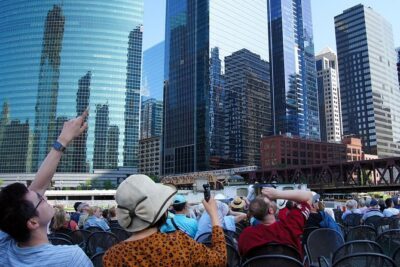
Chicago Architecture Center River Cruise aboard First Lady
Read our review →
Architecture River Cruise Skip-the-Ticket Line
Read our review →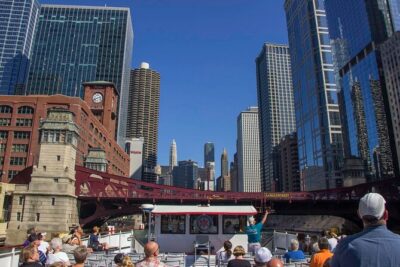
Chicago River 45-Minute Architecture Tour from Magnificent Mile
Read our review →
Browse the lists this tour appears in