

REVIEW · WALKING TOURS
Goa Walking tour: History, Culture, Art and architecture
Goa has stories beyond the sand. This four-hour private tour takes you through Panjim’s markets, old Portuguese-era buildings, Fontainhas lanes, a famous church, and a local art gallery, with a tuk-tuk ride and a beer or feni stop along the way. I especially like the market-to-neighborhood route, which gives you a look at everyday Panjim instead of keeping you among beach resorts, and the private format, which lets your group set the pace and ask questions freely. The main consideration is the price: at $94 per person, this is not a cheap city walk, especially for solo visitors.
The early 8:30 a.m. start works in your favor. Markets are best seen before the day becomes too hot, and the tour includes hotel pickup, private transport, a guide, bottled water, and the short tuk-tuk ride. The tour has a 4.5 rating from two posted ratings, but that is a small sample, so I would treat the score as encouraging rather than conclusive.
Five reasons this Goa walk is worth considering
- Panjim’s fish, vegetable, spice, and flower markets: You see daily commerce rather than a staged cultural display.
- A string of historic landmarks: The route includes the Old Secretariat area, the Portuguese-built Account Department, Yusuf Adil Shah’s 1500s summer palace, and the Abbe Faria statue.
- Fontainhas by tuk-tuk: The local ride adds a practical and distinctly Goan touch to the transition between Panjim and the Latin quarter.
- Beer or cashew feni included: You get a chance to sample feni, a spirit made from cashew fruit, or choose a chilled beer at a local restaurant.
- Private attention: Only your group joins the activity, useful if you want to pause for photographs or ask about architecture.
- A useful first morning in Goa: Pickup and drop-off make this a straightforward way to get your bearings before spending time at the coast.
Starting at Panjim Head Post Office at 8:30 a.m.
The tour begins with pickup from your hotel and transport to the India Post Panjim Head Post Office. This is more than a simple meeting point. It places you near the older civic heart of Panjim, where the tour can shift quickly from vehicle travel to walking.
The early start matters in Goa. Four hours on foot can feel long under a strong sun, but the morning departure gives you a better chance of comfortable market walking. Wear shoes with decent grip, bring sun protection, and keep your hands free for moving through crowded market areas.
A private vehicle is included for the transfer from your hotel, and the tour also provides one bottle of mineral water. Food is not included, apart from the specified beer or feni stop, so have breakfast before pickup or confirm your plans with the operator. The available information does not specify the hotel pickup area, so you should check that point when booking.
More walking tours in India:
- British Architecture Walk, an immersive walking tour in Chennai
★ 5.0 · 60 reviews - Mumbai heritage walk- Story of Gothic and Art Deco buildings
★ 5.0 · 33 reviews - Victorian Gothic Heritage Quarter and Art Deco Walking Tour
★ 4.9 · 14 reviews
Panjim’s markets show the city at work
The first major section lasts about two hours and covers several different parts of Panjim on foot. The route heads toward the local fish market, passing historic buildings and civic landmarks on the way.
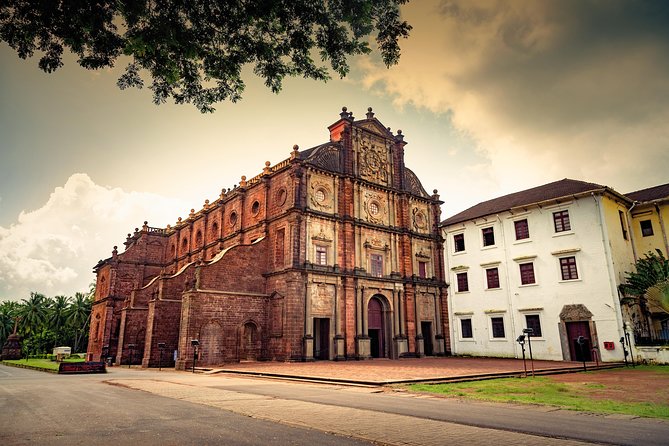
You will see the Old Secretariat area and the Account Department, a Portuguese-built structure that helps explain why Panjim feels different from many other Indian cities. The tour then points out the summer palace of Yusuf Adil Shah, one of Goa’s oldest surviving buildings, dating from the 1500s. Its Indo-Portuguese design is one of the most useful architectural details on the walk because it shows how local and European influences mixed over time.
The Abbe Faria statue adds another layer. Rather than seeing one famous church and moving on, you get a sequence of civic, royal, and religious references. That variety gives the walk more substance than a simple photo stop.
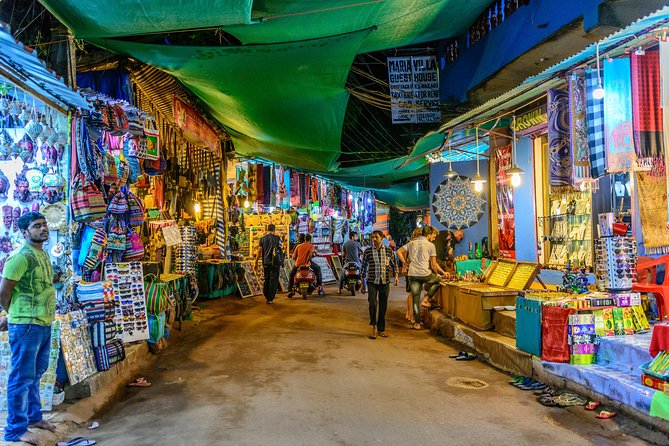
The fish market is likely to be the most immediate part of this section. You can expect fishnets, fresh fish, sellers, and the practical noise of a working market. This is not a polished attraction, and that is part of its value. You see a part of Panjim connected to ordinary shopping and trade.
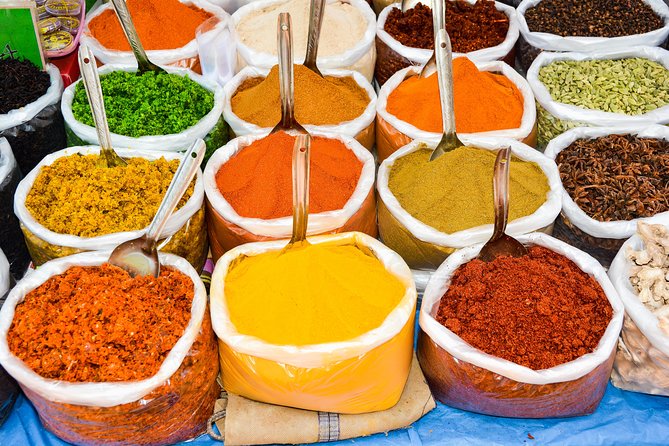
Next comes the vegetable and spice market. The smells change quickly, with herbs and spices replacing the sharper character of the fish market. The flower market completes the sequence with color and a different kind of commerce.
I like this market section because it gives you useful context for the rest of the day. Goa is often sold through beaches, nightlife, and seafood, but a market walk shows how the city actually functions. The drawback is that market conditions can be hectic. If you prefer quiet streets, neat displays, and long photo pauses, this part may feel crowded and fast-moving.
Your guide is important here. The tour is sold as a local-style experience, but the quality will depend on how well the guide explains what you are seeing. Since the tour is private, you can ask for clarification instead of losing questions in a large group.
Yusuf Adil Shah and Goa’s layered architecture
The architectural stops are short, but they give the walk a clear theme. Goa’s built heritage is not one single style. The old buildings reflect local traditions, Portuguese rule, religious history, and the changing role of Panjim as a city center.
Yusuf Adil Shah’s summer palace is especially useful because it dates back to the 1500s and is described as one of Goa’s oldest surviving buildings. You should not expect a full museum visit or a long indoor tour based on the information provided. The value is in seeing the structure in its city setting and having the guide explain its distinctive Indo-Portuguese character.
The Old Secretariat and Account Department help balance the palace stop. They bring the focus back to administration and public life. The Abbe Faria statue then gives you a quick landmark to photograph while walking between the markets and older streets.
This section suits anyone who enjoys architecture but does not want to spend a full day inside formal museums. You get several visual clues in a short period. If your priority is detailed interior access, confirm what can actually be entered, since the tour description focuses on passing and viewing these landmarks rather than guaranteed admissions.
A tuk-tuk ride into Fontainhas

After the market walk, you switch to a tuk-tuk for the trip to Fontainhas. The ride is included, and it changes the rhythm of the tour at a good point. Two hours of walking through markets can be tiring, so a short local transfer gives your feet a break while keeping the experience connected to daily Goa.
Fontainhas is known for its Latin-style quarters and Portuguese-influenced streets. The tour treats the area as a place to walk slowly, look at facades, and notice how the older neighborhood differs from the market districts.
The tuk-tuk is also a practical choice. It is not just private-car transport repeated in another setting. You get a small taste of a local mode of travel, and the shift from walking to an open local ride makes the route feel less predictable and more connected to the city.
The exact tuk-tuk duration is not given, so think of it as a transfer rather than a separate sightseeing ride. It may be brief, but it is still one of the more distinctive inclusions in the price.
More history tours in India:
- The Hipster Chandigarh Architecture History Tour
★ 5.0 · 54 reviews - Jaipur City Heritage and Architecture Tour
★ 5.0 · 32 reviews - Victorian Gothic Heritage Quarter and Art Deco Walking Tour
★ 4.5 · 13 reviews - Chicago in a Day: Food, History & Architecture Walking Tour
★ 5.0 · 1,153 reviews
Our Lady of the Immaculate Conception is the big photo stop
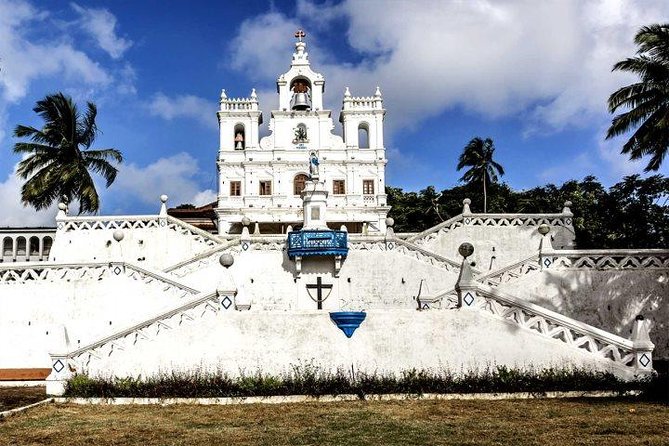
The church of Our Lady of the Immaculate Conception is the most prominent religious landmark on the route. The building dates to the 1560s and is described as having architecture inspired by the Church of Bom Jesus de Braga in Portugal.
The church is included as a photo stop, so plan for a look at its exterior and a chance to appreciate its scale and design. One posted description particularly praised the church as huge and beautiful inside, so if entry is possible during your visit, the interior may add something to the stop. Still, admission is not listed as a separate included ticket, and access can depend on local conditions.
This is a good place to pause and let the guide explain how Portuguese influence shaped Goa’s churches. The tour does not present the building as an isolated monument. It fits into the wider route, which has already shown you civic buildings, a palace, markets, and residential streets.
Bring a camera, but do not let the church become the entire point of the morning. Goa has many tours that focus almost entirely on church architecture. This experience is more appealing if you want the church as one part of a broader city walk.
Beer, feni, and a slower look at Fontainhas
At a local restaurant in or near Fontainhas, you can choose a mug of chilled beer or cashew feni. Feni is a Goan spirit distilled from cashew fruit, and this is a simple way to try a local drink without arranging a separate tasting.
The drink is included in the tour price, but other food and drinks are not included unless specifically stated. Do not arrive expecting a full meal. If you want lunch, budget separately and ask whether the restaurant stop can accommodate that plan.
The drink break gives the walking tour a social pause. You can sit, chat with the guide, and ask about the buildings and neighborhoods you have just seen. For some people, this will be the most enjoyable moment of the tour. For others, especially those who do not drink alcohol, it may feel less useful. The description does not specify a nonalcoholic substitute, so ask the operator before booking if that matters to you.
Feni can be strong, so take the easy option if you still have more sightseeing planned. A beer or spirit in the morning is not for everyone, and the tour does not include a meal to balance it.
Fontainhas and the local art gallery
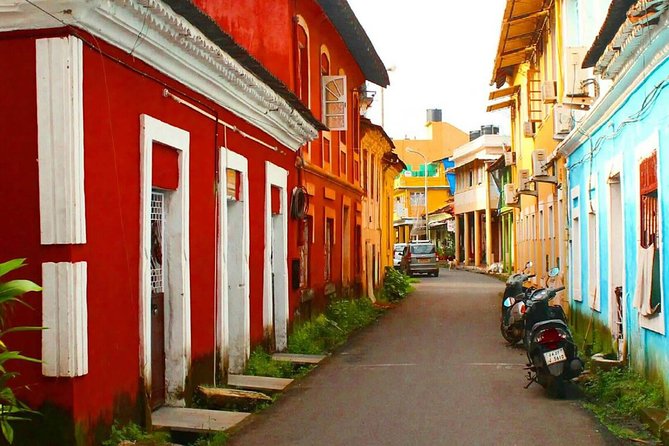
After the refreshment stop, you take a relaxed walk through Fontainhas. The neighborhood is the visual heart of the second half, with Latin-style streets and Portuguese-influenced architecture.
This is where the private format pays off. You can stop for photographs, ask about a painted facade, or spend a little more time looking at details without worrying about a large group waiting around the corner. The tour is not built around rushing from one major ticketed site to another. Its appeal lies in noticing street scenes and older buildings at walking speed.
A local art gallery is also part of the experience. The supplied details do not name the gallery or specify its size, collection, or opening hours, so keep your expectations flexible. It is best understood as a short cultural visit that adds contemporary or local artistic context to the older architecture.
That combination is useful. You see Goa as a place with both historic buildings and living creative work, rather than as an open-air collection of monuments. One posted description also noted that the city offers shops selling clothing and wearable art, along with good restaurants. The gallery and Fontainhas walk fit naturally with that broader interest in local art and design.
What the $94 price really covers
The cost is $94 per person. That is a noticeable amount for a four-hour walking tour, but you are paying for more than the guide’s time on the street.
The package includes hotel pickup and drop-off, private vehicle transport, a professional guide, the tuk-tuk ride, bottled water, GST, walking, and one beer or feni at a local restaurant. A private tour also means your group is not combined with strangers. For two or more people who value convenience and personal attention, the price can be reasonable.
The value is weaker if you are alone, comfortable arranging your own transport, or mainly want to stroll through Fontainhas without explanations. The tour offers group discounts, so larger parties may find the per-person cost easier to justify.
No entrance fees are listed because the major stops appear to be viewed from public areas or included as exterior visits. That keeps the package simple, but it also means you should not expect a series of paid museum admissions.
Who will enjoy this four-hour route?
I would recommend this tour to you if you want a first look at Goa beyond beach resorts. It suits people who like markets, architecture, food and drink traditions, local transport, and street photography.
It is also a good choice for a short stay. Pickup removes the need to work out the city’s layout before breakfast, and the route gives you several useful reference points for later exploring.
You may want another option if your main goal is a long church tour, extensive museum time, or a food-focused experience. The tour includes a drink, but it is not a full culinary tour. It includes art, but the gallery visit is not described in enough detail to make it the central reason to book.
Most people can participate, and the activity is near public transportation. Luggage is limited to one suitcase and one carry-on per person, with restrictions possible for oversized items such as surfboards, golf clubs, or bicycles. That makes it better suited to people already settled at a hotel than to those moving between accommodations.
Free cancellation is available if you cancel at least 24 hours before the 8:30 a.m. start time. Changes or cancellations made inside that window are not accepted for a refund.
Should you book the Goa walking tour?
Book it if you want a private introduction to Panjim that mixes working markets, old buildings, Fontainhas, a tuk-tuk ride, a church, art, and a local drink. The route has enough variety to keep four hours interesting, and hotel pickup makes it easy to fit into a Goa itinerary.
Skip it if $94 feels high for a half-day outing or if you prefer to explore independently. The limited number of posted ratings means you should not treat the 4.5 score as a guarantee, but the strongest features are clear: the market access, the architectural variety, and the chance to see Panjim as a lived-in city rather than simply a stop between beaches.
FAQ
How long does the Goa walking tour last?
The tour lasts approximately four hours.
What time does the tour begin?
The stated start time is 8:30 a.m.
Is hotel pickup included?
Yes. Hotel pickup and drop-off are included, with transport by private vehicle.
Is this a private tour?
Yes. Only your group participates in the activity.
What markets are visited?
The route includes a local fish market, vegetable and spice market, and flower market in Panjim.
Is the tuk-tuk ride included?
Yes. The tuk-tuk ride is included in the tour price.
Is a drink included?
Yes. The tour includes either beer or cashew feni at a local restaurant.
What is cashew feni?
Cashew feni is a Goan spirit distilled from cashew fruit.
Is food included?
No. Food and drinks are not included unless specifically stated. The included beer or feni is the stated exception.
Can I cancel for a full refund?
Yes, if you cancel at least 24 hours before the experience start time. Cancellations made less than 24 hours before the start are not refunded.
Just added in India
- Victorian Gothic Heritage Quarter and Art Deco Walking Tour★ 4.9 · 14 reviews
- New Delhi: Mughal’s architecture tour with transfers★ 4.0 · 7 reviews
- Victorian Gothic Heritage Quarter and Art Deco Walking Tour★ 4.5 · 13 reviews
- 2 day tour from Mumbai to architectural wonder of Mandu★ 5.0 · 2 reviews
- British Architecture Walk in Chennai by Wonder tours★ 5.0 · 10 reviews
- South India Tour- Temple Architecture and Backwaters★ 5.0 · 7 reviews
- Day trip from Bangalore to Lepakshi for Temple architecture & paintings★ 5.0 · 15 reviews
- Old & New Delhi Culture & Architecture City Private Tour★ 4.9 · 9 reviews
Walking Tours, compared.

The Official Art Deco Walking Tour by The Miami Design Preservation League
Read our review →
Baroque Architecture and Underground Walking Tour
Read our review →
Chicago in a Day: Food, History & Architecture Walking Tour
Read our review →

Ramblas, Old Town, Gothic and Gaudi Architecture Walking Tour
Read our review →
Chicago’s Secret Interiors Architectural Walking Tour
Read our review →
Browse the lists this tour appears in