
REVIEW · WALKING TOURS
British Architecture Walk in Chennai by Wonder tours
Chennai’s past is written in stone. This three-hour walk links railway buildings, memorials, Fort St. George, Napier Bridge, and the University of Madras, showing how British design was mixed with Indian forms. I like the focused route and the chance to see several major landmarks in one outing. I also like that a local snack and tea or coffee are included, a small but welcome pause during a walking tour.
The guides receive especially warm praise for their history explanations and friendly manner. Rajesh and Nanda are the names most often associated with this experience, and the comments describe both as professional, clear, and easy to spend time with. The main drawback is the pace: seven stops in about three hours gives you a useful introduction, but not much time for long museum visits or detailed architectural study.
This is a private activity, so only your group takes part. That makes the $49 price easier to justify for two or more people who want personal attention, though it is less of a bargain for a solo visitor. The walk begins at the Greater Chennai Corporation Office on Raja Muthiah Road and finishes back at the same meeting point.
Key points to know before booking
- Seven major sites in three hours: The route covers Ripon Building, Chennai Central, Southern Railway Headquarters, Victory War Memorial, Fort St. George, Napier Bridge, and the University of Madras.
- Rajesh and Nanda receive strong praise: The guides are noted for friendly service, clear history lessons, and useful explanations of colonial architecture.
- Private group format: Only your own group participates, which can make questions and conversation easier.
- A useful mix of styles: You see Gothic Revival, Indo-Saracenic, Anglican, military, railway, and civic architecture in one short walk.
- Snack and hot drink included: A local snack with tea or coffee adds a pleasant local touch.
- Watch the extras: Hotel transfers, tips, porterage, and camera or video camera fees are not included.
Why this Chennai architecture walk is worth your time
Chennai is often introduced through temples, food, music, and coastal views. This tour gives you a different entry point. It focuses on the city’s years as the capital of Southern British India, when government offices, railway facilities, churches, memorials, and university buildings reshaped central Chennai.
The most useful feature is the range of buildings. You are not looking at one grand monument in isolation. You move between public administration, transport, military power, education, and remembrance. That helps you see how colonial Chennai functioned as a city.
I also like the fact that the route does not focus only on famous façades. Chennai Central Railway Station and Southern Railway Headquarters remain connected to the working life of the city. Fort St. George brings in military and religious history, while the Senate House at the University of Madras shows how education served the colonial administration.
The tour is listed at $49 per person and lasts about three hours. The price includes a local guide, the snack and tea or coffee, admission-related charges listed for the stops, and taxes and handling fees. For a private group that wants a guided introduction rather than a quick look from a passing vehicle, that is a fair price.
Still, value depends on your style. If you want to examine every carving, read every museum label, or spend an hour inside Fort St. George, this route may feel too quick. If you prefer a clear overview with several stops and a guide who can connect them, the format works well.
More walking tours in India:
- British Architecture Walk, an immersive walking tour in Chennai
★ 5.0 · 60 reviews - Mumbai heritage walk- Story of Gothic and Art Deco buildings
★ 5.0 · 33 reviews - Victorian Gothic Heritage Quarter and Art Deco Walking Tour
★ 4.9 · 14 reviews
Ripon Building and Chennai Central Railway Station
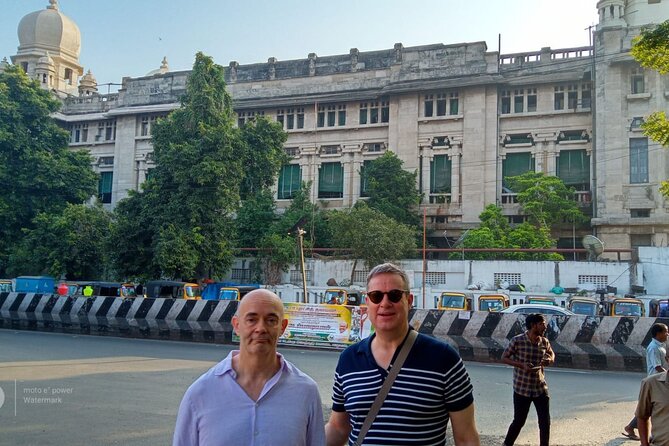
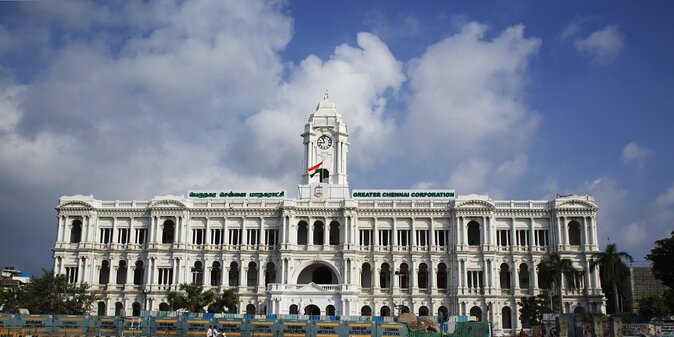
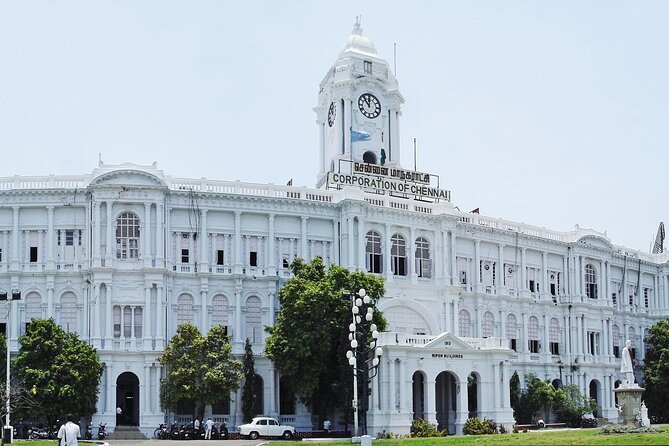
Ripon Building is an early highlight. Designed by G. S. T. Harris and built by Loganatha Mudaliar, it was named for Lord Ripon, a Governor-General of British India associated with local self-government. The visit here is scheduled for about 15 minutes, so expect an exterior-focused introduction rather than a long interior visit.
This is the sort of stop where a good guide matters. The building is not just an attractive white civic structure. Its name and purpose open a discussion about municipal administration and the way British rule operated through local institutions. I would listen closely here, since the short stop means the explanation carries much of the value.
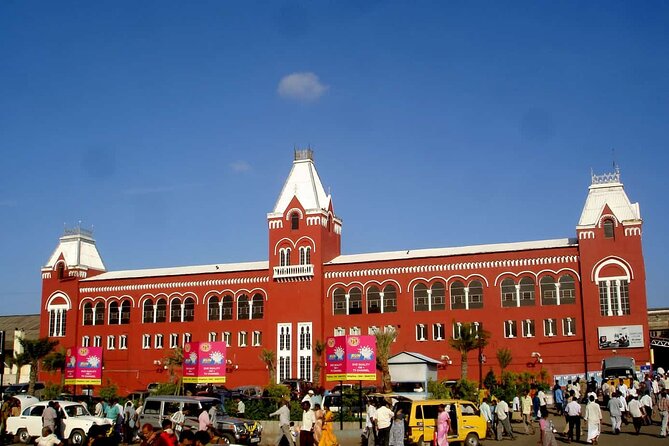
Chennai Central Railway Station receives more time, about 30 minutes. Built in 1873 in the Gothic Revival style by British architect George Harding, it was later modified by Robert Chisholm. The station now handles more than 350,000 passengers each day, so this is not a quiet heritage shell. It remains part of Chennai’s daily transport system.
That contrast is one of the best parts of the tour. You get to see a historic railway building while standing near a major modern transport hub. The station also gives the guide a chance to explain how railways helped link the city with the wider region.
The stop may be busy, and the setting is functional rather than calm. That is part of its character, but you should not expect a museum-like visit. Keep your group together and pay attention to the guide’s meeting instructions.
Southern Railway Headquarters and the language of Indo-Saracenic design
The walk continues to the Southern Railway Headquarters, built in 1921. N. Grayson designed the building, and Samynada Pillai built it. Its Indo-Saracenic style is important because it combines British planning and engineering with architectural forms drawn from India.
You will see a useful change in mood here. Chennai Central presents a strong Gothic Revival identity, while the railway headquarters reflects the colonial taste for buildings that appeared more closely tied to the region. The design raises a practical question: how did British architects use Indian motifs while serving British institutions?
The scheduled visit is about 15 minutes. That is enough for an exterior explanation and a few photographs if permitted, but not enough for a slow architectural survey. Camera and video fees are not included, so check any fee requirements before taking photographs inside controlled areas.
This stop also reinforces the railway theme. The two railway sites are not random additions. They show both the movement of people and goods and the administrative power behind that system.
Victory War Memorial and its changing meaning
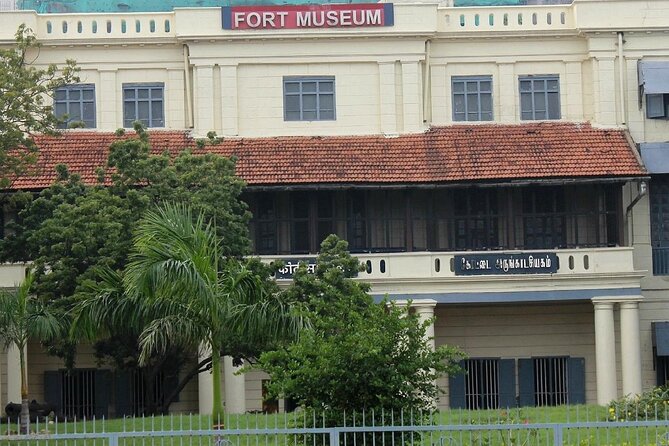
The Victory War Memorial is allotted about 30 minutes, giving it more breathing room than Ripon Building or Southern Railway Headquarters. It was first known as Cupid’s Bow and was built to commemorate the Allied victory in World War I from 1914 to 1918. It later became known as the Victory War Memorial.
That change in name is a useful reminder that public monuments can gather new meanings over time. The memorial is not only a decorative feature. It connects Chennai to global conflict and to the military history of the British Empire.
I would treat this as one of the better stops for a thoughtful guide explanation. The monument’s story is easy to reduce to a date and a victory, but its changing identity gives the guide material for a wider discussion of memory, empire, and public space.
The 30-minute allocation also helps balance the fast architectural stops. You can look carefully, ask questions, and understand why the memorial was placed here. As with the other outdoor locations, the experience depends on the guide’s storytelling and on how much time your group spends taking photographs.
A few more architecture tours in India worth a look
- The Hipster Chandigarh Architecture History Tour
★ 5.0 · 54 reviews - Jaipur City Heritage and Architecture Tour
★ 5.0 · 32 reviews - Le Corbusier’s Chandigarh : A Complete Architecture Tour
★ 4.7 · 25 reviews - Day trip from Bangalore to Lepakshi for Temple architecture & paintings
★ 5.0 · 15 reviews
Fort St. George, St. Mary’s Church, and the colonial museum
Fort St. George brings the tour into Chennai’s military and administrative past. Inside the fort area, the walk includes St. Mary’s Church, described as the oldest Anglican church in India, along with a museum containing relics from the colonial period.
This is the most layered stop on the route. You are not simply looking at one building. The fort, church, and museum together show how British authority was supported by military power, religion, government, and record keeping.
The 30-minute schedule is useful but limited. You can expect a compact visit to the church and museum rather than a full fort exploration. The museum should appeal to anyone who likes objects and documents more than façades, while the church adds a religious dimension to the story.
Admission is included in the tour details, but camera and video camera fees are specifically excluded. Ask before photographing. Some historic sites have rules that are easy to miss when you are moving with a group.
Fort St. George can also be the point where you most notice the difference between a guided walk and an independent visit. A guide can explain why the buildings matter and help you connect the objects inside the museum to the city outside. Without that context, the fort may feel like a collection of old structures rather than a center of colonial power.
Napier Bridge and the city’s familiar public image
Napier Bridge receives about 15 minutes. The original narrow bridge was widened and converted into a concrete structure, opening to the public in July 1943. It is often used by media as an image of Chennai.
This is a shorter and more visual stop. You will not spend long studying fine architectural detail. Instead, the bridge gives you a familiar civic landmark and a sense of how Chennai represents itself in photographs and public imagery.
The stop also changes the rhythm of the walk. After the formal buildings and museum, you are looking at infrastructure that connects parts of the city. That is useful because architecture is not only about grand offices and monuments. Bridges shape movement and daily life too.
Do not expect a major sightseeing session here. The value comes from the guide’s explanation and the bridge’s role in the city’s public identity.
The University of Madras and the Senate House
The final major sight is the University of Madras building, particularly the Senate House. The masterpiece was built between 1874 and 1879 and includes a convocation hall, porticos, a parapet, meeting halls, and a library. The Senate House serves as the administrative center of the university.
This is an excellent closing stop because it brings the walk from transport and government to education. It also offers another chance to examine the blend of British and Indian design that defines much of Chennai’s colonial architecture.
The scheduled time is about 30 minutes. You should have enough time to take in the exterior and hear how the university functioned within the city’s colonial system. The building’s spaces also suggest the ceremonial side of education, with its convocation hall and formal meeting rooms.
The University of Madras is a fitting end because it leaves you with more than a list of buildings. You can compare the Gothic Revival railway station, the Indo-Saracenic railway headquarters, the fort and church, the memorial, and the university complex. The route becomes a quick lesson in changing architectural taste and institutional power.
Guides, group size, and the feel of the tour
The strongest praise centers on the guides. Rajesh is described as friendly and effective at explaining the city’s history. Nanda is praised for professional service and clear information about heritage buildings. That matters because the buildings themselves do not always explain their own stories.
This is a private tour, so only your group participates. You can ask about details that interest you, spend a little longer at a favorite stop, or ask for clarification without competing with a large crowd. The exact rhythm will still depend on the guide and the group.
A mobile ticket is available, and confirmation is received when you book. The meeting point is the Greater Chennai Corporation Office at 53 Raja Muthiah Road, Periamet, Kannappar Thidal, Poongavanapuram. The activity ends back at that meeting point.
Hotel pickup and drop-off are not included. One comment describes a driver collecting someone from a hotel and the guide joining at the site, but the stated tour details do not include hotel transfers. I would not rely on pickup unless it is confirmed separately.
The walk is near public transportation, and most people can participate according to the tour information. You will want comfortable footwear, since the experience involves several sites on foot. A small day bag is more practical than anything bulky.
What the $49 price includes and leaves out
At $49 per person, this is priced as a private guided experience rather than a basic group stroll. The cost includes the local guide, taxes, fees, handling charges, and a local snack with tea or coffee. The listed admissions are included as well.
The private format is the key value. For a couple, family, or small group, the price buys a route that would take more planning to arrange independently. You also get historical interpretation at each stop, not just directions between buildings.
The price does not include tips, porterage, hotel transfers, or camera and video camera fees. It also excludes incidental charges. Add those costs when planning your budget.
The tour offers group discounts, but the exact discount is not stated. Ask for the current group rate before booking if you are traveling with several people.
Who should book this walk?
I would recommend it to first-time visitors who want a fast, organized introduction to Chennai’s colonial buildings. It is also a good fit if you enjoy civic architecture, railway history, military sites, churches, and university buildings more than shopping or food-focused tours.
History students and architecture fans will get the most from the variety of styles. The tour is also useful for anyone who wants to understand how Chennai’s public institutions developed under British rule.
You may want a different plan if you dislike walking, need long indoor visits, or want extensive time at Fort St. George. The schedule is tight, and several stops receive only 15 minutes.
The supplied rating is 5 out of 5 from 10 ratings, with a 100 percent recommendation figure. That is a small sample, so I would treat it as encouraging rather than final proof. Still, the repeated praise for Rajesh and Nanda points to the most important strength: the human guide can turn a series of old buildings into a connected story.
Should you book the British Architecture Walk in Chennai?
Book this tour if you want a private, three-hour introduction to Chennai’s British-era architecture, with strong guide support and a route that covers more than one type of site. The combination of Chennai Central, Fort St. George, the Victory War Memorial, Napier Bridge, and the University of Madras gives you a useful cross-section of the city.
Skip it if you want a slow museum day or a full architectural survey. At $49, the tour is best value for a small private group that wants context, clear organization, and a friendly guide. Confirm the meeting details, ask about photography fees, and remember that the booking is non-refundable and cannot be changed after purchase.
FAQ
How long does the British Architecture Walk in Chennai last?
The tour lasts approximately three hours.
What is the price?
The listed price is $49 per person. Group discounts are available, though the exact discount is not stated.
Is this a private tour?
Yes. Only your group participates in the activity.
Where does the tour begin?
It begins at the Greater Chennai Corporation Office, 53 Raja Muthiah Road, Periamet, Kannappar Thidal, Poongavanapuram, Chennai, Tamil Nadu 600003, India.
Where does the tour end?
The activity ends back at the meeting point.
Which sites are included?
The route includes Ripon Building, Chennai Central Railway Station, Southern Railway Headquarters, Victory War Memorial, Fort St. George, Napier Bridge, and the University of Madras building.
Is a guide included?
Yes. A local guide is included.
Are food and drinks included?
A local snack and tea or coffee are included.
Is hotel pickup included?
No. Hotel pickup and drop-off are not included.
Just added in India
- Victorian Gothic Heritage Quarter and Art Deco Walking Tour★ 4.9 · 14 reviews
- New Delhi: Mughal’s architecture tour with transfers★ 4.0 · 7 reviews
- Victorian Gothic Heritage Quarter and Art Deco Walking Tour★ 4.5 · 13 reviews
- 2 day tour from Mumbai to architectural wonder of Mandu★ 5.0 · 2 reviews
- Goa Walking tour: History, Culture, Art and architecture★ 4.5 · 2 reviews
- South India Tour- Temple Architecture and Backwaters★ 5.0 · 7 reviews
- Day trip from Bangalore to Lepakshi for Temple architecture & paintings★ 5.0 · 15 reviews
- Old & New Delhi Culture & Architecture City Private Tour★ 4.9 · 9 reviews
Walking Tours, compared.

The Official Art Deco Walking Tour by The Miami Design Preservation League
Read our review →
Baroque Architecture and Underground Walking Tour
Read our review →
Chicago in a Day: Food, History & Architecture Walking Tour
Read our review →

Ramblas, Old Town, Gothic and Gaudi Architecture Walking Tour
Read our review →
Chicago’s Secret Interiors Architectural Walking Tour
Read our review →

Browse the lists this tour appears in