
REVIEW · HISTORICAL TOURS
The Hipster Chandigarh Architecture History Tour
Chandigarh rewards curious eyes. This two-day tour makes the city’s concrete forms, careful planning, and human stories easier to understand, led by Rusty, a third-generation resident who spent much of his life in Corbusier-designed buildings. I like the insider access to places such as the Capitol Complex, private housing, and Lake Club. I also like the way architecture is tied to daily life, politics, food, and the city’s social aims.
The main drawback is the pace. You cover a great deal, and some stops are short. At $71.02 per person, the price is fair because transport, entry fees, photography charges, parking, and two full days of guiding are included, but this is not a relaxed sightseeing outing. You need to enjoy listening, walking, and looking closely at buildings.
Key points to know before booking
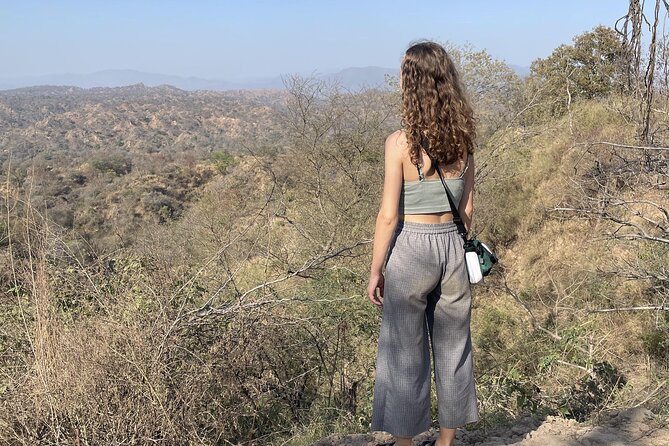
- Rusty’s personal connection: He lived in Corbusier’s public housing, studied in Pierre Jeanneret-designed schools, and worked in buildings designed by Maxwell Fry.
- A rare two-day schedule: The route goes beyond the famous Capitol Complex to housing, university buildings, museums, markets, and a yacht club.
- Entry costs are covered: Admission, photography fees, parking, pickup, drop-off, and vehicle charges are included.
- Architecture with context: You learn how Chandigarh’s planning shaped ordinary life, not just how its concrete buildings look.
- Flexible, human pacing: Rusty adjusts explanations and food stops to suit families, students, couples, architects, and other groups.
- A large possible group: The maximum group size is 41, so ask ahead if you want a more intimate feel.
Why Chandigarh needs a guide like Rusty
Chandigarh can look simple at first glance: broad roads, numbered sectors, clean lines, exposed concrete, and buildings that seem designed for a textbook rather than daily life. The details become more interesting once you understand who designed each part and why.
Rusty brings an unusual point of view. He is not only a journalist with 11 years of experience. He grew up inside the city’s built experiment. He spent 24 years in Corbusier’s public social housing and attended schools designed by Pierre Jeanneret. That personal background gives his explanations a useful local edge.
I like that he does not treat Chandigarh as a collection of famous names. Le Corbusier gets much of the attention, but the tour also gives space to Jeanneret, Maxwell Fry, and the planners who turned a post-independence vision into working neighborhoods, offices, schools, markets, and public spaces.
Rusty’s style also matters. His humor is designed to work for families, children, students, diplomats, and foreign officials without turning political subjects into arguments. The result sounds lively rather than academic, though you should still expect a lot of information.
More history tours in India:
- Mumbai heritage walk- Story of Gothic and Art Deco buildings
★ 5.0 · 33 reviews - Jaipur City Heritage and Architecture Tour
★ 5.0 · 32 reviews - Victorian Gothic Heritage Quarter and Art Deco Walking Tour
★ 4.9 · 14 reviews
Day one begins at the Capitol Complex
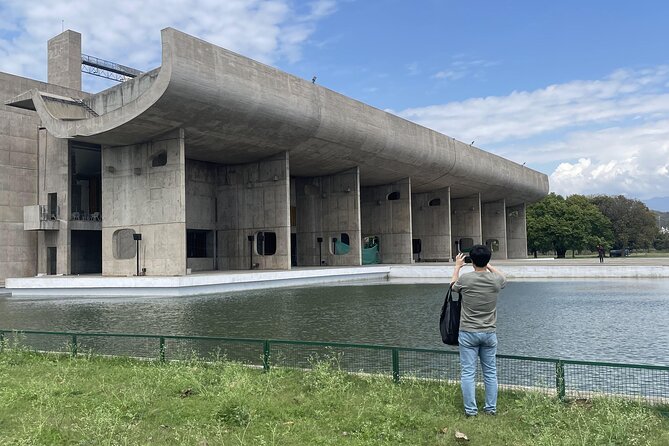
The first day opens at the Capitol Complex, Chandigarh’s most important group of modernist buildings. You visit the Secretariat, Assembly Hall, and Open Hand Monument, with about an hour set aside for this section.
The scale is the first thing you notice. These buildings were planned for government, but they also function as bold statements about a new India. Concrete is not used as a shy background material here. It is the subject.
The insider access is valuable because the Capitol Complex is more than a quick photo stop. Rusty can explain the forms, the planning ideas, and the way Corbusier used sun, shadow, mass, and movement. You should have time to take photographs, though the tour’s purpose is to help you see why the buildings look as they do.
The Open Hand Monument receives its own later visit, lasting about 25 minutes. This is useful rather than repetitive. At the first stop, you get the wider political and architectural setting. Later, you can focus on the monument itself, its message of peace and unity, and Corbusier’s idea of an open hand giving and receiving.
Wind can add a small bit of drama here. The monument is designed to move, and if conditions are right, you may see that motion.
The Le Corbusier Centre and Chandigarh Architecture Museum
The Le Corbusier Centre occupies the old architects’ building and offers about 50 minutes of guided time. This stop gives you a closer look at the working side of Chandigarh’s creation.
I find this kind of museum useful because it can connect grand buildings with practical design problems. The tour includes visual demonstrations of an early attempt at green, sustainable, naturally cooled construction. That makes the visit relevant beyond architectural history. You begin to notice how climate shaped the city’s forms.
The Chandigarh Architecture Museum follows with about an hour. Its raw concrete form and tubular staircase pay homage to Corbusier’s 1965 Zurich Pavilion. You explore three levels of exhibits, including rare material connected with Chandigarh’s modernist story.
This is one of the denser portions of the day. If you are not used to architecture museums, the number of names, dates, and design terms may feel like a lot. Rusty’s storytelling helps keep it grounded, but you should not expect a quick museum stroll.
Gandhi Bhawan and Panjab University
Gandhi Bhawan receives a 30-minute private guided visit. Designed by Pierre Jeanneret, it is one of Chandigarh’s most recognizable structures, with a distinctive spinning lotus-shaped roof.
The building shows why Jeanneret deserves more attention. It feels sculptural, but it also belongs to a university setting and carries a clear symbolic purpose. A short visit works well here because the form is compact and easy to study from different angles.
Panjab University gets about 40 minutes. The stop expands the story from individual monuments to a working academic center. You see how Chandigarh’s modernist language adapted to education, movement, shade, and everyday campus use.
For anyone interested in planning, this is an important part of the tour. A city is not defined only by its government buildings. Schools and universities reveal how grand ideas were meant to function for ordinary people.
A few more architecture tours in India worth a look
- British Architecture Walk, an immersive walking tour in Chennai
★ 5.0 · 60 reviews - Le Corbusier’s Chandigarh : A Complete Architecture Tour
★ 4.7 · 25 reviews - Day trip from Bangalore to Lepakshi for Temple architecture & paintings
★ 5.0 · 15 reviews - British Architecture Walk in Chennai by Wonder tours
★ 5.0 · 10 reviews
Geometric Hill and the Tower of Shadows
Geometric Hill is a brief 20-minute stop, but it gives you a different way to read the Capitol Complex. Its grid-like earth mounds and concrete forms turn open space into a designed object.
The Tower of Shadows is even shorter, at about 15 minutes. Corbusier designed it as a demonstration structure for studying solar movement. It shows his interest in controlling sunlight rather than simply blocking it.
These stops reward close attention. They may not satisfy someone looking for a long indoor visit or a major monument, but they are useful for understanding the technical side of Corbusier’s work. I would bring a phone or camera and listen carefully to the explanation before rushing to take pictures.
Pierre Jeanneret’s home and the human side of design
The Museum Maison Jeanneret offers around 30 minutes inside the first house built in Chandigarh. It was Pierre Jeanneret’s residence for 11 years and is now a museum.
This is one of the most personal stops on the route. Government buildings can feel distant and imposing. A house shows how the designers thought about rooms, light, furniture, storage, and daily routines.
The visit also corrects the common idea that Chandigarh was made by Corbusier alone. Jeanneret was a major collaborator, and his work appears across the city. Seeing his home makes his design approach easier to understand.
Day two starts at Sukhna Lake
The second day begins with a 30-minute walk at Sukhna Lake. This manmade lake was designed by Corbusier to refresh groundwater and help cool the northern sectors of Chandigarh.
The lake gives the tour a welcome change of pace. After a day focused on concrete buildings and government spaces, you get open air and a gentler setting. Rusty explains how the lake was created and how its role changed over time.
I like this stop because it shows that Chandigarh’s planning was not only about roads and buildings. Water, shade, recreation, and climate were part of the larger plan. You also get a chance to reset before returning to the city’s architecture.
Sector 17 Market and the city at street level
Sector 17 Market receives about an hour of walking and conversation. This is where the tour looks at Corbusier’s commercial planning, an area often missed by visitors who focus only on the Capitol Complex.
The shaded, tree-lined walkways are important. You can observe how the market was designed for commerce, movement, community, and people watching. It is also a useful place to see how planned architecture meets real daily use.
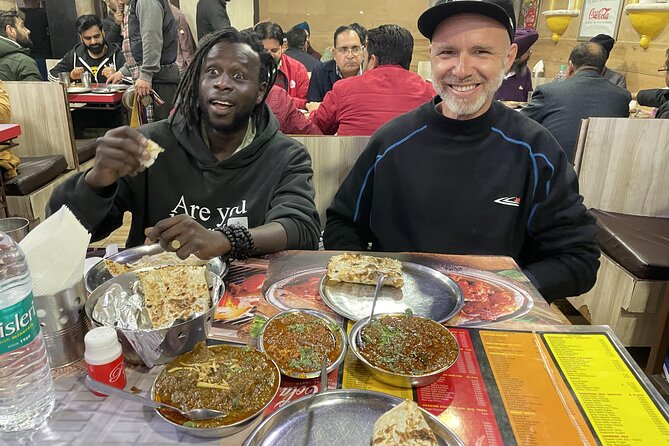
The market is the only listed stop without an admission fee. Frequent snack stops are also part of the general rhythm, but you pay for your own food and drinks. The guide keeps these stops inexpensive, which works well for students and backpackers, as well as anyone who would rather spend money on local snacks than formal restaurants.
The War Memorial and public housing
The Chandigarh War Memorial is set within Bougainvillea Garden in Sector 3. The visit lasts about 30 minutes and offers a quieter change of mood.
The design is restrained, and the setting gives the memorial room to work without spectacle. This stop adds military and civic memory to a tour that could otherwise focus too narrowly on modernism.
The public housing walk lasts about an hour and is subject to local conditions. It is one of the most valuable parts of the experience because you see Pierre Jeanneret’s housing not as a museum piece, but as a functioning part of the city.
Rusty’s own experience here adds meaning. He lived in Corbusier’s public social housing for much of his life, so he can discuss the buildings as homes rather than just architectural objects. This is the point where Chandigarh’s planning ideas meet real family life, neighbors, routines, and limits.
Access can change because the housing remains functional. Treat that uncertainty as part of the arrangement, not a flaw. The tour promises rare access, but no responsible guide can guarantee every private or active site under all local conditions.
Government Museum and Art Gallery
The Government Museum and Art Gallery takes about an hour. It was designed by Le Corbusier in the 1960s and holds material from the pre-partition era in Pakistan, along with one of the world’s largest collections of Greco-Buddhist art.
This stop broadens the tour well beyond Chandigarh’s founding. You are not only looking at modern concrete. You are also encountering art and objects connected with the region’s older cultural world and the upheaval of partition.
I would give this museum your full attention. It can feel like a change of subject, but that change is useful. Chandigarh was created in a place with a long past, and the museum helps place the new city in that wider setting.
Lake Club and the less obvious Corbusier
The final stop is Lake Club, a private yacht club designed by Corbusier only a year before his death. The visit lasts about 30 minutes.
This is a good closing stop because it reveals a lesser-known side of his work. You see a recreational building made for boating and social life, not government or education.
Access is described as insider guided access, so the stop depends on local arrangements. The building’s private character is part of its appeal, but it also means you should remain flexible.
What the $71.02 price really covers
At $71.02 per person, this tour is not the cheapest way to see Chandigarh. The value comes from what is bundled into the fee.
You receive pickup and drop-off, an air-conditioned vehicle, taxi and driving costs, parking, waiting time, entrance fees, photography charges, and admission tickets. Over two days, those costs could become awkward to manage on your own, especially when several sites have different access rules.
The guiding is the bigger value. Chandigarh’s architecture is easy to photograph badly and understand only partly. A local guide who can connect Corbusier’s ideas with housing, education, markets, and climate gives you a more useful visit than a series of isolated stops.
The tour can include up to 41 people, which is worth considering. A large group may mean less personal attention and more time moving people around. On the other hand, Rusty’s experience includes adjusting the pace and explanations to different kinds of groups.
Who will enjoy this two-day tour
I would recommend it most strongly if you:
- Like architecture, urban planning, photography, or modern history
- Want to understand Chandigarh beyond its most famous monument
- Prefer a local guide with a personal connection to the city
- Appreciate museums and public buildings as much as scenic stops
- Want transport and admissions handled in one package
- Enjoy a full schedule with conversation and frequent short visits
Families can also enjoy it because Rusty keeps the humor gentle and the facts approachable. Students and budget-minded visitors benefit from inexpensive food stops and included transport.
I would hesitate if you want a slow holiday with long café breaks. Some visits last only 15 or 20 minutes, and the two days contain many stops. You should also be comfortable with changes if a public holiday, local restriction, or weather problem affects access.
One previous booking had to cope with an unexpected public holiday that closed key sites. Rusty filled the day with other visits, which suggests useful flexibility, but it also shows why the exact order cannot always be treated as fixed.
Practical details before you commit
The start time is 9:00 a.m. Pickup is offered, and the tour uses an air-conditioned vehicle. Confirmation arrives at booking, service animals are allowed, and the experience is near public transportation.
Most people can take part, but you should expect walking at parks, markets, campuses, museums, and architectural sites. Food and drinks are not included. Gratuities are optional.
The activity requires good weather. If poor weather cancels it, you are offered another date or a full refund. For other cancellations, the refund depends on timing: cancel at least six full days before the start for a full refund, two to six full days before for a 50 percent refund, and less than two full days before for no refund.
Should you book Rusty’s Chandigarh architecture tour?
Book it if you want Chandigarh explained from the inside rather than viewed from a car window. Rusty’s strongest qualities are his local experience, humor, flexibility, and ability to connect architecture with ordinary life.
The tour costs more than arranging a few public sights yourself, but it covers two substantial days, transport, tickets, parking, and access that may be difficult to organize alone. I would choose it especially for a first visit, an architecture-focused trip, or a short stay when you want a clear understanding of the city.
Skip it if you dislike structured days or have little patience for buildings, museums, and planning details. For the right person, though, this is a thoughtful way to see why Chandigarh is not just a city of striking concrete. It is a living experiment in how design can shape daily life.
FAQ
How long is the Chandigarh architecture tour?
The experience lasts approximately two days, with a full itinerary spread across Day 1 and Day 2.
What time does the tour start?
The start time is 9:00 a.m.
Is pickup included?
Yes. Pickup and drop-off charges are included, along with driving, parking, waiting, and taxi costs.
Is transportation air-conditioned?
Yes. The tour includes an air-conditioned vehicle.
Are entrance fees included?
Yes. All listed entry tickets, admission fees, photography tickets, and related charges are included.
Is food included?
No. Snack stops are included in the schedule, but you pay for your own food and drinks.
How large can the group be?
The maximum group size is 41 people.
Can service animals join the tour?
Yes. Service animals are allowed.
What happens if bad weather cancels the experience?
You will be offered a different date or a full refund if poor weather causes cancellation.
What is the cancellation policy?
Cancel at least six full days before the start for a full refund. Cancel two to six full days before for a 50 percent refund. Cancellations less than two full days before the start are not refunded.
Just added in India
- Victorian Gothic Heritage Quarter and Art Deco Walking Tour★ 4.9 · 14 reviews
- New Delhi: Mughal’s architecture tour with transfers★ 4.0 · 7 reviews
- Victorian Gothic Heritage Quarter and Art Deco Walking Tour★ 4.5 · 13 reviews
- 2 day tour from Mumbai to architectural wonder of Mandu★ 5.0 · 2 reviews
- Goa Walking tour: History, Culture, Art and architecture★ 4.5 · 2 reviews
- British Architecture Walk in Chennai by Wonder tours★ 5.0 · 10 reviews
- South India Tour- Temple Architecture and Backwaters★ 5.0 · 7 reviews
- Day trip from Bangalore to Lepakshi for Temple architecture & paintings★ 5.0 · 15 reviews
Historical Tours, compared.
Chicago in a Day: Food, History & Architecture Walking Tour
Read our review →
Charleston’s Best Highlights: History, Culture & Architecture
Read our review →
Palm Springs Modernism Architecture & History Bike Tour
Read our review →
Historic Georgetown: History, Gossip, & Architecture Walking Tour
Read our review →
Charleston History, Homes, and Architecture Guided Walking Tour
Read our review →
Historical and Architectural Chicago Fireboat River & Lake Cruise
Read our review →Browse the lists this tour appears in