
REVIEW · GOTHIC QUARTER TOURS
Victorian Gothic Heritage Quarter and Art Deco Walking Tour
Mumbai’s grandest facades fit into one walk. This two-hour route links the General Post Office, Town Hall, St. Thomas Cathedral, the Bombay High Court, Rajabai Clock Tower, Oval Maidan, Kala Ghoda, the Gateway of India, and the Taj Mahal Palace. I like the compact route, which gives you a useful first look at South Mumbai without requiring a car, and I like the chance to hear local stories from guides such as Abhi, Yash, Ravi, and Abhishek.
The price is reasonable at $18.88 per person, especially with bottled water included and a maximum group size of 15. The main caution is that this is an outdoor walking tour with many brief stops, so your enjoyment may depend on the guide assigned to you. Most feedback praises the guides, but one past participant found the historical explanation and presentation weak.
The walk begins at Regal Cinema in Colaba and ends near Churchgate Station. That start-to-finish design works well for your first morning in Mumbai, though the route can run longer than the advertised two hours if the guide adds stops or allows extra questions.
Key Points to Know Before You Go
- Ten major landmarks in about two hours: You move from the GPO and Town Hall to Gothic university buildings, Oval Maidan, Kala Ghoda, and the waterfront.
- A useful contrast of styles: The route brings together Indo-Saracenic, neoclassical, Victorian Gothic, and Art Deco architecture.
- A small group limit: No more than 15 people are scheduled, making it easier to hear the guide and ask questions.
- Strong guide feedback: Abhi, Yash, Ravi, and Abhishek are praised for clear storytelling, local facts, friendliness, and flexibility.
- A walking-only experience: Private transport is not included, but the route begins near public transport and finishes at Churchgate Station.
- Good first-day value: At $18.88, it offers a broad orientation to central Mumbai for less than the cost of many private sightseeing options.
Starting at Regal Cinema in Colaba
The meeting point at Regal Cinema places you in South Mumbai’s Colaba district, a sensible base for this kind of architecture walk. From here, the route moves through the old civic and commercial center before finishing near Churchgate.
You should arrive ready to walk at city pace. The tour does not include private transportation, and the 10 stops are close enough to connect on foot. Bottled water is included, a useful touch in Mumbai’s warm conditions, but you will still want comfortable shoes and sun protection.
The group limit of 15 matters. A smaller party gives you a better chance of hearing explanations beside busy roads and asking about details that catch your eye. It also keeps the group from becoming a slow-moving crowd at narrow pavement corners.
The published duration is about two hours, with roughly 5 to 15 minutes at each stop. One guide-led outing reportedly lasted three hours after adding unscheduled stops and finishing at Mumbai Railway Terminus. I would treat the two-hour time as a guide rather than a hard promise, especially if you enjoy questions and photographs.
More Gothic Quarter walks in India:
- Mumbai heritage walk- Story of Gothic and Art Deco buildings
★ 5.0 · 33 reviews - Victorian Gothic Heritage Quarter and Art Deco Walking Tour
★ 4.9 · 14 reviews - Ramblas, Old Town, Gothic and Gaudi Architecture Walking Tour
★ 5.0 · 723 reviews
Indo-Saracenic Grandeur at Mumbai GPO

The General Post Office is the first major stop, with about 15 minutes set aside. Built in 1913 and designed by John Begg, it shows the Indo-Saracenic style, a blend of Indian design elements and European architectural planning.
This is a smart opening because the building immediately shows how much visual drama Mumbai puts into public institutions. The GPO is not simply a place to send a letter. It reflects the importance of communication, administration, and trade in the city’s growth.
You should expect to admire the exterior rather than spend time inside. Admission is listed as free, but the experience is primarily about the building and the guide’s explanation. If architecture is your main interest, ask how the design differs from the Gothic buildings you will see later.
Town Hall and the Asiatic Society Library
The next stop is Town Hall, home to the Asiatic Society Library, with about 15 minutes. Founded in 1804, the institution is associated with rare manuscripts, old texts, and valuable artifacts. Its neoclassical appearance gives the route a clear change of mood after the GPO.
Look for the building’s formal symmetry and classical lines. The restrained design helps you see that Mumbai’s colonial architecture was not all pointed arches and carved ornament. This stop adds an intellectual side to the walk, linking the city’s buildings with scholarship, collecting, and the preservation of written material.
The listed admission is free. Still, the short stop means you should not expect an extended library visit or time to inspect its collections at length. The value here comes from context and comparison, not from a long indoor tour.
A Pause at Horniman Circle Garden
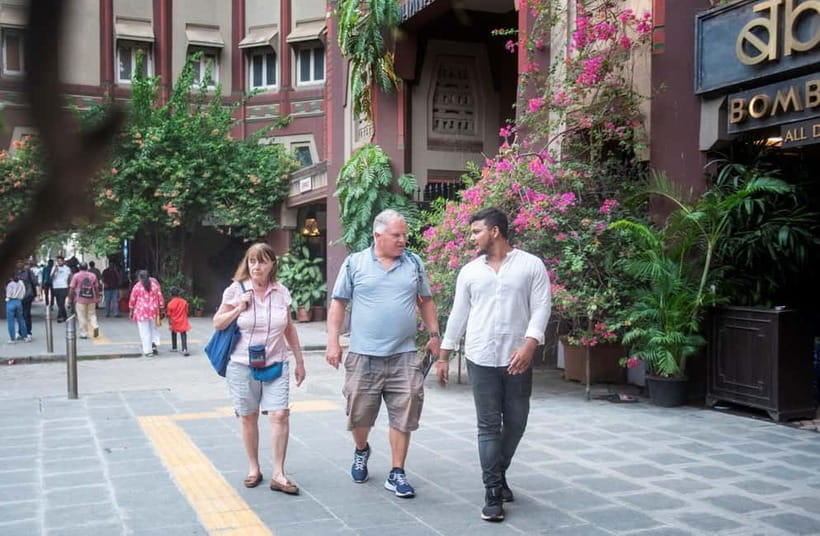
Horniman Circle Garden offers a 15-minute break among grand colonial buildings. Created in 1860 and named after British editor Benjamin Horniman, it gives the route a little breathing room after several formal facades.
I like this stop because it helps you understand the shape of the neighborhood. The garden is not isolated from the city. It sits within a ring of historic buildings, so you can look across the open space and see how public gardens once helped organize commercial districts.
The character of this stop can change with the day. One Sunday outing included time in a park where many cricket matches were taking place. That kind of moment is one reason a walking tour can feel more connected to daily Mumbai than a drive-by sightseeing trip.
More Art Deco tours in India:
- The Official Art Deco Walking Tour by The Miami Design Preservation League
★ 5.0 · 1,580 reviews - Miami South Beach Art Deco Walking Tour
★ 5.0 · 1,039 reviews - Miami Beach Food and Art Deco Walking Tour
★ 4.5 · 245 reviews - Guided 10am Morning Art Deco Walk From Napier Art Deco Trust
★ 4.5 · 167 reviews
St. Thomas Cathedral, Mumbai’s Oldest Anglican Church
St. Thomas Cathedral receives another 15 minutes. Consecrated in 1718, it is described as Mumbai’s oldest Anglican church and one of the city’s early British colonial buildings.
This stop adds religious and civic history to the route. The church is not presented as a separate paid attraction, and admission is free. Instead, you get a short look at its architecture and its place in Mumbai’s development.
The quick timing is both useful and limiting. It keeps the tour moving, but it may not satisfy you if you want to study every memorial, interior detail, or piece of decorative work. Ask your guide to point out the features that best explain the building’s design.
Gothic Power at the Bombay High Court

The Bombay High Court is one of the route’s strongest architectural stops. Inaugurated in 1879, the building is a major example of Gothic Revival design and remains closely tied to Mumbai’s legal system.
The court makes the city’s colonial architecture feel practical rather than decorative. These buildings were designed to house the institutions that governed public life. The pointed forms and elaborate exterior details are easier to understand when you connect them with the court’s working purpose.
You will view the building from outside, with around 15 minutes allocated. Do not expect a courtroom visit or an interior legal tour. The attraction is the structure itself, along with the guide’s explanation of its role.
Rajabai Clock Tower and the University of Mumbai
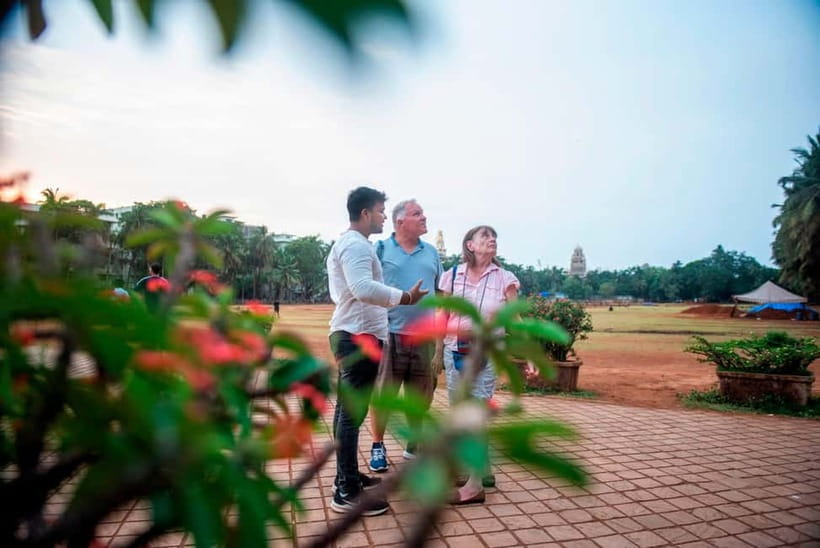
Rajabai Clock Tower is another 15-minute stop and one of the walk’s most recognizable Gothic landmarks. Completed in 1878, it was designed by Sir George Gilbert Scott and funded by Premchand Roychand.
The tower gives you a chance to look upward and notice vertical design, pointed arches, and the kind of ornamental detail that defines Mumbai’s Victorian Gothic quarter. Its position at the University of Mumbai also shows how education formed part of the city’s grand civic plan.
This is a good place for photographs, though the short schedule means you may need to choose between taking pictures and listening closely. I would first hear the guide’s explanation, then use the remaining time for the tower and surrounding buildings.
Oval Maidan: Gothic Buildings on One Side, Art Deco on the Other
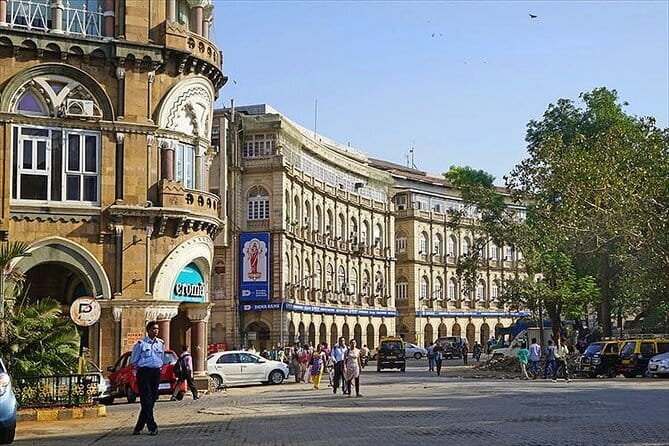
Oval Maidan is the route’s best point for comparing two architectural eras. Established in the 19th century, the recreational ground is flanked by Victorian Gothic buildings and Art Deco architecture.
That side-by-side view is the heart of the tour. Instead of seeing Gothic and Art Deco as separate subjects, you can compare their shapes across the open field. One side is associated with pointed forms and elaborate decoration. The other presents the cleaner lines and geometric look of the 20th century.
Only about 10 minutes are assigned here, so the guide’s explanation is especially valuable. The maidan may also offer a glimpse of local cricket culture. Sunday can be a particularly lively time for seeing matches in the open grounds, based on one reported outing.
Kala Ghoda and the Black Horse District
The stop at Kala Ghoda lasts about five minutes, making it the shortest scheduled pause. The area is known for galleries, museums, street art, and the cultural events associated with the Kala Ghoda Arts Festival.
The name refers to the former statue of King Edward VII. Even with limited time, the stop helps connect the grand civic quarter with Mumbai’s art scene. It is also a useful transition from formal government and university buildings toward the waterfront sights.
Five minutes is not long enough to explore the galleries or museums. If Kala Ghoda interests you, plan to return independently after the tour. The walk can show you where to spend more time later, but it cannot replace a full visit to the district.
The Gateway of India and the Taj Mahal Palace
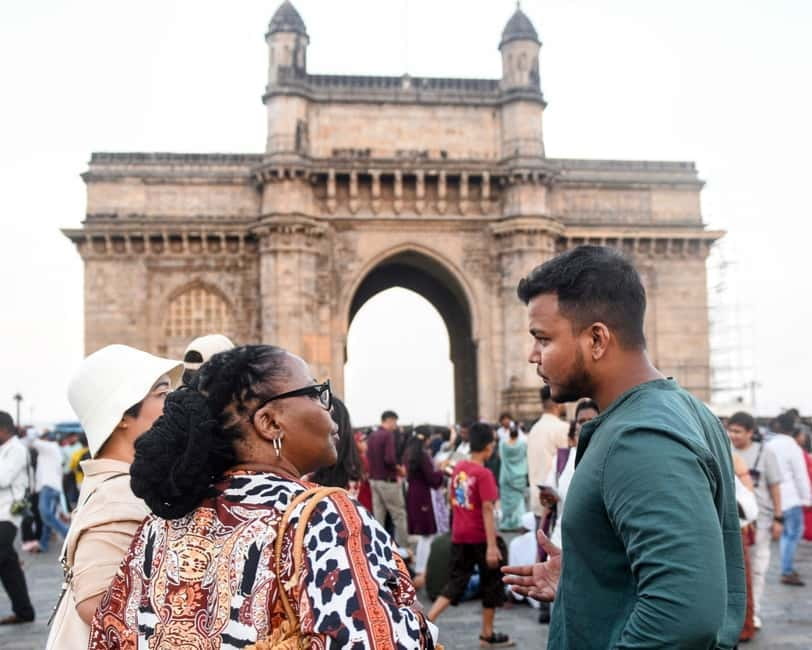
The route then reaches the Gateway of India, with about 10 minutes for the stop. Built in 1924 to commemorate King George V and Queen Mary’s visit to India, the arch has become one of Mumbai’s best-known landmarks.
This is the point where the walk shifts from civic architecture to waterfront symbolism. The Gateway is visually grand, but its meaning is layered. It was built to celebrate imperial ceremony, yet it is now one of the city’s most familiar public images.
The tour finishes its main landmark sequence at the Taj Mahal Palace, built in 1903. The luxury hotel faces the Arabian Sea and is noted for its architecture and long association with Mumbai’s public life. You receive about five minutes here, so expect an exterior look rather than a hotel tour.
These final stops can be busy. Stay close to the guide and allow time for photographs without blocking foot traffic. The combination of the Gateway and the Taj Palace makes a strong final chapter, but you may want to return later when you can look around at your own pace.
What the Guides Add to the Walk
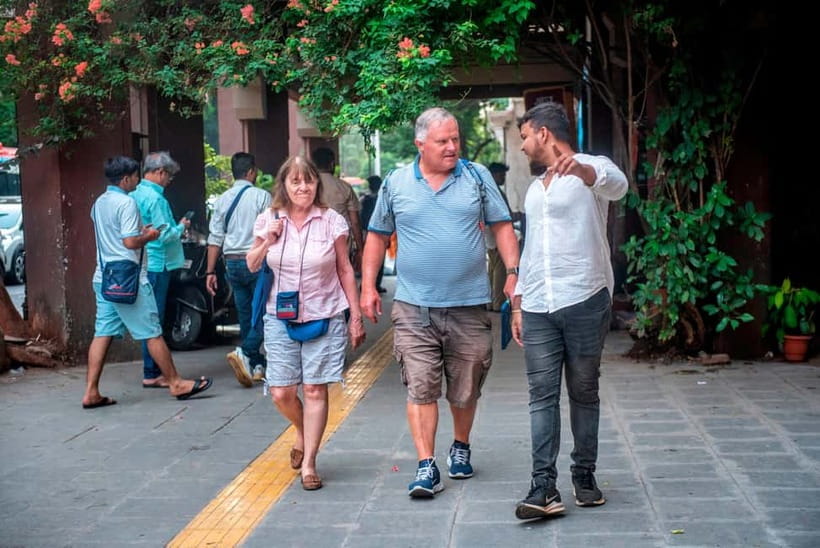
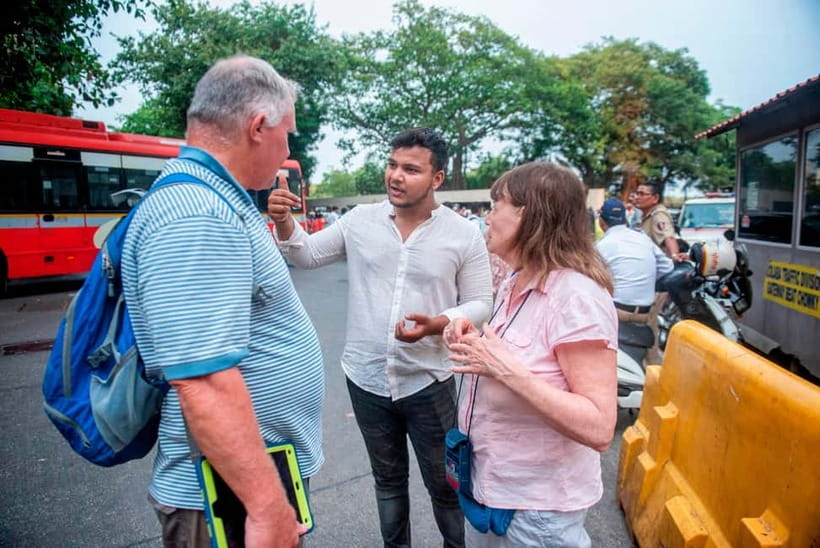
The guide is the most important variable in this experience. Abhi receives repeated praise for being friendly, clear in English, flexible, and good at mixing major landmarks with lesser-known facts. Yash is credited with explaining the city’s past well and taking good photographs for participants.
Ravi is praised for his passion for Mumbai’s architecture and history. Abhishek is described as answering questions thoroughly and adjusting the route with extra stops. These details suggest that the best version of the tour is conversational rather than purely scripted.
There is one important balance point. A past participant felt the guide lacked sufficient knowledge and presented the material poorly. That criticism means you should not book this expecting a guaranteed specialist lecture. The overall rating is 4.7 from 13 reviews, and 92 percent recommend the experience, but a small review sample cannot promise that every guide will suit every listener.
Is $18.88 Good Value?
At $18.88 per person, I consider this a fair price for a two-hour introduction to South Mumbai. You cover 10 major sights, receive bottled water, and benefit from a group capped at 15. The route also saves you the effort of working out how the Gothic quarter, Oval Maidan, Kala Ghoda, and Colaba fit together.
The value is strongest if you are new to Mumbai or want a quick architectural orientation. It is also useful for a local who wants to explain the city to a visiting manager or friend. One person who grew up in Mumbai used the walk for exactly that purpose and found the historical background worthwhile.
The value is weaker if you already know these districts well or want long interior visits. Several stops last only five or 15 minutes, and private transportation is not included. You are paying for the guide’s interpretation and the route design, not for entry into a series of attractions.
Who Should Book This Mumbai Walk?
I would recommend it for a first visit, a first morning, or anyone interested in architecture and city history. It gives you a clear framework for later independent exploring and ends at Churchgate Station, a convenient finish for continuing your day.
It also suits people who prefer walking to sitting in a vehicle. The short route connects major sights without complicated transfers, and the small group should make questions manageable.
You may want another option if you dislike outdoor walking, want extensive time inside churches and libraries, or require a fully private experience. The tour has a maximum of 15 people, not a private guide arrangement, and the schedule leaves little time for unplanned exploration unless the guide chooses to extend it.
Should You Book It?
Book this tour if you want a low-cost introduction to Mumbai’s most important central buildings, with a good chance of friendly local storytelling. The strongest reasons are the architectural variety, the manageable route, and guides such as Abhi, Yash, Ravi, and Abhishek, who are praised for clear explanations and useful local details.
Go in with realistic expectations. This is a fast outdoor orientation, not a series of interior visits or a specialist architecture seminar. At $18.88, it offers good value for a first look, especially if you plan to revisit Kala Ghoda, the Gateway, or the Gothic quarter on your own afterward.
FAQ
How long is the Victorian Gothic Heritage Quarter and Art Deco Walking Tour?
The advertised duration is approximately two hours. One outing lasted three hours after extra stops were added, so the actual finish may vary.
How much does the tour cost?
The listed price is $18.88 per person.
Where does the tour begin?
The tour begins at Regal Cinema, Apollo Bandar, Colaba, Mumbai, Maharashtra 400001, India.
Where does the tour end?
The tour ends at Churchgate Station on Maharshi Karve Road, Mumbai.
Is bottled water included?
Yes. Bottled water is included in the tour price.
Is private transportation included?
No. Private transportation is not included. The experience is a walking tour, and the meeting point is near public transportation.
How many people can join the tour?
The group has a maximum of 15 participants.
What landmarks does the route visit?
The route includes Mumbai GPO, Town Hall and the Asiatic Society Library, Horniman Circle Garden, St. Thomas Cathedral, the Bombay High Court, Rajabai Clock Tower, Oval Maidan, Kala Ghoda, the Gateway of India, and the Taj Mahal Palace.
Is admission to the stops included?
The listed stops show free admission. The tour is mainly an exterior walking experience, with short scheduled visits at each location.
Can I cancel for a full refund?
Yes. You can cancel at least 24 hours before the experience start time for a full refund. Cancellations or changes made less than 24 hours before the start time are not refunded or accepted.
More history tours in India
- The Hipster Chandigarh Architecture History Tour
★ 5.0 · 54 reviews - Jaipur City Heritage and Architecture Tour
★ 5.0 · 32 reviews - Chicago in a Day: Food, History & Architecture Walking Tour
★ 5.0 · 1,153 reviews - Charleston’s Best Highlights: History, Culture & Architecture
★ 5.0 · 422 reviews
More walking tours in India
- British Architecture Walk, an immersive walking tour in Chennai
★ 5.0 · 60 reviews - British Architecture Walk in Chennai by Wonder tours
★ 5.0 · 10 reviews - Goa Walking tour: History, Culture, Art and architecture
★ 4.5 · 2 reviews - Lecce: Baroque Architecture and Underground Walking Tour
★ 4.6 · 1,248 reviews
Just added in India
- Victorian Gothic Heritage Quarter and Art Deco Walking Tour★ 4.9 · 14 reviews
- New Delhi: Mughal’s architecture tour with transfers★ 4.0 · 7 reviews
- 2 day tour from Mumbai to architectural wonder of Mandu★ 5.0 · 2 reviews
- Goa Walking tour: History, Culture, Art and architecture★ 4.5 · 2 reviews
- British Architecture Walk in Chennai by Wonder tours★ 5.0 · 10 reviews
- South India Tour- Temple Architecture and Backwaters★ 5.0 · 7 reviews
- Day trip from Bangalore to Lepakshi for Temple architecture & paintings★ 5.0 · 15 reviews
- Old & New Delhi Culture & Architecture City Private Tour★ 4.9 · 9 reviews
Gothic Quarter Tours, compared.

Ramblas, Old Town, Gothic and Gaudi Architecture Walking Tour
Read our review →
Barcelona 1.5h Private Old Town, Gothic & Ramblas Walking Tour
Read our review →
Gothic Quarter & Gaudí’s Treasures Small-Group Tour
Read our review →
Mumbai heritage walk- Story of Gothic and Art Deco buildings
Read our review →
Barcelona in One Day: Gaudí, Gothic Quarter &Tapas (Private Tour)
Read our review →
Victorian Gothic Heritage Quarter and Art Deco Walking Tour
Read our review →
Browse the lists this tour appears in