
REVIEW · BAUHAUS AND BRUTALIST ARCHITECTURE TOURS
Brutalist Tbilisi: Urban exploration and untold stories
Brutalism tells human stories. This four-hour Tbilisi tour trades postcard balconies for Soviet-era buildings, quiet neighborhoods, and places most visitors miss. I like the comfortable car travel and the guides’ gift for connecting concrete, steel, and daily life. The main drawback is clear: abandoned buildings, heights, and rough urban settings will not suit everyone.
I also like the small-group feel, the stop at a local bakery, and the chance to ride an old cable car rather than simply photograph it. Guides such as Khatuna, Khato, Jonah, Aleksi, and Oksana have earned especially warm praise for clear explanations and good humor. Allow extra time, though, since Tbilisi traffic and weather can change the pace.
Key points to know before you book
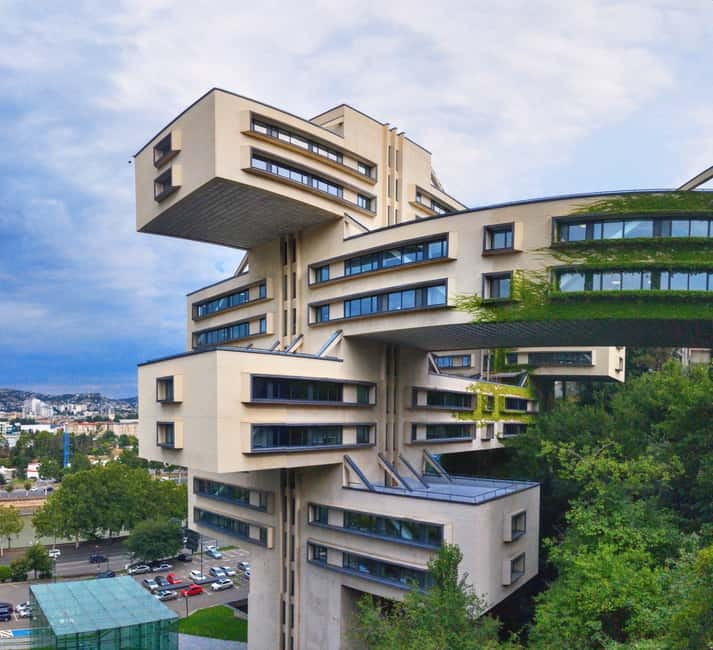
- Ministry of Highways: See one of Eastern Europe’s best-known Brutalist buildings, a massive concrete structure with a striking sculptural form.
- Nutsubidze Skybridge: Walk through a 1970s residential complex and see the suspended bridges that link its towers.
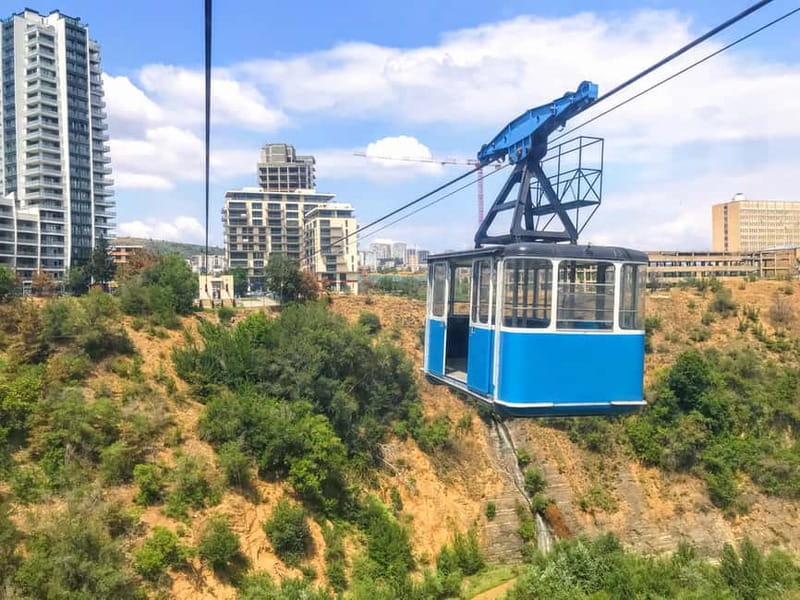
- Old cable car ride: Travel on a surviving piece of Soviet-era transport at Bagebi Cable Road.
- Human stories: The guides explain how people lived, worked, and adapted around these monumental buildings.
- Comfortable transport: A car covers far more ground than a walking tour, with pickup available in central Tbilisi.
- Social purpose: Part of the $75 fee supports internally displaced people in Georgia.
Why this is a different Tbilisi tour
Tbilisi is famous for wooden balconies, sulfur baths, churches, and steep lanes. Those sights deserve your time. But they show only one part of the city.
This tour takes you into a less polished Tbilisi, where huge public buildings, concrete housing blocks, and abandoned structures reveal the ambitions and hardships of the Soviet period. You are not just looking at unusual architecture. You are seeing places still tied to ordinary life.
That distinction matters. Brutalist buildings can look cold in photographs, but a good guide explains what happened inside them and around them. A housing complex becomes a story about residents, transport, access, and family life. A monumental sculpture becomes a record of political ideals. An abandoned museum raises questions about what a city chooses to preserve.
I like that the tour does not pretend every site is pretty or easy. It presents Tbilisi as it is: layered, uneven, practical, and sometimes haunting.
The tour costs $75 per person and lasts about four hours. That is fair value if you want several distant parts of the city in one outing. You are paying for a private group, a local guide, transport, entrance fees, bottled water, and a route that would be awkward to arrange alone. It is less attractive if you only want famous central sights or prefer to explore on foot.
More Bauhaus and brutalist tours in the world:
- London: Brutalist Architecture & History Walking Tour
★ 4.8 · 42 reviews - Le Corbusier’s Chandigarh : A Complete Architecture Tour
★ 4.7 · 25 reviews - Architecture of New Belgrade – Brutalism Decoded
★ 4.5 · 24 reviews
The City of Students and Tbilisi’s Soviet scale
The first major stop is known as the City of Students. You get around 45 minutes for a guided visit and photographs.
The name points to the area’s institutional and residential character. This is not a quick view from a roadside. You have time to look at the buildings, hear how the area functioned, and discuss the architectural ideas behind it.
The value here comes from scale. Soviet planning often favored large complexes designed around public needs, with housing, education, and shared facilities grouped together. The result can feel imposing, but it also shows how planners imagined an entire urban life rather than a single attractive facade.
Your guide helps turn that broad design into something easier to understand. Pay attention to the relationship between open space and concrete mass. Look at how entrances, corridors, and towers shape movement. These details explain why some Soviet buildings still feel powerful even when paint is worn and maintenance is uneven.
This is also where the tour begins to move away from sightseeing as a simple checklist. You are encouraged to ask what a building was meant to do, who used it, and what has changed since the Soviet period.
Bagebi Cable Road and a ride into the past
At Bagebi Cable Road, the tour includes a cable car ride and roughly 25 minutes for the stop.
This is one of the more unusual parts of the experience because you are not merely viewing old infrastructure. You get to experience it in motion. For anyone interested in transport history, that small ride adds texture to the tour.
The cable car also gives you a different view of Tbilisi’s steep terrain and sprawling development. The city is not laid out on a flat grid, and its hills have shaped everything from housing to public transport. A system that once served practical urban needs now feels like a surviving fragment of another era.
The ride may be brief, so do not expect a long excursion. Its importance is less about distance and more about context. The guide explains how the system fitted into Soviet Tbilisi and why older transport links still matter to the city’s memory.
If you are uneasy with heights, take the warning seriously. The tour is not suitable for people afraid of heights, and some of the later stops also involve elevated views.
Nutsubidze Skybridge and the daily life of concrete housing
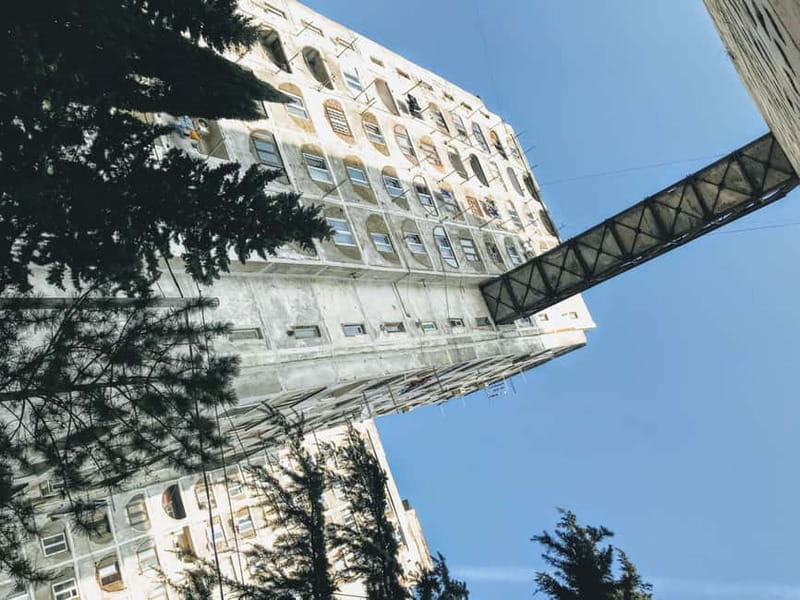
The Nutsubidze Skybridge gets about 40 minutes, including guided sightseeing and views along the way.
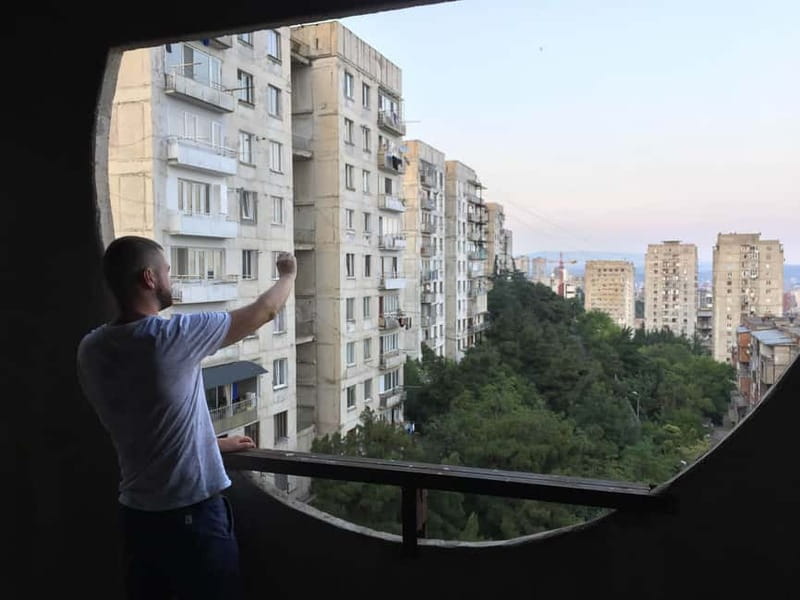
This 1970s residential complex is one of the tour’s strongest stops. Its suspended skybridges link sections of the housing development high above ground. They are visually dramatic, but their real interest lies in their practical purpose.
The bridges were designed as part of a larger residential system. They show how architects tried to connect apartment blocks and make movement through a steep, difficult site easier. From a distance, the complex looks like a piece of science fiction. Up close, it is also a lived-in neighborhood.
That contrast is worth noticing. The architecture may seem monumental, but people still use these spaces for ordinary routines. You may see laundry, entrances, stairways, and signs of ongoing residential life. The tour’s strongest guides explain this human side instead of treating the buildings as giant sculptures.
Bring comfortable shoes. The tour is car-based, but you still leave the vehicle at several stops, and sensible footwear was specifically recommended by past participants. The skybridge area can also feel exposed, so anyone uncomfortable with height should think carefully before booking.
Same city, a different building to stand in front of:
- Chicago Architecture River Cruise
★ 5.0 · 15,756 reviews - Chicago River 90-Minute Architecture Tour
★ 4.5 · 9,629 reviews - Chicago River: 1.5-Hour Guided Architecture Cruise
★ 4.8 · 8,046 reviews - Chicago Architecture Center River Cruise aboard First Lady
★ 5.0 · 5,536 reviews
The Bank of Georgia and Brutalism at its boldest
The Bank of Georgia stop lasts about 20 minutes and focuses on sightseeing and guided explanation.
This building is one of the clearest examples of Tbilisi’s daring late-Soviet architecture. Its stacked, irregular forms make it look assembled from huge concrete blocks placed one above another. The design is bold enough to attract attention even from people who normally ignore architecture.
The building is often connected with the former Ministry of Highways of the Georgian SSR, one of the city’s most famous Brutalist landmarks. The tour explains the structure’s public role and the way its unusual form reflects the grand ambitions of the period.
You should give this stop your full attention, even though it is shorter than the skybridge visit. The building rewards close looking. Notice the repeated volumes, deep shadows, and way the structure appears to balance mass against open space.
This is also a good moment to ask your guide about the difference between Brutalism and broader modernist design. The tour is not limited to labels. Guides such as Khatuna and Jonah have been praised for explaining architectural ideas in plain language and linking them to Georgian history and everyday experience.
A local bakery break, with something simple to eat
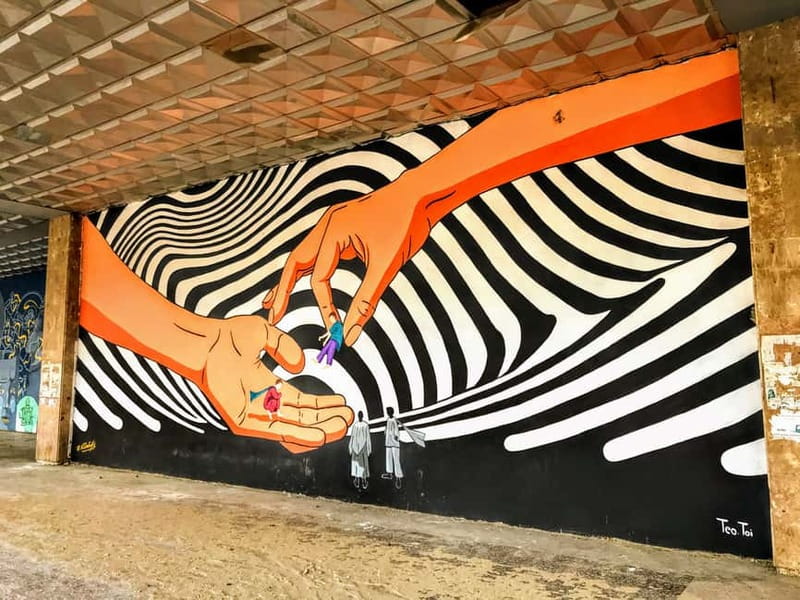
The bakery stop lasts about 15 minutes and includes local snacks or street food.
Do not expect a full lunch. Lunch is not included, and this is a short refreshment break. Still, it is a useful touch. After several large buildings and serious historical subjects, a quick taste of local food gives the outing a more ordinary rhythm.
The stop also keeps the tour connected to modern Tbilisi. You are not spending the whole day in a museum-like version of the past. You move between monumental architecture and the places where people eat, work, and carry on with daily business.
Some guides have also offered food suggestions for later, including Georgian places to try and chimney cake. That kind of practical local advice can add value, especially if this is your first visit.
Eat before the tour if you need a substantial meal. The bakery visit is best treated as a snack, not a substitute for lunch.
The darker side: Suicide Bridge and abandoned modernism
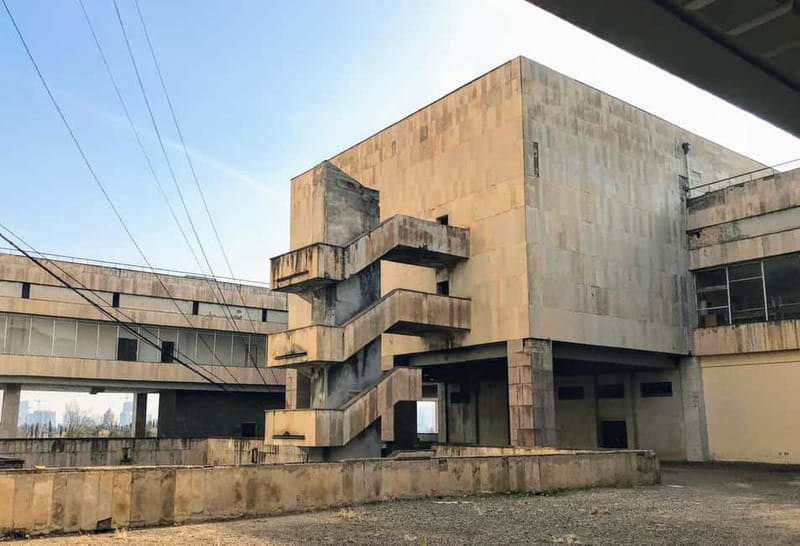
Another part of the route covers less comfortable subjects, including Suicide Bridge and the former Museum of Archaeology.
The bridge carries a painful association with Tbilisi’s darker history. It is not a lighthearted photo stop, and the guide’s explanation matters. Expect a thoughtful account of the site rather than a polished attraction designed for quick entertainment.
The former Museum of Archaeology offers a different kind of unease. Its modernist design remains forceful, yet the building is now abandoned. Empty public buildings can reveal a great deal about political change, funding, and shifting ideas about what a city values.
You may find these stops more moving than the famous structures. They show that architecture is not only about success. It can also record loss, neglect, and unfinished transitions.
The condition of these places is part of the experience, not a flaw to hide. Still, you need to be comfortable around neglected buildings and imperfect surroundings. One direct piece of advice is especially important: this is not the right tour for anyone seeking only cheerful, polished attractions.
The Chronicle of Georgia above the Tbilisi Sea
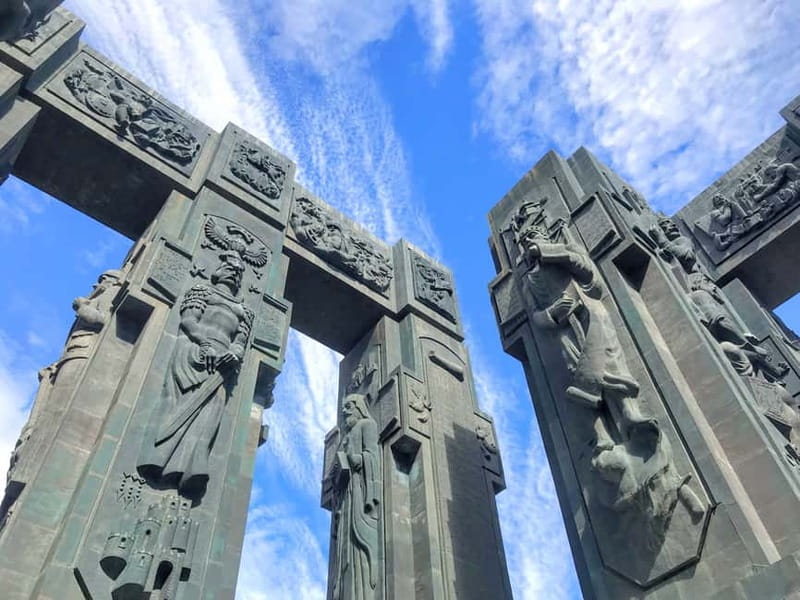
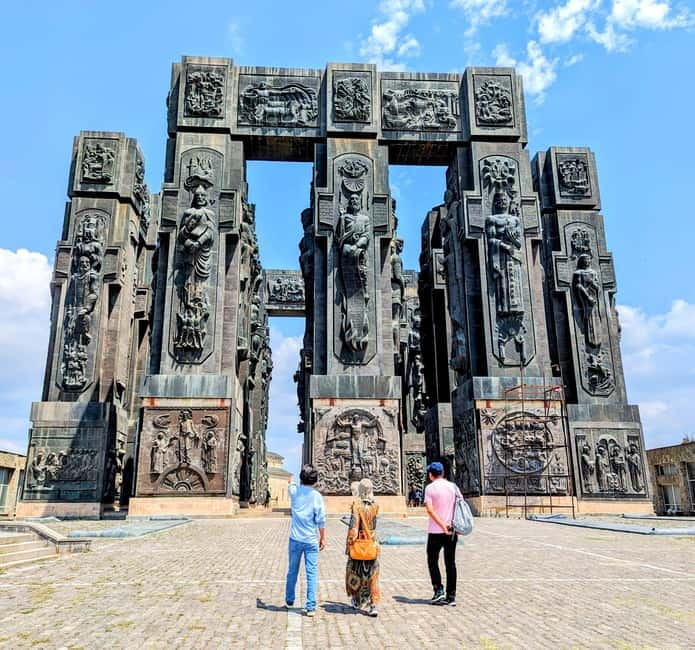
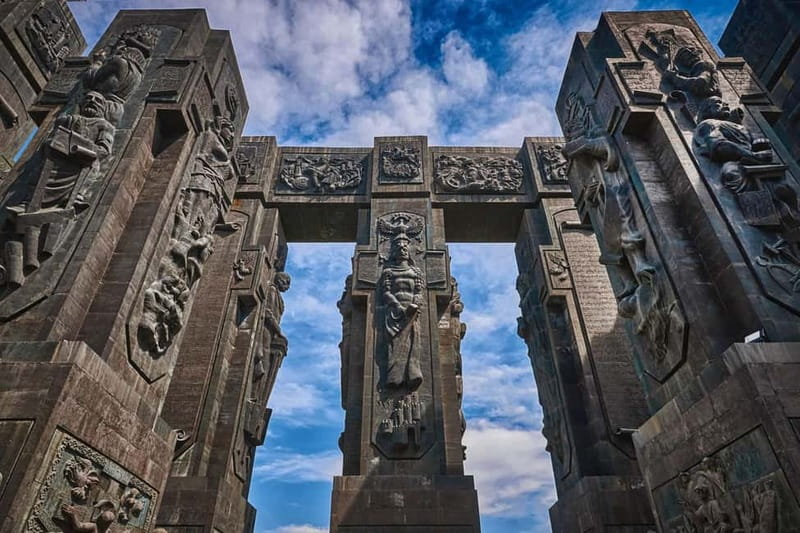
The Chronicle of Georgia is the most monumental outdoor stop, with about 45 minutes for photographs, a guided visit, and free time.
Often called the Georgian Stonehenge, the site consists of enormous pillars and sculpted panels overlooking the Tbilisi Sea. The scale is hard to grasp in photographs. From the site, you get broad views as well as a powerful sense of how national identity and public art were expressed through monument building.
The Chronicle is not simply Soviet architecture in the same way as an apartment block or ministry building. It is a symbolic work, packed with historical and religious references. Your guide can help you read the scenes and explain how Georgia’s older identity was presented through a modern monumental project.
This is one place where free time matters. After the explanation, you can look on your own, take photographs, and absorb the setting without a constant stream of facts.
The site is exposed, and weather can affect the visit. Traffic and changing conditions may also alter the exact timing or selection of stops. Keep your plans flexible and bring comfortable shoes.
What the car, guide, and small group add
The car is not just a convenience. It makes the route possible within half a day.
The sites are spread across Tbilisi, and walking between them would be tiring and inefficient. By car, you can reach residential districts, elevated viewpoints, monumental sites, and older transport links without losing hours on city streets. Pickup is available at your accommodation or another central Tbilisi location when the private option is selected.
The experience is built for a private group rather than a large bus. That gives you more room to ask questions and more freedom to pause for photographs. It also makes the guide’s personality important.
Khatuna and Khato have received particular praise for warmth, historical detail, and flexibility. Jonah has been singled out for clear explanations and good conversation. Aleksi, Alex, Alexo, and Oksana have also been praised for taking people to places they would not normally find alone.
Guide quality can vary from person to person, but the overall pattern is strong. You should expect English or Russian guiding, a friendly tone, and explanations that connect buildings with Georgian culture and the Soviet past.
The experience has a Georgian National Tourism Award and a 95 percent perfect score for transport. Part of the fee supports internally displaced people, which adds a practical social benefit without changing the main focus of the tour.
Who should book, and who should skip it
I would choose this tour if you are curious about architecture, Soviet history, urban change, or the everyday side of Tbilisi. It is especially useful early in a trip because it can change how you see the city afterward. Ordinary concrete blocks and public buildings begin to carry more meaning.
It also suits anyone who wants to cover a lot of ground without a long walking day. The private format is helpful for couples, families with older children, and small groups who prefer conversation over a fixed public tour.
The minimum age is 12. The tour is not suitable for people with mobility impairments, people afraid of heights, or anyone bringing a stroller, large luggage, or an electric wheelchair. Pets are not allowed.
Plan for four hours, but do not schedule an important appointment immediately afterward. Traffic, weather, and other conditions can stretch the timing. Free cancellation is available up to 24 hours before the start, and you can reserve now and pay later.
Should you book Brutalist Tbilisi?
Book it if you want the Tbilisi most guidebooks skip: monumental concrete, Soviet transport, residential experiments, abandoned modernism, and stories about the people who lived with these structures.
Skip it if you want the old town, colorful balconies, wine tasting, or a gentle walk through attractive streets. This tour can be visually dramatic, but it can also be stark and emotionally heavy.
At $75, the value is strongest for visitors who would struggle to reach these far-flung sites independently. With transport, entrance fees, a private group, a local guide, and a route built around unusual places, it earns its price. For me, the best reason to go is simple: it shows Tbilisi as a living city, not just a pretty picture.
FAQ
How long does the Brutalist Tbilisi tour last?
The scheduled duration is four hours, though traffic, weather, and other conditions can make the tour longer or change the order of stops.
How much does the tour cost?
The price is $75 per person.
Is transportation included?
Yes. The tour travels by car, and pickup is available at your accommodation or another central location in Tbilisi when the private option is selected.
Which languages are available?
Live guiding is available in English and Russian.
Is this a private tour?
Yes. The experience is offered for a private group.
Are entrance fees included?
Yes. Entrance fees and bottled water are included. Lunch is not included.
Can children join the tour?
The tour is not suitable for children under 12.
Is the tour suitable for people afraid of heights or with mobility impairments?
No. The experience is not suitable for people afraid of heights or people with mobility impairments. Comfortable shoes are recommended.
Just added in the world
- Wilmington History and Architecture Tour★ 4.8 · 18 reviews
- New Orleans : Garden District Architecture Walking tour★ 4.8 · 5 reviews
- Washington DC: Dupont Circle & Embassy Row Architecture Tour★ 5.0 · 6 reviews
- Washington, DC: Georgetown Architecture Walking Tour★ 5.0 · 8 reviews
- Vicenza: Palladian Architecture Private Walking Tour★ 3.3 · 3 reviews
- Walk & Discover KL’s Architectural and Heritage Gems★ 5.0 · 7 reviews
- Private Colonial Williamsburg Architectural Tour★ 5.0 · 5 reviews
- Unveiling Brno: History, Culture & Architectural Delights★ 5.0 · 2 reviews
Bauhaus and Brutalist Architecture Tours, compared.
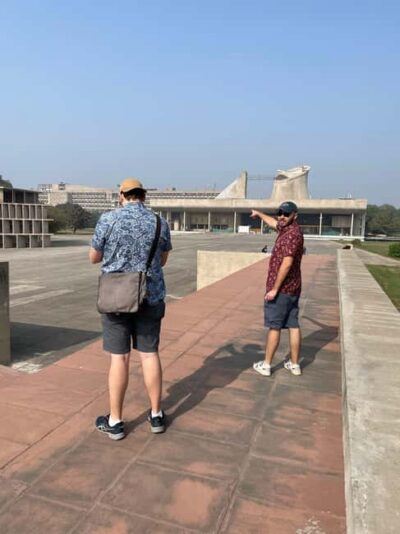
Le Corbusier’s Chandigarh : A Complete Architecture Tour
Read our review →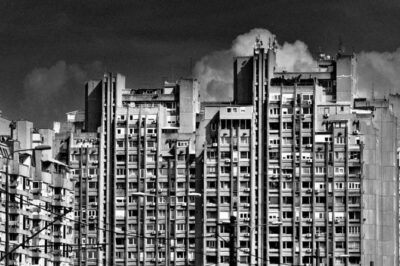
Architecture of New Belgrade – Brutalism Decoded
Read our review →
Secret Split: Socialist Architecture & brutalism – Urban Utopia
Read our review →
Tashkent Soviet Architecture (Modernism) and Subway station tour.
Read our review →
Belgrade: Space architecture tour – brutalist architecture
Read our review →
Bishkek : USSR History, Soviet Architects ,Statues & Mosaics
Read our review →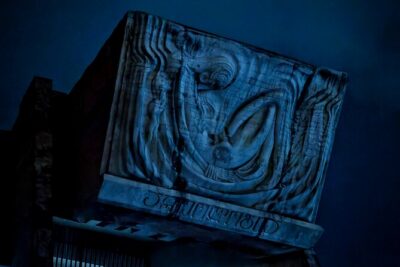
Brutal Tbilisi — Night Edition: Dark Side of Soviet Architecture
Read our review →Browse the lists this tour appears in