
REVIEW · TOKYO ARCHITECTURE TOURS
Private Ueno Park Architecture Walking Tour
Ueno Park rewards a closer look. This private 3.5-hour walk goes beyond cherry blossoms and museum collections to focus on buildings by Le Corbusier, Kunio Maekawa, Tadao Ando, and other major architects. I especially like the one-party format, which lets you ask questions freely, and the way the tour links buildings across different eras rather than treating each museum as an isolated stop. The main consideration is that this is an architecture tour first, not an art or artifact tour, and the admission details for one museum need confirming before you pay.
I also like the choice of morning or afternoon departure, a useful touch in a city where your schedule can change quickly. The guide adds context to each building, and the route includes a short drinks pause. If you want a quiet, focused look at Ueno Park’s buildings with a guide speaking excellent English, this is a strong option. If you want several hours inside museum galleries, it may feel too short.
Key points to know before booking
- Le Corbusier’s UNESCO-listed museum: The National Museum of Western Art is the architectural centerpiece, recognized for its modern design in 2016.
- A private experience: Only your party takes part, so the pace and questions can suit your group.
- Two very different eras: The route moves from the 1906 International Library of Children’s Literature to museum buildings completed as late as 1999.
- Architecture over collections: You will study façades, structure, renovation, and design ideas, with limited time for paintings and objects.
- About $146.59 per person: The price makes the most sense for people who would otherwise miss the buildings’ meaning without expert explanation.
- A practical Ueno route: The tour begins near Ueno Park and ends beside the JR Ueno Station ticket machines, making onward travel simple.
Why Ueno Park is worth seeing through its buildings
Ueno Park is often treated as a pleasant route between museums, a zoo, and the famous spring cherry trees. That is a shame. The park also works as a compact lesson in Japanese architecture, with buildings from different periods gathered within a manageable walking area.
I like this tour because it gives you a reason to look up, across, and behind the obvious attractions. You are not simply told that a building is important. You get the story of how it fits into Japanese modernism, how local architects responded to international ideas, and how older structures have been repaired or adapted.
The private format matters here. Architecture tours often depend on small visual details, and you may want to stop for a question or spend an extra moment comparing two façades. With only your own party, you do not have to compete with a large group or wait while a guide repeats the same point for people at the back.
The tour lasts about three and a half hours. The listed stops account for roughly two hours and five minutes, leaving time for walking between sites, explanations outdoors, and a comfortable pause with drinks. You should still expect a walking experience rather than a seated museum visit, so moderate physical fitness is recommended.
More walking tours in Japan:
- Tokyo: Shibuya Highlights Walking Tour & Secret View Spot
★ 5.0 · 287 reviews - Private Harajuku Omotesando Architecture Walking Tour
★ 5.0 · 67 reviews - Private Ginza Architecture Walking Tour
★ 5.0 · 50 reviews
Starting with Le Corbusier at the National Museum of Western Art
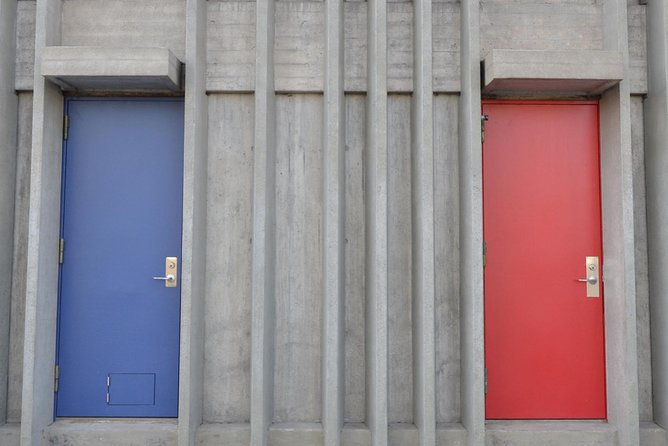
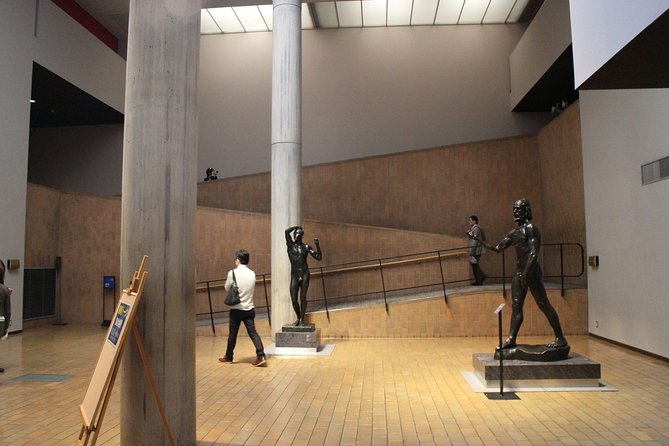
The first major stop is the National Museum of Western Art, designed by Le Corbusier. Its importance is not only visual. In 2016, the building was included as a UNESCO World Cultural Heritage Site for its modern architectural value.
You have about 40 minutes here. That is enough time for your guide to explain the building’s form and place it within the history of modern design. The museum holds Western paintings and sculpture from before the 18th century through the 20th century, but the focus of this tour is the building itself.
That distinction is important. If you enter expecting a full art museum visit, you may be disappointed by the limited time. If you are curious about how a museum can express a design philosophy, the stop should be much more satisfying.
The supplied details create a small uncertainty about admission. The general tour description says entrance to the National Museum of Western Art and Tokyo National Museum is included, while the detailed stop information marks the National Museum of Western Art admission as not included. The inclusions specifically name the Tokyo National Museum fee of 1,000 yen. I would confirm the Western Art Museum ticket situation with Showcase Tokyo Architecture Tour before booking.
Still, the building is the key reason to visit. You will be looking at a landmark associated with one of the best-known architects of the 20th century, then comparing it with later Japanese responses to modern architecture.
Comparing two architects at Tokyo Bunka Kaikan
Across from the National Museum of Western Art is Tokyo Bunka Kaikan, designed by Kunio Maekawa. The tour gives you about 15 minutes here, and that short stop is intentional. The two buildings can be read together, almost like a conversation across the park.
Maekawa was one of three local apprentices of Le Corbusier, so this is a useful point in the tour. You can consider how international modernist ideas were taken up by a Japanese architect and expressed in a different setting.
I find this comparison more valuable than viewing either building alone. The guide can point out relationships in form, scale, and approach, helping you see that architecture is not only about famous names. It is also about influence, adaptation, and the choices made by architects working in a particular country.
Because the stop is brief, you will not spend much time inside Tokyo Bunka Kaikan. Think of it as an outdoor explanation and comparison, not a full building visit. The good news is that the site is free, so there is no extra admission decision here.
Seeing the 1906 library and its careful renewal
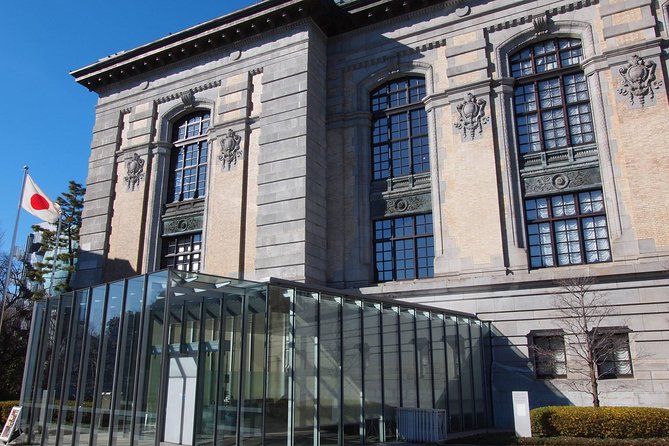
The International Library of Children’s Literature provides a sharp change of mood and period. Constructed in 1906, it is described as the oldest building on the Ueno Park route.
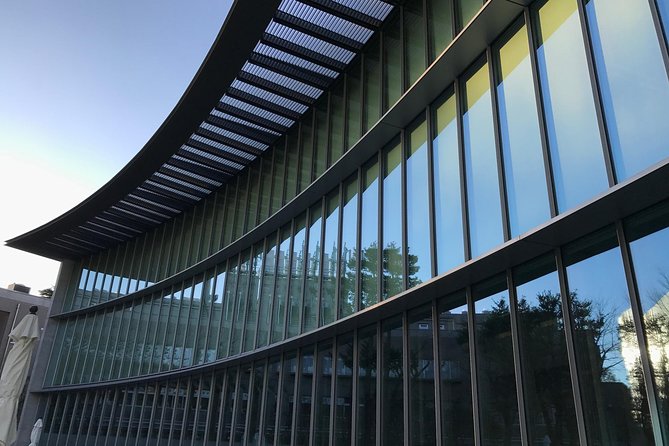
You have about 40 minutes at this stop. The focus includes the building’s preservation and renovation work, along with a newer, striking arc-shaped addition. That combination makes the site especially useful for anyone interested in how historic buildings survive in a modern city.
I like this part of the walk because it widens the story. The tour is not only about celebrated modern architects. It also asks what happens to older buildings when their original needs change. Preservation can be more revealing than a pristine new structure because you can see where history and present-day use meet.
The library also gives the route a welcome change from major art institutions. You are looking at a place connected with children’s literature, while the guide explains the architecture and the work required to keep it useful. The available information does not promise a full interior library tour, so you should expect the building’s design and renovation to receive more attention than its books.
More private tours in Japan:
- Private Harajuku Omotesando Architecture Tour
★ 4.9 · 18 reviews - Private Edo-Tokyo Open Air Architectural Museum Tour
★ 4.8 · 15 reviews - Private Ueno Park Architecture Tour
★ 5.0 · 5 reviews - Private Ginza Architecture Tour
★ 5.0 · 3 reviews
Four eras at the Tokyo National Museum
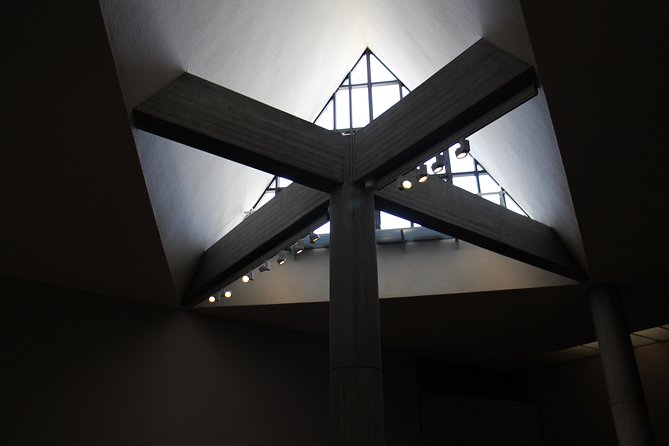
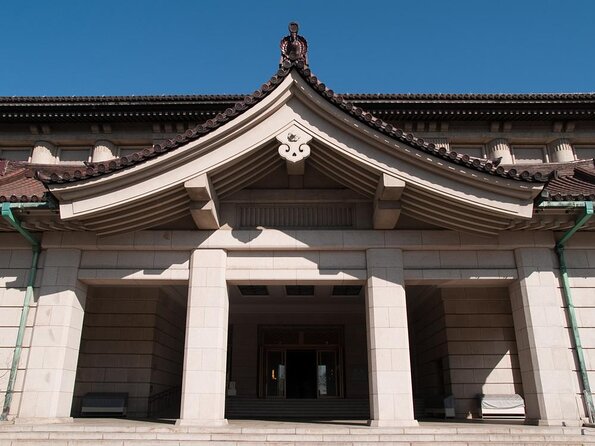
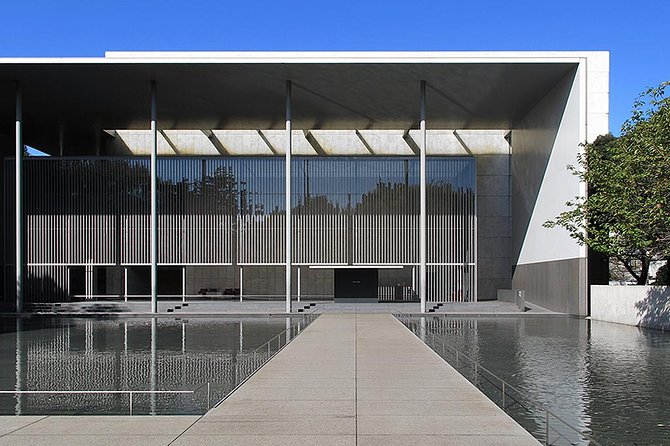
The final major stop is the Tokyo National Museum, where you examine four architectural works: Hyokei-kan, Hon-kan, Toyo-kan, and the Gallery of Horyuji Treasure. Together, they reflect changing architectural ideas from 1908 to 1999.
You have about 30 minutes here. That is not enough to explore the museum’s collections, but it is enough for a focused look at the buildings and their historical setting. The guide’s role is particularly useful because the four structures represent different periods rather than one single design approach.
The museum itself contains an enormous amount to see, so a guided architectural visit can help you resist the temptation to wander into every gallery. If you have already set aside another day for the Tokyo National Museum, this tour gives you a useful first orientation. If this is your only visit, you will need to accept that the architecture takes priority over the objects inside.
The 1,000-yen admission fee is included in the tour price. That makes this section easier to plan, since you do not need to budget separately for the museum entrance. The tour ends near JR Ueno Station, beside the park exit ticket machines, so you can continue to another Tokyo destination without retracing the route.
What the guide adds to the walk
The strongest praise for this experience concerns the guide’s preparation and English. One detailed assessment described the tour as informative and carefully planned, with excellent English and a strong focus on architecture.
That focus is the heart of the experience. You are not simply being escorted from one museum to another. The guide explains why each building matters, how its architect fits into a wider story, and what to notice when you stand in front of it.
I would ask questions as you go. A private tour is most useful when you turn it into a conversation. You might ask how Maekawa’s work relates to Le Corbusier, why the children’s library needed renovation, or how the four Tokyo National Museum buildings differ in period and purpose.
The provider’s written reply to one participant was signed Aki. The supplied information does not confirm that Aki personally leads every departure, so I would not assume you will have that particular guide. What you can reasonably expect is a private professional guide, with the experience designed around explanation rather than a rushed checklist.
How the private format affects value
At $146.59 per person, this is not a cheap way to fill a morning. The value depends heavily on your interest in architecture and the number of people in your party.
For one person or a couple, the price may feel high compared with simply walking through Ueno Park alone. You can see many of the buildings from public areas without paying for a guide. But the tour gives you a structured route, historical connections, private questions, and entry to the Tokyo National Museum.
For a larger private group, the value improves because group discounts are available. The price also buys convenience. You do not need to research the architects, work out which buildings belong to which period, or decide how to fit the museums into a sensible walking route.
The 4.9 rating from eight published ratings suggests very strong satisfaction, though the sample is small. One assessment gave four out of five and praised the beautiful setting and the informative planning, while also making the most important limitation clear: this is not an art or artifact exploration.
That is a fair trade if you choose the tour for the right reason. I would not book it as a replacement for a full museum day. I would book it as a guided architectural reading of Ueno Park, with selected museum access added to the route.
Timing, meeting points, and walking comfort
The tour offers a morning or afternoon departure. That flexibility helps you fit it around other Tokyo plans, though the supplied information does not provide exact start times. Confirmation arrives at booking, and the tour operates near public transportation.
The starting point is 7-chōme-7-7 Uenokōen in Taito City. The end point is beside the ticket machines at the park exit of JR Ueno Station, listed as 7-chōme-1-1 Ueno. This is useful if you plan to take a train immediately afterward.
There is no hotel pickup or drop-off. You need to reach the starting point yourself, so allow enough time to find the correct area of the park. Ueno Station has several exits and a large surrounding area, making an early arrival sensible even though the route is near public transport.
Wear comfortable shoes. The exact walking distance is not provided, but the experience lasts three and a half hours and includes several outdoor stops. A moderate fitness level is requested, and that is a reasonable expectation.
A drinks pause is included, which helps break up the walking. Do not mistake this for a long café stop, since no length or location is specified. It is best viewed as a small comfort built into the route.
Who will enjoy this Ueno architecture tour?
I would recommend this tour to you if you enjoy modern architecture, city planning, preservation, or the way buildings reflect changing ideas. It is also a good choice if you have already seen Ueno Park’s main attractions and want a more focused reason to return.
Students and design-minded readers may get particular value from the route. The progression from Le Corbusier to Maekawa, then from the 1906 library to museum buildings reaching to 1999, gives you a clear framework for understanding different periods.
The private format also suits families or friends with a shared interest. You can ask questions at your own level rather than listening to a fixed speech aimed at a large mixed group.
I would hesitate to recommend it if your main goal is painting, sculpture, or Japanese historical artifacts. The museums are part of the setting, but the guide’s attention stays on the architecture. You may see only a small portion of the collections during the scheduled stops.
I would also check the admission terms before purchase. The detailed information clearly includes the Tokyo National Museum fee, but it is inconsistent about the National Museum of Western Art. A quick confirmation can prevent an avoidable surprise.
Cancellation and planning details
You can cancel up to 24 hours before the start time for a full refund. Changes made less than 24 hours before the experience are not accepted, and the cutoff uses Tokyo local time.
Confirmation is provided at booking. Since the tour is booked an average of 44 days ahead, planning early may be sensible if you need a particular morning or afternoon departure, especially for a private group.
Should you book the Private Ueno Park Architecture Walking Tour?
Book it if you want Ueno Park explained through its buildings rather than treated as a shortcut between museums. The route brings together Le Corbusier, Kunio Maekawa, historic preservation, and four Tokyo National Museum structures in one private walk.
At $146.59 per person, I would want at least a real interest in architecture to justify the cost. If that interest is there, the private guide, focused route, included Tokyo National Museum admission, and flexible departure make the experience worthwhile.
Skip it if you want a relaxed museum day or a broad introduction to Tokyo art. Also confirm the National Museum of Western Art admission before booking. For the right audience, this is a thoughtful, well-planned way to see a side of Ueno Park that many people walk past without noticing.
FAQ
How long does the Private Ueno Park Architecture Walking Tour last?
The tour lasts approximately 3 hours and 30 minutes.
Is the tour private?
Yes. Only your party participates in the activity.
What departure times are available?
You can choose a morning or afternoon departure. Exact start times are confirmed when you book.
Is admission to the Tokyo National Museum included?
Yes. The 1,000-yen entrance fee to the Tokyo National Museum is included.
Is admission to the National Museum of Western Art included?
The supplied tour details are inconsistent. The general description says both museum admissions are included, while the detailed stop information marks admission to the National Museum of Western Art as not included. Confirm this point with the provider before booking.
Where does the tour start and finish?
It starts at 7-chōme-7-7 Uenokōen in Taito City, Tokyo. It finishes beside the ticket machines at the park exit of JR Ueno Station, at 7-chōme-1-1 Ueno.
Just added in Japan
- Tokyo Architecture and Contemporary Art Walking Tour with a local guide★ 5.0 · 15 reviews
- Japanese Garden & Western Architecture: Akasaka exploration tour★ 5.0 · 9 reviews
- Small-Group Architecture Tour in Ginza, Tokyo★ 5.0 · 6 reviews
- [Aomori Prefecture] Tour the history and architecture in Towada City, the art city★ 5.0 · 6 reviews
- Private Ginza Architecture Tour★ 5.0 · 3 reviews
- Private Ueno Park Architecture Tour★ 5.0 · 5 reviews
- Kyoto: Nijo Castle & Gardens 2-Hour Guided Tour★ 4.5 · 2 reviews
- Private Edo-Tokyo Open Air Architectural Museum Tour★ 4.8 · 15 reviews
Tokyo Architecture Tours, compared.
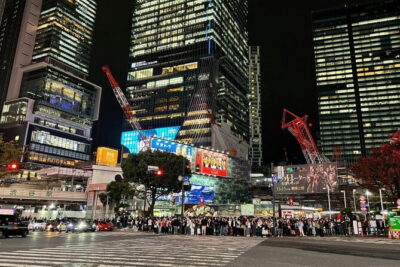
Shibuya Highlights Walking Tour & Secret View Spot
Read our review →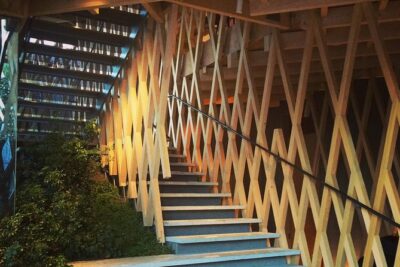
Private Harajuku Omotesando Architecture Walking Tour
Read our review →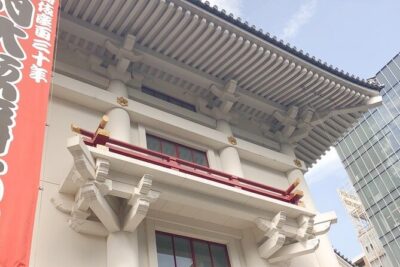
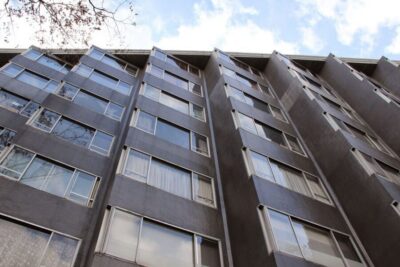
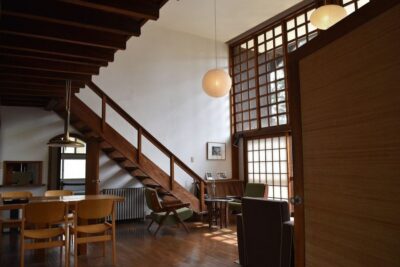
Private Edo-Tokyo Open Air Architectural Museum Tour
Read our review →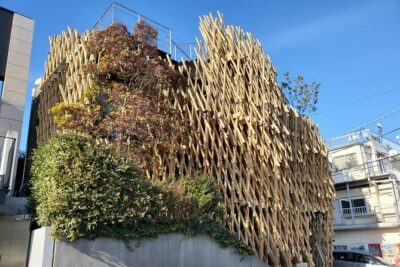
Tokyo Architecture and Contemporary Art Walking Tour with a local guide
Read our review →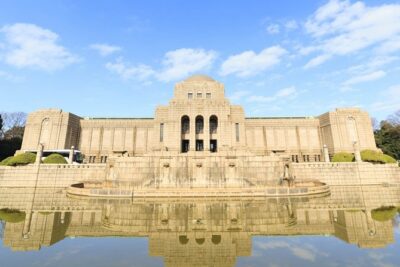
Japanese Garden & Western Architecture: Akasaka exploration tour
Read our review →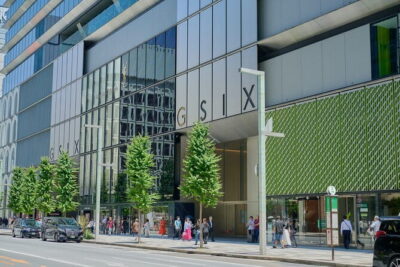
Browse the lists this tour appears in