
REVIEW · HIDDEN GEMS ARCHITECTURE TOURS
Tokyo: Shibuya Highlights Walking Tour & Secret View Spot
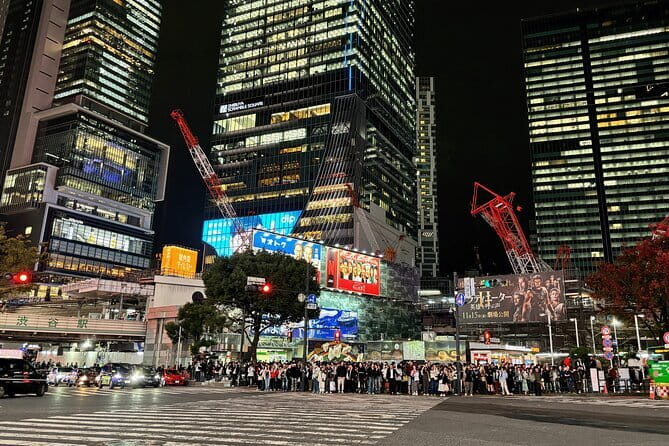
Shibuya is best understood on foot. This 90-minute walk brings you to Shibuya Crossing, Miyashita Park, Nonbei Yokocho, Center-gai, and lesser-seen corners around Mark City. I like the small-group format and the useful commentary from local guides such as Hannah and Mao. The main catch is that the promised panoramic viewpoint may not always be available or clearly included.
At $25.20, the tour is a low-cost way to get your bearings before exploring Shibuya on your own. I also like that photos are included and the guide leads the way through a district where it is easy to lose your sense of direction. Still, check the exact plan for the observation view, since one guest was told it was not part of the experience.
Key points at a glance
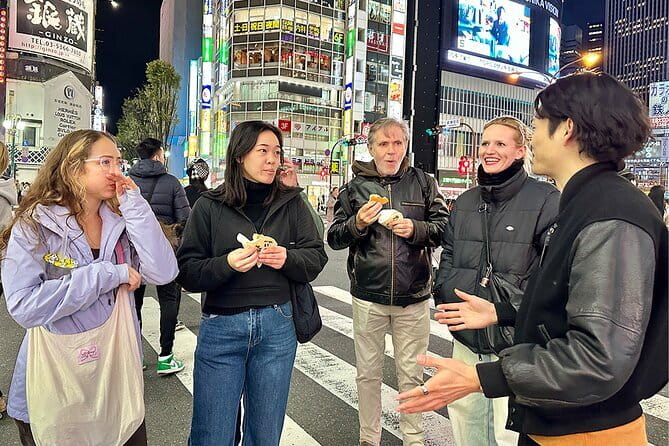
- Shibuya Crossing is the opening stop: You get time to see and cross Tokyo’s famous intersection, with a guide helping take photos.
- The route mixes famous sights with local corners: Nonbei Yokocho and the basement level of Shibuya Mark City add variety beyond the usual postcard stops.
- Miyashita Park gets the longest single stop: You have about 20 minutes to see its lights and modern park design.
- Guide quality matters here: Hannah was praised for friendly help and special finds, while Mao was noted for good stories and photo assistance.
- The viewpoint needs clarification: The tour information refers to Shibuya Scramble Square and Shibuya Fukuras, but access or timing may vary.
- The price is reasonable for a short orientation: At $25.20, you are paying mainly for navigation, local context, and a compact introduction to Shibuya.
Why this short Shibuya walk works
Shibuya can feel like several districts packed into one. Giant screens, railway lines, department stores, narrow lanes, elevated walkways, and busy shopping streets all meet around the station. On your own, you can see the famous crossing but miss the quieter corners that explain how the area fits together.
This tour gives you a quick framework. You move from the world-famous intersection to an old-fashioned drinking lane, then to a modern park, the main shopping streets, and the station’s commercial underbelly. That contrast is the real strength of the route.
The experience lasts about one hour and 30 minutes. That makes it a useful first activity in Tokyo, especially if you have only just arrived and want to learn the shape of Shibuya without spending half a day studying maps.
The group is described in one part of the information as limited to 10 people, while the additional details give a maximum of 20. I would plan for a small group, but keep in mind that the final number may be higher. Either way, this is a guided group walk rather than a private tour.
More hidden-gem architecture tours in Japan:
- Chicago’s Secret Interiors Architectural Walking Tour
★ 5.0 · 635 reviews - Chicago: Secret Interiors Architecture Walking Tour
★ 4.9 · 498 reviews - Delhi Hidden Gems: Mehrauli, Lodhi Art & Sunder Nursery
★ 5.0 · 108 reviews
Meeting at Shibuya Hachi Box
The tour begins at Shibuya Hachi Box, at 2-chōme-1-1 Dōgenzaka. The location is near public transportation, which matters in Shibuya, where station exits can send you onto completely different streets.
Arrive ready to walk. Private transportation is not included, and the activity ends back at the meeting point. Since the route covers busy streets and several parts of the station area, comfortable shoes will serve you better than anything chosen for style alone.
The guide is an important part of the value. You are not simply being escorted from one sight to another. The plan includes commentary about Shibuya’s history and architecture, along with help finding routes that are easy to miss when you are dealing with crowds and unfamiliar signs.
The best guides also add practical help. Hannah received especially strong praise for being friendly, attentive, and generous with recommendations. Mao was noted for telling good stories, guiding the group through the crossing, and taking photos. The experience can feel quite different depending on who leads it, but the supplied feedback points to strong guide service overall.
Shibuya Crossing: a famous start with real energy
The first stop is Shibuya Crossing, with about 10 minutes set aside. This is the part of Shibuya most people already know from photographs, films, and city videos. Seeing it in person gives you a better sense of its scale and rhythm.
Your guide can help you get into the crossing without wasting time on station exits. The walk also includes photo help, which is useful because the best picture is often less about the crossing itself and more about showing your position within it.
Ten minutes is enough for a first look, but not enough for long people-watching. I see that as a benefit rather than a flaw. The tour does not spend the whole morning at the one sight you could easily visit alone.
The crossing is also a good introduction to the guide’s role. You get more than directions. You receive a quick explanation of why this intersection matters to Tokyo’s image and how it connects to the surrounding commercial district.
The viewpoint question at Shibuya Scramble Square
The next listed stop is Shibuya Scramble Square, with about 10 minutes for a panoramic look at Shibuya. The wider tour description also refers to an observation deck at Shibuya Fukuras. These names create some uncertainty, so I would confirm the exact viewpoint before booking if a high view is your main reason for joining.
One guest found that the panoramic view did not happen and was told it was not included. That is the clearest drawback in the available feedback. The issue may relate to access, timing, or the way the tour is described, but you should not assume a guaranteed observation deck visit.
If the view is available, it adds a useful change of pace after the street-level crossing. You can pause, understand the railway and building layout, and see how tightly Shibuya is packed together. If it is not available, the tour still has several other stops, but the experience will not fully match the promise of a secret or panoramic viewpoint.
This is the one point I would clarify directly with Local Guide Stars. Ask which building is used, if admission is included, and if the stop is guaranteed on your date. The listed entrance and experience fees are included, but the conflicting descriptions make a quick check worthwhile.
More walking tours in Japan:
- Private Harajuku Omotesando Architecture Walking Tour
★ 5.0 · 67 reviews - Private Ginza Architecture Walking Tour
★ 5.0 · 50 reviews - Tokyo Architecture and Contemporary Art Walking Tour with a local guide
★ 5.0 · 15 reviews - Private Ueno Park Architecture Walking Tour
★ 5.0 · 8 reviews
Nonbei Yokocho and the older face of Shibuya
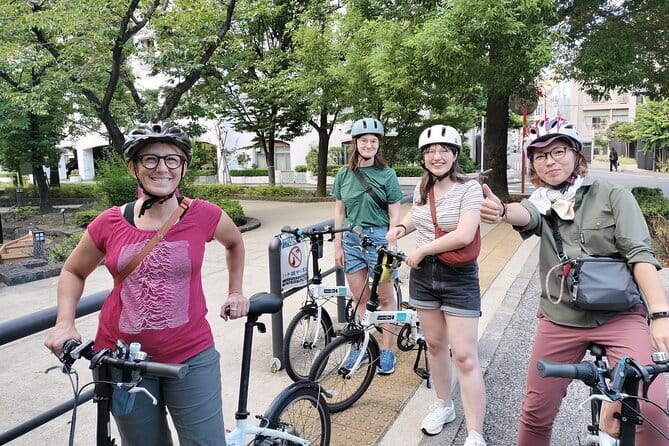
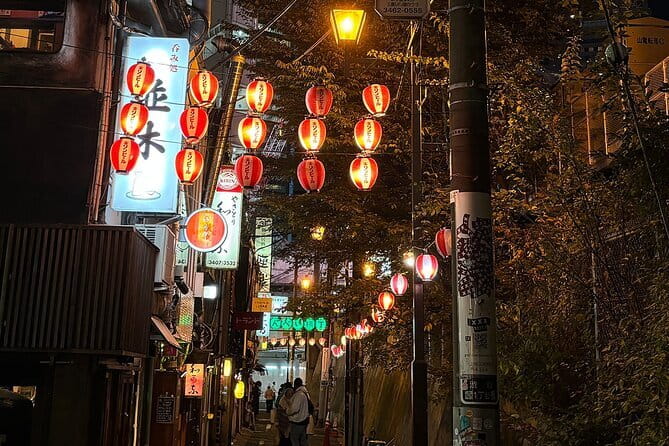
Nonbei Yokocho receives about 10 minutes. Its narrow lanes and traditional izakaya offer a sharp contrast to the large signs and wide roads around the crossing.
This is one of the most useful stops for understanding Shibuya beyond its polished commercial image. The small drinking establishments create a more intimate setting, and the guide can explain how the area’s older character sits beside the newer towers and shopping centers.
You should not expect a full meal stop here. The schedule allows a short visit, not a long evening in an izakaya. Still, it gives you a place to return to later if you want a drink or a closer look after the tour.
I particularly like this inclusion because it adds texture to the route. A visit that only covers major buildings can make Shibuya feel like a shopping mall with traffic. Nonbei Yokocho reminds you that the district has smaller, more personal spaces too.
Miyashita Park: modern design and a longer pause
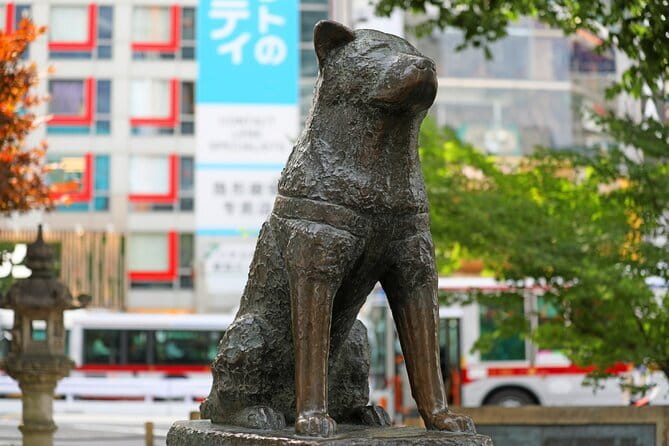
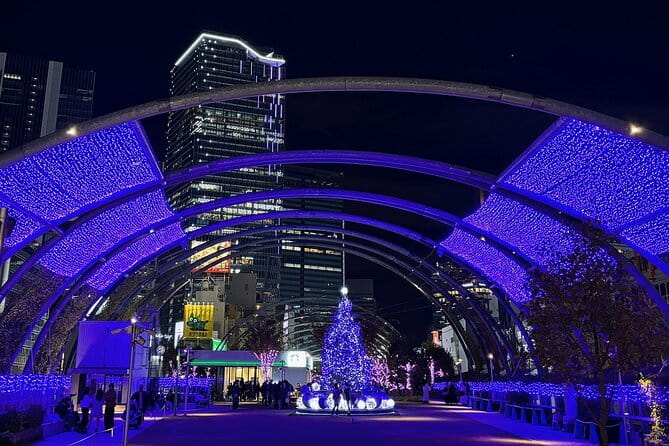
Miyashita Park gets approximately 20 minutes, the longest single stop on the route. The park is especially popular with younger people and is known here for its illuminations.
This is a good place to slow down. After the noise of the crossing and the tight lanes of Nonbei Yokocho, the park gives the group room to look around and take photos. Its modern setting also helps explain how Tokyo keeps adding public spaces in areas where land is scarce.
The stop is not presented as a formal attraction with a separate ticket. Your entrance and experience fees are included, and the listed stops have no additional admission charge. That keeps the tour simple, though the value rests mainly in the guide and route rather than paid attractions.
Twenty minutes is enough for an introduction. You will not explore every corner of the park, and you may want to return later if you enjoy the design or evening lights. The guide’s commentary can help you notice details that might otherwise blur into the rest of Shibuya’s newer construction.
Center-gai: the main streets of Shibuya

The route then spends about 20 minutes in Shibuya Center-gai. This is the central shopping and entertainment area, where the district’s youthful character is most obvious.
Here, the guide helps you understand the street plan instead of leaving you to wander at random. You will see the main streets, but the real benefit is learning where they lead and how they connect with the station, crossing, and other stops.
Center-gai is not a quiet part of town. Expect a busy urban setting, lots of visual noise, and plenty of activity. That is exactly why a guide helps. A short explanation can turn a confusing stretch of shops and signs into a place you can revisit confidently.
This part of the tour may be less rewarding if you have already spent several days shopping in Shibuya. For a first visit, though, it gives you a fast orientation and points out the central routes without requiring much advance research.
Shibuya Mark City and the basement route

The final listed stop is Shibuya Mark City, with about 20 minutes to explore the basement floor. That detail makes this tour more interesting than a simple highlight walk.
Basements in Japanese city centers often serve as important commercial spaces, yet they are easy to miss if you stay above ground. The Mark City stop gives you a look at another side of Shibuya, away from the obvious tower views and giant screens.
The phrase explore the basement floor leaves the exact experience open, so I would treat this as a guided orientation rather than a shopping excursion. You may find it helpful for learning how the station and retail areas connect, especially if you plan to return for food or shopping.
Ending back at the meeting point is practical. You can use the guide’s directions to continue exploring, return to your hotel, or revisit a stop that caught your attention. Since the activity uses no private vehicle, you also avoid spending part of a short tour sitting in traffic.
What the $25.20 price really covers
At $25.20 per person, this is priced as an accessible introduction rather than a full cultural tour. You are paying for an English-speaking local guide, route planning, commentary, photos during the walk, and the convenience of moving through Shibuya with someone who knows the area.
The included stops do not require separate admission fees. That means you should judge the price by the quality of the guiding and the time saved, not by the value of tickets. If you would otherwise spend an hour and a half finding these places yourself, the cost is fair.
I would consider it especially good value for a first visit, a short stay, or anyone who wants an easy start in Tokyo. It is less compelling if you already know Shibuya well or only want access to a guaranteed observation deck.
The 99 percent recommendation rate and 5 out of 5 score from 287 ratings suggest that the basic format works very well. Still, the lower-scoring account about the missing panorama matters because it identifies a specific expectation problem. A strong guide cannot fully replace a viewpoint you thought was included.
Who should book this experience
I would choose this walk if you want:
- A fast introduction to Shibuya
- Help navigating the station and major streets
- A small-group setting rather than a large coach tour
- Local stories about architecture and the area’s past
- A route that includes both famous sights and less obvious corners
- Photos taken during the walk
- A low-cost activity for your first day in Tokyo
It also suits solo visitors who want a little structure without committing to a private guide. Families and older visitors can participate according to the available information, though the route is a walking activity through busy urban areas.
I would think twice if your main goal is a long food stop, serious shopping time, or a guaranteed rooftop view. The schedule is tight, with only 10 to 20 minutes at each location. You get a useful overview, not an unhurried study of every stop.
The experience requires good weather. If poor weather cancels it, you are offered another date or a full refund. You can cancel for a full refund up to 24 hours before the start time, but cancellations within 24 hours are not refunded.
Should you book the Shibuya walk?
Book it if you want a compact, well-priced introduction to Shibuya and value a friendly local guide more than a long visit at one attraction. The route covers the essentials, then adds Nonbei Yokocho, Miyashita Park, and the Mark City basement so the district feels broader than a single famous crossing.
Before paying, confirm the exact viewpoint arrangement. If Shibuya Crossing, local stories, photos, and quick orientation are enough, this is a sensible choice at $25.20. If the panoramic view is the deciding factor, ask Local Guide Stars to confirm that part in writing first.
FAQ
How long does the Shibuya walking tour last?
The tour lasts approximately one hour and 30 minutes.
Where does the tour begin and end?
It starts at SHIBU HACHI BOX at 2-chōme-1-1 Dōgenzaka, Shibuya, Tokyo. The activity ends back at the meeting point.
Is Shibuya Crossing included?
Yes. The route includes about 10 minutes at Shibuya Crossing, where you can experience the famous intersection and receive help with photos.
Is the tour conducted in English?
Yes. An expert English-speaking local guide leads the experience.
Is the observation deck guaranteed?
The tour information refers to a panoramic view at Shibuya Scramble Square and also mentions an observation deck at Shibuya Fukuras. However, one account states that the panoramic view was not included, so you should confirm the exact arrangement before booking.
Can I cancel for a full refund?
Yes. You can cancel at least 24 hours before the start time for a full refund. Cancellations or changes made less than 24 hours before the start time are not refunded or accepted. If poor weather causes cancellation, you are offered another date or a full refund.
Just added in Japan
- Tokyo Architecture and Contemporary Art Walking Tour with a local guide★ 5.0 · 15 reviews
- Japanese Garden & Western Architecture: Akasaka exploration tour★ 5.0 · 9 reviews
- Small-Group Architecture Tour in Ginza, Tokyo★ 5.0 · 6 reviews
- Private Ueno Park Architecture Walking Tour★ 5.0 · 8 reviews
- [Aomori Prefecture] Tour the history and architecture in Towada City, the art city★ 5.0 · 6 reviews
- Private Ginza Architecture Tour★ 5.0 · 3 reviews
- Private Ueno Park Architecture Tour★ 5.0 · 5 reviews
- Kyoto: Nijo Castle & Gardens 2-Hour Guided Tour★ 4.5 · 2 reviews
Hidden Gems Architecture Tours, compared.

Chicago’s Secret Interiors Architectural Walking Tour
Read our review →

Delhi Hidden Gems: Mehrauli, Lodhi Art & Sunder Nursery
Read our review →
Miami Beach Art Deco & Hidden Gems Bike Tour with Local Historian
Read our review →

Detroit: Architectural Beauty and Hidden Gems Walking Tour
Read our review →
Secret Split: Socialist Architecture & brutalism – Urban Utopia
Read our review →
Barcelona Beyond Gaudí: Modernism, Rooftops, and Hidden Gems
Read our review →Browse the lists this tour appears in