
REVIEW · WALKING TOURS
Noto: Sicilian Baroque Architecture Guided Walking Tour
Noto turns architecture into theater. This private two-hour walk takes you from the Porta Reale through grand churches, sunny squares, decorated balconies, and the city’s famous Via Nicolaci. I like the clear route through the historic center, and I like that the tour includes important interiors rather than keeping you on the street.
The licensed guide adds useful context to details that are easy to miss, from the statues on Palazzo Nicolaci to the optical tricks inside Palazzo Ducezio. The main consideration is price: at $346.65 for a group of up to 25, this is good value for a full private group, but expensive if only one or two people are sharing the cost.
- Porta Reale begins the story: Enter Noto’s old center beside the Church of St. Francis and the former Convent of the Holy Savior.
- Santa Chiara rewards the short climb: Its staircase, stuccoes, apostle statues, and putti make the interior one of the tour’s visual highlights.
- Palazzo Ducezio brings a playful surprise: Frescoes, mirrors, and rooms designed to create visual illusions give the Town Hall more personality than its official role suggests.
- San Nicolò dominates Piazza del Duomo: The honey-colored cathedral is Noto’s best-known building and is visited inside during the walk.
- Via Nicolaci is more than a pretty street: Its Baroque balconies are decorated with carved masks, animals, and figures, while the road becomes a flower carpet during the Infiorata.
- The final stops broaden the picture: The Loggia del Mercato, Tina di Lorenzo Theater, and Fountain of Hercules show that Noto’s appeal is not limited to churches.
Starting at Porta Reale and the Church of St. Francis
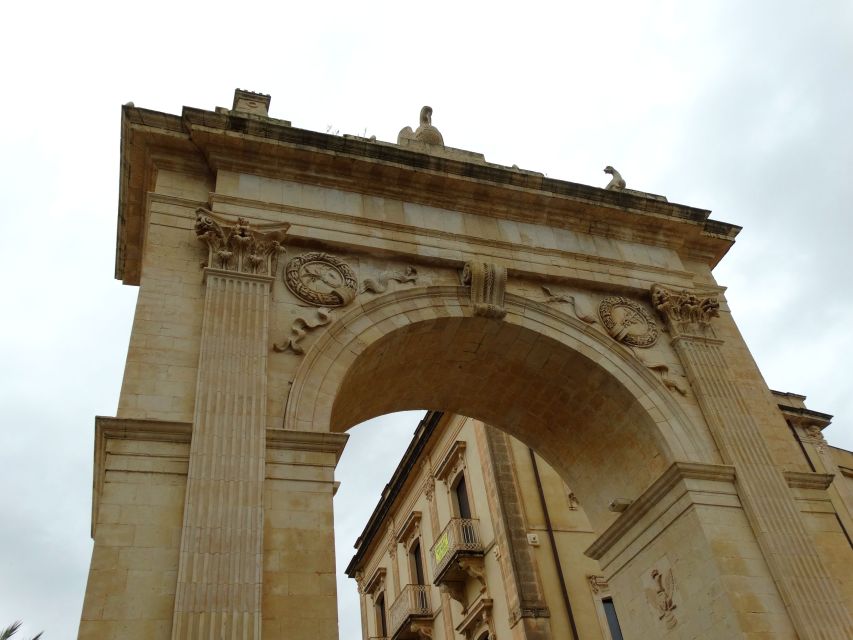
The meeting point is beneath Porta Reale, also called Porta Ferdinandea, at the entrance to Noto’s historic center. Look for the guide wearing a clearly visible license badge. This is a sensible place to begin because the gate gives you an immediate sense of crossing from modern Noto into its grand Baroque core.
The first stop is the Church of St. Francis of Assisi, reached near the former Convent of the Holy Savior. You go up a beautiful staircase to see the interior, where frescoes and decoration make the visit more than a quick look at a facade.
I like this opening because it sets the tone for the whole walk. Noto’s Baroque style is not shy. It uses stairways, statues, carved stone, and layers of decoration to make even a short approach feel ceremonial. You should be ready for some steps at the start, and comfortable shoes are a smart choice.
The nearby former convent also helps explain how religious buildings shaped the city. The tour does not treat the old center as a row of isolated monuments. Instead, the route links churches, civic buildings, theaters, fountains, and market spaces into one connected urban setting.
Santa Chiara and the art of looking upward
A short walk along the main street brings you to the Church of Santa Chiara, next to a former Benedictine monastery. This church is especially rewarding inside, where columns are dressed with stucco and the decoration includes statues of apostles and small putti.
This is a good place to slow down. Baroque interiors often reward a glance upward and a second look at corners, capitals, and figures. A guide can point out how the decoration works together, rather than leaving you to see only a wall of white stucco and ornament.
For you, the value here is access to an interior that may be easy to pass by during an unplanned stroll. Noto’s main street is pleasant to walk, but without a route or explanation, you could easily spend your time taking facade photographs and miss the details inside.
The practical issue is pace. Two hours is enough for the listed stops, but not for long lingering at every church and palace. If you love architectural photography or want quiet time inside each building, you may find the schedule brisk.
More baroque architecture tours in Italy:
- Lecce: Baroque Architecture and Underground Walking Tour
★ 4.6 · 1,248 reviews - Martina Franca: Baroque and Rococo Architecture Walking Tour
★ 5.0 · 4 reviews - LECCE: AMONG ARCHITECTURAL TREASURES IN THE LECCE BAROQUE
★ 4.7 · 3 reviews
Piazza del Duomo and Palazzo Ducezio’s visual tricks
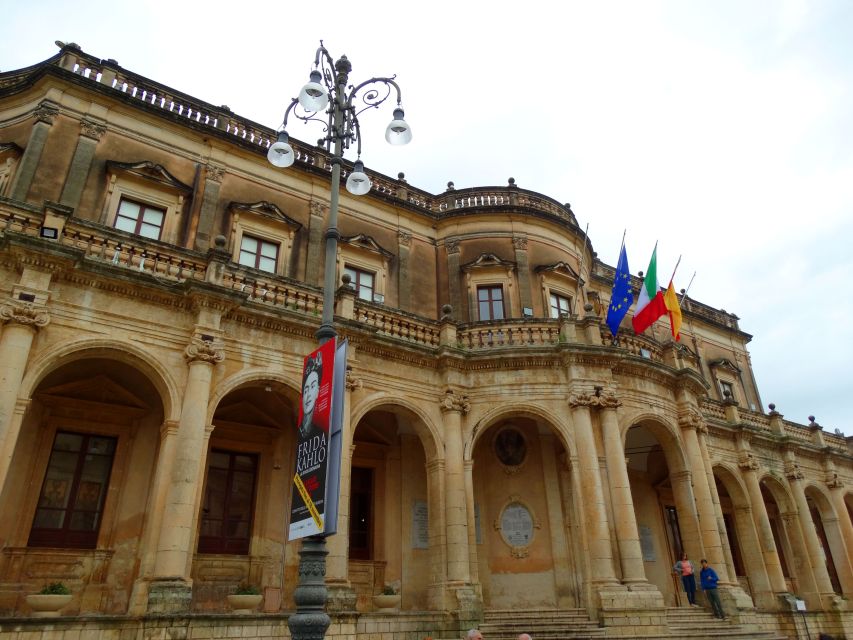
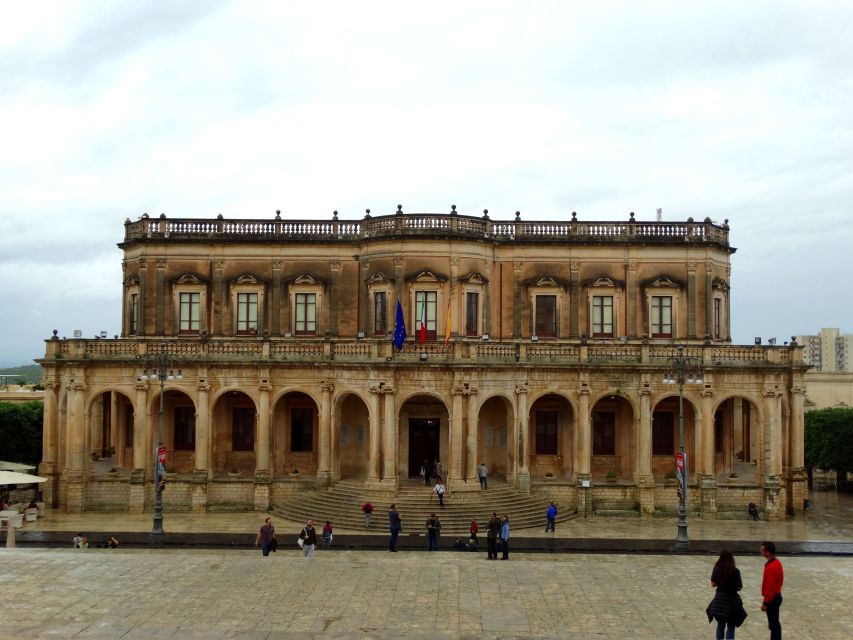
The route continues to Piazza del Duomo, the grand civic and religious heart of Noto. Here, the Town Hall, Palazzo Ducezio, faces the monumental staircase of the Cathedral of San Nicolò.
Palazzo Ducezio was built between the 18th and 19th centuries and now serves as Noto’s Town Hall. Its interior includes a frescoed roof and rooms with mirrors that create visual illusions, making the spaces appear larger than they are.
That mirror effect is one of the tour’s more unusual details. It gives you something to look for beyond the standard list of dates and architectural labels. I would pay attention to how the room uses reflection to stretch the sense of space. It is a small but memorable reminder that Baroque design was often playful as well as grand.
The building also shows how Noto’s architecture served public life. Churches express religious power, while Palazzo Ducezio places ceremony and civic government in the same carefully designed setting. The square works because the buildings face one another as partners, with the cathedral staircase creating a strong visual approach.
You will want time for photographs here, but keep your eyes on the details around the square too. The attraction is not one isolated facade. It is the relationship between the palace, the staircase, the cathedral, and the open space in front of them.
Inside the Cathedral of San Nicolò
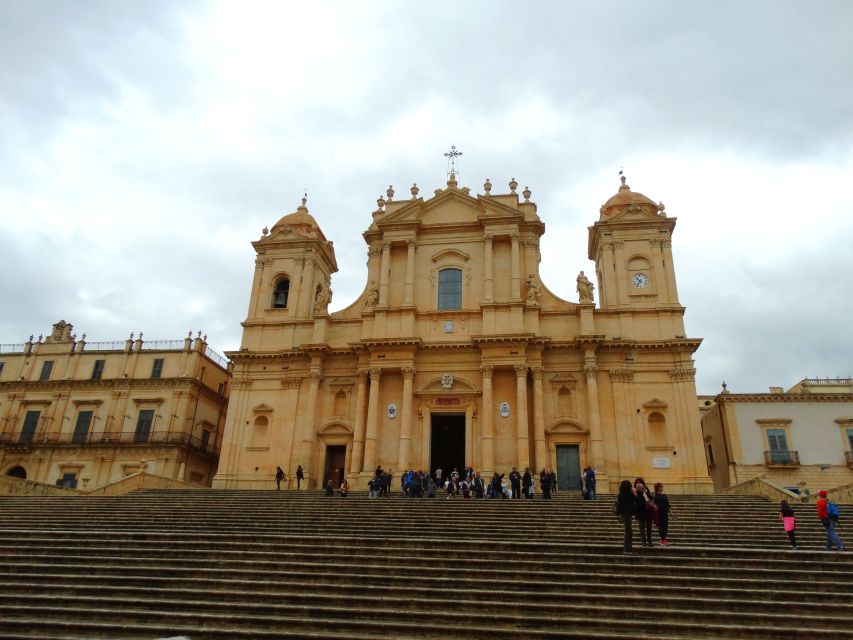
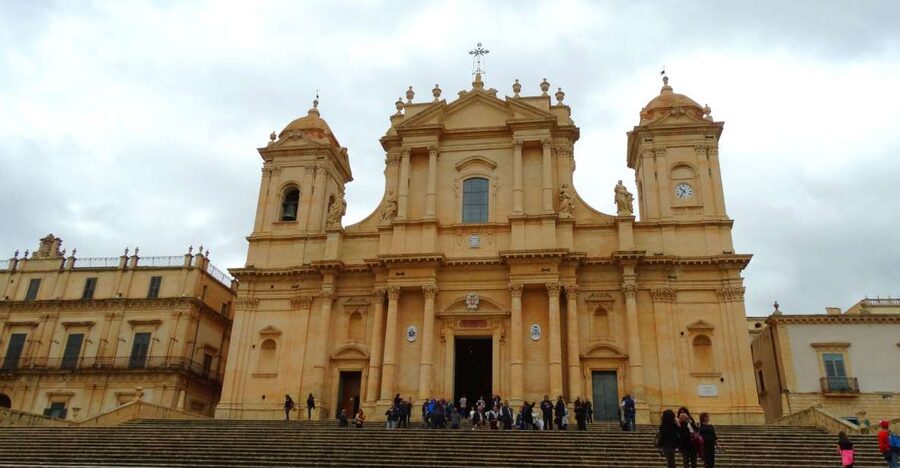
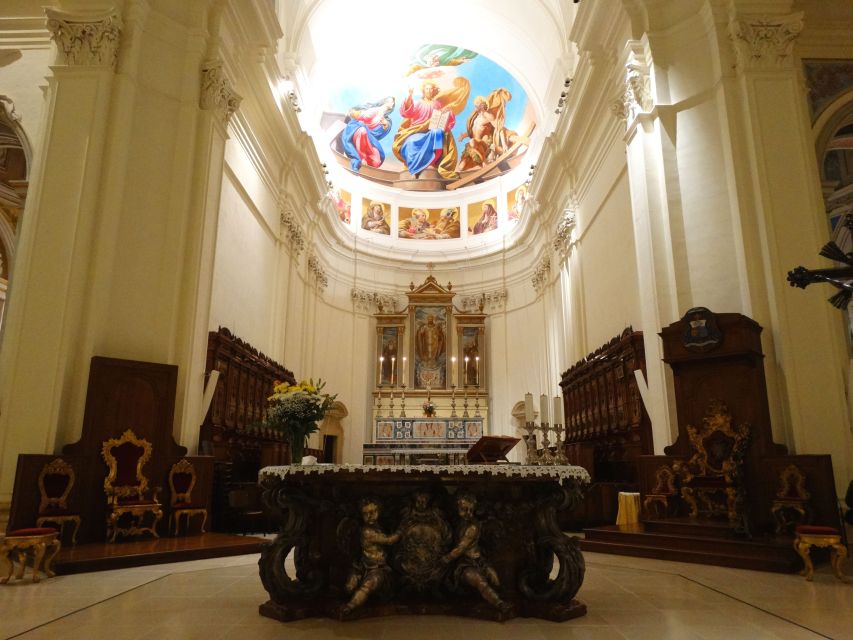
The Cathedral of San Nicolò is the symbolic center of Noto, and the tour includes a visit inside. Built in the 18th century, the cathedral has collapsed three times over the years and was rebuilt. Many frescoes were lost, which gives the building a complicated story rather than a perfectly preserved one.
Its honey-colored exterior is particularly striking in the late light, when the stone takes on a warmer tone. The facade has two bell towers. One contains a bell, while the other holds a clock, a detail worth noticing from the square.
The grand staircase makes the cathedral feel larger as you approach it. That arrival is part of the experience. You do not simply step through a doorway from a narrow street. You cross an open piazza and climb toward the facade, with the building gaining weight and scale as you get closer.
Inside, the cathedral’s rebuilding matters. You are seeing a place shaped by loss, repair, and changing decoration. The absence of some original frescoes is part of what you are looking at, not something to hide.
The guide’s explanation is useful here because the cathedral can look simple from certain angles. A short visit with context helps you understand why the building is so important to Noto, even after repeated damage and reconstruction.
Via Nicolaci and Noto’s famous balconies
From Piazza del Duomo, the tour reaches Via Nicolaci, one of the city’s best-known streets. This is where the Infiorata flower display is set up, with flowers arranged as a carpet along the road. When the display is in place, the street becomes one of Noto’s most photographed scenes.
The tour also takes you past some of the city’s finest palaces. Palazzo Nicolaci is the star. Its balconies are supported and decorated with limestone carvings of masks, animals, and other figures. These are not tidy, restrained decorations. They are expressive, sometimes comic, and full of the theatrical spirit that makes Sicilian Baroque so memorable.
You see the palace from the outside, so manage your expectations. This is a facade-focused stop rather than a full palace visit. That still gives you plenty to study, especially if you look beneath the balconies instead of only at the windows.
I like Via Nicolaci because it shows how Baroque style reaches into everyday urban space. The street is not just a route between monuments. Its balconies, carved figures, and flower displays turn the entire roadway into part of the city’s visual show.
The Infiorata is also a reminder to check the timing of your visit. The tour description identifies Via Nicolaci as the place where the flower carpet is set up, but it does not promise that the display will be present on every tour date. If the flowers are your main reason for booking, confirm current conditions before you pay.
More walking tours in Italy:
- Experience Florence’s Art and Architecture on a Walking Tour
★ 5.0 · 318 reviews - Palermo: Art and Architecture Walking Tour
★ 4.7 · 136 reviews - City Walk with Architect: Private walking tour of Rome
★ 5.0 · 22 reviews - Private Tour: Venice Art and Architecture Walking Tour
★ 4.0 · 22 reviews
The Loggia del Mercato and Noto’s working side
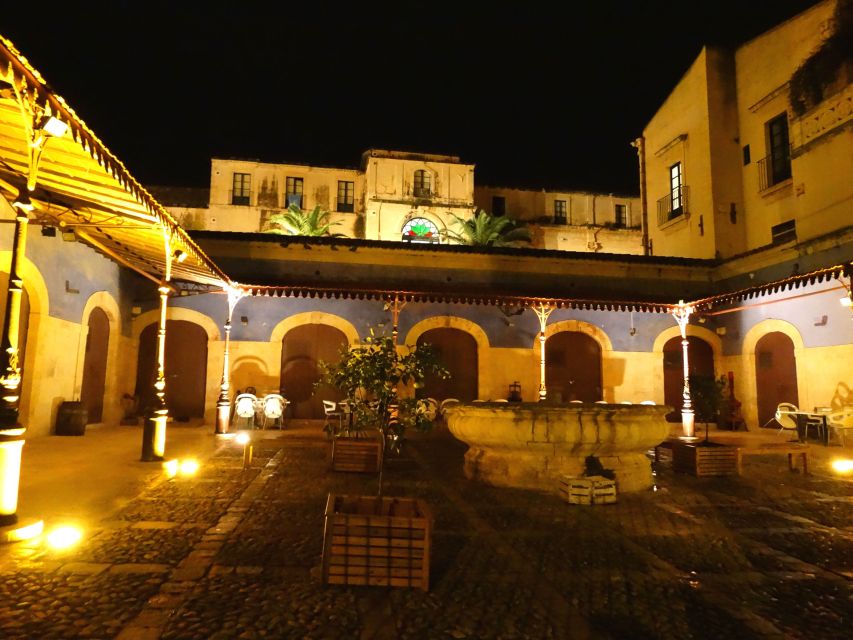
The route leaves the grandest squares and moves through the lanes of the historic center to the Loggia del Mercato. This wrought-iron loggia once served as Noto’s market and is now used for cultural events.
This stop gives the walk some needed variety. Churches and palaces show Noto at its most formal, while the former market space points toward ordinary commercial life. It is a useful reminder that cities are not built only for ceremonies. They also need places to trade, meet, and gather.
The ironwork makes the loggia visually different from the heavy limestone around it. That change in material and purpose keeps the tour from feeling like a parade of similar facades.
You may find this stop less dramatic than the cathedral or Palazzo Nicolaci, but it adds context. I prefer tours that include such places because they help you see how the whole town functioned, not just the buildings designed to impress official visitors.
Tina di Lorenzo Theater and the Fountain of Hercules
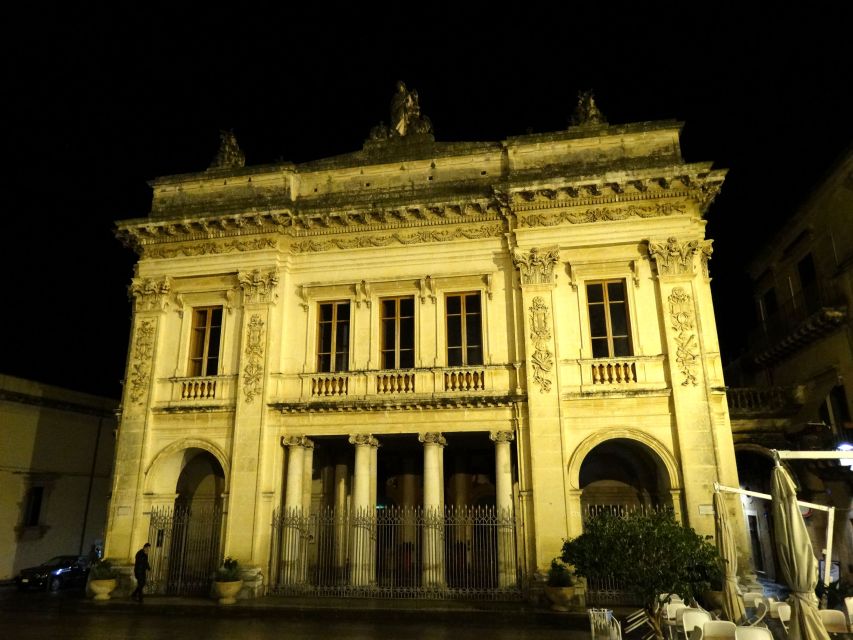
The final section of the walk includes the Tina di Lorenzo Theater, an elegant Neoclassical building, and the marble Fountain of Hercules, built in the 1700s.
The theater broadens the architectural story again. Noto is not only Baroque. The Neoclassical building shows a later taste for order and restraint, giving you a useful contrast after the elaborate churches and palaces.
The Fountain of Hercules provides a fitting outdoor finish. Its marble and 18th-century date connect it to the city’s grand period, while its public placement reminds you that decoration was not limited to private interiors or religious spaces.
Ending back at the meeting point under Porta Reale is practical. You finish where you started, without needing a taxi or a separate route back to your car. The walk is also compact enough to fit into a day when you are visiting Noto as part of a larger itinerary.
What the two-hour format means for you
Two hours is a useful length for Noto. It is long enough to connect the main monuments, yet short enough to leave you time for lunch, independent wandering, shopping, or another stop in southeastern Sicily.
The tradeoff is that this is an overview, not a slow architectural study. You will see many places, but you should not expect extended time in every interior. The guide needs to keep the group moving between Porta Reale, Santa Chiara, Piazza del Duomo, Via Nicolaci, the market loggia, the theater, and the fountain.
The private format helps. The group can include up to 25 people, but you are not joining an open public group with strangers. A private group also gives the guide more room to adjust the pace and answer questions.
One guide, Elia, has been praised for making the tour enjoyable. Another highly rated guide was described as thoughtful about shade on a warm day and willing to tailor the timing to the amount of time available. That practical care matters in Noto, where bright sun, stone pavement, and stairways can make a walking tour tiring.
English and Italian are available. Wear comfortable shoes and light, comfortable clothes. The advice is basic but important, since the route includes stairs and a fair amount of walking through the historic center.
Is $346.65 a fair price?
The listed cost is $346.65 per group of up to 25 people. For a large family, school group, wedding party, or organized private party, the arithmetic can work out well. Split among 10 people, it becomes much easier to justify than the headline price suggests.
For one or two people, the value is harder to defend. You are paying for a private licensed guide and a focused route through Noto, not for transportation, meals, or a full-day excursion. If you mainly want a quick orientation, a less expensive shared walk may make more sense if one is available.
The strongest reason to pay this rate is control. You get a private group, a guide in English or Italian, and a route that combines major landmarks with smaller points such as the market loggia and Fountain of Hercules. The tour also goes inside several important buildings, which adds more value than a walk that only points at facades.
Free cancellation up to 24 hours before the tour and reserve-now, pay-later booking reduce the financial risk. Still, I would make the decision based on group size. This is a good splurge for a group, but not an obvious bargain for a couple.
Who will enjoy this Noto walk most?
I would recommend it to first-time visitors who want a clear introduction to Noto’s architecture without spending half a day on a formal tour. It suits anyone curious about Baroque details, especially carved stone, church decoration, grand staircases, and the way civic buildings fit into the city center.
It is also a strong choice for families and private groups. The guide can keep everyone together, explain the main sights in a practical way, and make adjustments when the weather or group energy calls for it.
You may want something else if your priority is extensive time inside each church, a full visit to Palazzo Nicolaci, or a slow photography walk. The route covers a lot in two hours, so it favors range and explanation over long periods at one site.
Should you book this tour?
Book it if you are traveling with a group and want an efficient, guided introduction to Noto’s Baroque center. The route covers the essential sights, includes several interiors, and adds useful variety with the theater, market loggia, and fountain.
For a small group, compare the total cost with other guided options before committing. If you do book, choose comfortable shoes, protect yourself from the sun, and ask about the current Infiorata display if Via Nicolaci’s flowers are a priority.
FAQ
How long is the Noto walking tour?
The tour lasts two hours.
Where does the tour begin?
It begins under the Porta Reale or Porta Ferdinandea gate, near the Church of St. Francis of Assisi and the former Convent of the Holy Savior.
Where does the tour end?
The tour ends back at the meeting point under Porta Reale.
Which languages are available?
The live guide is available in English and Italian.
Is this a private tour?
Yes. It is a private group experience for up to 25 people.
What buildings and sights are included?
The route includes the Church of St. Francis, Santa Chiara, Palazzo Ducezio, the Cathedral of San Nicolò, Via Nicolaci, Palazzo Nicolaci from the outside, the Loggia del Mercato, the Tina di Lorenzo Theater, and the Fountain of Hercules.
What should I bring?
Bring comfortable shoes and comfortable clothes. The route includes walking and stairways.
Just added in Italy
- Vicenza: Palladian Architecture Private Walking Tour★ 3.3 · 3 reviews
- Private Personalized Architecture Tour of Rome with an Architect★ 5.0 · 5 reviews
- Architectural Milan: Private Tour with a Local Expert★ 4.5 · 2 reviews
- The Architect’s Water★ 4.5 · 11 reviews
- Architectural Florence: Private Tour with a Local Expert★ 5.0 · 3 reviews
- Rione Sanità: tour among street art, architecture, folklore★ 4.5 · 2 reviews
- Palermo Tour: Magnificent Mixture Of Architectural Styles★ 4.2 · 6 reviews
- Discover Coppedè in Rome: Liberty architecture, symbols, and jewels★ 5.0 · 2 reviews
Walking Tours, compared.

The Official Art Deco Walking Tour by The Miami Design Preservation League
Read our review →
Baroque Architecture and Underground Walking Tour
Read our review →
Chicago in a Day: Food, History & Architecture Walking Tour
Read our review →

Ramblas, Old Town, Gothic and Gaudi Architecture Walking Tour
Read our review →
Chicago’s Secret Interiors Architectural Walking Tour
Read our review →
Browse the lists this tour appears in