
REVIEW · ARCHITECTURE TOURS
Lübeck: Architecture and Local Craft Private Guided Tour
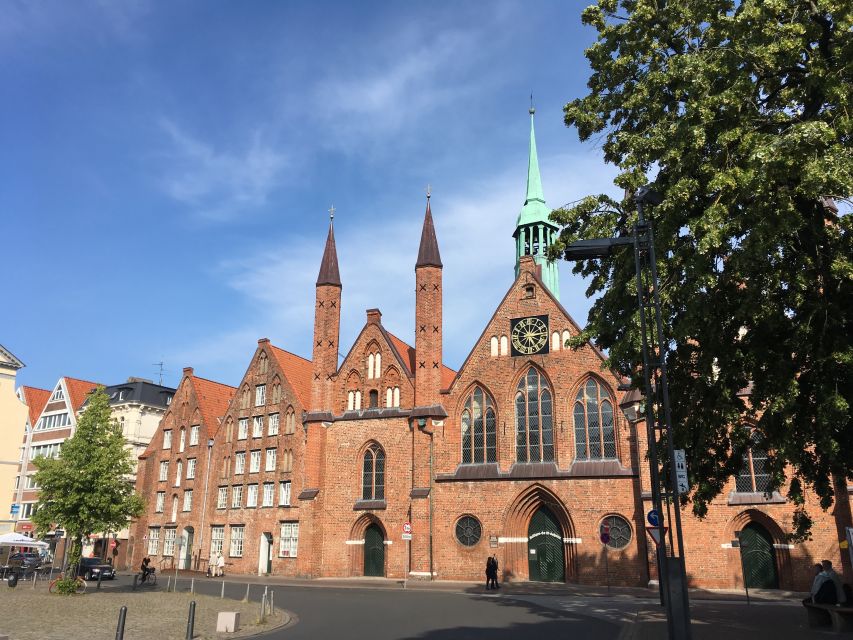
Lübeck’s bricks have stories to tell. This private walk turns the city’s famous red-brick Gothic buildings into a readable history lesson, covering churches, townhouses, courtyards, merchant homes, and the craft that helped make Lübeck powerful. I especially like the private format, which gives your group room to ask questions, and the focus on local building details rather than a quick list of monuments. The main drawback is time: 90 minutes passes quickly, so you will see highlights rather than every corner of the old town.
I also like the way the tour connects architecture with daily life. You hear about sagging houses, altered gables, artificial construction areas, and the practical reasons brick-making mattered. The tour is priced at $277 per group of up to eight, so it makes better financial sense for a family or small group than for one or two people.
- Holstentor starting point: Meet directly at Lübeck’s most famous gateway, then walk into the old town.
- Brick architecture explained: Learn why brick became central to Lübeck’s churches, homes, and civic buildings.
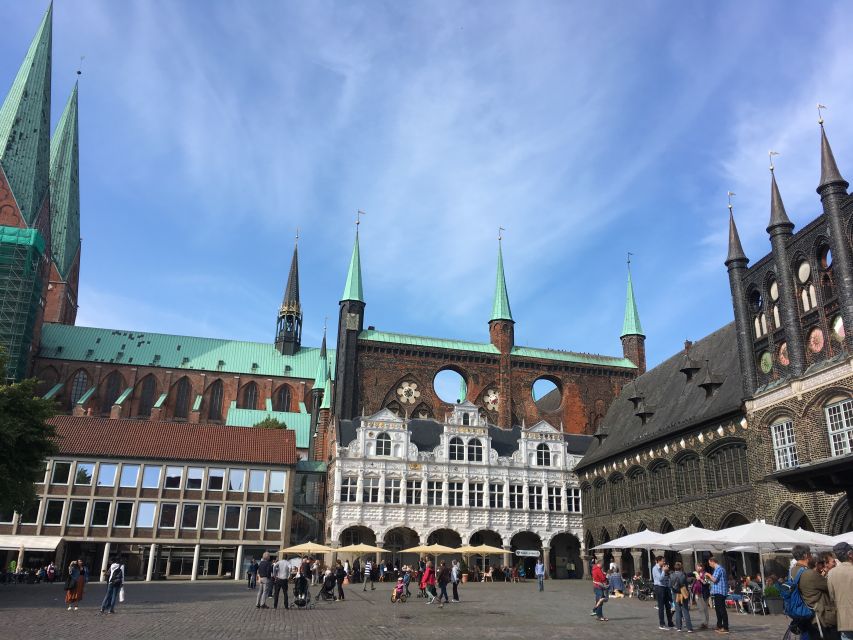
- Town Hall and St. Mary’s Church: See two of the city’s major architectural landmarks at the market square.
- Glockengießerstraße courtyards: Pass through historic passages and courtyards with stories about their construction.
- Local craft and merchant life: Visit a merchant’s house and hear why brick-making was an important skill.
- Private scheduling: Choose a start time between 9 a.m. and 7 p.m., subject to arrangement with the guide.
Why Lübeck’s Brick Architecture Deserves a Walk
Lübeck is one of northern Germany’s great Hanseatic cities, and its historic center is recognized as a UNESCO World Heritage Site. The city’s character comes less from one isolated sight than from the repeated use of brick across churches, civic buildings, merchant homes, and narrow residential streets.
That is why this tour works best on foot. You are not simply looking at a church facade and moving on. You are learning how the city was built, how its streets developed, and how old construction choices still shape what you see today.
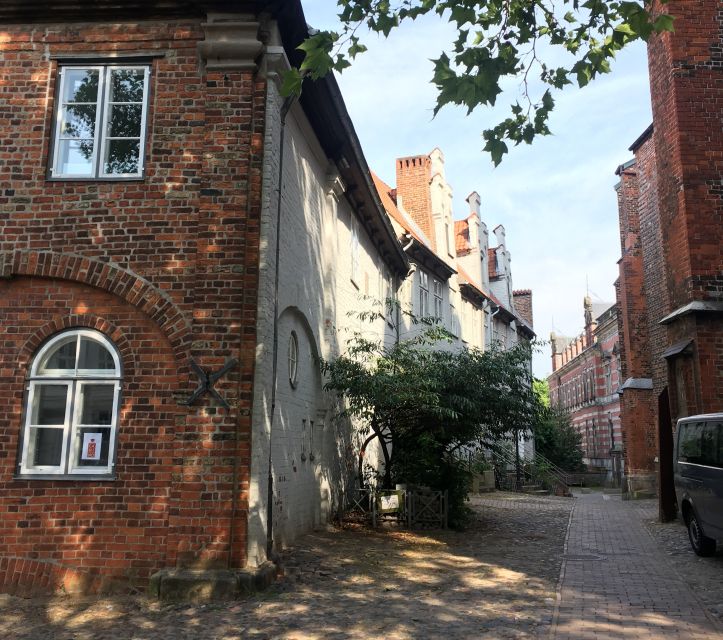
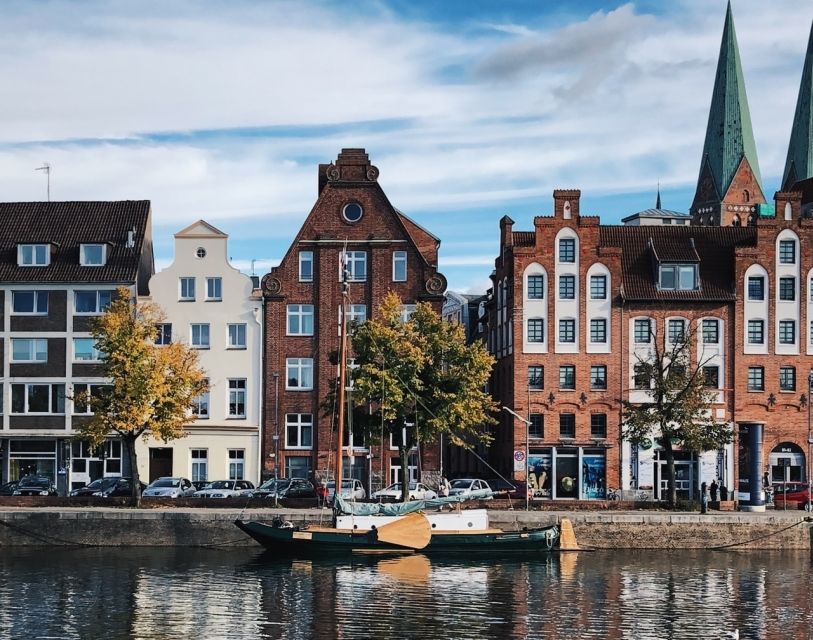
Brick also gives Lübeck a particular visual rhythm. Stone is scarce in much of northern Germany, while clay was available and could be formed into durable building material. The result is a city of strong vertical church towers, stepped and decorated gables, heavy walls, and warm red-brown surfaces.
Your guide puts these details into context. The tour covers the original street system, the artificial expansion of building areas during the Middle Ages, and the changes made to gables over time. These subjects may sound technical at first, but they help explain why Lübeck looks the way it does.
Meeting at the Holstentor
The tour begins at the Holstentor, the fortified gate that has become Lübeck’s best-known symbol. You meet your guide directly at the entrance, so it is wise to arrive a few minutes early and wait at the gateway itself rather than somewhere nearby.
The Holstentor is a useful starting point because it links the city’s defensive past with the commercial world inside the walls. From here, the walk heads into Lübeck’s historic streets, where the focus shifts from one famous landmark to the wider pattern of old buildings.
The final part of the route also returns to the mighty Holstentor, giving the tour a satisfying visual anchor. Still, you should clarify the exact route and timing with your guide when the appointment is arranged, since the tour can begin at different times and is privately scheduled.
More private tours in Germany:
- Private Taxi Tour City East & West History and Architecture 3-4h
★ 5.0 · 42 reviews - Private walking Tour: Berlin Architecture Tour
★ 5.0 · 14 reviews - Lübeck: Private Historical and Architectural Walking Tour
★ 4.5 · 6 reviews
The Market Square, Town Hall, and St. Mary’s Church
One of the central stops is Lübeck’s town market place. Here, you can look at the town hall and the Ratskirche St. Marien, usually known in English as St. Mary’s Church.
The market area shows how civic power and religious influence once met in the same public space. The town hall represents administration and trade, while St. Mary’s Church reflects the importance of religion and the wealth of the city’s merchants.
The church is one of Lübeck’s major landmarks, and the tour places it within the larger story of brick Gothic design. You will hear about the city’s famous churches rather than simply photographing their towers and moving on.
An optional church entrance fee of 2 euros is not included. That is a small extra cost, but it is worth knowing in advance if you hope to go inside. The available information does not promise interior access at every church, so ask your guide what is open and included on your chosen route.
Buddenbrockhaus and the Changing Face of Old Buildings
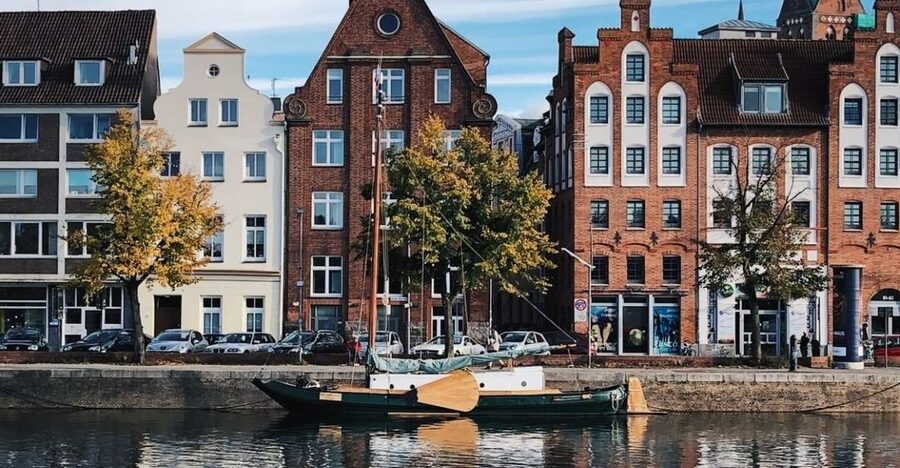
The route passes through the Baroque Buddenbrockhaus before continuing toward Glockengießerstraße. This section gives you a look at how Lübeck’s buildings changed over time instead of remaining frozen in one medieval style.
The tour discusses modern gable alterations, a useful reminder that old cities are rarely untouched museum pieces. Gables may have been repaired, reshaped, or changed to suit later tastes and needs. Looking for those alterations adds another layer to the walk.
You also learn about sagging houses. Old buildings can shift, settle, or lean, and Lübeck’s architecture carries visible signs of age. Rather than treating every crooked wall as a curiosity, the guide explains what such changes can reveal about construction and the passage of time.
I like this part because it keeps the tour grounded. You are not only admiring grand churches. You are also learning to notice small irregularities in ordinary buildings, the sort of details you might otherwise walk past.
Glockengießerstraße’s Passages and Courtyards
Glockengießerstraße is one of the more intimate parts of the walk. Here, you see several passages and courtyards and hear how they were built and used.
These spaces offer a different view of Lübeck from the grand market square. The main streets show civic confidence, while passages and courtyards suggest the practical organization of housing and work. They help you picture how people lived behind the attractive facades.
The route is especially useful if you enjoy architecture at a human scale. A large church can impress you in seconds, but a narrow passage often raises better questions. Who used it? Why was it built this way? How did limited space affect the city’s growth?
The tour explains the history and construction of these places, though 90 minutes does limit how long you can linger. If courtyards are your main interest, tell the guide early. A private tour gives you more room to shape the discussion than a large scheduled group walk.
A few more architecture tours in Germany worth a look
- Düsseldorf: Guided City Architecture Walking Tour
★ 4.6 · 61 reviews - Potsdam: Guided Walking Tour of UNESCO Site and Architecture
★ 4.7 · 49 reviews - Berlin: Guided Architectural Walking Tour of Hansaviertel
★ 4.9 · 5 reviews - Munich Your Way: Private Tour with Architect & Guide
★ 5.0 · 2 reviews
Inside a Merchant’s House and the Importance of Brick-Making
A local merchant’s house is another key stop. This brings the story back to the people who lived and worked in these buildings, especially the merchants whose trade helped Lübeck prosper.
The tour also explains brick-making and why mastering the craft mattered to local residents. This is one of the most distinctive parts of the walk because it connects a visible building material with skills, labor, and economic life.
Brick was not simply a decorative choice. It required suitable clay, careful production, and reliable construction methods. In a city filled with churches and substantial merchant houses, the ability to produce and use brick helped shape both the appearance and growth of Lübeck.
You may find this stop especially valuable if you prefer practical history. Instead of hearing only about powerful families and grand dates, you get a sense of the work behind the city’s buildings.
The Stories Behind Closed Doors
The tour promises stories about events that took place behind closed doors. That wording points toward the private side of Lübeck’s past, where homes and courtyards held their own stories beyond the public monuments.
The available details do not identify each secret event in advance, so you should treat this as part of the guide’s storytelling rather than a fixed list of named incidents. The private format is helpful here. You can ask follow-up questions when a story catches your attention.
The reviews give this tour a rating of 4 out of 5 from six reviews, with four written comments awarding five stars. The praise centers on the guides being engaging, competent, and able to answer questions fully. One Danish guest specifically praised the guide’s command of local history, while another called the guide enthusiastic.
That feedback is useful because architecture tours can become dry if the guide only recites dates and styles. Here, the strongest signal is that the human side of the tour matters. You are likely to get more from it if you ask about residents, building use, and the reasons behind visible changes.
What $277 Means for Your Group
The price is $277 for a private group of up to eight people. That means the value depends heavily on your group size.
For eight people, the cost works out to about $34.63 per person. For four people, it is about $69.25 each. For only two people, it becomes $138.50 each, which is a much larger commitment for a 90-minute walk.
I see the price as reasonable for a full group that wants a private guide and a flexible start time. You are paying for personal attention, the ability to ask questions, and a route focused on architecture and local craft rather than a general city introduction.
For one or two people, compare it with a shared walking tour before booking. The private format is the main reason to choose this option, not a longer duration. Food, drinks, and optional church entrance fees are extra.
Timing, Languages, and Planning the Walk
The tour lasts 90 minutes and can begin at any time between 9 a.m. and 7 p.m., based on your preference and the guide’s availability. After booking, the guide contacts you to arrange the start time.
This flexibility helps you fit the walk around a train arrival, a meal, or another Lübeck sight. A morning start may suit you if you want to use the rest of the day for museums and independent wandering. A later start can work well if you prefer a slower morning.
The tour is offered in English or German. If your group has mixed language needs, confirm the preferred language when arranging the time.
You should wear comfortable shoes. The tour is a walking route through city streets, passages, courtyards, and market areas. No transport is included, and the supplied details do not specify an accessibility route or the condition of every courtyard, so ask before booking if that matters for your group.
Free cancellation is available up to 24 hours before the tour for a full refund. You can also reserve now and pay later, which is useful if your schedule is still taking shape.
Who Will Get the Most From This Tour?
I would choose this tour for a group that wants architecture explained in plain language. It suits people who enjoy old churches, town halls, merchant houses, construction methods, and the small signs of change found in historic buildings.
Families can also benefit from the private setup, especially if children need occasional breaks or questions answered at their own pace. The stories about unusual houses, courtyards, and life behind closed doors may be easier to follow than a long lecture on dates.
It is less suitable if you want extensive interior visits, a food-focused outing, or a full-day survey of Lübeck. The route includes an optional church entrance, but entrance fees are not included and the main emphasis is the city’s architecture as seen from the streets.
The tour also makes sense for repeat visitors who have already seen the Holstentor and the main churches. A guide can help you notice details you missed on a first visit, especially gable changes, sagging structures, and smaller passages.
Should You Book the Lübeck Architecture Tour?
Book it if you are traveling with a group of up to eight and want a focused introduction to Lübeck’s brick architecture, local building craft, and merchant history. The private format, flexible start time, and strong praise for the guides’ historical knowledge are the best reasons to choose it.
Think twice if you are alone or traveling as a pair, since the flat group price becomes expensive. Also keep your expectations practical: this is a 90-minute outdoor walking tour, not an all-access visit to every church or courtyard.
For the right group, I think the tour offers a useful way to read Lübeck. You leave with more than photographs of red-brick buildings. You learn why the streets developed as they did, how local skills shaped the city, and where to look for the human stories tucked behind its grand facades.
FAQ
Where does the Lübeck architecture tour meet?
Your guide meets you directly at the entrance of the Holstentor in Lübeck.
How long does the tour last?
The tour lasts 90 minutes.
What time can the private tour begin?
The tour can start at any time between 9 a.m. and 7 p.m., based on your preference and the arranged schedule.
How many people can join the private group?
The price covers a private group of up to eight people.
What languages are available?
The tour is available in English and German.
Is the Holstentor included in the route?
Yes. The tour starts at the Holstentor and includes a final visit to this major Lübeck landmark.
Are church entrance fees included?
No. Optional church entrance fees cost 2 euros and are not included in the tour price.
Are food and drinks included?
No. Food and drinks are not included.
Can I cancel for a full refund?
Yes. You can cancel up to 24 hours in advance for a full refund.
Just added in Germany
- Hidden Architectural Gems of Munich (Max. 16 guests)★ 5.0 · 2 reviews
- Munich Your Way: Private Tour with Architect & Guide★ 5.0 · 2 reviews
- Architectural Frankfurt: Private Tour with a Local Expert★ 5.0 · 2 reviews
- Architectural Berlin: Private Tour with a Local Expert★ 4.0 · 3 reviews
- Private Taxi Tour of City East History and Architecture 2-3h★ 5.0 · 2 reviews
- Berlin Architecture/River Spree Full Day Photography Tour★ 5.0 · 2 reviews
- Lübeck: Private Historical and Architectural Walking Tour★ 4.5 · 6 reviews
- Dessau: Radtour Bauhaus – Junkers – Gartenreich★ 5.0 · 2 reviews
Architecture Tours, compared.
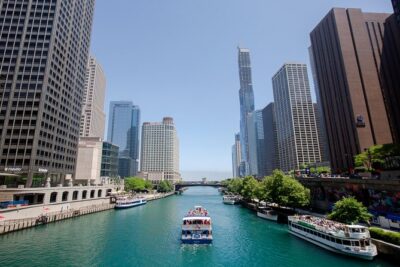

Chicago River: 1.5-Hour Guided Architecture Cruise
Read our review →
Chicago Architecture Center River Cruise aboard First Lady
Read our review →
Architecture River Cruise Skip-the-Ticket Line
Read our review →
Chicago River 45-Minute Architecture Tour from Magnificent Mile
Read our review →
Browse the lists this tour appears in