
REVIEW · WALKING TOURS
Lübeck: Private Historical and Architectural Walking Tour
Lübeck rewards slow steps. This private 90-minute walk gives you a compact introduction to the old city, linking the Holsten Gate, merchant wealth, Gothic churches, Buddenbrook House, marzipan, and the Town Hall. I like the private format, which lets your group ask questions instead of following a large crowd. I also like the marzipan tasting, since it adds a local flavor to the stone-and-brick story.
The main drawback is the short running time. Lübeck has plenty to explain, and this tour gives you an overview rather than a full museum visit. Cobblestones, stairs, and extended walking also make it a poor fit for wheelchair users or anyone with serious mobility limits.
Key points at a glance
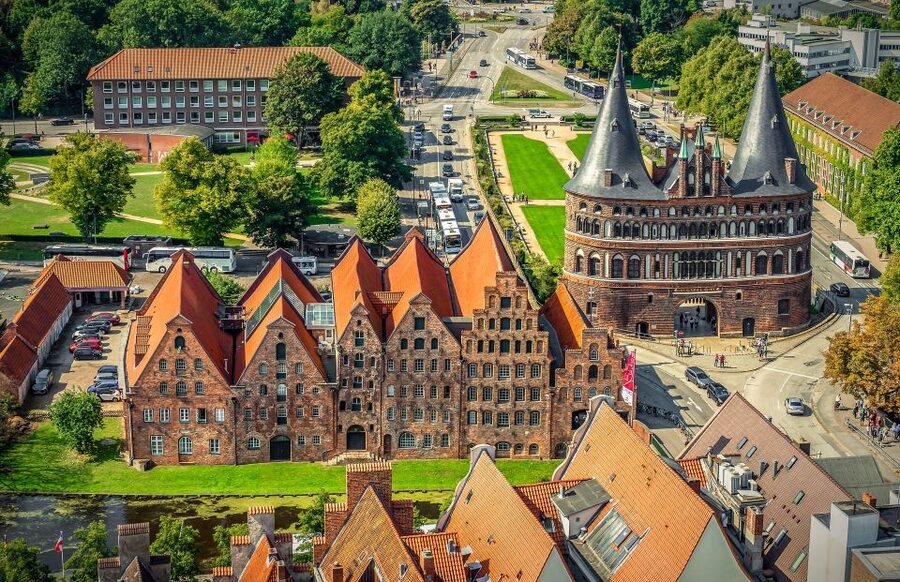
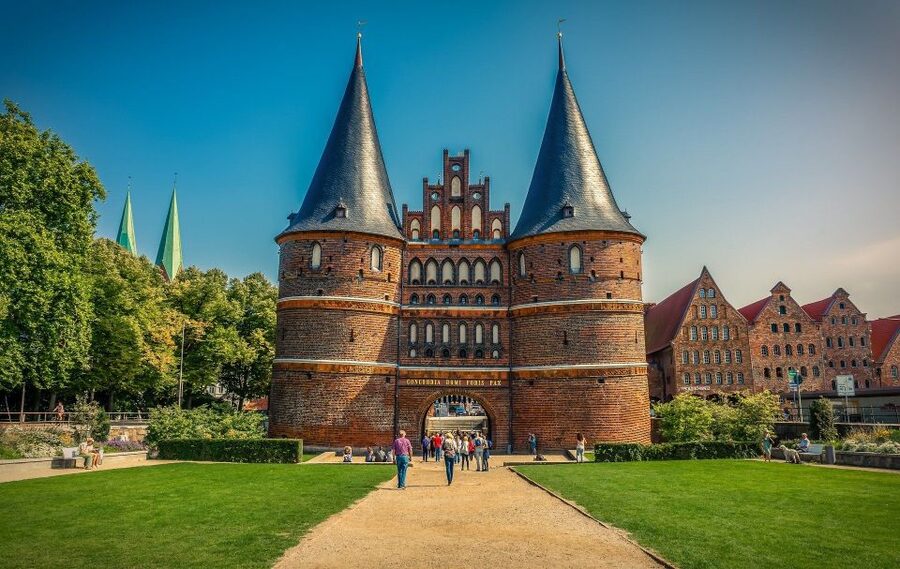
- Holsten Gate begins the story: Meet beside Lübeck’s famous Gothic city gate, built in 1464 and linked to the city’s medieval defenses and idea of freedom.
- A private group of up to 15: The $265 price is shared by the group, making the cost more reasonable when several people join.
- Marzipan is part of the history: Taste several varieties at a traditional bakery while learning why this sweet became part of Lübeck’s identity.
- Five church towers shape the view: Look across the old center toward churches, salt storehouses, and merchant houses built from the city’s distinctive brick.
- The Mann family adds a literary layer: Buddenbrook House connects Lübeck with German writers Thomas Mann and Heinrich Mann.
- No entry tickets are included: The experience focuses on outdoor sights and guided explanation, so budget separately if you want to enter paid attractions.
Starting beside Lübeck’s Holsten Gate
Your guide meets you in front of the Holsten Gate, near Museum Holstentor. This is a practical starting point because the gate immediately places you in Lübeck’s medieval world. You do not need a long orientation before the city begins telling its story.
Built in 1464, the Holsten Gate is one of the last Gothic remains of Lübeck’s old fortifications. It is also one of only two surviving city gates. Its heavy brick form, rounded towers, and defensive purpose make it more than a pretty photo stop. The gate shows how Lübeck once controlled movement into the city and protected its commercial power.
The tour uses the gate to explain the idea of freedom tied to Lübeck. That point matters because the city was not simply a collection of old buildings. Its position on Baltic Sea trading routes helped merchants build influence, wealth, and political independence.
I appreciate beginning here rather than at a random central square. The gate gives you a clear frame for the rest of the walk: trade brought money, money funded churches and homes, and those buildings still shape the city today.
More walking tours in Germany:
- Düsseldorf: Guided City Architecture Walking Tour
★ 4.6 · 61 reviews - Potsdam: Guided Walking Tour of UNESCO Site and Architecture
★ 4.7 · 49 reviews - Private walking Tour: Berlin Architecture Tour
★ 5.0 · 14 reviews
Reading the skyline from the old center
As you continue into Lübeck, your guide points out views across the historic center. The skyline includes five churches, salt storehouses, and substantial brick homes built by wealthy merchants in the late 1700s.
This is one of the tour’s strongest features because Lübeck’s architecture makes more sense when you know who paid for it and why. The city’s brick Gothic style was practical, but it also became a marker of status. Merchants used large homes and impressive civic buildings to show that Baltic trade had made Lübeck prosperous.
The salt storehouses are especially useful clues. Salt was an important trading product, and these buildings connect ordinary commerce with the grand churches and residences nearby. You are not just looking at old walls. You are seeing the physical results of shipping routes, storage, business, and civic ambition.
The city is known as the City of Seven Spires, although the route highlights a view containing five churches. That contrast is a good reminder that this is a short orientation walk, not an attempt to cover every corner of Lübeck. Your guide can help you understand the larger shape of the city even when the tour does not stop at every landmark.
Buddenbrook House and Lübeck’s literary side
The next major stop is Buddenbrook House, associated with Thomas Mann and Heinrich Mann. The building adds a literary dimension to a tour that otherwise focuses heavily on trade, religion, and architecture.
Thomas Mann’s novel Buddenbrooks is closely connected with Lübeck, and the Mann family gives the city another way to understand its merchant society. The stop helps link the grand homes and commercial traditions you have just seen with the people and social world that inspired German literature.
Do not assume the guided fee includes admission to the house. Entry tickets are not part of the tour, so the walking experience should be treated as a guided stop and explanation rather than a guaranteed museum visit. If you want to spend time inside, check the admission arrangements separately.
This is also where the private setup can help. A group of up to 15 is still large enough that the guide must keep moving, but it is small enough for questions about the Mann family, Lübeck society, or the building itself. The experience is offered in German or English.
St. Mary’s Church and the little devil
The walk continues to St. Mary’s Church, described as the third largest brick Gothic church in Germany. Its size and brick construction show how much money and confidence medieval Lübeck could direct toward religious buildings.
The church is not presented only as a solemn monument. Your guide also tells the story of a little devil outside the church. That kind of local tale makes the stop easier to remember, especially after the larger explanations about trade and architecture.
The church also helps you understand the city’s nickname and skyline. Lübeck’s many spires are not isolated decorations. They mark the power of religious institutions and the wealth of the city that supported them.
Again, entry tickets are not included. The tour’s value here comes from the explanation and the exterior setting unless you arrange any interior visit separately. If you want a long look inside, allow extra time beyond the 90-minute schedule.
More history tours in Germany:
- Private Taxi Tour City East & West History and Architecture 3-4h
★ 5.0 · 42 reviews - Private Munich Tour for History Buffs with Architectural Gems and WWII sites
★ 5.0 · 3 reviews - Private Taxi Tour of City East History and Architecture 2-3h
★ 5.0 · 2 reviews - Chicago in a Day: Food, History & Architecture Walking Tour
★ 5.0 · 1,153 reviews
Marzipan, baked fresh and explained locally
The marzipan stop gives the walk a welcome change of pace. At a traditional bakery, you taste different varieties of freshly baked marzipan while learning about the sweet’s importance in Lübeck.
This is more useful than a random snack break. Food gives you a simple way to connect with the city’s commercial past. Marzipan is part of Lübeck’s public identity, and tasting several forms lets you compare the product instead of hearing about it only in abstract terms.
I especially like this stop for first-time visitors. A church or gate may blur together after a long day of sightseeing, but a local food memory tends to stay put. It also prevents the tour from becoming a nonstop sequence of dates, names, and architectural labels.
The description does not specify exactly which bakery or varieties you will receive, so do not expect a fixed tasting menu. What you can count on is a bakery visit, several marzipan samples, and an explanation of the treat’s significance.
The Merchants’ Quarter and the city’s trade routes
The walk also covers the nearby Merchants’ Quarter and the impact of trading routes along the Baltic Sea. This is essential context for Lübeck. Without it, the old homes and churches can look like disconnected monuments.
Your guide explains how merchants helped shape the city’s economic development. The subject is practical and visible: commercial success appears in the homes, warehouses, churches, and public buildings you pass.
The tour does not promise a separate museum session on Hanseatic trade, so keep your expectations at the right level. In 90 minutes, you get the main idea and the city’s most useful visual clues. If your main interest is maritime commerce, you may want to continue exploring Lübeck after the walk.
The private format gives you a better chance to ask focused questions. You can ask how the Baltic routes affected daily life, why brick became so common, or how merchant wealth influenced local architecture. The guide’s job is not only to recite dates, but to connect the buildings around you.
Lübeck Town Hall and the final stop
Before the tour ends, you stop at Lübeck’s Town Hall. It is considered one of Germany’s most beautiful town halls and is part of the city’s UNESCO World Heritage designation.
The Town Hall makes a fitting finish because it brings together the themes of the route. Lübeck’s economic strength, independent civic identity, elaborate architecture, and long public life all meet in the town center.
The UNESCO status applies to Lübeck’s historic old town, whose Gothic and Renaissance buildings reflect the city’s importance as a Baltic trading center. This designation is not just a badge for a brochure. It explains why the city’s streets, towers, gates, churches, and merchant houses are protected as a connected historic setting.
As with the other stops, the emphasis is on guided interpretation. Entry tickets are not included, so check separately if you want to go inside any paid site.
What the 90-minute length really means
Ninety minutes is enough for a focused introduction. You can see several major landmarks, hear the basic story of Lübeck’s trade and architecture, enjoy a food tasting, and finish near the civic heart of the old city.
It is not enough for a slow museum day or a detailed tour of every church interior. The route has several subjects to cover, so the pace may feel brisk if you like to linger for photographs.
That short length can be an advantage. You can fit the walk into a morning or afternoon without giving up the rest of your day. It also works well as an arrival activity, helping you decide which buildings deserve a closer look later.
Wear comfortable shoes and clothes. The route uses historic streets and cobblestones, and the activity is not suitable for wheelchair users or people with mobility impairments. If you walk slowly or need frequent rests, ask before booking whether the route can be adjusted.
Guide quality and the private-group advantage
The strongest praise for this experience centers on the guide’s command of Lübeck. One German-language evaluation described the guide as someone who had lived and breathed the city and seemed to know every brick. That is exactly the kind of local attention that can turn a basic sightseeing walk into a useful introduction.
Another visitor described the guide as friendly and capable, while noting that the guide could have made herself easier to identify at the meeting point. That is a small but practical warning. Arrive at the Holsten Gate near Museum Holstentor with a clear meeting plan, and confirm how you will recognize the guide.
A private group also changes the feel of the tour. You are not sharing the guide with a large public crowd, and a group of up to 15 can ask questions that match its own interests. For a family, couple, or group of friends, that privacy may be worth more than a cheaper standard walking tour.
Is $265 good value for your group?
The price is $265 per group of up to 15 people, not $265 per person. At the maximum group size, that works out to about $17.67 per person. For two people, the effective cost is much higher, so the value depends heavily on how many people join you.
The fee includes a private guide and the walking tour. It does not include entry tickets, so factor in any extra admission costs if you want to enter Buddenbrook House, St. Mary’s Church, the Holsten Gate museum, or another paid attraction.
I see the best value for families and small groups who want a tailored introduction without committing to a half-day program. The price is harder to justify for a solo visitor or a pair unless private guiding is a priority.
The included marzipan tasting adds something tangible, but this is still mainly a guided city walk. Book it for the interpretation, local stories, and efficient route, not as an all-inclusive sightseeing package.
Who should book this Lübeck walk?
I would recommend it to first-time visitors who want the main old-town landmarks explained in a short session. It also suits people who care about architecture, German literature, Baltic trade, or local food and want all four themes connected.
It works particularly well for:
- Families and private groups
- Visitors with only 90 minutes
- People who prefer a guide to a self-guided route
- Architecture fans interested in brick Gothic buildings
- English or German speakers
- Anyone who wants a quick orientation before exploring alone
I would hesitate if you need step-free access, dislike cobblestones, or want long interior visits. I would also compare the cost carefully if only one or two people are booking.
The experience allows free cancellation up to 24 hours before the start, with a full refund, and you can reserve now while paying later. Those terms help if your schedule is still shifting, but they do not change the physical demands of the walk.
Should you book the Lübeck private walking tour?
Book it if you want a compact, personal introduction to Lübeck that mixes major sights with useful local details. The Holsten Gate, St. Mary’s Church, Town Hall, Buddenbrook House, merchant architecture, Baltic trade, and marzipan tasting create a well-rounded first look at the city.
Skip it if you want a museum-heavy tour, an accessible route, or enough time to study each building at length. For a full group, the price is sensible. For just one or two people, the private fee is harder to defend.
The guide’s local knowledge is the main reason to choose this walk. Just arrive ready for cobblestones, confirm how to spot your guide at the Holsten Gate, and treat the 90 minutes as an engaging overview rather than the final word on Lübeck.
FAQ
Where does the tour meet?
The meeting point is in front of the Holsten Gate near Museum Holstentor.
How long does the walking tour last?
The tour lasts 90 minutes.
What is the price?
The price is $265 per private group of up to 15 people.
Is the tour private?
Yes. It is offered as a private group experience.
Which languages are available?
The tour is available in German and English.
Are entry tickets included?
No. Entry tickets are not included in the tour price.
Is the marzipan tasting included?
The experience includes a stop at a traditional marzipan bakery where you taste different varieties and learn about the sweet’s significance.
What should I bring?
Bring comfortable shoes and comfortable clothing.
Is the tour suitable for wheelchair users?
No. The experience is not suitable for wheelchair users or people with mobility impairments.
Just added in Germany
- Hidden Architectural Gems of Munich (Max. 16 guests)★ 5.0 · 2 reviews
- Munich Your Way: Private Tour with Architect & Guide★ 5.0 · 2 reviews
- Architectural Frankfurt: Private Tour with a Local Expert★ 5.0 · 2 reviews
- Architectural Berlin: Private Tour with a Local Expert★ 4.0 · 3 reviews
- Private Taxi Tour of City East History and Architecture 2-3h★ 5.0 · 2 reviews
- Berlin Architecture/River Spree Full Day Photography Tour★ 5.0 · 2 reviews
- Lübeck: Architecture and Local Craft Private Guided Tour★ 4.0 · 6 reviews
- Dessau: Radtour Bauhaus – Junkers – Gartenreich★ 5.0 · 2 reviews
Walking Tours, compared.

The Official Art Deco Walking Tour by The Miami Design Preservation League
Read our review →
Baroque Architecture and Underground Walking Tour
Read our review →
Chicago in a Day: Food, History & Architecture Walking Tour
Read our review →

Ramblas, Old Town, Gothic and Gaudi Architecture Walking Tour
Read our review →
Chicago’s Secret Interiors Architectural Walking Tour
Read our review →
Browse the lists this tour appears in