
REVIEW · WALKING TOURS
Düsseldorf: Guided City Architecture Walking Tour
Look up and Düsseldorf changes shape. This two-hour walk connects the polished storefronts of Königsallee with the old town and the broad cultural quarter of Ehrenhof, showing you how international architects, local builders, politics, and changing tastes shaped the city. I especially like the route’s variety and the way it puts famous buildings into context, rather than treating them as isolated photo stops. The included City Museum entry adds useful value.
The main caution is pace. You cover a lot in two hours, and one detailed account describes it as a fast march packed with information. The tour is in German only, so you need solid listening skills to get the full benefit. One canceled departure also caused serious frustration, although that appears to be an exception rather than the normal pattern.
Key points at a glance
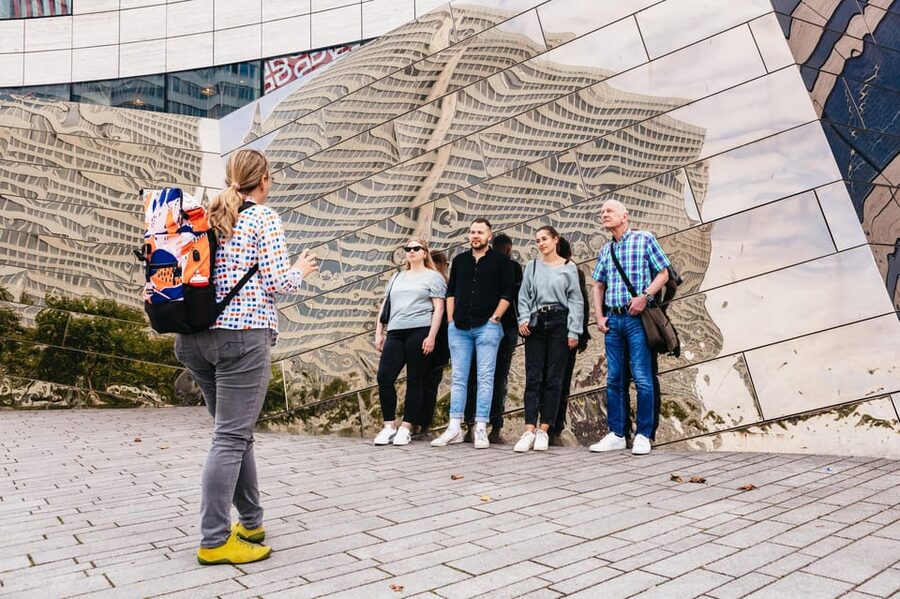
- Kö-Bogen gives the tour a modern opening: Daniel Libeskind’s sharply cut complex provides a clear lesson in how new architecture can reshape a familiar shopping district.
- Dreischeibenhaus brings postwar Düsseldorf into view: The 96-meter tower helps explain the city’s mid-century office architecture and its strong Brutalist presence.
- The route covers three distinct areas: You move from Königsallee to the Old Town and then toward Ehrenhof, with plenty of chances to stop for photographs.
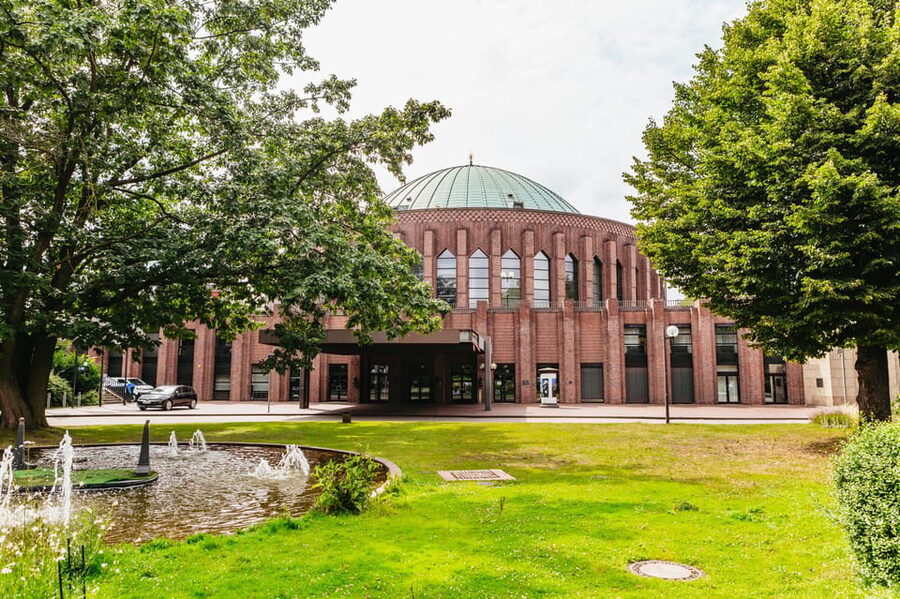
- The architecture is not all from one era: Expressionism from the 1920s, postwar modernism, Brutalism, and newer international work all appear within a compact part of the city.
- Several major designers receive attention: Wilhelm Kreis, Daniel Libeskind, Karl Friedrich Schinkel, Bernhard Pfau, and Helmut Hentrich are part of the story.
- You get museum value beyond the walk: Admission to the City Museum at Bergerallee 2 is included, though you should confirm how the entry fits with your tour timing.
Why this Düsseldorf walk is worth your time
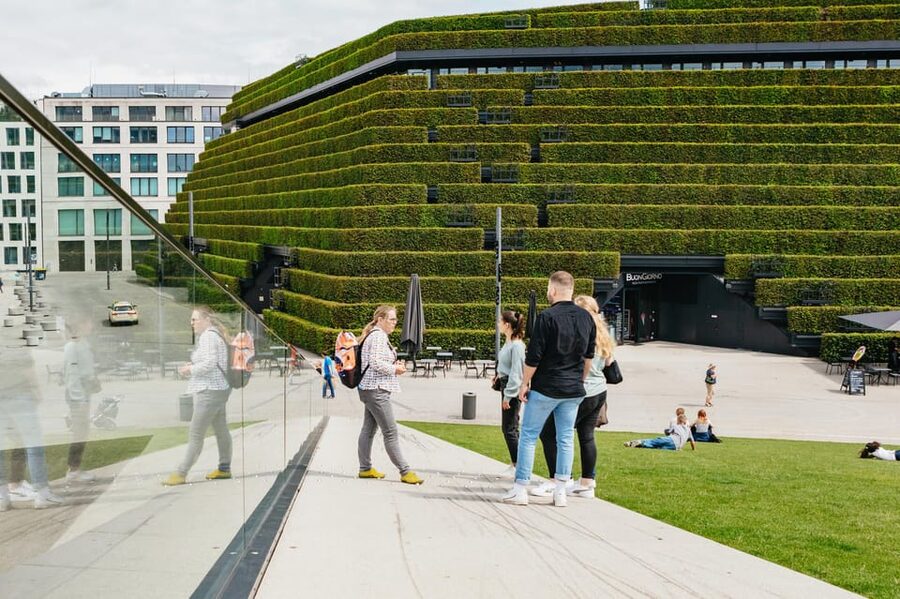
Düsseldorf is easy to reduce to two postcard ideas: the grand shopping boulevard of Königsallee and the old town’s bars and narrow streets. This tour asks you to look again. Behind the familiar facades are arguments about style, power, commerce, rebuilding, and the role of public space.
I like that the walk does not stay inside a single architectural period. In a relatively small area, you can hear about Expressionist work from the 1920s, postwar office buildings, Brutalism, and the bold forms of Daniel Libeskind. That range gives you a better sense of Düsseldorf as a working city that kept changing, rather than a place frozen in one historic image.
The guide is central to the experience. German-language sessions have been praised for their historical detail, humor, clear answers, and personal stories. Dietmar Schönhoff is specifically named as an excellent guide, with a talent for mixing architectural explanation with anecdotes. If he is leading your departure, expect a particularly talkative and informed presentation, though the quality of any guided walk naturally depends on who is holding the microphone.
The overall rating is 4.6 from 61 ratings, which points to strong satisfaction with the content and guiding. Still, this is not a light stroll with a few facts sprinkled in. You need to enjoy listening, looking closely, and keeping up.
More walking tours in Germany:
- Potsdam: Guided Walking Tour of UNESCO Site and Architecture
★ 4.7 · 49 reviews - Private walking Tour: Berlin Architecture Tour
★ 5.0 · 14 reviews - Lübeck: Private Historical and Architectural Walking Tour
★ 4.5 · 6 reviews
Starting at Mannesmannufer and heading toward the city center
The published meeting point is Mannesmannufer 2. Three starting-location references are associated with the activity: Alter Stahlhof, Mannesmannufer 2, and Breite Str. 69. Since those details are not perfectly tidy, check your booking confirmation carefully before setting out. The stated meeting point is Mannesmannufer 2, so that is the place to treat as your default unless your confirmation says otherwise.
The walk lasts two hours, with the guide leading on foot. There is no promise of interior access to every building along the route. Much of the architecture is viewed from public streets and open spaces, so comfortable shoes and attention to traffic are more useful than formal sightseeing gear.
The route begins with the city’s central architectural story and then moves through several districts. Your guide can point out details that are easy to miss at street level, from the shape of a facade to the reasons a building was placed where it is. Photo stops are built into the pace, which matters because the strongest views often require a moment to step back and take in the whole structure.
Königsallee, where shopping meets serious architecture
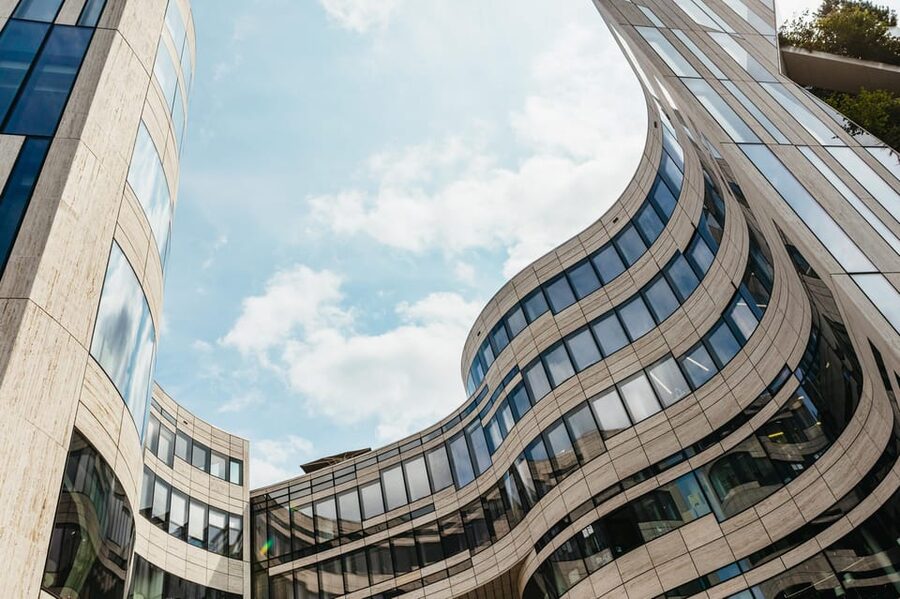
Königsallee is Düsseldorf’s famous boulevard, known for its upscale shops and broad central canal. On this walk, it becomes an outdoor architecture lesson. You are not simply passing attractive commercial buildings. You are looking at how a prestige shopping street absorbs new design while keeping its polished public image.
The main focus here is Kö-Bogen, designed by New York architect Daniel Libeskind. Its angular forms and sharply cut lines make it easy to spot, but a guide adds the missing part of the story: how a major contemporary project changes the experience of an established city center.
Libeskind’s work can divide opinion, and that is part of its interest. You can decide for yourself if the building improves the area, challenges it, or does both at once. The tour is strongest when it connects the building’s appearance with the wider questions behind it: Who gets to reshape a city center? How should new construction respond to older streets? What makes a modern building feel like part of Düsseldorf rather than an imported object?
The walk passes by Kö-Bogen rather than promising a full interior visit. That is an important distinction. You get the exterior view and the guide’s explanation, along with time for photographs, but this is not an architectural tour of the building’s inside spaces.
Dreischeibenhaus and the sharp edge of postwar modernism
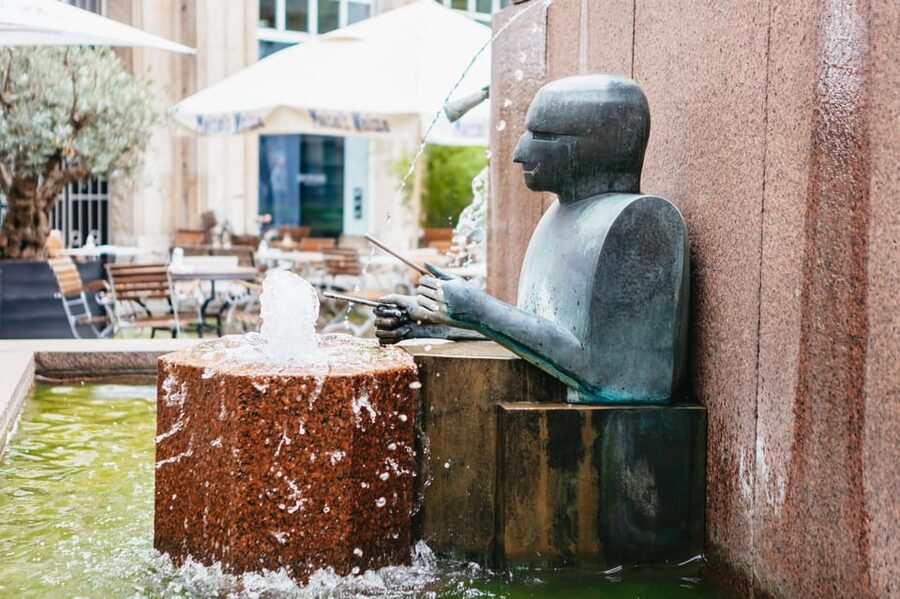
The 96-meter Dreischeibenhaus is another major stop along the Königsallee section. Its tall, clean profile represents a different architectural mood from Libeskind’s more fragmented forms. Seeing both in one outing lets you compare two ideas of modernity: one tied to postwar corporate confidence, the other to contemporary sculptural design.
The building is also useful for understanding Düsseldorf’s role as a business center. A tower like this is not just a shape on the skyline. It speaks about offices, institutions, economic ambition, and the desire to project a forward-looking image.
The nearby Schauspielhaus adds another layer. Together, the theater and Dreischeibenhaus help you see how architecture serves different public purposes. One building supports business and administration, while the other supports performance and civic culture. Your guide may also discuss Helmut Hentrich and other designers connected with Düsseldorf’s postwar development.
This section will appeal to anyone who likes comparing buildings rather than merely collecting names. The city gives you a useful visual contrast within a short distance. You can stand in one part of central Düsseldorf and see how different decades expressed confidence in very different ways.
A few more architecture tours in Germany worth a look
- Lübeck: Architecture and Local Craft Private Guided Tour
★ 4.0 · 6 reviews - Berlin: Guided Architectural Walking Tour of Hansaviertel
★ 4.9 · 5 reviews - Munich Your Way: Private Tour with Architect & Guide
★ 5.0 · 2 reviews - Chicago River: 1.5-Hour Guided Architecture Cruise
★ 4.8 · 8,046 reviews
The Old Town, with facades that hide complicated stories
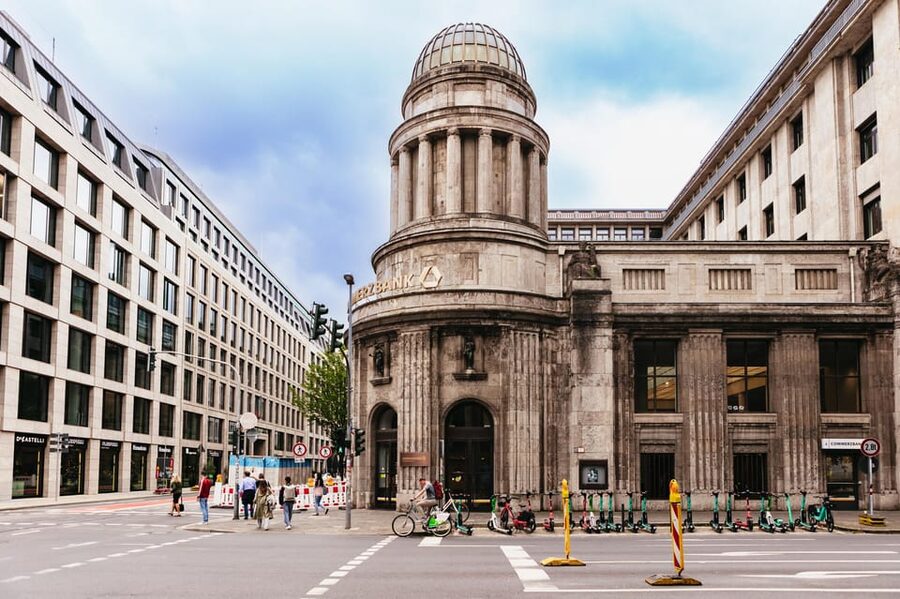
The route then enters Düsseldorf’s Altstadt. The Old Town is often treated as a place for restaurants, bars, and a pleasant wander. This architecture walk gives it a more serious reading. You look at the relationship between the historic street pattern, rebuilt or altered structures, and the modern city around them.
The supplied tour details do not promise a fixed list of Old Town buildings, so you should expect the guide to choose examples along the route. That flexibility can be useful. A live guide can respond to the group’s interests, point out a detail that catches attention, and explain how a particular facade fits into the city’s larger story.
This is also where the tour’s emphasis on unknown stories behind familiar facades becomes most valuable. A building can look old without being untouched, and a familiar street can carry layers of rebuilding and redesign. I like walking tours that make you question first impressions. The Old Town section seems designed for that purpose.
Do keep the pace in mind. One detailed German-language account praised the amount of information but wished for more links between events, decision-makers, architecture, power, aesthetics, and daily city life. That is a fair criticism of a two-hour format. You will hear many useful facts, but you may need to do some connecting yourself.
Ehrenhof and the final architectural chapter
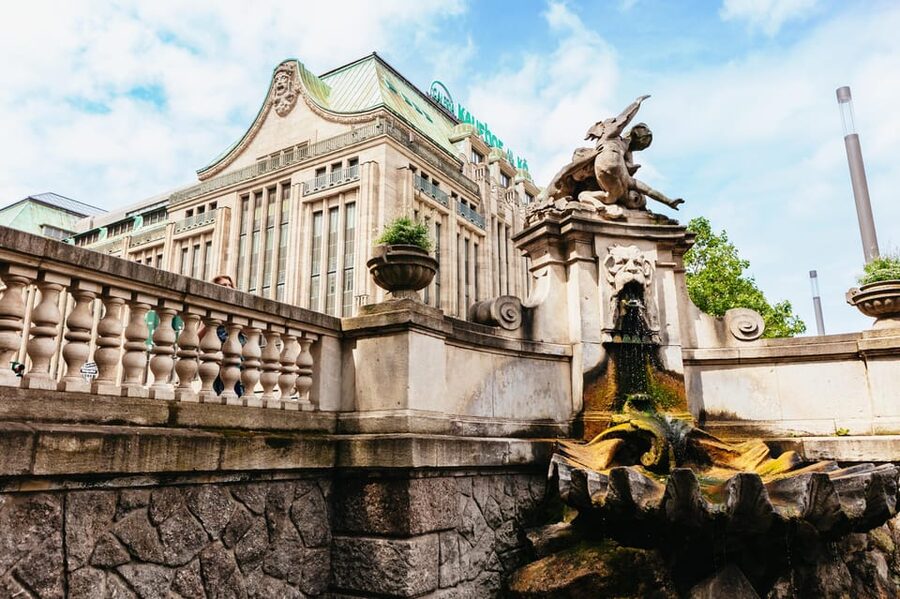
The tour ends in Ehrenhof, a cultural area at the northern end of the route. This gives the walk a strong finish because the surroundings shift again. After the commercial focus of Königsallee and the street life of the Old Town, Ehrenhof lets you think about architecture in relation to museums, public space, and civic identity.
Wilhelm Kreis and Karl Friedrich Schinkel are among the designers given special mention during the tour. Bernhard Pfau is also part of the Düsseldorf architectural story. Their inclusion helps broaden the discussion beyond the best-known modern names. You are not only following international fashion. You are also hearing about regional constructors and architects who shaped the city in more local ways.
Ehrenhof is listed as the endpoint, with drop-off references at Ehrenhof and the address 40479 Düsseldorf. This is convenient if you plan to continue with museums or other sights in the area. It also means the walk is not a loop, so plan your next stop from the endpoint rather than assuming you will return to Mannesmannufer.
The included City Museum entry is listed at Bergerallee 2. Because the walk ends elsewhere, ask the provider or guide how and when you should use that admission. It may be best saved for after the tour, but the supplied details do not specify a time arrangement. The admission still adds value, particularly if you want more historical context after seeing the city’s buildings in person.
What the guides do best
The most consistent strength is the guiding. The strongest feedback describes a guide with extensive architectural and historical knowledge who answers questions readily and uses humor to keep the material moving. That mix matters. Architecture can become dry when it turns into a list of dates, names, and styles. Stories and jokes give the facts a human scale.
Dietmar Schönhoff is singled out by name for an especially informative and engaging tour. He reportedly combines technical architectural material with anecdotes, making the two hours pass quickly. Other comments also praise the guide’s friendliness and broad background in Düsseldorf’s history.
You should still know what kind of presentation you are choosing. This is not designed as a casual, slow-paced city walk. You may hear a large amount of information in a short time, and the guide’s own interests may shape the emphasis. One participant wanted more discussion of controversy, power structures, public life, and the way people interact with buildings. If those themes matter to you, ask questions during the walk. The guide appears willing to respond.
The advertised language is German. No English option is given. That makes this a strong choice for German speakers who want more precise architectural discussion, but a poor fit if you cannot comfortably follow a sustained German explanation.
Price, pace, and practical value
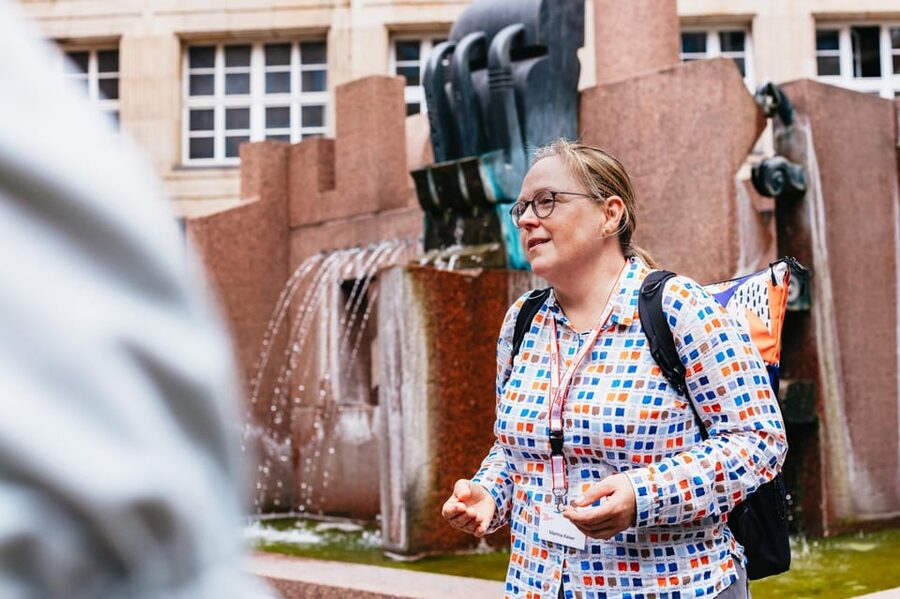
At $23 per person, the cost is reasonable for a two-hour guided city walk that includes a live guide and City Museum admission. You are paying not only for movement between sights, but for interpretation. Without a guide, you can photograph Kö-Bogen and Dreischeibenhaus, yet you may miss the reasons those buildings matter and how they fit into Düsseldorf’s development.
The value improves if you use the museum entry. Since admission is included, you can extend the architectural and historical theme beyond the two-hour walk. Confirm the practical details first, because the published route ends at Ehrenhof while the museum address is Bergerallee 2.
You can choose between a shared group walk and a private guided tour. A shared outing should suit solo visitors and couples who enjoy hearing other questions. A private tour may be preferable if you want to set the pace or focus more closely on a particular period, architect, or type of building. The supplied information does not give group-size limits or a private-tour price, so check those details before booking.
The activity allows cancellation up to 24 hours before departure for a full refund, and you can reserve now and pay later. Those policies help if your Düsseldorf plans are still shifting. One departure was reportedly canceled because of illness, with the notice arriving late. That incident was handled badly, according to the affected participant, so keep an eye on your messages before heading to the meeting point.
Who should book this architecture walk?
I would recommend it to anyone who already knows Düsseldorf’s main sights and wants a more thoughtful explanation of the buildings. It is also a good first-day activity if you like using a guided walk to get your bearings through a city’s design and public spaces.
Architecture students, design fans, urban-history readers, and German-speaking visitors are the obvious audience. You do not need professional training, but curiosity helps. If you enjoy comparing Expressionism, Brutalism, postwar modernism, and contemporary design, this compact route gives you plenty to consider.
It is less suitable if you want relaxed wandering, lots of indoor visits, or a tour in English. The format is information-heavy, the pace can be brisk, and several major buildings are viewed from outside. Families with older children may enjoy the visual variety, but younger children could find the explanations long.
Should you book the Düsseldorf architecture tour?
Book it if you want to understand why Düsseldorf looks the way it does, not just photograph its best-known buildings. The mix of Königsallee, Kö-Bogen, Dreischeibenhaus, the Old Town, and Ehrenhof gives you a useful two-hour cross-section of the city.
Go in ready for a quick pace and German-language commentary. Confirm the meeting point and the museum-entry details, and ask questions if you want more discussion of politics, public life, or controversial design choices. At $23, the tour offers solid value for curious visitors who prefer buildings with stories to buildings treated as backdrop.
FAQ
How long does the Düsseldorf architecture walking tour last?
The tour lasts two hours.
Where does the tour meet?
The stated meeting point is Mannesmannufer 2. Other starting-location references include Alter Stahlhof and Breite Str. 69, so check your booking confirmation for the exact departure details.
Which parts of Düsseldorf does the tour visit?
The route includes Königsallee, the Kö-Bogen area, the Dreischeibenhaus area, Düsseldorf’s Old Town, and Ehrenhof.
Is the tour offered in English?
The listed tour language is German. No English-language option is provided in the supplied details.
Is the City Museum included?
Yes. Entry to the City Museum at Bergerallee 2 is included. The available information does not specify when you should use the admission, so confirm the timing with the provider.
Can I cancel the booking?
Yes. You can cancel up to 24 hours in advance for a full refund. A reserve-now, pay-later option is also available.
Just added in Germany
- Hidden Architectural Gems of Munich (Max. 16 guests)★ 5.0 · 2 reviews
- Munich Your Way: Private Tour with Architect & Guide★ 5.0 · 2 reviews
- Architectural Frankfurt: Private Tour with a Local Expert★ 5.0 · 2 reviews
- Architectural Berlin: Private Tour with a Local Expert★ 4.0 · 3 reviews
- Private Taxi Tour of City East History and Architecture 2-3h★ 5.0 · 2 reviews
- Berlin Architecture/River Spree Full Day Photography Tour★ 5.0 · 2 reviews
- Lübeck: Private Historical and Architectural Walking Tour★ 4.5 · 6 reviews
- Lübeck: Architecture and Local Craft Private Guided Tour★ 4.0 · 6 reviews
Walking Tours, compared.

The Official Art Deco Walking Tour by The Miami Design Preservation League
Read our review →
Baroque Architecture and Underground Walking Tour
Read our review →
Chicago in a Day: Food, History & Architecture Walking Tour
Read our review →

Ramblas, Old Town, Gothic and Gaudi Architecture Walking Tour
Read our review →
Chicago’s Secret Interiors Architectural Walking Tour
Read our review →
Browse the lists this tour appears in