
REVIEW · MUNICH ARCHITECTURE TOURS
Hidden Architectural Gems of Munich (Max. 16 guests)
Munich’s best stories sit south of the center. This 2.5-hour walking tour with architect and guide Philipp takes you through bold new buildings, street art, old workers’ cottages, a boat on a railway bridge, and quiet corners along the Isar. It is a smart choice if you have already seen Marienplatz and want a more local view of the city.
I like the small maximum of 16 people, which should make it easier to hear Philipp and ask questions. I also like the mix of architecture, social history, public art, and oddball places such as Alte Utting and Gans Woanders. The main drawback is pace: several stops last only 10 minutes, and you should expect a fair amount of walking with few chances to linger.
At $31.44 per person, the tour offers good value if you enjoy cities through their buildings and stories rather than through famous sights alone. It does not include admissions because the stops are viewed from public spaces. You are paying for Philipp’s architectural eye, local knowledge, and the route connecting these lesser-known parts of Munich.
Key points to know before booking
- An architect leads the walk: Philipp brings professional architectural knowledge and a personal connection to the Münchner Volkstheater.
- The route covers southern Munich: You travel from Zenettiplatz through the Isar districts to Gans Woanders.
- Expect unusual sights: Highlights include an old boat on a railway bridge, converted air raid shelter housing, and two historic workers’ cottages.
- Street art is part of the story: Bahnwärter Thiel adds color, creative energy, and a look at a former cattle yard district.
- The tour is small but active: Groups are limited to 16, and a moderate level of fitness is recommended.
- The ending is practical: Gans Woanders has restrooms, and Bus 52 from nearby Humboldtstraße reaches central Munich in about 12 minutes.
Why this Munich walk feels different
Many Munich tours center on royal buildings, church towers, beer halls, and the old town. This one heads into neighborhoods south of the center, where the city’s character comes through in reused structures, small waterways, housing projects, art spaces, and riverfront parks.
That gives you a more varied look at Munich. You are not simply moving from one polished monument to another. Instead, you see how a city changes, how old industrial and working-class areas survive, and how unusual buildings find new uses.
Philipp’s background matters here. He is an architect and certified city guide, and the tour includes a personal connection to the Münchner Volkstheater. The route is built around design, but it does not stop at technical talk. You also hear about war, flooding, rafting, urban renewal, preservation, and the social life of southern Munich.
The group size is limited to 16 people. That is useful on a walking tour where the guide may point out details on a wall, explain a building’s former use, or stop beside a narrow canal. The experience is offered in English.
A few more architecture tours in Germany worth a look
- Munich 3-Hour Segway Tour: Nazi Munich & Royal Architecture
★ 4.9 · 194 reviews - Düsseldorf: Guided City Architecture Walking Tour
★ 4.6 · 61 reviews - Hidden Architectural Gems of Munich (Max. 16 guests)
★ 4.9 · 52 reviews
Starting at the Münchner Volkstheater
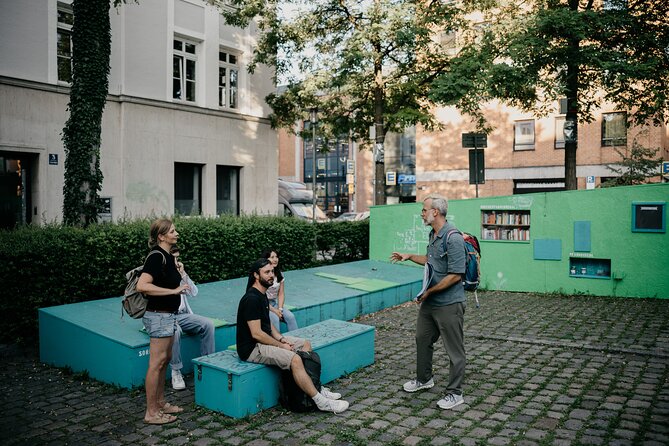
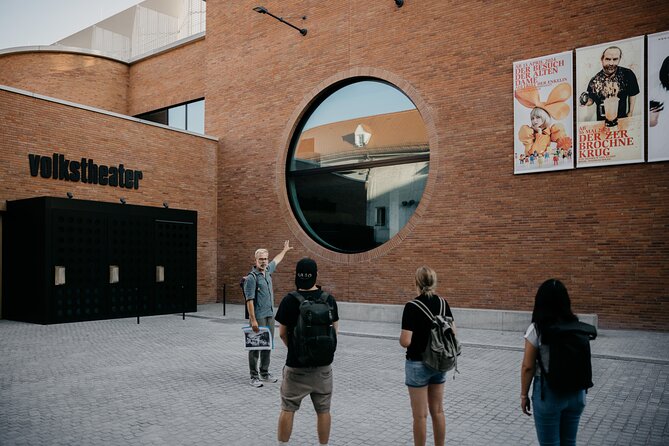
The tour begins at Piazza Zenetti on Zenettiplatz. Your first stop is the Münchner Volkstheater, where Philipp explains the building’s design journey and its connection to his former architecture professor.
You get only about 10 minutes here, so this is an introduction rather than a full architectural inspection. Still, it sets the tone for the walk. You are encouraged to look at how a modern cultural building fits into the city, not simply to admire its exterior.
This opening stop should appeal to anyone who likes learning how buildings come together. Philipp’s personal connection also gives the explanation a human touch. It is not just a building chosen because it is famous. It is part of the guide’s own architectural story.
Street art at Bahnwärter Thiel
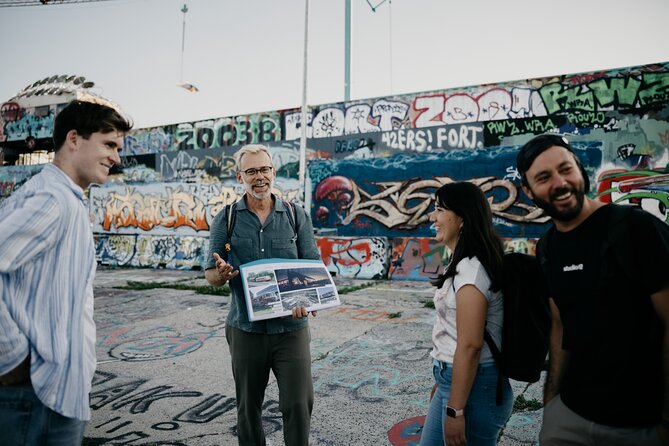
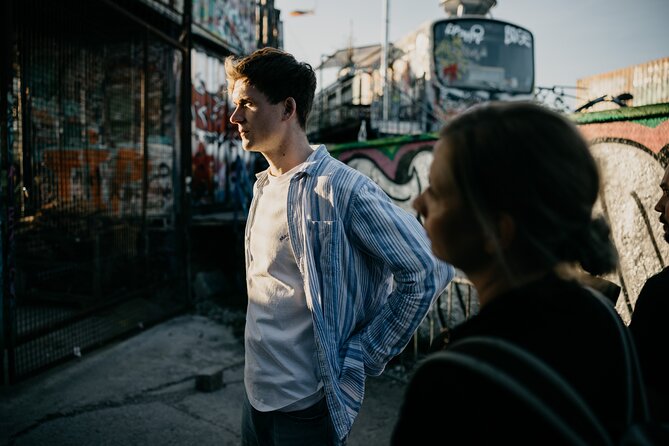
From the theater, the route continues to Bahnwärter Thiel, an art area created in the former cattle yard district. Here you see the Beginner’s Wall and more than 40 spray-painted shipping containers.
This is one of the tour’s most colorful stops. The containers give the area a rough, improvised feel, while the painted walls turn an old industrial setting into an outdoor art space. You can expect about 15 minutes here.
The value of this stop is the contrast. Munich is often presented as orderly and traditional, but Bahnwärter Thiel shows a more experimental side. You get a quick look at how unused or overlooked urban spaces can become places for art and community.
The short visit may leave you wanting more time to examine the artwork. If street art is a major interest, take mental notes of the setting and consider returning on your own if your schedule allows. The tour gives you a useful introduction, but it is not designed as a long gallery visit.
Alte Utting, Munich’s boat on a bridge
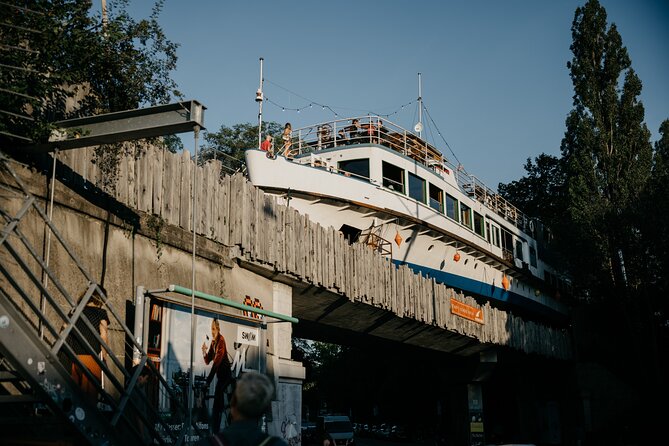
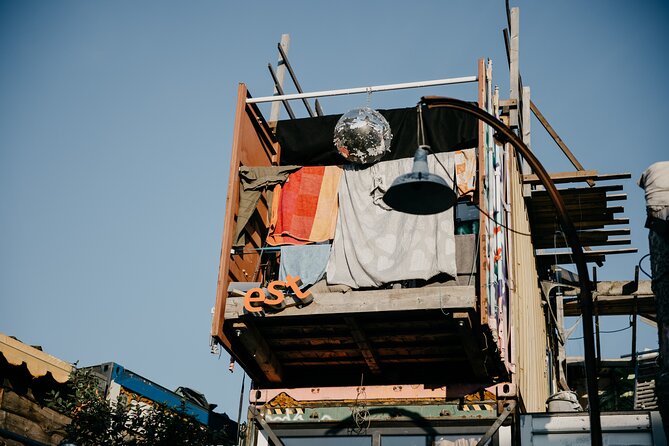
Alte Utting is one of those Munich sights that sounds invented until you see it. An old boat sits on a former railway bridge and now houses a bar, café, and restaurant.
The tour allows about 10 minutes here. That is enough to understand the basic idea and hear the story behind the conversion, though it is not a meal break. The setting has gained international attention, including coverage in The New York Times, but its appeal is easy to understand without the publicity.
I like this stop because it combines reuse, transport history, and hospitality in one place. The boat is no longer serving its original purpose, and the bridge is no longer simply carrying trains. Together, they create a distinctly Munich kind of oddness.
Do not count on having time to settle in with a drink during the walking portion. The route continues, and the longer stop for relaxing comes at the end.
Same city, a different building to stand in front of:
- Potsdam: Guided Walking Tour of UNESCO Site and Architecture
★ 4.7 · 49 reviews - Private Taxi Tour City East & West History and Architecture 3-4h
★ 5.0 · 42 reviews - Stuttgart city library – an architectural tour
★ 4.4 · 27 reviews - Karl-Marx-Allee Tour: Life and Architecture in East Berlin
★ 5.0 · 19 reviews
The Dreimühlenviertel and its older roots
At Dreimühlenstraße, Philipp turns the clock back to a time when this part of Munich had fields, a canal, and a water mill. Today, the area is known as the Dreimühlenviertel, one of the city’s more charming small districts.
The stop lasts around 10 minutes. The point is not to see one grand building. It is to understand how a neighborhood grew from a watery, rural edge into a city quarter.
This kind of explanation adds value because it changes how you read the streets. A canal or oddly shaped boundary can seem random when you walk alone. Once you know about the former mill and fields, the district begins to make more sense.
The area also provides a quieter change of mood after the painted containers and unusual boat. You get a sense of how much of Munich’s past remains visible in ordinary streets, even when the original uses have disappeared.
Along the Isar at Wittelsbacherbrücke
The walk then reaches Wittelsbacherbrücke and the park beside the Isar River. This is the longest stop, at about 20 minutes, and one of the best places to slow down.
Philipp covers more than 700 years of rafting history here. He also explains the river’s renaturation project, completed in 2009. That gives you two useful ways to read the Isar: as a working river tied to trade and transport, and as a natural space that the city has worked to restore.
The riverfront section should be a welcome break from streets and buildings. You can expect open views, greenery, and a chance to walk beside the water. At the same time, this is not a long rest stop. You remain on a walking tour, so wear comfortable shoes and be ready to keep moving.
I especially like the way this section widens the tour beyond architecture. Munich’s identity is not only found in façades. It is also shaped by water, engineering, work, recreation, and decisions about how a city treats its river.
A former air raid shelter on Claude-Lorrain-Straße
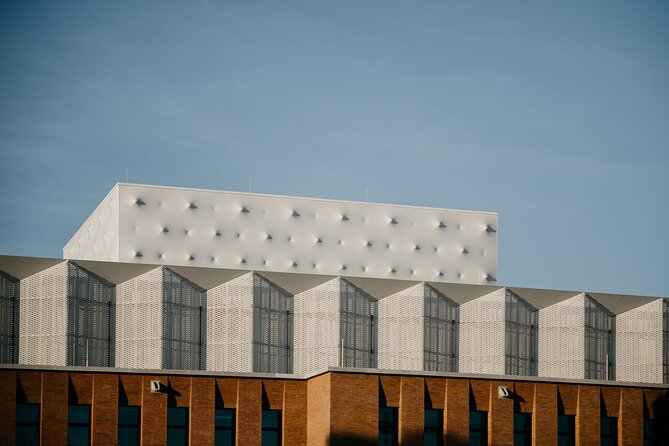
On Claude-Lorrain-Straße, the group examines a former high-rise air raid shelter from the Second World War. The building has since been transformed into an upscale residential complex.
The stop lasts about 10 minutes, but the subject carries more weight than the timing suggests. Philipp connects the structure to wartime Munich and to the difficult process of giving a threatening building a new life.
The most interesting part is the change from solid protection to light-filled housing. The building’s conversion shows how transparency and daylight can alter the feeling of a structure without erasing its past.
This is a thoughtful stop, but it may not suit someone looking only for light sightseeing. The war connection is serious, and the tour asks you to think about how modern Munich lives with difficult parts of its past. That balance gives the route more substance than a simple architecture outing.
Workers’ cottages in the Scherbenviertel
At Untere Weidenstraße, you enter the Scherbenviertel, a neighborhood once associated with poverty and regular flooding from the Isar. Two small workers’ cottages have survived and are now protected as part of a historic ensemble.
The cottages are modest. That is precisely why they matter. They show the kind of housing that can vanish quickly when land values rise and older neighborhoods change.
Philipp also connects these preserved cottages to a nearby dispute involving similar homes and the fight to protect Munich’s architectural heritage. The story gives you a sharper sense of the choices behind preservation. Keeping old buildings is not automatic. People have to decide that ordinary structures are worth saving.
You spend about 10 minutes here. The stop is best for visitors who enjoy social history and local conflicts, not only beautiful façades. It is also a reminder that a city’s character often lives in small houses and humble streets rather than in official monuments.
Little Venice beside the Auermühlbach
Little Venice, or Small Venice, offers a calmer section of the route. Houses line the Auermühlbach canal, creating a village-like pocket within Munich.
The contrast with the earlier sites is welcome. You move from painted containers, converted infrastructure, and war-era architecture to water, small homes, and a slower residential setting. The tour allows about 10 minutes here.
I would treat this as a visual pause rather than a major sightseeing stop. There is no need to expect grand monuments. The appeal is the atmosphere created by the canal and houses, plus the feeling that the city has briefly pulled away.
A café nearby provides a natural place to pause, although the main post-tour stop is Gans Woanders. If you like photographing small urban details, this may be one of the most pleasing sections of the walk.
Finishing at Gans Woanders
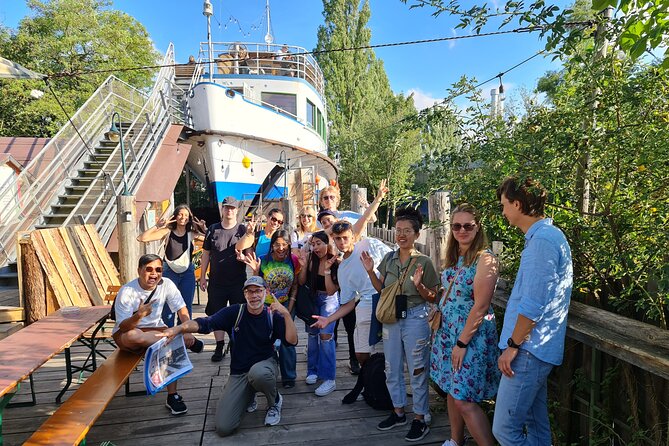
The tour ends at Gans Woanders on Pilgersheimer Straße. This alternative beer garden and café has an artistic character and gives the walk an easygoing finish.
The official stop is about 10 minutes, but unlike most parts of the route, you can stay longer after the tour. Restrooms are available here, which is useful after 2.5 hours on foot.
Gans Woanders is more than a convenient endpoint. It matches the tour’s interest in unusual spaces and creative reuse. After seeing a boat turned into a restaurant and containers turned into an art district, you finish in another place that does not feel like a standard Munich beer garden.
The nearby Humboldtstraße bus stop is about a two-minute walk away. Bus 52 goes to Marienplatz, reaching the Marienplatz Rindermarkt stop in roughly 12 minutes. That makes the ending easy to fit into a day of sightseeing.
Is $31.44 a fair price?
At $31.44 per person, I consider this a solid price for a 2.5-hour guided walk, especially with a maximum of 16 people and a guide who works as an architect and certified city guide.
The tour does not include paid admissions, but that is not a serious weakness here. The value comes from the route and the interpretation. Many of the locations would be difficult to connect into one coherent walk on your own, and the important details are often about former uses, planning decisions, and local history rather than entry tickets.
You get the best value if you enjoy asking why a place looks the way it does. If you only want famous Munich sights or indoor attractions, this may feel less rewarding. The price makes more sense for repeat visitors, architecture fans, street-art followers, and curious first-time visitors who want a different side of the city.
Who should book this walk?
I would recommend it to you if you:
- Have already seen Munich’s central sights and want something less predictable
- Like architecture, urban planning, street art, or adaptive reuse
- Enjoy local stories about neighborhoods, flooding, work, war, and preservation
- Prefer a small English-language group
- Can walk for about 2.5 hours and manage a moderate level of physical activity
- Want an ending where you can sit down for food or a drink
Families with older children may also enjoy the strange and visual stops, especially the boat on the railway bridge and the painted containers. Very young children may find the historical explanations and steady walking less engaging.
You should think twice if you need lots of seated breaks, want a conventional sightseeing route, or hope to spend substantial time inside each venue. Most stops are short, and the experience is built around moving through neighborhoods.
Practical details that matter
The meeting point is Piazza Zenetti at Zenettiplatz, 80337 Munich. The tour is offered in English, and confirmation is provided when you book.
Service animals are allowed, and the route is near public transportation. A moderate level of physical fitness is recommended, so comfortable walking shoes are a sensible choice.
The tour can be canceled for a full refund up to 24 hours before the start time. Cancellations or changes made less than 24 hours before the start are not accepted for a refund.
Should you book Hidden Architectural Gems of Munich?
Book this tour if you want Munich to feel like a living city rather than a checklist of famous buildings. Philipp’s architectural background, the small group, and the unusual route give the walk a clear point of view. The strongest moments are the combination of street art, the boat on the railway bridge, the Isar’s long working history, and the quiet stories of workers’ housing and preservation.
Skip it if you want palace interiors, major museums, or a relaxed café crawl. This is an active walk with several brief stops and some serious history along the way.
For curious visitors who have time beyond the old town, the $31.44 cost is reasonable. You leave with a better sense of how Munich grows, remembers, reuses, and protects its less famous places.
FAQ
Where does the tour begin?
The tour begins at Piazza Zenetti, Zenettiplatz, 80337 München, Germany.
Where does the tour end?
It ends at Gans Woanders, Pilgersheimer Str. 13, 81543 München, Germany.
How long is the experience?
The tour lasts approximately 2 hours and 30 minutes.
How large is the group?
The tour has a maximum of 16 travelers.
Is the tour offered in English?
Yes. The experience is offered in English.
Is public transportation available after the tour?
Yes. The Humboldtstraße bus stop is about a two-minute walk from Gans Woanders. Bus 52 goes to Marienplatz Rindermarkt in about 12 minutes.
Just added in Germany
- Munich Your Way: Private Tour with Architect & Guide★ 5.0 · 2 reviews
- Architectural Frankfurt: Private Tour with a Local Expert★ 5.0 · 2 reviews
- Architectural Berlin: Private Tour with a Local Expert★ 4.0 · 3 reviews
- Private Taxi Tour of City East History and Architecture 2-3h★ 5.0 · 2 reviews
- Berlin Architecture/River Spree Full Day Photography Tour★ 5.0 · 2 reviews
- Lübeck: Private Historical and Architectural Walking Tour★ 4.5 · 6 reviews
- Lübeck: Architecture and Local Craft Private Guided Tour★ 4.0 · 6 reviews
- Dessau: Radtour Bauhaus – Junkers – Gartenreich★ 5.0 · 2 reviews
Munich Architecture Tours, compared.
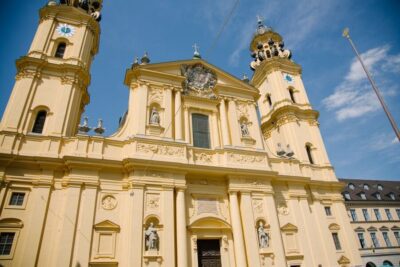
Munich 3-Hour Segway Tour: Nazi Munich & Royal Architecture
Read our review →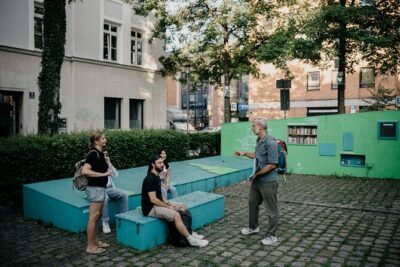
Hidden Architectural Gems of Munich (Max. 16 guests)
Read our review →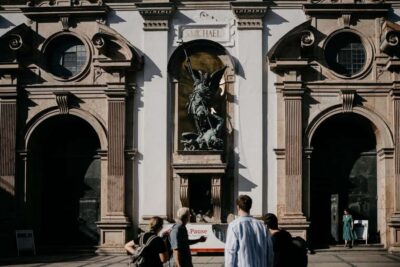
500 Years of Munich Architecture (Max. 16 Guests)
Read our review →
Private Munich Tour for History Buffs with Architectural Gems and WWII sites
Read our review →
Browse the lists this tour appears in