
REVIEW · BERLIN ARCHITECTURE TOURS
Karl-Marx-Allee Tour: Life and Architecture in East Berlin
East Berlin tells its story in stone. This two-hour walk along Karl-Marx-Allee connects grand socialist architecture with the daily lives, hopes, and disappointments of the people who lived there. I especially like the focus on both architecture and politics, plus the small-group format, capped at 15 people. The main consideration is that the tour requires walking outdoors and can be canceled in poor weather.
I also like the tight route, which begins at Frankfurter Tor and ends near Alexanderplatz at Strausberger Platz. Guides such as Martina have been praised for clear storytelling, humor, personal knowledge of East Germany, and carefully prepared visual material. At $30.01 per person, it is a strong value if you want more than a quick look at Berlin’s famous boulevard.
Key things to know before you book
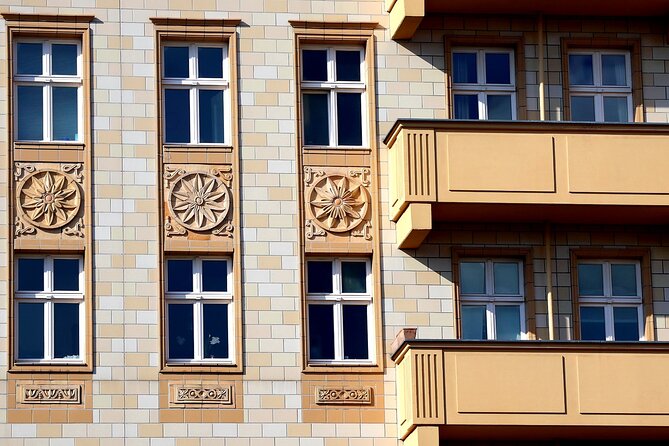
- Frankfurter Tor opens with grand socialist design: Twin towers, careful symmetry, and a plan to create East Germany’s first socialist boulevard set the tone.
- The tour compares two visions of postwar Berlin: You see Hans Scharoun’s modernist Laubenganghäuser, then the more formal architecture favored by the East German government.
- A prototype apartment block reveals everyday privilege: The Hochhaus an der Weberwiese introduced unusual comforts and became a public relations tool.
- The June 17, 1953 uprising adds human cost: This was not only a tour of buildings. It also examines worker anger and a government nearly toppled.
- Café Sibylle links daily life to Stalinist power: A café, a missing statue, and a changing political climate come together in one stop.
- The route is short but packed: Seven stops in about two hours make this useful for a weekend visit, though the pace may feel brisk if you want long photo breaks.
Why Karl-Marx-Allee matters to Berlin
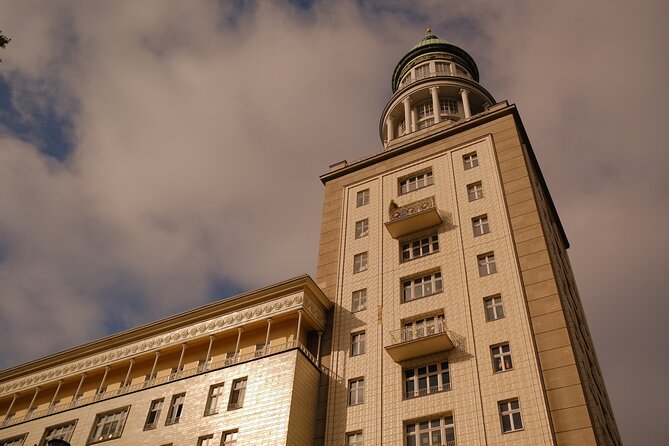
Karl-Marx-Allee is much more than a broad avenue lined with large buildings. It was a political project, a housing project, and a public performance of East German power.
The boulevard was first known as Stalinallee. Its design aimed to show that the new socialist state could rebuild Berlin after the destruction of World War II. The buildings were meant to inspire pride, project order, and provide modern homes for working people.
That mixture is what makes the walk worthwhile. You are not simply looking at towers and apartment blocks. You are reading the city as a political document. Every change in style tells you something about what the government wanted citizens, foreign architects, and Western observers to believe.
The guide helps connect the grand scale with ordinary life. You hear about residents, housing, ideology, propaganda, and the way East Berlin changed after the Berlin Wall fell. This human focus keeps the tour from becoming a dry architecture lecture.
A few more architecture tours in Germany worth a look
- Munich 3-Hour Segway Tour: Nazi Munich & Royal Architecture
★ 4.9 · 194 reviews - Düsseldorf: Guided City Architecture Walking Tour
★ 4.6 · 61 reviews - Hidden Architectural Gems of Munich (Max. 16 guests)
★ 4.9 · 52 reviews
Frankfurter Tor and the first socialist boulevard
The meeting point is U Frankfurter Tor, at 10243 Berlin. This is an easy place to reach by public transportation, and the twin towers give you a clear landmark for finding the group.
The opening section lasts about 20 minutes. Herman Henselmann’s towers create one of the most recognizable views on the avenue, with strong symmetry and a formal arrangement that feels designed for public ceremony. The scale is deliberate. This was architecture meant to be seen from a distance.
You learn how plans for Germany’s first socialist street took shape in the early 1950s. The rebuilding effort involved thousands of volunteers, and the project was presented as proof that collective work could transform a damaged city.
I like beginning here because it gives the rest of the walk a clear question: was Karl-Marx-Allee built mainly for residents, for the state, or for the world watching from outside? The answer shifts as you move along the route.
Take a moment to look back at the towers before leaving. Their symmetry is easy to photograph, but the more useful detail is the intention behind it. This was not casual urban planning. It was a carefully staged image of a new society.
Laubenganghäuser and the rejected postwar vision
The next stop lasts about 15 minutes and changes the visual language completely. The Laubenganghäuser show the modernist ideas that shaped some of Berlin’s immediate postwar rebuilding.
Hans Scharoun imagined a more open, experimental form of urban life in the years after the war. These designs came from a city in ruins, where many architects were asking how Berlin could avoid repeating the rigid patterns of the past.
The East German government soon rejected this direction. It favored a more formal, monumental approach for Karl-Marx-Allee, influenced by Soviet planning and socialist representation.
This contrast is one of the best parts of the tour. You do not need to be an architecture expert to notice the difference. One vision feels more experimental and modernist. The other uses grand scale, order, and historical references to express state authority.
The stop is brief, so listen closely. If you want to study building details at length, two hours may not be enough. The value here comes from comparison. You see how competing ideas about city life were pushed aside as political priorities changed.
Hochhaus an der Weberwiese, where housing became propaganda
The Hochhaus an der Weberwiese is one of the most revealing stops because it brings the grand political project down to the level of an apartment home. The building served as a prototype for later sections of Karl-Marx-Allee and offered its first residents an unusual level of comfort.
The visit here lasts around 20 minutes. You learn how the building project was used as a propaganda tool and why it attracted attention from architects in the West.
That combination is important. The apartment block was supposed to show that socialism could provide modern housing for working people. At the same time, it became an object of international interest. Architecture crossed the political divide even when governments did not.
For you, this stop offers a useful way to think about the avenue. The buildings were not only symbols. People lived in them. A new apartment, better facilities, and the promise of a more secure life could make the political message feel practical.
The guide also helps you examine the gap between the official story and daily reality. A building can represent progress while still being part of a controlled system. That tension gives the tour its bite.
Same city, a different building to stand in front of:
- Potsdam: Guided Walking Tour of UNESCO Site and Architecture
★ 4.7 · 49 reviews - Private Taxi Tour City East & West History and Architecture 3-4h
★ 5.0 · 42 reviews - Stuttgart city library – an architectural tour
★ 4.4 · 27 reviews - Berlin: Hansaviertel Modernist Architecture Tour
★ 4.9 · 16 reviews
The June 17, 1953 memorial and the workers’ revolt
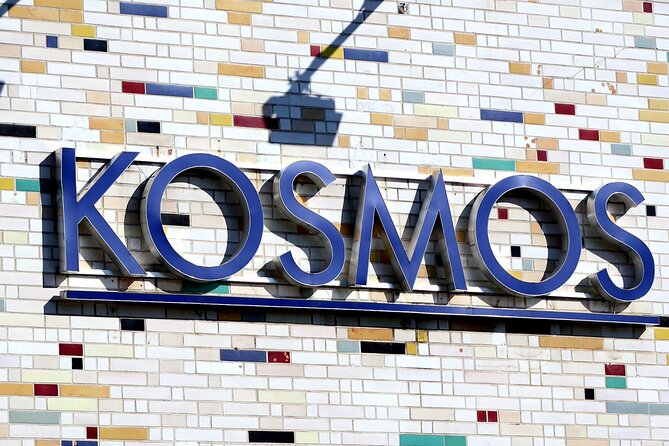
The memorial to the June 17, 1953 workers’ uprising brings a darker mood. This stop takes about 20 minutes and marks the place where dissatisfied workers began a mass protest that spread through East Germany.
The uprising came close to toppling the socialist government. It was a major challenge to the state, and its memory remained politically sensitive. The controversial monument forces you to consider how governments choose to remember unrest, especially when the unrest comes from the very workers the state claimed to represent.
This is where the tour moves beyond architecture. The broad avenue was designed to celebrate workers, yet workers themselves could become a threat when wages, conditions, and government demands collided.
I value this stop because it prevents the boulevard from becoming a collection of attractive façades. You are reminded that grand urban projects have real consequences for the people expected to support them.
The monument may prompt questions rather than offer simple answers. That is a strength, though visitors looking only for polished sightseeing may find this section more serious than expected.
Café Sibylle and the vanished Stalin statue
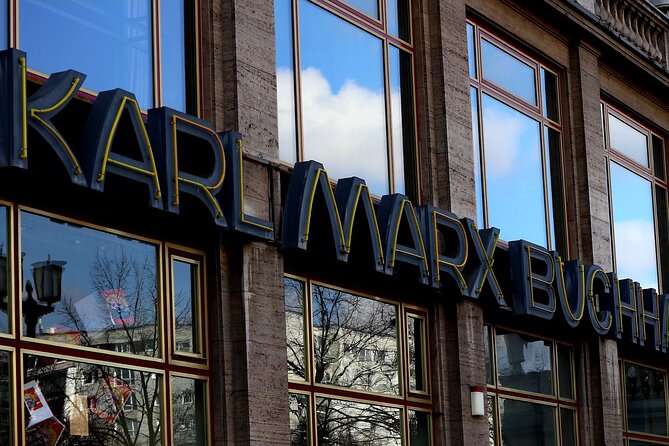
Café Sibylle adds a more personal and social layer to the route. In the days of East Berlin, it was one of the most exclusive cafés on Karl-Marx-Allee.
The stop lasts about 15 minutes and explores the café’s connection with Joseph Stalin, whose statue once stood nearby until 1961. That detail captures the shifting political climate better than a long list of dates could.
A café gives you a way to think about how people used the boulevard beyond official ceremonies. It was a place for meeting, seeing, and being seen. Yet it existed beside monuments and symbols of Soviet power.
The removal of Stalin’s statue also shows how quickly public spaces can be rewritten. A landmark that once dominated the avenue could disappear, while the surrounding buildings remained.
This is a good place to listen for the guide’s stories about daily life. Martina has been praised for adding humor and personal detail to difficult subjects, and this section benefits from that approach. The café helps make the political history feel close to ordinary routines.
The Karl Marx bust and ideology in daily life
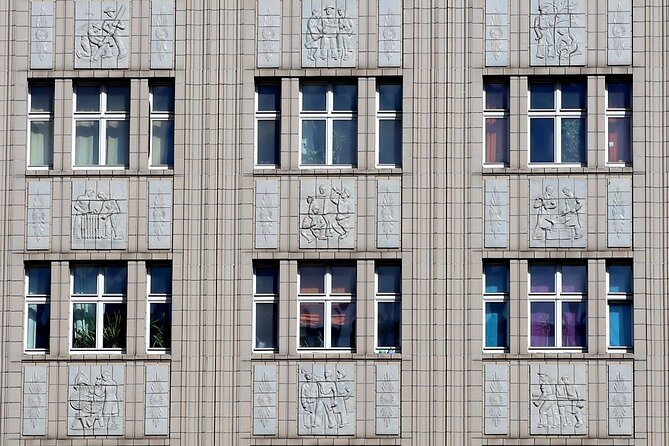
The Karl Marx bust is a shorter stop, about 15 minutes, but it addresses one of the tour’s central questions: how did socialist ideology affect everyday life in East Berlin?
Marx’s name was placed directly into the avenue’s identity. The bust gives the guide a natural point for explaining how political ideas moved from books and speeches into housing, workplaces, education, public art, and city planning.
You do not need to arrive with a background in Marxism. The guide’s job is to connect the symbolism to daily experience rather than give you a formal political theory class.
This is also where the tour’s emphasis on personal stories matters. The best parts of the experience are not simply dates or names. They are the links between state ideals and the choices people made within a system that shaped nearly every part of public life.
Strausberger Platz and Karl-Marx-Allee after 1989
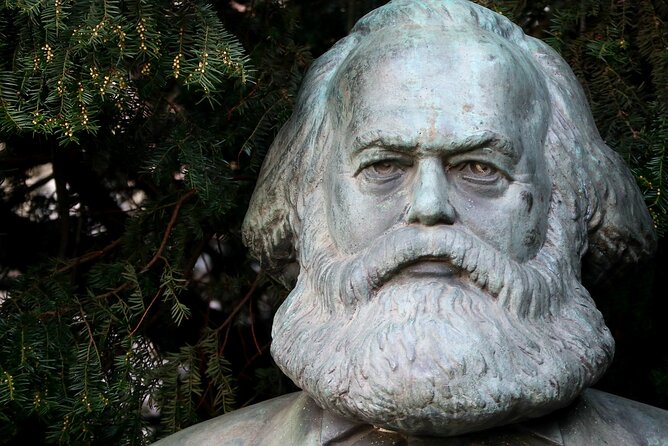
The walk ends at Strausberger Platz, another major example of Henselmann’s style. You spend about 15 minutes here, looking at the architecture and hearing how life on Karl-Marx-Allee changed after the fall of the Berlin Wall.
The ending works well because it moves the story into the present. The boulevard did not freeze in 1961 or 1989. Its buildings continued to house people, and the meaning of the avenue changed as East and West Berlin became one city.
The route ends at the eastern side of the Strausberger Platz roundabout, about a 10-minute walk from Alexanderplatz. This makes it easy to continue sightseeing afterward, though remember that you are not finishing at the same place where you began.
Strausberger Platz is also a good final viewpoint for comparing the different architectural ideas introduced earlier. By this stage, you can see the avenue not as one uniform project but as a series of political and design choices made over time.
What the guide adds to the experience
The guide is the main reason to book this walk instead of exploring Karl-Marx-Allee alone. The avenue is open and easy to see, but the meaning behind its buildings is not always obvious from the pavement.
Martina receives especially strong praise for her preparation, memory, humor, and ability to make a difficult period understandable. She has also used demonstration material and original items in her presentations, which can help turn abstract history into something tangible.
Another useful quality is the personal connection to East Germany. One account describes the guide as someone who lived through part of the communist period, giving the tour a perspective that a standard imported city tour may not provide.
Guide names can vary. Martina is associated with the strongest comments about this particular style of tour, while other experiences from the same provider mention Luis and Marina. The important point is the approach: careful research, enthusiasm, and storytelling that links architecture with lived experience.
The group limit of 15 people supports that style. You are more likely to hear explanations and ask questions than on a large city walk. Still, a small group does not guarantee a private tour, and the quality of the experience will depend partly on the guide assigned that day.
Is $30.01 a fair price?
At $30.01, this is reasonably priced for a focused two-hour walking tour with an expert local guide. There are no admission charges at the stops, so you are paying for interpretation, planning, and access to a coherent story rather than for entry tickets.
That distinction matters. You can walk along Karl-Marx-Allee for free, but you may miss why the buildings look so different, how the housing program worked, and why the 1953 uprising belongs in the story.
The value is strongest if you enjoy history, architecture, politics, or city planning. It is less compelling if you only want a fast photo stop at Frankfurter Tor and Strausberger Platz.
The tour also makes good use of two hours. You cover seven locations without spending half a day on one subject. If your Berlin schedule is tight, this is a practical way to understand East Berlin before moving on to other neighborhoods.
Practical advice for your two hours
Wear comfortable shoes. The tour lasts about two hours and takes place outside, so your experience will depend on the weather and your comfort with walking and standing.
Arrive at U Frankfurter Tor with enough time to locate the meeting point. The twin towers are a useful reference, but the official start is the U-Bahn location at Frankfurter Tor.
Bring a way to take notes if the subject interests you. The route contains many names, political changes, and design comparisons, and the information comes quickly.
Keep your expectations realistic. This is an English-language walking tour, not a museum visit with indoor exhibits. All stops are free, but the tour depends on the guide’s explanation and your attention.
Free cancellation is available if you cancel at least 24 hours before the start time. Changes or cancellations inside that window are not refunded, and poor weather can lead to a new date or a full refund.
Who should book this Karl-Marx-Allee walk?
I recommend it most strongly to anyone who wants a clearer understanding of East Berlin than a standard city-center walk can provide. It suits history fans, architecture students, politically curious visitors, and anyone who enjoys a well-told urban story.
Families with older teenagers may also find it worthwhile. One account describes a 17-year-old becoming absorbed in Martina’s storytelling, which suggests that the subject can work well for young people when presented through buildings and personal stories rather than classroom theory.
You should skip it if you dislike outdoor walking, want extensive time for photography, or have no interest in postwar Germany. The tour is focused and serious, even when the guide uses humor.
Should you book it?
Book this tour if you want Karl-Marx-Allee to make sense. The buildings are impressive on their own, but the guide connects them to workers, propaganda, housing, architecture, protest, and the long afterlife of East Germany.
For $30.01, the small group and tightly planned route offer good value. I would choose it early in a Berlin visit, since it gives you useful context for many other sights across the city. Just bring comfortable shoes, allow for outdoor weather, and expect a thoughtful history walk rather than a casual stroll.
FAQ
How long does the Karl-Marx-Allee Tour last?
The tour lasts approximately two hours.
Where does the tour begin?
It begins at U Frankfurter Tor, 10243 Berlin, Germany.
Where does the tour end?
The tour ends at Strausberger Platz, on the eastern side of the roundabout. It is about a 10-minute walk from Alexanderplatz.
How much does the tour cost?
The listed price is $30.01 per person.
Is the tour offered in English?
Yes. The experience is offered in English and includes an expert local guide.
What happens if the weather is poor?
The experience requires good weather. If it is canceled because of poor weather, you will be offered another date or a full refund. You can also cancel for a full refund if you cancel at least 24 hours before the start time.
Just added in Germany
- Hidden Architectural Gems of Munich (Max. 16 guests)★ 5.0 · 2 reviews
- Munich Your Way: Private Tour with Architect & Guide★ 5.0 · 2 reviews
- Architectural Frankfurt: Private Tour with a Local Expert★ 5.0 · 2 reviews
- Architectural Berlin: Private Tour with a Local Expert★ 4.0 · 3 reviews
- Private Taxi Tour of City East History and Architecture 2-3h★ 5.0 · 2 reviews
- Berlin Architecture/River Spree Full Day Photography Tour★ 5.0 · 2 reviews
- Lübeck: Private Historical and Architectural Walking Tour★ 4.5 · 6 reviews
- Lübeck: Architecture and Local Craft Private Guided Tour★ 4.0 · 6 reviews
Berlin Architecture Tours, compared.
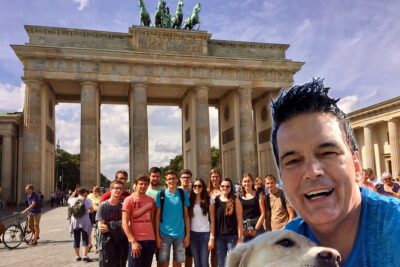
Private Taxi Tour City East & West History and Architecture 3-4h
Read our review →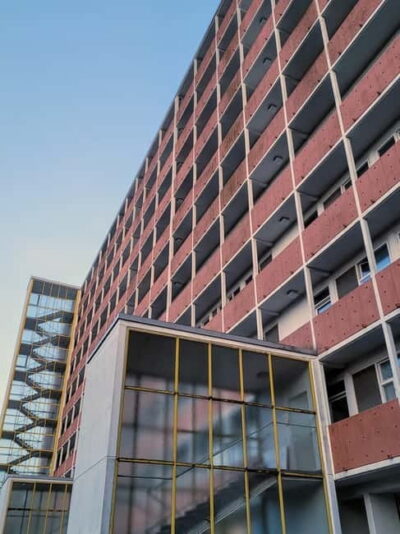
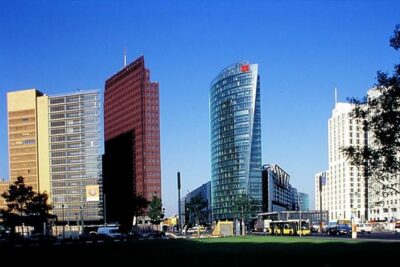
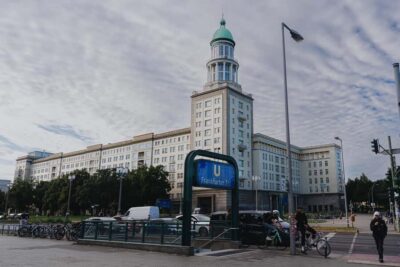
Karl-Marx-Allee Tour of Life and Architecture in GDR
Read our review →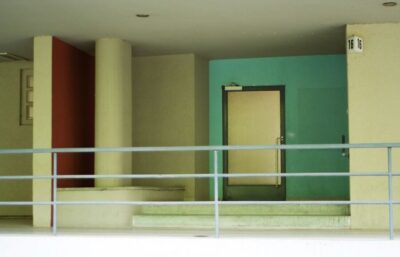
Guided Architectural Walking Tour of Hansaviertel
Read our review →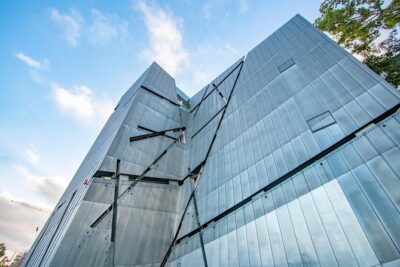
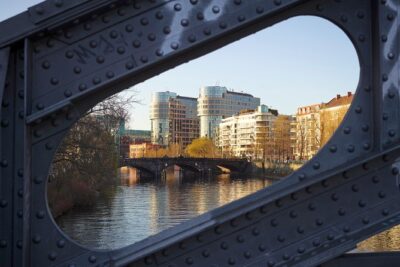
Berlin Architecture/River Spree Full Day Photography Tour
Read our review →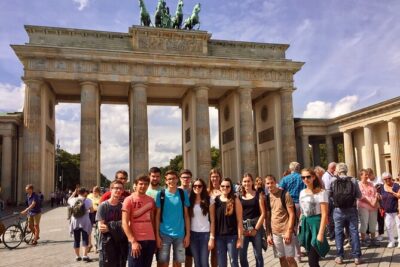
Private Taxi Tour of City East History and Architecture 2-3h
Read our review →Browse the lists this tour appears in