
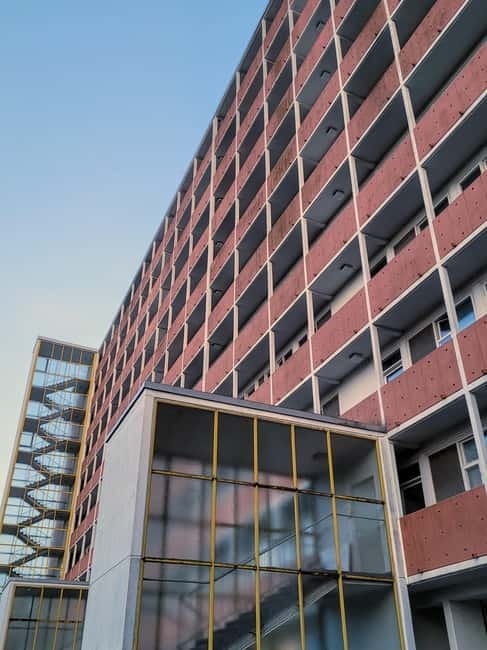
REVIEW · BERLIN ARCHITECTURE TOURS
Berlin: Hansaviertel Modernist Architecture Tour
Berlin’s boldest ideas hide in plain sight. This two-hour walk through Hansaviertel connects elegant 19th-century villas, Jewish history, wartime destruction, and the experimental buildings of Interbau 1957. I like the way the tour treats architecture as part of everyday life, not as a parade of famous names. I also like that it reaches beyond the usual Berlin sights while staying close to the city center.
The main consideration is the pace and subject matter. You will walk and stand for about two hours, and the historical content includes Nazi persecution, wartime destruction, and postwar political rivalry. That makes it a better fit for adults and teenagers aged 14 and up than for young children.
Key points at a glance
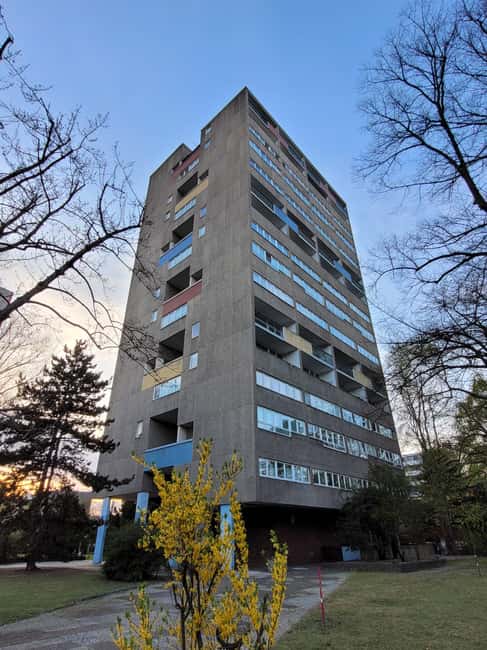
- Interbau 1957 shaped the entire neighborhood: Hansaviertel became West Berlin’s showcase for modern urban living during the Cold War.
- Famous architects appear in built form: You see work connected with Walter Gropius, Oscar Niemeyer, Alvar Aalto, and other leading modernists.
- The story begins before modernism: The tour explains Hansaviertel as a 19th-century middle- and upper-class district of villas, gardens, and elegant façades.
- Jewish history is part of the route: A quiet memorial marks the site of an important Jewish community destroyed under Nazism and by wartime bombing.
- The setting is unusually calm: The walk runs between the Spree and Tiergarten, with riverside quiet and leafy streets replacing Berlin’s traffic-heavy center.
- The guide is central to the experience: The tour is offered in English or German, and past guests have praised its clear structure and well-prepared explanations.
Starting beside Tiergarten’s S-Bahn station
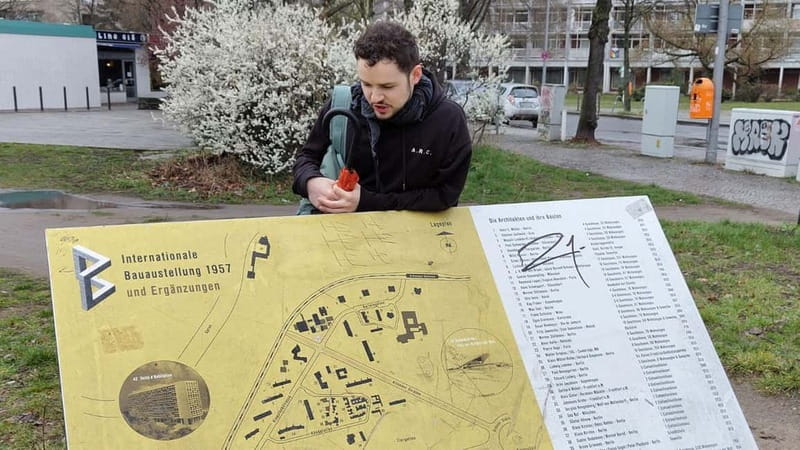
The meeting point is in front of Berlin-Tiergarten S-Bahn station, at the Siegmunds Hof and Bachstraße exit. Look for the guide with the orange umbrella, next to Biergarten der Tiergartenquelle, also called Biergartenquelle.
That is a useful meeting place because it is easy to reach by S-Bahn and puts you right at the edge of the district. You do not begin with a long transfer or a confusing journey through residential streets. The tour starts near one of Berlin’s major green spaces, then quickly moves into Hansaviertel’s layered past.
Bring comfortable shoes and water. This is not a museum talk with occasional outdoor stops. You will walk and stand for approximately two hours, although the guided section through Hansaviertel is described as about 1.5 hours within the total experience. The difference likely allows for meeting, orientation, and movement between the starting point and the final stop at Hansaplatz.
A few more architecture tours in Germany worth a look
- Munich 3-Hour Segway Tour: Nazi Munich & Royal Architecture
★ 4.9 · 194 reviews - Düsseldorf: Guided City Architecture Walking Tour
★ 4.6 · 61 reviews - Hidden Architectural Gems of Munich (Max. 16 guests)
★ 4.9 · 52 reviews
Hansaviertel before the war
The first part of the walk explains what Hansaviertel was before it became a modernist showcase. In the late 19th century, Berlin was growing at great speed, and this district developed as a middle- and upper-class enclave.
That earlier Hansaviertel was defined by villas, gardens, and carefully designed façades. You get a useful reminder that Berlin was not created all at once in the 20th century. Its streets also reflect the city’s imperial-era expansion, social divisions, and appetite for new housing.
The tour brings in notable former residents, including Rosa Luxemburg, Nelly Sachs, and Käthe Kollwitz. These names help widen the story beyond architecture. Luxemburg connects the area to political resistance, Sachs to German-Jewish literary life and exile, and Kollwitz to Berlin’s artistic and social concerns.
I appreciate this opening because it prevents the modern buildings from appearing out of nowhere. When you see the postwar towers and slabs later, you understand that they replaced an established neighborhood rather than occupying an empty plot.
You should not expect preserved 19th-century Hansaviertel to dominate the walk. Much of the district was destroyed, so this portion is about memory, surviving traces, and context. If you want a tour devoted only to ornate façades and intact historic streets, this is not the right choice. The older story matters because it explains the scale of what was lost.
A quiet memorial to Jewish Berlin
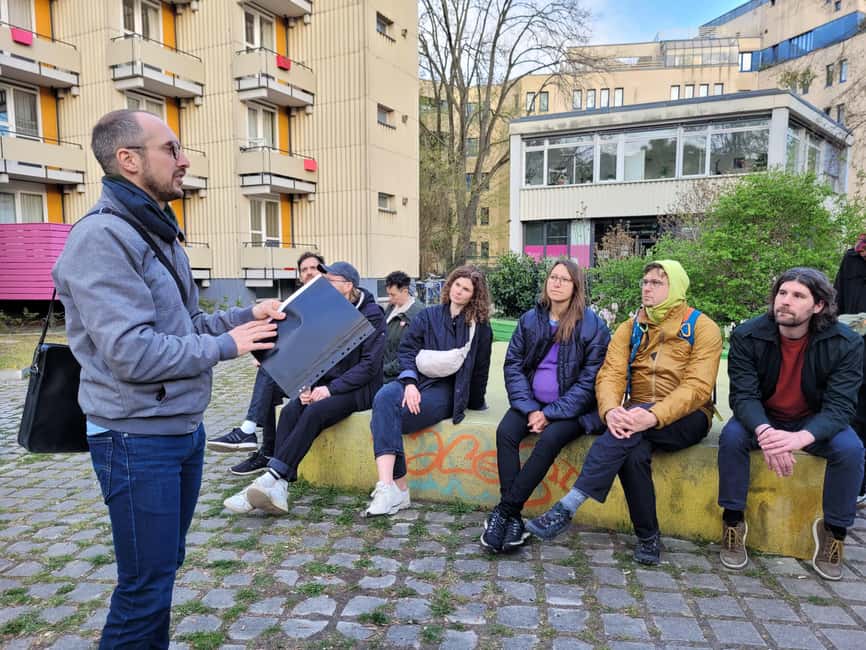
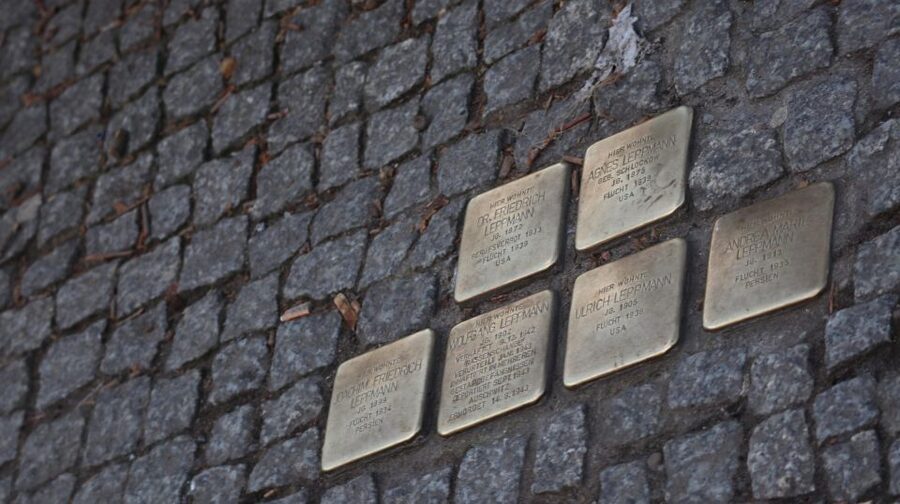
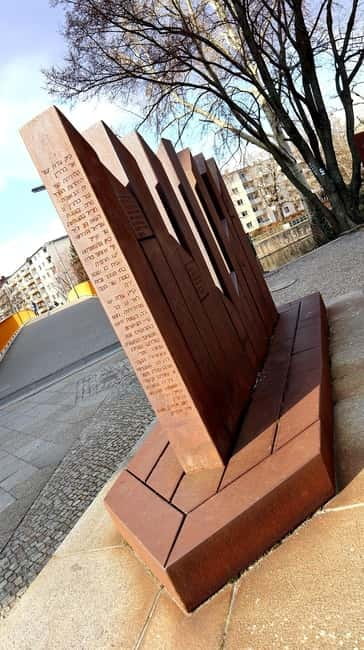
The route then turns toward a memorial marking the site of one of Berlin’s significant Jewish communities. This is one of the most serious moments of the walk.
The neighborhood was damaged in two connected ways. The Nazi regime destroyed Jewish life through persecution and murder, while Allied bombing raids caused extensive physical destruction. The memorial helps you think about both forms of loss without reducing the story to architecture alone.
The setting is described as quiet, which matters. Berlin has many major memorial sites, but a smaller neighborhood memorial can make history feel closer to ordinary streets and homes. You are not simply looking at a famous monument. You are being asked to consider the people and community that once shaped this part of the city.
The guide’s role is especially important here. The tour is offered in English and German, and one German participant praised the clear structure, balanced amount of information, and excellent German spoken by a guide from Texas. That detail gives you a sense of the tone: well prepared, accessible, and able to handle serious material without flooding you with facts.
Why Interbau 1957 changed the district
The central chapter begins in 1957, when West Berlin hosted Interbau, an international architecture exhibition. The event was not just a design fair. It was a political statement made in the middle of the Cold War.
West Berlin wanted to show that it could rebuild with modern ideas, international cooperation, and a new approach to city life. Hansaviertel became a showcase for what the future might look like in the democratic West. The rebuilt district presented a sharp contrast to older urban forms and to the monumental planning associated with East Berlin.
The timing gave the project extra force. The buildings rose on ground cleared by World War II, so the new housing carried a message of renewal. At the same time, it was not an innocent blank slate. The destruction of the old district made the new vision possible, and the tour does well to connect progress with loss.
You will hear about the thinking behind the buildings, not just their dates and architects. The important question is how architecture was meant to shape daily life. Could light, open space, modern apartments, and new traffic patterns produce a healthier and more democratic city?
That question remains useful today. Some modernist ideas still feel fresh. Others may seem severe or less comfortable than their original promises suggested. The walk asks you to judge the buildings for yourself.
Same city, a different building to stand in front of:
- Potsdam: Guided Walking Tour of UNESCO Site and Architecture
★ 4.7 · 49 reviews - Private Taxi Tour City East & West History and Architecture 3-4h
★ 5.0 · 42 reviews - Stuttgart city library – an architectural tour
★ 4.4 · 27 reviews - Karl-Marx-Allee Tour: Life and Architecture in East Berlin
★ 5.0 · 19 reviews
Meeting Gropius, Niemeyer, and Aalto in the streets

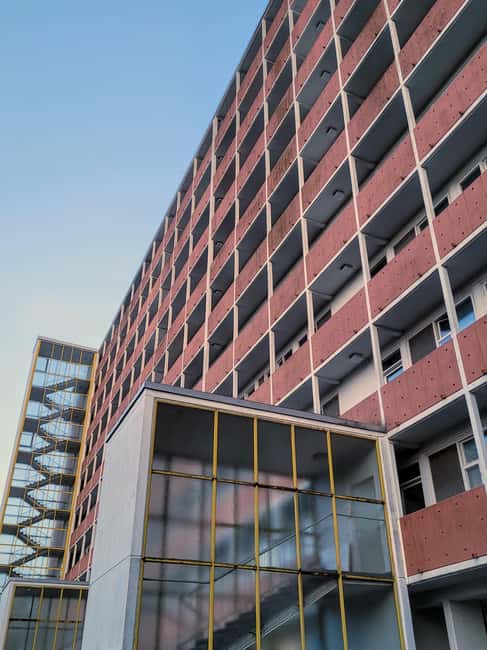
The architectural portion features work by Walter Gropius, Oscar Niemeyer, Alvar Aalto, and other major 20th-century architects. Their presence gives Hansaviertel unusual weight for a relatively compact neighborhood.
You will see different responses to the same postwar challenge. Modernist architecture was not one single style. It could be precise and restrained, curved and sculptural, practical and experimental. The tour explains how these architects approached housing, open space, materials, and the relationship between individual buildings.
Oscar Niemeyer’s name brings a more expressive approach to the discussion, while Alvar Aalto is associated with a warmer and more human-centered modernism. Walter Gropius adds the influence of the Bauhaus and its belief that design should connect art, function, and everyday life.
The value of seeing these buildings with a guide is that you learn to look beyond the famous architect’s name. A building can be celebrated internationally and still be ordinary to the people who live near it. You can ask whether the apartments feel inviting, how the buildings relate to trees and paths, and if the original vision still works for modern residents.
The walk does not promise entry into the apartments. One participant specifically wished it might be possible to visit one of the homes. That is a fair limitation to keep in mind. You should expect to examine the buildings from public areas, not tour private interiors.
Hansaplatz and the final stretch
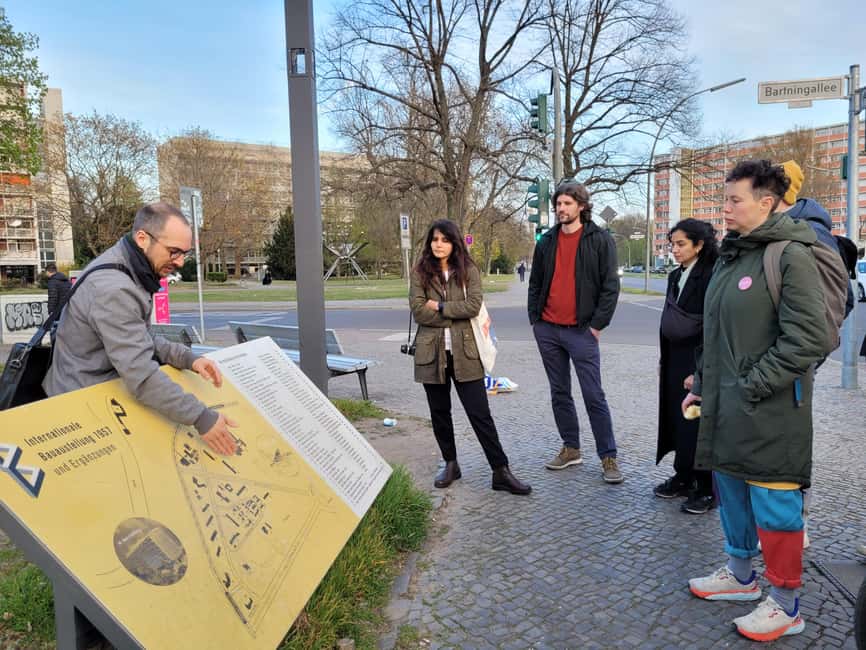
The tour ends at Hansaplatz, the district’s main public square. Finishing here gives the route a clear destination rather than leaving you somewhere along a residential street.
Hansaplatz helps you read the neighborhood as a planned whole. The buildings are not isolated architectural objects. They were arranged as part of a model district, with open areas and shared public space intended to support a particular way of living.
This final stop also gives the guide a natural place to bring the themes together: prewar elegance, Jewish life, Nazi destruction, postwar rebuilding, Cold War competition, and modernist hopes. In about two hours, you cover more than a set of buildings. You trace how a neighborhood can be repeatedly reshaped by politics and design.
The walk is short enough to fit into a day of Berlin sightseeing, but substantial enough to require attention. One person described it as an informative afternoon walk with an eclectic mix of local residents and tourists. That combination is a strength. You get a district that matters to Berliners, not just a stage set designed for visitors.
What the guide adds
This tour depends heavily on the quality of its guide. The strongest feedback points to careful preparation, a clear beginning, and information presented in manageable amounts.
That structure matters because Hansaviertel can otherwise feel confusing. You may see a tower, a low-rise block, a curved façade, and a patch of open ground without understanding how they connect. A good explanation turns those separate sights into one argument about the modern city.
The guide from Texas who spoke excellent German received special thanks for making the route enjoyable and easy to follow. Another participant noted that the guide had more material to share than the available time allowed and stayed afterward to answer questions. That suggests you may want to save your own questions for the end, especially if architecture or Berlin’s political history interests you.
The tour is not designed as an academic lecture. It aims to make difficult subjects clear while keeping the walk moving. Still, the content is serious, and the recommended age of 14 and up is sensible.
Is $29 a fair price?
At $29 per person, this is a reasonable price for a two-hour guided city walk, particularly if you care about architecture, urban planning, or Berlin history. You are paying for interpretation, not admission to a major museum or a view from a landmark.
The value comes from the connections. You could walk through Hansaviertel alone for free, but you might miss why the neighborhood was rebuilt, how Interbau functioned as a Cold War showcase, and what happened to the communities that came before it.
The price is less attractive if you want a broad introduction to Berlin. This tour stays focused on one district and one set of themes. It will not replace a general city tour covering the Brandenburg Gate, Museum Island, the Berlin Wall, and other major sights.
I see it as a good second or third tour for someone who has already seen Berlin’s headline attractions. It also makes sense for a resident who wants to understand a neighborhood often passed by without much thought. A perfect rating of 4.9 from 16 recorded ratings supports the idea that the focused format works well for its intended audience, though the sample is small.
Who should book this walk?
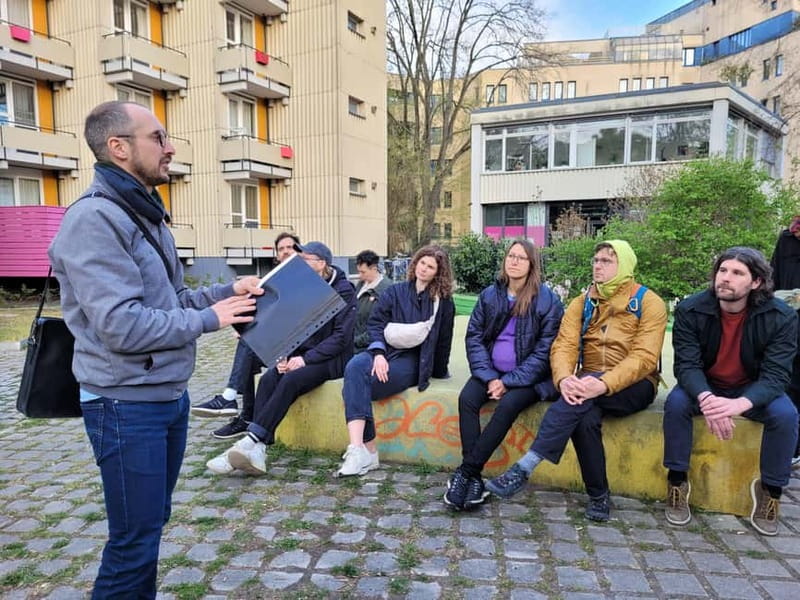
I would choose this tour if you enjoy architecture that makes you ask questions. You do not need professional training, but curiosity helps. The guide explains why the buildings matter, then leaves room for you to decide if the results are beautiful, practical, cold, or all three.
It is also a strong fit if you want a quieter side of central Berlin. The location between Tiergarten and the Spree gives the route a calmer feel than the city’s busiest central streets.
History-minded visitors will get the most from the memorial and the links between Jewish life, Nazi persecution, wartime destruction, and postwar politics. The subject matter is not light, so I would not book it for children under 14 or for anyone seeking a purely decorative architecture stroll.
Wheelchair users can take the tour, as the activity is listed as wheelchair accessible. Because it remains a walking tour with standing, you should still be comfortable moving through the route for around two hours.
Should you book the Hansaviertel tour?
Book it if you want to understand how architecture can express political ideas. The strongest parts are the clear historical structure, the access to major modernist designs by Gropius, Niemeyer, Aalto, and others, and the chance to see a real neighborhood rather than a single famous monument.
Skip it if your Berlin visit is very short and you have not yet covered the main sights, or if you prefer indoor attractions and preserved historic buildings. For everyone else, $29 buys a thoughtful walk through one of Berlin’s most revealing districts, with enough substance to change the way you look at postwar cities.
FAQ
Where does the Hansaviertel tour meet?
The meeting point is in front of Berlin-Tiergarten S-Bahn station at the Siegmunds Hof and Bachstraße exit, next to Biergarten der Tiergartenquelle. Look for the guide with the orange umbrella.
Where does the tour finish?
The walk finishes at Hansaplatz.
How long does the tour last?
The full activity lasts two hours. The guided portion through Hansaviertel is listed as approximately 1.5 hours.
Which languages are available?
The tour is offered in English and German.
Is the tour wheelchair accessible?
Yes, the activity is listed as wheelchair accessible.
What should I bring?
Wear comfortable shoes and bring water. You should be prepared to walk and stand for approximately two hours.
Is the tour suitable for children?
There is no strict age restriction, but it is recommended for people aged 14 and up because of the historical content. All minors must be accompanied by an adult.
Just added in Germany
- Hidden Architectural Gems of Munich (Max. 16 guests)★ 5.0 · 2 reviews
- Munich Your Way: Private Tour with Architect & Guide★ 5.0 · 2 reviews
- Architectural Frankfurt: Private Tour with a Local Expert★ 5.0 · 2 reviews
- Architectural Berlin: Private Tour with a Local Expert★ 4.0 · 3 reviews
- Private Taxi Tour of City East History and Architecture 2-3h★ 5.0 · 2 reviews
- Berlin Architecture/River Spree Full Day Photography Tour★ 5.0 · 2 reviews
- Lübeck: Private Historical and Architectural Walking Tour★ 4.5 · 6 reviews
- Lübeck: Architecture and Local Craft Private Guided Tour★ 4.0 · 6 reviews
Berlin Architecture Tours, compared.
Private Taxi Tour City East & West History and Architecture 3-4h
Read our review →
Karl-Marx-Allee Tour: Life and Architecture in East Berlin
Read our review →
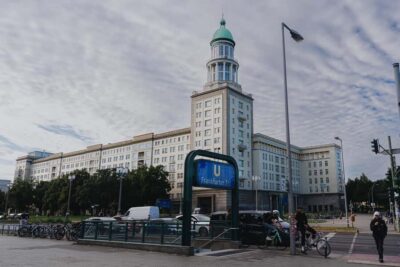
Karl-Marx-Allee Tour of Life and Architecture in GDR
Read our review →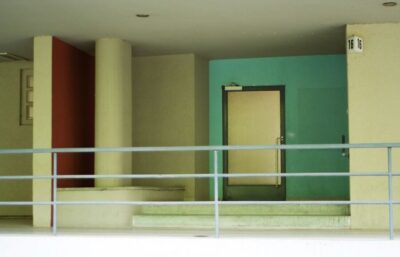
Guided Architectural Walking Tour of Hansaviertel
Read our review →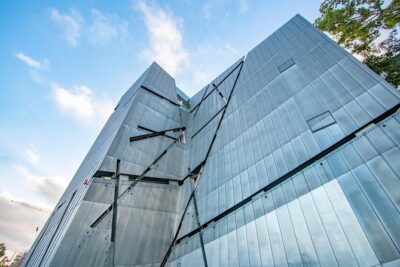
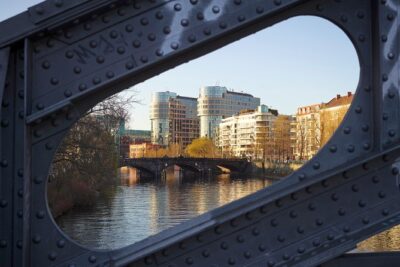
Berlin Architecture/River Spree Full Day Photography Tour
Read our review →
Private Taxi Tour of City East History and Architecture 2-3h
Read our review →Browse the lists this tour appears in