
REVIEW · COPENHAGEN ARCHITECTURE TOURS
Copenhagen: Danish Architecture Center Entrance Ticket
Architecture can explain a city before you meet it. At Copenhagen’s Danish Architecture Center, I like the changing exhibitions that connect buildings to everyday life, and I like the clear sweep of history from the Viking age to modern Denmark. The 40-meter DAC Slide adds a playful jolt, while the rooftop terrace gives you a fine view over the harbor, cycle bridges, and historic city.
The main drawback is that this is an exhibition center, not a guided walking tour through Copenhagen. If you want famous facades, royal interiors, or a long list of landmark buildings, the experience may feel more conceptual than expected. Still, at $19 per person, it offers a useful and family-friendly way to understand how Danish society has been shaped by design.
Five things to know before visiting DAC

- The building is BLOX, a striking harbor-front complex with the center below ground level at Bryghuspladsen.
- Exhibitions change, so your experience depends partly on what is showing during your visit.
- Danish architecture spans the Viking age to today, giving you a broad view instead of a single-period museum visit.
- The 40-meter DAC Slide is included, making this more than a quiet gallery stop.
- The rooftop terrace and café overlook Copenhagen’s harbor, with food and drinks available at an extra cost.
- One ticket is valid for one day, and the center is wheelchair accessible.
Why Danish architecture belongs on your Copenhagen list

Copenhagen is easy to admire from the outside. You see clean lines, cycle bridges, harbor baths, old streets, and modern public buildings almost everywhere you go. DAC helps you make sense of those sights by showing how architecture is tied to the way people live.
That connection is the center’s real appeal. You are not simply looking at attractive buildings. You are considering how function, art, and design work together in Danish society.
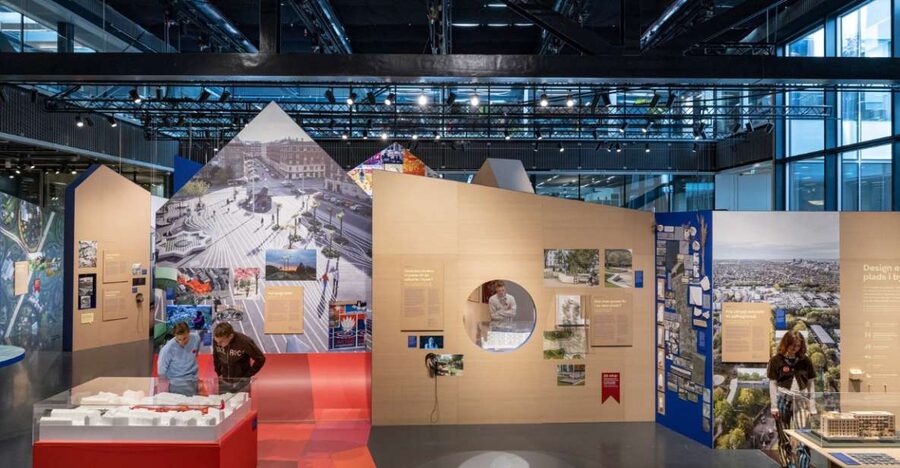
The exhibitions focus on changing themes, so you should not expect one fixed route. Some displays may focus on the city, others on welfare architecture, design, or the role of buildings in daily life. This format keeps the center current, but it also means you should check the present exhibition lineup before buying a ticket if one topic matters especially to you.
I would set aside enough time to read, look carefully, and pause at the views. A quick visit can cover the major features, but the center rewards a slower pace more than a rushed checklist does.
More tickets in the world:
- Chicago: Architecture River Cruise Skip-the-Ticket Line
★ 4.8 · 4,325 reviews - Barcelona: Sant Pau Recinte Modernista Entry Ticket
★ 4.6 · 2,567 reviews - Valencia: Art & Architecture Guided Tour with Monuments Tickets
★ 5.0 · 255 reviews
Entering BLOX beside Copenhagen’s harbor
The Danish Architecture Center occupies part of BLOX, an eye-catching building directly on the water. Its position matters. From here, you can look toward the historic city, cycle bridges, and harbor baths, so the setting already gives you a working example of Copenhagen’s changing urban design.
The entrance is below ground. From Bryghuspladsen, use the stairs or escalators down to the center. That detail is easy to miss, especially if you are looking for a traditional street-level museum entrance.
Once inside, you can move through all open exhibitions with the same admission. The layout is designed for more than architecture specialists. Families, curious first-time visitors, and people who simply want a better sense of Copenhagen can all find an entry point.
The center is also wheelchair accessible. Since the entrance is below ground and access uses stairs or escalators, you may want to confirm the best accessible route directly with DAC before arrival if you have specific mobility needs.
From Viking building traditions to modern Denmark

One of the most useful features is the broad time span. DAC presents Danish architecture from the Viking age through the present, giving you a long view of how buildings and communities change.
Do not expect a full archaeological museum or a room-by-room history course. The value is in the connection between periods. You can see architecture as a response to practical needs, social values, changing technology, and ideas about public life.
The center also gives attention to welfare architecture, where function, art, and design matter together. That topic helps explain why Danish buildings often feel carefully planned for ordinary life rather than designed only to impress.
For you, the payoff is practical. After visiting DAC, a school, housing project, public space, or bridge may look different. You start asking who a place serves, how people move through it, and why it feels welcoming or efficient.
This is also why the center works well early in a Copenhagen stay. Visit near the beginning of your trip, and the ideas may sharpen what you notice during the rest of your time in the city.
Changing exhibitions make each visit different

DAC’s exhibitions rotate, and that is both a strength and a small risk. The strength is freshness. You are not locked into a display that treats Danish architecture as a finished story.
The risk is that the exact content depends on the date of your visit. One exhibition may appeal strongly to you, while another may feel less relevant. Check the current program before booking if you have limited time or a specific interest in design, public housing, city planning, or contemporary buildings.
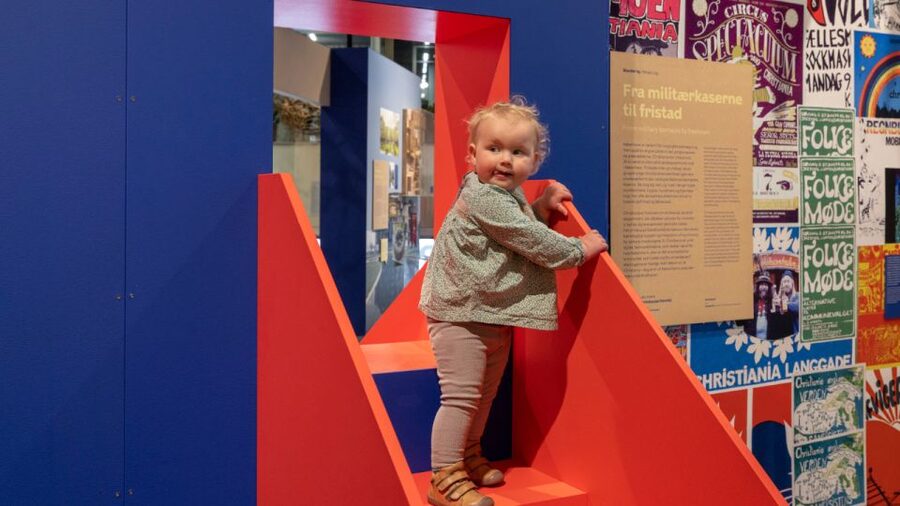
The center aims its exhibitions at children and adults alike. That makes it a sensible choice for families who want something more engaging than a traditional museum display. The DAC Slide gives younger visitors a clear reason to stay interested, while the exhibitions provide substance for adults.
I especially like that the center treats architecture as part of society. The displays are not only about famous architects or polished photographs. They encourage you to consider the purpose of buildings and the effect of design on everyday routines.
A few more architecture tours in the world worth a look
- Chicago Architecture River Cruise
★ 5.0 · 15,756 reviews - Chicago River 90-Minute Architecture Tour
★ 4.5 · 9,629 reviews - Chicago River: 1.5-Hour Guided Architecture Cruise
★ 4.8 · 8,046 reviews - Chicago Architecture Center River Cruise aboard First Lady
★ 5.0 · 5,536 reviews
The DAC Slide adds a welcome change of pace
The 40-meter DAC Slide is included with admission. It is an unusual feature for an architecture center, and it keeps the experience from feeling too formal.
You can ride down the slide as part of your visit, giving the center a simple physical highlight after time spent reading and examining displays. It also helps explain why the place appeals to families, not just architecture students and design fans.
The slide should not be the sole reason you pay $19. It is an extra feature, not the main substance of the visit. But it improves the value of the ticket and gives children something immediate to look forward to.
If you are visiting with a family, I would treat the slide as a useful pause between exhibitions. If you are alone or mainly interested in architecture, you can regard it as optional rather than essential.
Rooftop views over bridges and harbor baths
Admission includes access to the rooftop café area. You can look over Copenhagen’s historic center, the harbor, cycle bridges, and harbor baths from above.
The view adds context to the exhibitions. Instead of studying urban design only on a wall, you can look out at the city’s actual arrangement. Water, movement, public spaces, and buildings meet here in one wide view.
Food and drinks are not included, so plan to pay separately if you want something from the café. You do not need to buy refreshments to benefit from the rooftop access.
I would save this area for a natural pause, perhaps after the exhibitions and slide. It is a good place to let the main ideas settle, especially if you are trying to connect what you saw indoors with Copenhagen outside.
The rooftop is also useful for anyone who wants a short harbor view without committing to another attraction. It is not presented as a separate observation deck with a timed entry. It is part of the center experience.
How much time should you allow?

The ticket is valid for one day, with starting times shown when you check availability. The supplied information does not give a fixed visit length, so you should plan according to your interest and schedule rather than expect a timed tour.
A quick stop could work if you want to see one exhibition, take the slide, and enjoy the view. A longer visit makes more sense if you read display material closely or want to explore the history of Danish architecture from the Viking age onward.
Because the exhibitions rotate, I would avoid squeezing DAC into a tiny gap between major appointments. The center is most useful when you have enough time to think about what you are seeing.
There is no stated group size or guided itinerary. The experience is built around independent exploration, with Danish and English available. That gives you freedom to move at your own pace, but it also means you should not expect a guide to explain every display personally.
Is $19 a fair price?

At $19, the ticket is not the cheapest museum admission in Copenhagen, but it covers all open exhibitions, the DAC Slide, and access to the rooftop café area for one day.
That package gives the ticket good value if you are interested in design, city planning, social history, or family-friendly attractions. The price is also easier to justify if you use the full visit rather than dropping in only for the slide or the terrace.
The value is less convincing if you want a conventional museum filled with famous historical objects. DAC focuses on ideas, buildings, design, and the way places function. You are paying for interpretation and access to a modern architecture center, not for a large collection of artifacts.
The center’s rating of 4.4 from 169 reviews points to a generally strong experience, and the most praised points are consistent: people appreciate the clear presentation, the insight into Danish society and history, and the rooftop moment. Those strengths match the ticket’s purpose.
Who will enjoy DAC most?
I would recommend this experience to:
- First-time visitors who want context for Copenhagen’s buildings and public spaces
- Architecture and design fans
- Families looking for an indoor activity with something physical to do
- Visitors interested in Danish society and welfare architecture
- Anyone who enjoys thoughtful exhibitions but does not want a full-day museum
- People seeking a harbor view connected to the city’s built environment
You may want to skip it if your main goal is a guided tour of historic landmarks or a detailed look at royal architecture. DAC is broader and more interpretive.
It also suits a rainy or chilly day, although the provided information does not promise a special weather program. The center gives you indoor exhibitions plus a rooftop area, so you can combine shelter with city views.
Practical advice for planning your visit
Check the available starting times before you book. Your ticket is valid for one day, but the experience is still tied to the opening schedule shown at reservation.
Go to Bryghuspladsen and look for the entrance below ground. Use the stairs or escalators to reach the center. Allow extra time if you are unfamiliar with BLOX or are meeting someone there.
Danish and English are available, and the host or greeter languages are listed as Danish and English. That makes the center straightforward for English-speaking visitors.
You can cancel up to 24 hours before the activity for a full refund. A reserve-now, pay-later option is also available, which helps if your Copenhagen schedule is still shifting.
Food and drinks at the rooftop café cost extra. If you are watching your budget, enjoy the view without making a café purchase, then eat elsewhere in the city.
Should you book the Danish Architecture Center?
Book DAC if you want to understand how architecture connects with Danish life, not just take photographs of attractive buildings. The rotating exhibitions, broad history, rooftop view, and 40-meter slide give the visit more range than its name may suggest.
I would especially recommend it early in a Copenhagen trip. The ideas about function, public life, and design can sharpen your view of the streets, bridges, housing, and harbor spaces you see afterward.
Skip it if you want a traditional museum collection or a guided sightseeing route. For most curious visitors, though, $19 is a reasonable price for a flexible one-day visit with real context, a strong city view, and one wonderfully unexpected slide.
FAQ
Where is the Danish Architecture Center located?
It is inside the BLOX building in central Copenhagen, directly on the harbor front.
How do I reach the entrance?
The entrance is below ground at Bryghuspladsen. Take the stairs or escalators down to the center.
What does the ticket include?
The ticket includes entry to the Danish Architecture Center, all open exhibitions, the DAC Slide, and access to the rooftop café area.
Is food included with admission?
No. Food and drinks purchased at the rooftop café cost extra.
How long is the ticket valid?
The ticket is valid for one day. Check availability for the starting times offered on your chosen date.
Is the DAC Slide included?
Yes. Entrance to the 40-meter DAC Slide is included with admission.
Can I visit the rooftop terrace?
Yes. The ticket includes access to the rooftop café area and its views over the city and harbor.
Is the center wheelchair accessible?
Yes, the Danish Architecture Center is wheelchair accessible.
Can I cancel my booking?
Yes. You can cancel up to 24 hours in advance for a full refund. A reserve-now, pay-later option is also available.
Just added in the world
- Wilmington History and Architecture Tour★ 4.8 · 18 reviews
- New Orleans : Garden District Architecture Walking tour★ 4.8 · 5 reviews
- Washington DC: Dupont Circle & Embassy Row Architecture Tour★ 5.0 · 6 reviews
- Washington, DC: Georgetown Architecture Walking Tour★ 5.0 · 8 reviews
- Vicenza: Palladian Architecture Private Walking Tour★ 3.3 · 3 reviews
- Walk & Discover KL’s Architectural and Heritage Gems★ 5.0 · 7 reviews
- Private Colonial Williamsburg Architectural Tour★ 5.0 · 5 reviews
- Unveiling Brno: History, Culture & Architectural Delights★ 5.0 · 2 reviews
Copenhagen Architecture Tours, compared.

Copenhagen Architecture and Sustainability Tour with local Guide
Read our review →

Copenhagen City, Old Town, Nyhavn, Architecture Walking Tour
Read our review →
Copenhagen City, Old Town, Nyhavn, Architecture Walking Tour
Read our review →Browse the lists this tour appears in