
REVIEW · COPENHAGEN ARCHITECTURE TOURS
Copenhagen: Danish Design and Architecture Walking Tour
Copenhagen makes good design feel ordinary. This two to two-and-a-half-hour walk links the Opera House, harbor, royal gardens, and Designmuseum Danmark while showing how function, beauty, and daily life fit together in Danish culture. I like the clear route through central Copenhagen, and I like that the tour includes hands-on time with three iconic Danish design objects. The main caution is the timing: the activity is advertised as two hours, while the route description says about two and a half.
I also like the way the walk mixes major sights with smaller design details instead of treating architecture as a string of photo stops. Guide Linnea earned special praise for making Danish architectural history interesting and for choosing art and design examples from several centuries. You should arrive ten minutes early, wear good shoes, and confirm accessibility before booking, since the information describes the tour as wheelchair accessible but also says it is not suitable for wheelchair users or people with mobility impairments.
Key points at a glance

- The route begins on Holmen: You start at the Royal Danish Academy of Architecture, Design and Conservation, an fitting place to discuss how Copenhagen builds for both use and beauty.
- The Opera House is a main architectural lesson: About 20 minutes are set aside to look at the relationship between light, open space, and a major modern building.
- Three Danish design objects add a hands-on element: This is not only a walk and lecture. You also get a practical look at objects shaped by Danish design ideas.
- The harbor connects old and new Copenhagen: The walk crosses Inderhavnsbroen and continues to Nyhavn, where historic buildings meet the city’s modern waterfront.
- The tour ends at Designmuseum Danmark: You receive about 15 minutes of free time there, making the museum a useful place to continue exploring afterward.
- The price is fair for a specialist tour: At $63 per person, the value depends on how much you want guided interpretation rather than simple sightseeing.
Why Danish design makes a useful walking-tour theme

Danish design is often reduced to clean lines, pale wood, and stylish furniture. This tour offers a broader idea. You look at buildings, bridges, public spaces, artwork, and everyday objects, then consider the choices behind them.
The central question is practical: how can something work well and still look good? That question helps you read Copenhagen differently. A building is not just a facade. Light, movement, materials, scale, and the way people use a space all matter.
I like this subject because it gives you a way to understand Copenhagen beyond its famous views. You are not simply told that a structure is attractive. You discuss why it feels balanced, how older architecture is retained, and how new construction can fit beside it without copying the past.
The tour is also designed for people who are curious about ordinary objects. The inclusion of three iconic Danish designs gives the guide a chance to connect large public buildings with the things you use every day. That link makes the subject easier to grasp, even if you do not normally visit architecture museums.
More walking tours in the world:
- Lecce: Baroque Architecture and Underground Walking Tour
★ 4.6 · 1,248 reviews - Chicago in a Day: Food, History & Architecture Walking Tour
★ 5.0 · 1,153 reviews - Ramblas, Old Town, Gothic and Gaudi Architecture Walking Tour
★ 5.0 · 723 reviews
Starting on Holmen at the Royal Danish Academy
The meeting point is the Royal Danish Academy, Architecture, Design and Conservation, on Holmen. This is a strong starting point because the tour begins inside Copenhagen’s design culture rather than in a standard sightseeing square.
You will meet your English-speaking guide here and set out on foot. Arrive ten minutes before the stated start time. The activity information gives a duration of two hours, while the full description estimates about two and a half hours, so leave room in your schedule for the longer version.
The opening section should help establish the ideas used throughout the walk. Expect discussion of Danish design principles, architecture, and the way old buildings can continue to serve modern needs.
There is no transportation included. You need to make your own way to Holmen, and the tour does not provide food or drinks. That is not a major problem for most visitors, but it matters if you are arranging the walk between timed museum visits or a meal.
The Copenhagen Opera House and the use of space

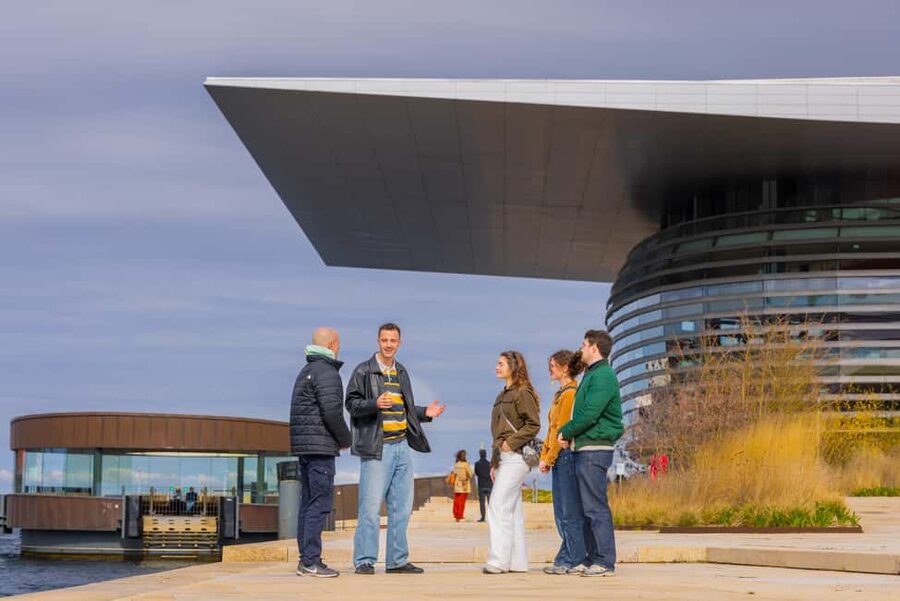
The Opera House receives about 20 minutes. This is one of the clearest moments to see how a large public building can use light and space to shape your experience.
The focus is not simply on the building’s appearance. You will consider the harmony between its open areas, surfaces, and light. That approach is useful because it turns a famous structure into a lesson in design rather than a quick photograph.
You should expect the guide to explain how function and visual effect work together. An opera house has to serve performers, staff, and audiences, but it also creates a public presence on the harbor. The tour uses that balance to show why Danish architecture is often praised for being practical without being plain.
The 20-minute stop is long enough for an explanation and some photographs, but not long enough for an extended architectural study. If you want to inspect every detail or enter the building at leisure, you would need separate time before or after the tour.
Crossing Inderhavnsbroen toward the older harbor

The route continues with a 15-minute walk across Inderhavnsbroen. This section matters because it gives you a moving view of Copenhagen rather than another stationary stop.
Bridges are useful design examples. They must guide people across water, but their shape, width, materials, and connection to surrounding streets also affect how the city feels. The guide can use the crossing to explain how infrastructure becomes part of public life.
This is also where the tour begins to connect modern Copenhagen with its older harbor districts. You are not moving from one unrelated attraction to another. The route follows the way the city has developed around the water, with contemporary structures beside historic streets and buildings.
The crossing is outdoors, so weather matters. Bring a coat or rain layer when needed, and do not underestimate the value of comfortable shoes. The walk is not described as strenuous, but you will be on your feet for the entire experience.
A few more architecture tours in the world worth a look
- Chicago Architecture River Cruise
★ 5.0 · 15,756 reviews - Chicago River 90-Minute Architecture Tour
★ 4.5 · 9,629 reviews - Chicago River: 1.5-Hour Guided Architecture Cruise
★ 4.8 · 8,046 reviews - Chicago Architecture Center River Cruise aboard First Lady
★ 5.0 · 5,536 reviews
Nyhavn, where old facades meet a modern city
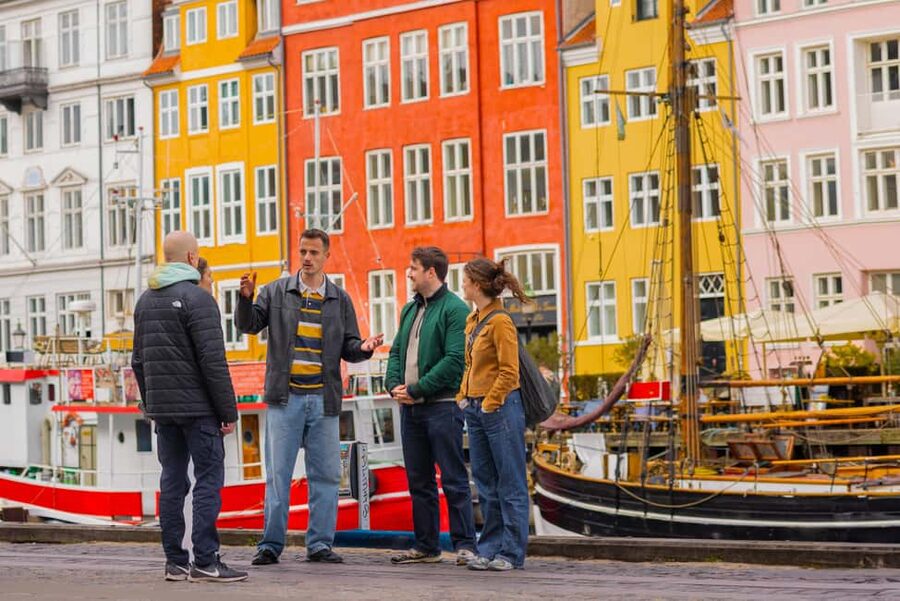
The stop at Nyhavn lasts about 20 minutes. Its colorful harbor buildings make it one of Copenhagen’s most recognizable places, but the design discussion gives you a reason to look beyond the postcard view.
Here, the guide can point out how traditional architecture continues to shape the city. Older buildings do not sit apart from modern Copenhagen. They remain part of the working visual character of the waterfront, alongside new bridges, public spaces, and contemporary architecture.
I find this part especially useful for understanding the tour’s central theme: preservation is not always about freezing a place in time. Copenhagen’s older structures can remain visible while the city adds new uses and new forms around them.
Nyhavn can be busy, and the 20-minute stop may feel brief if you want to take photographs, listen closely, and look at the facades all at once. Keep your attention on the guide during the explanation, then use any remaining time for pictures.
Rosenborg Castle and the pause in the route
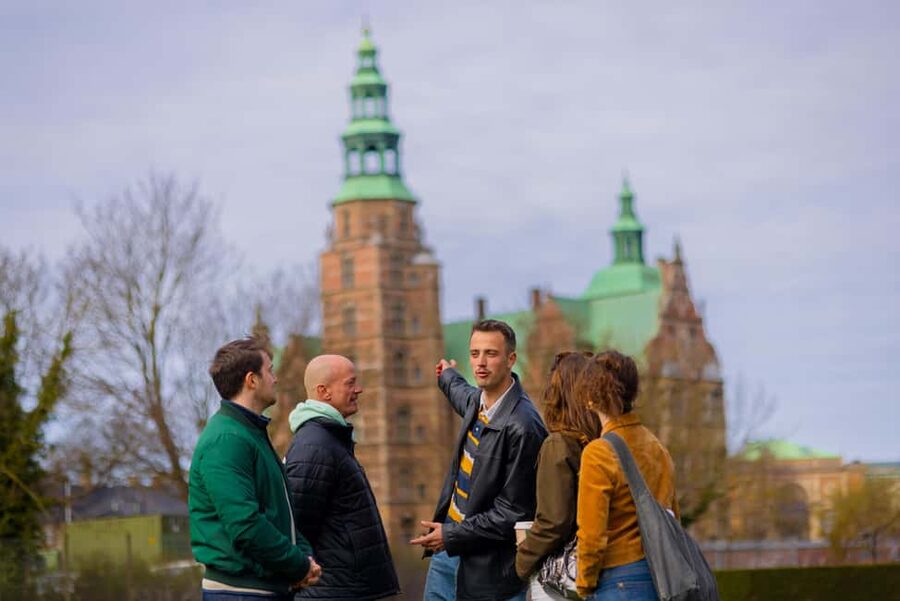
The next stop is Rosenborg Castle, with about 15 minutes for a visit and break time. This gives the walk a change of scale and mood after the harbor.
The castle represents a more traditional architectural setting. Its presence helps the guide compare historic forms with the modern structures you have already seen. Rather than treating old and new architecture as separate subjects, the tour asks how they can exist within the same city.
The break is useful. A two-hour walk, or possibly two and a half hours, is easier when you have a moment to reset. This is a good place to check your camera, drink water you brought with you, and listen without feeling rushed.
The stop is short, so do not expect a full castle visit. Entrance fees are not included, and the tour does not promise an extended interior tour. The value here is the architectural context and the connection to the next stop, not a complete exploration of Rosenborg.
The King’s Garden and Copenhagen’s public spaces
The King’s Garden receives about 25 minutes, making it one of the longer stops. The garden gives the tour room to discuss how designed outdoor spaces organize movement, rest, views, and daily use.
This is an important counterpoint to the Opera House and the harbor bridge. Design is not limited to buildings. A public garden also reflects choices about proportion, access, paths, open areas, and how people share a place.
You may find this section more relaxed than the earlier stops. It gives you time to look around while the guide explains how architecture and urban planning extend into the spaces between buildings.
The garden also reinforces the idea that Danish design is part of ordinary life. A well-planned public area does not need to announce its design principles loudly. You notice them through how easily you can move, pause, and understand the space.
Finishing at Designmuseum Danmark
The walk ends at Designmuseum Danmark, with about 15 minutes of free time. This is a sensible finish because the tour’s ideas come together in a museum devoted to Danish and international design.
The free time is not presented as a full guided museum visit, and admission is not included. Still, ending here gives you a clear next step if the subject catches your interest. You can continue looking at furniture, objects, and visual examples after the guide has provided the wider context.
That hands-on element with three iconic Danish design objects is one of the strongest parts of the experience. Objects make the larger ideas easier to understand. You can see how a designer balances comfort, purpose, materials, and appearance in a way that a large building may not explain as quickly.
If you want a longer museum visit, plan to return or stay afterward if your ticket arrangements allow it. The scheduled 15 minutes is enough to orient yourself, not enough to cover the whole museum.
What the guides add to the experience
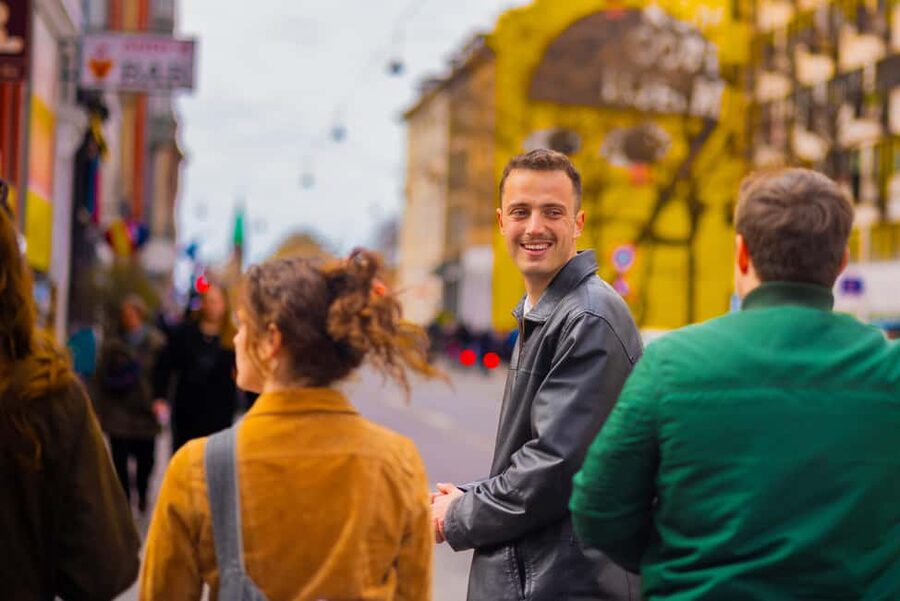
The quality of this tour depends heavily on the guide. The route includes familiar places, so the guide’s explanations are what turn a pleasant walk into a design-focused experience.
Linnea received particular praise for making Danish architectural history interesting and for selecting examples of art and design from different centuries. That range matters. It prevents the tour from presenting Danish design as a single modern style that appeared recently.
Another guide was described as friendly and well informed about the area, with the afternoon offering a pleasant overall experience. That suggests the tone is conversational rather than overly academic.
You should still keep your expectations realistic. A two-hour walk cannot provide a full course in Danish architecture, and the short stops limit how much detail any guide can cover. The benefit is a readable introduction that helps you notice more during the rest of your Copenhagen visit.
Is $63 a fair price?
At $63 per person, this is not the cheapest way to see the route. You can walk past the Opera House, Inderhavnsbroen, Nyhavn, Rosenborg Castle, the King’s Garden, and the museum area without paying for a guide.
The price makes more sense if you want interpretation, structure, and a specialist theme. You are paying for a live English-language guide, a planned route, explanations of Danish design philosophy, and hands-on work with three design objects. You also avoid spending time deciding how to connect these places yourself.
No entrance fees, food, drinks, or transportation are included. That keeps the costs clear, but you should budget separately if you want to enter attractions or spend additional time at Designmuseum Danmark.
I would call the price reasonable for visitors who already enjoy architecture, furniture, public spaces, or museum design. If you only want quick photographs of Copenhagen’s major sights, a self-guided walk will cost less and may suit you better.
Who should book this Copenhagen walk?
I would recommend this tour to you if you like learning how cities work. It suits people who notice materials, light, furniture, streets, and the relationship between older buildings and new construction.
It is also a good fit if you have only a short time in Copenhagen and want a guided introduction to several important areas. The route brings together Holmen, the harbor, Nyhavn, the royal setting around Rosenborg, the King’s Garden, and Designmuseum Danmark.
You should bring comfortable shoes, weather-appropriate clothing, and a camera. Smoking is not allowed during the experience.
The accessibility information needs careful attention. One part of the description says the tour is wheelchair accessible, while another says it is not suitable for wheelchair users or people with mobility impairments. Because this is a continuous walking route with outdoor sections, contact the provider before booking if you have mobility concerns.
The tour is offered in English, and free cancellation is available up to 24 hours before the start. You can also reserve now and pay later, which helps if your Copenhagen schedule is still changing.
My verdict: a smart choice for design-minded visitors
I would book this walk if you want more than a checklist of Copenhagen sights. Its best feature is the connection between architecture and everyday objects. You learn to look at the Opera House, a bridge, a garden, and a chair through related ideas about use, beauty, and human scale.
The route is well chosen, and the stops cover a useful range of old and new Copenhagen. The main limits are the short time at each place, the extra cost of admission, the unclear two-hour versus two-and-a-half-hour duration, and the conflicting accessibility information.
Choose it if a guide’s explanation is worth $63 to you. Skip it if you prefer long museum visits, independent wandering, or a faster sightseeing loop. For curious visitors who want to understand why Copenhagen feels so thoughtfully made, this is a focused and worthwhile introduction.
FAQ
How long does the Danish Design and Architecture Walking Tour last?
The activity information gives a duration of two hours, while the full route description says approximately two and a half hours. Allow at least two and a half hours so you are not rushed afterward.
Where does the tour start?
The tour starts at Det Kongelige Akademi, Architecture, Design and Conservation, on Holmen in Copenhagen. You should arrive ten minutes before the scheduled start.
Where does the tour finish?
The tour finishes at Designmuseum Danmark. Around 15 minutes of free time is provided there.
Is the tour offered in English?
Yes. The tour has a live English-speaking guide.
Are entrance fees included?
No. Entrance fees to attractions are not included in the $63 price. Food, drinks, and transportation to and from the starting point are also excluded.
Is the tour wheelchair accessible?
The information is conflicting. One section describes the tour as wheelchair accessible, while another says it is not suitable for wheelchair users or people with mobility impairments. Contact the provider before booking to confirm whether the current route meets your needs.
Just added in the world
- Wilmington History and Architecture Tour★ 4.8 · 18 reviews
- New Orleans : Garden District Architecture Walking tour★ 4.8 · 5 reviews
- Washington DC: Dupont Circle & Embassy Row Architecture Tour★ 5.0 · 6 reviews
- Washington, DC: Georgetown Architecture Walking Tour★ 5.0 · 8 reviews
- Vicenza: Palladian Architecture Private Walking Tour★ 3.3 · 3 reviews
- Walk & Discover KL’s Architectural and Heritage Gems★ 5.0 · 7 reviews
- Private Colonial Williamsburg Architectural Tour★ 5.0 · 5 reviews
- Unveiling Brno: History, Culture & Architectural Delights★ 5.0 · 2 reviews
Copenhagen Architecture Tours, compared.

Copenhagen Architecture and Sustainability Tour with local Guide
Read our review →
Copenhagen City, Old Town, Nyhavn, Architecture Walking Tour
Read our review →Copenhagen City, Old Town, Nyhavn, Architecture Walking Tour
Read our review →Browse the lists this tour appears in