

REVIEW · OLD TOWN ARCHITECTURE WALKS
Copenhagen City, Old Town, Nyhavn, Architecture Walking Tour
Copenhagen rewards slow walking. This private tour gives you a clear route through Indre By, the city center, while a local guide connects Viking legends, royal power, wartime stories, and modern Danish life. I like the flexible length, from a quick two-hour introduction to a full six-hour royal tour, and I like having a guide in your chosen language.
I also like the smart meeting point at City Hall Square, close to Tivoli Gardens and the start of Strøget. The main drawback is simple: the two-hour option skips the Marble Church, Rosenborg Castle, and Amalienborg Palace interiors, so you must choose your duration carefully if those sights matter to you.
Five details worth knowing before you book
- Start at the Lur Blowers column: Your guide meets you opposite Copenhagen City Hall at Rådhuspladsen 57.
- Choose your royal sights carefully: Marble Church appears on the three, four, and six-hour tours; Rosenborg Castle appears on the four and six-hour tours; Amalienborg Palace Museum is included only on the six-hour tour.
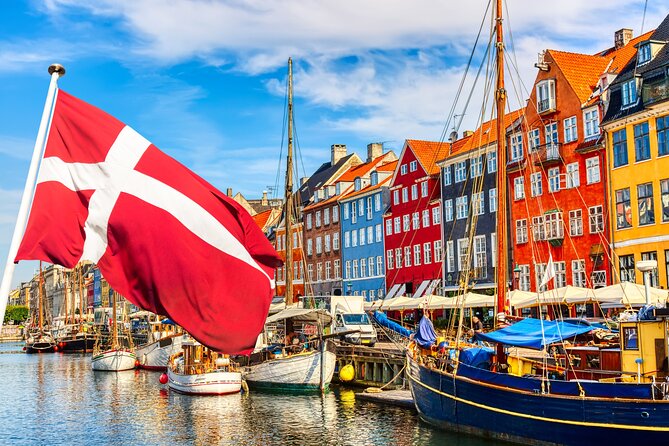
- Nyhavn is the natural finale: The colorful harbor gives the shorter tour a pleasant ending and leaves you well placed for restaurants and further sightseeing.
- Private means flexible: One licensed guide can lead up to 23 people, with extra guides arranged for larger groups.
- Skip-the-line has limits: Reserved entry helps at Rosenborg and Amalienborg, but ticket checks and security screening still apply.
- The tour works for many visitors: It is wheelchair accessible and offered in Danish, English, French, German, Italian, and Spanish.
What this Copenhagen walk does well

Copenhagen can feel easy to navigate, but its sights are spread across a broad central area. A guide helps you understand how the old city fits together instead of leaving you with a pile of disconnected monuments.
The route moves from City Hall Square through the historic center, along Strøget, across the King’s Garden, and toward the royal quarter and Nyhavn. That progression makes sense. You begin with the city’s public heart, move through its streets and churches, then reach the palaces and harbor that give Copenhagen much of its character.
I especially like the private format. You are not tied to a large group’s pace or a fixed lecture. You can ask about Danish customs, royal traditions, Viking stories, or the wartime period as your interests develop. Since the guide speaks the language selected at booking, this is also useful if you want more than a standard English tour.
The experience is priced at $227 per person. That is a serious price for a walking tour, so the value depends heavily on your choice. The two-hour version is best seen as a city orientation. The longer options make more sense if you want private guiding inside the major royal sights and prefer not to organize separate visits yourself.
More old town architecture walks in the world:
- Barcelona: Sagrada Familia, Modernism, and Old Town Tour
★ 4.7 · 1,621 reviews - Ramblas, Old Town, Gothic and Gaudi Architecture Walking Tour
★ 5.0 · 723 reviews - Astana: Old City Tour, Imperialistic and Soviet Architecture
★ 5.0 · 4 reviews
Starting at City Hall Square and Tivoli
Your meeting point is under the Lur Blowers column, opposite City Hall at Rådhuspladsen 57. This is a practical place to begin because it is easy to identify and close to Tivoli Gardens, one of Copenhagen’s best-known attractions.
The opening section gives you a quick sense of modern Copenhagen’s public center. From here, the route heads into the Old Town, known locally as Indre By. You will pass shops and restaurants along Strøget, the central pedestrian shopping street.
This part of the walk is useful for orientation. You can note places to return to later, ask your guide where to eat, and get a feel for how close the main sights are to one another. The guide also brings in stories about Viking-era Denmark, Danish history, and Scandinavian culture, so the streets become more than a succession of pretty buildings.
Do not expect every major attraction to receive a full interior visit on the short option. The two-hour tour is designed to show you the city’s key areas and offer recommendations. It is a good fit for a first afternoon in Copenhagen, especially if you want help deciding what to see on your own afterward.
Churches, university life, and the Round Tower
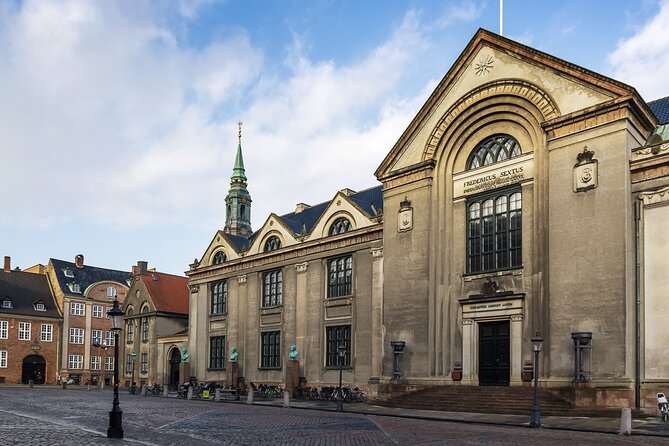
The early route includes Copenhagen’s oldest church, the neoclassical Cathedral, Copenhagen University, and the Round Tower. Together, these stops show several sides of the city: religious life, learning, royal-era planning, and practical science.
The Round Tower is particularly interesting because its observatory dates to the 17th century and is still used by Danish astronomers. Even if you do not enter, the building gives the walk a strong architectural focus. Its presence also helps explain Copenhagen’s long connection with astronomy and public scholarship.
The cathedral and older church provide a useful contrast. One offers neoclassical design, while the other represents an earlier layer of the city. Your guide can help you notice how Copenhagen rebuilt and reshaped itself over time rather than presenting the center as one uniform historic district.
The route is mainly outdoors unless you choose one of the options with included church or palace entry. Wear comfortable shoes. The distance is manageable for most people, but the four and six-hour versions ask for a full morning or afternoon of walking and sightseeing.
King’s Garden and the first glimpse of Rosenborg
The tour passes through King’s Garden, where admission is free on every option. The garden offers a welcome change from the shopping streets and dense city blocks.
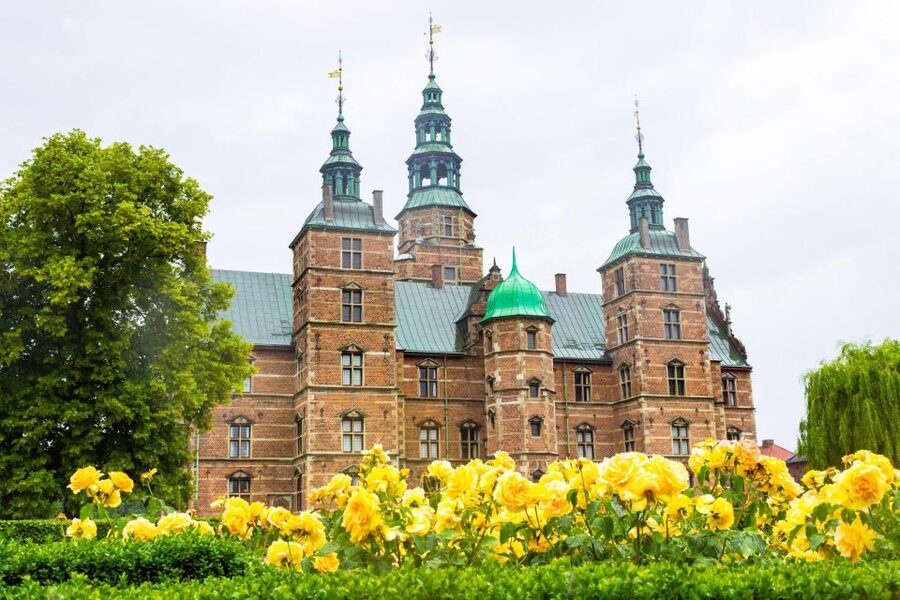
From here, you can catch a glimpse of Rosenborg Castle. The small Renaissance castle was built under Christian IV, one of Denmark’s most important royal figures. The outside view helps set up the longer tours, where you can enter the castle and see its royal collections.
The two-hour route does not include admission to Rosenborg. That is worth remembering because a glimpse of the castle may sound like a visit, but it is not the same thing. If you want the interiors, crown jewels, coronation chairs, and other royal treasures, choose at least the four-hour option.
King’s Garden is included even on the shortest tour, so you still receive a peaceful green space and a strong view of the castle without paying a separate entrance fee during the walk.
More walking tours in the world:
- Lecce: Baroque Architecture and Underground Walking Tour
★ 4.6 · 1,248 reviews - Chicago in a Day: Food, History & Architecture Walking Tour
★ 5.0 · 1,153 reviews - Chicago’s Secret Interiors Architectural Walking Tour
★ 5.0 · 635 reviews - Chicago: Secret Interiors Architecture Walking Tour
★ 4.9 · 498 reviews
King’s New Square and the route to Nyhavn

After the central streets and King’s Garden, the route continues toward King’s New Square. This broad, important square connects the older shopping district with the harbor area and the royal quarter.
The final stop on the two-hour tour is Nyhavn. The canal is famous for its rows of colorful buildings, waterside restaurants, and social atmosphere. It is one of the easiest places in Copenhagen to pause after a walking tour, though prices around the harbor can be higher than elsewhere in the city.
I like ending here because it gives the short tour a clear finish. You are not dropped in an anonymous street. Instead, you arrive at a place where you can continue with a meal, a drink, or a relaxed look at the canal.
Nyhavn is also a useful planning point. From here, you are close to the royal district and several central attractions, so you can continue exploring if you still have energy. The tour itself does not include a meal or harbor cruise.
Frederik’s Church and Copenhagen’s royal quarter

The three-hour option adds Frederik’s Church, better known as the Marble Church. This is one of Copenhagen’s most impressive interiors, with Rococo design, painted ceiling details, sculptures, and antique organs.
The church’s large dome is described as the biggest in Scandinavia. Its scale changes the mood of the tour. After walking through streets and squares, you enter a broad, highly decorated space where the design is meant to draw your eyes upward.
Admission to the church is included on the three, four, and six-hour tours. It is not included on the two-hour option. Entry may be limited during mass or scheduled events, so timing can affect what you are able to see. The fee for entering the dome is not included, either.
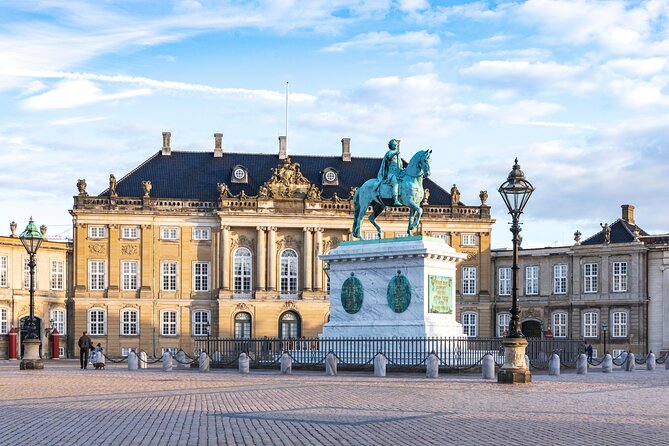
Near the church is Amalienborg Palace, the official residence of the Danish Queen. On the three-hour tour, you see the palace area and the Royal Guards, but you do not receive admission to the Amalienborg Palace Museum. That distinction matters if you are mainly interested in royal interiors and exhibitions.
Rosenborg Castle on the four-hour tour

The four-hour version adds a proper visit to Rosenborg Castle. Skip-the-line tickets are included, with a reserved entry time. This is a useful addition because Rosenborg is one of Copenhagen’s most visited sights, and avoiding the ticket office can save some time.
The castle interiors focus on Danish royal life. You can see treasures such as the crown jewels and coronation chairs while your guide explains the people, ceremonies, and power behind them.
Rosenborg works well as the main indoor attraction because it feels more personal than a large modern museum. The castle presents royal objects in rooms built for court life, which helps you connect the displays to the building itself.
The ticket is for the main exhibition. Skip-the-line does not mean walking straight through every checkpoint. You may still wait for ticket validation and security checks, and entry is tied to a reserved time slot.
The four-hour option is a strong middle choice. It gives you the central walking route, Marble Church, Rosenborg, and the royal gardens without committing to the full six-hour schedule. If your interests lean toward architecture and royal history, this is probably the best balance.
The six-hour route and Amalienborg Palace Museum

The six-hour option is the fullest version of the tour. It includes the Old Town, Marble Church, Rosenborg Castle and Gardens, and Amalienborg Palace Museum.
Amalienborg is the official royal residence, so the museum gives you a different view of Danish monarchy from Rosenborg. Rosenborg emphasizes royal collections and historic court life. Amalienborg adds the palace setting and exhibitions, including the Fabergé Chamber.
Skip-the-line tickets are included for the museum, with a reserved time slot. You may still face validation and security checks, but you avoid buying a ticket at the office. Admission covers the main exhibition.
Six hours is a substantial amount of time on foot. I would choose it if you want one private guide to organize the full central route and the major royal interiors. It suits visitors with a strong interest in Danish monarchy, architecture, and cultural context.
It may be too much if you prefer short visits and plenty of free time. Copenhagen is pleasant to explore independently, and a long guided schedule leaves less room for lingering at cafés, shopping, or returning to places that catch your eye.
How the private format affects the value
The tour is private, not a standard large-group walk. Your guide is a licensed professional and can lead one to 23 people. For larger groups, additional guides are arranged, and the price will be higher.
That matters most on the longer versions. A private guide can adjust the discussion to your interests and answer questions without a rigid script. Families and groups with mixed interests may find this more useful than joining a fixed public tour.
The price of $227 per person is easier to justify when several people share the private experience and when you select the four or six-hour version with included admissions. For one person or a couple choosing only the two-hour walk, the cost is harder to defend unless personalized guiding is your priority.
Admission details also affect the calculation. King’s Garden is included on every option. Frederik’s Church is included from three hours onward. Rosenborg entry begins at four hours, while Amalienborg Palace Museum is reserved for six hours.
Read the selected duration carefully before booking. The tour title includes the city, Old Town, Nyhavn, and architecture, but the royal interiors depend entirely on the option you choose.
Practical advice for choosing your duration
Choose the two-hour tour if you want a fast introduction to Copenhagen’s center, the Old Town, Strøget, the Round Tower area, King’s Garden, King’s New Square, and Nyhavn. It is the right pick if you plan to visit palaces separately.
Choose the three-hour tour if Marble Church and the Amalienborg area interest you, but you do not need palace museum admission. You will see the Royal Guards, but the museum is not included.
Choose the four-hour tour if Rosenborg Castle is a priority. You receive skip-the-line entry and enough time for the major central sights plus the castle and its grounds.
Choose the six-hour tour if you want the fullest royal itinerary, including both Rosenborg and Amalienborg Palace Museum. This is the best fit for a first-time visit focused on monarchy, architecture, and guided context.
The tour is wheelchair accessible, which is helpful information for anyone planning a private visit. Starting times vary, so you need to check availability for the date you want.
Who should book this Copenhagen tour?
I would recommend it to first-time visitors who want a strong introduction without planning every turn themselves. The private format is also useful for families, small groups, and anyone who wants guiding in Danish, English, French, German, Italian, or Spanish.
It suits people who enjoy connecting architecture with politics and culture. You will hear about Vikings, Danish history, WWII stories, and Scandinavian customs while moving through the city’s main sights.
I would be more cautious if you already know Copenhagen well or prefer independent wandering. The two-hour version may feel expensive for a route you could walk alone. The longer options offer better value because they add timed entries to Rosenborg and, on the six-hour tour, Amalienborg Palace Museum.
The tour allows free cancellation up to 24 hours before the start, and you can reserve now and pay later. Check your email the day before for important information, especially the final meeting details and any timing notes.
Should you book it?
Book this tour if you want a private, well-organized introduction to Copenhagen and you value context as much as sightseeing. The four-hour option is the strongest compromise, combining the city walk, Marble Church, and Rosenborg Castle without the full length of the six-hour itinerary.
Choose six hours if Amalienborg Palace Museum and the Fabergé Chamber are must-sees. Choose two hours only if you want orientation and recommendations, not palace interiors.
The price is high, but the private guide, language choice, flexible format, and included admissions on the longer versions can make it worthwhile for a small group. For independent visitors on a tight budget, Copenhagen’s center is easy to explore without it. For a first visit when you want the city explained as you see it, this tour earns its place.
FAQ
Where does the Copenhagen walking tour meet?
Meet your guide under the Lur Blowers column opposite Copenhagen City Hall, at Rådhuspladsen 57, 1550 København, Denmark.
How long is the tour?
The available options last two, three, four, or six hours. Starting times depend on availability.
Is the tour private?
Yes. It is a private group tour with one licensed guide for one to 23 people. Larger groups require additional guides, and the price will be higher.
Which languages are available?
The tour is offered in Danish, English, French, German, Italian, and Spanish.
Is Frederik’s Church included?
Admission to Frederik’s Church, also called the Marble Church, is included on the three, four, and six-hour tours. It is not included on the two-hour option.
Is Rosenborg Castle included?
Rosenborg Castle is included on the four and six-hour tours, with skip-the-line tickets. It is not included on the two or three-hour tours.
Is Amalienborg Palace Museum included?
The Amalienborg Palace Museum is included only on the six-hour tour, with skip-the-line tickets. The shorter tours may include the palace area and Royal Guards, but not museum admission.
Does skip-the-line entry mean there is no waiting?
No. You receive a reserved entry time, but ticket validation and security checks may still cause a wait. Admission covers the main exhibition.
Can I cancel or pay later?
You can cancel up to 24 hours in advance for a full refund. You can also reserve the tour and pay later, which keeps your plans flexible.
Just added in the world
- Wilmington History and Architecture Tour★ 4.8 · 18 reviews
- New Orleans : Garden District Architecture Walking tour★ 4.8 · 5 reviews
- Washington DC: Dupont Circle & Embassy Row Architecture Tour★ 5.0 · 6 reviews
- Washington, DC: Georgetown Architecture Walking Tour★ 5.0 · 8 reviews
- Vicenza: Palladian Architecture Private Walking Tour★ 3.3 · 3 reviews
- Walk & Discover KL’s Architectural and Heritage Gems★ 5.0 · 7 reviews
- Private Colonial Williamsburg Architectural Tour★ 5.0 · 5 reviews
- Unveiling Brno: History, Culture & Architectural Delights★ 5.0 · 2 reviews
Old Town Architecture Walks, compared.

Sagrada Familia, Modernism, and Old Town Tour
Read our review →
Barcelona e-Bike Tour: Gaudí & Old Town Small Group
Read our review →
Ramblas, Old Town, Gothic and Gaudi Architecture Walking Tour
Read our review →
Barcelona 1.5h Private Old Town, Gothic & Ramblas Walking Tour
Read our review →
Astana: Old City Tour, Imperialistic and Soviet Architecture
Read our review →
Copenhagen City, Old Town, Nyhavn, Architecture Walking Tour
Read our review →Browse the lists this tour appears in