
REVIEW · BERLIN ARCHITECTURE TOURS
Private Taxi Tour City East & West History and Architecture 3-4h
Berlin rewards a wide-angle introduction. This private taxi tour links East and West Berlin in three to four hours, moving from the Kaiser Wilhelm Memorial Church and Ku’damm to the Brandenburg Gate, Museum Island, Alexanderplatz, and Checkpoint Charlie. I like the efficient route and the personal guiding by Gunter Bauer, who can adjust the focus to your interests. The main consideration is pace: you see a great deal from the car, but several stops are brief rather than full museum visits.
I also like the warm, private setting, especially in winter or on a wet day. You can pause for photos, ask questions without a group crowd, and stay in touch with your guide by SMS or WhatsApp for pickup. The drawback is price: at $150.18 per person, it offers strong value for a small group, but less so for a solo visitor who could cover some sights cheaply by public transport.
Key points to know before booking
- Berlin in one clear sweep: The route covers the former western shopping and diplomatic districts, the historic center, Cold War sites, and major government buildings.
- A private taxi, not a fixed script: Gunter Bauer asks about your interests and can give more attention to architecture, Prussian history, World War II, the Berlin Wall, or modern Berlin.
- Excellent for poor weather: You spend much of the tour in an air-conditioned taxi, with short walks and photo stops along the way.
- Strong personal service: Gunter is praised for punctual pickup, careful driving, fluent English, help with transport questions, and sending photographs afterward.
- Best for first-time orientation: You will see far more districts than on foot, then can return later to the museums and memorials that interest you most.
- Some sights are drive-bys: The tour gives context and outside views, but it is not designed for long interior visits.
A private taxi is a smart way to read Berlin
Berlin is spread out. The Brandenburg Gate, Charlottenburg, Checkpoint Charlie, the East Side districts, and the government quarter are not arranged in one compact old town. A taxi solves that problem neatly, especially when you have only a short stay.
This is a private activity for your group alone. Pickup inside the S-Bahn ring is included from a hotel, apartment, or another requested city address. Pickup from BER Airport or locations outside the ring costs extra, based on the Berlin taxi tariff. You are asked to come outside after receiving Gunter’s SMS or WhatsApp message, so keep your phone available.
The vehicle includes air conditioning, WiFi, parking fees, and private transport. A toddler seat for children aged six months to three years and a booster seat for older children are available. A baby seat can be brought on request.
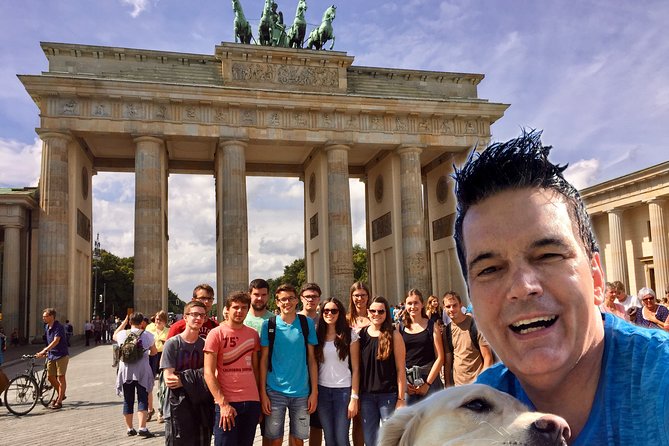
The tour has a 4.9 rating from 42 reviews, with 100 percent recommending it. The strongest praise focuses on Gunter himself: he is friendly, careful, responsive, and good at turning a moving car into a history lesson. He also took photographs at places such as the Brandenburg Gate and sent them afterward. That is a small touch, but it matters when you are busy trying to see the city and get your family into the picture.
More history tours in Germany:
- Lübeck: Private Historical and Architectural Walking Tour
★ 4.5 · 6 reviews - Private Munich Tour for History Buffs with Architectural Gems and WWII sites
★ 5.0 · 3 reviews - Private Taxi Tour of City East History and Architecture 2-3h
★ 5.0 · 2 reviews
Charlottenburg, the zoo, and the old West Berlin

The western portion begins around the Kaiser Wilhelm Memorial Church at Breitscheidplatz. The damaged church tower and west portal were preserved after World War II, while Egon Eiermann’s modern blue-glass church was built around the old remains. Berliners gave the new buildings playful nicknames, lipstick and powder compact, which tells you something about the city’s habit of mixing grim history with dry humor.
Inside the new church, thousands of blue glass blocks create a calm, almost mysterious light. The double-wall construction also keeps out much of the traffic noise from this crowded square. The church is one of Berlin’s clearest examples of how destruction was not simply erased. Old and new sit together, awkwardly but honestly.
You then pass Berlin Zoological Garden, one of Germany’s oldest zoos. Its collection grew from animals once kept on Peacock Island by Friedrich Wilhelm IV, and the zoo’s historic gates are worth a look even if you are not entering. The Elephant Gate near the monkey enclosure and the Lion Gate by Zoo Station are the main exterior features.
The Theater des Westens adds another layer. Its elaborate confectioner’s-style facade reflects the period when Berlin’s wealthy citizens moved west from the crowded center into larger villas and greener neighborhoods. The theater now serves as a musical theater and still contains an imperial box.
From Kantstrasse, the taxi turns toward Kurfürstendamm, usually shortened to Ku’damm. This broad avenue was modeled on the Champs-Élysées and once carried grand villas, cafes, cinemas, and entertainment venues. Today it is chiefly a shopping street, with luxury names farther west and modern flagship stores closer to the center.
I find this part useful because it corrects a common idea about Berlin. The city is not only Prussian monuments and Cold War walls. West Berlin also has postwar commercial energy, polished department stores, and an older culture of theaters, newspapers, and cafes.
Ku’damm, KaDeWe, and the Berlin shopping mile
At Tauentzienstrasse, you reach the Kaufhaus des Westens, better known as KaDeWe. The department store covers about 60,000 square meters and is described as the largest single department store in continental Europe. Its upper gourmet floor is the main attraction, with champagne, oysters, chocolates, bread, and cheese.
The stop is usually about 15 minutes and admission is free. That is enough for a quick look, not a leisurely shopping expedition. If you want to browse properly, ask Gunter in advance about extending this section or returning later on your own.
The tour also passes Wittenbergplatz, where several subway lines meet beneath an attractive station building. The nearby Urania science association, the curved French gift arch, Lützowplatz, and the wide green strip around it help explain how West Berlin was planned and reshaped.
Then the route enters the Tiergarten, Berlin’s great central park. It began as an electoral hunting ground. Frederick the Great opened parts of it to the public and later gardeners, especially Peter Lenné, shaped it into an English-style park with lakes, paths, views, and the Landwehr Canal.
World War II left the park badly damaged. Trees were cut or destroyed, and potatoes were grown near the Reichstag. Allied assistance helped restore it afterward. Seen from a taxi, the Tiergarten can seem like a pleasant green interruption, but Gunter’s explanation gives it real political and social weight.
Government Berlin from the Victory Column to the Reichstag
The Victory Column originally stood in front of the Reichstag and had three drums decorated with captured cannons from wars against Denmark, Austria, and France. It was moved to its current position during Hitler’s rebuilding plans and received a fourth drum after another supposed victory. The unfinished story of that fourth victory is one of the site’s sharper reminders of how Berlin’s monuments have been used by different governments.
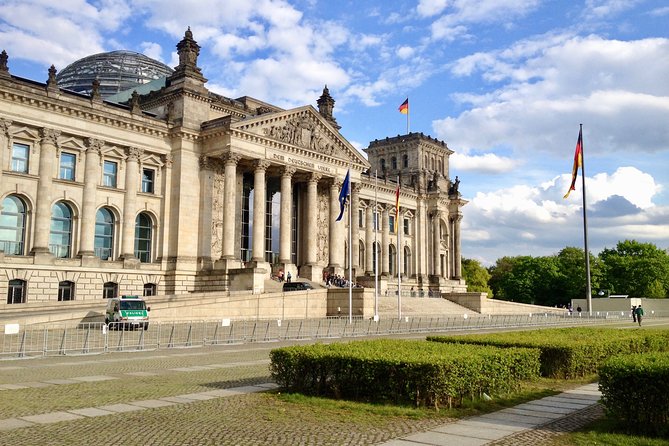
Nearby, the Reichstag is one of the essential stops. The building’s grand nineteenth-century exterior was damaged, neglected during the division of Berlin, and later rebuilt for the reunified Bundestag. Christo’s wrapping project briefly made it a worldwide art event, while the glass dome now represents a more open political image.
The Paul-Löbe-Haus, opposite the Reichstag, is the working engine of parliament. Committees meet in its many offices and rooms, and the building’s glass design lets you see something of that activity from outside. The large rotunda facing the Spree is used for sensitive committee work and cannot be viewed in the same way.
The Federal Chancellery follows, an enormous building with ten floors, 500 offices, and space for more than 300 employees. Its size is easy to appreciate from the taxi. The nearby press building, with its broad central window, is where accredited journalists receive government briefings.
This part of the route is strongest for anyone interested in modern German politics. You are not entering each government building, but the sequence gives you a useful physical map of how today’s federal institutions fit into the former border zone.
More private tours in Germany:
- Private walking Tour: Berlin Architecture Tour
★ 5.0 · 14 reviews - Lübeck: Architecture and Local Craft Private Guided Tour
★ 4.0 · 6 reviews - Architectural Berlin: Private Tour with a Local Expert
★ 4.0 · 3 reviews - Munich Your Way: Private Tour with Architect & Guide
★ 5.0 · 2 reviews
Hackesche Höfe and Berlin’s Jewish quarter
The taxi crosses back toward the former East Berlin and reaches Hackesche Höfe. These interconnected courtyards were built in 1908 as a planned mix of housing, workshops, printing businesses, and small factories. They were restored after the fall of the Wall and now contain shops, galleries, and selected local products.
The stop is about 10 minutes and free. That is enough to step into the decorated courtyards and see their Art Nouveau details, but not enough for a slow browse. The Ampelmännchen and Königliche Porzellan-Manufaktur displays add local character.
Nearby, the New Synagogue on Oranienburger Strasse is easy to recognize by its golden dome and Moorish details. The main synagogue was destroyed during the war, but the front section was rebuilt and now contains an exhibition about Jewish life in Berlin.
Security is strict. Expect airport-style checks before entering the exhibition area. That can slow you down, but it is part of the present-day reality of visiting an important Jewish institution in Berlin.
You also pass the former Friedrichstrasse border station, now connected with the Palace of Tears exhibition. During the Wall years, this was the only station where some east-west international rail traffic could continue. Families said goodbye here under heavy controls, often with no clear idea when they would meet again.
Unter den Linden, the Brandenburg Gate, and Gendarmenmarkt
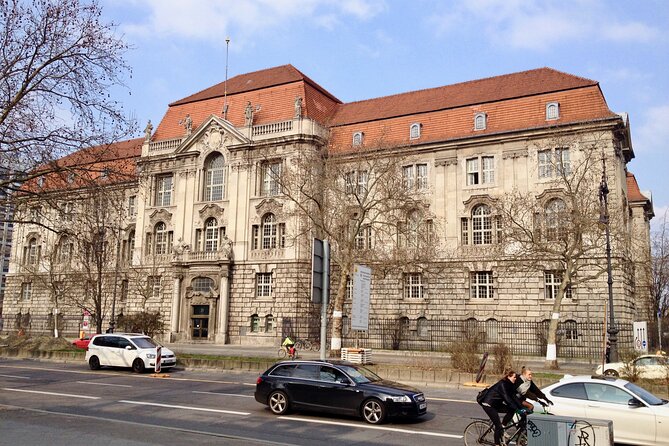
Unter den Linden is Berlin’s grand ceremonial boulevard. It began as a route from the palace to the royal hunting grounds and later became a formal avenue lined with universities, libraries, the State Opera, and important public buildings.
The Brandenburg Gate sits at Pariser Platz, the city’s best-known reception room. War, demolition, the Wall, and the isolated gate itself all shaped this open space. After reunification, surrounding buildings were rebuilt in modern form while keeping their earlier dimensions. The result is polished and formal, though it can feel less lived-in than older Berlin streets.
The Soviet Embassy, now used by the successor states of the former Soviet Union, occupies an imposing site nearby. Its scale was meant to show power in the center of postwar Berlin. At Bebelplatz, the Forum Fridericianum brings together the State Opera, St. Hedwig’s Cathedral, the former Royal Library, and Humboldt University.
Look for the glass panel in the square. It reveals an empty underground library, a memorial to the Nazi book burning of May 10, 1933. This is one of Berlin’s most effective memorials because it does not need a long explanation. The absence does the work.
Gendarmenmarkt is often considered Berlin’s most beautiful square. The Concert Hall sits between the German and French cathedrals, though neither dome is technically a cathedral. The French building still serves a French-speaking Reformed congregation, while the German building houses a museum on German parliamentary history.
The Neue Wache, farther along Unter den Linden, once held royal guards. Today it is a memorial to victims of war and tyranny, centered on Käthe Kollwitz’s enlarged sculpture of a grieving mother. The tone shifts here from imperial display to national mourning.
Humboldt Forum, Alexanderplatz, and old Berlin
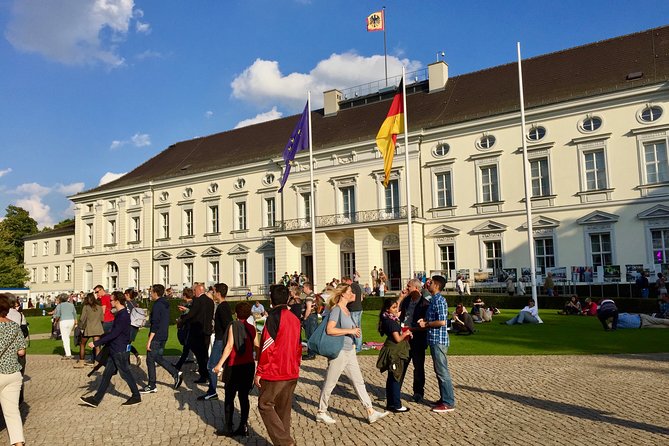
The Humboldt Forum occupies the site of the former Berlin Palace. The palace was badly damaged in the war and later demolished by East German authorities, despite criticism from inside and outside the country. The current building recreates the historic exterior and Schlüter courtyard while housing non-European collections and Humboldt University material inside a modern structure.
The included stop is listed at about 30 minutes. That makes it one of the few places on the route where you may have time for more than a photograph. Still, a full museum visit would require much longer.
Alexanderplatz brings a very different mood. Its broad open design reflects East Berlin’s socialist planning, with the television tower, House of the Teacher, House of Electrical Engineering, and former House of Tourism arranged around large public space. Its older name, Ochsenplatz, refers to the cattle once traded there.
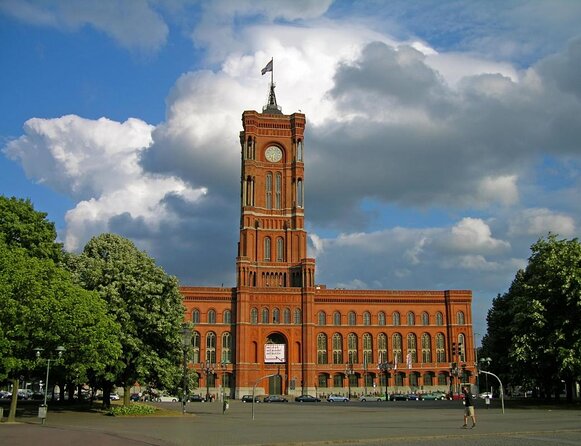
Nearby, the red brick Rathaus is the seat of Berlin’s governing mayor. The name refers to its masonry, not its political history. You can visit some rooms free of charge, including one with plaster casts of famous statues.
Nikolaiviertel offers a reconstructed version of old Berlin. Much of what you see was rebuilt in the 1980s, when only a few original buildings and the roofless walls of St. Nicholas Church remained. The Nikolaikirche is associated with the city’s early development, and the Knoblauchhaus provides a glimpse of Biedermeier family life.
This is a useful place to ask questions about reconstruction. Berlin often presents rebuilt streets with great confidence, but the details of what survived, what was copied, and what was invented are part of the story.
Potsdamer Platz, the embassies, and Cold War Berlin
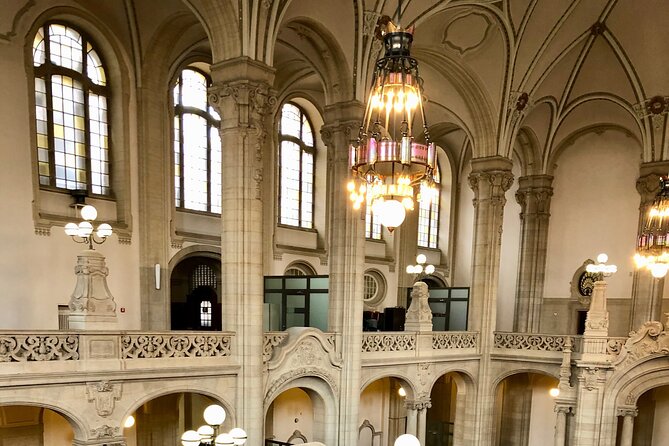
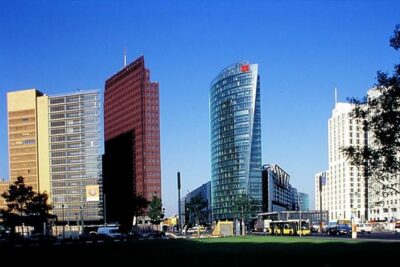
The route continues through areas that show Berlin’s unfinished character. The broad stretch near Fischerinsel and the former Molkenmarkt has seen major rebuilding plans, archaeological work, and postwar housing projects. Potsdamer Platz, once a roaring traffic and nightlife center, was rebuilt with the Sony Center, corporate towers, hotels, shops, and entertainment venues.
It is impressive in scale, but its planned atmosphere can feel less natural than older Berlin districts. That contrast is worth seeing from a taxi because you can connect several redevelopment zones without losing time walking between them.
The Kulturforum was built as a counterpart to Museum Island. It includes the Philharmonie, Chamber Music Hall, New State Library, New National Gallery, Picture Gallery, Museum of Decorative Arts, and Museum of Musical Instruments. The Picture Gallery contains major old masters, including works by Titian, Caravaggio, and Rembrandt.
The tour also passes the Landwehr Canal, which helped drain wet ground, carry goods, and shorten the route of the winding Spree. Berlin has about 200 kilometers of waterways, and many central sights make more sense once you understand how much the city was shaped by water control.
The diplomatic quarter offers a quick architectural survey. Italy’s pink palazzo, Japan’s monumental embassy, India’s red stone, South Africa’s sandstone, Turkey’s security barriers, and the five Nordic embassies each present a different national style. The InterContinental Hotel is another recognizable landmark, built with high security standards for senior political visitors.
Topography of Terror and Checkpoint Charlie
The Topography of Terror is one of the most important short stops. The site brings together remains and documentation linked to the Nazi state police and security agencies, a large Nazi-era government building, the postwar division of Berlin, and an original section of the Wall.
The stop lasts about 15 minutes and includes toilet access. That is enough for a focused introduction, but you should return later if you want to read the full documentation center.
Checkpoint Charlie comes next as a 10-minute photo stop. The guard hut and famous sign are replicas, not original Cold War equipment. The site is still useful because it recalls the tank confrontation of October 1961, when American and Soviet forces faced each other at the most dangerous point of the Berlin crisis.
Knowing that the display is partly reconstructed keeps expectations realistic. You come for the location and the explanation, not an untouched relic.
Who gets the most from this tour?
I would choose this tour for first-time visitors, families, older travelers, and anyone who wants a city overview without relying on a complicated public transport map. It also suits travelers with limited time, since Gunter can cover both sides of Berlin in one sitting.
It is especially useful in winter. One family found the heated taxi a major advantage and appreciated the stops that broke up the driving. Another parent noted that adults could easily fill four hours with questions, while children might prefer a shorter two-hour version.
The tour is less suitable if you want long museum visits, extended walks, or a single subject in great depth. Ask Gunter to focus on your priorities before pickup. He has adjusted tours toward Berlin highlights, World War II, architecture, or the Wall.
Should you book this Berlin taxi tour?
Book it if you want a warm, private, efficient introduction to a very spread-out city. Gunter Bauer’s personal service, careful driving, fluent English, local stories, and willingness to take photographs add real value. The included pickup, parking, WiFi, and private vehicle make the price easier to justify for a couple, family, or small group.
Skip it if you are traveling alone on a tight budget or prefer to spend hours inside museums. For most first-time visitors, though, this is a strong opening day in Berlin: you will learn how the city fits together, mark the places worth returning to, and avoid spending your first day figuring out the map.
FAQ
How long does the private taxi tour last?
The tour lasts approximately three to four hours.
Is pickup included?
Pickup within Berlin’s S-Bahn ring is included from a hotel, apartment, or another requested city location. Pickup from BER Airport or outside the S-Bahn ring costs extra.
Is the tour private?
Yes. Only your group participates in the private tour.
What language is offered?
The tour is offered in English.
Are child seats available?
A toddler seat for children from six months to three years and a booster seat for older children are available. A baby seat can be brought on request.
What happens if I need to cancel?
You can receive a full refund if you cancel at least 24 hours before the start time. Changes or cancellations made less than 24 hours before the tour are not accepted for a refund.
Just added in Germany
- Hidden Architectural Gems of Munich (Max. 16 guests)★ 5.0 · 2 reviews
- Munich Your Way: Private Tour with Architect & Guide★ 5.0 · 2 reviews
- Architectural Frankfurt: Private Tour with a Local Expert★ 5.0 · 2 reviews
- Architectural Berlin: Private Tour with a Local Expert★ 4.0 · 3 reviews
- Private Taxi Tour of City East History and Architecture 2-3h★ 5.0 · 2 reviews
- Berlin Architecture/River Spree Full Day Photography Tour★ 5.0 · 2 reviews
- Lübeck: Private Historical and Architectural Walking Tour★ 4.5 · 6 reviews
- Lübeck: Architecture and Local Craft Private Guided Tour★ 4.0 · 6 reviews
Berlin Architecture Tours, compared.
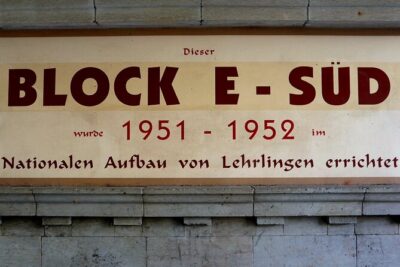
Karl-Marx-Allee Tour: Life and Architecture in East Berlin
Read our review →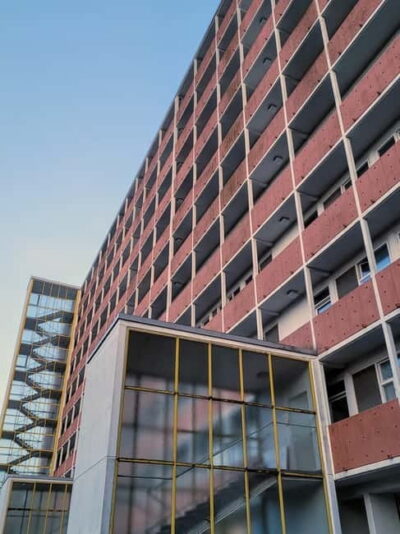
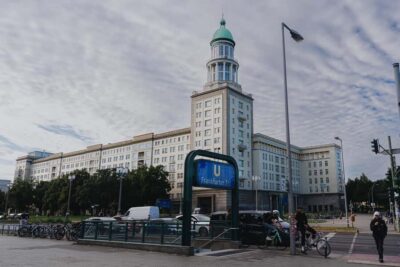
Karl-Marx-Allee Tour of Life and Architecture in GDR
Read our review →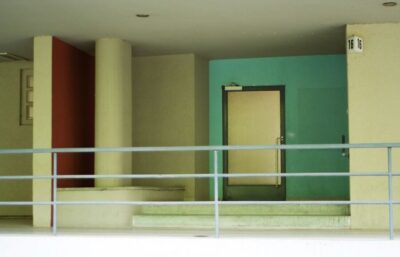
Guided Architectural Walking Tour of Hansaviertel
Read our review →
Berlin Architecture/River Spree Full Day Photography Tour
Read our review →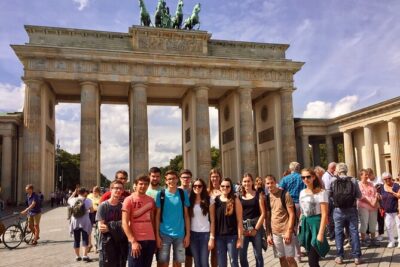
Private Taxi Tour of City East History and Architecture 2-3h
Read our review →Browse the lists this tour appears in