
REVIEW · BAUHAUS AND BRUTALIST ARCHITECTURE TOURS
London: Brutalist & High-tech Architecture Walking Tour
Concrete tells stories. This three-hour architecture walk links the Barbican, Lloyd’s Building, the Gherkin, and other City landmarks with the political and economic changes that shaped modern London. I like the clear route from post-war public housing to high-tech offices, and I especially like that an architect leads the explanations rather than simply naming buildings. At $47 per person, it offers good value if you want ideas and context, not just exterior photographs. The main drawback is the amount of walking, with limited suitability for people with mobility or hearing impairments.
I also like the small-group format, which gives you a better chance to follow detailed explanations and ask questions. Guide Poi has earned especially strong praise for being clear, sincere, enthusiastic, and able to connect design choices with hidden stories. Just remember that you do not enter the buildings, and video and audio recording are not allowed.
Key things to know before you go
- The Barbican sets the historical stage: You begin with post-war reconstruction, the Welfare State, and the social goals behind Brutalist planning.
- An architect leads the tour: Poi explains structure, materials, services, politics, and urban planning in plain terms.
- The route covers major City landmarks: You see 22 Bishopsgate, Lloyd’s Building, the Leadenhall Building, the Gherkin, the Walkie Talkie, and the Monument.
- The styles change as London changes: Brutalist public ambition gives way to high-tech engineering and the financial growth of the late 20th century.
- You get exterior interpretation, not interior access: The buildings are discussed from public spaces and streets.
- Plan for a serious walk: Comfortable shoes matter, and the tour is not suitable for wheelchair users, people with mobility impairments, people over 80, or people with hearing impairments.
Why this London architecture walk is worth your time
London can look like a jumble of old churches, glass towers, concrete terraces, and narrow medieval lanes. This tour gives that jumble a storyline. You move from the post-war city’s belief in public housing and shared services to a later London shaped by finance, private development, computer-aided design, and expressive engineering.
That progression is the tour’s strongest feature. You are not simply ticking off famous buildings. You are learning why one generation used raw concrete to express public purpose, while another put lifts, ducts, stairs, and structural supports on display.
The price is $47 per person for three hours. I consider that fair for a small-group walk led by an architect, especially because the route includes several of London’s best-known modern buildings and a historical stop at the Monument. You are paying for interpretation and connections. If you only want skyline views, you can see many of these buildings for free. If you want to understand what you are looking at, the fee makes more sense.
The experience is offered in English and Chinese. The explanations are intended to be detailed, so this suits you if you enjoy architecture, planning, history, or the way politics affects a city’s appearance.
More Bauhaus and brutalist tours in the world:
- London: Brutalist Architecture & History Walking Tour
★ 4.8 · 42 reviews - Le Corbusier’s Chandigarh : A Complete Architecture Tour
★ 4.7 · 25 reviews - Architecture of New Belgrade – Brutalism Decoded
★ 4.5 · 24 reviews
Starting beside St Giles Cripplegate
The meeting point is outside St Giles Cripplegate church, at the Barbican. This is a useful beginning because the church sits within one of London’s most striking contrasts: an old place of worship surrounded by a large post-war concrete estate.
You meet your guide here before moving into the Barbican area. The opening location immediately shows one of the tour’s main ideas: London rarely replaces one period completely. Instead, different eras press against each other.
Bring water if you need it, since food and drinks are not included. There is no need to dress formally, but comfortable shoes are important. The route takes about three hours and includes substantial walking between stops.
Barbican Estate: concrete with a social purpose
The Barbican receives the longest stop, about 50 minutes, and rightly so. It is the best place to understand Brutalism as more than a style of exposed concrete.
Here, you examine the post-war reconstruction period and the rise of the Welfare State. The discussion places the estate within a time when public bodies were trying to provide housing, cultural facilities, open space, and services as part of a broader social program.
I find this framing much more useful than simply calling the Barbican beautiful or ugly. Brutalist planning often gets reduced to a debate about appearance. The more important question is what the buildings were meant to do. The Barbican was designed as a large urban community, with housing and shared amenities arranged in a planned setting.
Your guide explains how the estate’s concrete forms and raised walkways relate to that ambition. You will look at the way buildings are grouped, how pedestrian movement is handled, and how architecture tries to create a complete environment rather than a collection of isolated blocks.
This is also where the tour asks you to consider the cost of post-war rebuilding. The ambitions were large, but concrete housing estates have often been judged through later changes in maintenance, public opinion, and social use. A good explanation needs both sides, and this tour’s focus on political context helps keep the Barbican from becoming a simple design lesson.
Allow your eyes time to adjust. The estate rewards careful looking, and the guide’s explanation can point out details you would probably pass without noticing. One strong review described the Barbican as beautiful and said the tour completely changed the way the city was viewed. That is a useful measure of the experience: the buildings are familiar, but their purpose is not always obvious.
Walking from public housing to private finance
After roughly 50 minutes at the Barbican, you walk for about 15 minutes toward the City of London. This change in setting is central to the route.
The Barbican represents a period of public reconstruction and collective planning. The office towers that follow reflect a different economic era. As you move through the City, the guide connects architecture with deregulation and the expansion of London as a global financial center.
This section also brings in the long effect of the Great Fire of London. The fire changed how parts of the City were planned and rebuilt, and its legacy remains part of the story even when you are looking at modern towers.
The walk is not a scenic pause in the usual sightseeing sense. It is a transition between ideas. You are moving from a planned residential complex to a business district where land value, corporate identity, structural systems, and vertical growth become more visible.
More walking tours in the world:
- Lecce: Baroque Architecture and Underground Walking Tour
★ 4.6 · 1,248 reviews - Chicago in a Day: Food, History & Architecture Walking Tour
★ 5.0 · 1,153 reviews - Ramblas, Old Town, Gothic and Gaudi Architecture Walking Tour
★ 5.0 · 723 reviews - Chicago’s Secret Interiors Architectural Walking Tour
★ 5.0 · 635 reviews
22 Bishopsgate and the new scale of the City
The first modern office stop is 22 Bishopsgate, with about 10 minutes of guided discussion. Its height and scale help show how far the City has moved from the low-rise streets around it.
The guide uses the building to discuss contemporary development and the pressure to build upward in a compact financial center. You may find this stop especially useful if tall buildings seem to you like simple glass boxes. The tour asks what their size, structure, and services say about the businesses they contain and the city that permits them.
Because the visit is from outside, the value comes from the explanation rather than access to offices or observation decks. You will not enter the building. Ten minutes is enough for a focused reading of the exterior before the route continues.
Lloyd’s Building: when services become architecture
Lloyd’s Building gets about 25 minutes, making it one of the major stops. It is a key example of High-tech architecture, a style that treats structure, circulation, mechanical systems, and building services as visible parts of the design.
Instead of hiding everything inside walls and ceilings, the building makes much of its working machinery part of its public image. Pipes, lifts, stairs, and other service elements become visual features. Your guide explains how that approach differs from the controlled mass of Brutalist architecture.
This is where an architect’s perspective makes a real difference. You are not only looking at unusual forms. You are considering why the building displays its technical systems, how those systems support the interior, and how engineering can become an architectural language.
The building also fits the financial story. Lloyd’s is not simply an object from a design textbook. Its look reflects an institution and a period in which technology, business, and corporate identity were closely linked.
The tour does not include entry. That may disappoint you if you hoped to see the interior, but the exterior contains enough material for a detailed explanation. Stay close to the guide here, since street noise and the complexity of the building can make casual listening difficult.
The Leadenhall Building and the logic of visible structure
The Leadenhall Building receives around 10 minutes. Its sloping profile gives it a very different presence from Lloyd’s, and the guide uses it to discuss how modern towers respond to tight urban sites and nearby historic streets.
The building’s form is not just a decorative gesture. It helps create a distinctive profile while managing the relationship between a tall office tower and the City around it. You will consider how the structural frame and the building’s visible elements contribute to its appearance.
This is a short stop, so it works best as part of the larger sequence. On its own, the building might be another impressive tower. After the Barbican and Lloyd’s, it becomes another chapter in the shift from concrete public housing to highly engineered commercial development.
The Gherkin: a tower shaped by design tools and climate
At 30 St Mary Axe, better known as the Gherkin, the discussion turns toward environmental engineering and digital design. The rounded form is instantly recognizable, but the tour asks you to look beyond the nickname.
The building shows how complex computer-based design tools can help architects produce forms that would have been harder to develop through older methods. It also provides a way to discuss the role of environmental thinking in contemporary office design.
You will consider how shape, structure, and ventilation relate to one another. The building’s unusual form is not only an attempt to make a memorable skyline mark. It reflects a period when architects and engineers were looking for new ways to handle energy, climate, and the demands of high-rise office space.
This is one of the tour’s most accessible stops visually. Even if you know little about architecture, the Gherkin gives you an easy point of reference. The guide then adds the technical and political background that a photograph cannot provide.
Leadenhall Market and the Walkie Talkie
The route visits Leadenhall Market for about 10 minutes. The market offers a sharp contrast with the surrounding office towers and helps you see how different layers of London occupy the same district.
The stop is a walk and visit rather than a building entry. It provides a chance to compare older urban fabric with newer commercial architecture. You may find the contrast especially helpful after discussing the Gherkin and Leadenhall Building.
The tour then passes the Fenchurch Building, often called the Walkie Talkie, with about five minutes for views along the way. This is a brief stop, so do not expect a long architectural lecture there. Instead, it adds another example of how digital design and environmental engineering have affected the modern City.
The building’s distinctive shape also raises practical questions about how large towers meet public space and neighboring streets. The guide places it within the wider story rather than treating it as an isolated curiosity.
The Monument and London’s long memory
The final guided stop is the Monument to the Great Fire of London, with about 15 minutes. This is an important ending because it brings the tour back from late modern finance to one of the events that shaped the City’s planning history.
The Great Fire is not treated as a detached historical footnote. Its effects influenced rebuilding, regulation, street planning, and the way London understood urban risk. Finishing here helps you connect the modern towers to the older decisions beneath them.
It is a satisfying close because the tour has moved through several moments of change: the Great Fire, post-war reconstruction, the Welfare State, financial deregulation, and the rise of London as a global business center.
The tour ends at the Monument. That makes it easy to continue exploring the City afterward, although the activity itself does not include food, drinks, or entry to any building.
What the guide adds to the experience
The most praised part of this walk is the guide’s method. Poi is an architect, and that professional background comes through in the explanations. The strongest descriptions of the tour emphasize clear, interesting, sincere teaching and a high level of useful detail.
That does not mean you need technical training to enjoy it. The appeal is that the guide explains difficult ideas in a way that connects them to things you can see: a concrete surface, an exposed service core, a sloping frame, a tower’s outer skin, or the relationship between a building and the street.
The small-group approach also matters. In a large crowd, architecture tours can become a struggle to hear the guide while trying to keep up. A smaller group gives you a better chance to ask questions and follow the route without losing the thread.
English and Chinese guiding are available. Video and audio recording are not permitted, so plan to listen and take mental notes rather than document the entire walk.
Practical limits and who should book
You should book this if you enjoy modern architecture, urban history, city planning, engineering, or London’s financial district. It is also a strong choice if you have already seen these buildings and want to understand their purpose and design decisions.
I would not choose it for a relaxed stroll. The tour covers significant distances, and the three-hour duration requires steady walking. It is specifically not suitable for people with mobility impairments, wheelchair users, people over 80, or people with hearing impairments.
You also need to accept that every building is viewed from outside. There is no entry into the Barbican’s private areas or the modern office towers as part of the tour. If interior access is your main goal, this will not meet it.
The route works best with comfortable shoes and a willingness to concentrate. The subject is architecture and history, not shopping or food. You may want to eat before or after, since beverages and refreshments are not included.
Should you book the $47 walk?
I would book this tour if you want a focused way to understand London’s modern City in one half-day. The route is well chosen, moving from the Barbican to Lloyd’s, the Gherkin, newer towers, Leadenhall Market, and the Monument. The historical links give the walk more weight than a simple collection of photo stops.
The $47 price is sensible for an architect-led experience with a small group and three hours of explanation. You can see the buildings without paying anything, but you will miss much of the reasoning behind them.
Skip it if you dislike long walks, need step-free access, want to go inside the buildings, or prefer a broad sightseeing tour with many unrelated attractions. Book it if you want to look at London more carefully and understand how public policy, finance, engineering, and history have shaped the streets around you.
FAQ
Where does the tour begin?
The meeting point is outside St Giles Cripplegate church at the Barbican.
Where does the tour end?
The tour finishes at the Monument to the Great Fire of London.
How long does the tour last?
The walking tour lasts three hours.
What is the price?
The listed price is $47 per person.
Is entry into the buildings included?
No. The tour discusses the buildings from outside, and entry is not included.
Which buildings are included in the route?
The route includes the Barbican Estate, 22 Bishopsgate, Lloyd’s Building, the Leadenhall Building, 30 St Mary Axe, also called the Gherkin, and the Fenchurch Building, also called the Walkie Talkie. It also visits Leadenhall Market and the Monument to the Great Fire of London.
What languages are available?
The live guide is available in English and Chinese.
Is food or drink included?
No. Food and beverages are not included.
Can I record the tour?
No. Video recording and audio recording are not allowed.
Is the tour suitable for wheelchair users?
No. The tour is not suitable for wheelchair users or people with mobility impairments. It is also not suitable for people over 80 or people with hearing impairments.
Just added in the world
- Wilmington History and Architecture Tour★ 4.8 · 18 reviews
- New Orleans : Garden District Architecture Walking tour★ 4.8 · 5 reviews
- Washington DC: Dupont Circle & Embassy Row Architecture Tour★ 5.0 · 6 reviews
- Washington, DC: Georgetown Architecture Walking Tour★ 5.0 · 8 reviews
- Vicenza: Palladian Architecture Private Walking Tour★ 3.3 · 3 reviews
- Walk & Discover KL’s Architectural and Heritage Gems★ 5.0 · 7 reviews
- Private Colonial Williamsburg Architectural Tour★ 5.0 · 5 reviews
- Unveiling Brno: History, Culture & Architectural Delights★ 5.0 · 2 reviews
Bauhaus and Brutalist Architecture Tours, compared.
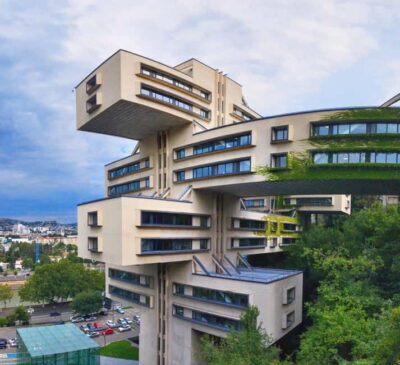
Brutalist Tbilisi: Urban exploration and untold stories
Read our review →
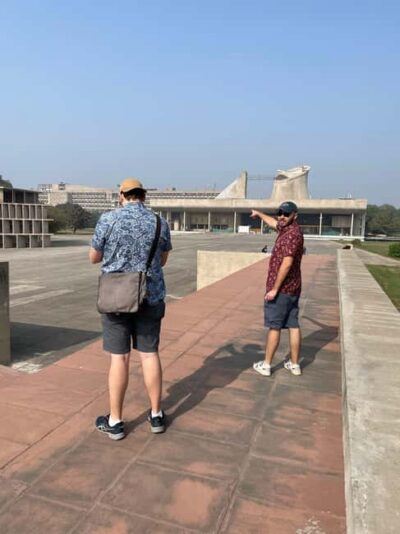
Le Corbusier’s Chandigarh : A Complete Architecture Tour
Read our review →
Architecture of New Belgrade – Brutalism Decoded
Read our review →
Secret Split: Socialist Architecture & brutalism – Urban Utopia
Read our review →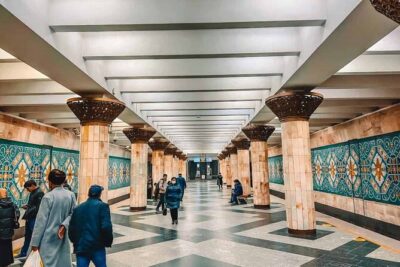
Tashkent Soviet Architecture (Modernism) and Subway station tour.
Read our review →
Belgrade: Space architecture tour – brutalist architecture
Read our review →
Bishkek : USSR History, Soviet Architects ,Statues & Mosaics
Read our review →Browse the lists this tour appears in