
REVIEW · COPENHAGEN ARCHITECTURE TOURS
Copenhagen: Guided Architecture and Sustainability Tour
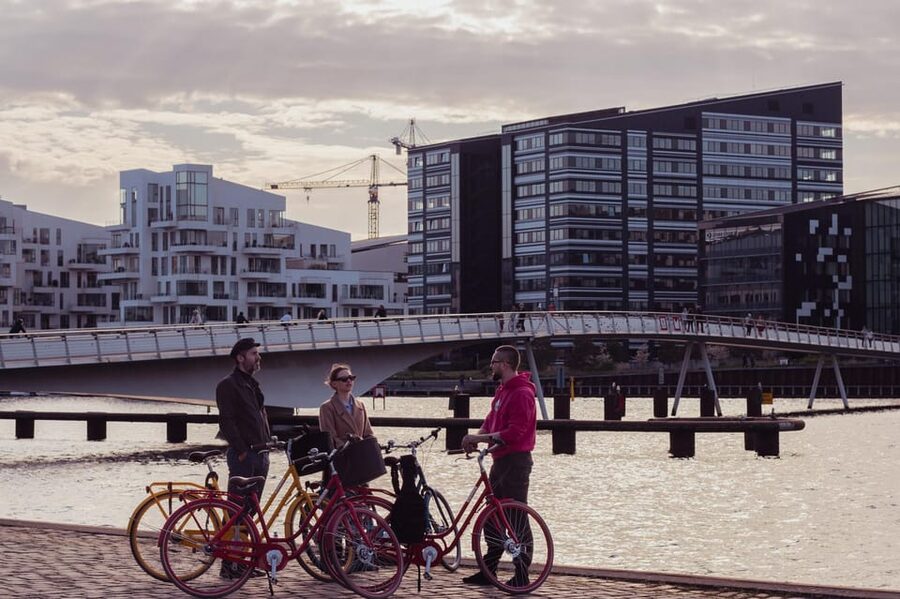
Copenhagen makes city planning feel personal. This three-hour bike tour shows how old industrial areas, new housing, public swimming spots, and car-light streets fit together. I like the 17-kilometer route, which reaches places many first-time visitors miss, and I like the way guides connect striking buildings with everyday life. The main drawback is that it is a fairly long ride, and one past participant found the group management weak enough that some people got lost.
This is not a greatest-hits tour of palaces and pretty squares. It is a look at Copenhagen as a working city, with stops at harbour projects, student housing, bike infrastructure, and former industrial sites. Guides such as René, Jörn, and Josephine have been praised for making the subject clear and personal, though the tour is strongest for modern architecture and urban planning rather than older buildings.
Key points at a glance
- About 17 kilometers by bike: You cover a lot of Copenhagen, so comfortable clothing and a steady cycling pace matter.
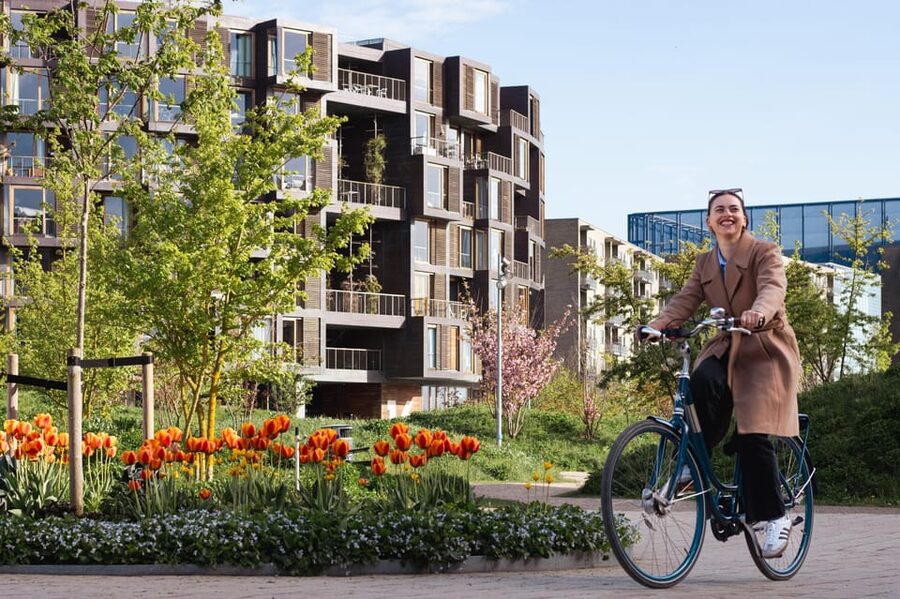
- Modern Copenhagen takes center stage: Ørestad, Kaktus Towers, Tietgen Residence Hall, and the Gemini Residence show the city’s recent design choices.
- Sustainability is explained through real places: You see harbour baths, cycling bridges, public squares, housing, and former industrial districts rather than hearing only general ideas.
- A quieter route beyond the center: Islands Brygge, Amager Fælled, and Ørestad offer a different view from the usual central sights.
- Good bike support: Different adult frame sizes, children’s bikes by request, helmets, rain ponchos, luggage storage, and a lounge are included.
- Best for confident cyclists: The tour runs in all weather and is not suitable for anyone who cannot ride a bike.
Why this tour shows the real Copenhagen
Copenhagen is often praised for bicycles, clean streets, and smart urban design. Those ideas can sound like travel-brochure talk until you see how they affect an ordinary day. This route lets you look at the city through its bridges, housing, public spaces, waterfront access, and old industrial buildings.
I especially like that the tour does not stay in the most polished central streets. You head toward the harbour, Amager, Ørestad, and former industrial zones. That gives you a clearer sense of how Copenhagen has changed and where its ambitions have brought complications.
The architectural focus is mostly contemporary. If you want medieval streets, royal interiors, or a detailed history of older Copenhagen, this is not the right tour. If you want to understand why a city looks and feels the way it does today, it offers much more.
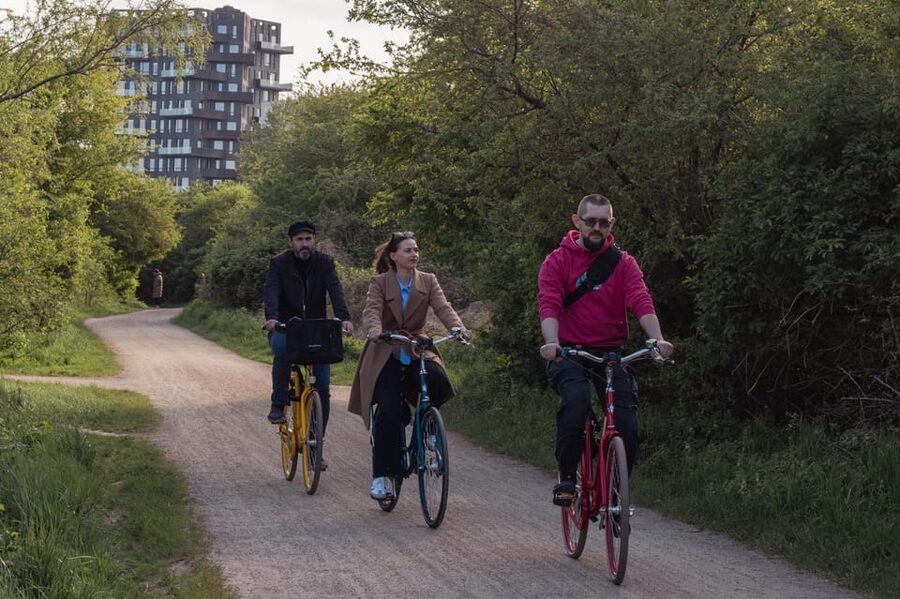
The cycling itself is part of the lesson. You do not simply hear about Copenhagen’s bike culture from a minibus window. You move through it. The city’s commitment to cycling becomes easier to understand when you cross bridges, follow dedicated routes, and travel between districts at street level.
A few more architecture tours in the world worth a look
- Chicago River: 1.5-Hour Guided Architecture Cruise
★ 4.8 · 8,046 reviews - Charleston: History and Architecture Guided Walking Tour
★ 4.8 · 349 reviews - Vienna: Spanish Riding School Guided Architectural Tour
★ 4.8 · 333 reviews
Starting at Tropical Bikes and getting ready
The listed meeting point is Tropical Bikes at Vester Voldgade 2A, though the exact starting point can vary with the option you book. The same shop is also listed as the drop-off location. Allow a little time to get settled before departure, especially if you need a child’s bike or an upgrade.
Adult bikes come in 48, 51, and 56 centimeter frame sizes. Children’s bikes with 24-inch and 26-inch frames are available, but you need to reserve them in advance. Helmets are included, and a rain poncho is available if the weather turns wet.
You can store luggage and use the lounge and toilets before or after the ride. That is a useful touch, especially if you are arriving before check-in or leaving Copenhagen later in the day.
Baskets and phone holders cost 49 DKK each on site. If you want an electric bike, cargo bike, tandem, e-cargo bike, or child seat, reserve it ahead of time. The listed upgrade prices are 249 DKK for an e-bike, 449 DKK for a cargo or tandem bike, 649 DKK for an e-cargo bike, and 119 DKK for a child seat.
The tour runs in any weather. Wear comfortable shoes and clothing suited to the forecast. This is not a quick pedal between two nearby attractions. You will be riding for roughly 17 kilometers over three hours.
Blox and Lille Langebro: a compact introduction
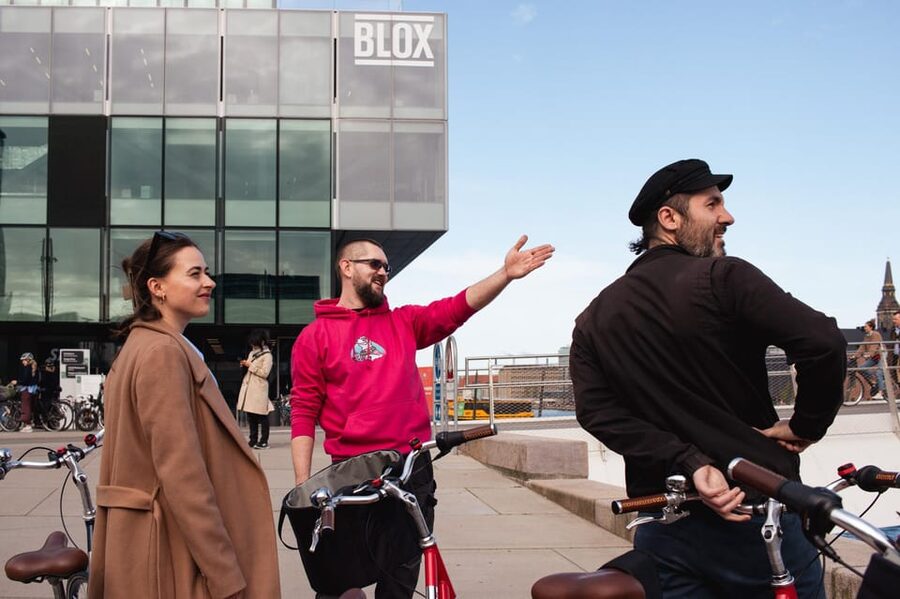
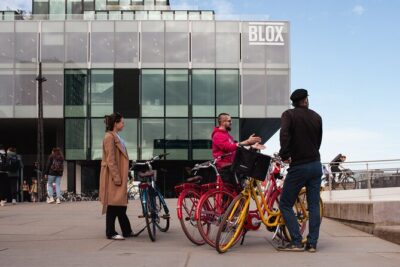
The first architectural stop is Blox, a modern building by the harbour that acts as an early signpost for the tour’s main themes. Your guide spends about 10 minutes here, explaining how contemporary design, public use, and waterfront redevelopment meet in one place.
This is a good opening because it gives you a framework for the rest of the ride. Look beyond the building’s appearance and pay attention to how it relates to the water, nearby routes, and public activity.
A short ride brings you to Lille Langebro. The guided stop lasts about five minutes. The bridge is important not only as a piece of design, but also as part of the network that helps people move around Copenhagen by bike and on foot.
Do not expect a long architectural lecture at every stop. Several visits last only five or ten minutes. The value comes from the rhythm: ride, pause, listen, and then see the next project in context.
Islands Brygge and the harbour’s new public life
At Havnebadet Islands Brygge, you spend about 10 minutes looking at a former industrial waterfront that has become a public destination. The harbour bath is a strong example of Copenhagen trying to make the water part of daily city life instead of treating it as a fenced-off working edge.
This stop also helps explain the tour’s sustainability theme in practical terms. Reusing urban waterfront space for public recreation changes how residents relate to the city. You are looking at planning as a social choice, not just at a photogenic building.
From here, the route moves toward Karen Blixens Plads. The stop lasts around 10 minutes. The square is connected with the University of Copenhagen’s southern campus and offers a look at how open public space can serve students, cyclists, and pedestrians.
The setting also marks the transition toward Ørestad. The city begins to feel newer and more planned. That change is useful to see in person, since Copenhagen’s modern districts can feel quite different from the older center.
Same city, a different building to stand in front of:
- Chicago Architecture River Cruise
★ 5.0 · 15,756 reviews - Chicago River 90-Minute Architecture Tour
★ 4.5 · 9,629 reviews - Chicago Architecture Center River Cruise aboard First Lady
★ 5.0 · 5,536 reviews - Chicago: Architecture River Cruise Skip-the-Ticket Line
★ 4.8 · 4,325 reviews
Ørestad, Tietgen Residence Hall, and Amager Fælled
The ride through Ørestad is listed as a scenic section, with roughly five minutes devoted to views along the way. This is one of the most revealing parts of the route because Ørestad represents Copenhagen’s large-scale modern development.
You see ambitious contemporary buildings beside broad spaces and newer transport connections. The guide explains how the area blends modern architecture with ideas about sustainable living. At the same time, you can judge the results for yourself. New districts may look bold and efficient, but they can feel less intimate than older neighborhoods.
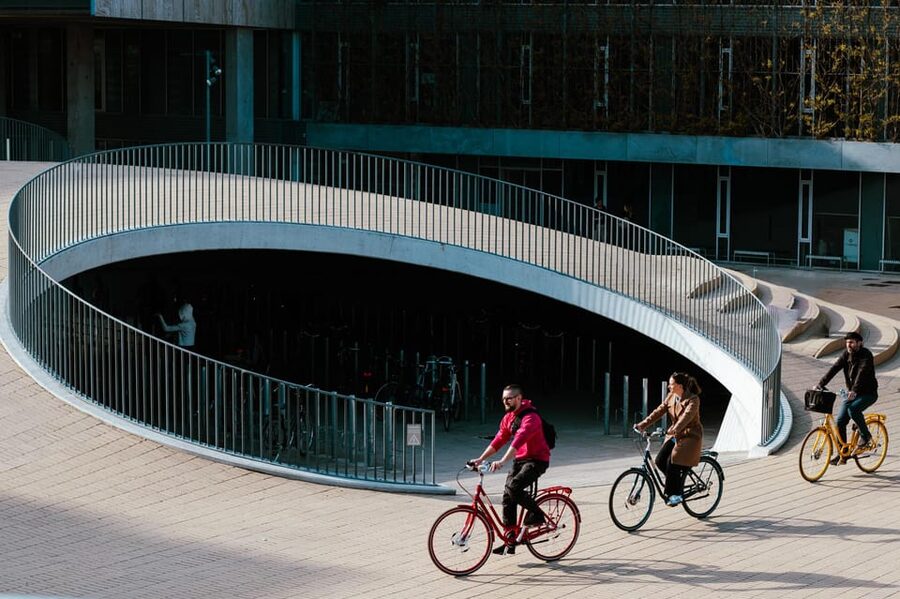
The Tietgen Residence Hall receives a 10-minute guided stop. Its distinctive circular form and shared residential concept make it a natural highlight for anyone interested in student housing and community design. The building is not presented simply as an object to photograph. Its value lies in the way the form relates to shared life and private rooms.
After that comes Amager Fælled, another 10-minute guided stop. This section brings open natural space into a tour otherwise filled with buildings, bridges, and streets. It helps show that Copenhagen’s planning story is not only about constructing new districts. It is also about how built areas relate to nearby outdoor areas.
One participant described seeing both urban and rural-feeling sections during the ride. That contrast is one of the route’s strengths. You get a break from dense development and a better sense of how broad the city’s edges are.
Gemini Residence and Copenhagen’s cycling design
The E/F Gemini Residence is another 10-minute architecture stop. This former industrial structure was converted into housing, making it a useful example of adaptive reuse. Instead of clearing an old building away, Copenhagen found a new role for it.
That idea comes up again and again on this tour: the city’s future is not built only from blank ground. Existing structures can be changed, retained, and given a new purpose. If you enjoy seeing how old industrial forms are folded into modern housing, this is one of the route’s better stops.
The Cykelslangen follows as a scenic cycling section of about five minutes. The name refers to its curving elevated bike path, which separates cycling from other traffic and gives riders a smoother connection through the harbour area.
This is one of the moments when the tour’s subject becomes physical. You can feel the difference between a bike route designed as an afterthought and one treated as a serious piece of city infrastructure. The stop is brief, but the ride itself makes the point.
Kaktus Towers and the return toward the center
Kaktus Towers receives about 10 minutes of guided attention. The pair of residential towers is among the route’s more eye-catching modern projects, with a strong visual identity that makes them easy to remember.
Here, your guide can discuss how contemporary housing tries to combine density with design. The buildings also show the limits of modern architecture tours: an unusual shape can attract attention, but the more useful question is how people live in and around it.
The route then turns toward Enghave Plads, another 10-minute stop. This is a chance to look at a public square in a more established part of the city. The contrast with Ørestad matters. You can compare a newer planned district with a place shaped by an older neighborhood pattern.
The final guided stop is Israels Plads, also allotted 10 minutes. The square has been transformed into a public space that connects historic surroundings with greener, more people-focused planning. It is a fitting end because the tour has moved from new construction to reuse, public access, cycling, housing, and civic space.
After Israels Plads, you return to Tropical Bikes. The exact route and drop-off arrangement depend on the option booked, but the listed return point is Vester Voldgade 2A.
The guides make a major difference
This tour depends heavily on the guide. Architecture can become a dry parade of names and dates, but the strongest guides make the buildings relate to choices about housing, transport, water, public life, and the quality of daily routines.
René has been praised for being friendly, informative, and careful about cycling safety. Jörn is described as passionate and able to explain how Copenhagen has struggled with the choices behind its current form. Josephine has been singled out for clear explanations and a good sense of humor.
The listed tour languages are English and German. A private group is also available. If you care about a more personal pace or want to focus on a particular architectural interest, that option may be worth considering.
There is one practical caution. One past participant found the group management poor and said some people got lost. That sounds like an isolated concern among otherwise very strong feedback, but it is still worth keeping your eyes on the guide and staying with the group at crossings and turns.
Is the $70 price good value?
At $70 per person, this is not the cheapest way to spend three hours in Copenhagen. But the price includes the bike, helmet, local guide, luggage storage, lounge access, and a carefully arranged route covering several districts.
The value is strongest if you would otherwise rent a bike and try to find these places on your own. You would save the guide fee, but you would need to plan the route, work out the cycling connections, identify the buildings, and understand how they fit into Copenhagen’s planning story.
It is also good value for repeat visitors who have already seen the central sights. For a first visit, I would compare it with your other priorities. If you want castles, museums, and old-town streets, spend your money elsewhere. If you want to understand present-day Copenhagen, the route gives you a lot of material in a short time.
The public score is 4.8 from 73 reviews, with particularly strong praise for the guides, the bike quality, the safety care, and the chance to see places outside the usual tourist circuit. The one lower assessment pointed to limited coverage of earlier architecture and weak group control. Those are fair limits to keep in mind.
Who should book this ride?
I would recommend it to confident cyclists, architecture fans, urban planners, design students, and anyone who wants to see how Copenhagen works beyond the postcard center. It also suits people who like a guide with opinions and context rather than a simple list of building names.
Families can consider it if children can manage the distance and a suitable bike is reserved in advance. The child-bike sizes are listed, but the tour is still 17 kilometers and runs in all weather, so judge your family’s cycling ability honestly.
I would not choose it if you cannot ride a bike, dislike cycling in uncertain weather, or want a relaxed sightseeing trip with minimal physical effort. It is also less suitable if your main interest is medieval or royal Copenhagen.
FAQ
How long is the Copenhagen architecture and sustainability tour?
The tour lasts three hours and covers roughly 17 kilometers by bike.
What languages are available?
The live guide is available in English or German.
Where does the tour start?
The meeting point can vary depending on the option booked. Tropical Bikes at Vester Voldgade 2A is listed as a starting and drop-off location.
Are bikes included?
Yes. Adult bikes in 48, 51, and 56 centimeter frame sizes are included, along with helmets.
Are children’s bikes available?
Yes. Children’s bikes with 24-inch and 26-inch frames are available, but you need to reserve them in advance.
Is an electric bike included?
No. An e-bike is a paid upgrade listed at 249 DKK, and it should be reserved in advance.
Does the tour run in bad weather?
Yes. The tour starts in any weather. A rain poncho is included, but you should wear suitable clothing and comfortable shoes.
Can I cancel the booking?
You can cancel up to 24 hours in advance for a full refund. The activity also offers reserve-now, pay-later booking.
Should you book it?
Book this tour if you want Copenhagen explained through the way people move, live, and use public space. The best parts are the less familiar districts, the strong local guides, and the chance to connect design with real city policy.
Skip it if you want old Copenhagen, a short ride, or a weather-proof activity. For the right cyclist, though, $70 buys more than a bike rental. It gives you a guided route through Copenhagen’s recent past and possible future, with enough practical detail to change the way you see the city afterward.
Just added in the world
- Wilmington History and Architecture Tour★ 4.8 · 18 reviews
- New Orleans : Garden District Architecture Walking tour★ 4.8 · 5 reviews
- Washington DC: Dupont Circle & Embassy Row Architecture Tour★ 5.0 · 6 reviews
- Washington, DC: Georgetown Architecture Walking Tour★ 5.0 · 8 reviews
- Vicenza: Palladian Architecture Private Walking Tour★ 3.3 · 3 reviews
- Walk & Discover KL’s Architectural and Heritage Gems★ 5.0 · 7 reviews
- Private Colonial Williamsburg Architectural Tour★ 5.0 · 5 reviews
- Unveiling Brno: History, Culture & Architectural Delights★ 5.0 · 2 reviews
Copenhagen Architecture Tours, compared.
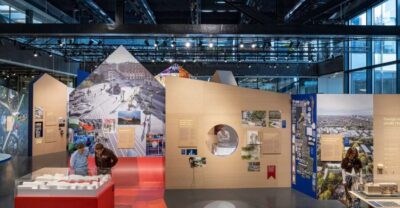
Copenhagen Architecture and Sustainability Tour with local Guide
Read our review →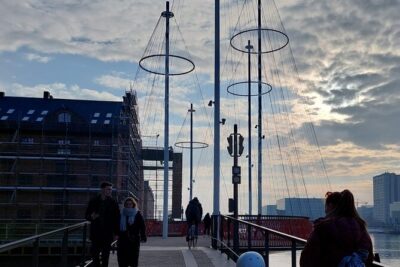
Copenhagen City, Old Town, Nyhavn, Architecture Walking Tour
Read our review →
Copenhagen City, Old Town, Nyhavn, Architecture Walking Tour
Read our review →Browse the lists this tour appears in