
REVIEW · BAUHAUS AND BRUTALIST ARCHITECTURE TOURS
Brutal Tbilisi — Night Edition: Dark Side of Soviet Architecture
Tbilisi gets stranger after sunset. This private night tour takes you beyond the usual old-town streets to unfinished hotels, monumental concrete buildings, a hillside museum, and a skybridge where an old elevator still climbs through the dark. I especially like the strong architectural focus and the way private transport links far-flung parts of the city. The guide also helps with phone photography, which is useful when the light is low and the buildings are hard to frame.
I also like the human stories behind the concrete. The Arashenda Building is not just an abandoned shell, and the Wedding Palace is not just an odd Soviet relic. Each stop shows how politics, ambition, family life, and survival shaped Tbilisi. The main drawback is clear: this is not a gentle sightseeing evening. Uneven ground, high viewpoints, enclosed spaces, long drives, and emotionally heavy stories make it a poor fit if you dislike heights, darkness, or abandoned places.
At $100 per person, the price makes the most sense for a private group that wants unusual sights and dedicated photography help. Door-to-door pickup in central Tbilisi keeps the evening simple, but the tour runs about three to four hours, and the route can change with traffic, weather, or city events.
Key points to know before booking
- Six striking Soviet-era locations: The route includes Arashenda, the Chronicles of Georgia, the Former Archaeology Museum, the former Ministry of Highways, the Nutsubidze Skybridge, and the Wedding Palace.
- Night lighting changes everything: Shadows, scattered windows, and city lights give these buildings a mood you will not get in daylight.
- Private transport saves time: The sights are spread across Tbilisi, so a car is far more practical than trying to connect them by public transport.
- Photography is part of the experience: You get photo tips and a professional photographer who can capture portraits and teach you more about your phone camera.
- The route includes height and rough conditions: Expect stairways, uneven ground, an old elevator, suspended bridges, and exposed viewpoints.
- A local guide adds the human side: The best parts are the stories of displaced families, Soviet civic rituals, political change, and everyday life inside bold concrete structures.
Why Tbilisi’s Soviet architecture works better at night
Tbilisi has no shortage of handsome historic streets, balconies, churches, and bathhouses. This tour takes a different road. It focuses on buildings that are strange, unfinished, oversized, or still carrying the marks of the Soviet period and Georgia’s later upheavals.
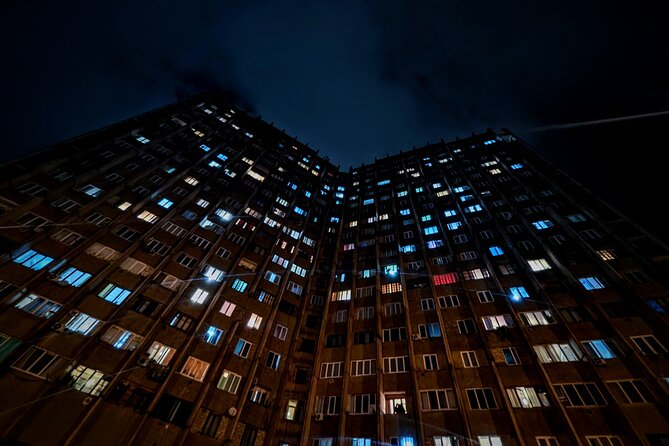
At night, flaws become part of the design. A cracked wall catches a small pool of light. An empty stairway looks ceremonial. A residential block turns into a stack of glowing windows above the city. You are not simply looking at old buildings. You are seeing how architecture changes when its original purpose fails, changes, or survives in unexpected ways.
The route is also a practical way to cover distant parts of Tbilisi. The stops are not arranged for a casual walking tour. Private transportation lets you move from hilltop monument to hillside residential block without spending the evening working out connections.
The tour is offered in English and is private, so the pace belongs to your group. That matters at photo stops. You can take time to adjust your position, ask questions, or listen to a longer story without keeping pace with a large crowd.
More Bauhaus and brutalist tours in the world:
- London: Brutalist Architecture & History Walking Tour
★ 4.8 · 42 reviews - Le Corbusier’s Chandigarh : A Complete Architecture Tour
★ 4.7 · 25 reviews - Architecture of New Belgrade – Brutalism Decoded
★ 4.5 · 24 reviews
Arashenda Building and the story of an unfinished hotel
The first stop, the Arashenda Building, sets the tone. Construction began in the early 1980s, when the building was meant to become the grand Hotel Odishi. Political change and civil conflict interrupted the project, leaving a 17-storey frame unfinished.
The building later became shelter for families displaced by war. That detail changes how you see it. From a distance, the folded wings look like an open book or a bold piece of Soviet design. Up close, the story is less polished: cracked walls, improvised balconies, and signs of people adapting an abandoned project for survival.
The guide explains why locals call it Arashenda, meaning the one that did not get built. This is one of the tour’s strongest stops because the architecture and the human story are inseparable. You are looking at failed state ambition, but also at practical endurance.
The stop lasts about 20 minutes and has no admission charge. From the open stairways, you can also catch a night view toward the Chronicles of Georgia. That visual link is clever. One site represents grand public ambition, while the other shows what happens when plans collapse and people make do.
Take care on the stairs and uneven surfaces. The description does not promise interior access beyond the areas used during the visit, so expect an atmospheric viewpoint rather than a polished museum visit.
Chronicles of Georgia under soft night lighting
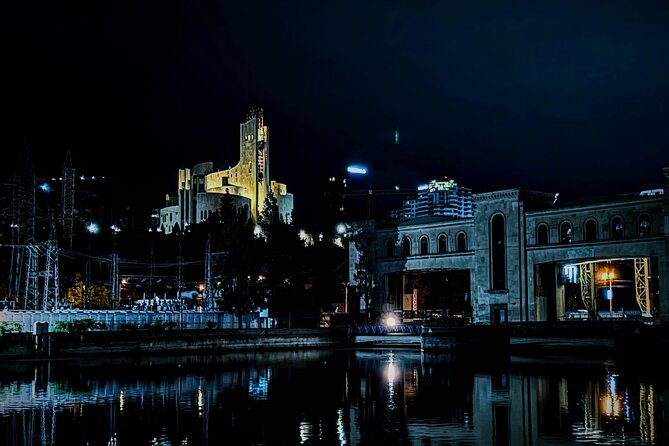
The Chronicles of Georgia is the most monumental stop on the route. Huge columns rise above Tbilisi, carved with figures connected to Georgian kings, saints, and religious stories. In daylight, the scale is impressive. At night, soft golden lighting and deep shadow give the place a much quieter force.
The guide shares the meaning behind the carvings and the legends connected with the monument. This is where the tour moves beyond architecture and into Georgia’s national story. The site feels solemn without needing a crowd or a formal presentation.
Allow about 45 minutes here. That is enough time to walk among the columns, study the carved surfaces, and reach the upper platform for views over Tbilisi and the dark water of the Tbilisi Sea. Bring a phone with a charged battery. Night scenes can drain power quickly, especially if you are taking repeated photos while experimenting with exposure.
The monument is free to enter, which is typical of the stops on this tour. You are paying for the guide, private vehicle, route planning, and photography help rather than entrance tickets.
The possible weakness is weather. The site is exposed, and the tour operates in rain or snow. Comfortable shoes and suitable clothing are not optional here. A cold, wet night can make a hilltop stop feel much longer than 45 minutes.
The Former Archaeology Museum on Digomi Hill
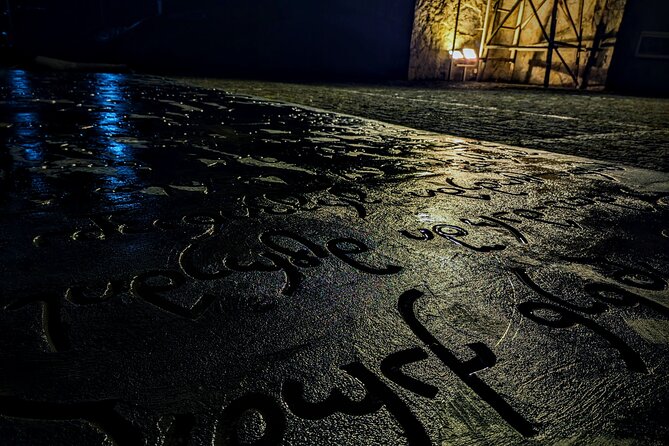
The Former Archaeology Museum is another unfinished chapter. Built in 1988 to house Georgia’s ancient discoveries, it never fully opened its doors. Its location on Digomi Hill gives it a commanding position, but its empty state creates the mood.
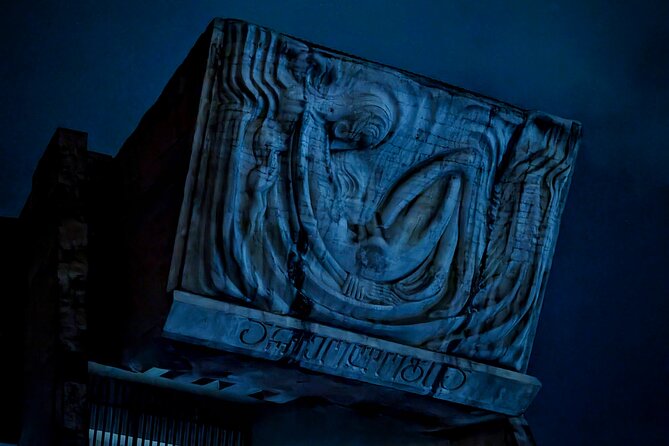
The building’s carved bas-reliefs are especially effective after dark. Figures seem to emerge from the stone as the light shifts across the surface. A broad stairway leads toward the entrance like an approach to an ancient temple, though the structure itself belongs to the late Soviet period.
This contrast is the point. The building tried to give Georgia’s distant past a grand modern home, yet political changes altered its fate before the project could reach its intended purpose. Your guide connects the museum to the changing place of archaeology and national identity in Georgia.
The visit takes about 20 minutes. It is a short stop, but one of the more visually powerful ones. You may find it less satisfying if you want to go inside and see exhibits. This is an exterior architecture visit, built around atmosphere, form, and explanation rather than displayed collections.
More evening tours in the world:
- Chicago River: Guided Sunset Cocktail & Architecture Tour
★ 4.6 · 203 reviews - Night Tapas Walking Tour in Barcelona Modernist Area with Small Group and Dinner
★ 4.5 · 56 reviews - Saint Augustine Evening Architectural Photo Tour
★ 5.0 · 15 reviews - Tirana Evening & Night Walking Tour History and Architecture
★ 4.9 · 15 reviews
The former Ministry of Highways and bold concrete design
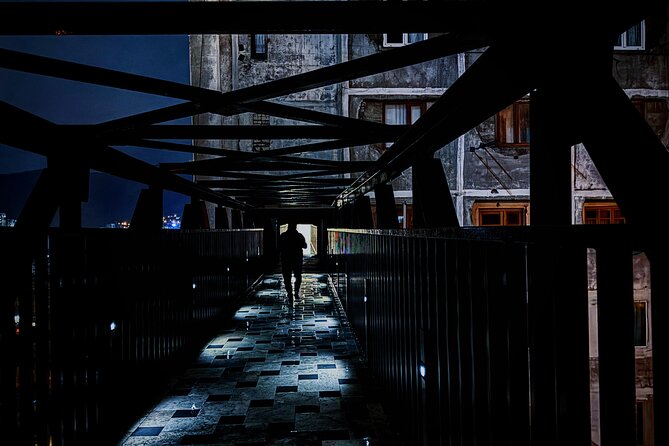
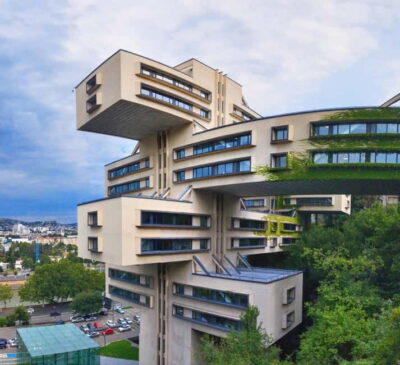
The former Ministry of Highways of the Georgian SSR is perhaps the tour’s most famous architectural sight. Designed in the 1970s, it uses massive concrete blocks stacked above one another, creating the impression of bridges floating over the hillside.
The design was meant to suggest Georgia’s mountain roads and the connections between them. Today, the building houses the Bank of Georgia headquarters, so it is not an abandoned ruin. That gives the stop an interesting edge: a daring Soviet design continues to serve a modern purpose.
At night, illuminated corridors and open spaces give the building a surreal shape. From the right angle, it looks futuristic. From another, it resembles an ancient structure cut into the hill. Your guide helps you find the best photo positions and explains how the building reflects Soviet engineering, political messaging, and Georgian design ideas.
Plan on about 20 minutes. You will mainly view the exterior, so do not expect a long interior visit. The value is in seeing the structure as a whole and understanding how its unusual form works from different viewpoints.
This is a good place to use the photography advice included in the tour. A phone camera can struggle with dark concrete against bright windows. The guide can help you work with angles, exposure, and the available light instead of simply pointing and shooting.
Nutsubidze Skybridge and Tbilisi from above
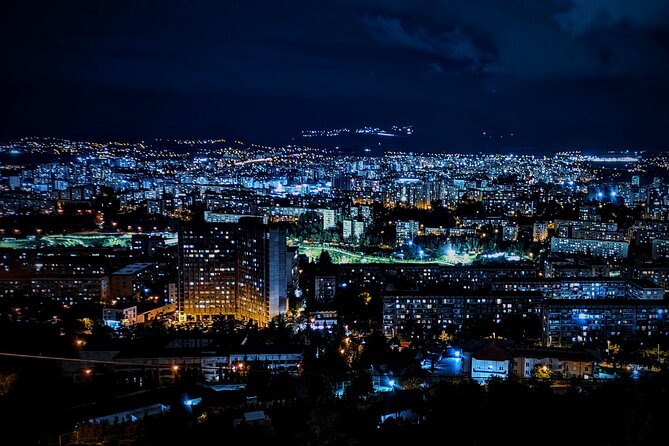
The Nutsubidze Skybridge brings you into a working residential area. Three large apartment blocks on Nutsubidze Plateau are connected by suspended bridges, creating one of Tbilisi’s boldest examples of Soviet housing design.
The setting feels different from the earlier monuments. These are not empty public structures. People still live in the towers, and the bridges remain part of the local environment. At night, faintly lit corridors connect the blocks above the city, while windows flicker below and the upper concrete fades into darkness.
You ride an old elevator operated by a local lift lady. Her presence is a small but memorable detail. The elevator ride is not presented as a theatrical attraction. It is part of how the buildings function, and that ordinary human element makes the massive design easier to understand.
The stop lasts about 45 minutes. You get time to ride up, cross the connecting spaces, and look out over Tbilisi. The views stretch toward modern glass towers, distant hills, and the older parts of the city.
This is one of the tour’s more demanding sections. You may need to deal with heights, enclosed elevator space, narrow corridors, and an environment that feels rough around the edges. If you have claustrophobia or a fear of heights, take the warning seriously. The point is not to force yourself through discomfort for a photograph.
The Wedding Palace, where Soviet ritual met Georgian form
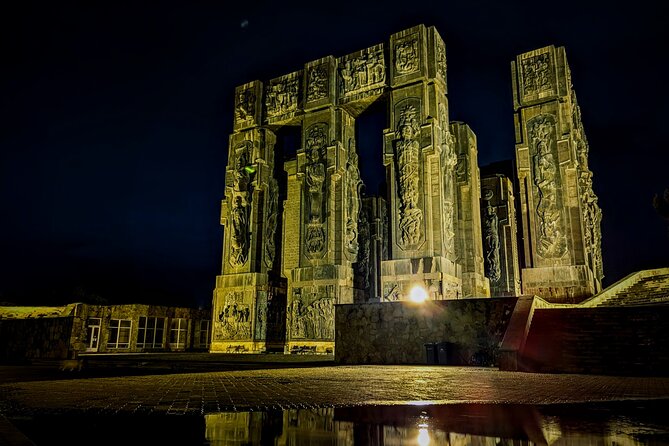
The final stop is Arcadia Georgia, also known as the Wedding Palace or Palace of Rituals. Architect Victor Jorbenadze designed it in 1984 as a place for civil weddings during the Soviet period.
The building was intended to replace religious marriage ceremonies with a civic ritual. Yet its form does not feel plain or bureaucratic. It rises in a spiraling, sculptural shape, with arches that recall Georgian churches and raw concrete that gives it a distinctly modern edge.
That mix is what makes the building memorable. It reflects a system that tried to control public ritual, but it also shows how local architectural ideas and a desire for beauty could survive within that system.
At night, light comes through the windows and creates curved shadows inside and around the building. The mood is romantic, but not sugary. You can still feel the politics behind the place. Couples came here to begin family life in a building meant to give secular authority the emotional weight once held by religion.
Allow around 20 minutes. The visit is mainly about the exterior form, the story, and the night lighting. If you are interested in architecture that carries an argument about society, this is an excellent final stop.
Photography help and the value of a private guide
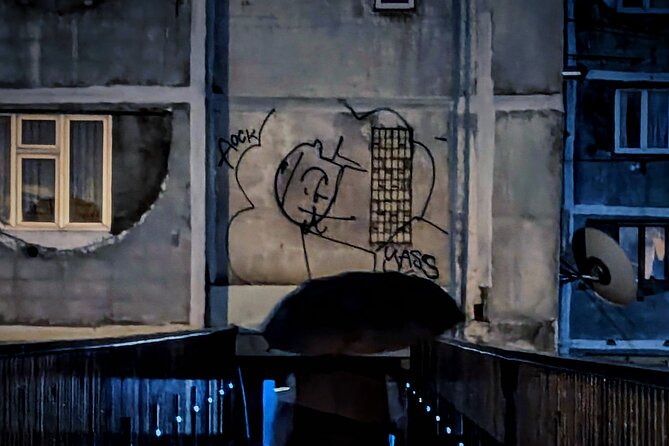
Photography is not an afterthought here. A professional photographer accompanies the experience, and the guide offers practical advice about what your phone camera can do. That combination should appeal to you if you want strong personal photos without carrying specialist equipment.
Night photography can be unforgiving. Bright lights, black skies, concrete surfaces, and distant city views all compete in the same frame. Help with angles and phone settings can make a real difference, especially at the Chronicles of Georgia and the former Ministry of Highways.
The photography service also changes the social side of the evening. You do not have to choose between enjoying the view and asking someone to take your picture. The guide can help capture portraits while also explaining the sites.
The company has used guides including Jonah, Oksana, Aleski, and Alex on its wider Tbilisi tours. The supplied information does not confirm which guide will lead this particular night route, so you should not book expecting a specific person. What you can expect is an English-speaking local guide, photo tips, and private transportation.
Price, timing, and who gets the best value
The cost is $100 per person, with group discounts offered. Since the tour includes private transportation, a live guide, and photography help, the price is easier to justify for a small group sharing the experience than for one person traveling alone.
You are not paying for entry tickets. All six stops list free admission, and meals are not included. The real value lies in reaching difficult-to-connect sites during a carefully planned evening, with someone explaining what you are seeing.
The duration is about three to four hours. That sounds manageable, but the route covers a wide area and includes several short stops. You will spend part of the evening in the vehicle, which is useful for comfort and efficiency but less appealing if you want a long walk through Tbilisi.
Pickup is available from central Tbilisi. You provide your accommodation address after booking, and the guide or driver contacts you by WhatsApp on the day to confirm the location and time. If you stay outside the pickup zone, the meeting point is usually Liberty Square or Europe Square near the vintage tram-café.
The sequence can change because of traffic, weather, or special events. The key locations and viewpoints remain part of the plan, but you should keep the rest of your evening flexible.
Practical concerns before you go
Wear shoes that can handle uneven ground and stairways. Dress for the forecast, but remember that the tour continues in rain or snow. Hilltop sites and exposed viewpoints can feel colder than central Tbilisi.
Bring a charged phone and, ideally, a power bank. You will have repeated photo opportunities, and night photography uses plenty of battery. A small amount of water is sensible, since meals are not included.
The experience is described as unsuitable for people who are emotionally sensitive, afraid of heights, or uncomfortable in enclosed spaces. That is not empty fine print. The route includes abandoned structures, stories connected with war and displacement, old elevators, high bridges, and dark open spaces.
Most people can participate, but you should be comfortable with long drives, uneven terrain, and the possibility of emotionally charged stories. The tour is private, so you can discuss your comfort level with the guide rather than being locked into a large group schedule.
Should you book Brutal Tbilisi Night Edition?
Book it if you want a side of Tbilisi that most standard city tours skip. You will see ambitious Soviet architecture, unfinished projects, working apartment blocks, civic ritual spaces, and dramatic night views. The private car and photography support add real value, especially for a small group.
Skip it if you want a relaxed evening of cafés, illuminated churches, and easy pavement. This tour asks you to accept darkness, rough conditions, height, and stories about political upheaval and displacement.
For architecture fans, photographers, and curious visitors who prefer unusual city experiences, I would choose this over a routine sightseeing loop. Just wear good shoes, bring a charged phone, and treat the warnings about heights and claustrophobia seriously.
FAQ
How long does Brutal Tbilisi Night Edition last?
The tour lasts approximately three to four hours.
Is pickup available from my accommodation?
Door-to-door pickup is provided within central Tbilisi. If your accommodation is outside the pickup area, the company usually suggests Liberty Square or Europe Square as a meeting point.
Is transportation included?
Yes. Private transportation is included, along with a live local guide and photography tips.
Is the tour conducted in English?
Yes. The experience is offered in English.
Are entrance fees included?
All listed stops have free admission, so there are no entrance fees listed for this route. Meals are not included.
Is the tour suitable for someone afraid of heights or enclosed spaces?
No. The experience is not suitable for people with a fear of heights or claustrophobia. It includes high viewpoints, suspended bridges, an old elevator, and enclosed areas.
Just added in the world
- Wilmington History and Architecture Tour★ 4.8 · 18 reviews
- New Orleans : Garden District Architecture Walking tour★ 4.8 · 5 reviews
- Washington DC: Dupont Circle & Embassy Row Architecture Tour★ 5.0 · 6 reviews
- Washington, DC: Georgetown Architecture Walking Tour★ 5.0 · 8 reviews
- Vicenza: Palladian Architecture Private Walking Tour★ 3.3 · 3 reviews
- Walk & Discover KL’s Architectural and Heritage Gems★ 5.0 · 7 reviews
- Private Colonial Williamsburg Architectural Tour★ 5.0 · 5 reviews
- Unveiling Brno: History, Culture & Architectural Delights★ 5.0 · 2 reviews
Bauhaus and Brutalist Architecture Tours, compared.
Brutalist Tbilisi: Urban exploration and untold stories
Read our review →
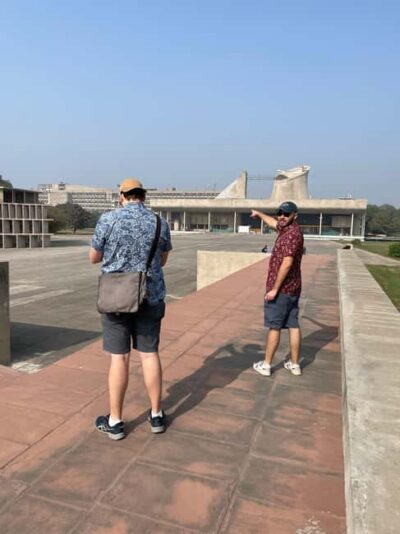
Le Corbusier’s Chandigarh : A Complete Architecture Tour
Read our review →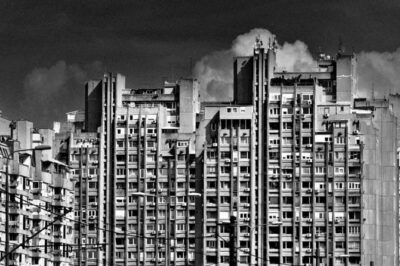
Architecture of New Belgrade – Brutalism Decoded
Read our review →
Secret Split: Socialist Architecture & brutalism – Urban Utopia
Read our review →
Tashkent Soviet Architecture (Modernism) and Subway station tour.
Read our review →
Belgrade: Space architecture tour – brutalist architecture
Read our review →
Bishkek : USSR History, Soviet Architects ,Statues & Mosaics
Read our review →Browse the lists this tour appears in