
REVIEW · NEW YORK CITY ARCHITECTURE TOURS
TriBeCa Architecture & History Walking Tour
TriBeCa rewards slow feet. This 2.5-hour walk shows how a former farming area became a 19th-century industrial center and, later, one of New York’s most expensive neighborhoods. I like the way it connects grand buildings, working warehouses, modern towers, and social history instead of treating TriBeCa as a collection of pretty facades. The stops at the Ghostbusters Firehouse and the hard-to-spot Staple Street sky bridge add some welcome fun.
I also like the focus on firsts, including the A. T. Stewart Building and the Frederick Hotel. Guide Meghan, also called Meghan Sara in one review, is repeatedly praised for her humor, energy, clear explanations, and command of the area. The main drawback is simple: 2.5 hours on foot may feel long in bad weather, and the tour only runs in English.
For $40, I see this as a good-value choice if you want context rather than a quick photo stop. You will walk, listen, look up often, and leave with ideas for brunch, photo spots, and Manhattan speakeasies. It is less useful if your priority is a major interior attraction or a view from above.
Key points to know before booking
- TriBeCa’s story runs from farmland to factories to luxury homes, giving the walk a clear sense of change over time.
- The A. T. Stewart Building and Frederick Hotel help explain New York’s early commercial and hotel history.
- The Ghostbusters Firehouse brings a pop-culture stop into an otherwise serious architecture tour.
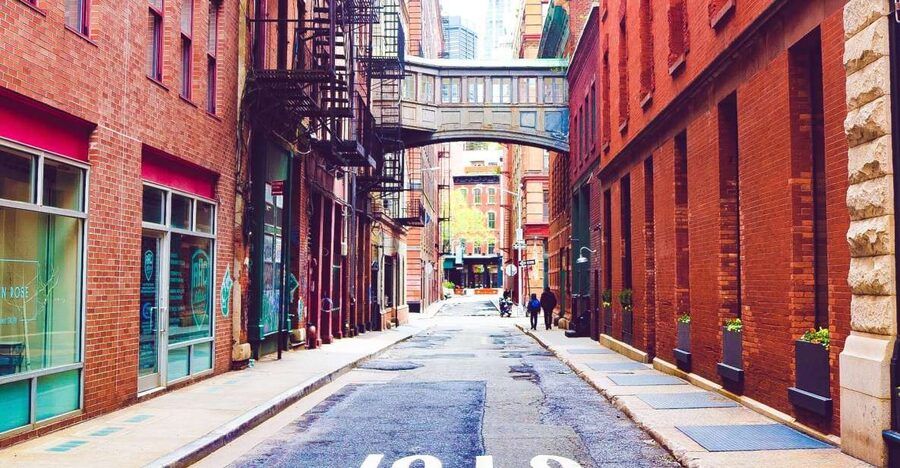
- The Staple Street sky bridge is one of the tour’s best photo opportunities and is easy to miss on your own.
- Air rights and the fight against slavery show that TriBeCa’s past is about law, power, business, and social change, not only buildings.
- Meghan’s lively presentation is a major part of the appeal, especially if you like stories with your architecture.
Why TriBeCa works so well as a walking tour

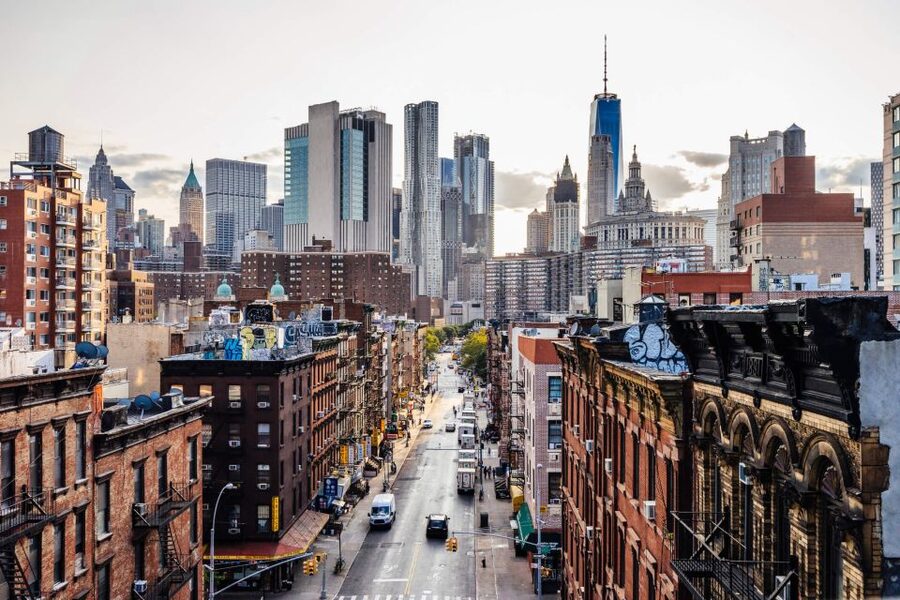
TriBeCa is a good neighborhood for seeing New York at street level. Its name comes from Triangle Below Canal Street, and its streets hold several different versions of the city close together. You can move from old commercial buildings to converted warehouses and then to newer residences without needing a bus or subway between every stop.
That mix gives the guide plenty to explain. You are not just looking at brick, stone, and glass. You are learning why buildings were put there, what businesses used them, how the neighborhood changed, and why certain structures still matter.
I like tours that make you look up. TriBeCa rewards that habit because details may sit above eye level: upper stories, bridges between buildings, altered facades, and signs of earlier uses. The walk also shows how a neighborhood can keep its old bones while changing its purpose.
The route begins at the southern end of TriBeCa and works north. That direction gives the tour a natural flow. You start with the neighborhood’s place in early New York and follow its development into the modern city.
More walking tours in New York City:
- Tribeca Architecture And History Walking Tour
★ 5.0 · 141 reviews - Midtown Manhattan Art and Architecture Walking Tour
★ 5.0 · 32 reviews - Holdouts: A NYC Architecture Walking Tour
★ 5.0 · 31 reviews
From farmland to a 19th-century industrial center
The first major lesson is that TriBeCa was not always the polished residential district you see today. The tour explains its earlier life as countryside before streets, warehouses, hotels, and commerce changed the area.
That shift matters because New York’s growth was not only a story of famous avenues and grand civic buildings. Neighborhoods such as TriBeCa supplied storage, trade, manufacturing, and lodging. The buildings here helped the city work, not merely look impressive.
You will hear how TriBeCa became an industrial hub during the 19th century. Dry goods warehouses played a major role in that change. These structures were built for business, with broad spaces and practical layouts, but many now serve as luxury residences.
That change in use is one of the most useful themes on the tour. A warehouse turned into an expensive home tells you two stories at once. It reflects the original commercial strength of the district and the later rise in property value that helped make TriBeCa one of the wealthiest zip codes in the United States.
I would pay close attention to this part if you are interested in urban change. The tour does not present gentrification or redevelopment as an abstract idea. It shows you the buildings that carried the change.
The A. T. Stewart Building and New York’s early firsts
The A. T. Stewart Building is one of the important architectural stops. The tour uses it to discuss early New York firsts and the city’s growing commercial identity.
Even if you are not an architecture specialist, this kind of stop gives the walk a clear purpose. Instead of hearing a long list of dates, you can connect a building to the rise of retail, trade, and urban ambition. The guide also points out how individual structures helped shape the character of both TriBeCa and New York City.
The route includes the Frederick Hotel as another key example. The hotel helps broaden the story beyond warehouses and merchants. Hotels brought visitors, workers, and commerce into the area, while also showing how New York learned to accommodate a growing population.
Meghan’s style seems particularly well suited to these stops. Her explanations are described as lively, funny, and full of small details. One person noted that she covered architecture, history, and air rights, while still making time for questions. That balance matters because technical subjects can become dry when they are delivered as a lecture.
Warehouses, luxury residences, and air rights
TriBeCa’s converted warehouses are among the most revealing parts of the walk. Their large forms and industrial origins remain visible, even when their present use is far more private and expensive.
The tour explains how historic buildings were adapted into luxury residences. That shift raises practical questions about preservation and development. What gets kept? What gets changed? Who can afford the result? You may not get a full answer to every question in a single walk, but you will have a better way to read the neighborhood.
Air rights are another useful topic. In New York, the space above a property can have real legal and financial value. Hearing about air rights helps explain why some buildings remain lower while others can support new construction nearby or above existing structures.
This is one of the places where a guide adds real value. You could walk past a building without realizing that the most important story is not its facade but the rules governing what can happen above it.
I would choose this tour over a simple photo walk if you want to understand how New York gets built. It gives you a sense of the negotiations between old structures, new homes, private investment, and public character.
More history tours in New York City:
- New York City: Flatiron Food, History, and Architecture Tour
★ 4.8 · 43 reviews - The Story Behind NY’s Evolving Skyline An Architectural Journey Through History
★ 5.0 · 18 reviews - Chelsea Galleries and High Line; Art, Architecture and History
★ 5.0 · 14 reviews - Private Flatiron Food, History and Architecture Tour
★ 5.0 · 8 reviews
The Ghostbusters Firehouse adds a lighter stop
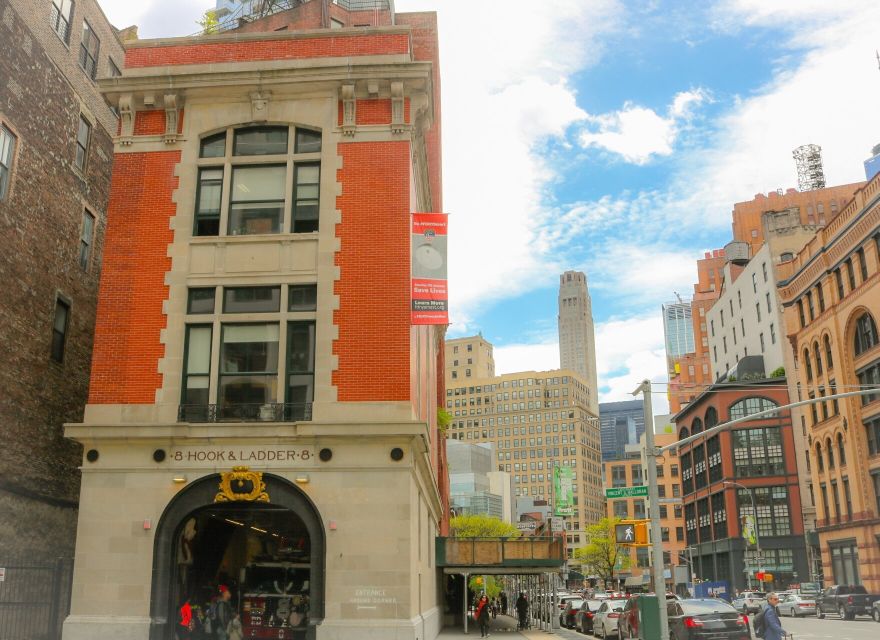
The Ghostbusters Firehouse is the tour’s most playful landmark. The building is famous from the film, but the guide also places it within the neighborhood rather than treating it as a stand-alone movie prop.
That is a smart choice. A good neighborhood walk should leave room for popular culture. TriBeCa’s identity is made from serious history, architecture, business, residents, and the images that draw people to the area.
The firehouse also gives the walk a useful change of pace. After hearing about commercial buildings, hotels, development, and air rights, you get a familiar pop-culture reference. It is an easy place to take a photo and a good reminder that New York streets often serve several roles at once.
If you are a major Ghostbusters fan, this stop may be a highlight. If you are not, it still works as a short, enjoyable pause within the larger story.
Finding the Staple Street sky bridge
The Staple Street sky bridge is another strong reason to take the guided route. It is one of those New York sights that can be difficult to find without knowing where to look.
The bridge links buildings above the street and creates one of TriBeCa’s most memorable views. It is the kind of detail that rewards a local guide because you could pass nearby without seeing it.
This stop is especially useful for photographers. You get an unusual angle on the neighborhood, and the structure shows how TriBeCa combines old industrial forms with creative later additions. It also makes the point that the best urban details are not always on the main sightseeing route.
Do not expect a large attraction with an interior visit. The value is in seeing the structure, understanding its place in the neighborhood, and getting a photo that feels more specific to TriBeCa than a standard Manhattan landmark.
TriBeCa’s less visible role in the fight against slavery
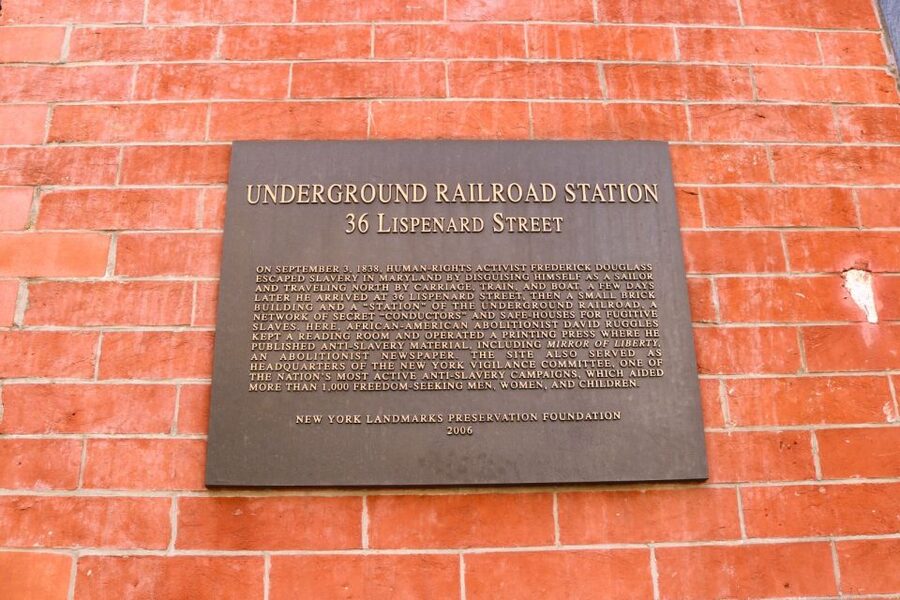
The final part of the walk turns to TriBeCa’s connection with the fight against slavery in the 19th century. This subject gives the tour more weight and keeps it from being only an architecture outing.
New York’s commercial districts were tied to wider national and international debates. The tour explains the neighborhood’s less visible history and the role it played in anti-slavery efforts.
I appreciate this inclusion because streets can hide difficult parts of the past. A building may look elegant today while its surrounding community was involved in arguments over freedom, trade, law, and human rights. You get a fuller picture of the city when those links are included.
This section may be especially valuable if you have already seen the main tourist sights in Lower Manhattan. It moves beyond the familiar story of skyscrapers and finance and gives you another way to understand the area.
What Meghan adds to the experience
The strongest praise is directed at guide Meghan. Descriptions of her presentation repeatedly point to energy, humor, patience, and detailed explanations. She is said to make the neighborhood feel alive while covering architecture, history, atmosphere, and practical details.
That matters on a walking tour. Buildings do not speak for themselves, especially when their original use is no longer obvious. A guide has to keep the pace moving while giving you enough information to remember what you saw.
You should also expect room for questions. One account specifically notes that Meghan was willing to answer questions and that the walk included two short breaks. That is helpful during a 2.5-hour outing, though you should still wear comfortable shoes.
The tour’s perfect 5 out of 5 rating from 37 reviews supports the idea that the guide is a major strength. The praise is consistent rather than focused on one isolated feature. People point to the explanations, the fun atmosphere, and the discovery that TriBeCa contains more history than expected.
Price, timing, and practical comfort
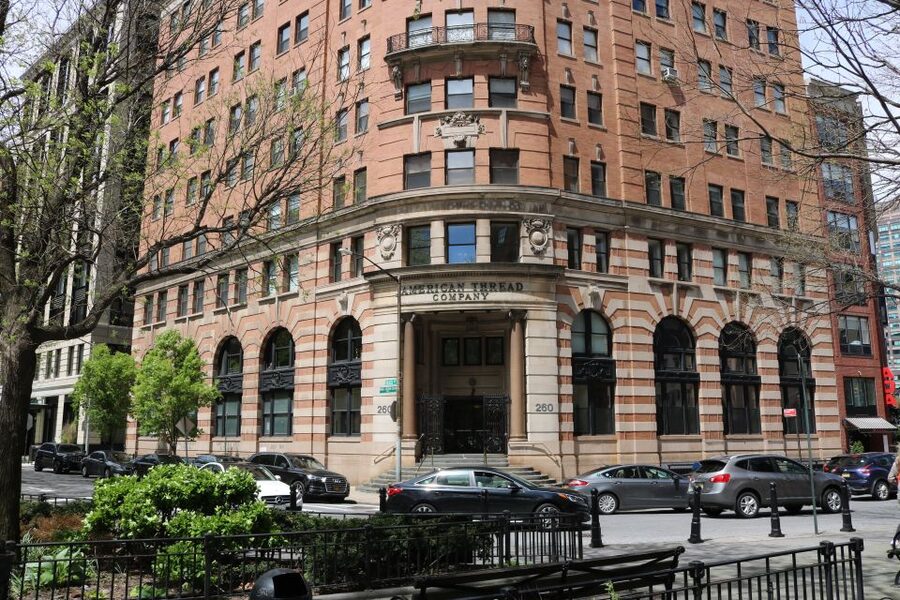
The price is $40 per person. For 2.5 hours, that works out to about $16 per hour before considering the guide’s local recommendations and route planning. I consider that fair for a small-area walking tour with a certified New York City guide, especially if you would otherwise spend time trying to locate the sky bridge and identify buildings on your own.
The tour is usually offered in the morning. That timing can work well if you want to continue exploring Lower Manhattan afterward. The meeting point is marked by a black Metro Tours umbrella, with nearby subway options at Brooklyn Bridge City Hall, City Hall, and Park Place.
You should bring comfortable shoes and clothing suited to the forecast. Tours go out in rain or shine. If the weather becomes too severe, you will be contacted by email, phone, or text with the choice to rebook or receive a full refund.
The experience is wheelchair accessible, which is important to know before booking. The tour is conducted in English, and no other language is listed.
You can cancel up to 24 hours before the start for a full refund. You can also reserve now and pay later, which helps if your New York schedule is still moving around.
Who should book this TriBeCa walk?
I would recommend this tour to you if you enjoy architecture but do not want a specialist lecture. The guide explains enough about design, development, and building use to make the streets more readable without requiring prior study.
It also suits first-time visitors who want a neighborhood experience away from the biggest attractions. TriBeCa is close to major Lower Manhattan sights, but the walk gives you a more local-scale view of the city.
History fans will appreciate the industrial past, air rights, early commercial buildings, and anti-slavery material. Film fans will enjoy the Ghostbusters Firehouse. Photographers should keep the Staple Street sky bridge in mind.
Families and mixed-interest groups may also find the route useful because it shifts between serious history, architecture, pop culture, and practical neighborhood advice. Meghan’s humor and energy should help keep the subject accessible.
I would think twice if you dislike walking, need a tour in a language other than English, or prefer interiors and formal exhibits. This is a street-level experience, and weather can affect your comfort.
Extra neighborhood advice included with the walk
The tour includes suggestions for affordable brunch, hidden Manhattan speakeasies, and good photo locations. That makes the $40 fee more useful than a route that ends at the final building.
The brunch advice may be especially handy because TriBeCa can be expensive. A recommendation for a meal that does not break the bank helps you use the neighborhood without turning every stop into a major expense.
The photo suggestions also give you a reason to keep exploring after the guide leaves. You may want to revisit the sky bridge or look for other details you missed while listening.
These recommendations are not a substitute for a full food tour or nightlife tour. Think of them as practical add-ons that can help shape the rest of your day.
Should you book the TriBeCa Architecture & History Walking Tour?
I would book it if you want New York explained through its streets and buildings. For $40, you get a focused route, a certified English-speaking guide, major architectural stops, the Ghostbusters Firehouse, the Staple Street sky bridge, and a thoughtful look at anti-slavery history.
The best reason to choose it is Meghan’s presentation. Her humor, patience, and command of the subject appear to turn a potentially dry architecture walk into an engaging neighborhood story.
Skip it only if a long outdoor walk does not suit you or if you want a ticketed attraction with an interior visit. For curious visitors who like seeing how a city changes, this is a practical and worthwhile way to spend a morning in Lower Manhattan.
FAQ
How long does the TriBeCa Architecture & History Walking Tour last?
The tour lasts 2.5 hours.
How much does the tour cost?
The price is $40 per person.
Where does the tour meet?
Look for the black Metro Tours umbrella. Nearby subway stations include Brooklyn Bridge City Hall on the 4, 5, 6, J, and Z lines, City Hall on the R and W lines, and Park Place on the 2 and 3 lines.
In which direction does the tour go?
The walk starts at the southernmost point of TriBeCa and continues north.
What language is the tour conducted in?
The live tour guide speaks English.
Is the tour available in the morning?
The tour is usually available in the morning.
Is the tour wheelchair accessible?
Yes, the tour is wheelchair accessible.
What should I bring?
Bring comfortable shoes and clothing suitable for the weather. Sunscreen and an umbrella may also be useful.
Does the tour operate in bad weather?
Tours go out rain or shine. If conditions become too severe, you will be contacted by email, phone, or text with an option to rebook or receive a full refund.
Can I cancel for a full refund?
Yes. You can cancel up to 24 hours in advance for a full refund. You can also reserve now and pay later.
Just added in New York City
- Race to the Sky: NYC Architecture Tour With SUMMIT One Ticket★ 5.0 · 3 reviews
- New York Soho and the Village Art and Architecture Tour★ 5.0 · 4 reviews
- Chelsea and the High Line NYC Architecture Walking Tour★ 5.0 · 6 reviews
- Private Flatiron Food, History and Architecture Tour★ 5.0 · 8 reviews
- New York Upper West Side Art and Architecture Tour★ 5.0 · 4 reviews
- New York Upper East Side Art and Architecture Tour★ 5.0 · 3 reviews
- New York Midtown South Art and Architecture Tour★ 5.0 · 2 reviews
- Custom Private New York Architecture, Art and City Tour★ 5.0 · 3 reviews
New York City Architecture Tours, compared.


Around Manhattan Official NYC Architecture Cruise
Read our review →
Art Deco and Architecture Midtown Landmarks Tour
Read our review →

New York City The Official Rockefeller Center Tour
Read our review →
Browse the lists this tour appears in