
REVIEW · NEW YORK CITY ARCHITECTURE TOURS
Holdouts: A NYC Architecture Walking Tour
Look up, and Midtown gets stranger. This compact walking tour explains how stubborn property owners, odd leases, and changing building laws shaped New York’s streets. I especially like the focus on overlooked corners and the small groups, capped at five people, which allow guide Rob to adjust the pace and answer questions. The best moments include Amster Yard, Rockefeller Center, and the remarkable brownstone preserved inside a newer skyscraper.
The main caution is pace. The route covers a lot of ground in two to three hours, and one recent outing felt rushed, with too little time for photographs and questions. You should wear comfortable shoes, arrive ready to walk, and tell Rob early if you prefer a slower look at each building.
Six things to know before you go
- Holdouts explain the city’s odd shapes: Learn how owners who refused to sell altered skyscraper plans and left older buildings surrounded by newer ones.
- The group is very small: A maximum of five people makes this feel more like a guided conversation than a standard city tour.
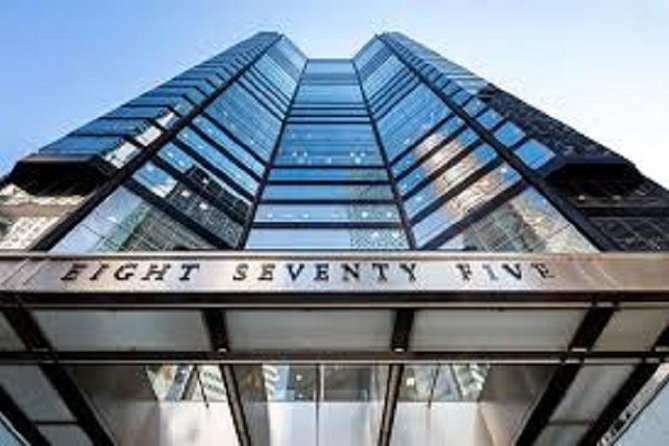
- The route crosses Midtown: You begin at 875 Third Avenue and finish near Fifth Avenue at 22 East 54th Street.
- Grand Central is part of the route: The walk passes through the terminal, with a short informal look at this famous landmark.
- The subject goes beyond architecture: Air rights, privately owned public spaces, urban planning, and tenant leases all enter the conversation.
- Plan for weather and walking: The tour depends on good weather and requires a moderate level of fitness.
Why Midtown’s holdouts matter
A holdout is a property owner who refuses to sell when developers assemble a larger block. In Midtown, that simple act could interrupt a grand plan for a tower, force architects to build around an older structure, or preserve a small piece of an earlier city.
That makes the tour more than a parade of impressive facades. You learn to read the gaps, setbacks, narrow lots, and mismatched buildings that usually fade into the background. Midtown begins to look less like a clean plan and more like a negotiation carried out over generations.
I like this theme because it gives you a useful tool for the rest of your visit. After the tour, you can look up at a tower and ask why it sits where it does, why an older structure survived, or why a public passage appears in the middle of private development.
The guide also connects holdouts to larger planning questions. You may hear about air rights, privately owned public spaces, buildings being held until a tenant’s lease expires, and the effect of major construction on nearby housing. These subjects may sound technical, but they explain why New York often feels both carefully engineered and wonderfully improvised.
More walking tours in New York City:
- Tribeca Architecture And History Walking Tour
★ 5.0 · 141 reviews - TriBeCa Architecture & History Walking Tour
★ 5.0 · 37 reviews - Midtown Manhattan Art and Architecture Walking Tour
★ 5.0 · 32 reviews
Starting inside TPR Holdings
The tour begins in the lower lobby of TPR Holdings at 875 Third Avenue. This first building provides the opening case study because its shape and existence are tied to holdout property.
Expect about 15 minutes here as Rob sets up the route and explains the development story behind Midtown. This introduction has real value: without it, the later buildings can seem like disconnected curiosities.
The opening also requires a judgment call from the guide. Some people will appreciate a clear explanation before walking. Others will want to get outside quickly and begin photographing the city. One recent participant felt too much time went to printed building images at the start, leaving less time for photographs and questions later.
You can help shape the experience by saying what interests you. If you want a brisk introduction, say so. If you enjoy planning details and building diagrams, the opening may be exactly your speed.
Midtown’s odd buildings and unexpected stories
The next section includes an unnamed building described as a fascinating ego building. The point is less a single famous landmark than the way personal ambition can shape a large piece of Midtown.
Another stop concerns a building that was not a holdout but has an unusual structural story. Its main pillar supports sit in the middle of the side rather than at the corners. That detail is easy to miss from street level, yet it shows how a building’s interior structure can affect its outside form.
This is one of the tour’s strengths. You are not simply told which buildings are old or important. You are encouraged to notice engineering choices, unusual proportions, and the clues that reveal how a structure came together.
Wollensky’s Grill and an old factory
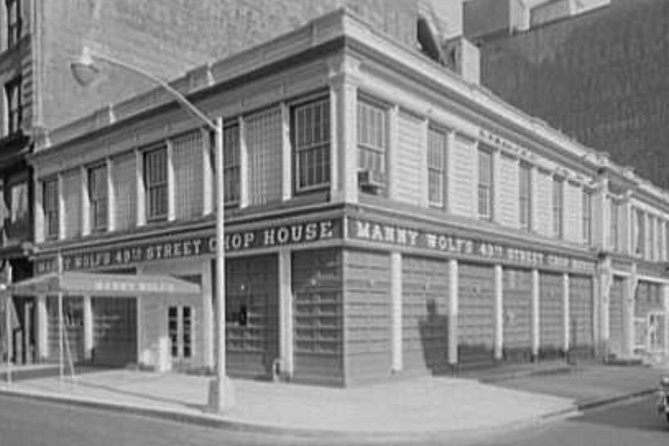
Wollensky’s Grill occupies the site of an old buggy whip factory and is another holdout example. The stop is brief, about five minutes, so do not expect a long interior visit or a full restaurant history.
What makes it useful is the contrast. Midtown is often associated with offices, hotels, and giant commercial towers, but the area once included industrial workspaces and small-scale businesses. A buggy whip factory sounds out of place today, which is precisely why it helps you picture the district before the skyscraper boom reshaped it.
The tour repeatedly uses these contrasts. You move from a small, stubborn remnant to a much larger building and begin to understand how quickly the city changed.
A few more architecture tours in New York City worth a look
- Manhattan Architecture Yacht Cruise
★ 5.0 · 1,395 reviews - NYC: Around Manhattan Official NYC Architecture Cruise
★ 4.8 · 402 reviews - Art Deco and Architecture Midtown Landmarks Tour
★ 5.0 · 142 reviews - 3 Hour Midtown Manhattan Architectural Tour
★ 5.0 · 81 reviews
Amster Yard, a small break in the city
If Amster Yard is open during your tour, you stop briefly inside. The visit lasts about five minutes, making it a quick pause rather than a full exploration.
The setting is described as an oasis and a time capsule, where city life meets an older suburban feel. That mix makes it an important part of the route. You get a sense of how older spaces can survive within a tightly built district, even when the surrounding blocks have been transformed.
Because access depends on whether it is open, treat this as a possible stop rather than a guarantee. The uncertainty is minor, but it is worth knowing if this is one of the places you most want to see.
Sparks Steak House and the stories behind the streets
At Sparks Steak House, the tour pauses at a site associated with a notorious mob hit. The stop also points out an interesting holdout next door.
This is a good example of how the walk blends architecture with social history. The city is not presented as a collection of neutral buildings. Restaurants, crimes, businesses, property deals, and famous addresses all form part of Midtown’s story.
The stop lasts around five minutes, so the emphasis is on context rather than a lengthy discussion. Along the route, you also get notable views of a major landmark and a look toward the Secretariat Building down the block. These short viewing moments help connect individual holdouts to the larger Midtown skyline.
42nd Street and one surviving property
The downtown portion of the walk ends at 42nd Street, where one holdout survived the area’s long transformation.
This is a satisfying point in the route because you can see the central idea in a single place: one older property can remain while much larger projects rise around it. The holdout is not just an old building. It is evidence of a decision that affected the shape of the surrounding streets.
By this point, you should have a clearer understanding of the tour’s main lesson. New York’s appearance often comes from compromise. Developers may have money and plans, but ownership rights, leases, and local conditions can redirect the result.
Grand Central Terminal and the move uptown
The walk then heads toward the west side and the uptown portion of Midtown, passing through Grand Central Terminal. Grand Central is not itself connected to a holdout on this route, but Rob may offer a short informal tour of the terminal.
The stated stop is only about five minutes, so keep expectations realistic. This is not a full Grand Central visit with every room and detail. Instead, it is a chance to place the terminal within the story of Midtown and to enjoy one of New York’s most recognizable public spaces while moving between tour sections.
The route also passes a city-in-a-building that was still under construction when the tour details were written. That point matters because Midtown is not a finished museum. Buildings continue to rise, older properties continue to be negotiated over, and the relationship between public space and private development keeps changing.
Brooks Brothers, Terminal City, and the changing avenue
At Brooks Brothers, you see another historic New York institution whose neighbor was a holdout. The stop is brief, but it reinforces the idea that small properties can influence prestigious commercial blocks.
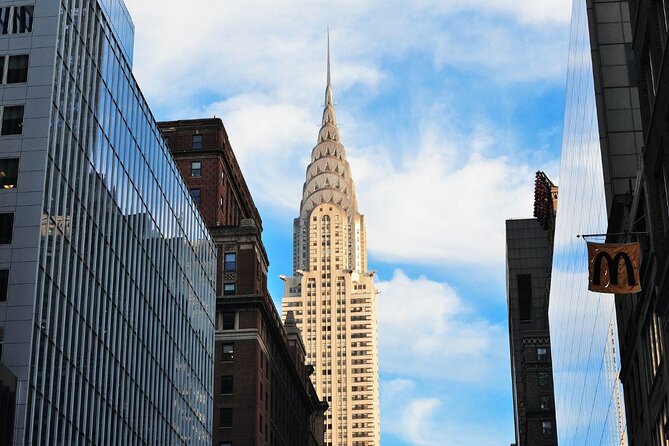
You also pass a crystal and iceberg-like building viewed from the side. Its unusual shape gives the group another chance to talk about how towers respond to their sites, nearby buildings, and development rules.
The route then passes the sole survivor of Terminal City, a group of hotels linked to Grand Central in the period before air travel. Cross-country passengers once arrived by train and could be received by nearby hotels. That detail gives the avenue a wider story, connecting architecture with the way people once moved through the country.
A further stop points out the block where an enormous diamond trade takes place, reportedly about $440 million in diamonds each day. The entrance is one block north, flanked by 12-foot diamond sculptures. You may not spend long here, but it is a memorable reminder that Midtown includes specialized commercial worlds hidden behind ordinary-looking entrances.
Rockefeller Center’s holdout puzzle
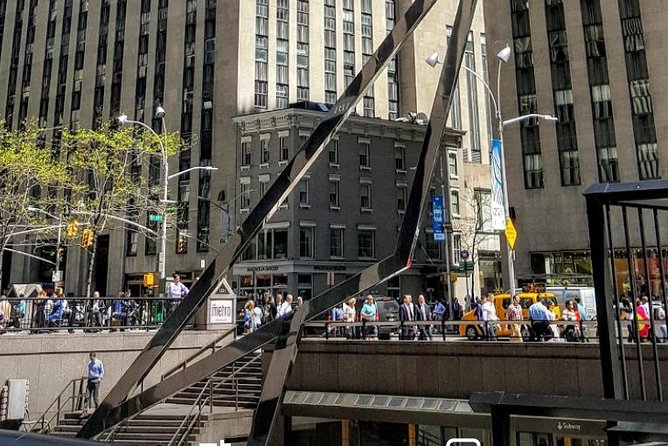
Rockefeller Center receives about 10 minutes and is one of the most substantial stops on the route. Its story includes several thought-provoking holdouts, making it a natural place to explore the tension between a sweeping development plan and individual property rights.
Rockefeller Center can feel familiar if you have already visited New York, but the holdout theme gives it a different purpose. Instead of only admiring the plazas and towers, you consider what had to be acquired, what resisted acquisition, and how the final complex reflects those negotiations.
This is also where the guide’s wider planning knowledge can pay off. Rob has been praised for explaining skyscraper growth, city planning, housing effects, air rights, and privately owned public spaces in a way that connects the details. The strongest outings appear to be conversational, with time for questions and side topics.
The remarkable hold-in at Papillon
The tour ends at Papillon Bistro & Bar, near 22 East 54th Street. This is one of the most compelling examples on the route because it is better described as a hold-in.
A restaurant proprietor negotiated extra square footage so the business could expand into a future skyscraper. Today, you can enter the newer building and stand within the walls of a 19th-century brownstone. That is a striking physical reminder of old and new New York sharing one address.
The stop lasts about five minutes, but it may be the image you remember longest. It turns an abstract lesson about property rights into something you can see and physically enter.
The tour finishes at Papillion Restaurant, so you can continue your Midtown visit from there. The end point is close to major attractions, but the experience itself is about the route between the two addresses, not simply the final building.
How the guide shapes the experience
The guide is identified in the feedback as Rob, with some people referring to him as Robert or Bob. His strongest quality is his command of New York architecture, planning, and local history, paired with a willingness to follow questions.
The small maximum of five people is important. In a larger group, a discussion about air rights or a strange structural support could become a lecture. Here, the format allows more back-and-forth and can make the walk feel tailored.
There is also a tradeoff. A small group does not guarantee a slow pace. The route still covers much of Midtown, and one recent participant felt hurried. Rob acknowledged that the pace depends partly on reading each group, so you should speak up if you want more time for photos or a closer look.
Several participants praised the tour for changing how they see Manhattan. That is a fair description of its purpose. You may not leave with a list of classic attractions checked off, but you should leave noticing the city’s seams.
Is $59 a fair price?
The price is $59 per person, with a professional guide included. For two to three hours in a group of no more than five, that is a reasonable price if you care about architecture, urban planning, or the backstory behind familiar Midtown buildings.
The value comes from interpretation, not admission tickets. The stops are generally viewed from public areas, and the tour does not promise special entry to every building. You are paying for the guide’s research, route planning, explanations, and ability to connect scattered details into one story.
I would consider it good value for someone who has already seen the major Midtown sights and wants a sharper understanding of how the district developed. If you only want landmark interiors or a basic sightseeing walk, you may find the price harder to justify.
The tour is offered in English and normally sells about 10 days ahead, so booking early is sensible if your dates are fixed. Confirmation arrives at booking. Free cancellation is available up to 24 hours before the start time, while poor weather or failure to meet the minimum group size can lead to a new date or a full refund.
Who should book this Midtown walk?
I would choose this tour if you enjoy noticing details other city walks skip. It suits people interested in architecture, urban history, real estate, transportation, and the odd logic of New York’s streets.
It also works well for repeat visitors. You can pass through Midtown many times and still miss the reasons certain buildings survived or why a tower has an awkward neighbor.
You should be comfortable walking for two to three hours and keep your shoes practical. The tour requires moderate physical fitness, is near public transportation, and allows service animals.
I would be more cautious if you want a relaxed photo walk. The route is full, and the guide may keep moving to cover the material. Tell Rob at the beginning that you want time for photos and questions. That simple conversation could make the pace a better match.
Should you book Holdouts?
Book it if you want to understand why Midtown looks the way it does, not just identify its biggest buildings. The small group, strong guide, and unusual subject make this a distinctive choice at $59.
Skip it if you want a broad introduction to all of New York or a long visit inside each landmark. This is a focused architecture and planning walk, with short stops and plenty of explanation.
For the right audience, it offers a useful new way to read Manhattan. Afterward, a strange gap, a surviving brownstone, or a tower with an odd edge will no longer look accidental.
FAQ
Where does the tour begin?
The tour begins at 875 3rd Avenue, New York, NY 10022, in the lower lobby of TPR Holdings.
Where does the tour end?
The tour ends at 22 East 54th Street, New York, NY 10022, near Papillion Restaurant.
How long does the tour last?
The walk lasts approximately two to three hours.
What is the price?
The price is $59 per person.
How many people can join?
The tour has a maximum of five participants.
Is the tour offered in English?
Yes. The tour is offered in English.
Do I need to be physically fit?
A moderate level of physical fitness is recommended, and comfortable shoes are advised.
What happens if the weather is poor?
The experience requires good weather. If it is canceled because of poor weather, you can receive a different date or a full refund.
Just added in New York City
- Race to the Sky: NYC Architecture Tour With SUMMIT One Ticket★ 5.0 · 3 reviews
- New York Soho and the Village Art and Architecture Tour★ 5.0 · 4 reviews
- Chelsea and the High Line NYC Architecture Walking Tour★ 5.0 · 6 reviews
- Private Flatiron Food, History and Architecture Tour★ 5.0 · 8 reviews
- New York Upper West Side Art and Architecture Tour★ 5.0 · 4 reviews
- New York Upper East Side Art and Architecture Tour★ 5.0 · 3 reviews
- New York Midtown South Art and Architecture Tour★ 5.0 · 2 reviews
- Custom Private New York Architecture, Art and City Tour★ 5.0 · 3 reviews
New York City Architecture Tours, compared.


Around Manhattan Official NYC Architecture Cruise
Read our review →
Art Deco and Architecture Midtown Landmarks Tour
Read our review →

New York City The Official Rockefeller Center Tour
Read our review →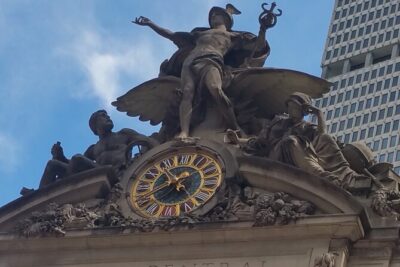
Browse the lists this tour appears in