
REVIEW · NEW YORK CITY ARCHITECTURE TOURS
Custom Private New York Architecture, Art and City Tour
Skyscrapers tell New York’s story. I like the way this private walking tour links colonial streets, modern towers, museums, galleries, and public spaces instead of treating Manhattan as one giant postcard. I also like the freedom to choose a focus, from Wall Street and the World Trade Center to Chelsea’s art scene or Midtown’s famous towers. The main drawback is the walking: this is not a good pick if you have trouble covering city blocks, and $299 per person can feel steep for a short two-hour outing.
Dr. Ivan Shumkov leads the experience, with English, Spanish, French, and Italian available. His background in architecture gives the tour a clear purpose, and the available feedback praises his city insight, detailed explanations, and ability to make architectural history both educational and fun. Bring a camera, and bring a sketchbook if buildings make your pencil itch.
Key points at a glance
- A genuinely private format: Only your group takes part, so the route and pace can be tailored to your interests.
- Four strong area choices: Pick from the Financial District, East Village, Chelsea, or Midtown, each with a different architectural story.
- Architecture meets art: Expect discussion of museums, galleries, public spaces, historic buildings, and major contemporary designs.
- A guide with an architect’s eye: Dr. Ivan Shumkov explains how buildings reflect New York’s growth, changing uses, and competing styles.
- Two to eight hours: A short tour can cover one district, while a longer booking allows more time and broader coverage.
- Useful practical touches: Individual headsets are included, and the tour is available in four languages.
A private way to read New York through its buildings
New York can be hard to understand from street level. You see a church beside a tower, a warehouse beside a glass apartment building, and a grand civic space squeezed between traffic and construction. Without context, it is easy to admire the view and miss the story.
This tour gives you that context. Rather than rushing through a list of famous addresses, Dr. Shumkov discusses how each area developed and why its buildings look the way they do. That makes the experience useful for first-time visitors who want a clear introduction, as well as repeat visitors who have already seen the major sights.
The private setup matters. Your group can focus on photography, design, urban planning, art, or New York history. You can also ask questions without worrying about holding up a large crowd. Professional individual headsets are included, which should help when city traffic and crowds compete with the guide’s voice.
The tour lasts approximately two to eight hours. That wide range signals an important choice: you are not expected to cover every listed district in a single short walk. A two-hour booking makes sense for one neighborhood. A longer booking gives you room to connect several parts of the city, though you should be prepared for a full day on foot if you choose the maximum length.
More private tours in New York City:
- Private Flatiron Food, History and Architecture Tour
★ 5.0 · 8 reviews - Sagrada Familia & Gaudi Tour Private or Small Group with Tickets
★ 4.5 · 1,188 reviews - Barcelona 1.5h Private Old Town, Gothic & Ramblas Walking Tour
★ 5.0 · 318 reviews
Financial District: colonial streets beneath the towers
At Manhattan’s southern tip, the Financial District packs several centuries into a small area. This is where New York’s old street pattern meets a forest of modern skyscrapers, and the contrast gives the district its appeal.
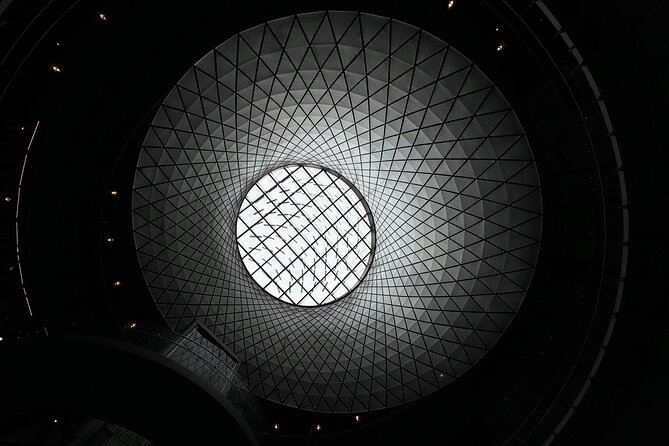
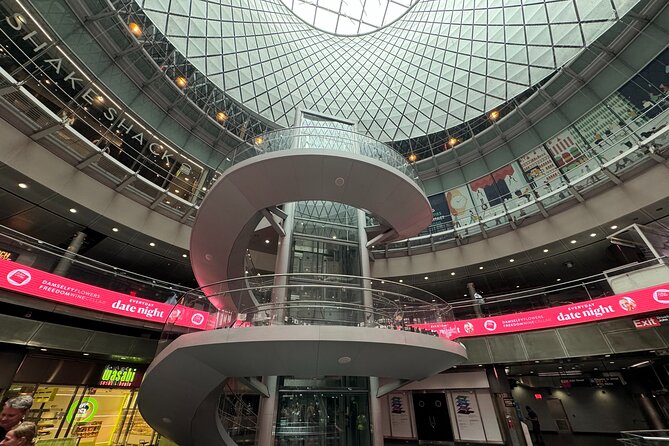
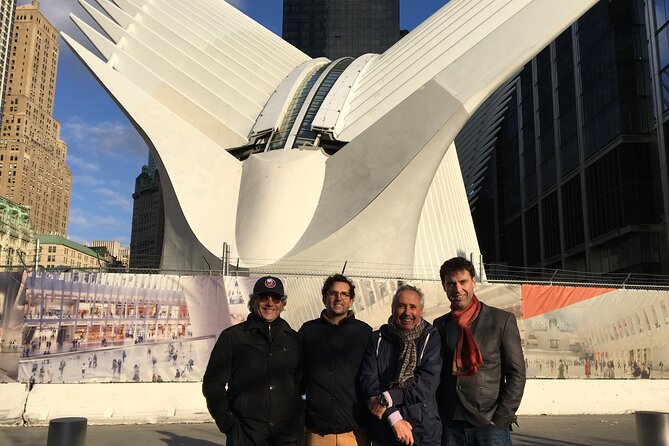
The route can include Battery Park City, Wall Street, Fraunces Tavern, Stone Street, Trinity Church, the World Trade Center, the 9/11 Memorial, Fulton Station, and the East River waterfront. Each place offers a different way to read the city.
Stone Street and Fraunces Tavern point to an older New York, when the southern tip was a port and commercial center rather than the home of global financial firms. Trinity Church adds another layer, with a setting that makes the scale of the surrounding towers especially clear. Wall Street then shifts the conversation toward money, power, and the city’s role in world commerce.
The World Trade Center area brings the tour into the present. The 9/11 Memorial is a place where architecture, memory, and public space carry equal weight. A guide can help you consider not only what the buildings look like, but how a rebuilt district responds to loss and public expectations.
Battery Park City and the East River waterfront offer a different view of downtown development. Fulton Station shows how transportation infrastructure can become part of the city’s visual identity. You will need to allow time for pauses here, since the district contains more than enough material for a thoughtful two-hour walk.
The main limitation is emotional and practical. The 9/11 Memorial can be a serious stop, and the area may feel intense rather than relaxed. It is also a district where crowds, security measures, and busy streets can affect the pace.
East Village, Lower East Side, Bowery, and SoHo
The East Village option reaches into a group of neighborhoods shaped by immigration, industry, commerce, art, and changing property values. The architecture gives you a useful record of those shifts.
In the Lower East Side, tenement apartments show how many people once lived in tight urban blocks. Their design reflects practical pressures: limited space, dense development, and the need to house a growing population. The Bowery adds another chapter, with a history tied to movement, trade, and changing city life.
SoHo changes the architectural vocabulary. Its cast-iron buildings were designed for industry and commerce, but their broad floors and distinctive façades later made them attractive to artists, galleries, shops, and design brands. The result is a neighborhood where the building’s original purpose and present use are easy to compare.
The contemporary examples are just as important. The New Museum by SANAA, the Prada flagship by Rem Koolhaas, and Cooper Union by Morphosis show how newer buildings respond to older blocks. You can look at materials, scale, entrances, and the relationship between a new façade and its neighbors.
This area suits you if you want architecture with social context. It is less about one grand monument and more about how ordinary buildings, commercial spaces, and bold new designs work together. The drawback is that the neighborhoods cover a lot of ground, and the route may feel physically demanding if you try to see every example in one short session.
The listed meeting point is Washington Square Park, even though the chosen district may be elsewhere. Confirm the exact starting instructions when booking, especially if you select an East Village or Financial District focus.
Chelsea and the West Village: art, reuse, and new construction
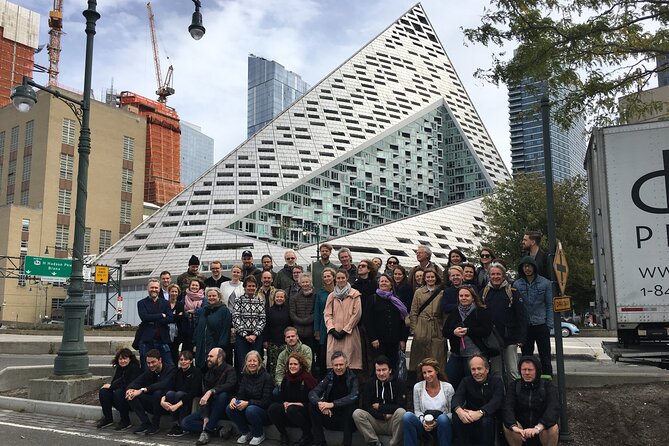
Chelsea offers one of the clearest examples of New York adapting old industrial buildings for new cultural uses. Former warehouses and factories now house galleries, making the area important to the city’s art world.
The route can include Washington Square Park, NYU buildings, the Whitney Museum, the Standard Hotel, the High Line, Hudson Yards, and the Javits Center. It is an ambitious mix, linking a historic village setting, a university district, art institutions, elevated public space, hospitality design, and major new development.
Washington Square Park gives the walk a calmer opening and connects naturally to NYU. The university buildings provide a chance to examine how an academic campus fits into an active city neighborhood rather than sitting apart from it.
The Whitney Museum and Chelsea galleries shift the focus toward contemporary art. Even if you do not enter the museum, its exterior and setting can support a useful discussion about how cultural buildings announce themselves in the city. The gallery district is especially good for showing how architecture can change use without erasing an older structure.
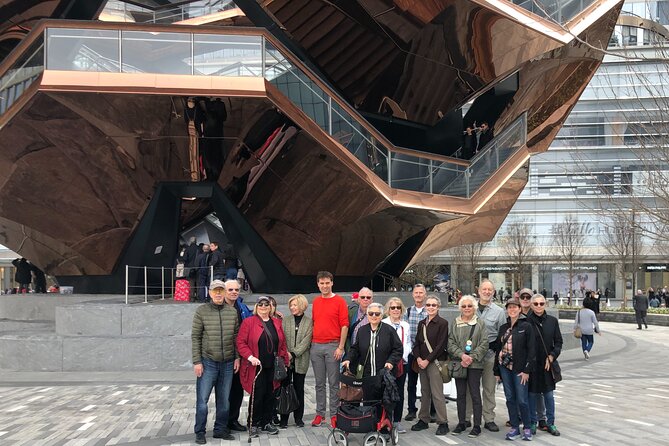
The High Line brings public space into the discussion. It is not simply a place to stroll. It also raises questions about old infrastructure, public access, planting, views, and the effects of major redevelopment nearby. Hudson Yards then offers a sharp contrast, with newer towers and large-scale planning. The Javits Center adds another example of a major public building serving a citywide function.
This stop is best for you if art and current urban design matter as much as historic buildings. It can also be visually rewarding for photographers and sketchers. The tradeoff is scope. Chelsea, the West Village, the High Line, and Hudson Yards are not a compact little bundle, so ask how the guide will shape the route for your available time.
A few more architecture tours in New York City worth a look
- Manhattan Architecture Yacht Cruise
★ 5.0 · 1,395 reviews - NYC: Around Manhattan Official NYC Architecture Cruise
★ 4.8 · 402 reviews - Art Deco and Architecture Midtown Landmarks Tour
★ 5.0 · 142 reviews - Tribeca Architecture And History Walking Tour
★ 5.0 · 141 reviews
Midtown: from early skyscrapers to Times Square
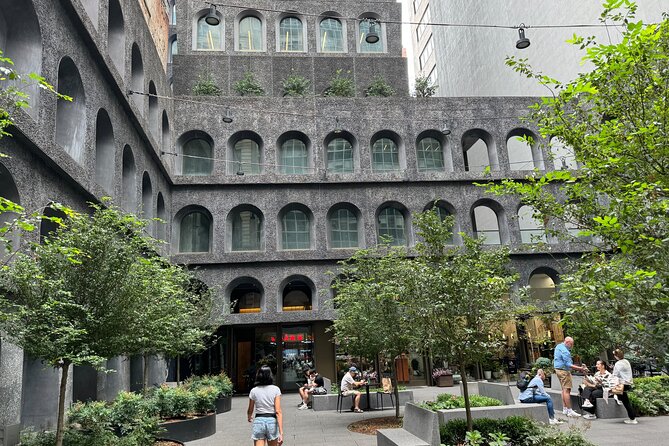
Midtown is the city’s great lesson in vertical growth. Its energy comes from business, entertainment, transportation, hotels, shops, and some of the world’s most recognizable towers.
The Midtown tour traces development from early twentieth-century buildings to newer additions. That approach is more useful than simply stopping for photographs because it lets you see how each era answered the same basic problem: how to put more activity into a limited amount of land.
Times Square supplies the obvious spectacle, with bright signs and constant movement. But the value of a guided walk is learning to look past the lights. The surrounding buildings reveal different ideas about advertising, office space, theater, retail, and public circulation.
The business district adds another layer. Ascending towers change the scale of the street, the amount of daylight, and the way people experience the sidewalk. A guide with an architect’s training can point out details that are easy to miss when you are focused on getting from one famous address to the next.
This option may be the best introduction for a first visit because Midtown gathers so many familiar images in one broad story. It is also the area most likely to feel crowded and hectic. If you prefer quiet streets and small historic buildings, Chelsea or the Financial District may suit you better.
The published feedback is especially strong on the Midtown experience. Dr. Shumkov is praised for explaining the evolution of the city’s iconic buildings and making the walk both fun and educational. That combination matters here, since Midtown can otherwise become an exhausting parade of tall façades.
What the $299 price really means
At $299 per person, this is not a budget walking tour. The value depends heavily on your group size, chosen duration, and interest in architecture.
For one person or a couple, the price is a serious splurge. For a larger private group, the per-person cost may feel easier to justify because you are paying for a dedicated guide rather than joining a large public walk. The price includes all fees and taxes, an in-person guide, and an individual headset. Tips are not included.
The strongest value comes when you use the private format well. Tell the guide what you care about before the walk. If you want old buildings, request more time for historic districts. If you prefer contemporary design, focus on the New Museum, Cooper Union, Hudson Yards, or Midtown. If art matters most, Chelsea deserves your attention.
A two-hour booking gives you a focused introduction. The longer eight-hour option makes sense only if you want an extensive day and can comfortably walk for that long. Since the listed areas are spread across Manhattan, do not assume that every stop can receive equal attention.
Who will enjoy this most
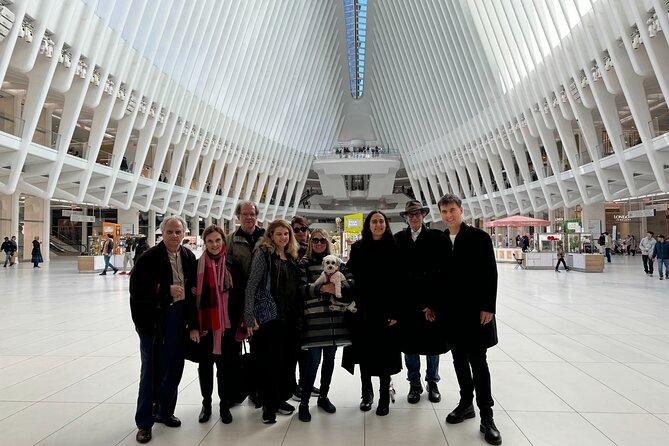
I would recommend this experience to people who want more than a quick photo stop. It suits architecture students, design fans, art lovers, photographers, sketchers, and visitors who enjoy asking why a place looks and functions as it does.
It is also a good fit for families or private groups with a shared interest, since the guide can tailor the conversation. The availability of English, Spanish, French, and Italian makes it more accessible for multilingual groups.
You should think twice if you dislike walking, want a relaxed vehicle-based tour, or mainly want to enter museums and attractions. The supplied information describes an outdoor walking experience, and admission tickets are not listed as included. The tour is not recommended for people with walking problems, although service animals are allowed and the route is near public transportation.
The available feedback gives Dr. Shumkov particular credit for city insight, strong explanations, and an unexpected final surprise. Since that surprise is not described, I would not book solely for it. Book for the architectural instruction and private attention.
Practical details before you book
The meeting point is Washington Square Park, Washington Square, New York, NY 10012. The activity ends back at the meeting point. Because several possible districts are not close to Washington Square Park, confirm the precise route and meeting instructions before setting out.
Confirmation is provided at booking. Most people can participate, but the walking requirement is clear. Wear comfortable shoes, carry water, and leave room in your schedule for stops and questions.
The experience requires good weather. You can cancel for a full refund up to 24 hours before the start time. Cancellations or changes within 24 hours are not refunded or accepted, and a weather cancellation offers either another date or a full refund.
Should you book this New York architecture tour?
Book it if you want a private, idea-rich walk led by someone who can explain how New York’s buildings connect to history, art, business, and public life. I especially like the choice of four very different districts and the option to shape the day around your interests.
I would choose one two-hour neighborhood rather than trying to force all four into a rushed schedule. Midtown is a strong first choice for famous city views and skyscraper history. Chelsea suits art and new public spaces. The Financial District delivers the clearest old-and-new contrast. The East Village, Lower East Side, Bowery, and SoHo are best for neighborhood change and architectural variety.
At $299 per person, this is a specialist tour, not a casual add-on. If that price fits your budget and you enjoy learning how cities work, the private format and Dr. Shumkov’s architectural perspective can make it worthwhile. If you mainly want sightseeing without much discussion, choose a less expensive general tour.
FAQ
How long does the private New York architecture tour last?
The experience lasts approximately two to eight hours, depending on the booking and selected route.
Is this a private tour?
Yes. Only your group participates in the activity.
Which New York areas can the tour cover?
The listed choices are the Financial District, East Village, Chelsea, and Midtown.
Where does the tour meet?
The meeting point is Washington Square Park at Washington Square, New York, NY 10012.
Does the price include admission tickets?
The experience includes all fees and taxes, but the listed itinerary identifies admission as free and does not include paid museum admission.
Which languages are available?
The guide service is available in English, Spanish, French, and Italian.
Can I cancel for a full refund?
Yes. You must cancel at least 24 hours before the experience start time for a full refund. Cancellations within 24 hours are not refunded.
Just added in New York City
- Race to the Sky: NYC Architecture Tour With SUMMIT One Ticket★ 5.0 · 3 reviews
- New York Soho and the Village Art and Architecture Tour★ 5.0 · 4 reviews
- Chelsea and the High Line NYC Architecture Walking Tour★ 5.0 · 6 reviews
- Private Flatiron Food, History and Architecture Tour★ 5.0 · 8 reviews
- New York Upper West Side Art and Architecture Tour★ 5.0 · 4 reviews
- New York Upper East Side Art and Architecture Tour★ 5.0 · 3 reviews
- New York Midtown South Art and Architecture Tour★ 5.0 · 2 reviews
- Chelsea Architecture and Art Tour with Award Winning NYC Guide★ 5.0 · 9 reviews
New York City Architecture Tours, compared.


Around Manhattan Official NYC Architecture Cruise
Read our review →
Art Deco and Architecture Midtown Landmarks Tour
Read our review →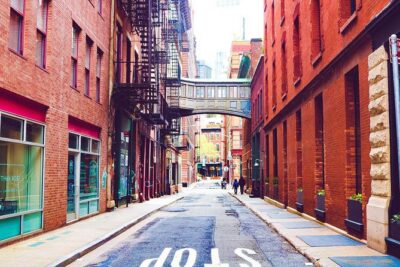
New York City The Official Rockefeller Center Tour
Read our review →
Browse the lists this tour appears in