

REVIEW · SKYSCRAPER TOURS
The Story Behind NY’s Evolving Skyline An Architectural Journey Through History
New York’s buildings tell the city’s story. This on-demand architecture tour by Kitt Garrett traces New York from its Dutch beginnings through the rise of skyscrapers, changing waterfronts, and modern Hudson Yards. You can follow it from home, then use the downloadable tour document to explore the city on foot.
I like the way Garrett connects architectural styles to the events and people that shaped New York. I also like the flexible format: you get nearly two hours of organized instruction without joining a fixed group or racing after a guide. The main drawback is clear: this is not a live walking tour, so you must supply your own street-level exploring and navigation.
The tour costs $25 per group of up to 15 people, which makes it a strong value for a family, couple, or small group. It works especially well before a New York visit, but locals may get just as much from it. Several long-time New Yorkers found that the presentation changed the way they looked at familiar streets.
Key points at a glance
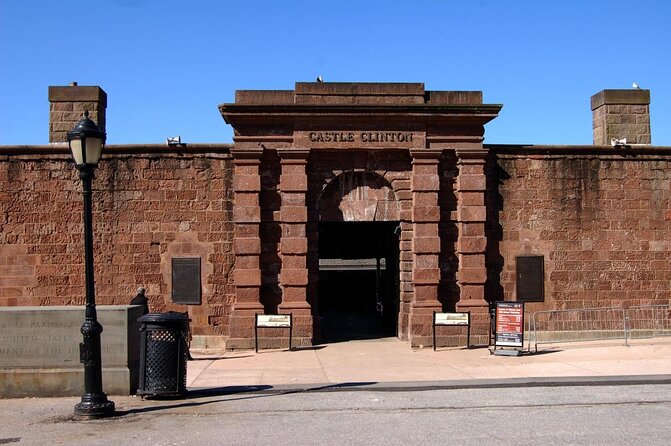
- Begins at Castle Clinton: Start in Lower Manhattan, where New York’s waterfront history and commercial origins come into focus.
- Covers more than one architectural era: Learn to recognize Georgian, Federal, Greek Revival, Italianate, Romanesque Revival, Renaissance Revival, Gothic Revival, Queen Anne, Neo-Classical, and modern design.
- Connects buildings to city planning: The discussion includes zoning, air rights, public transportation, parks, landmarked districts, and the changing waterfront.
- Works on your schedule: The video is self-guided and on demand, with a downloadable document for later use in the city.
- Reaches Hudson Yards: The route ends at 20 Hudson Yards, with shopping, restaurants, and restrooms nearby.
- Useful for locals and first-time visitors: The presentation has enough detail for architecture fans but also gives newcomers a clear way to read the city.
A two-hour lesson in reading New York

The advertised running time is about 1 hour and 58 minutes. Set aside close to two hours if you want to follow the material carefully, pause to examine images, or jot down places you want to see.
Kitt Garrett presents the city through its buildings rather than treating architecture as a list of famous facades. That approach matters. A building becomes easier to understand when you know what was happening when it was designed, what materials were available, who commissioned it, and how the surrounding neighborhood was changing.
The presentation also helps you look up. New York often rewards attention above eye level, where cornices, towers, rooflines, windows, and decorative details reveal a building’s age and purpose. You are not simply told that a structure belongs to a certain style. You learn what visual clues may help you identify that style when walking through another neighborhood.
The scope is ambitious. The tour moves across roughly four centuries of development, from the city’s early Dutch period to the present day. That means it cannot examine every building in equal detail. Instead, it gives you a working framework for understanding the city as you move around it.
This is one of the tour’s best qualities. Afterward, you may not remember every architect or date, but you will have a better sense of how to ask useful questions: Why is this building set back? Why does this district look different from the next one? Why did a certain style become popular at that moment? What changed when transportation, zoning, or construction technology changed?
More skyscraper tours in New York City:
- Chicago Premium Driving Tour with River Boat Cruise and Sky Deck
★ 4.5 · 165 reviews - Chicago Walking Tour: Art Deco Skyscrapers Loop
★ 5.0 · 138 reviews - Chicago Walking Tour: Art Deco Skyscrapers Riverfront
★ 5.0 · 53 reviews
Castle Clinton and New York’s first chapters
The starting point is Castle Clinton National Monument at the southern end of Manhattan. Admission to the monument is free, and the location gives the tour a fitting opening scene.
From here, you are looking toward the harbor and the place where New York’s growth as a trading center began. The story reaches back to Henry Hudson’s arrival in the harbor and follows the city’s development from a small Dutch settlement into a major commercial center.
That setting helps you understand why New York’s buildings cannot be separated from its waterfront. Trade, immigration, transportation, industry, and finance all affected where people lived and worked. As the city expanded, its architecture changed to meet new needs and to express new ideas about status, technology, religion, business, and public life.
Castle Clinton is also a useful reminder that New York was not always a forest of towers. The city’s present form grew in layers. Some districts preserve older street patterns and building types, while newer areas reflect different rules, different construction methods, and different economic pressures.
You will not spend the entire experience inside Castle Clinton. It is the opening point for a wider architectural journey. If you are using the tour in person, treat the monument as your orientation point, then use the digital material to guide further exploration.
From Georgian houses to modern towers
The architectural survey is the heart of the experience. Garrett covers a long list of styles, including Georgian, Federal, Greek Revival, Romanesque Revival, Italianate, Renaissance Revival, Gothic Revival, Queen Anne, Neo-Classical, and modern design.
That list may sound like an architecture class, but the practical value is strong. New York contains examples from many periods close together, often on the same block or within a short walk. Once you understand basic signs of each style, the city becomes easier to read.
The early styles help place New York’s first growth in context. Georgian and Federal buildings reflect a young nation and an older European design tradition. Greek Revival brought a classical public image that suited a growing republic. Italianate buildings added a different approach to windows, cornices, and ornament.
Later styles reflect the city’s increasing wealth, population, and technical ability. Romanesque Revival and Gothic Revival could make churches, civic buildings, and commercial structures feel solid, dramatic, or historic. Queen Anne design brought more varied shapes and decoration. Renaissance Revival and Neo-Classical architecture often conveyed order, authority, and permanence.
Modern buildings introduce another set of questions. Steel frames, elevators, zoning rules, corporate needs, and limited land changed the possible height and shape of New York’s buildings. The skyline was not created by architecture alone. It was also shaped by finance, engineering, transportation, and regulation.
I appreciate that the presentation treats these styles as part of a living city. You are not asked to admire old buildings while ignoring new ones. The subject is change itself, including the tension between preservation and growth.
Why zoning and air rights matter

Many city tours stop at attractive buildings. This one also explains the rules behind the buildings, including zoning and air rights.
You do not need a planning degree to benefit from this section. Zoning affects a building’s height, bulk, use, and relationship to the street. It helps explain why one block may feel enclosed and vertical while another has lower buildings, wider sidewalks, or more open space.
Air rights are especially useful to understand in New York. In simple terms, they concern the unused development potential above a property. That concept can affect how tall a building becomes, how development is transferred, and how new construction fits beside historic structures.
This subject gives the tour a practical edge. Instead of seeing the skyline as a random collection of towers, you begin to notice the decisions and compromises behind it. You also see how planning rules can protect a neighborhood, encourage construction, or produce arguments between residents, developers, preservation groups, and city officials.
The material considers the needs of people who live and work beside skyscrapers and landmarked neighborhoods. That balance is important. New York has to make room for housing, offices, shops, transportation, parks, and public space while also caring for buildings that carry cultural and architectural value.
More history tours in New York City:
- Tribeca Architecture And History Walking Tour
★ 5.0 · 141 reviews - New York City: Flatiron Food, History, and Architecture Tour
★ 4.8 · 43 reviews - TriBeCa Architecture & History Walking Tour
★ 5.0 · 37 reviews - Chelsea Galleries and High Line; Art, Architecture and History
★ 5.0 · 14 reviews
Following the waterfront from industry to recreation
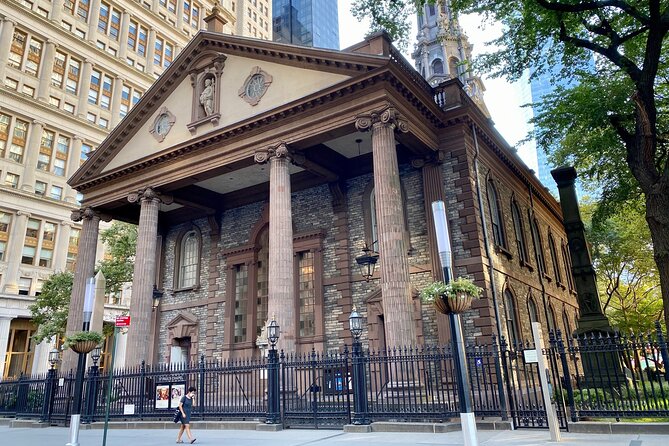
The tour also traces the waterfront’s shift from industrial use toward parks, recreation, housing, shopping, and public destinations.
For much of New York’s history, the waterfront was tied closely to shipping, manufacturing, storage, and commercial work. As those uses changed, large stretches of shoreline became available for new purposes. The result is a patchwork of old piers, new parks, residential districts, cultural sites, and private development.
This part of the presentation helps you understand why some waterfront areas feel dramatically different from older inland neighborhoods. It also introduces the role of public and private partnerships in creating new destinations.
That does not mean every change is simple or universally beneficial. New waterfront development can add public access and useful amenities, but it can also raise questions about affordability, neighborhood identity, and who benefits from new construction. The tour’s attention to planning gives you a better basis for considering those issues.
If you later walk along New York’s waterfront, the downloadable document can help you connect what you see to the larger story. You may notice where an industrial past remains visible, where public access has been added, and where newer development is still reshaping the area.
Ending at Hudson Yards
The journey ends at 20 Hudson Yards, a modern district on Manhattan’s west side. This is a smart final stop because it brings the story into the present.
Hudson Yards represents the kind of large-scale development that would have been difficult to imagine in earlier eras of New York. It raises questions about land use, transportation, private investment, public space, and the city’s desire to keep growing.
The ending also gives you a convenient place to pause. The location has shopping, restaurants, and restrooms, so it works well as a practical endpoint after further exploration. You can stop for a meal, look around the newer buildings, or use the area as a base for continuing your day.
The contrast between Castle Clinton and Hudson Yards gives the tour its shape. You begin near the harbor and the city’s earliest commercial story, then finish in one of its newest major development areas. The city’s architectural evolution becomes visible through that change in setting.
One caution: the experience does not appear to be a guided physical walk from one location to the next. It is an on-demand video and self-guided resource. If you expect a live guide waiting at Castle Clinton, this will not fit your plans. If you prefer to learn first and explore later, the format is much more appealing.
What the downloadable document adds
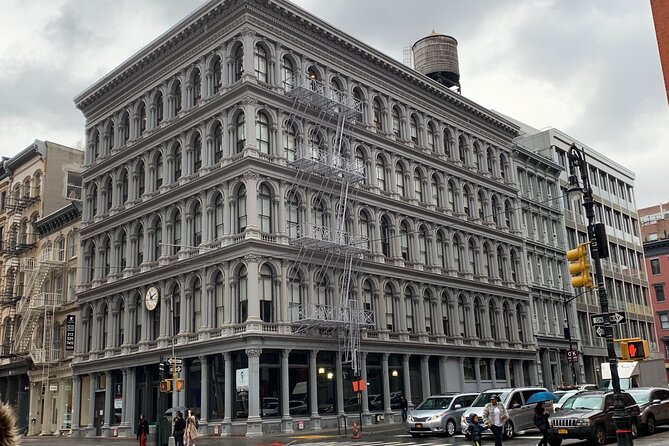
The downloadable tour document is more than a souvenir. It gives you a way to carry the material into the city.
Use it to note street addresses, architectural styles, neighborhoods, and buildings you want to see. The guide’s own advice is practical: keep the document on your device, then use it as you walk around and look for details you may have missed before.
This is particularly helpful for repeat visitors. If you have already seen the major sights, a document like this can give your next walk a purpose. Instead of simply moving from one attraction to another, you can spend an hour examining building tops, entrances, materials, windows, and the relationship between old and new structures.
The material also works as a planning tool before your trip. You can watch the presentation at home, decide which parts of New York interest you most, and then create your own walking days around those subjects.
Who will get the most from this tour
I would recommend this experience to anyone who likes history, buildings, urban planning, or self-guided sightseeing. It is especially useful for:
- First-time visitors who want context before walking around Manhattan
- Repeat visitors who feel they have seen the main sights already
- Local residents who want a fresh way to examine familiar streets
- Architecture students and design-minded travelers
- Families or small groups who can share the $25 fee
- People planning a New York visit from outside the city
The format suits independent learners. You can pause, replay sections, and take notes without holding up a group. It also works for people who cannot be physically in New York at the time of viewing. One long-time New Yorker used the presentation to learn more about a city they had known for more than 16 years, while another native New Yorker watched from the Washington, DC area.
It may be less suitable if you want a live guide, spontaneous questions, or a tightly managed street walk. The tour gives you structure and research, but you must decide how to apply it on the ground.
Price, timing, and practical value
At $25 per group of up to 15 people, the pricing is one of the strongest parts of the experience. A couple pays less than the cost of many in-person attractions. A family or group of friends can share one purchase, making the per-person cost very low.
You should think of it as both a video lesson and a planning aid. If you only watch it once and never use the downloadable material, the value depends on how much you enjoy the presentation itself. If you use it to shape several walks around New York, the price becomes easier to justify.
The mobile ticket keeps the experience simple. You can watch it on a device, and the supporting document can be downloaded for later reference. The tour is private in the sense that only your group participates, but it is not a private live guide service.
Most people can participate, service animals are allowed, and the route is near public transportation. Since the format is self-guided, you can also choose when and where to continue exploring. The experience is non-refundable and cannot be changed after booking, so confirm that a video-based tour matches your plans before paying.
What I think of Kitt Garrett’s approach
Garrett’s strongest quality is organization. The material covers a huge subject, yet the presentation is described as methodical, easy to follow, and carefully researched.
Her enthusiasm also comes through. That matters with architecture, where a long list of names and styles can become dry. The best parts of this experience appear to be the small facts and connections: obscure details about buildings, the reasons behind design choices, the role of air rights, and the way neighborhoods changed over time.
The pacing receives particular praise. For a presentation lasting close to two hours, that is important. You want enough detail to learn something real without feeling trapped in a lecture.
The content also seems to avoid a narrow focus on famous landmarks. It considers neighborhoods, public transportation, parks, zoning, and the waterfront. That makes the experience more useful once you leave the screen and begin walking through the city.
Should you book it?
Book this tour if you want to understand New York rather than simply photograph it. The $25 group price is fair, the subject covers a remarkable span of time, and the downloadable material can continue helping you after the video ends.
I would choose it before a first trip, during a rainy afternoon, or as a preparation tool for repeat visits. It is also a good pick for locals who have spent years passing buildings without knowing why they look the way they do.
Skip it if you want a live guide, a fixed walking route, or personal conversation at each stop. But if you enjoy learning at your own pace and then exploring with sharper eyes, Kitt Garrett’s architectural journey offers a useful, thoughtful way to meet New York again.
FAQ
Where does the tour begin?
The tour begins at Castle Clinton National Monument in New York, New York.
Where does the tour end?
It ends at 20 Hudson Yards, New York, New York. The area has shopping, restaurants, and restrooms.
How long does the tour take?
The experience lasts approximately 1 hour and 58 minutes.
Is this a live guided walking tour?
No. It is an on-demand video and self-guided walking experience. You can watch it on your own and then explore New York independently.
How much does the experience cost?
The price is $25 per group of up to 15 people.
Can I download supporting material?
Yes. A document connected to the virtual tour can be downloaded to your device for reference while exploring.
Is the experience refundable?
No. The experience is non-refundable and cannot be changed for any reason after booking.
Just added in New York City
- Race to the Sky: NYC Architecture Tour With SUMMIT One Ticket★ 5.0 · 3 reviews
- New York Soho and the Village Art and Architecture Tour★ 5.0 · 4 reviews
- Chelsea and the High Line NYC Architecture Walking Tour★ 5.0 · 6 reviews
- Private Flatiron Food, History and Architecture Tour★ 5.0 · 8 reviews
- New York Upper East Side Art and Architecture Tour★ 5.0 · 3 reviews
- New York Midtown South Art and Architecture Tour★ 5.0 · 2 reviews
- New York Upper West Side Art and Architecture Tour★ 5.0 · 4 reviews
- Chelsea Architecture and Art Tour with Award Winning NYC Guide★ 5.0 · 9 reviews
Skyscraper Tours, compared.

Chicago Premium Driving Tour with River Boat Cruise and Sky Deck
Read our review →
Chicago Walking Tour: Art Deco Skyscrapers Loop
Read our review →
Chicago Walking Tour: Art Deco Skyscrapers Riverfront
Read our review →

Browse the lists this tour appears in