REVIEW · ARCHITECTURE TOURS
Lesser Poland Wooden Architecture Trail UNESCO Private Tour from Krakow
Wood and faith shape this quiet corner. This private tour carries you from Krakow into southern Lesser Poland, where timber churches, Lemko tserkovs, village buildings, and old estates reveal a regional building tradition that lasted for centuries. I like the private format, which lets you set the pace, and I like that the route includes six important churches rather than one quick photo stop.
The main consideration is time. Ten to twelve hours is a long day, and the churches are spread across rural areas. You should also expect the exact number of churches to depend on your pace and the day’s plan. The guide may offer four or five stops, or as many as eight or nine if your group wants a fuller architectural survey.
Key points at a glance
- Six major wooden churches: See Lipnica Murowana, Binarowa, Sękowa, Owczary, Kwiatoń, and another fifteenth-century church on the route.
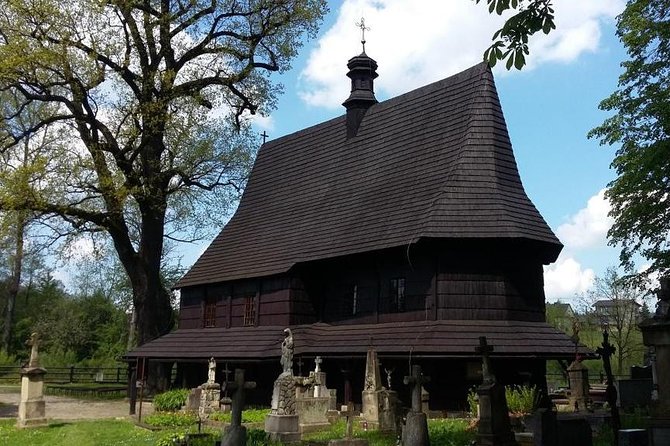
- UNESCO-listed architecture: Lipnica Murowana’s St. Leonard’s Church is one of six wooden churches in southern Lesser Poland recognized by UNESCO.
- Flexible private sightseeing: You can ask for a slower visit or more churches, depending on your group’s interest and available time.
- A full countryside day: The tour lasts about 10 to 12 hours and includes transport in an air-conditioned minibus.
- Hotel pickup in Krakow: Pickup and drop-off at your hotel, hostel, or apartment are included when you provide the full address.
- A strong guide experience: Maciej, also called Matthew, is praised for careful timing, route planning, and extra effort to make the day work well.
Why these wooden churches matter
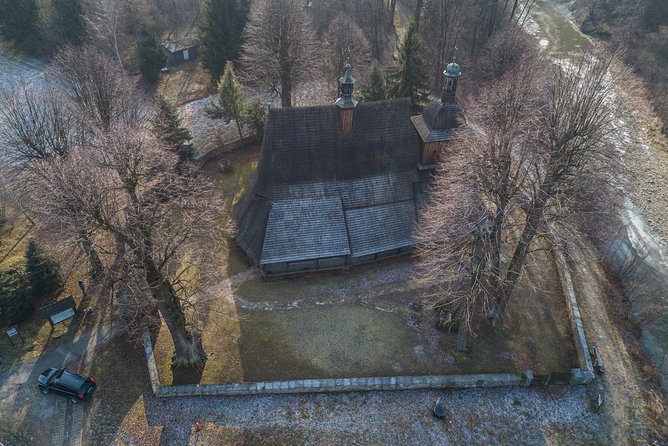
At first glance, a wooden church can seem modest. There is no marble facade or grand city square. Yet these buildings can be remarkably expressive, with steep roofs, timber walls, carved details, painted interiors, and forms shaped by local weather, materials, and religious customs.
Southern Lesser Poland developed a strong wooden-building tradition because timber was available and local builders knew how to work with it. Villages and small towns used wood for churches, homes, farm buildings, manors, and civic structures. The result is not one identical style, but a family of related forms shaped by Catholic, Orthodox, and Lemko communities.
That mix is one of the best reasons to take this tour. You are not simply ticking off old churches. You are comparing different religious traditions and building methods across one part of Poland. Roman Catholic churches such as St. Leonard’s in Lipnica Murowana sit alongside Greek Catholic and Orthodox buildings in Owczary and Kwiatoń.
I also like the way the route moves beyond Krakow’s familiar sights. This is a day for rural Poland, where the setting matters almost as much as the buildings. You see small villages, open countryside, and churchyards rather than another line of city museums.
More private tours in the world:
- Best of Chicago: Architecture & Highlights City Private Tour
★ 5.0 · 94 reviews - Private Harajuku Omotesando Architecture Walking Tour
★ 5.0 · 67 reviews - Private Santa Barbara History and Architecture Walking Tour
★ 5.0 · 56 reviews
Lipnica Murowana and St. Leonard’s Church
Lipnica Murowana is the first planned stop, and St. Leonard’s Church gives the day a strong beginning. Built at the end of the fifteenth century, it is one of the six wooden churches in southern Lesser Poland included on the UNESCO World Heritage list.
The UNESCO label matters here because it recognizes a group of churches as examples of a wider building tradition. St. Leonard’s is not important only because it is old. It helps show how late medieval wooden churches in the region were designed and preserved.
You are scheduled to spend about 30 minutes here. That is enough for a focused visit, but not a long architectural study. If church interiors are your main reason for booking, tell the guide early. The private format gives you a better chance to adjust the pace than a fixed large-group excursion.
The name Lipnica Murowana can be confusing to English speakers because murowana suggests masonry, while the church itself is wooden. That contrast is part of the charm of the stop, but the tour information does not promise a longer visit through the town itself. The focus is St. Leonard’s Church.
The fifteenth-century church on the route
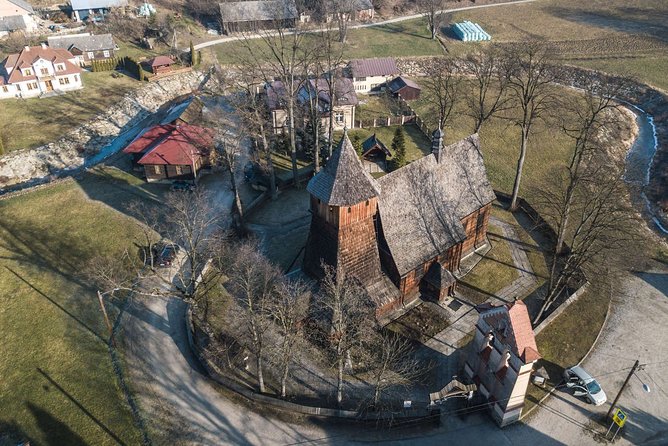
The second stop is listed as Kościół pw. Nawiedzenia Najświętszej Maryi Panny, a wooden fifteenth-century church. The supplied route does not identify the town in English, so you should treat this as a church visit rather than expect a clearly defined town tour.
Its age places it among the early wooden religious buildings that make this route worthwhile. A fifteen-minute photo stop would miss much of the point, so the planned 30 minutes should be used to look at the structure, hear the guide’s explanation, and check whether interior access is available.
This is also where a good guide makes a real difference. A wooden church can reward close attention, but only if someone points out why the roofline, wall construction, interior decoration, or floor plan matters. The tour is offered in English, and professional guide service is included.
Binarowa and late Gothic craftsmanship
St. Michael the Archangel Church in Binarowa is described as one of Poland’s most valuable examples of late Gothic architecture. That makes it one of the most important stops for anyone interested in medieval design rather than only picturesque exteriors.
The church is scheduled for roughly 30 minutes. In that time, I would focus on the contrast between its simple wooden construction and its place within Gothic architectural development. The word Gothic often makes people think of stone cathedrals, so seeing late Gothic ideas expressed in timber is especially useful.
Binarowa also shows why this route works better with explanation. From outside, several wooden churches can appear similar. Their dates, religious roles, decoration, and construction details help separate them. You are moving from a UNESCO church in Lipnica Murowana to a late Gothic example in Binarowa, which gives the day a clear architectural thread.
Interior access is an important practical point. On the described tour, most churches could be entered with a local church guide or an audioguide. Access can depend on the church and the timing, so you should not assume every interior will be open in exactly the same way.
A few more architecture tours in the world worth a look
- Chicago Architecture River Cruise
★ 5.0 · 15,756 reviews - Chicago River 90-Minute Architecture Tour
★ 4.5 · 9,629 reviews - Chicago River: 1.5-Hour Guided Architecture Cruise
★ 4.8 · 8,046 reviews - Chicago Architecture Center River Cruise aboard First Lady
★ 5.0 · 5,536 reviews
Sękowa, the Pearl of Beskid Niski
The village of Sękowa is home to the Church of St. Philip and St. James the Apostles. Built at the beginning of the fifteenth century, it is known as the Pearl of Beskid Niski.
That nickname sets high expectations, but the church earns its place on the route through its strong Gothic wooden form and rural setting. It is another reminder that these buildings were made for working communities, not built as isolated monuments for tourists.
You get about 30 minutes here. I would use the first few minutes to take in the whole exterior, then look more closely at the timber construction and roof shape. If interior access is available, the guided explanation or audioguide can help you understand details that are easy to miss.
Sękowa is also a good point to judge your own interest. If you are fascinated by wooden churches, you may want to add more stops. If you prefer variety, four or five churches may be enough. The guide has reportedly offered the choice of seeing as many as eight or nine churches, with the minimum usually around four or five. That flexibility is one of the strongest reasons to choose a private tour.
Owczary and Lemko religious traditions
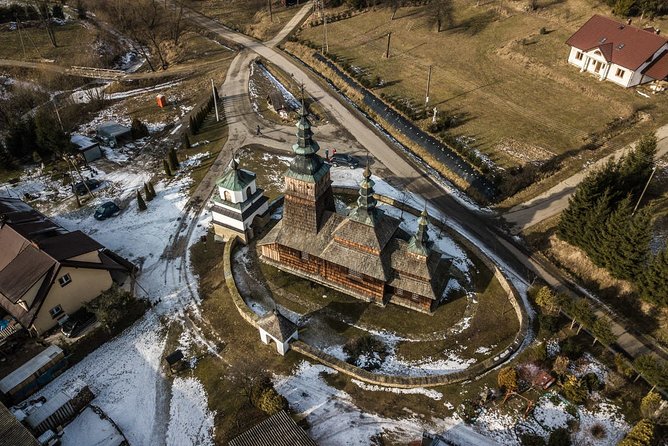
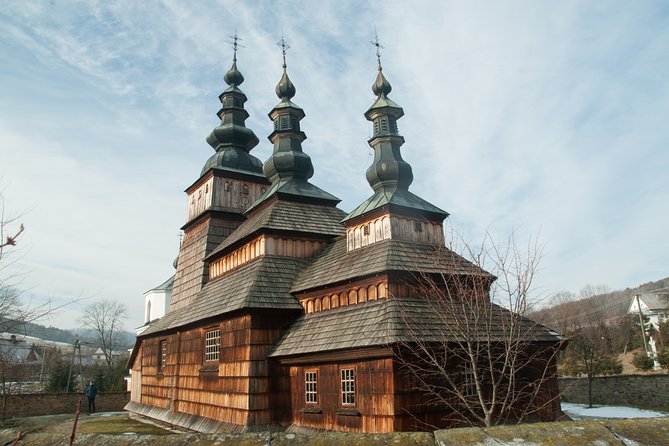
The Greek Catholic Church of the Protection of Our Most Holy Lady in Owczary offers a different view of the region. It is an Orthodox church, also called a tserkov, and is identified as one of the oldest Lemko tserkovs, built in the second half of the seventeenth century.
This stop adds cultural range to the day. Instead of seeing six variations on one Catholic church type, you can compare Roman Catholic buildings with a church shaped by Lemko and Eastern Christian traditions.
The 30-minute visit is short, but the change in religious tradition gives it weight. Ask the guide to explain the building’s role in the local community and how its form differs from the Catholic churches earlier in the day.
The tour description uses both Greek Catholic and Orthodox wording for the building. Rather than getting caught up in a label, focus on what the stop contributes: another religious tradition, another period, and another wooden church form. It makes the route broader and more meaningful.
Kwiatoń and St. Parasceve
The Church of St. Parasceve in Kwiatoń is presented as one of the most beautiful wooden churches in Lesser Poland. The route gives you about 30 minutes to see it.
After several Gothic Catholic churches and the Lemko church in Owczary, Kwiatoń works as a final comparison. You can look back over the day and notice how much the buildings differ in age, purpose, community, and design, even though wood links them all.
The available information does not provide a detailed interior description, so I would avoid booking this tour solely for a particular painting, icon, or furnishing. Its value lies in the building itself and in the way it completes the architectural sequence.
Six stops at 30 minutes each already account for about three hours of sightseeing. Add driving between rural communities, short orientation talks, possible interior visits, and a meal break, and the 10 to 12-hour schedule makes sense. This is not a quick excursion that squeezes in one church before lunch.
The private minibus makes the long day easier
Pickup and drop-off are included from your Krakow hotel, hostel, or apartment. You need to provide the full accommodation name and address when booking. If pickup is not arranged at your accommodation, the listed meeting point is Kiss&Ride Zyblikiewicza at Mikołaja Zyblikiewicza 2 in central Krakow.
Transport is by air-conditioned minibus. That matters on a route with several rural stops because you are not trying to coordinate separate buses or find parking at each church. It also gives your group a private place to regroup between visits.
The tour is private, so only your group participates. That means you can discuss the day’s pace with the guide, ask for more explanation at a favorite church, or decide that another stop is less important than lunch. The schedule is still full, but it is not as rigid as a large coach tour.
The standard operating window is Wednesday through Sunday, with departures arranged between 7:00 and 8:00 in the morning. A prompt start matters. With a route this long, losing an hour in Krakow can reduce the number of churches you can see.
Food, breaks, and the rhythm of the day
Food and drinks are not included, so plan to pay for lunch separately. A full day among rural churches needs a proper break, not just a snack grabbed beside the minibus.
The day described by the tour guide included about an hour for lunch at a village restaurant, where traditional Polish dishes were available. That is useful advice: use the meal to try local food and reset before the afternoon churches. Still, the exact restaurant and break timing are not guaranteed in the supplied information.
The best pace is not necessarily the fastest one. The guide, Maciej, was praised for asking how quickly the group wanted to move and for arranging the day around that answer. If you want eight or nine churches, expect a more streamlined visit at each one. If you choose four or five, you may have more time to look, ask questions, and enjoy the countryside between stops.
Is $299.53 per person good value?
At $299.53 per person, this is not a budget day trip. The price needs to be judged against what you receive: private transport, hotel pickup and drop-off, a professional English-language guide, entrance fees, and a full 10 to 12 hours on the road.
For a solo traveler, the cost may feel steep. For a couple or small group, the private format becomes easier to justify because you are paying for a dedicated vehicle and guide rather than just a seat on a coach. Group discounts may also be available.
The value is strongest if you care about architecture, religious heritage, and rural Poland. If you only want a general countryside outing, a less specialized trip may be better value. You are paying for access to a scattered group of churches and for someone to connect them into one story.
The fact that admission fees are included simplifies the day. You still need to budget for food and drinks, and you should not assume every interior visit follows the same arrangement. The tour is booked, on average, about 45 days ahead, so planning early is sensible if your Krakow dates are fixed.
Who should book this experience?
I would recommend it to you if you enjoy old buildings, sacred art, local cultures, and journeys that leave the city behind. It is also a good choice if you have already seen Krakow’s main sights and want a more specialized day in Lesser Poland.
Families and mixed-interest groups may appreciate the private format because the guide can adjust the pace. Still, younger children may find six church visits and a long minibus day demanding. The activity information says most people can participate, but it does not give detailed accessibility information, so ask the operator if your group has specific mobility needs.
This is less suitable if you want a relaxed half-day trip, a long shopping stop, or a schedule built around one famous attraction. The route is about comparison and context. You will spend much of the day moving from one rural church to another.
Should you book the Lesser Poland Wooden Architecture Trail?
Book it if the idea of comparing UNESCO-listed timber churches, Gothic buildings, and Lemko tserkovs sounds better than another standard Krakow excursion. The route is unusually focused, and the private guide makes the long day more manageable.
I especially like the choice between a shorter set of four or five churches and a fuller program of eight or nine. I also like the combination of hotel pickup, included admissions, and a guide who can explain why each building matters.
Skip it if you dislike long day trips or have little interest in architecture and religious history. At $299.53 per person, it should match your interests. For the right person, though, this is a thoughtful way to see a quieter, more local side of southern Poland.
FAQ
How long does the tour last?
The tour lasts approximately 10 to 12 hours.
What days is the tour offered?
It is offered from Wednesday through Sunday, with departure times arranged between 7:00 AM and 8:00 AM.
Is hotel pickup available in Krakow?
Yes. Pickup and drop-off are offered from hotels, hostels, and apartments in Krakow. You should provide the full accommodation name and address when booking.
What language is the tour offered in?
The tour is offered in English.
Is this a private tour?
Yes. Only your group participates in the activity.
What is included in the price?
The price includes entrance fees, professional guide service, hotel pickup and drop-off, and transport by air-conditioned minibus.
Are food and drinks included?
No. Food and drinks are not included.
Can I cancel for a full refund?
Yes. You can cancel at least 24 hours before the experience starts for a full refund. Cancellations or changes made less than 24 hours before the start time are not accepted for a refund.
Just added in the world
- Wilmington History and Architecture Tour★ 4.8 · 18 reviews
- New Orleans : Garden District Architecture Walking tour★ 4.8 · 5 reviews
- Washington DC: Dupont Circle & Embassy Row Architecture Tour★ 5.0 · 6 reviews
- Washington, DC: Georgetown Architecture Walking Tour★ 5.0 · 8 reviews
- Vicenza: Palladian Architecture Private Walking Tour★ 3.3 · 3 reviews
- Walk & Discover KL’s Architectural and Heritage Gems★ 5.0 · 7 reviews
- Private Colonial Williamsburg Architectural Tour★ 5.0 · 5 reviews
- Unveiling Brno: History, Culture & Architectural Delights★ 5.0 · 2 reviews
Architecture Tours, compared.
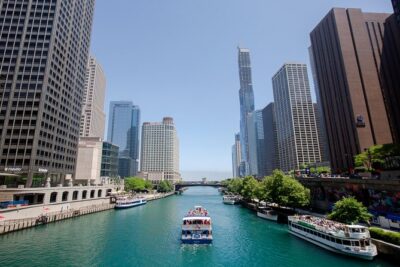
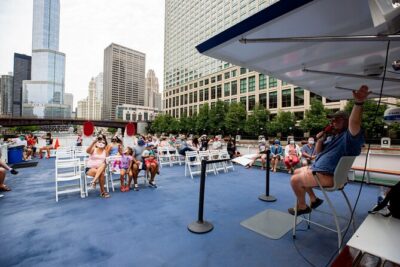

Chicago River: 1.5-Hour Guided Architecture Cruise
Read our review →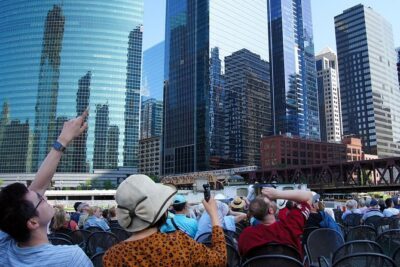
Chicago Architecture Center River Cruise aboard First Lady
Read our review →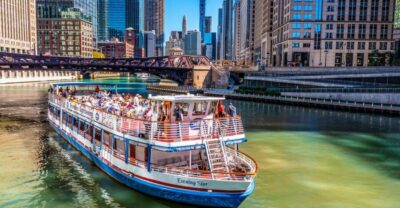
Architecture River Cruise Skip-the-Ticket Line
Read our review →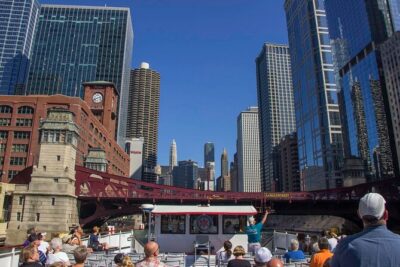
Chicago River 45-Minute Architecture Tour from Magnificent Mile
Read our review →