
REVIEW · WALKING TOURS
Private Santa Barbara History and Architecture Walking Tour
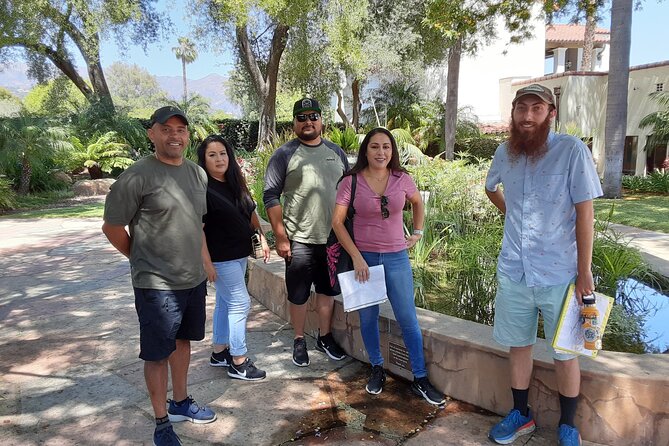
Santa Barbara reveals its past one adobe at a time. This private walking tour connects the city’s Spanish, Mexican, and American eras through old military buildings, quiet courtyards, theaters, gardens, and grand civic architecture. I especially like the way Sullivan Israel adjusts the route to your interests, and I like that the walk includes lesser-known corners alongside Santa Barbara’s famous sights. The main consideration is pace: two to three hours on foot covers a lot, so you may need to choose between lingering over details and seeing the full route.
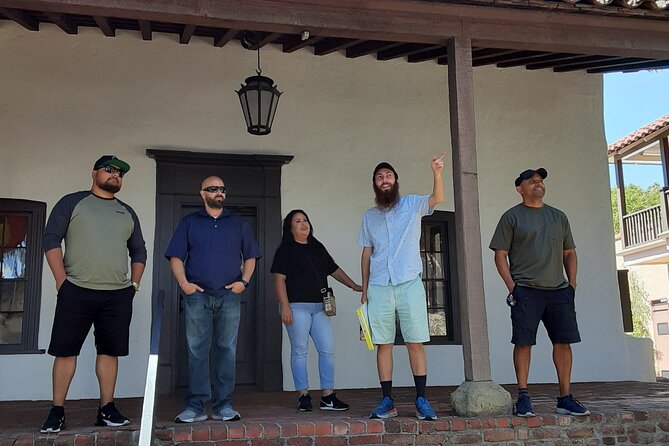
Sullivan, often called Sully, brings unusual energy to the subject. He uses historical photographs and stories about the people who shaped the city, not just dates and building names. The tour is a strong choice for first-time visitors, families, architecture fans, and even long-time residents who want to notice details they have passed for years.
Key points to know before booking
- A private route built around your interests: You can ask for more architecture, local history, family-friendly pacing, or extra time at particular sites.
- The Presidio and El Cuartel frame the walk: You begin and end near two of Santa Barbara’s oldest surviving structures.
- Architecture changes block by block: Adobes, Spanish Colonial Revival buildings, Streamline Moderne design, theaters, courtyards, and gardens all appear along the way.
- Sully’s storytelling is the main attraction: His research, historical images, and personal enthusiasm give the buildings human context.
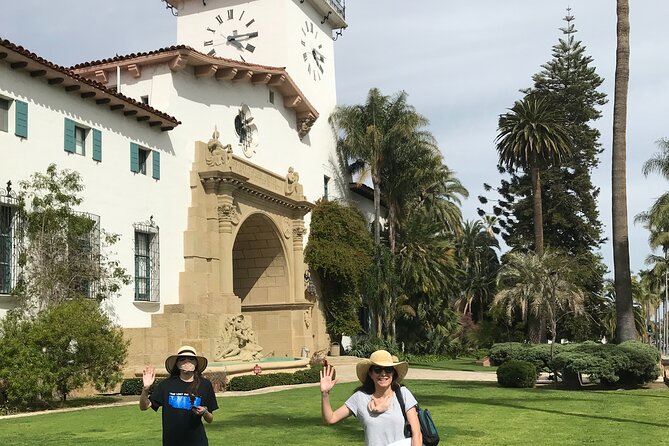
- The County Courthouse deserves special attention: Its painted tiles, carved details, mural room, and clock tower make it one of the tour’s major highlights.
- Plan for practical walking needs: Parking is not included, the tour requires good weather, and water or a small snack can help on the longer route.
Starting at El Presidio, where Santa Barbara began
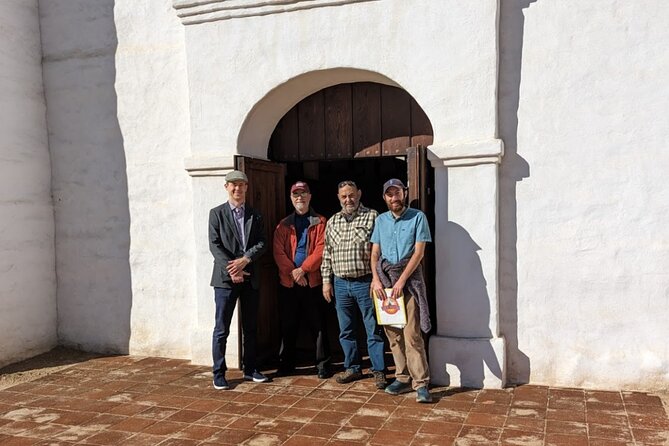
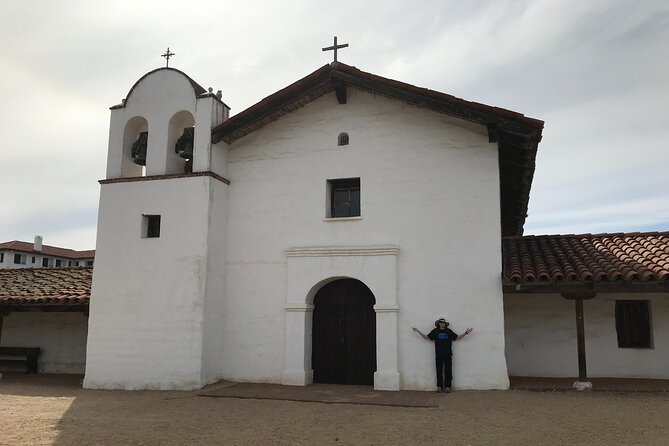
The tour starts at El Presidio de Santa Bárbara State Historic Park, at 123 East Canon Perdido Street. Built in 1782 from adobe brick, the Presidio was part of Spain’s military network in California. It is one of the oldest structures in the state, and its rooms, chapel, soldiers’ gardens, and period objects help turn an abstract colonial story into something you can picture.
I like beginning here because the building materials tell part of the story by themselves. The Presidio was made from resources found in the surrounding countryside, a reminder of how remote this outpost once was. Your guide can explain how people lived at the far edge of the Spanish Empire, where military duty, religion, trade, and survival were tightly linked.
The opening stop is scheduled for about 20 minutes, with admission included. That is enough time for an introduction and a look around, though history fans may wish they could stay longer. Since this is a private tour, ask Sully if you want to give the Presidio extra attention.
Nearby, you pass the Rochin Adobe. Built in 1856 by a descendant of Captain Francisco Ortega, the Presidio’s first comandante, it used adobe bricks salvaged from the damaged fort. The building was covered with wooden clapboard around 1900, which is why its present appearance does not immediately reveal its adobe core.
More walking tours in the USA:
- The Official Art Deco Walking Tour by The Miami Design Preservation League
★ 5.0 · 1,580 reviews - Chicago in a Day: Food, History & Architecture Walking Tour
★ 5.0 · 1,153 reviews - Miami South Beach Art Deco Walking Tour
★ 5.0 · 1,039 reviews
Adobes, courtyards, and Santa Barbara’s quieter corners
The Santa Barbara Historical Museum is the next major stop. Built in 1964 in the early California style, it contains exhibits on local history, paintings, and etchings. Its courtyard includes two adobe structures dating from 1817, along with a gift shop and good photo angles.
Admission is not included, and entering is optional. That makes the stop flexible, but you should ask about current opening arrangements if seeing the exhibits matters to you. The outside architecture and courtyard are still part of the walk, even if you decide not to go inside.
At 112 East De la Guerra Street, you see the Meridian Studios and Lugo Adobe. The studios were designed by George Washington Smith and completed in 1925. Their pastel stucco walls and broad glass windows show how Santa Barbara’s later architectural identity developed beyond the earliest adobes.
Look for the old wisteria vine, especially in spring when its purple flowers appear. Behind the studios, the Lugo Adobe offers a quieter contrast. Built by a retired Presidio soldier in the early 19th century, it has been preserved and remodeled, and its tucked-away setting keeps it away from the busiest sightseeing paths.
The route continues to 802 Anacapa Street, where a later building incorporates two Mexican-period adobes and the 1906 Nardi Hotel. Behind it are a courtyard, garden, and Presidio Street, considered Santa Barbara’s earliest city street because it once formed part of the route from the waterfront to the Presidio and Mission.
These stops explain why a private guide adds value. Without context, an adobe can look like an attractive old wall. With the story of who built it, what was reused, and how the street functioned, the same wall becomes part of a much larger picture.
On East De la Guerra Street, you also pass the adobes built in 1849 by José de la Guerra, the fifth comandante of the Presidio. They are strong examples of Mexican-Californio building traditions and later passed to the Orena family, whose descendants still own them.
Civic Santa Barbara at City Hall and Casa de la Guerra
Santa Barbara City Hall takes you into the Spanish Colonial Revival period. Built in 1923, before the earthquake that reshaped the city in 1925, it has hand-painted tiles and arches extending over the sidewalk. A large California pepper tree in front is itself a city landmark.
The building faces Plaza de la Guerra, the ceremonial center of town, along with Casa de la Guerra and the News-Press Building. This is a useful place to understand that Santa Barbara’s Spanish appearance was not simply inherited from the colonial era. Much of the city’s deliberate architectural character took shape after the earthquake and during the 1920s.
Casa de la Guerra was built in 1819 by José de la Guerra as both a family home and a business center. It also served as a setting for political and cultural activity when Santa Barbara consisted of a small cluster of adobes around the Presidio.
The house remains one of the city’s key historic buildings and hosts Fiesta celebrations each summer. It is open to visitors on weekends, so access may vary depending on the day of your tour. The scheduled viewing is about 10 minutes, enough for an explanation and exterior look if the interior is not available.
El Paseo and La Arcada, where architecture becomes a walk
El Paseo marks a major change in Santa Barbara’s architectural story. Built between 1922 and 1929, it helped shift the city away from an Eastern American main-street appearance toward a Hispanic Pueblo style.
You wander through narrow passageways, a romantic courtyard, and the area known as Street in Spain before reaching State Street. This is one of the most photogenic parts of the walk, but its value goes beyond appearance. The design shows how Santa Barbara used courtyards, arcades, tiled surfaces, and pedestrian passages to create a distinctive public identity.
La Arcada Courtyard continues that idea. From State Street, the tiled paseo leads through shops and restaurants toward the County Courthouse. Along the way, look for bronze statues, second-story bridges, and a fountain with live turtles.
The route here may feel more commercial than the adobe sections, but that contrast is useful. You can see how historic design survives within an active downtown rather than in a separate museum district. If you want extra time for photographs or shops, tell your guide. The private format gives you more control than a fixed group walk.
More history tours in the USA:
- Charleston’s Best Highlights: History, Culture & Architecture
★ 5.0 · 422 reviews - Palm Springs Modernism Architecture & History Bike Tour
★ 5.0 · 359 reviews - Charleston: History and Architecture Guided Walking Tour
★ 4.8 · 349 reviews - Historic Georgetown: History, Gossip, & Architecture Walking Tour
★ 5.0 · 321 reviews
Santa Barbara County Courthouse, the tour’s grand centerpiece
Allow about 30 minutes for the County Courthouse. This is arguably the architectural high point of the tour, and it deserves more than a quick photograph from the sidewalk.
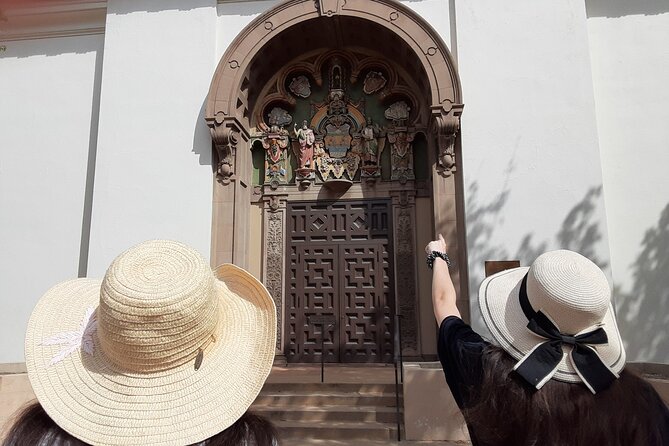
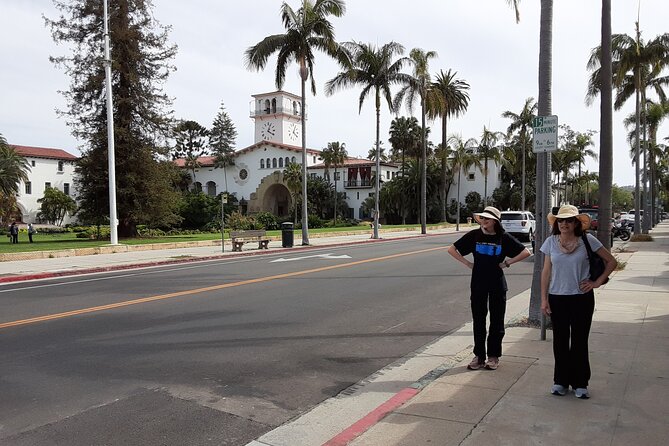
Completed in stages during the early 20th century, the courthouse is a major expression of Spanish Colonial Revival design. Its front entrance has a Roman triumphal arch flanked by stone statues. Inside and around the building, you can see hand-carved column capitals, painted tiles, and carefully crafted decorative details.
The mural room is another major feature, though access may depend on current restrictions. The clock tower offers a 360-degree view of Santa Barbara when open, and you can reach it by stairs or elevator. From above, the city’s low-rise character becomes clear, including the importance of the height limit that shapes the downtown view.
This is a place where a guide’s explanation improves the experience. Architecture enthusiasts can study the materials and decoration, while history-minded visitors can connect the building to Santa Barbara’s post-earthquake rebuilding. Families may appreciate having a clear visual focus after several smaller adobe stops.
Across the street, the Santa Barbara Public Library adds more detail. Sections of the building date from 1917, 1925, and 1930, and stone sculptures frame the main entrances. Down Anapamu Street, you pass the Granada Theatre, built in 1924. Its glazed terra-cotta upper floors and status as the city’s tallest building make it easy to identify.
The theaters, parks, and greener side of downtown
The Arlington Theatre offers a different type of architectural experience. Its tower rises above the surrounding buildings, while an arched paseo at street level provides a shady place to pause.
Inside, the theater is designed to feel like a Spanish village square. Fake three-dimensional building fronts line the auditorium, and a vaulted ceiling painted with stars completes the illusion. Interior access may depend on current restrictions, so the exterior may be the main part of your visit.
Alameda Park brings a welcome change of pace. Set aside for public use in 1850, its blocks remain part of downtown life and host events connected with the Summer Solstice and Earth Day. Trees from different parts of the world fill the park, including redwoods and East African fern pines.
One block contains an 1880s bandstand. Another has Kids’ World, an extensive playground. This section works well for families, especially if children need a break from architectural details. The former Mirasol Hotel site has been converted into a botanical garden with a duck pond and unusual flowering trees.
Alice Keck Park Memorial Gardens continues the garden theme. The square once held the El Mirasol Hotel and now includes a butterfly meadow visited by monarchs, a creek with stepping stones, a large Australian fig tree, and a duck pond with live turtles.
These green spaces are more than filler between buildings. They show how Santa Barbara’s public life includes parks, shade, water, and outdoor gathering places. For photography, the gardens also provide relief from the stucco and tile that dominate much of the earlier route.
Finishing with the Post Office, Lobero Theatre, and El Cuartel
The Santa Barbara Main Post Office is a short stop, but it is worth noticing. Its design mixes Streamline Moderne with Spanish elements, and sculptures appear both inside and outside the building.
You may also pass the Lobero Theatre, designed by George Washington Smith in 1924. The site has been used for theater since 1873, when José Lobero opened Southern California’s first opera house there. If access allows, the painted vaulted ceiling is worth seeing.
The tour ends at El Cuartel, across from the starting point. Built in 1788, this small structure was part of the Presidio complex and is considered the oldest building in town. You can see its rooms and back garden, which offer a more intimate view of 18th-century life than the larger Presidio complex.
Ending here creates a satisfying loop. You begin with the military foundation of Santa Barbara and finish with a modest building that brings the story back to everyday shelter, work, and survival.
How the private format affects the value
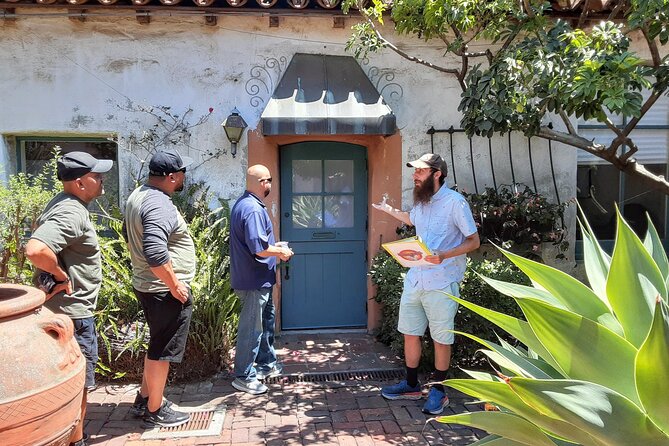
The experience lasts about two to three hours and is offered in English on weekdays from 10 a.m. to 3 p.m. You receive a private tour, so only your group takes part. That matters if you want to ask frequent questions, adjust the pace, or focus on a particular interest.
There is no listed cost in the details provided, so I cannot judge the exact price. In value terms, the private format makes the most sense for families, couples, friends, or small groups who would otherwise book several separate sightseeing stops and research the city themselves. Group discounts may improve the per-person value as your party grows.
Parking fees and lunch are not included. Since the route is on foot and can run for several hours, wear comfortable shoes and bring water. A small snack is sensible for children, especially around the halfway point.
Sully’s greatest strength is his command of local stories. He has studied antique books and consulted specialists, and he brings historical photographs into the explanation. His engineering background also adds another angle when he discusses buildings, materials, and design.
The main drawback is that the walk covers a great deal. If you want a leisurely architectural sketching session or long interior visits, you may need to trim the route. One guest also wished for more of Santa Barbara’s colorful and whimsical buildings, so tell Sully if that side of the city interests you most.
The tour suits adults, older children, and curious teenagers. A 13-year-old was reported to stay engaged, and families with children around nine and twelve found the pace manageable. It also works for locals. The route includes details easy to miss, even if you have lived in Santa Barbara for years.
Cancellation and weather details
You can cancel up to 24 hours before the start time for a full refund. Changes or cancellations within 24 hours are not accepted for a refund.
The tour requires good weather. If poor weather causes cancellation, you are offered another date or a full refund. The experience also requires a minimum number of participants, and a cancellation for that reason brings the same choice of another date or a full refund.
Service animals are allowed, public transportation is nearby, and most people can participate. Confirmation is provided at booking.
Should you book this Santa Barbara walking tour?
Book it if you want Santa Barbara explained rather than simply photographed. The strongest reasons are the private pacing, the mix of major landmarks and quiet adobes, and Sully’s ability to connect buildings with the people and events behind them.
It is especially good for a first visit, an architecture-focused day, or a return trip when you want something beyond the usual Mission and waterfront stops. If you prefer a short walk with lots of free time, it may feel too full. Ask to customize the route, bring water, and reserve your best questions for the buildings you most want to understand.
FAQ
How long does the private Santa Barbara walking tour last?
The tour lasts approximately two to three hours.
Where does the tour begin and end?
It begins at El Presidio de Santa Bárbara State Historic Park at 123 East Canon Perdido Street and ends back at the same meeting point.
Is admission included at every stop?
Admission is included at El Presidio and Alice Keck Park Memorial Gardens. Entry to the Santa Barbara Historical Museum is not included. Several other stops are listed as free, though access to some interiors can depend on current restrictions or opening hours.
Is this a private tour?
Yes. Only your group participates in the activity.
What does the tour price include?
The tour includes a guided walk and historical photographs. Parking fees and lunch are not included.
What happens if bad weather cancels the tour?
You are offered a different date or a full refund if poor weather causes cancellation.
Just added in the USA
- Wilmington History and Architecture Tour★ 4.8 · 18 reviews
- New Orleans : Garden District Architecture Walking tour★ 4.8 · 5 reviews
- Washington DC: Dupont Circle & Embassy Row Architecture Tour★ 5.0 · 6 reviews
- Washington, DC: Georgetown Architecture Walking Tour★ 5.0 · 8 reviews
- Private Colonial Williamsburg Architectural Tour★ 5.0 · 5 reviews
- Tulsa: Art Deco Walking Tour of Tulsa★ 5.0 · 8 reviews
- Monuments and Memorials Architectural Walking Tour★ 5.0 · 17 reviews
- Castle to Capitol: Museums of the National Mall Architecture Tour★ 4.5 · 9 reviews
Walking Tours, compared.
The Official Art Deco Walking Tour by The Miami Design Preservation League
Read our review →
Baroque Architecture and Underground Walking Tour
Read our review →
Chicago in a Day: Food, History & Architecture Walking Tour
Read our review →

Ramblas, Old Town, Gothic and Gaudi Architecture Walking Tour
Read our review →
Chicago’s Secret Interiors Architectural Walking Tour
Read our review →
Browse the lists this tour appears in