
REVIEW · WASHINGTON DC ARCHITECTURE TOURS
Embassy Row: Architecture, Mansions & International Intrigue
Diplomatic Washington has plenty of secrets. This two-hour walk through Dupont Circle and Embassy Row links grand mansions, foreign embassies, statues, and presidential history in a compact route. I like that the tour looks beyond the National Mall and shows you a neighborhood where private wealth, international politics, and old Washington society meet.
I especially like the small group limit of 15 people, which makes it easier to hear the guide and ask questions. The other strong point is the storytelling. Guides such as Becca, Mark, Tyler, Dan, John, and Eli have earned praise for making architecture and political history lively rather than dry. The main consideration is that the walk covers a lot in two hours, so you may not examine every building closely.
Key points to know before you book
- Gilded Age mansions now house embassies: You see grand homes built by wealthy Americans before many became diplomatic offices.
- Dupont Circle gives you useful context: The tour begins with neighborhood history and practical suggestions for food and shopping.
- The group stays small: A maximum of 15 people makes this more personal than a large city sightseeing walk.
- The route includes unusual stops: Look for the Saraswati statue, the Society of the Cincinnati, Sheridan Circle, and Washington’s Spanish Steps.
- It is an easy but fairly long walk: The route includes shade in places, though comfortable shoes still matter.
- The price buys interpretation, not entry tickets: At $49, you are paying for a guide who connects buildings, people, and scandals.
Why Embassy Row makes such a good walking tour
Washington’s famous monuments are designed to impress from a distance. Embassy Row works differently. Here, the interest is in the details: a mansion’s former owner, a country’s choice of building, a statue tucked beside a diplomatic office, or a political story that never appears on a standard sightseeing route.
The avenue’s grand houses were built when American millionaires competed to display their wealth. Many now serve as embassies, residences, or international offices. That change gives the walk its central question: what happens when private power becomes public diplomacy?
I enjoy tours that help me read a city instead of simply photograph it. This one gives you a way to understand Dupont Circle as a place shaped by money, politics, culture, and changing ideas of status. You are not just looking at handsome facades. You are learning why those facades were built and how their purpose changed.
The guide also adds the human element. The strongest feedback describes guides who tell scandalous stories, answer questions comfortably, and share facts that are easy to miss on your own. Mark is praised for his warmth and passion, while Becca is noted for her clear delivery and energetic style. Dan is especially good at turning the walk into an informal history lesson.
A few more architecture tours in the USA worth a look
- Chicago Architecture River Cruise
★ 5.0 · 15,756 reviews - Chicago River 90-Minute Architecture Tour
★ 4.5 · 9,629 reviews - Chicago River: 1.5-Hour Guided Architecture Cruise
★ 4.8 · 8,046 reviews
Starting at Dupont Circle
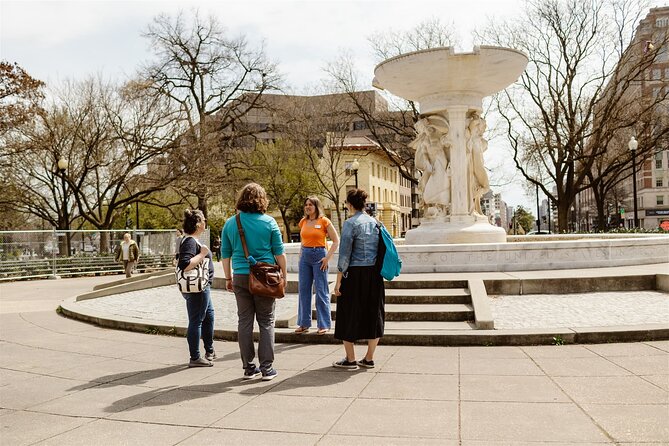
The tour begins at the Dupont Circle fountain at 10:00 in the morning. This is a sensible meeting place because it puts you directly in the neighborhood rather than making you spend the first part of the tour walking in from elsewhere.
The opening ten minutes cover the history of Dupont Circle. That introduction matters because the neighborhood is more than a collection of embassies. It gives you the social and architectural setting for the grand avenue ahead.
I also like the practical touch at the beginning. Your guide can point you toward places to eat or shop after the walk. Since the tour begins and ends in the Dupont Circle area, those suggestions can help you turn a two-hour activity into a longer neighborhood visit.
Dupont Circle is also near public transportation, which makes the start fairly easy to reach. You receive a mobile ticket, and confirmation is provided when you book. Plan to arrive early enough to find the fountain without rushing.
Reading the mansions along Embassy Row
The main portion of the tour follows Embassy Row for about 30 minutes, though the full experience includes several nearby stops. The focus is on the imposing homes built by wealthy Americans during the Gilded Age.
This is where the tour earns its price. You can walk along Massachusetts Avenue and see grand buildings on your own, but the architecture will not explain itself. A guide helps you connect the size of a house with the ambition of its original owner, then explains how foreign governments later adapted these properties for diplomatic work.
The setting also gives the walk a useful Washington lesson. American history and international history are not separate subjects here. A mansion can tell you about millionaires, social competition, national identity, and the way a country presents itself abroad.
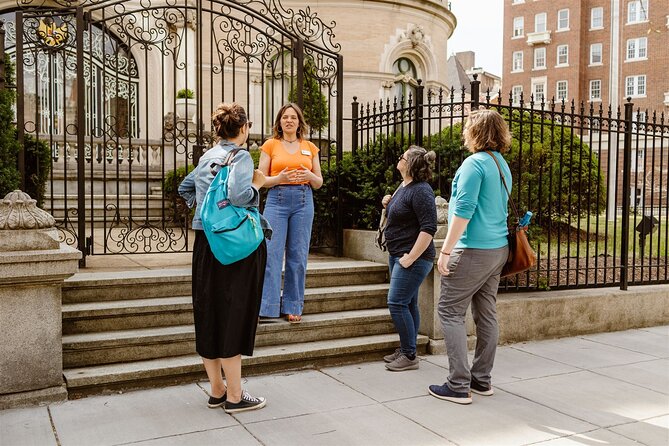
Do not expect to enter most of the embassies or mansions. The experience is an exterior walking tour, so the value comes from what your guide explains from the street. If your main goal is interior access, this is not the right activity. If you enjoy architecture, political stories, and unusual city details, it is a better match.
The Saraswati statue and cultural diplomacy
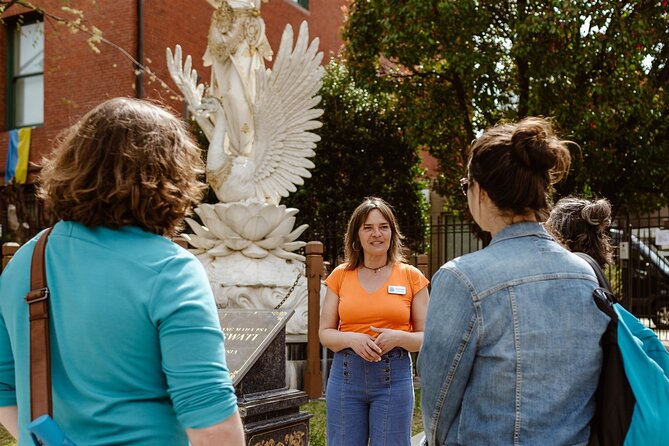
One of the more unusual stops is the statue of Goddess Dewi Saraswati. Located along Embassy Row near the Indian Embassy, it honors the Hindu goddess associated with knowledge, music, and the arts.
The statue gives the walk a change of pace. After looking at stone mansions and diplomatic architecture, you encounter a work that expresses culture and learning in a more direct way. Its flowers and setting make it easy to remember, but the larger point is how public art can support cultural exchange.
This is a short stop of about five minutes. That is enough for an explanation and a look around, but not enough for a long discussion of Hindu art or Indian religious tradition. I appreciate the stop because it shows that Embassy Row is not only about wealthy American families and government offices.
Same city, a different building to stand in front of:
- Chicago Architecture Center River Cruise aboard First Lady
★ 5.0 · 5,536 reviews - Chicago: Architecture River Cruise Skip-the-Ticket Line
★ 4.8 · 4,325 reviews - Chicago River 45-Minute Architecture Tour from Magnificent Mile
★ 4.5 · 2,924 reviews - Chicago Lake and River Architecture Tour
★ 4.5 · 2,308 reviews
The Society of the Cincinnati and inherited power

The Society of the Cincinnati receives about ten minutes on the route. The focus is on the millionaires who built the home and the society that inherited it.
This stop fits the larger theme of the walk: power changes hands, but buildings often outlast their original owners. A house that began as a display of private wealth can later become connected to an organization with its own historic identity.
You will get more from this stop if you pay attention to the contrast between the building’s physical presence and the stories behind it. Washington is full of places that look formal and quiet from the sidewalk. Their pasts are often much less restrained.
The Indian Embassy and Gandhi statue

The Indian Embassy is another short stop, lasting about five minutes. The building reflects Indian heritage and serves as a diplomatic center for relations between India and the United States.
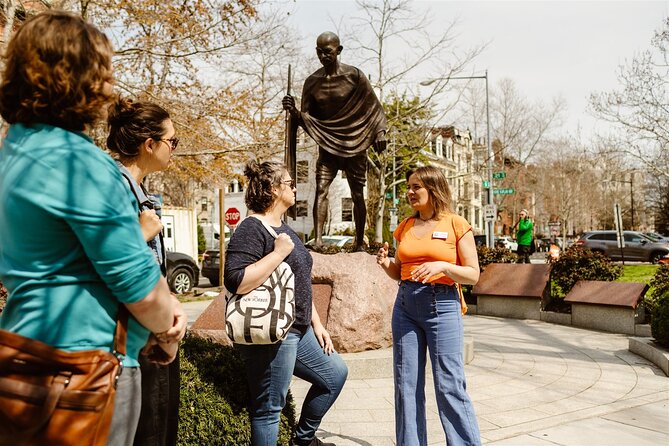
Nearby, the Gandhi statue honors Mahatma Gandhi and his connection with peace and nonviolence. This pairing gives you a quick lesson in how an embassy can communicate more than government business. Its architecture, surrounding art, and public symbols all help present a national identity.
The stop is brief, so think of it as one piece of a larger route rather than a full study of India’s diplomacy or architecture. Still, it adds cultural range to the tour and keeps the walk from becoming a parade of American mansions.
The Irish Embassy and national identity
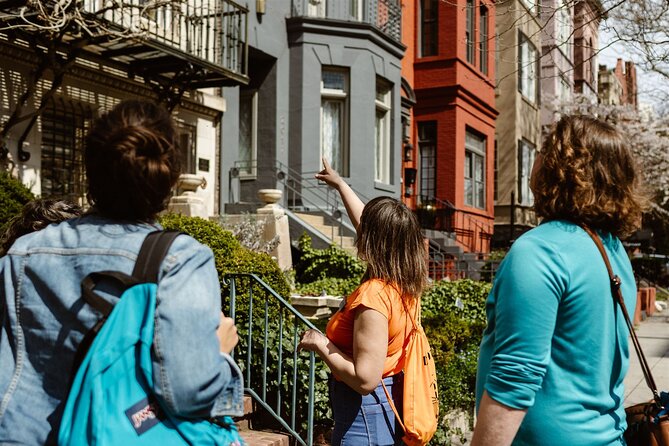
The Irish Embassy takes another five minutes. Its elegant building reflects Ireland’s history and culture while serving as a place for diplomatic work between Ireland and the United States.
This stop helps you notice how countries use prominent Washington addresses. Embassy Row is not simply a street of offices. It is also a public display of heritage, friendship, and national image.
The guide’s role is especially useful here. Without context, you might see another attractive building. With a good explanation, you can consider why this location matters and how the building fits into Ireland’s relationship with the United States.
Sheridan Circle and the Mount Rushmore connection
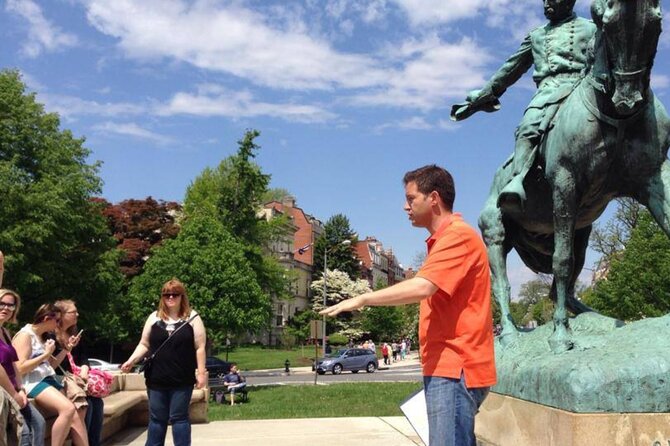
At Sheridan Circle, the tour turns to the equestrian statue of Philip Sheridan. The five-minute stop asks a memorable question: how is this statue connected to Mount Rushmore?
That kind of connection is one reason I prefer a guided walk to a self-directed stroll. You might notice the statue, take a photograph, and continue. A guide can use it as a doorway into a much broader story about American public memory and the people chosen to represent national power.
The stop also breaks up the architectural focus. You are no longer looking only at houses and embassies. You are considering monuments, military figures, and the way Washington places history in public spaces.
Woodrow Wilson House from the sidewalk
The Woodrow Wilson House receives about ten minutes. The guide discusses the presidential home from outside, including the unusual fact that Wilson lived in Washington after leaving office, apart from Barack Obama in the modern period.
This is a useful stop for anyone interested in the city’s connection to presidents. Washington is often treated as a place people pass through for public service, but private homes tell a more personal story. The exterior view also reminds you that important presidential history can sit in an ordinary neighborhood setting rather than behind a museum gate.
Again, you should not expect to tour the interior as part of this experience. The focus is the house’s place in Washington history and the story your guide can tell from the street.
Ending at the Spanish Steps
The Spanish Steps provide a quieter finish. Inspired by Rome’s famous staircase, this small urban landmark sits near Dupont Circle among greenery and historic buildings.
After two hours of mansions, embassies, statues, and political stories, the steps offer a pleasant change in mood. They are picturesque without being grand, and they show another side of the neighborhood: intimate, residential, and easy to overlook.
The advertised information says the activity ends back at the meeting point. One practical note is worth keeping in mind: feedback about the route describes the finish as nearby, within sight of the starting area and a Metro station, rather than at the exact fountain. Ask your guide at the start where the final stop will be so you can plan your next move.
What the $49 price really covers
The cost is $49 per person. Since the tour includes no paid admissions, you are paying for the guide’s time, storytelling, route planning, and local interpretation.
I consider that reasonable if you want more than a pleasant walk past impressive buildings. The strongest guides make the difference. Becca, Mark, Tyler, Dan, John, and Eli have been praised for clear explanations, friendly personalities, useful transportation advice, and the ability to keep the group engaged.
The value is less convincing if you prefer to wander alone and research as you go. One critical assessment felt the route was not unique and preferred using Google independently. That is a fair objection. The streets are public, and you can see the exteriors without booking a tour.
Still, self-guided research takes time and depends on finding reliable information at each stop. The paid walk is most worthwhile when you want the connections between places, especially the stories about former owners, diplomatic use, social power, and Washington scandals.
Pace, group size, and practical comfort
The walk lasts about two hours and is described as long but easy. Several people enjoyed the shade along the route, which helps on a warm day. You should still wear comfortable shoes and bring water, since the experience stays outdoors and keeps moving.
The maximum group size is 15. That is small enough for a more personal feel, and it gives you a fair chance to hear the guide. It also suits people who like asking questions without interrupting a large crowd.
Most people can participate, and service animals are allowed. The tour is offered in English. It is near public transportation, and the starting point at Dupont Circle is straightforward to reach.
Cancellation is flexible up to 24 hours before the experience, when you can receive a full refund. That is useful if your Washington schedule depends on weather or changing museum plans.
Who will enjoy this walk most?
I would choose this tour if you enjoy architecture but want the people and politics behind it. It is also a good fit if you have already seen the National Mall and want a neighborhood with a different mood.
History fans should get plenty from the route, especially if you like presidential stories, wealthy families, public monuments, and international relations. Couples and solo visitors may appreciate the small group format. Families can enjoy it too, though the amount of historical explanation may suit older children better than very young ones.
You may want to skip it if you require indoor access, dislike walking, or want a strictly chronological account of Washington history. The route moves across several subjects and gives you selected stories rather than a full academic treatment of every building.
Should you book Embassy Row?
Book it if you want a guided look at Washington beyond the monuments. The combination of Gilded Age mansions, working embassies, cultural statues, and presidential history gives the walk real variety.
The best reason to go is the guide. A strong storyteller turns a two-hour route into a lively lesson in architecture, wealth, diplomacy, and scandal. The main limitation is the brisk format and mostly exterior viewing, so keep your expectations clear.
At $49, I think it is a good buy for curious first-time visitors and repeat Washington visitors who want a more local neighborhood experience. If you are comfortable researching buildings yourself, you can walk Embassy Row for free. If you want someone to connect the clues, explain the odd details, and keep you moving, book the tour.
FAQ
How long is the Embassy Row tour?
The tour lasts approximately two hours.
Where does the tour begin?
The meeting point is the Dupont Circle fountain in Washington, DC.
What time does the tour start?
The scheduled start time is 10:00 am.
How large is the group?
The maximum group size is 15 people.
Is the tour offered in English?
Yes. The experience is offered in English.
Are admission tickets included?
There are no admission tickets required for the listed stops. The experience includes a professional licensed guide and a two-hour guided small group walk.
Can I cancel for a refund?
Yes. You can cancel up to 24 hours in advance for a full refund.
Just added in the USA
- Wilmington History and Architecture Tour★ 4.8 · 18 reviews
- New Orleans : Garden District Architecture Walking tour★ 4.8 · 5 reviews
- Washington DC: Dupont Circle & Embassy Row Architecture Tour★ 5.0 · 6 reviews
- Washington, DC: Georgetown Architecture Walking Tour★ 5.0 · 8 reviews
- Private Colonial Williamsburg Architectural Tour★ 5.0 · 5 reviews
- Tulsa: Art Deco Walking Tour of Tulsa★ 5.0 · 8 reviews
- Monuments and Memorials Architectural Walking Tour★ 5.0 · 17 reviews
- Castle to Capitol: Museums of the National Mall Architecture Tour★ 4.5 · 9 reviews
Washington DC Architecture Tours, compared.

Historic Georgetown: History, Gossip, & Architecture Walking Tour
Read our review →
Dupont Circle and Embassy Row Architectural Walking Tour
Read our review →
DC: Georgetown History & Architecture Tour with Local Guide
Read our review →
Monuments and Memorials Architectural Walking Tour
Read our review →
Castle to Capitol: Museums of the National Mall Architecture Tour
Read our review →
Embassy Row: Architecture, Mansions & International Intrigue
Read our review →Browse the lists this tour appears in