

REVIEW · ARCHITECTURE TOURS
Brno’s Modernist Marvels: A Private Functionalist Journey
Look up in Brno and modernism appears. This two-hour private walk links seven important Functionalist buildings, from the narrow Hotel Avion to the Baťa Building and the Railway Post Office. I like the focused route and the chance to see how early 20th-century architects made function part of the beauty. I also like that the tour ends near Brno’s main railway area, making it easy to continue exploring.
The main concern is the price: $400.28 per person is a serious charge for a two-hour experience, even with group discounts available. You are paying for a private activity in English, not for admission tickets, since every listed stop has free admission. The value depends heavily on how much you want personal architectural guidance.
Key points about Brno’s Functionalist walk
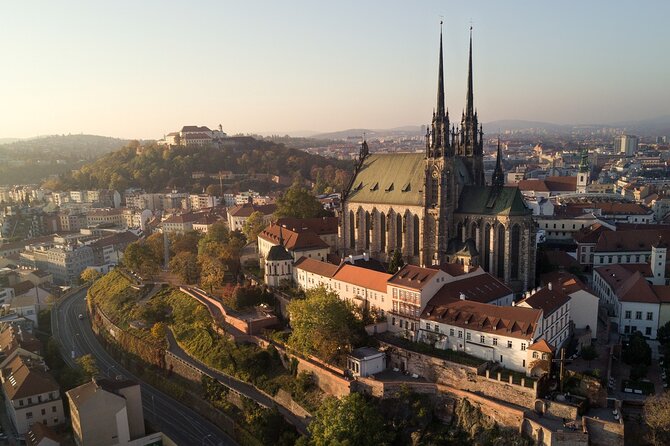
- Seven city-center landmarks are covered in about two hours, with most stops lasting 20 minutes.
- Hotel Avion opens the tour with an unusually narrow facade and clever use of limited space.
- Moravian Bank and Alfa Palace show two different sides of Brno’s early modern design.
- Baťa Building connects Functionalism with industrial efficiency and commercial ambition.
- Pražák Palace, Čedok, and Česká pošta complete the route with public, cultural, and travel-related buildings.
- A private English-language format lets only your group take part, though the high price deserves careful thought.
Why Brno is a rewarding city for modernist architecture
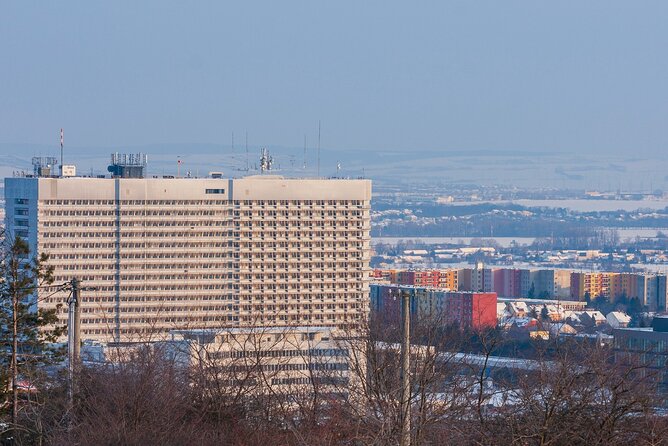
Brno is often introduced through its old town, churches, cafés, and castle. Yet its Functionalist buildings offer another way to read the city. Here, clean lines and practical layouts reflect a period when architecture was becoming more direct, efficient, and modern.
You do not need to be an architect to enjoy this tour. The useful idea is simple: look at how each building handles space, shape, and purpose. A bank, hotel, department building, gallery, travel office, and post office each needed to work in a different way. Functionalism gave designers a common visual language for solving those problems.
I like this approach because it turns a city walk into a kind of visual puzzle. You begin noticing narrow facades, restrained decoration, strong proportions, and forms shaped by use rather than ornament. The tour is also a good choice if you have already seen Brno’s main historic sights and want a different side of the city.
The route is compact, with seven stops between Česká 150 and Nádražní 681/2a. You start at Hotel Avion Brno and finish at Česká pošta, identified as the Railway Post Office. The end point is useful if you plan to catch a train or continue around the station district.
More private tours in the world:
- Best of Chicago: Architecture & Highlights City Private Tour
★ 5.0 · 94 reviews - Private Harajuku Omotesando Architecture Walking Tour
★ 5.0 · 67 reviews - Private Santa Barbara History and Architecture Walking Tour
★ 5.0 · 56 reviews
Hotel Avion: a narrow building with a big idea
Hotel Avion receives the longest opening look, at about 20 minutes, and it earns that attention. It is described as one of the world’s first examples of minimalist architecture, with a slender facade and inventive use of space.
The narrow shape is the key thing to notice. A building with limited frontage has to make every part of its design work hard. Instead of treating the restricted site as a problem, the architecture uses it as a challenge. That makes Hotel Avion a strong introduction to the tour’s main theme.
You can expect this stop to focus on architectural ingenuity rather than decorative detail. Look for the relationship between the building’s width, vertical emphasis, and practical purpose. The guide can help you understand why such a compact structure matters in the story of modern design.
The admission cost is listed as free. Still, free entry does not necessarily mean every interior area is part of the visit, so you should treat the tour as an architectural stop rather than assume access to every room. The supplied details do not promise an interior visit.
Moravian Bank: proportion over decoration
The next 20-minute stop is Moravian Bank, also described as the Moravian Bank building. This is presented as an example of architectural precision, with harmonious proportions and a clear belief that form should follow function.
A bank is a useful building to study because it needs to project order and confidence. Here, the important qualities are not elaborate decoration or theatrical effects. The appeal comes from the balance of the facade and the way the building’s appearance relates to its purpose.
I would pay attention to the overall arrangement rather than hunt for one spectacular feature. Functionalist design often rewards a slow look at windows, lines, entrances, and the relationship between solid wall and open space. A guide is particularly useful here because the differences between disciplined design and plain construction can be easy to miss.
This is another free-admission stop, and the planned 20 minutes should give you time to compare it with Hotel Avion. The contrast is part of the fun. Hotel Avion makes a virtue of narrow space, while Moravian Bank is introduced through proportion and precision.
Alfa Palace: early modernity in a stronger urban form

Alfa Palace brings another 20-minute pause. Its clean lines and modern appearance reflect the progressive side of early 20th-century urban design.
The building is a good reminder that Functionalism was not just about practical engineering. It also carried an optimistic idea of city life. Streamlined forms suggested that urban buildings could look forward rather than copy older styles.
I like this stop for the way it broadens the tour. Hotel Avion is notable for its unusual shape, and Moravian Bank for its measured proportions. Alfa Palace adds a more direct expression of modernity. You can use the three buildings as a small lesson in how the same design movement can produce different results.
The supplied information does not specify interior access or special exhibits here. Plan to listen, look carefully, and ask questions rather than expect a full museum visit. Admission is free, but the real value comes from the explanation and the comparisons among the buildings.
A few more architecture tours in the world worth a look
- Chicago Architecture River Cruise
★ 5.0 · 15,756 reviews - Chicago River 90-Minute Architecture Tour
★ 4.5 · 9,629 reviews - Chicago River: 1.5-Hour Guided Architecture Cruise
★ 4.8 · 8,046 reviews - Chicago Architecture Center River Cruise aboard First Lady
★ 5.0 · 5,536 reviews
Baťa Building: where business meets Functionalist design
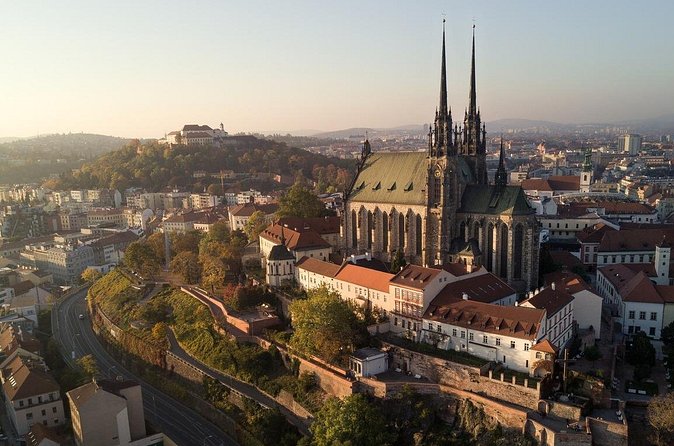
The Baťa Building gets about 20 minutes and brings industrial efficiency into the route. It is described as an iconic example of practical design and the pioneering spirit associated with Functionalism.
This stop adds an important business angle. The architecture is not presented as decoration for its own sake. It reflects a world in which buildings had to support organized work, commercial activity, and efficient movement.
You may find this one of the clearest places to connect design with daily use. Ask how the building’s appearance communicates purpose. What does its clean structure suggest about the company or institution that used it? Those questions help you see Functionalism as a working style, not simply a look.
The Baťa stop also keeps the tour from becoming a parade of similar facades. Each building had its own role, and that role helps explain its design. You are not just checking off famous addresses. You are comparing how architects handled hospitality, finance, commerce, and public service.
Pražák Palace and the Moravian Gallery
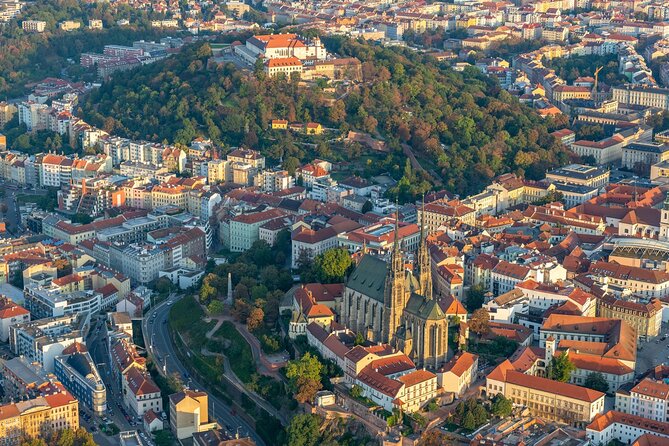
Pražák Palace, identified here with the Moravian Gallery, receives another 20-minute visit. Its elegant facade and streamlined forms are used to show the refined side of Functionalist architecture.
A gallery building has a different task from a bank or commercial building. It must house art and welcome the public, while its exterior communicates a sense of culture and order. That makes Pražák Palace a helpful stop for seeing how Functionalist ideas could be adapted to a cultural institution.
The phrase grace and precision fits the role of this building in the route. After the more business-focused Baťa stop, the palace gives you a chance to consider how modern architecture can remain polished without relying on heavy ornament.
Do not assume that this short tour includes a full gallery visit. The information provided identifies the building as a stop, not a separate art admission experience. If you want to spend time with the collection, you may need to plan that separately.
Čedok: a compact stop with a travel connection
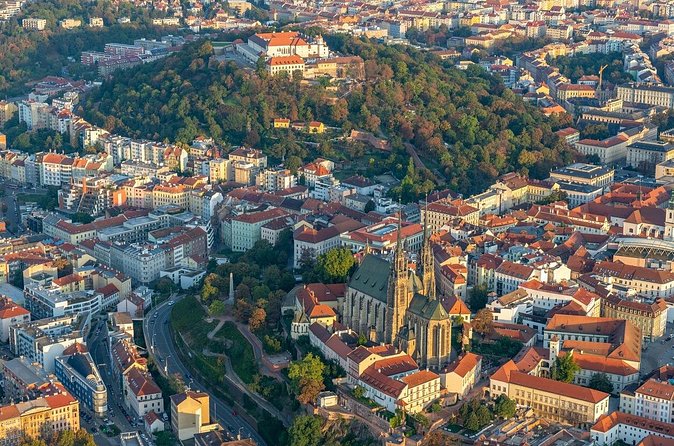
Čedok is scheduled for about 10 minutes, so this is a quicker look than the first five buildings. The building is described as an example of Functionalism adapting form to purpose, with an effortlessly modern silhouette.
The shorter time makes sense for a compact architectural explanation. You will likely be asked to notice the outline, surface treatment, and practical character of the building rather than spend a long period inside.
Čedok also adds a travel-related piece to the route. That matters because architecture is shaped by the institutions it serves. A travel company needs to communicate movement, organization, and modern service. Even without a long visit, the building helps complete the tour’s range of civic and commercial uses.
Because this is one of the shorter stops, you may want to ask your guide to point out the single most important feature before moving on. The tour covers seven buildings in two hours, so efficient explanations matter.
Česká pošta and the Railway Post Office finish

The final stop is Česká pošta at Nádražní 681/2a, also called the Railway Post Office. It receives about 10 minutes and closes the tour with another practical public-service building.
The description emphasizes efficiency, sleek design, and the link between beauty and function. That makes the post office a fitting final example. By this point, you have seen Functionalism applied to a hotel, bank, commercial palace, company building, gallery, travel office, and postal service.
Ending here also gives the walk a useful sense of direction. You do not return to Hotel Avion. Instead, you finish near the railway area, which may suit you if you have onward transport or want to continue independently from the station district.
As with the other stops, the details do not promise a full interior tour. Think of Česká pošta as the closing architectural example and a practical end point, not as a long museum visit.
What two hours feels like on this private route
The timing is brisk but workable. Five stops receive 20 minutes each, followed by two 10-minute stops. That totals 120 minutes before allowing for walking between buildings, so the tour needs to keep a steady pace.
A private format helps. Only your group participates, and the experience is offered in English. You can ask for clarification, request a comparison, or spend more time on the building that interests you most, although the provided details do not say how flexible the schedule is.
The route is near public transportation, and most people can participate. You should still arrive ready for a city walk, with comfortable shoes and enough time to find Hotel Avion at Česká 150. Those are practical choices rather than special requirements, since the tour is spread across several urban stops.
The strongest praise attached to this experience is that it feels interesting, cultural, and full of new knowledge while showing a different side of urban life. That is exactly where the tour has its best chance of succeeding. It is not just about pretty buildings. It gives you a new way to read Brno.
Is $400.28 per person a fair price?
At $400.28 per person, this is expensive for a two-hour walk. There are no admission charges at the listed stops, so the fee mainly pays for the private format, the English-language service, route planning, and architectural interpretation.
The price becomes easier to justify if you are traveling with a group and can use the advertised group discount. Since the activity is private, a larger group may also make the cost feel less severe per person, depending on the final discount and booking terms.
For one or two people, I would ask yourself how much you value specialist attention. If you simply want to see the buildings and take photographs, you may find the cost hard to defend. If you want someone to connect the buildings and explain how Functionalist design works across different types of institutions, the private setting offers something a self-guided walk does not.
The perfect rating from the three posted ratings and the strong praise for its cultural, educational character point to a clear strength: this is a focused experience for people who enjoy learning through a city. The small number of ratings means I would not treat that score as proof that every part of the tour will suit everyone.
Who should book this Brno architecture tour?
I would recommend it most to you if you have a real interest in architecture, design, city planning, or modern European history. It also suits repeat visitors who have already seen Brno’s older landmarks and want a more specialized walk.
The tour can work well for a private family group, a design-minded couple, or friends who prefer asking questions without sharing a guide with strangers. The English-language option makes the plan straightforward for international visitors.
I would be more cautious if you want interior access, long museum visits, or a slow photography walk. The schedule is tight, several stops last only 10 minutes, and the supplied details do not promise entry into every building.
Confirmation is provided at booking, and free cancellation is available if you cancel at least 24 hours before the local start time. Changes or cancellations inside that window are not accepted for a refund. The experience is provided by Opatrip.com Czech.
Should you book Brno’s Functionalist journey?
Book it if you want Brno explained through its modern architecture rather than simply photographed. Hotel Avion, Moravian Bank, Alfa Palace, Baťa, Pražák Palace, Čedok, and Česká pošta create a well-focused sequence, and the private English-language format should make the information personal and easy to follow.
Skip it if the price feels too high for a two-hour walk or if you mainly want to enter museums and buildings. The best reason to pay is the guided interpretation, not the free admission stops themselves. For the right visitor, this is a smart, compact introduction to Brno’s Functionalist character.
FAQ
How long does the Brno Functionalist tour last?
The tour lasts approximately two hours.
Where does the tour begin?
It begins at Hotel Avion Brno, Česká 150, Brno-město, 602 00 Brno-Brno-střed, Czechia.
Where does the tour finish?
It finishes at Česká pošta, Nádražní 681/2a, 602 00 Brno-střed, identified as the Railway Post Office.
Is this a private tour?
Yes. Only your group participates in the activity.
Is the tour offered in English?
Yes. The experience is offered in English.
Can I cancel for a full refund?
Yes, if you cancel at least 24 hours before the experience start time. Cancellations made less than 24 hours in advance are not refunded.
Just added in the world
- Wilmington History and Architecture Tour★ 4.8 · 18 reviews
- New Orleans : Garden District Architecture Walking tour★ 4.8 · 5 reviews
- Washington DC: Dupont Circle & Embassy Row Architecture Tour★ 5.0 · 6 reviews
- Washington, DC: Georgetown Architecture Walking Tour★ 5.0 · 8 reviews
- Vicenza: Palladian Architecture Private Walking Tour★ 3.3 · 3 reviews
- Walk & Discover KL’s Architectural and Heritage Gems★ 5.0 · 7 reviews
- Private Colonial Williamsburg Architectural Tour★ 5.0 · 5 reviews
- Unveiling Brno: History, Culture & Architectural Delights★ 5.0 · 2 reviews
Architecture Tours, compared.
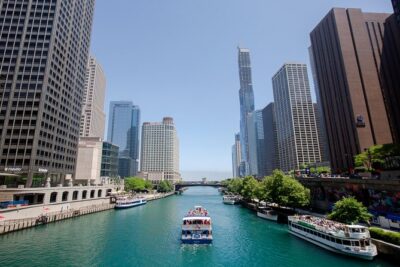
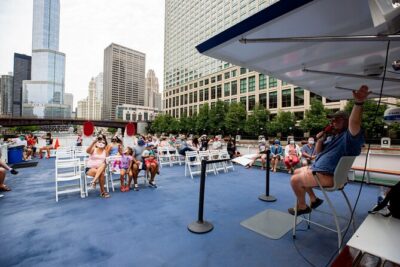

Chicago River: 1.5-Hour Guided Architecture Cruise
Read our review →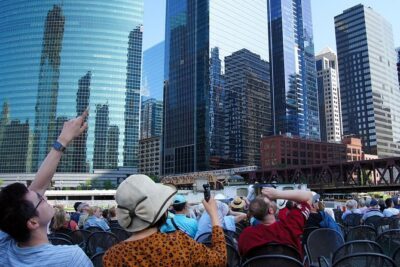
Chicago Architecture Center River Cruise aboard First Lady
Read our review →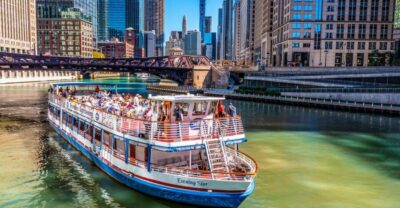
Architecture River Cruise Skip-the-Ticket Line
Read our review →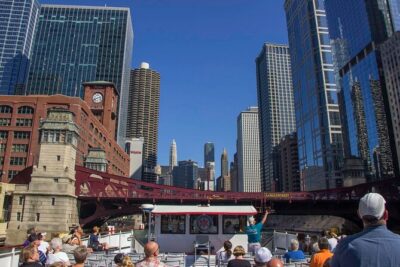
Chicago River 45-Minute Architecture Tour from Magnificent Mile
Read our review →
Browse the lists this tour appears in