
REVIEW · ARCHITECTURE TOURS
Architectural Strasbourg: Private Tour with a Local Expert
Strasbourg reveals its story one street at a time. This private walking tour packs the city’s main architectural sights into roughly two hours, with a local guide explaining how medieval, French, German, and modern influences shaped the city. I especially like the private format, which gives you room to ask questions, and the mix of famous sights with less obvious historical context.
I also like the flexible pace. The itinerary can adapt to your interests and walking speed, which matters in a city where you may want to pause for photographs or examine carved facades. The main drawback is the price: $565.35 for up to two people is a serious cost for a short tour, and entry fees, food, and public transport are extra.
Key points to know before booking
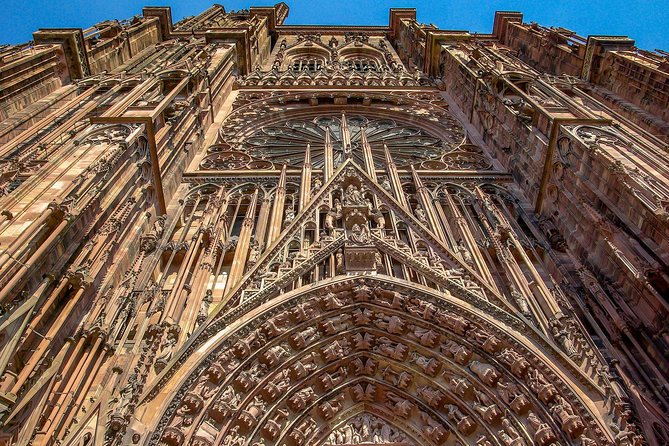
- Strasbourg Cathedral anchors the walk: See the Gothic exterior and learn about its Astronomical Clock.
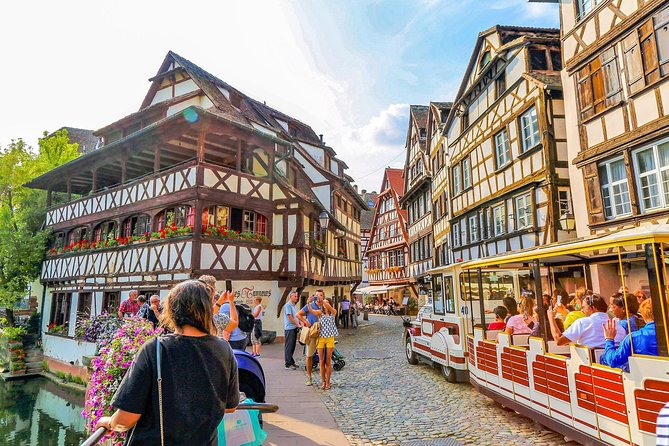
- Petite France adds the postcard scenery: Timber-framed houses, waterways, and Alsatian restaurants fill this old quarter.
- Barrage Vauban brings the best overview: The historic dam offers broad views over Petite France.
- Place de la République changes the architectural mood: Neoclassical buildings, including the Palais du Rhin, show another chapter of Strasbourg.
- The tour is genuinely private: Only your group participates, with a tailored route and pace.
- Budget carefully: The quoted price covers the local guide and private experience, not meals, museum admission, monument tickets, or transport.
A fast introduction to Strasbourg’s many eras
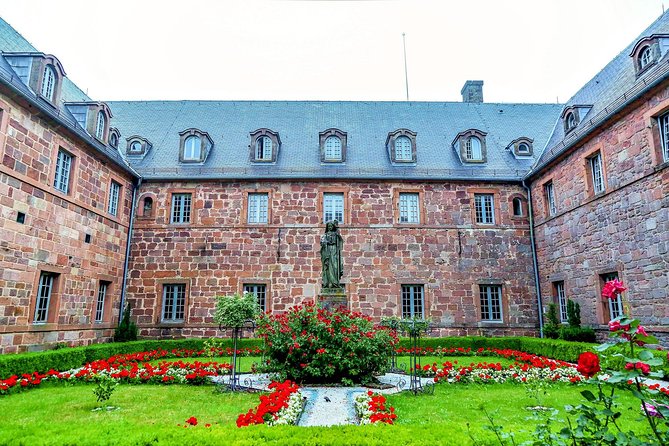
This tour works best as a first look at Strasbourg. In a short stretch of walking, you move from medieval architecture to grand nineteenth-century civic buildings, then back to canals and timber-framed houses. That range helps you understand why Strasbourg feels different from many French cities.
You are not simply checking off a cathedral and a pretty neighborhood. The guide connects the buildings to the city’s changing identity and its position near the French-German border. The tour summary places the history across hundreds of years, beginning in medieval times, so you should expect a broad introduction rather than a detailed study of one period.
The private setup changes the feel of the walk. With only your party and the guide, you can ask why a building looks German, how the cathedral was built, or which streets deserve another visit later. One particularly useful detail from the available feedback is that Rebecca’s walk gave a couple plenty of chances to ask questions about history and architecture. That is exactly where a private tour earns its keep.
Two hours is enough to get your bearings, but not enough to examine every monument inside and out. Think of this as an orientation walk with real historical substance, not a museum tour or a full-day architecture course.
More private tours in the world:
- Best of Chicago: Architecture & Highlights City Private Tour
★ 5.0 · 94 reviews - Private Harajuku Omotesando Architecture Walking Tour
★ 5.0 · 67 reviews - Private Santa Barbara History and Architecture Walking Tour
★ 5.0 · 56 reviews
Starting at Saint Aurelia’s Church
The stated starting point is Saint Aurelia’s Church on Rue Martin Bucer. From there, the route leads toward Strasbourg’s central historic areas and ends at Place de la République.
Check the exact meeting instructions before setting out. One account of the experience describes meeting at Kleber Square instead, so the practical move is to rely on the confirmed location supplied for your booking. The difference matters because Strasbourg’s center is easy to walk around, but you do not want to spend your first minutes searching for the guide.
The opening location also gives the tour a useful sense of movement. Rather than beginning and ending at the same place, you cross several parts of the city and finish in a district that deserves further exploration. Once the walk ends, you are not stranded at a remote meeting point. You are in a central area with more of Strasbourg ahead of you.
The tour is offered in English and hosted by an independent local. That means the personality and emphasis may vary with the guide. Atreyu is praised for being friendly, adaptable, and well informed about Strasbourg’s complicated past. Rebecca is also named in the available feedback and is associated with a walk through Petite France, the old district, and the cathedral.
Strasbourg Cathedral and the Astronomical Clock
Strasbourg Cathedral is the emotional center of the route. Its Gothic design gives you an immediate sense of the city’s medieval ambition, and its Astronomical Clock adds a more technical and curious side to the visit.
Your guide can help you look beyond the first grand view. Notice the carved stonework, the scale of the facade, and the way the cathedral dominates nearby streets. The point of having a local expert here is not just to hear dates. It is to understand why this building became such a powerful marker of Strasbourg.
The Astronomical Clock is another reason this stop works well early in your visit. It turns a religious monument into a lesson in medieval and early scientific thinking. You should ask your guide what parts of the clock you can see during the tour and whether any admission is needed, since monument tickets are not included.
That exclusion is worth keeping in mind. The tour gives you the architectural setting and explanation, but you may need to pay separately if you want to enter a monument or visit a paid attraction. The schedule is also short, so there may not be time for a long interior visit.
Even if you only see the cathedral from the outside, this stop gives you a strong reference point for the rest of the walk. Later buildings will feel easier to place against this medieval starting point.
Petite France and its timber-framed streets
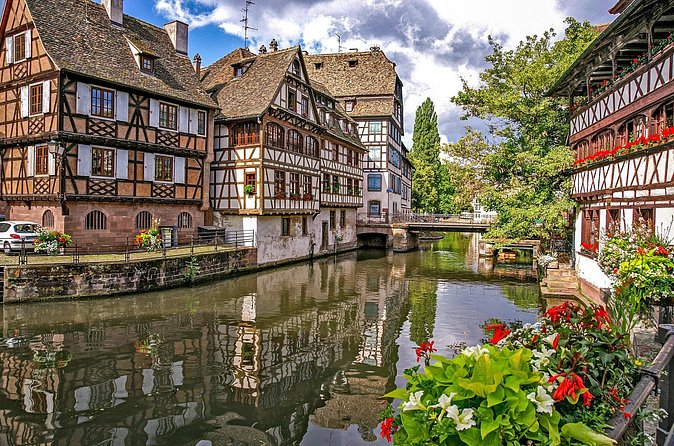
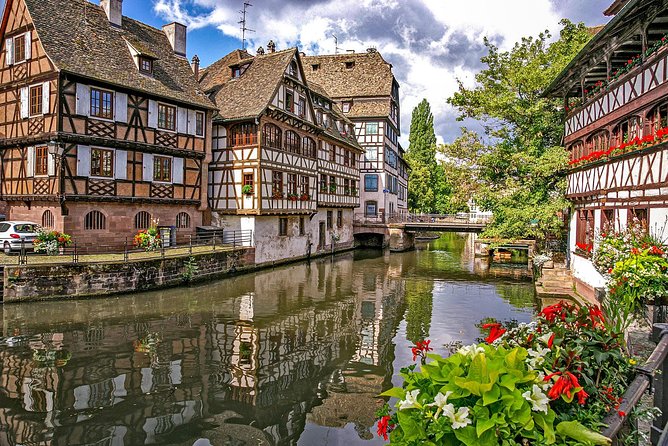
Petite France supplies the prettiest part of the route. The quarter is known for waterways, old timber-framed houses, and traditional Alsatian places to eat. It is also the section where the tour can feel least like a lecture and most like a stroll through a living neighborhood.
The waterways explain much of the area’s character. They help you see why this part of Strasbourg developed differently from the grand civic center. Your guide can point out how the canals, bridges, and buildings fit together, while you take in the layered facades and narrow views.
I like this stop because it gives the architecture a human scale. The cathedral is a giant public statement. Petite France is about houses, streets, water, and the daily shape of an old district. The contrast makes the overall tour more satisfying.
There is also a practical advantage to visiting Petite France with a private guide. You can ask which streets are worth revisiting at a slower pace and which restaurants serve traditional Alsatian food. The itinerary includes the chance to dine at Haus Kammerzell by the cathedral, but the tour price does not include personal expenses, so do not assume a meal is covered.
Allow yourself time to return to Petite France after the walk if you enjoy photography or want to eat. The official tour lasts about two hours, and this quarter alone can easily tempt you into lingering. The short format means you will see the area, but you should not expect an unhurried meal during the scheduled walk.
A few more architecture tours in the world worth a look
- Chicago Architecture River Cruise
★ 5.0 · 15,756 reviews - Chicago River 90-Minute Architecture Tour
★ 4.5 · 9,629 reviews - Chicago River: 1.5-Hour Guided Architecture Cruise
★ 4.8 · 8,046 reviews - Chicago Architecture Center River Cruise aboard First Lady
★ 5.0 · 5,536 reviews
Barrage Vauban and the city view
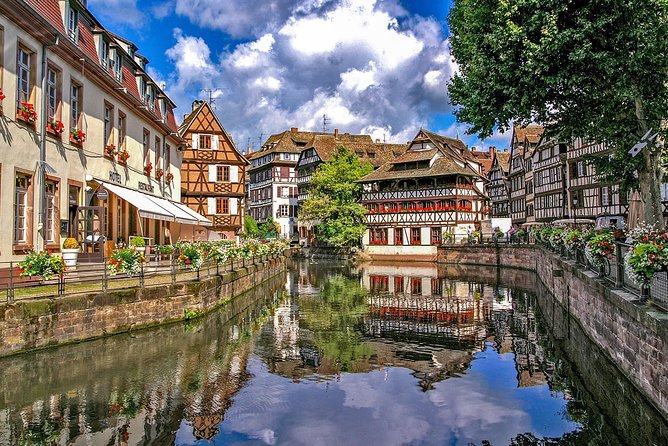
The Barrage Vauban is one of the most useful stops because it changes your viewpoint. Instead of studying individual buildings at street level, you look across the water toward Petite France and its timber-framed houses.
This historic dam links engineering with city defense. Even without a long technical explanation, it shows that Strasbourg’s waterways were not just decorative. They had practical importance, and the structure gives you a clear view of how water and urban planning work together.
Bring your camera here, but also listen before rushing through the photo stop. A local guide can explain what you are looking at and help connect the view to the neighborhoods you have already passed. That makes the panorama more than a quick snapshot.
The walkway may not suit every pace equally. The tour notes that the route can change with weather and adapt to walking speed, and visitors with impaired mobility should discuss their needs before booking. Public transport tickets are not included, though the walk itself is presented as a walking experience near public transportation.
This stop also helps break up the architecture lesson. After close views of facades and streets, the wider outlook gives you a moment to understand Strasbourg as a connected city rather than a collection of separate sights.
Place de la République and the Palais du Rhin
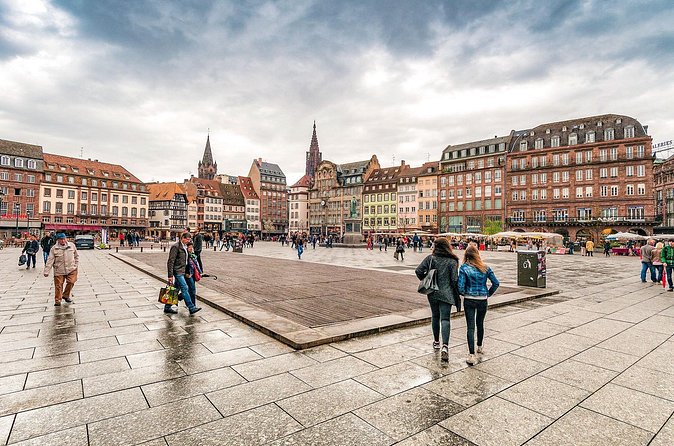
The route ends at Place de la République, a very different setting from Petite France. The square is surrounded by neoclassical buildings, including the Palais du Rhin, and offers a look at Strasbourg’s grander civic face.
This is where the city’s border position becomes especially useful as a theme. The square does not look like a medieval quarter. Its scale and formal design suggest a later period of planning and power, giving you a visible contrast with the cathedral and old houses.
Ending here is practical. Place de la République is not simply a final photo stop. It leaves you in an area where you can continue exploring after the guide departs. The tour information describes the end as the point where the city remains open for your own discovery, which is a polite way of saying the guide’s work finishes here and your independent time begins.
If you are booking this walk for the first day in Strasbourg, the endpoint can help you plan the rest of your visit. You will have seen the core historic sights and can decide which one deserves a longer return visit. If you already know the center well, the private format lets you ask for more architectural detail instead of following a fixed group script.
Haus Kammerzell and the Alsatian food angle
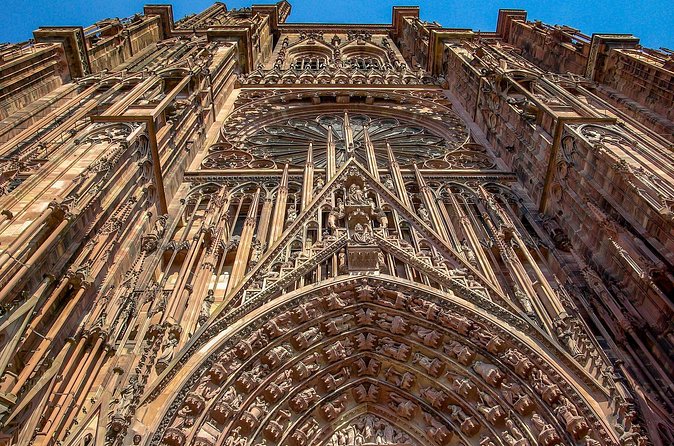
Haus Kammerzell is included as a notable stop near the cathedral. Its intricately carved facade makes it worth seeing even if you do not eat there. The restaurant is associated with traditional Alsatian cuisine, so it adds a useful food connection to an architecture-focused walk.
Be clear about the cost. The experience includes a local guide, a private tour, and a tailored itinerary. Personal expenses are not included, which means any meal at Haus Kammerzell is yours to pay for. Treat the restaurant as a possible dining suggestion or architectural stop, not as an included lunch.
That distinction matters because two hours is a tight window for a full meal. If you want to eat there, plan it before or after the walk unless your guide confirms that the timing works. You can also ask about other traditional Alsatian places in Petite France.
For me, this stop is most valuable as a reminder that architecture is not separate from local life. The carved facade, the cathedral setting, and the regional food all belong to the same sense of place. Still, visitors focused only on monuments may prefer more time at the cathedral or Barrage Vauban.
What the private format is worth
The price is $565.35 per group of up to two people. That is not a budget walking tour. For a couple, the cost works out to roughly $282.68 per person, before food, admissions, and any transport.
The value depends on how much you use the guide. If you want a general stroll with a few facts, the price will feel high. If you want to ask detailed questions, shape the pace, and focus on architecture rather than simply follow a standard route, the private format becomes easier to justify.
The strongest case is for two people who care about the city’s history and want an efficient first orientation. You avoid a large group and can make the guide spend more time on the topics that interest you. One available account specifically appreciates having room to get to know the guide and ask questions, which is the clearest benefit of paying for a private experience.
The tour is also useful for a short visit. Since it covers the cathedral, Petite France, Barrage Vauban, Place de la République, and Haus Kammerzell in about two hours, it helps you decide where to return. You are paying for access to a local perspective and a focused route, not for a long day of sightseeing.
The fact that it is often booked 88 days ahead suggests you should not leave the decision until the last minute, particularly if your dates are fixed. That does not guarantee the tour is unavailable later, but it is a useful planning signal.
Who should book this Strasbourg walk?
I would recommend it most strongly to:
- Couples who want a private introduction to Strasbourg
- First-time visitors with limited time
- People interested in architecture and city history
- Visitors who like asking questions instead of listening to a fixed script
- Anyone who wants a flexible pace and a route shaped around personal interests
It is less suitable if you want extensive interior visits, a full meal during the tour, or a low-cost group activity. The short schedule also means you should not expect every historical detail or every major monument in the city.
The experience may work for people with impaired mobility, but the route and stops should be discussed in advance. The information says most participants can take part, service animals are allowed, and public transportation is nearby. It does not promise a fully accessible route, so ask before booking if that is important to you.
The guide quality is likely to depend partly on who hosts your departure. Atreyu is praised for being friendly and adaptable, while Rebecca receives praise for making room for questions during a private walk. Those details point to a relaxed, conversational style, but they should not be treated as a guarantee of one specific guide.
Should you book it?
Book this tour if you want a private, question-friendly introduction to Strasbourg and can accept the high price. The route gives you an efficient look at the cathedral, Petite France, Barrage Vauban, Haus Kammerzell, and Place de la République, while the local guide adds the historical links that a self-guided walk may miss.
Skip it if your budget is tight or you prefer to explore independently. You can still see the main areas on your own, and the tour does not include admission tickets, food, or transport.
For the right visitor, the best reason to book is not the number of stops. It is the chance to shape a short walk around your own curiosity, then use the ending at Place de la République as a launch point for the rest of Strasbourg.
FAQ
How long does the tour last?
The experience lasts approximately two hours. Its highlights describe a private 90-minute tour, so you should allow around two hours overall.
How many people can join the private tour?
The price covers one group of up to two people. Only your group participates in the activity.
What language is the tour offered in?
The tour is offered in English.
Where does the tour start?
The stated starting point is Saint Aurelia’s Church on Rue Martin Bucer, Strasbourg. Check your confirmed booking details before arrival, since one account of the experience used Kleber Square as the meeting point.
Where does the tour end?
The walk ends at Place de la République in Strasbourg.
Which sights are included in the route?
The route includes Strasbourg Cathedral and its Astronomical Clock, Barrage Vauban, Place de la République, Petite France, and Haus Kammerzell.
Are admission tickets, food, and public transport included?
No. Entry tickets for public transportation, museums, and monuments are not included. Personal expenses, including food, are also extra.
Can I cancel for a full refund?
Yes. You can cancel at least 24 hours before the local start time for a full refund. Cancellations or changes made within 24 hours are not refunded or accepted.
Just added in the world
- Wilmington History and Architecture Tour★ 4.8 · 18 reviews
- Washington, DC: Georgetown Architecture Walking Tour★ 5.0 · 8 reviews
- New Orleans : Garden District Architecture Walking tour★ 4.8 · 5 reviews
- Washington DC: Dupont Circle & Embassy Row Architecture Tour★ 5.0 · 6 reviews
- Vicenza: Palladian Architecture Private Walking Tour★ 3.3 · 3 reviews
- Walk & Discover KL’s Architectural and Heritage Gems★ 5.0 · 7 reviews
- Private Colonial Williamsburg Architectural Tour★ 5.0 · 5 reviews
- Unveiling Brno: History, Culture & Architectural Delights★ 5.0 · 2 reviews
Architecture Tours, compared.
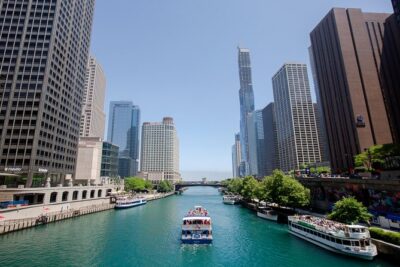
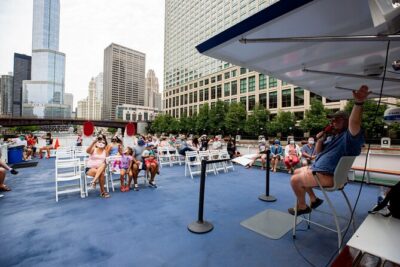

Chicago River: 1.5-Hour Guided Architecture Cruise
Read our review →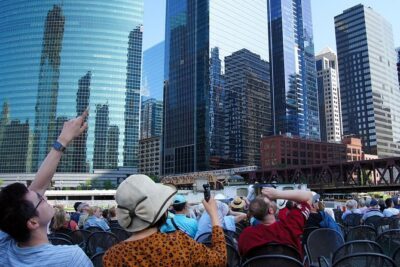
Chicago Architecture Center River Cruise aboard First Lady
Read our review →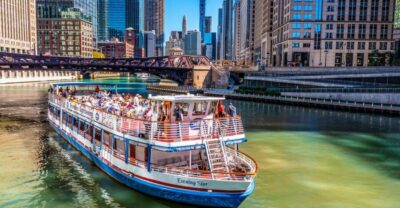
Architecture River Cruise Skip-the-Ticket Line
Read our review →
Chicago River 45-Minute Architecture Tour from Magnificent Mile
Read our review →
Browse the lists this tour appears in