
REVIEW · WALKING TOURS
British Architecture Walk, an immersive walking tour in Chennai
Chennai’s grandest stories are built in brick. This 2.5-hour walk links railway stations, civic buildings, bridges, and university architecture while showing how British design blended with Indian forms. I like the small group limit of 15, which should give you room to ask questions, and I like the route’s variety, from the old Egmore station to the Senate House beside Marina Beach. The main consideration is pace: you cover eight stops in a short time, and several buildings are viewed from outside or have admission not included.
The local guides are a major part of the appeal. Hareesh has been praised for adding fascinating historical details and even buying an Indian coffee during the walk, while Satish is described as informative and enthusiastic. At $55 per person, the price is fair if you value interpretation and a focused route, but less attractive if you only want quick photographs of Chennai’s colonial-era façades.
Key points to know before booking

- Eight notable stops in 2.5 hours: The route begins at Chennai Egmore and ends at the University of Madras, with Central Station, Victoria Public Hall, Ripon Building, Southern Railway Headquarters, Napier Bridge, and the Victory War Memorial in between.
- A compact group of up to 15: You get a better chance to hear the guide than on a large coach tour.
- A study in mixed design: Gothic Revival, Indo-Saracenic, and other British-era styles appear side by side.
- Coffee, tea, and snacks are included: A simple refreshment helps break up the walk, and one guide has also treated guests to Indian coffee.
- Hotel transfers are optional: Pickup and drop-off cost extra if selected, while the standard meeting point is Chennai Egmore.
- Strong satisfaction record: The experience has a 4.9 rating from 60 reviews, with 98 percent recommending it.
Why Chennai’s British architecture makes a good walking theme
Chennai is not a city where British influence appears in just one tidy historic quarter. It is spread across railway buildings, public halls, government offices, university spaces, bridges, and memorials. That makes this route useful: instead of staring at one façade, you can compare how architectural ideas changed across several decades.
The buildings also show that colonial design in Chennai was not simply copied from Britain. Gothic Revival details appear at Chennai Central, while Indo-Saracenic buildings combine European planning with Indian decorative forms. The result is a route with plenty of visual contrast, even if you are not an architecture specialist.
I would choose this walk if you want context for the city rather than a checklist of landmarks. The guide can explain why a clock tower matters, how a railway station was designed, or why a public building took its name from a British official. That extra layer is what makes the $55 price easier to justify.
More walking tours in India:
- Mumbai heritage walk- Story of Gothic and Art Deco buildings
★ 5.0 · 33 reviews - Victorian Gothic Heritage Quarter and Art Deco Walking Tour
★ 4.9 · 14 reviews - Victorian Gothic Heritage Quarter and Art Deco Walking Tour
★ 4.5 · 13 reviews
Starting at Chennai Egmore and its Indo-Saracenic style
The walk begins at Chennai Egmore railway station on Gandhi Irwin Road. The station is more than a century old and is identified as one of the earliest buildings in Chennai built in the Indo-Saracenic style.
The design was created by Henry Irwin, a major name in British-era architecture. The station was intended to be larger than Charing Cross station in London, which gives you an immediate sense of the ambition behind the project. This is not just an old transport building. It was meant to announce the importance of Chennai as a major city and rail connection.
You spend about 20 minutes here, with admission included. That is enough time for an introduction and a close look at the exterior details without using up too much of the route. If you enjoy railway architecture, this is one of the strongest opening stops because it sets up the mixture of Indian and European influences that appears again later.
Chennai Central and the Gothic Revival chapter
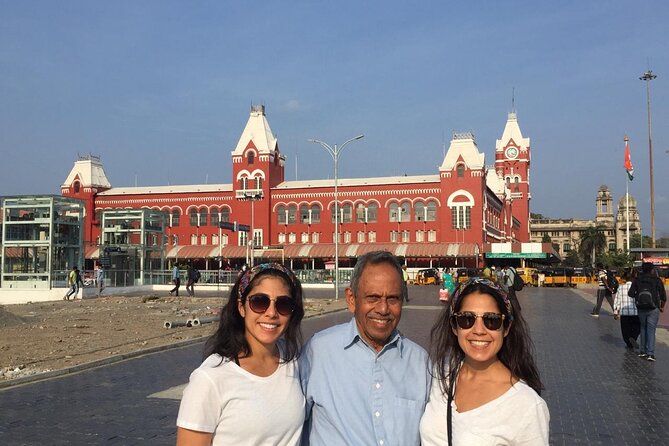
Next comes Chennai Central Railway Station, built in 1873 in the Gothic Revival style by British architect George Harding. The building was later modified by Robert Chisholm, who added the central clock tower and Travancore caps on the main structure.
You have about 30 minutes here, the longest stop on the route. That makes sense. Central is one of the most visually important buildings on the walk, and its layered design gives the guide more to explain. The original Gothic Revival plan and later additions help you see that these landmarks were not always created in one single campaign.
Admission is included at this stop. Still, do not expect a museum visit based on the information provided. The value is in seeing the station as a working architectural landmark and hearing how its design developed.
This is also a practical point in the tour. Railway stations are active public places, so the walk may feel less quiet than a museum visit. If you want to take photographs, listen closely to the guide’s instructions and stay aware of your group.
Victoria Public Hall and a vanished age of public events
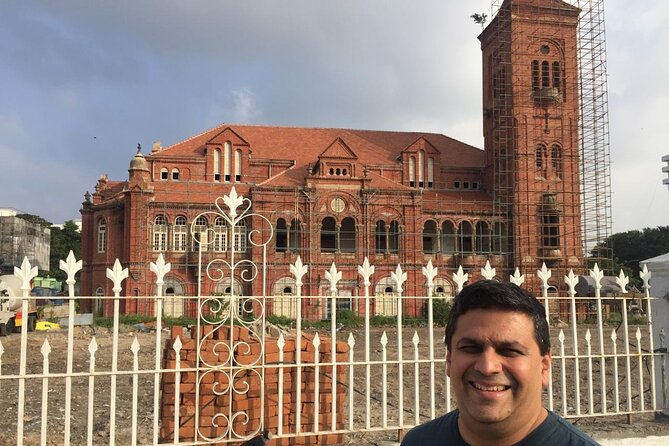
Victoria Public Hall opened in 1887 to mark the Golden Jubilee of Queen Victoria. It was named for the queen and served as a venue for public meetings and other events.
The stop lasts around 20 minutes, but admission is not included. That distinction matters. You should treat this part of the walk as an architectural and historical visit rather than assume you will enter every building.
The hall helps explain how public architecture worked during the British period. These buildings were not only offices. They hosted meetings and civic events, giving them a public role that went beyond their façades. The guide’s explanation is especially useful here because the building’s purpose gives more meaning to its design.
A few more architecture tours in India worth a look
- The Hipster Chandigarh Architecture History Tour
★ 5.0 · 54 reviews - Jaipur City Heritage and Architecture Tour
★ 5.0 · 32 reviews - Le Corbusier’s Chandigarh : A Complete Architecture Tour
★ 4.7 · 25 reviews - Day trip from Bangalore to Lepakshi for Temple architecture & paintings
★ 5.0 · 15 reviews
Ripon Building, Chennai’s white civic landmark
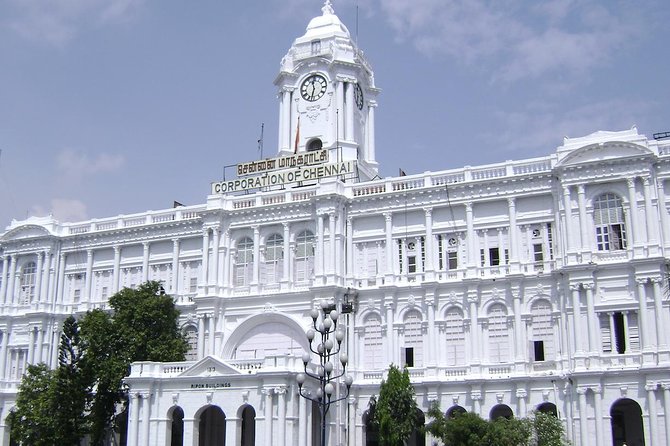
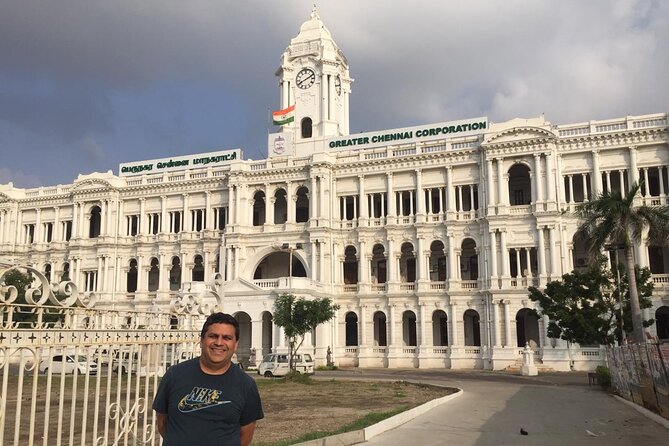
The route continues to the Greater Chennai Corporation Office, better known as Ripon Building. It was commissioned in 1913, designed by G.S.T. Harris, and built by Loganatha Mudaliar. It takes its name from Lord Ripon, a Governor-General of India.
You spend about 15 minutes here, and admission is not included. The stop works well as a quick architectural pause, particularly if you want to compare this civic building with the railway stations seen earlier.
Ripon Building is a reminder that colonial architecture also served municipal administration. Its purpose was practical and governmental, but the building was given a formal public face. I like this kind of stop because it shows how power was displayed through civic design, not only through forts and monuments.
Southern Railway Headquarters and Indo-Saracenic detail
The Southern Railway Headquarters is another important comparison point. Built in the Indo-Saracenic style, it was designed by N. Grayson and built by Samynada Pillai. Construction was completed in 1921.
The visit lasts about 15 minutes, with admission not included. As with Ripon Building, you should expect the guide to focus on the building’s exterior and historical role rather than an interior tour.
Placed after two earlier civic landmarks, this stop gives you a useful architectural progression. You have already seen the Indo-Saracenic approach at Egmore, and now you can consider how the style was used for a major railway office. The route does not present British architecture as one fixed look. Instead, you see several versions of it across transport, government, and education.
Napier Bridge across the Coovum River
Napier Bridge was built in 1869 across the Coovum River and named after Francis Napier, the British governor of Fort St George. It connects Marina Beach with Fort St George.
This is a shorter 15-minute stop, but it changes the mood of the tour. After several buildings, you are looking at infrastructure that links important parts of the city. The bridge also helps connect the architecture walk to Chennai’s wider geography, since it sits between the Fort area and Marina.
Admission is included. The supplied details do not promise a special bridge entry or extended stop, so think of it as a guided look at the structure and its place in the city.
For you, the main value is context. A bridge can seem ordinary when crossed quickly by car, but its age and name make it part of Chennai’s British-era story. It also gives the itinerary a useful outdoor break before the university and memorial stops.
The University of Madras and the Senate House
The University of Madras is the main endpoint, with the Senate House as its best-known architectural feature. The Senate House serves as the university’s administrative center and sits along Marina Beach. Robert Chisholm designed it, and it is regarded as a strong example of the Indo-Saracenic style.
You spend about 15 minutes here, and admission is not included. Since this is the end of the standard route, it is worth paying attention to the final explanation rather than treating the university as simply the place where the tour finishes.
The Senate House brings several ideas together: education, administration, Indian design references, and European planning. It is a fitting last major building because you can compare it with Egmore and Southern Railway Headquarters while the details are still fresh.
The end point is on Navalar Nagar in Chepauk, near Marina Beach. That gives you a useful location for continuing your own Chennai sightseeing, although no further activity is included in the tour.
The Victory War Memorial and its changing name
The route also includes the Victory War Memorial, formerly called Cupid’s Bow. The memorial was built to commemorate the Allied victory in World War I from 1914 to 1918 and later became known as the Victory War Memorial.
The stop lasts about 15 minutes, and admission is included. Its changing name gives the guide a chance to explain how public monuments can acquire new meanings over time.
This is a good counterpoint to the railway stations and government offices. The other buildings supported transport, civic administration, or education. This one was created to remember military victory. It shows another way public space was used during the British period.
What the guides add to the walk
A route like this depends heavily on the person leading it. Buildings can be photographed without a guide, but their connections are harder to see on your own. The strongest feedback for this experience centers on the guides’ historical explanations, enthusiasm, and personal touches.
Hareesh has been praised for sharing fascinating facts about the buildings and for buying an Indian coffee during the walk. Satish has been described as informative and enthusiastic, especially for visitors who want to see Chennai from a different angle. Those details suggest a friendly, conversational style rather than a dry lecture, though guide experiences can naturally vary by date.
The small group format helps. With a maximum of 15 people, you should have a better chance of hearing the explanation and asking a question than you would on a large city tour. It is still a group walk, so do not expect a private architectural consultation.
Coffee or tea is included, and snacks are provided at no extra cost. The coffee stop is a welcome practical touch, especially since the route keeps moving through the city.
Price, timing, and the real value
The cost is $55 per person. That is not a bargain-basement walking tour, but the price includes a local guide, taxes, handling charges, coffee or tea, and snacks. The route also covers eight named sites over roughly two and a half hours.
I see the value in the interpretation and the range of buildings. If you tried to identify the architects, dates, styles, and civic roles on your own, you could see the same exteriors but miss much of the meaning. The tour is also capped at 15 people, which supports a more personal experience.
The value is weaker if your priority is entering every landmark. Admission is not included for Victoria Public Hall, Ripon Building, Southern Railway Headquarters, and the University of Madras. The supplied details do not state that interior access is arranged at those locations, so book this for guided city sightseeing, not a guaranteed inside tour.
The experience is booked, on average, 29 days ahead. If your Chennai dates are fixed, reserving early is sensible. Confirmation arrives at booking, and a mobile ticket is available.
Meeting point, transport, and physical demands
The standard start is Chennai Egmore railway station on Gandhi Irwin Road. The tour ends at the University of Madras in Chepauk, rather than returning you to Egmore. Plan the rest of your day around that endpoint.
Hotel pickup and drop-off are optional, not part of the basic price. If you select that option, it can make the start easier, especially if you are unfamiliar with Chennai’s transport network. The walk is near public transportation, and most people can participate.
You should still be ready to walk between several sites for two and a half hours. The exact distance and surface conditions are not given, so comfortable shoes are a sensible choice. The route includes outdoor stops, and the pace must allow time for eight locations, so this is better for someone who enjoys a steady city walk than for someone seeking a slow, seated tour.
Free cancellation is available if you cancel at least 24 hours before the start time. Changes or cancellations inside that window are not accepted for a refund.
Who should book the British Architecture Walk
I would recommend this experience to you if you like architecture, railways, civic buildings, or the way history shapes an urban center. It also suits first-time visitors who want a structured introduction to central Chennai without spending a full day on a large sightseeing bus.
History fans will get the most from the dates, architects, building styles, and changing public roles. You do not need formal architecture training. The mix of Gothic Revival and Indo-Saracenic design gives the route enough variety for a casual interest.
You may want to skip it if you strongly prefer indoor attractions, need a very slow pace, or want guaranteed access to every building. The tour is mainly a guided look at significant sites along a walking route, with some admissions included and others not.
Should you book it?
Book this walk if you want Chennai explained through its buildings rather than reduced to a few quick photographs. The route is well chosen, the group size is sensible, and the guides appear to add the historical detail that makes the architecture meaningful. I especially like the contrast between Egmore, Central, Ripon Building, the railway headquarters, and the Senate House.
At $55, it is best for you if a local guide, refreshments, and a focused small-group route matter more than bargain pricing. If that sounds right, reserve ahead, wear comfortable shoes, and remember that the walk finishes at the University of Madras rather than at its starting point.
FAQ
How long does the British Architecture Walk last?
The tour lasts approximately 2 hours and 30 minutes.
Where does the tour begin?
It begins at Chennai Egmore railway station on Gandhi Irwin Road, Egmore, Chennai, Tamil Nadu 600008.
Where does the tour end?
The tour ends at the University of Madras in Navalar Nagar, Chepauk, Triplicane, Chennai, Tamil Nadu 600005.
How many people can join the tour?
The maximum group size is 15 people.
Is hotel pickup included?
Hotel pickup and drop-off are not included unless you select the optional transfer option.
What refreshments are included?
Coffee or tea is included, and snacks are provided at no extra cost.
Which sites are included in the route?
The route includes Chennai Egmore, Chennai Central Railway Station, Victoria Public Hall, the Greater Chennai Corporation Office in Ripon Building, Southern Railway Headquarters, Napier Bridge, the University of Madras, and the Victory War Memorial.
Are entrance tickets included at every stop?
No. Admission is included at Chennai Egmore, Chennai Central Railway Station, Napier Bridge, and the Victory War Memorial. Admission is not included at Victoria Public Hall, Ripon Building, Southern Railway Headquarters, or the University of Madras.
Can I cancel for a full refund?
Yes. You can receive a full refund if you cancel at least 24 hours before the experience start time. Cancellations or changes made less than 24 hours beforehand are not accepted for a refund.
Just added in India
- Victorian Gothic Heritage Quarter and Art Deco Walking Tour★ 4.9 · 14 reviews
- New Delhi: Mughal’s architecture tour with transfers★ 4.0 · 7 reviews
- Victorian Gothic Heritage Quarter and Art Deco Walking Tour★ 4.5 · 13 reviews
- 2 day tour from Mumbai to architectural wonder of Mandu★ 5.0 · 2 reviews
- Goa Walking tour: History, Culture, Art and architecture★ 4.5 · 2 reviews
- British Architecture Walk in Chennai by Wonder tours★ 5.0 · 10 reviews
- South India Tour- Temple Architecture and Backwaters★ 5.0 · 7 reviews
- Day trip from Bangalore to Lepakshi for Temple architecture & paintings★ 5.0 · 15 reviews
Walking Tours, compared.

The Official Art Deco Walking Tour by The Miami Design Preservation League
Read our review →
Baroque Architecture and Underground Walking Tour
Read our review →
Chicago in a Day: Food, History & Architecture Walking Tour
Read our review →

Ramblas, Old Town, Gothic and Gaudi Architecture Walking Tour
Read our review →
Chicago’s Secret Interiors Architectural Walking Tour
Read our review →

Browse the lists this tour appears in