REVIEW · ARCHITECTURE TOURS
Architectural Budapest: Private Tour with a Local Expert
Budapest tells its story in stone. This private two-hour walk links grand churches, royal buildings, Art Nouveau details, and modern design with a Local Expert who can shape the route around your interests. I like the private format, which keeps the pace and conversation personal, and I like the mix of famous sights with less obvious architecture, including the Postal Savings Bank and Hotel Budapest. The main drawback is the price: $578.41 for up to two people is a serious spend for only two hours.
You begin at St. Stephen’s Basilica and finish in Buda, near Hotel Budapest. That point-to-point route gives the tour a useful sense of movement across the city, but it also means you should ask how transport will work before setting out. Tickets for public transport, museums, and monuments are not included, and the route is not recommended for people with impaired mobility.
Key points at a glance
- A private route for up to two people: You get an exclusive guide rather than a shared group, with room to ask questions and adjust the pace.
- Seven contrasting architectural stops: The route moves from neoclassical and neo-Renaissance buildings to Gothic Revival, Art Nouveau, and modernist design.
- A strong citywide finish: Starting at St. Stephen’s Basilica and ending near Hotel Budapest takes you beyond the central sights toward Buda.
- Architecture tied to national identity: The Parliament Building, Buda Castle, and Castle Hill help explain how Budapest’s skyline reflects Hungary’s political and royal past.
- A flexible focus: The route can adapt to your interests, walking speed, and weather, though specific stops may change.
- Useful personal guidance: The guide offers suggestions for seeing more of Budapest after the tour, which helps turn a short outing into a starting point for the rest of your stay.
What this private Budapest architecture tour is really offering
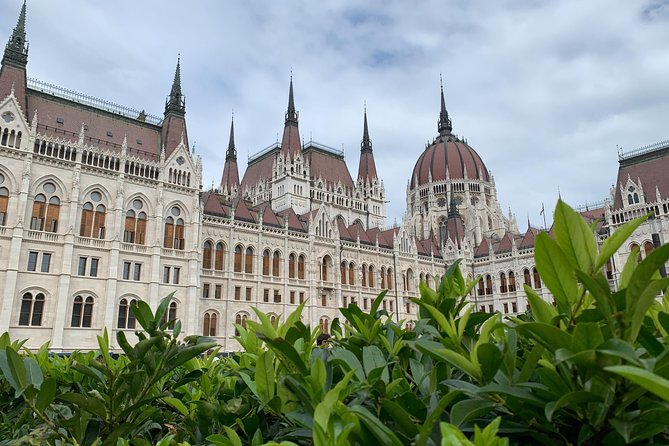
This is not a building-by-building lecture delivered at a fixed pace. It is a compact orientation to Budapest through its architecture, with a local guide choosing the emphasis according to what catches your attention.
That matters because Budapest can feel like several cities stitched together. Pest offers broad avenues, grand civic buildings, theatres, and commercial streets. Buda brings hills, castle walls, medieval references, and later modern construction. In two hours, you will not master the city’s architecture, but you can learn how to read its changes.
The private setting is the tour’s strongest feature. With only your group of up to two people, you can spend more time on the styles you care about. If you prefer opera houses and decorative interiors, say so. If political history, modern design, or the effects of Hungary regaining independence interest you more, the guide can give those subjects greater weight.
The route is also designed to move beyond the postcard version of Budapest. St. Stephen’s Basilica, the Opera House, Parliament, Buda Castle, Matthias Church, and Fisherman’s Bastion are major sights. The Postal Savings Bank and Hotel Budapest add a different layer, showing how the city experimented with Art Nouveau and modernist forms.
More private tours in the world:
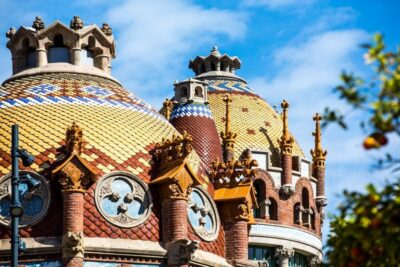
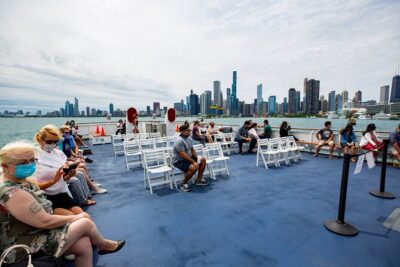
- Best of Chicago: Architecture & Highlights City Private Tour
★ 5.0 · 94 reviews - Private Harajuku Omotesando Architecture Walking Tour
★ 5.0 · 67 reviews - Private Santa Barbara History and Architecture Walking Tour
★ 5.0 · 56 reviews
Starting beneath the dome of St. Stephen’s Basilica
The tour begins at St. Stephen’s Basilica on Szent István tér. This is a practical meeting point in central Budapest, and the church gives you an immediate lesson in scale. Its neoclassical exterior, huge dome, and role as a major religious landmark make it one of the city’s clearest examples of monumental design.
I would use this first stop to ask your guide how Budapest’s religious buildings fit into the city’s political and cultural story. The basilica is not simply a pretty church. It shows how nineteenth-century Budapest used grand public architecture to express confidence, order, and national importance.
The drawback is that the tour does not include entry tickets for monuments. If you want to go inside, visit a museum, or use public transport during the experience, those costs are yours. Since the tour lasts about two hours, ask how much time will be spent outside and whether an interior visit fits the day’s plan.
Andrássy Avenue and the Hungarian State Opera House
From the basilica, the route turns toward Andrássy Avenue, one of Budapest’s most impressive urban corridors. The avenue is lined with substantial buildings, luxury shops, and cultural institutions, so it works as more than a walk between stops. It shows how Budapest planned a grand city boulevard for both daily life and civic display.
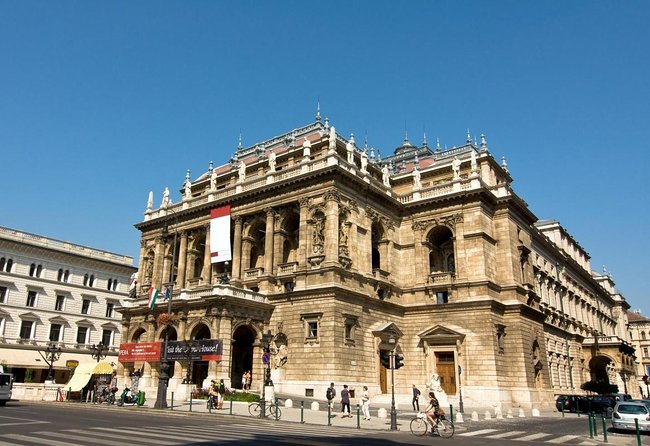
The Hungarian State Opera House brings that idea indoors, at least in architectural spirit. Its neo-Renaissance design and connection to major performances make it one of the city’s cultural highlights. Even if your visit focuses on the exterior, the building helps explain why Budapest is often compared with Europe’s great nineteenth-century capitals.
I like this section for readers who want architecture connected to music, public life, and urban planning. You can ask your guide to point out the difference between a ceremonial avenue and an ordinary street, then notice how Andrássy Avenue keeps its sense of occasion.
Do not assume an opera performance or interior visit is part of the tour. The package includes a Local Expert, a private tour, and a tailored route, not admission to performances or monuments.
The Postal Savings Bank’s playful Art Nouveau
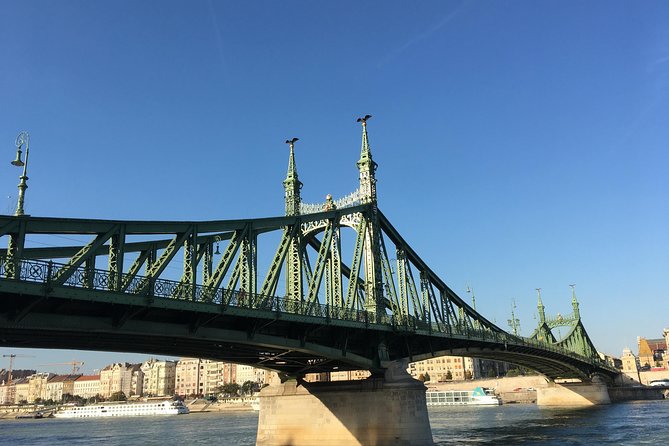
The Postal Savings Bank provides one of the route’s most distinctive stops. Its early twentieth-century Art Nouveau design shows a different Budapest from the formal basilica and opera house. Here, decoration is not treated as an afterthought. Functional architecture becomes a place for pattern, color, and visual wit.
This building is especially useful if you want to understand that Budapest architecture is not only about grand neoclassical fronts. Art Nouveau gave designers room to use local references and natural forms while still serving a practical purpose.
I would ask the guide to compare the Postal Savings Bank with the Opera House. Both are decorative, but they communicate differently. One is tied to performance and ceremony. The other connects design with an everyday service and the working city.
This is also a good example of why a local guide adds value. A short stop can pass quickly if you do not know where to look. The right explanation can help you notice details that you would otherwise walk past.
A few more architecture tours in the world worth a look
- Chicago Architecture River Cruise
★ 5.0 · 15,756 reviews - Chicago River 90-Minute Architecture Tour
★ 4.5 · 9,629 reviews - Chicago River: 1.5-Hour Guided Architecture Cruise
★ 4.8 · 8,046 reviews - Chicago Architecture Center River Cruise aboard First Lady
★ 5.0 · 5,536 reviews
Parliament beside the Danube
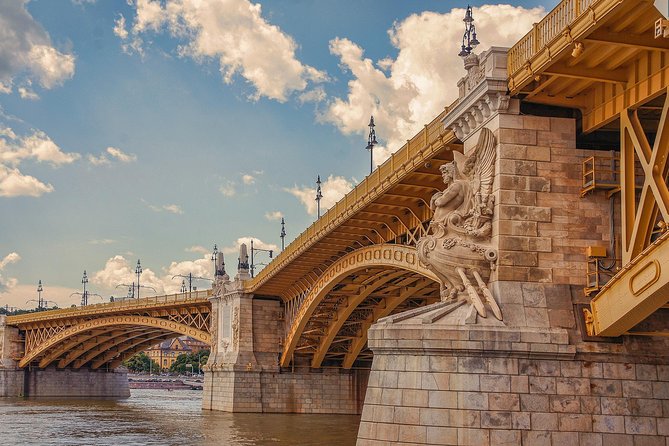
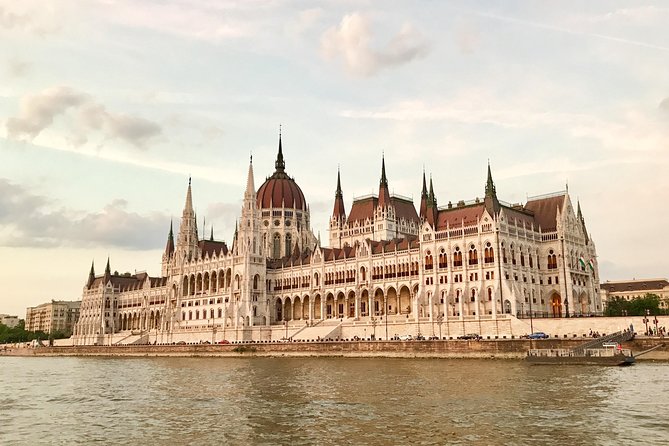
The Parliament Building is the route’s great Gothic Revival statement. Along the Danube, it represents the political center of Hungary and gives the riverfront its most recognizable profile.
The building’s importance is not only visual. It helps connect architecture with state power, national identity, and the changing role of Budapest as a capital. Your guide can place Parliament alongside the basilica, opera house, and castle buildings, allowing you to compare religious, cultural, political, and royal forms of authority.
This stop can also help you understand the city’s two-sided character. The Danube is not just a scenic divider. It separates and connects Pest and Buda, while the buildings on each bank show different periods and purposes.
Again, admission is not included. The tour can explain the building from outside, but you should not count on an interior visit unless you arrange and pay for it separately. With only two hours, the value here comes mainly from context and comparison rather than a long museum-style visit.
Castle Hill, Buda Castle, and medieval Budapest
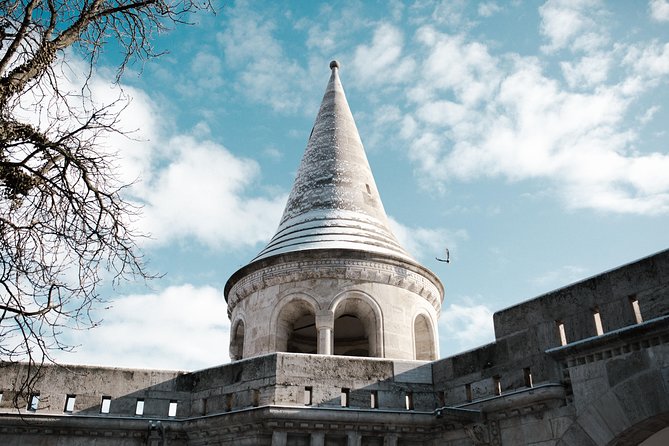
Castle Hill changes the mood. After the grand avenues and civic buildings of Pest, you reach a district shaped by medieval origins, royal power, religious architecture, and later rebuilding.
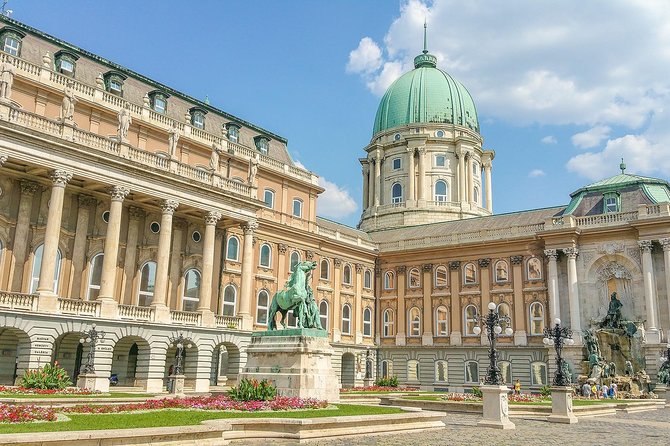
Buda Castle anchors the hill and has helped define Budapest’s skyline for centuries. Matthias Church adds a strong religious and historic focus, while Fisherman’s Bastion supplies one of the city’s best-known architectural viewpoints and a distinctly romantic style.
This is where the tour’s promise to explain the skyline becomes most useful. You can see how the castle district relates to the Danube, Parliament, and the city spreading below. The guide can also explain how different periods overlap rather than treating Budapest as a perfectly preserved medieval town.
Castle Hill is the section most likely to challenge your legs. The tour is not recommended for people with impaired mobility, and you should take that warning seriously. The route may involve uneven surfaces, slopes, or a change in elevation, though the exact path can vary.
Because the group is private, you can ask for a slower pace or fewer stops if needed. That flexibility helps, but it cannot remove the physical demands of a hill district.
Hotel Budapest and the city’s modern turn
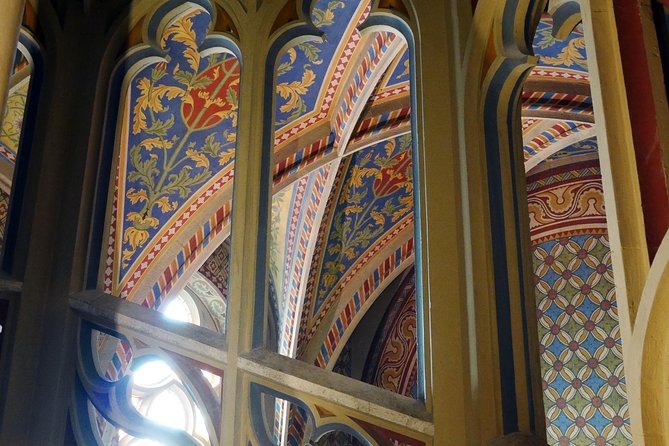
The final architectural example, Hotel Budapest, offers a sharp contrast to the classical and baroque buildings earlier in the day. Its cylindrical form makes it an example of modernist design in Buda, and its presence shows that Budapest did not stop changing after its grand nineteenth-century buildings were complete.
This is a smart ending because it prevents the tour from turning Budapest into a museum of old styles. You see a city that continued to experiment, even as older churches, palaces, and civic buildings remained central to its identity.
Ending near Szilágyi Erzsébet fasor 47 also takes you away from the most familiar central sights. You finish with a sense of Budapest as a larger city, not just the stretch around the basilica and riverfront.
The end point is not near the starting point, so plan your next activity with that in mind. The tour description does not specify which transport is used between stops, and transport tickets are excluded. Ask the guide at the start how the group will move across the city.
How much value do you get for $578.41?
At $578.41 per group of up to two, this tour costs far more than a standard shared walking tour. The value depends on how much you want personal attention and a custom route.
For two people, the price works out to $289.21 each. That is still expensive for two hours, but a private guide can save you from spending a full day trying to connect Budapest’s architecture on your own. You are paying for exclusivity, flexibility, and a route that crosses several parts of the city.
The price is harder to justify if you mainly want quick facts at the city’s biggest sights. You will also pay extra for public transport, museum admission, and monument entry where required. If your budget is tight, a longer shared tour may give you more sightseeing time for less money.
I see the best value for couples, friends, or families who want a focused introduction and plan to use the guide’s recommendations afterward. A published experience with guide Beata is particularly useful in this regard: she adjusted the focus toward parts of Budapest the group had barely seen and included subjects that worked for different age groups, from the Opera House to Szimpla Bar.
That example also shows what you should request. Tell the guide what you have already seen, what you want to understand, and how much walking suits you. The more specific you are, the more the private format can earn its price.
Timing, pace, and practical planning
Two hours goes quickly. Seven listed stops do not mean seven long visits. Much of the experience will involve moving between districts and viewing buildings from outside, so you should think of this as a focused introduction rather than a full architectural study.
The itinerary can change with weather, and the guide can adapt it to your interests and walking pace. That is helpful, but it also means the exact experience is not fixed. If one building matters greatly to you, mention it before the tour begins.
The starting point is St. Stephen’s Basilica, Szent István tér 1. The end point is in Buda at Szilágyi Erzsébet fasor 47. The tour is near public transport, but tickets are not included. Service animals are allowed, and most people can participate, but the route is not recommended for those with impaired mobility.
Confirmation arrives when you book. Free cancellation is available if you cancel at least 24 hours before the local start time. Inside that window, you receive no refund, and changes are not accepted.
Who should book this experience?
I would recommend this tour to people who care about buildings but want more than a list of dates and styles. It suits first-time visitors who want a quick framework for Budapest, as well as repeat visitors who have already seen the obvious sights and want a more focused look at architecture.
It is especially good for two people with different interests. One person can ask about opera and decorative design while the other focuses on politics, medieval history, or modern construction. The guide can adjust the balance instead of forcing everyone through the same script.
I would be more cautious if you need a low-cost activity, want extensive interior access, or prefer to avoid hills and citywide movement. The price is high, the duration is short, and entry fees and transport costs sit outside the package.
Should you book it?
Book this private architecture tour if personal attention matters more to you than bargain pricing. The best reason to choose it is the range of Budapest it covers, from St. Stephen’s Basilica and Andrássy Avenue to Parliament, Castle Hill, and Hotel Budapest.
Before paying, contact the operator with three questions: which stops are likely on your date, how the group will travel between Pest and Buda, and whether any interior visits are possible within two hours. If the answers fit your interests, the tour can give you a clear, useful way to read Budapest for the rest of your stay. If not, save the money for individual admissions and explore the city at your own pace.
FAQ
How long does the Architectural Budapest tour last?
The tour lasts approximately two hours.
How many people can join the private tour?
The experience is private and is priced for a group of up to two people. Only your group participates.
Where does the tour start?
The tour starts at St. Stephen’s Basilica, Budapest, Szent István tér 1, 1051 Hungary.
Where does the tour end?
The tour ends in Buda at Budapest, Szilágyi Erzsébet fasor 47, 1026 Hungary.
Are transportation, museum, and monument tickets included?
No. Entry tickets for transportation, museums, and monuments are not included.
Can the itinerary change?
Yes. The route can adapt to your interests and walking pace, and stops may vary with weather conditions.
Just added in the world
- Wilmington History and Architecture Tour★ 4.8 · 18 reviews
- New Orleans : Garden District Architecture Walking tour★ 4.8 · 5 reviews
- Washington DC: Dupont Circle & Embassy Row Architecture Tour★ 5.0 · 6 reviews
- Washington, DC: Georgetown Architecture Walking Tour★ 5.0 · 8 reviews
- Vicenza: Palladian Architecture Private Walking Tour★ 3.3 · 3 reviews
- Walk & Discover KL’s Architectural and Heritage Gems★ 5.0 · 7 reviews
- Unveiling Brno: History, Culture & Architectural Delights★ 5.0 · 2 reviews
- Private Colonial Williamsburg Architectural Tour★ 5.0 · 5 reviews
Architecture Tours, compared.
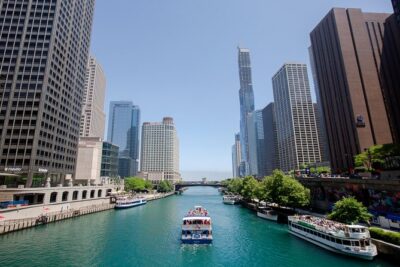
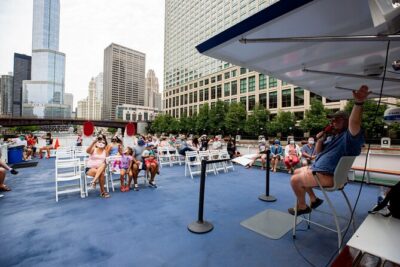

Chicago River: 1.5-Hour Guided Architecture Cruise
Read our review →
Chicago Architecture Center River Cruise aboard First Lady
Read our review →
Architecture River Cruise Skip-the-Ticket Line
Read our review →
Chicago River 45-Minute Architecture Tour from Magnificent Mile
Read our review →