
REVIEW · WALKING TOURS
Venice Art and Architecture Private Walking Tour
Venice rewards those who leave the obvious route. I like this two-hour walk for its focus on quieter architectural treasures and its private format, which lets your guide adjust the discussion to your interests. I also like the chance to see Santa Maria dei Miracoli and Campo San Giovanni e Paolo, two places that can slip past visitors racing toward St. Mark’s Square.
The tour costs $150.10 per person, so it makes the most sense for people who care about Venetian art and want personal attention rather than a broad city overview. The main drawback is clear: this is an exterior-only visit unless you pay extra entrance fees on the spot, and one very unhappy guest reported feeling that the guide stood too close during the tour.
Key points to know before booking
- A quieter side of Venice: The route avoids St. Mark’s Square and concentrates on churches, courtyards, and squares away from the city’s most familiar sights.
- A short private walk: The two-hour format works well for an introduction to Venetian art and architecture, but it does not allow time for a long list of monuments.
- Three especially strong stops: Corte del Milion, Santa Maria dei Miracoli, and Santi Giovanni e Paolo give the tour a clear architectural focus.
- A flexible guide can shape the walk: Guide Gentiana received praise for answering questions and adapting the route to the group’s interests and level of knowledge.
- Church interiors cost extra: The tour explains the exteriors, but entrance is not included if you want to go inside.
- Small group, not always one household: The group is limited to eight participants, and the experience is described as private, so confirm the exact arrangement when booking.
Why this walk works in a city built for wandering
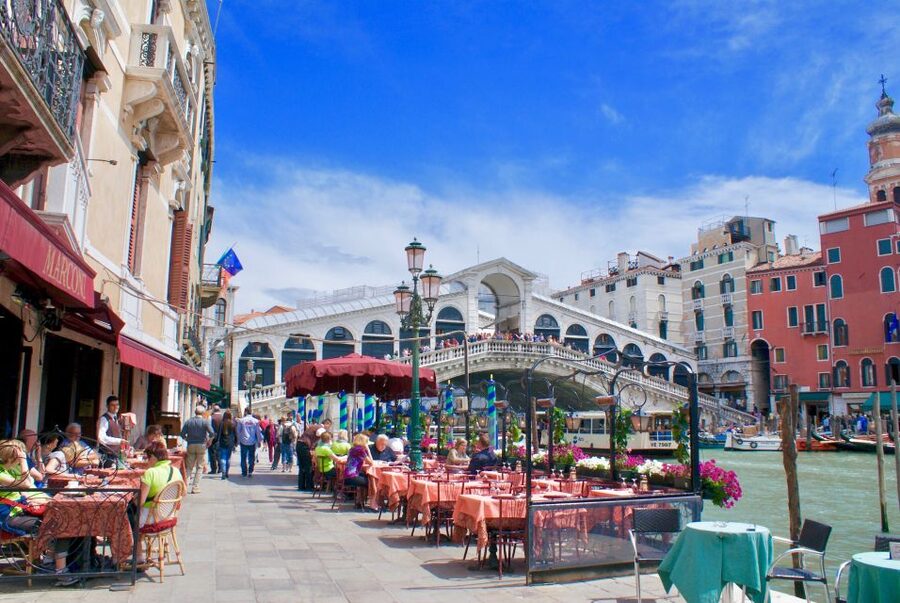
Venice can feel like a collection of famous postcard views: the Grand Canal, Rialto Bridge, St. Mark’s Basilica, and the Doge’s Palace. Those sights deserve their place, but they can also crowd out the quieter buildings that explain how the city developed.
This walk takes a different approach. It begins at Campo San Bartolomeo, near Rialto, then moves through less familiar corners toward the churches of Cannaregio and Castello. You are not simply ticking off monuments. You are following a small chain of courtyards, squares, and facades that show how Venetian religious and civic architecture changed over time.
I like the scale of the experience. Two hours is enough to cover several important sites without turning the outing into an all-day march. You get a guide who can answer questions, rather than a fixed audio track or a speech delivered to a large crowd. The group limit of eight also gives you a better chance to hear clearly in Venice’s narrow streets.
Still, this is not a full sightseeing tour of Venice. You will not cover St. Mark’s Square, the major palaces, or the city’s full museum collection. Think of it as a focused art and architecture walk that fits well beside a separate visit to the main sights.
More walking tours in Italy:
- Lecce: Baroque Architecture and Underground Walking Tour
★ 4.6 · 1,248 reviews - Experience Florence’s Art and Architecture on a Walking Tour
★ 5.0 · 318 reviews - Palermo: Art and Architecture Walking Tour
★ 4.7 · 136 reviews
Starting at Campo San Bartolomeo and the Goldoni statue
The meeting point is Campo San Bartolomeo, at Rialto 5282, in front of the statue of Carlo Goldoni. Arrive about 15 minutes early and look for the guide holding a sign with your name.
That location is practical because Rialto is easy to recognize, but Venice’s lanes can still make a short distance feel confusing. Give yourself extra time to cross bridges and find the campo. Hotel pickup may be arranged from hotels in the St. Mark’s area, which could save some orientation time if your accommodation is nearby.
The opening introduction sets up the idea behind the tour: looking at Venice through its buildings rather than rushing from one headline sight to another. This is also the moment to tell your guide what interests you. The strongest feedback came from a walk adjusted to the group’s architectural and historical knowledge, so speak up if you want more detail on sculpture, church design, Venetian political life, or local stories.
Corte del Milion and the Marco Polo connection
One early stop is Corte del Milion, a courtyard associated with Marco Polo’s account of his travels in the Far East. The name gives the place an immediate connection to Venice’s merchant past and its long interest in trade beyond the Adriatic.
A guide adds value here because a courtyard can be easy to pass without understanding why it matters. You can ask how the site connects with Marco Polo, Venetian commerce, and the city’s habit of folding private residences and public memory into a tight urban fabric.
This is also a useful reminder that Venice’s character is not only found along its grand waterways. Small courts and passageways often carry the names and stories that explain the city’s identity. I would pay close attention to how your guide links the physical space to the people connected with it, rather than treating the stop as a quick photo pause.
Because the tour lasts only two hours, the visit here is likely an explanation from the outside rather than a long exploration. That is fine for a first look, but readers with a strong interest in Marco Polo may want to ask focused questions in advance.
Santa Maria dei Miracoli and its Renaissance design
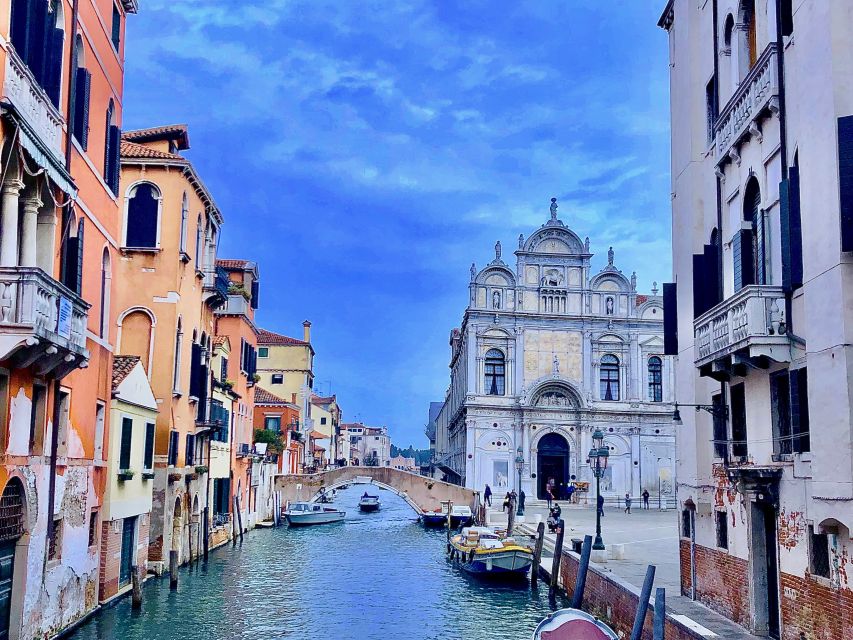
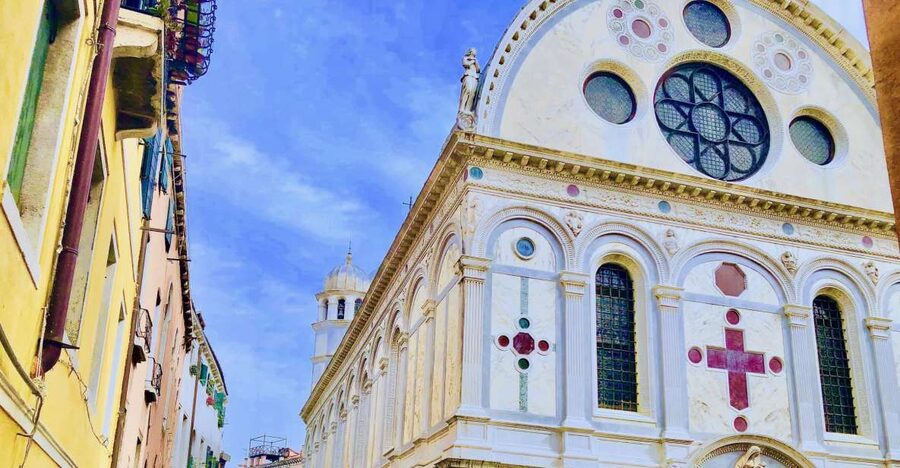
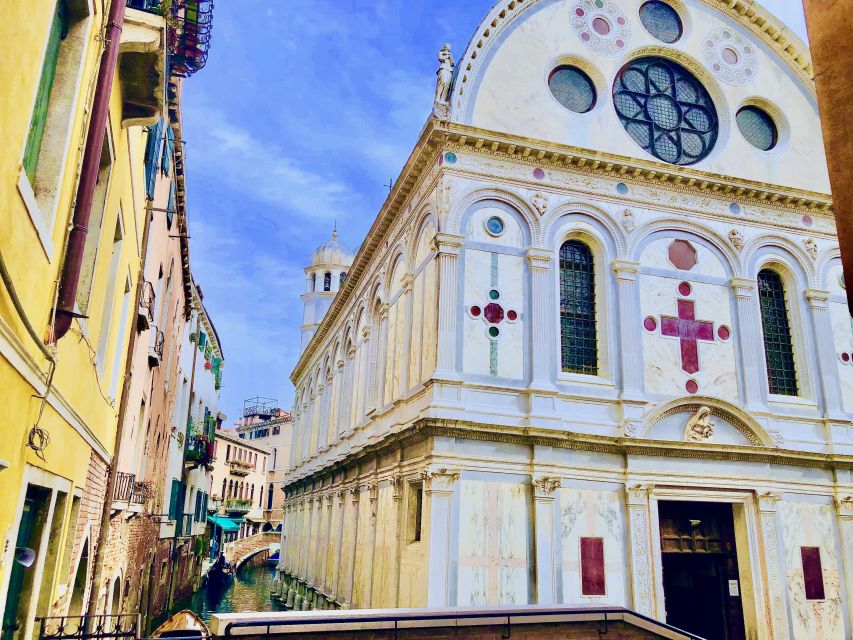
Santa Maria dei Miracoli is likely the architectural centerpiece of the walk. The church is known for its refined Renaissance appearance and its carefully ordered exterior, making it very different in feel from the larger, more layered churches elsewhere in Venice.
Here, your guide can point out the details that are easy to miss when you view the facade alone. The church is presented as one of Venice’s most beautiful Renaissance buildings, and its appeal comes from the way the design feels controlled and complete. This is a good place to slow down, look upward, and ask how the building fits into the city’s wider artistic development.
There is an important practical catch. The standard tour does not go inside the churches. If you want to enter Santa Maria dei Miracoli with your guide, you must pay the additional fee on site. That extra cost may be worthwhile if church interiors are a main reason you booked, but you should not assume that interior access is part of the $150.10 price.
For an exterior-only visit, this stop still has real value. A guide can help you read the facade as architecture rather than decoration. You will also get a chance to compare its measured Renaissance style with the more imposing church complex later in the walk.
More private tours in Italy:
- City Walk with Architect: Private walking tour of Rome
★ 5.0 · 22 reviews - Private Tour: Venice Art and Architecture Walking Tour
★ 4.0 · 22 reviews - Private Personalized Architecture Tour of Rome with an Architect
★ 5.0 · 5 reviews - Vicenza: Palladian Architecture Private Walking Tour
★ 3.3 · 3 reviews
Campo San Giovanni e Paolo, one of Venice’s finest squares
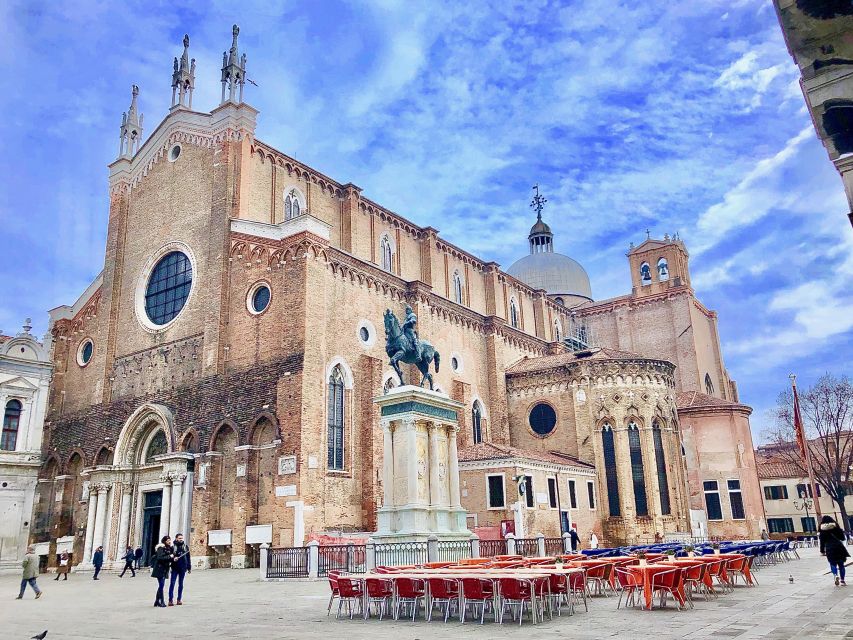
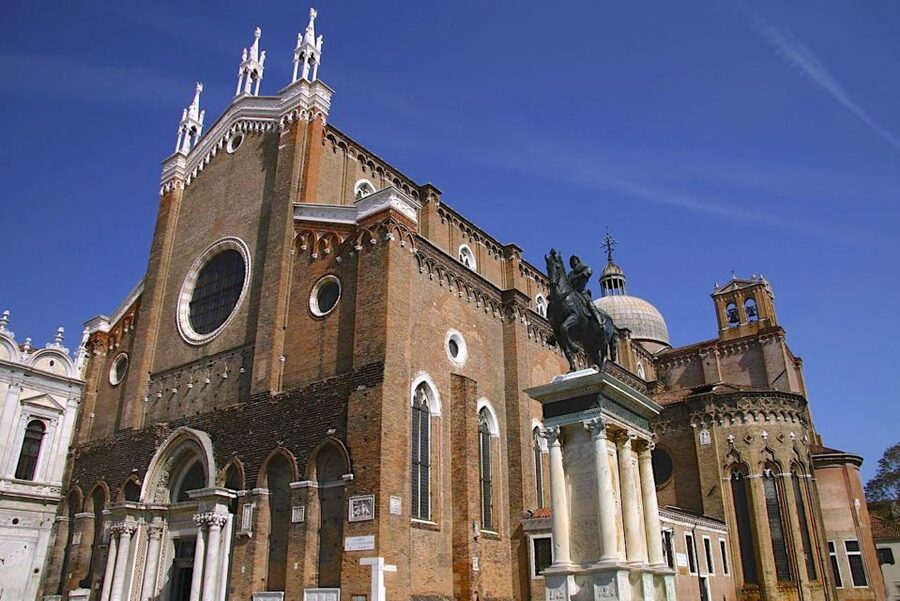
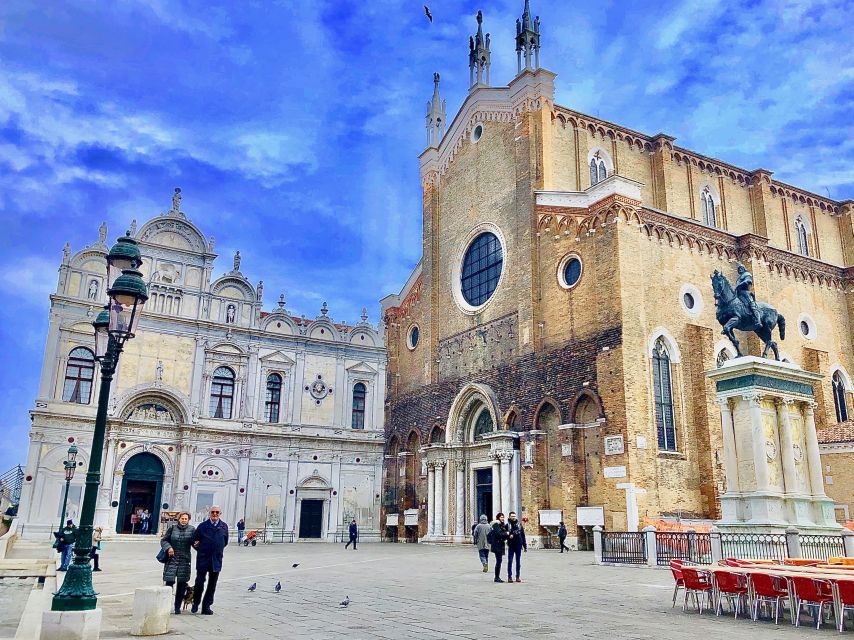
The route continues to Campo San Giovanni e Paolo, widely regarded as one of the most beautiful squares in Venice. It offers a broader setting after the tighter lanes and courtyards earlier in the walk.
The square helps you understand how Venetian public spaces work. It is not just a gap between buildings. The church, surrounding architecture, and open ground create a setting where religious and civic life meet. Your guide can explain the square’s role and point out the relationship between the basilica and the buildings around it.
I especially like this stop for people who want a break from the standard central route. The square gives you room to take in the architecture as a group rather than examining one facade at a time. It also creates a strong visual lead-in to the final church.
The tour’s emphasis on this campo is one reason it suits repeat visitors to Venice. You get a place that feels important without being one of the first locations most people name when asked about the city.
Santi Giovanni e Paolo, Venice’s Pantheon
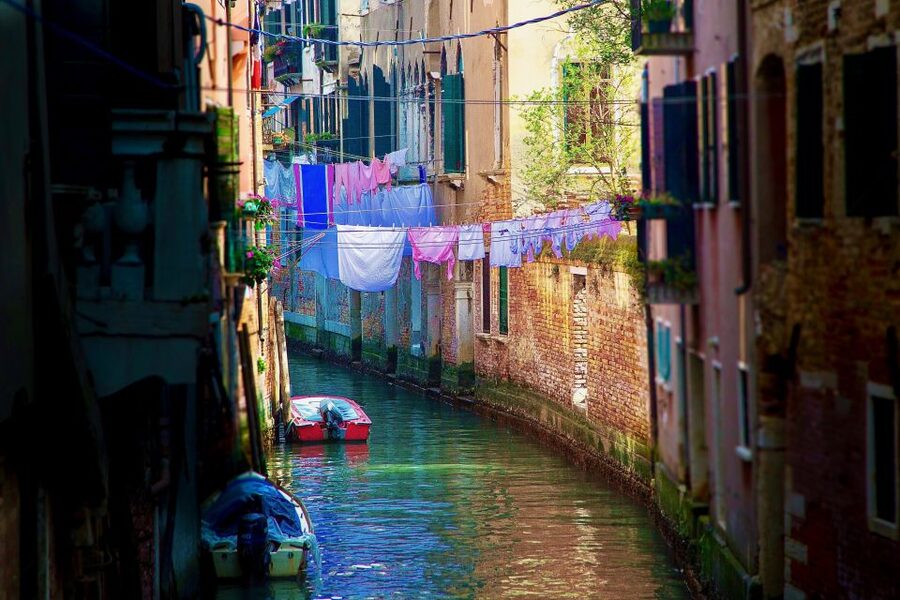
The Basilica of Santi Giovanni e Paolo is the final major sight and one of the most important stops on the route. It is often called the Pantheon of Venice because many Venetian doges were buried here after the 15th century.
That detail gives the church a direct connection to the political story of La Serenissima. The building is not merely a religious monument. It also serves as a record of the people who governed the Venetian Republic during a significant period.
Your guide can help you connect the basilica with Venice’s former power structure and explain why the church became such an important burial place. This is the sort of context that can turn a large exterior into a place with a clear purpose.
Again, the entry restriction matters. The standard experience is an outdoor walking tour, and church entrance fees are not included. The stated finish is at the Basilica dei Santi Giovanni e Paolo, while the meeting details also say the activity ends back at the meeting point, so confirm the exact endpoint when you book. That small clarification is useful if you have a restaurant reservation or another scheduled visit afterward.
What the private format adds
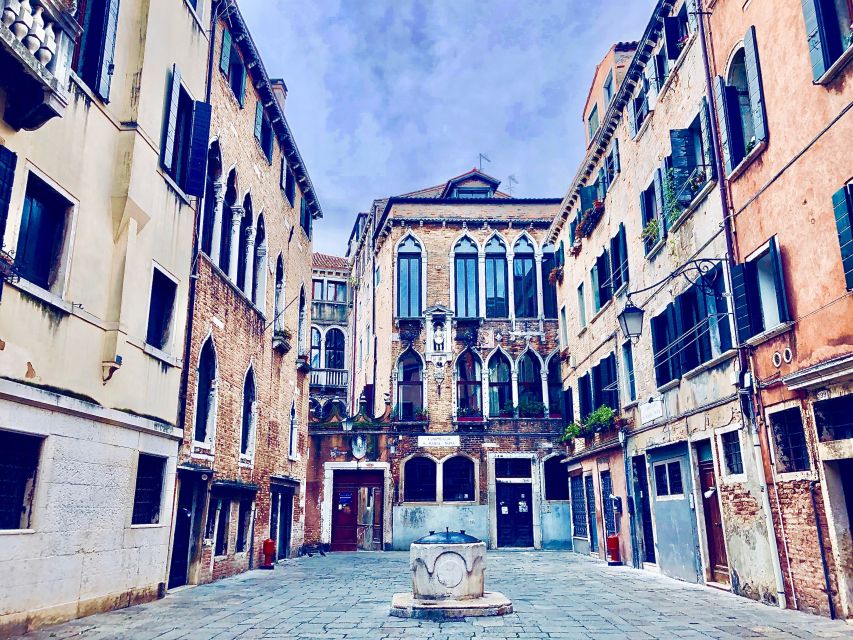
The best reason to pay for this experience is the guide’s ability to respond to you. A fixed group tour often has to keep moving, even when one building sparks a question. Here, the format allows more room to ask why a church looks the way it does, how Venice’s doges shaped the city, or what makes Renaissance architecture different from later Venetian styles.
Guide Gentiana received particularly strong praise for responding to questions and adjusting the tour to the group’s interests. Another highly positive experience involved starting from a different point at the group’s request and changing the discussion to match its architectural and historical knowledge.
That flexibility is valuable, but it should not be treated as guaranteed for every booking. Ask ahead if you have a specific starting point, church, or subject you want included. A two-hour tour has limits, and a guide cannot cover every part of Venice in one outing.
The group size is limited to eight participants. That is small enough for a more personal conversation, though the experience may not always feel like a one-family private tour if other people are included. If privacy is important, confirm the booking details before paying.
Price, time, and practical value
At $150.10 per person, this is not a budget walk. The value depends on how much you want a focused guide rather than a general orientation to Venice.
I think the price is easier to justify for visitors who already plan to see the major sights and want a more specialized experience. You are paying for a licensed private guide, a carefully selected route, and the chance to ask questions. The cost is harder to justify if you mainly want to enter churches, since admission fees are separate.
Two hours is a sensible length. You can fit the tour into a morning or afternoon without giving up half a day. Wear comfortable shoes, since the route is entirely on foot, and expect Venice’s bridges and uneven walking surfaces to be part of the experience. The tour is not suitable for wheelchair users.
The walk is offered in English, French, German, Spanish, and Italian. Free cancellation is available up to 24 hours before departure, and you can reserve now and pay later. Those terms give you some flexibility if your Venice schedule is still changing.
One concern deserves plain mention. A one-star account described the experience as frightening and said the guide kept too little distance, ending the tour after 30 minutes. That is sharply different from the strong praise for Gentiana’s manner and flexibility, but personal comfort matters. If you book, make your boundaries clear at the start and contact the provider promptly if the guide’s conduct makes you uncomfortable.
Who should book this Venice architecture walk?
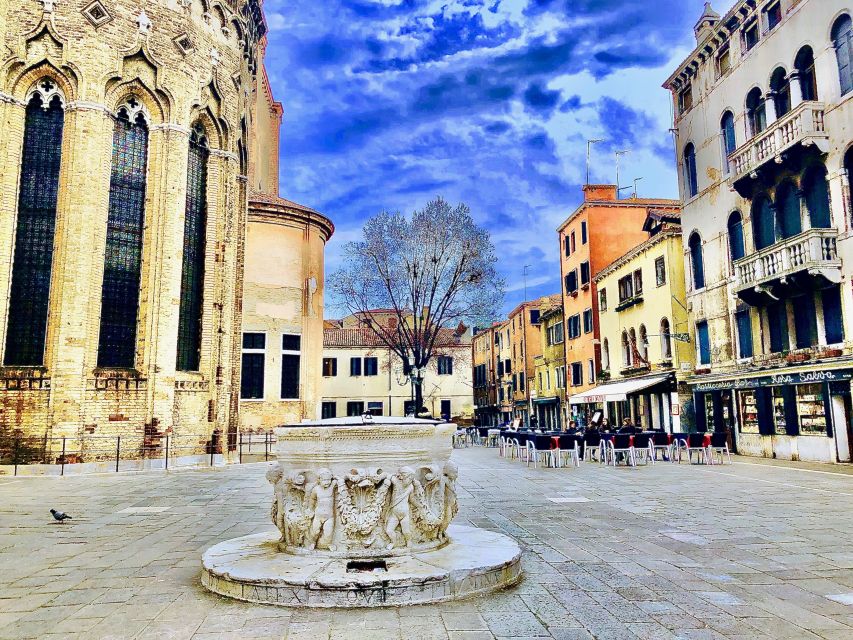
I would recommend this tour to you if you enjoy looking closely at buildings, want a quieter route, or have already seen Venice’s headline sights. It is also a good match if you prefer asking questions instead of listening to a long prepared talk.
The walk suits couples, families with older children, and small groups with a shared interest in architecture or Venetian political history. The guide’s ability to adapt the discussion is especially useful when people in the group have different levels of background knowledge.
I would hesitate if your top priority is entering churches. Interior admission is extra, and the tour itself focuses on the outside. I would also choose a different experience if you need step-free access or want a full introduction to every major Venetian sight.
Should you book it?
Book this walk if you want to see a less familiar side of Venice through its churches, courtyards, and public squares. Santa Maria dei Miracoli, Corte del Milion, Campo San Giovanni e Paolo, and Santi Giovanni e Paolo give the route a clear purpose, while the private format lets you shape the conversation.
Before booking, confirm whether the group is fully private, clarify the endpoint, and decide if you want to pay extra to enter the churches. If those details suit you, the tour offers a useful two-hour look at Venice beyond the usual postcard route.
FAQ
How long is the Venice Art and Architecture Private Walking Tour?
The tour lasts two hours. Starting times depend on availability.
Where does the tour begin?
It begins at Campo San Bartolomeo, in front of the statue of Carlo Goldoni. The address is Campo San Bartolomeo, Rialto 5282, 30124.
How early should I arrive?
You should arrive 15 minutes before departure and look for a guide holding a sign with your name.
Where does the tour finish?
The listed route finishes at the Basilica dei Santi Giovanni e Paolo. The meeting information also says the activity ends back at the meeting point, so confirm the exact endpoint when booking.
Does the tour enter the churches?
No. The standard activity is an exterior walking tour. You must pay an additional fee on site if you want to enter the churches with your guide.
Are entrance fees included?
No. Church entrance fees are not included in the tour price.
Is hotel pickup available?
Hotel pickup can be arranged from hotels within the St. Mark’s area.
What languages are available?
The tour is offered in English, French, German, Spanish, and Italian.
How many people can join?
The group is limited to eight participants.
Is the tour suitable for wheelchair users?
No. The activity is not suitable for wheelchair users.
Just added in Italy
- Vicenza: Palladian Architecture Private Walking Tour★ 3.3 · 3 reviews
- Private Personalized Architecture Tour of Rome with an Architect★ 5.0 · 5 reviews
- Architectural Milan: Private Tour with a Local Expert★ 4.5 · 2 reviews
- The Architect’s Water★ 4.5 · 11 reviews
- Architectural Florence: Private Tour with a Local Expert★ 5.0 · 3 reviews
- Rione Sanità: tour among street art, architecture, folklore★ 4.5 · 2 reviews
- Palermo Tour: Magnificent Mixture Of Architectural Styles★ 4.2 · 6 reviews
- Discover Coppedè in Rome: Liberty architecture, symbols, and jewels★ 5.0 · 2 reviews
Walking Tours, compared.

The Official Art Deco Walking Tour by The Miami Design Preservation League
Read our review →
Baroque Architecture and Underground Walking Tour
Read our review →
Chicago in a Day: Food, History & Architecture Walking Tour
Read our review →

Ramblas, Old Town, Gothic and Gaudi Architecture Walking Tour
Read our review →
Chicago’s Secret Interiors Architectural Walking Tour
Read our review →
Browse the lists this tour appears in