
REVIEW · MUNICH ARCHITECTURE TOURS
500 Years of Munich Architecture (Max. 16 Guests)
Munich’s buildings tell its story in stone. I like the way this 150-minute walk links famous churches with less obvious stops, and I like that Philipp brings both an architect’s eye and an official guide’s training. The route moves from Romanesque and Gothic work to Rococo, Neoclassical, Art Nouveau, Street Art, and recent architecture, so you get a clear sense of how Munich changed over time.
The small group of no more than 16 people should make questions easier, and Philipp’s calm, personable approach is a real strength. The main drawback is the physical side: this is not suited to wheelchair users or people with mobility impairments, and the route may feel long if churches and building details are not your main interests. The rooftop finish also depends on the weather.
Key points to know before booking
- A 500-year architectural timeline: You move from the Frauenkirche and old-city churches to Art Nouveau, Street Art, and modern design.
- Philipp leads the way: He is both a certified official Munich guide and an architect, with tours available in English, German, and Spanish.
- The route leaves the postcard center: The Isar River section adds trees, water, public art, and a welcome change from historic streets.
- A rare rooftop finale: The tour ends at the Dachgarten auf dem Gasteig, with broad views across Munich when conditions are suitable.
- Good value for curious visitors: At $30 per person, the tour offers 2.5 hours of guided interpretation, a digital map, and a postcard gift.
- Plan for walking and steps: Comfortable shoes are essential, and the experience is not suitable for wheelchair users or people with mobility limitations.
Why this Munich architecture tour is different
Many city walks explain what a building looks like. This one aims to explain why it looks that way.
Philipp connects architectural styles with the social and political forces behind them. That matters in Munich, where churches, palaces, royal buildings, public baths, museums, and postwar or contemporary structures sit within a relatively compact area. Instead of treating each stop as an isolated monument, the route gives you a running story.
You begin in the old center and gradually move outward toward the Isar. That change is useful. It shows Munich not as one preserved medieval set piece, but as a living city that kept adding new ideas, materials, and public spaces.
The tour is capped at 16 people, which is small enough for a more personal feel without the cost of a fully private walk. A private group is also available if you want a more tailored outing. Philipp leads in English, German, or Spanish.
A few more architecture tours in Germany worth a look
- Munich 3-Hour Segway Tour: Nazi Munich & Royal Architecture
★ 4.9 · 194 reviews - Düsseldorf: Guided City Architecture Walking Tour
★ 4.6 · 61 reviews - Hidden Architectural Gems of Munich (Max. 16 guests)
★ 4.9 · 52 reviews
Meeting Philipp at the Frauenkirche
The meeting point is outside the entrance to the Frauenkirche at Frauenplatz 1. Look for Philipp with a tablet slung over his shoulder. That is a practical detail, especially in the busy center where a guide holding a small sign can be easy to miss.
The simplest public transport option is the S-Bahn or the U3 and U6 subway lines to Marienplatz. From there, allow about 10 minutes on foot. You do not need transportation to begin the tour, but you should arrive ready to walk through central Munich and beyond.
The Frauenkirche is an appropriate starting point. Its twin towers and rounded copper domes are among Munich’s clearest visual symbols, but the building is also a useful lesson in Gothic architecture. Philipp can place it in the wider development of Munich rather than simply pointing out its most famous features.
Because this is a guided visit rather than a rushed photo stop, you should expect attention to shape, scale, materials, and the connection between the church and the city around it. Exact interior access can depend on church activity, so treat the stop as an architectural visit rather than a guaranteed extended sightseeing session inside.
From Gothic power to Baroque drama
The next churches show how Munich’s religious architecture changed as tastes and power shifted.
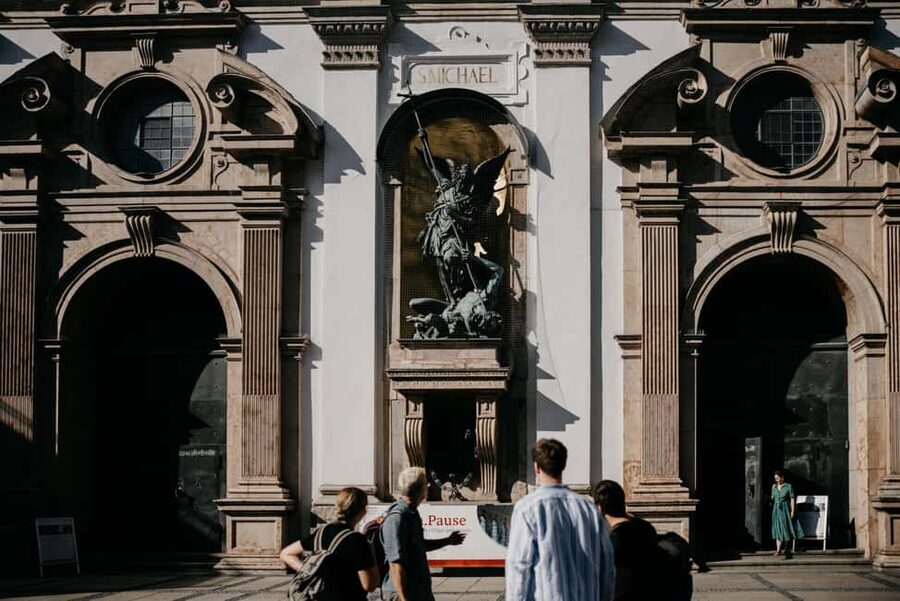
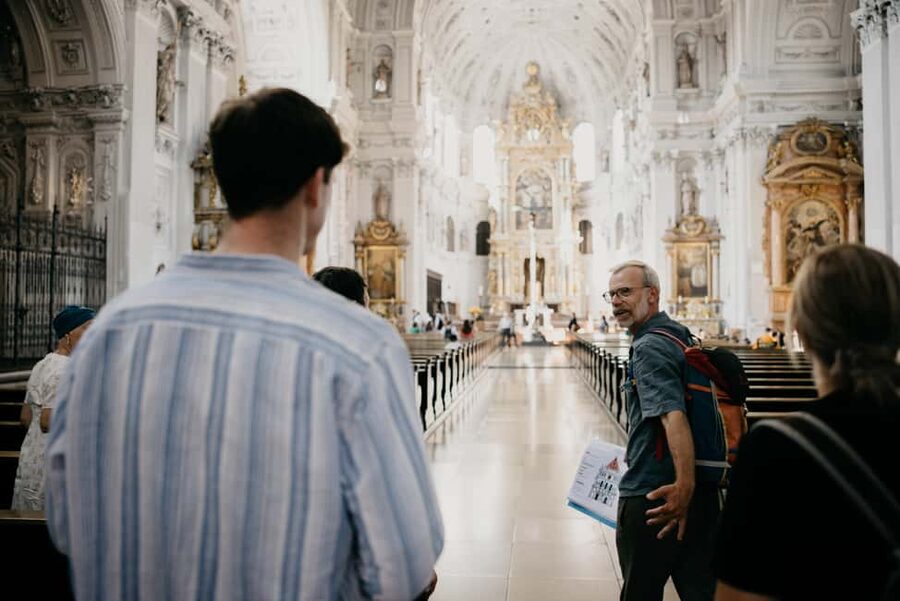
St. Michael’s Church brings you into the late Renaissance and early Baroque world. Its large interior and strong presence reflect a period when religious buildings were designed to impress through scale and theatrical effect. Philipp’s architectural background should help you notice the difference between the more vertical Gothic approach and the broader, more forceful language that followed.
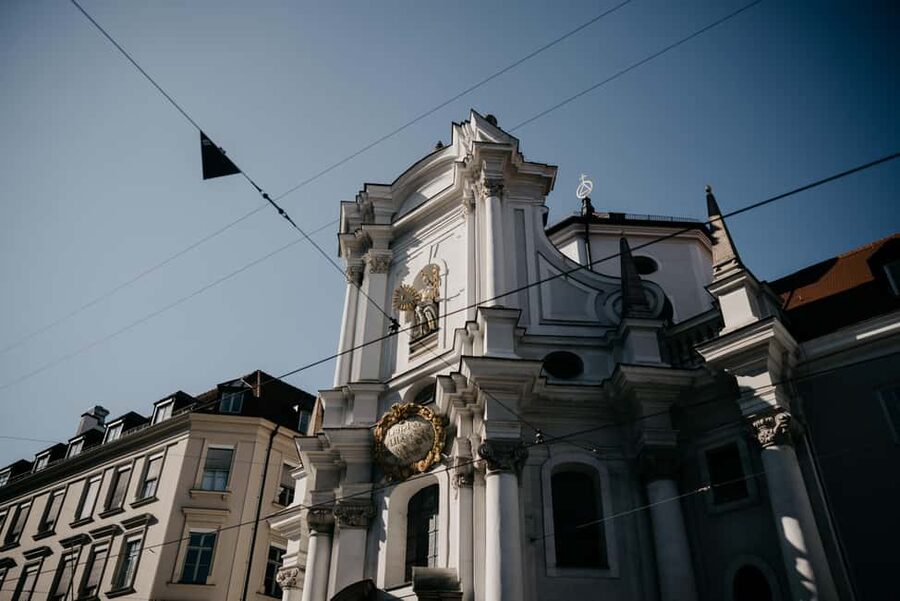
The Trinity Church offers a different lesson. This Baroque church is tucked into the old city and is easy to pass if you do not know where to look. Its more intimate setting makes it a useful contrast with the larger monuments. This is one of the stops that gives the tour its appeal: you are not only checking off Munich’s biggest sights.
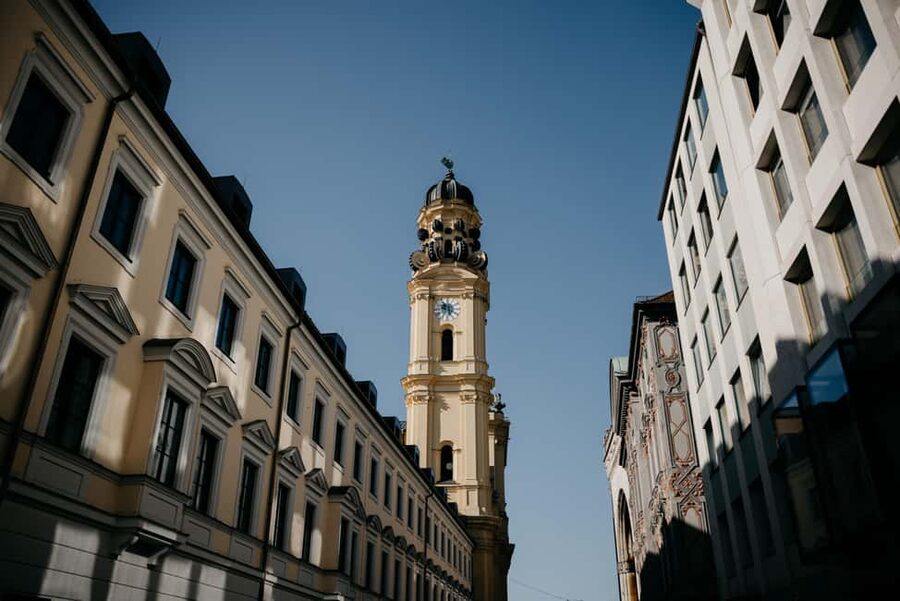
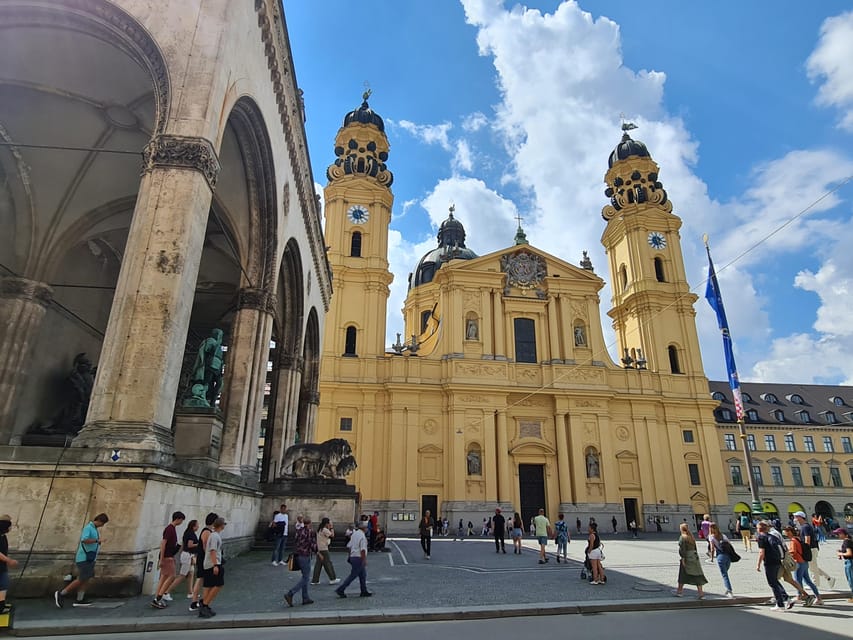
The Theatine Church adds another major chapter. Its pale facade and grand proportions show how Munich adopted Italianate Baroque ideas. Together, St. Michael’s, Trinity Church, and the Theatine Church make the shift from Gothic structure to Baroque display easier to understand.
This portion should suit you if you enjoy seeing how style develops in stages. If you prefer a tour with fewer stops and long periods inside each church, the pace may feel more active. The route covers many places in 150 minutes, so Philipp has to balance explanation with movement.
Royal Munich around the Opera and Maximilianstraße
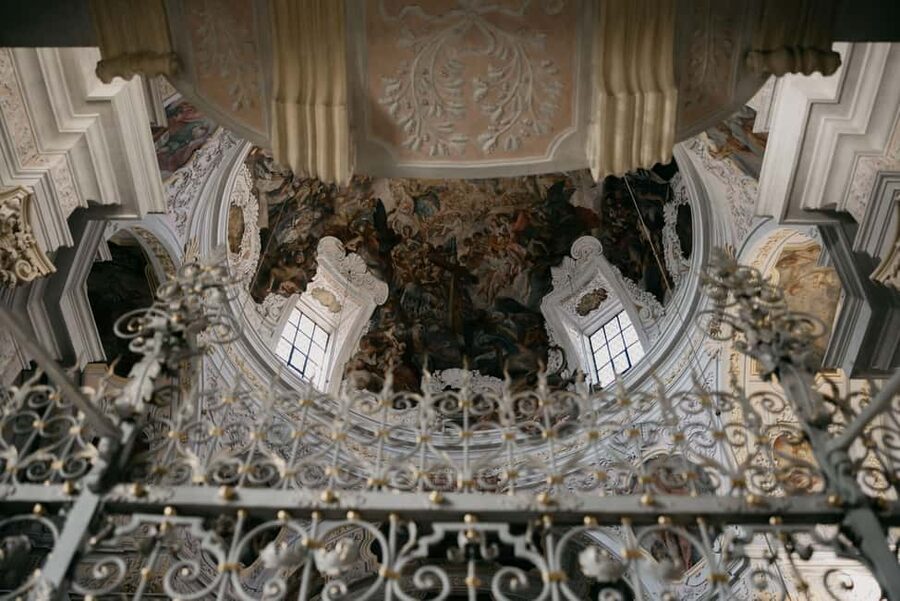
The Bavarian State Opera and Maximilianstraße bring architecture into the world of monarchy, public ceremony, and urban planning.
The opera house is a good place to discuss how a city presents culture and power. It is not just a performance venue. Its position and design help explain how Munich’s rulers shaped the center for formal public life.
On Maximilianstraße, the focus shifts to one of Munich’s grandest avenues. Here, scale and appearance matter as much as function. The street offers a chance to discuss Historicism, the practice of drawing on earlier architectural styles while creating buildings for a newer age.
This is where Philipp’s training as an architect should be particularly useful. You can ask why a building borrows from a certain period, how a facade creates status, or how the street works as a complete urban composition. Past participants have praised his willingness to answer extra questions, including questions outside architecture, and that can make the tour feel more like a conversation than a lecture.
Same city, a different building to stand in front of:
- Potsdam: Guided Walking Tour of UNESCO Site and Architecture
★ 4.7 · 49 reviews - Private Taxi Tour City East & West History and Architecture 3-4h
★ 5.0 · 42 reviews - Stuttgart city library – an architectural tour
★ 4.4 · 27 reviews - Karl-Marx-Allee Tour: Life and Architecture in East Berlin
★ 5.0 · 19 reviews
Moving toward the Isar at St. Lukas
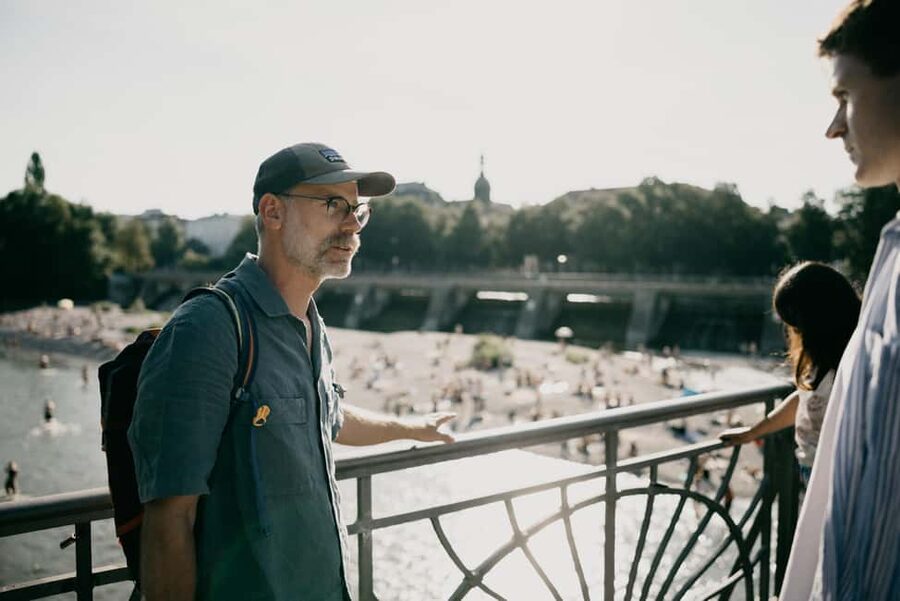
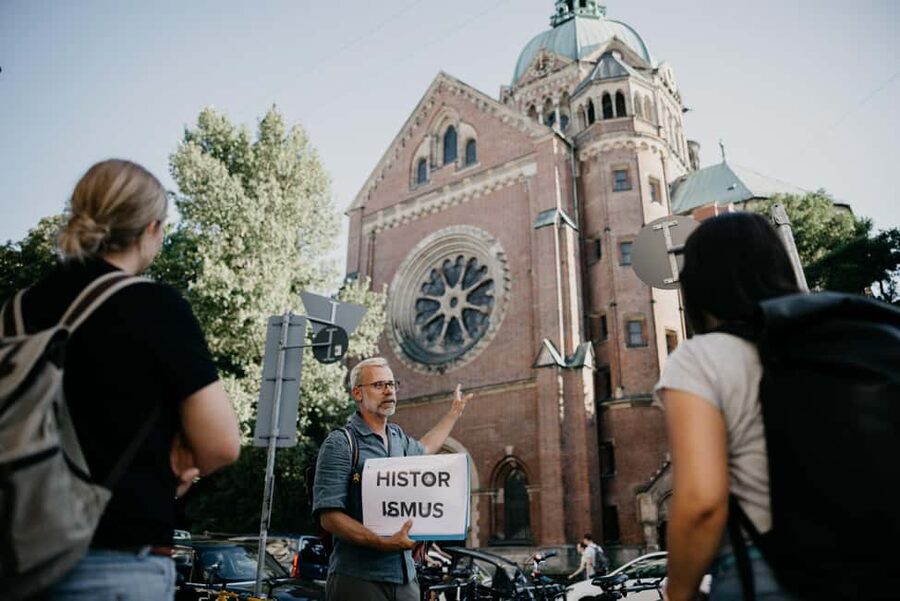
St. Lukas marks a change in mood and setting. Rather than remaining within the most polished parts of the old center, the route moves toward the Isar and shows another side of Munich.
The church is associated with Historicism, a style that looked back to earlier forms while using them in a later setting. It fits the tour’s main theme: architectural history is not a straight line from old to new. Designers repeatedly borrowed, revised, and reinterpreted earlier ideas.
The Isar section also gives you a break from dense streets and church interiors. You may find the river and surrounding greenery refreshing after the central city. The route is not only about facades. It shows how architecture works alongside water, public space, trees, art, and daily urban life.
One description of the route includes taking a tram out toward the river and greener surroundings. Since transportation to and from the meeting point is not included, check with Philipp whether any tram fare during the tour is covered or should be paid separately. That small clarification can prevent confusion on the day.
Müllersche Volksbad and Munich’s Art Nouveau side
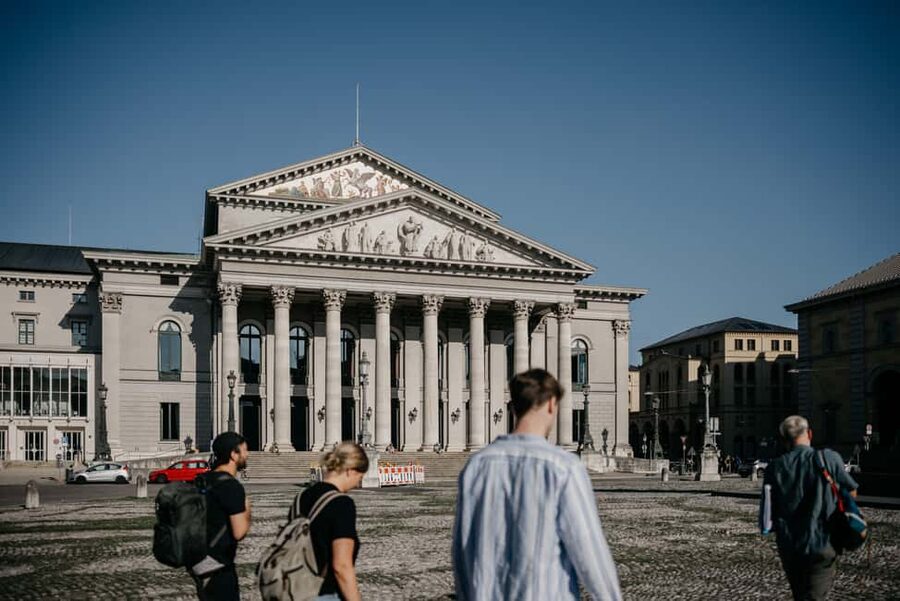
The Müllersche Volksbad is one of the most interesting stops for anyone who enjoys public architecture.
A public bath may sound less glamorous than a palace or cathedral, but it reveals how a city thought about health, leisure, civic life, and public access. Its design also introduces Munich’s Art Nouveau period, known locally as Jugendstil. Organic lines, decorative detail, and a concern for the total visual experience make this building different from the churches and royal avenues earlier in the tour.
This stop broadens the meaning of architecture. You are not only looking at places built for rulers or worship. You are also seeing a building created for ordinary city life. That makes the tour more useful than a simple parade of grand monuments.
You should not assume that every stop includes a full interior tour. Some sites are visits, while others are explained from outside. The value here lies in Philipp’s interpretation and in the way he places the building within Munich’s changing society.
A modern museum and the road to Gasteig
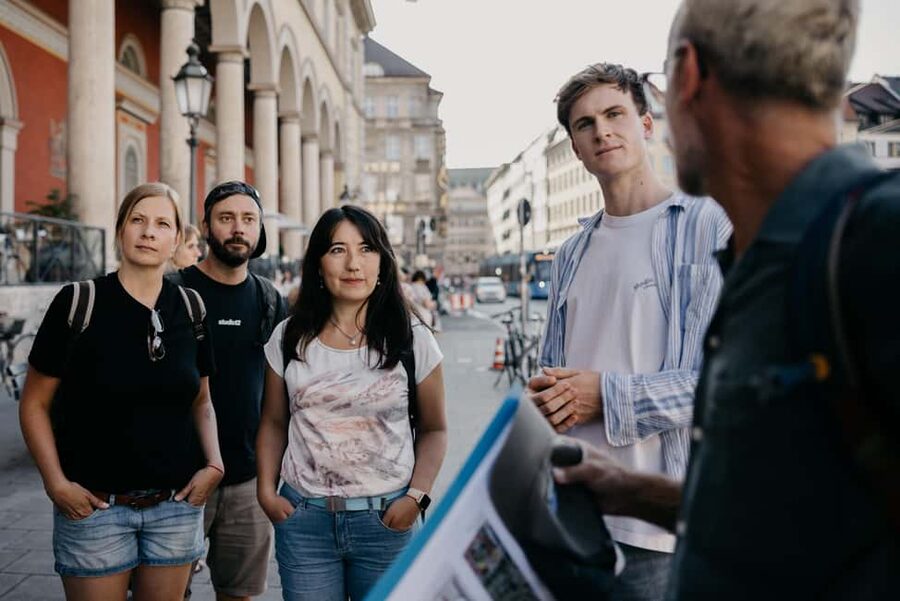
The Sudetendeutsches Museum brings the route into a more recent chapter. It introduces a modern museum building and gives Philipp a chance to discuss contemporary design, public memory, and the way new buildings fit into an older city.
The supplied route also includes one additional visit that is not identified by name. That means you should expect the precise sequence or one stop to vary. This is not necessarily a problem, but if you want a fixed checklist of interiors, ask for the current route before booking.
The final stretch is one of the strongest features. The route includes Art Nouveau, Street Art, and a modern building before finishing at the Dachgarten auf dem Gasteig. You get a compact view of Munich’s visual range: historic decoration, informal public art, and newer architecture all within one outing.
The Gasteig rooftop terrace is the payoff. Weather permitting, it gives you a wide view over Munich’s skyline. After a tour focused on individual facades and details, the high viewpoint helps you see the city as a whole. You can connect the old churches, broad avenues, river corridor, and newer structures in one glance.
What the $30 price buys you
At $30 per person, this is a solid value if you care about context rather than simply seeing buildings.
You are paying for 150 minutes with Philipp, an architect and certified official Munich guide. You also receive a postcard featuring a tour highlight and a digital map with his favorite Munich spots. The map can be useful after the tour, especially if you want to revisit a building or explore more of the city’s architecture on your own.
The strongest value comes from the range. A typical sightseeing route might focus almost entirely on the old center. This one adds the Isar, public architecture, Art Nouveau, Street Art, a modern museum, and a rooftop viewpoint. That wider reach makes the price easier to justify.
The value is less clear if you want extensive interior access or a slow, specialist lecture at every stop. The itinerary covers a lot of ground, so some buildings will receive a focused explanation rather than a long visit. For most people, that variety is a benefit. For a serious architecture student, a private group may be worth considering.
Who should book this experience?
I would recommend it to first-time visitors who want a strong architectural introduction to Munich without spending an entire day in a lecture. It should also suit repeat visitors who already know Marienplatz and want to see how the city extends toward the Isar.
Families may appreciate the mix of churches, streets, river scenery, public art, and a rooftop view. The format is more varied than a tour made entirely of museums. The family-friendly description does not remove the need for comfortable shoes, however.
Architecture students, design fans, photographers, and people interested in urban history are natural matches. You do not need specialist training. Philipp’s strength appears to be making technical subjects accessible, while still giving an expert enough material to think about.
You may want to skip it if you dislike walking, need step-free access, or prefer a short tour with only two or three major sights. Smoking is not allowed, and participation is at your own risk. Weather can also affect the rooftop finish.
The tour has a perfect 5 out of 5 rating from 15 reviews, with praise focused on Philipp’s friendly manner, clear explanations, patience with questions, and ability to make the subject entertaining. German-speaking participants especially describe the experience as interesting and inspiring, while English-speaking visitors highlight its memorable mix of history, architecture, and humor.
Practical advice for making the most of it
Wear comfortable shoes. The route lasts two and a half hours and includes several churches, streets, a river section, and the movement between central and outer stops.
Bring a light layer if the forecast is changeable. The Isar portion and rooftop ending are more exposed than the church interiors, and the final view depends on suitable weather.
Arrive at the Frauenkirche entrance with a few minutes to spare. The tablet over Philipp’s shoulder should help you find him, but the center can be busy.
If you have a special interest, say so early. Philipp is described as patient with extra questions, and the small group should make it easier to ask about a particular style, building, or period.
Check the current starting time and route when booking. Availability determines the start, and one listed stop is unnamed. If the tram segment matters to you, confirm how that part works and whether a local ticket is needed.
Cancellation is flexible: you can cancel up to 24 hours ahead for a full refund, and you can reserve now and pay later. That is useful when your Munich schedule is still shifting.
Should you book Philipp’s Munich architecture tour?
Book it if you want Munich explained rather than merely photographed. The best reasons are Philipp’s combination of architectural training and official guide experience, the small group, and the route’s unusual range from the Frauenkirche to the Isar and Gasteig rooftop.
I would be especially keen on it for a second day in Munich, when you have already seen the central squares and want a more thoughtful look at how the city developed. Skip it if mobility is a concern or if you want a slow interior-focused tour. For most curious visitors, $30 is a fair price for a lively, well-connected introduction to Munich’s built environment.
FAQ
How long does the Munich architecture tour last?
The tour lasts 150 minutes, or two and a half hours.
Where does the tour begin?
It begins outside the entrance to Munich’s Frauenkirche at Frauenplatz 1.
How can I reach the meeting point?
Take the S-Bahn or the U3 or U6 subway to Marienplatz, then walk about 10 minutes to the Frauenkirche.
Where does the tour finish?
It finishes at the Dachgarten auf dem Gasteig, a rooftop terrace with views over Munich when weather permits.
Who leads the tour?
Philipp leads the tour. He is an architect, a certified official Munich city guide, and a member of MGV and BVGD.
Which languages are available?
The live tour is available in English, German, and Spanish.
How large is the group?
The standard small group has a maximum of 16 people. A private group option is also available.
Is the tour suitable for wheelchair users?
No. The experience is not suitable for wheelchair users or people with mobility impairments.
What is included in the price?
The price includes Philipp’s guiding service, a postcard featuring a tour highlight, exclusive architectural insights, and a digital map with his favorite Munich spots. Food, drinks, and transportation to and from the meeting point are not included.
Just added in Germany
- Hidden Architectural Gems of Munich (Max. 16 guests)★ 5.0 · 2 reviews
- Munich Your Way: Private Tour with Architect & Guide★ 5.0 · 2 reviews
- Architectural Frankfurt: Private Tour with a Local Expert★ 5.0 · 2 reviews
- Architectural Berlin: Private Tour with a Local Expert★ 4.0 · 3 reviews
- Private Taxi Tour of City East History and Architecture 2-3h★ 5.0 · 2 reviews
- Berlin Architecture/River Spree Full Day Photography Tour★ 5.0 · 2 reviews
- Lübeck: Private Historical and Architectural Walking Tour★ 4.5 · 6 reviews
- Lübeck: Architecture and Local Craft Private Guided Tour★ 4.0 · 6 reviews
Munich Architecture Tours, compared.
Munich 3-Hour Segway Tour: Nazi Munich & Royal Architecture
Read our review →
Hidden Architectural Gems of Munich (Max. 16 guests)
Read our review →
Private Munich Tour for History Buffs with Architectural Gems and WWII sites
Read our review →Hidden Architectural Gems of Munich (Max. 16 guests)
Read our review →
Browse the lists this tour appears in