
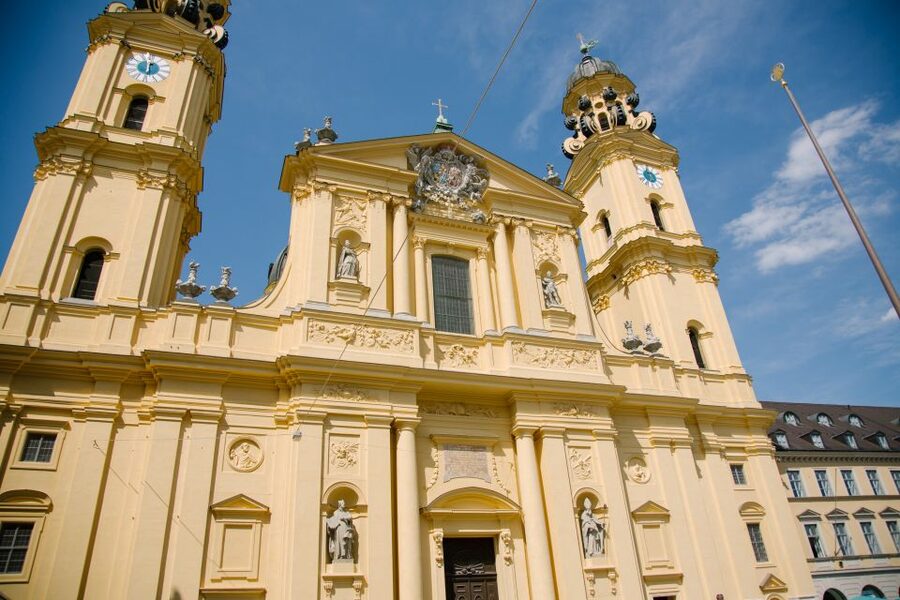
REVIEW · SEGWAY AND BIKE ARCHITECTURE TOURS
Munich 3-Hour Segway Tour: Nazi Munich & Royal Architecture
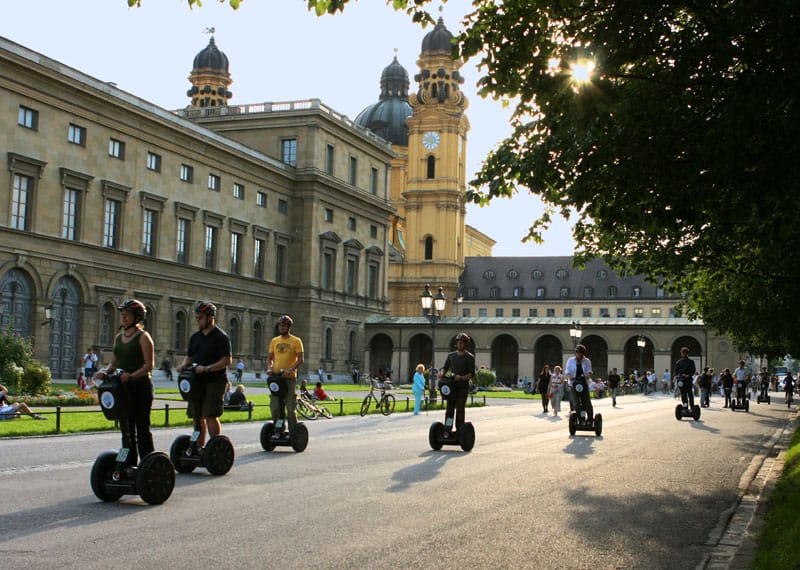
History moves quickly here. This three-hour Munich Segway tour links royal squares, Nazi-era landmarks, museums, the Isar River, and the famous Eisbach surfers without making you walk across the whole city. I especially like the small groups of up to eight and the patient training, which matters if you have never ridden a Segway. The guides also add useful tips for the rest of your stay. The main drawback is simple: you spend time on public roads, and cold or wet weather can make the ride less comfortable.
The tour costs about $91 per person. That is not a bargain sightseeing ride, but you cover a lot of ground, receive a proper safety lesson, and get an English or German-speaking guide who can explain Munich’s royal past and its role under Nazism. Guides such as Canaan, Matt, Thomas, Steve, and Michelle have been praised for clear instruction, local stories, and good humor.
Key points to know before booking
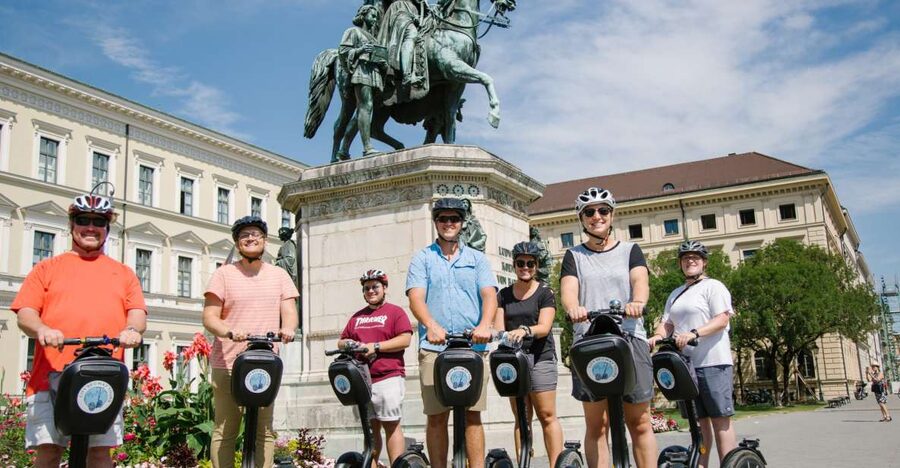
- Thirty minutes of training comes first: You practice stopping, turning, balancing, and road etiquette before heading into Munich.
- The route mixes grand sights with darker history: Königsplatz, the Residenz, the Maximilianeum, and Nazi-era locations all fit into one ride.
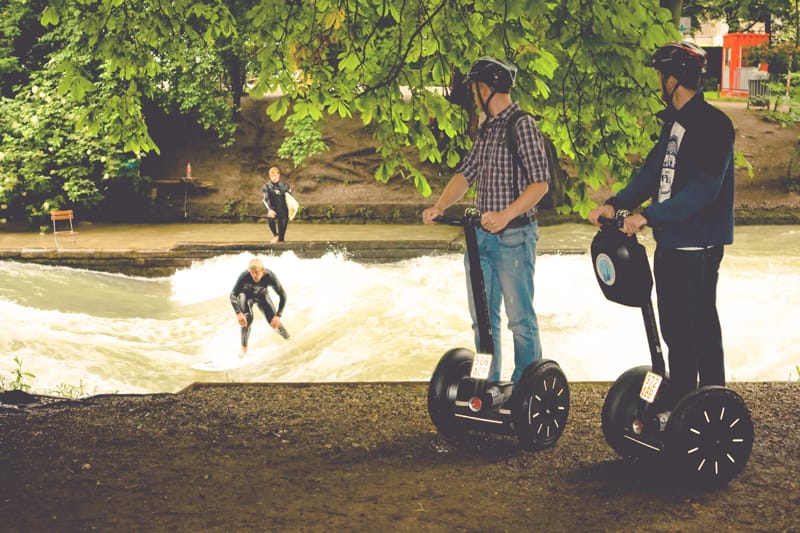
- The Eisbachwelle is a highlight: You may watch Munich’s famous river surfers at the world’s first permanent urban river surfing spot.
- Small groups make a real difference: With no more than eight people, the guide can help nervous riders and answer questions.
- Weather affects comfort: The tour runs in most conditions, and raincoats are supplied, but you should dress warmly and wear closed, comfortable shoes.
- This is active sightseeing: You need reasonable balance, mobility, and fitness, and you must weigh between 100 and 250 pounds.
Learning the Segway at Karlsplatz
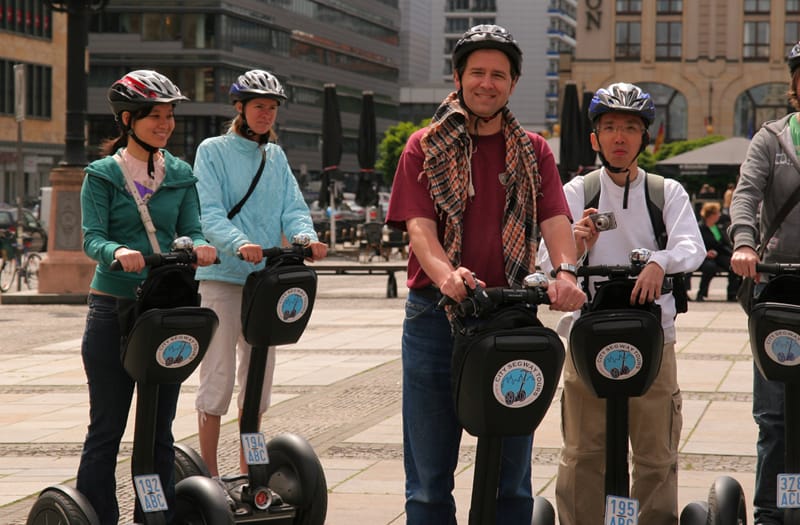
The meeting point is Fat Tire Tours at Karlsplatz 4, near Stachus. From the McDonald’s at Karlsplatz, keep your back to the old city gate, turn right along Sonnenstrasse, and look for the shop after about 50 meters on the right, inside the courtyard.
The first part of the experience is not a rushed explanation followed by instant departure. You receive about 30 minutes of orientation and safety practice. That is good news for first-time riders. A Segway responds to your weight and balance, so smooth movements matter more than strength. As one guide put it during the instruction, the trick is to stay calm and avoid sudden turns.
The practice also covers riding around other people and using Munich’s roads. You should pay attention here because this is not a closed park ride. The group travels on streets and off-road sections, and the guide sets the pace. Previous riders have found the machines easy after a few minutes, but the initial training still deserves your full attention.
A second safety briefing appears in the route plan, along with a short practice and photo stop. That suggests the guide continues checking the group once you leave the starting area. I like that approach. You do not need to be an expert rider, but you do need to feel comfortable before the history portion begins.
More architecture tours by bike and segway in Germany:
- Barcelona e-Bike Tour: Gaudí & Old Town Small Group
★ 5.0 · 769 reviews - Palm Springs Modernism Architecture & History Bike Tour
★ 5.0 · 359 reviews - Historical and Modernist Bike Tour Barcelona
★ 5.0 · 262 reviews
Karolinenplatz and Königsplatz: Munich’s grand stage
The first major sights are Karolinenplatz and Königsplatz. Karolinenplatz gives you an early look at Munich’s formal urban design, with broad open space and monumental buildings arranged for visual impact.
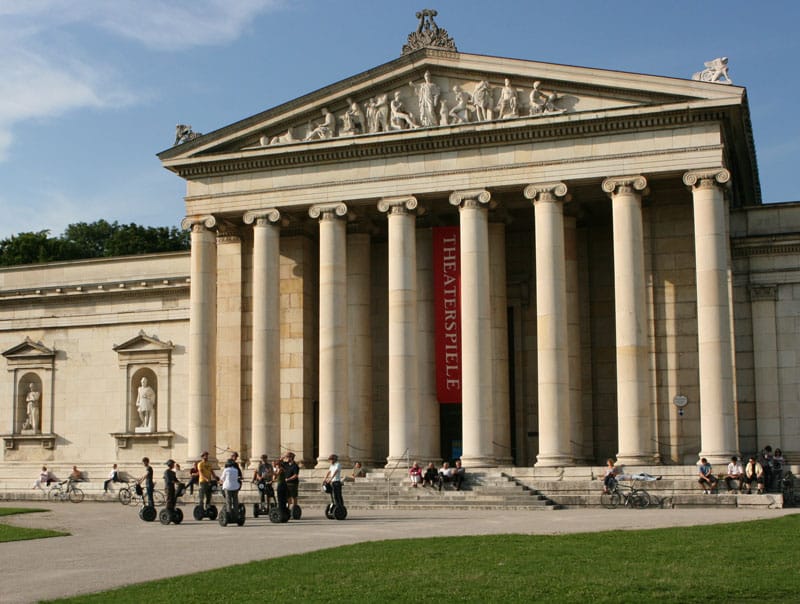
Königsplatz is the more memorable stop. Its classical architecture was modeled on the Acropolis in Athens, giving the square a deliberately grand appearance. This is where Munich’s royal ambitions become clear. The city grew from a medieval settlement into one of Germany’s wealthiest cities, and its rulers used architecture to show power, taste, and cultural status.
You stop for photographs at both squares rather than touring the interiors. That keeps the ride moving, but it also means you should not expect a detailed museum visit. The guide’s explanations give you context, while the buildings provide the visual evidence.
This part is especially useful early in a Munich trip. You begin to understand the city’s scale and layout, and you can mark places to revisit on foot later. The guide also offers local suggestions for the rest of your visit, which can be more useful than a long list of facts.
Munich’s museums, from the Alte Pinakothek to Haus der Kunst
The route passes the Alte Pinakothek and the Pinakothek der Moderne, two major parts of Munich’s museum district. The stops are brief, about five minutes each, so you will see the exteriors and hear about their place in the city rather than enter the galleries.
That limitation is worth knowing. If art museums are your main reason for visiting Munich, set aside another day for the interiors. On the Segway, these buildings work as landmarks that help you understand Munich’s cultural center.
The tour later reaches Haus der Kunst. Its location and architecture connect the ride back to Munich’s 20th-century political story. The route does not treat the city as a collection of pretty palaces. It shows how art, architecture, politics, and public life became tied together, especially during the Nazi period.
You are not given hours of academic detail. This is an active city tour, with short stops and a guide speaking to a moving group. Still, the combination of locations helps you see how Munich’s grand public spaces were used and reshaped over time.
Nazi Munich at Königsplatz and Odeonsplatz
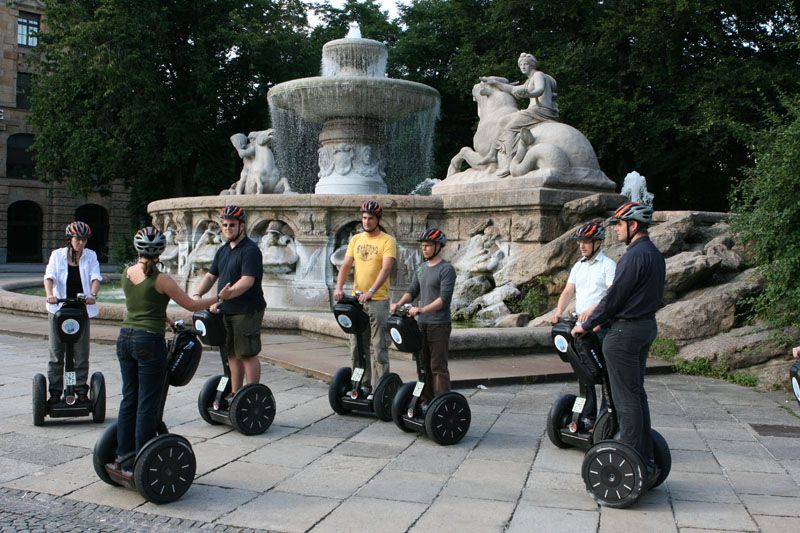
The darker part of the tour is handled alongside the royal and cultural sights. Munich played a major role in the rise of Nazism, and the route points out remnants and locations connected with that period.
Königsplatz is important here because the same monumental setting that expressed classical ideals was also used for Nazi ceremonies and propaganda. Seeing the square as part of both Munich’s royal image and its 20th-century political past gives it more weight than a quick photograph might suggest.
At Odeonsplatz, the guide adds another layer of political history. The square is one of Munich’s most impressive urban spaces, but it is also linked with the failed Beer Hall Putsch of 1923. The tour allows you to connect the location with the early rise of Hitler and the Nazi movement without turning the entire experience into a grim memorial walk.
This balance is one of the tour’s strengths. You move from difficult history to royal architecture, then back to modern city life. Some people may prefer a dedicated Nazi history tour with longer explanations and more memorial stops. I would choose this Segway tour if you want a broad introduction rather than a specialist study.
A few more architecture tours in Germany worth a look
- Private Taxi Tour of City East History and Architecture 2-3h
★ 5.0 · 2 reviews - Barcelona: 3-Hour Discover Gaudí GoCar Tour
★ 4.5 · 123 reviews - 3 Hour Midtown Manhattan Architectural Tour
★ 5.0 · 81 reviews - Barcelona 3-hour Bike or E-Bike Tour: Gaudí By Bike
★ 5.0 · 24 reviews
Siegestor, the Residenz, and Bavarian royalty
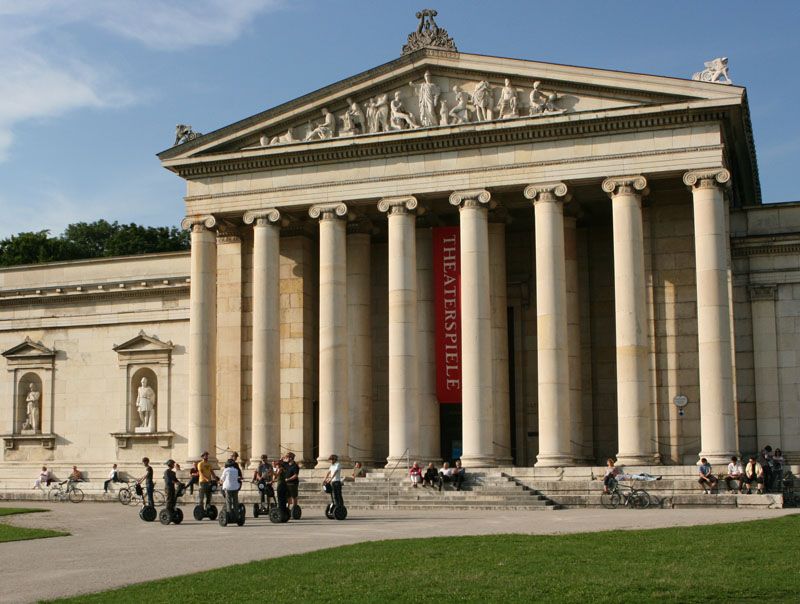
Siegestor, or Victory Gate, provides another striking photo stop. Its classical design fits the style of the earlier squares, and its position helps connect the northern part of the old city with the central sights.
The Munich Residenz is the grandest royal stop on the route. The former palace represents the wealth and authority of Bavaria’s rulers. You will see the exterior and hear about its role in Munich’s development, but the tour does not include an interior visit.
If you have time, the Residenz deserves a separate visit. Its rooms and collections require more than the five-minute stop available here. On the Segway, the value lies in seeing the palace as part of a larger route and understanding how close it is to the Opera, Odeonsplatz, and the city’s other major landmarks.
The Bavarian State Opera comes near the end of the route. Its position among the Residenz and Maximilianstraße shows how royal Munich developed into a center of music, performance, and public ceremony. This is a good final reminder that the city’s identity is not only about politics or museums.
Eisbachwelle: Munich’s unlikely sporting icon
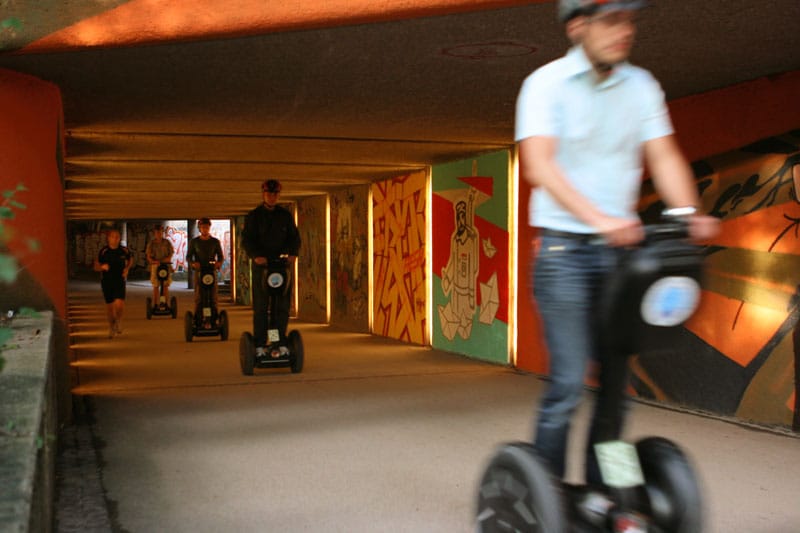
The Eisbachwelle is likely to be the most unexpected stop. At this engineered wave in the Eisbach River, surfers ride standing waves in the middle of the city. It is a strange and memorable contrast to the formal buildings you have just seen.
You stop for about 10 minutes, longer than at most other sights. That gives you a better chance to watch the action and take photographs. The surfers are not performing for the tour, so conditions and activity can vary, but the location itself is one of Munich’s most distinctive urban sights.
I like this stop because it shows modern Munich at its most playful. The tour’s title points toward Nazi history and royal architecture, but the river surfers prevent the experience from feeling too solemn or too focused on monuments.
The Angel of Peace, Isar River, and Maximilianeum
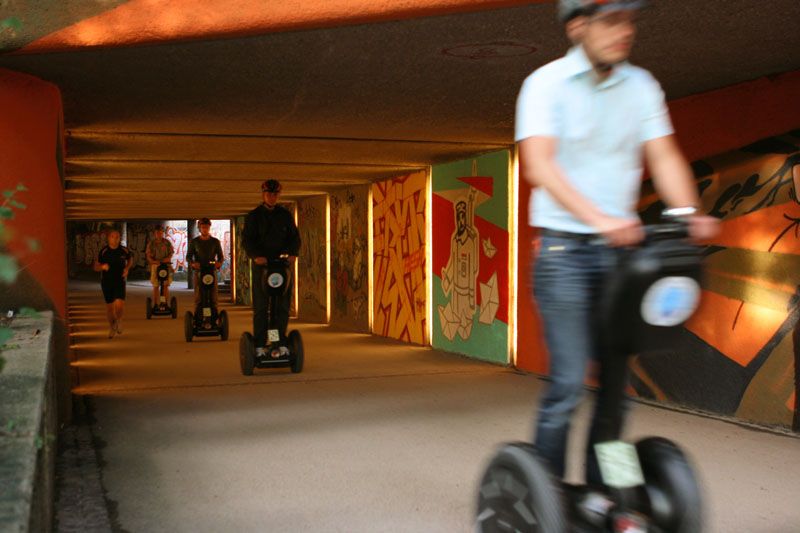
The route continues toward the Angel of Peace, a tall monument celebrating peace after the Franco-Prussian War. It gives you another view of Munich’s taste for grand symbolic structures.
At the Isar River, the ride shifts from city squares to open water and public space. The Isar is central to Munich’s daily life, and seeing it from a Segway gives you a change of pace after the dense historic center.
The Maximilianeum is one of the route’s strongest architectural stops. It has housed the Bavarian state parliament since 1949 and overlooks the river with an imposing facade. Its position and scale make clear how Bavaria presents its political identity through buildings.
You then ride along Maximilianstraße, one of Munich’s best-known grand avenues. It connects royal planning with modern high-end city life. The tour does not focus on shopping, but the street helps you see how the old royal axis remains part of present-day Munich.
Why the guides matter on this tour
A Segway can make sightseeing fun, but the guide determines how much history you take home. The strongest feedback centers on patient training, clear storytelling, and guides who adjust to the group.
Canaan has been praised for one-on-one instruction and for using stories to explain Bavarian history. Matt has earned especially strong marks for both training and narration, including with riders over 60. Thomas is noted for explaining the city’s historic buildings, while Steve helped a mixed-language couple enjoy the route together.
Other guides, including Bob, José, and Michelle, have been praised for energy and humor. One caution is worth keeping in mind: humor varies by guide and group. A past rider found some crude jokes unnecessary, so this may not be the best fit if you want a strictly formal history lesson.
The small group limit of eight is important. A larger group would make road crossings, practice, and questions harder. Here, the guide can keep an eye on less confident riders and stop to explain a detail without losing control of the group.
Weather, clothing, and physical demands
The tour runs in rain and cold unless conditions become extremely bad. Raincoats are included, and one cold-weather group received jackets and gloves, but you should not rely on borrowed clothing. Wear warm layers, comfortable clothes, and closed shoes.
Several riders found the wind chill surprisingly sharp, especially at speed. If rain is forecast, dress more warmly than you think necessary. The tour can still be enjoyable in poor weather, but the views and comfort will be better on a dry day.
You must be at least 14 years old. Anyone under 18 needs an adult present or an adult to complete the insurance paperwork. Open-toed shoes are not allowed.
The activity is not suitable for pregnant people, those with back problems, recent surgery, mobility impairments, or a low level of fitness. The stated weight range is 100 to 250 pounds, or 45 to 115 kilograms. The safety information also lists people over 95 as unsuitable. These limits are practical, not decorative. You need to balance on the machine, mount and dismount, and remain alert near roads.
Is $91 a fair price?
At $91, this is a mid-priced sightseeing experience. You are paying for the Segway, instruction, guide, safety support, and a route that covers many parts of Munich in three hours.
The value is best if you want an orientation on your first or second day. You will see enough to decide which places deserve a longer visit, and you avoid spending the whole day walking between the museums, palace, river, and eastern city sights.
It is less valuable if you already know Munich well, dislike motorized tours, or want to enter the museums and Residenz. Food and drinks are not included, though the route can finish with useful ideas about where to go next.
Free cancellation is available up to 24 hours before departure, and you can reserve now and pay later. Starting times vary, so check availability before planning the rest of your day.
Should you book the Munich Segway tour?
I would book this tour if you want a lively first look at Munich, enjoy learning through stories, and feel comfortable trying a new form of transport. It is especially good for couples, families with older teenagers, small groups of friends, and visitors who want royal architecture, Nazi-era history, and modern city life in one outing.
I would skip it if you need a slow, quiet, fully pedestrian tour or if you want long visits inside museums and palaces. For the right rider, the mix is excellent: patient instruction, a small group, plenty of landmarks, and an unusual stop at the Eisbachwelle.
FAQ
Where does the Munich Segway tour start?
It starts at Fat Tire Tours, Karlsplatz 4, near Stachus. From the Karlsplatz McDonald’s, keep your back to the city gate, turn right along Sonnenstrasse, and look for the shop after about 50 meters on the right inside the courtyard.
How long does the tour last?
The tour lasts three hours and returns to Karlsplatz 4.
What languages are available?
The live guide speaks English or German.
How many people are in the group?
The group is limited to eight participants.
Do I need previous Segway experience?
No previous experience is stated as a requirement. The tour includes Segway orientation, safety instruction, and about 30 minutes of initial practice before sightseeing begins.
What should I wear and bring?
Wear comfortable clothes and closed, comfortable shoes. Bring cash, and dress for the weather. Raincoats are provided, and the tour runs in most weather conditions.
Who cannot take part?
Participants must be at least 14 years old and weigh between 100 and 250 pounds, or 45 and 115 kilograms. The activity is not suitable for pregnant people, those with back problems, recent surgery, mobility impairments, low fitness, or people over 95. Open-toed shoes, alcohol, and drugs are not allowed.
Just added in Germany
- Hidden Architectural Gems of Munich (Max. 16 guests)★ 5.0 · 2 reviews
- Munich Your Way: Private Tour with Architect & Guide★ 5.0 · 2 reviews
- Architectural Frankfurt: Private Tour with a Local Expert★ 5.0 · 2 reviews
- Architectural Berlin: Private Tour with a Local Expert★ 4.0 · 3 reviews
- Private Taxi Tour of City East History and Architecture 2-3h★ 5.0 · 2 reviews
- Berlin Architecture/River Spree Full Day Photography Tour★ 5.0 · 2 reviews
- Lübeck: Private Historical and Architectural Walking Tour★ 4.5 · 6 reviews
- Lübeck: Architecture and Local Craft Private Guided Tour★ 4.0 · 6 reviews
Segway and Bike Architecture Tours, compared.

Barcelona e-Bike Tour: Gaudí & Old Town Small Group
Read our review →
Palm Springs Modernism Architecture & History Bike Tour
Read our review →


Barcelona Bike tour, Gaudí houses or beach bike or eBike tour
Read our review →
Miami Beach Art Deco & History Bike Tour with Design Enthusiast
Read our review →
Browse the lists this tour appears in