
REVIEW · GAUDí TOURS
Barcelona: 2.5-Hour Gaudí Segway Tour
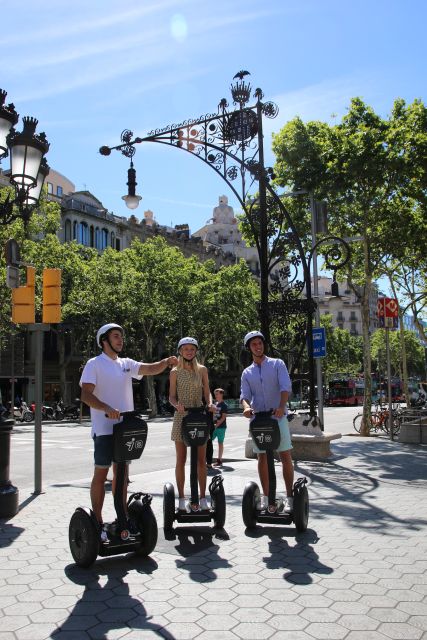
Barcelona rewards a little wheeled help. This $42 Gaudí Segway tour links the Sagrada Família, Passeig de Gràcia, Eixample, and Gràcia in 2.5 hours, giving you far more reach than a walking tour. I like the mix of famous Gaudí buildings and lesser-known modernist houses, and I like the small-group format, with two to six riders per guide. The main catch is simple: Segways share busy city streets, so you need confidence, balance, and comfort around traffic.
The route also gives you a quick look at Barcelona beyond its headline sights. You pause at Casa Amatller, Casa de les Punxes, La Monumental, and the old village center of Gràcia. Guides such as Alex, Edwin, Stephan, Maria, and Virginia have been praised for patient training, useful food tips, and careful handling of city traffic.
Key points before you roll
- Starts at Arc de Triomf: Meet at Passeig de Lluís Companys 10, beside one of Barcelona’s grandest gateways.
- Covers two districts: The route moves through Eixample and Vila de Gràcia, showing how Barcelona grew beyond its old center.
- Gaudí is only part of the story: Casa Milà, Casa Batlló, and Sagrada Família share the route with works by Domènech i Montaner and Puig i Cadafalch.
- Small groups help: Groups contain two to six people per guide, while larger parties are split among several guides.
- Training and equipment are included: You receive a Segway i2, helmet, safety equipment, insurance, instruction, and one drink.
- Age and fitness rules matter: Riders must be at least 16, at least 110 centimeters tall, and between 35 and 120 kilograms.
Why a Segway works well in Barcelona
Barcelona’s central districts are spread out enough that walking between major sights can eat up much of your morning. A Segway gives you a wider view without turning the outing into a motorized sightseeing circuit. You glide along broad avenues, stop for photos, and move between buildings at a useful pace.
I especially like this format for a first visit or a short stay. In one outing, you see the formal grid of Eixample, the quieter streets around Gràcia, the grand Passeig de Gràcia, and the unmistakable towers of Sagrada Família. You will not tour the interiors of the buildings, but you get a strong outdoor introduction and a better sense of how the city fits together.
The ride is not difficult for most people who can balance and follow instructions. Training comes before the tour, and several guides have earned praise for taking time with first-time riders. Virginia was singled out for teaching both the architecture and the machine, while Edwin was praised for keeping the group moving at a good pace.
Still, a Segway is not a magic carpet. You must make movements similar to climbing and descending stairs without help. The route includes streets shared with pedestrians and city traffic, so anyone who feels uneasy on two wheels may prefer a walking tour or an electric bicycle option.
More Gaudi tours in Barcelona:
- Barcelona: Park Güell and Gaudí House Museum Entry Ticket
★ 4.5 · 6,326 reviews - Barcelona: Gaudí’s Park Güell Tour with Fast-Track Ticket
★ 4.8 · 4,512 reviews - Sagrada Familia & Gaudi Tour Private or Small Group with Tickets
★ 4.5 · 1,188 reviews
Arc de Triomf gives the tour a fitting start
The meeting point is at the activity provider’s office on Passeig de Lluís Companys 10. From there, you begin near the Arc de Triomf, the red-brick gateway built for the 1888 Barcelona Universal Exposition.
The broad avenue makes a practical place for the safety briefing and initial practice. You learn how to mount, steer, slow down, and stop the Segway before heading into the city. This early training is not filler. It is the part that lets you relax later.
The Arc also sets the tone. Barcelona’s architecture is not only about Gaudí’s twisting forms. It is about the city’s late 19th-century expansion, public ambition, and love of ornament. Starting here gives you that wider frame before the tour reaches the famous houses.
Passeig de Gràcia turns architecture into a street show
The ride toward Passeig de Gràcia is one of the strongest sections. This grand boulevard cuts through Eixample, the planned district laid out in the 19th century. Its wide avenues and chamfered corners make it easier to appreciate the city’s unusual street plan from a moving viewpoint.
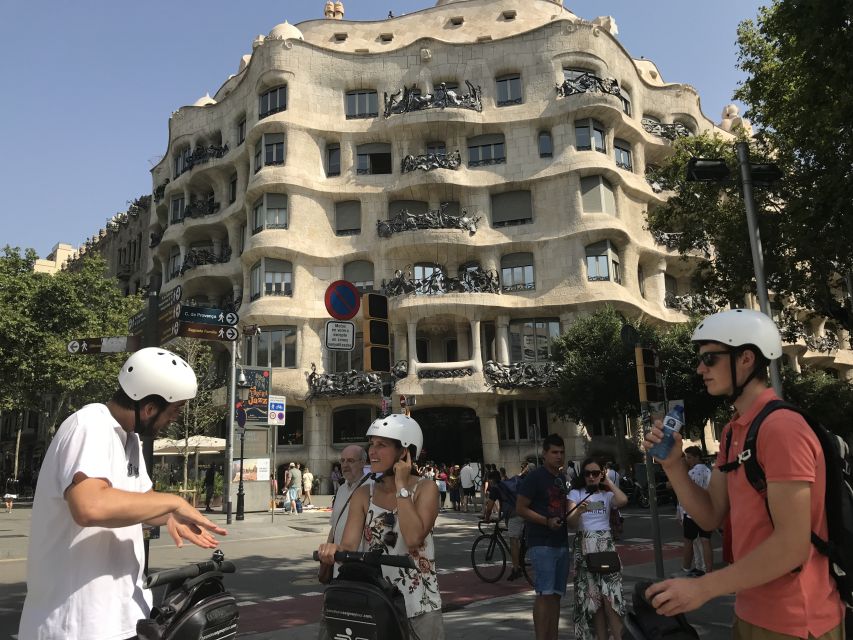
Casa Milà, better known as La Pedrera, is the major stop here. Gaudí’s apartment block looks less like a conventional building than a pale stone wave. Its irregular façade, rounded balconies, and sculpted roofline explain the nickname, which means stone quarry.
You get about 10 minutes at Casa Milà for a guided look and photos. That is enough to hear why the building is important and study the exterior details, but not enough for an interior visit. If La Pedrera is high on your wish list, plan separate time to see its rooftop and exhibitions.
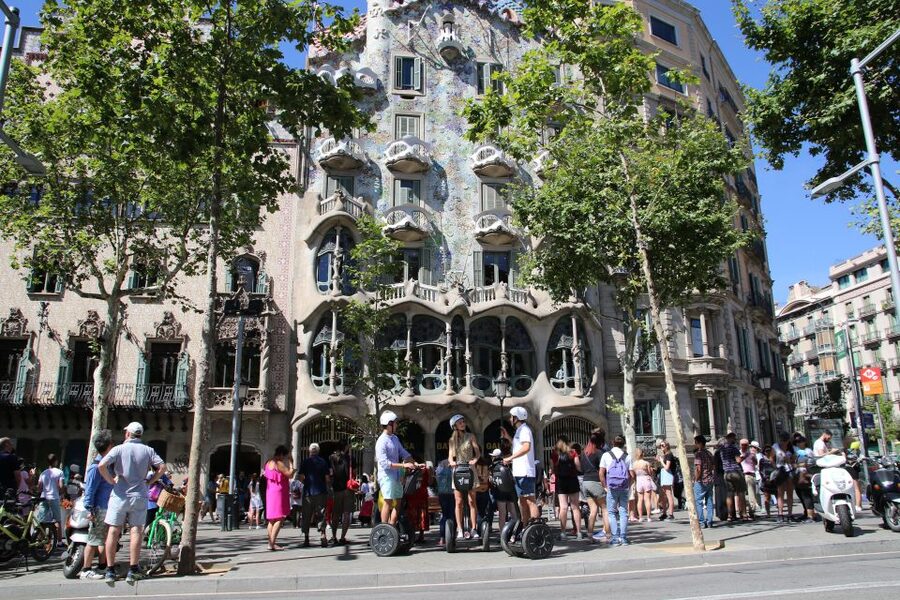
Casa Batlló comes next, also with about 10 minutes noted for the ride and sightseeing. Its façade is covered with curved surfaces, colored tiles, bone-like columns, and mask-shaped balconies. Gaudí designed a house that seems to shift as you look at it. The short stop works well for an exterior overview, though serious architecture fans may want more time on foot.
Passeig de Gràcia can be busy, and stopping beside famous buildings requires attention to the guide and surrounding traffic. The reward is scale. From a Segway, you can see how these highly personal buildings sit within a long, formal boulevard rather than viewing them as isolated museum pieces.
Three modernist houses reveal Barcelona’s friendly rivalry
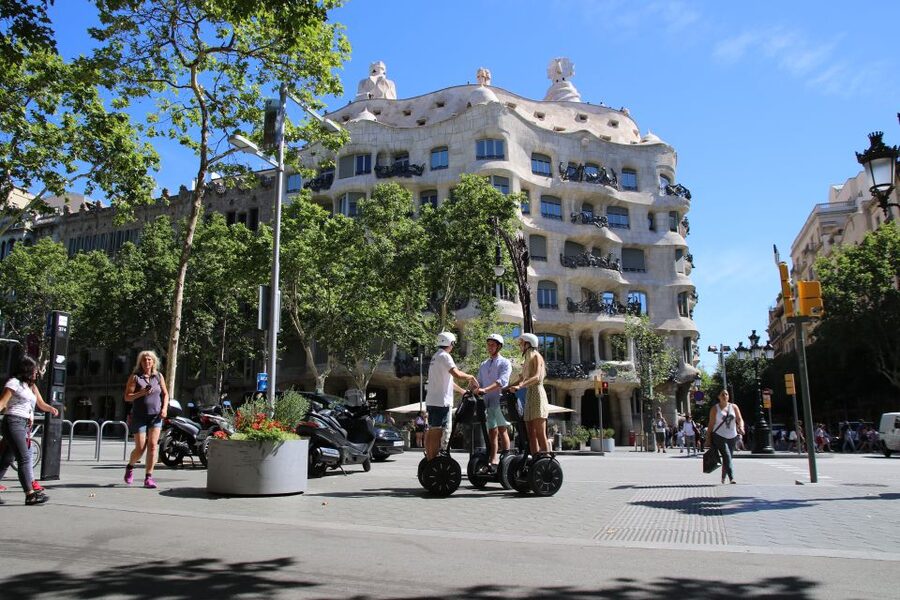
The route adds buildings by architects who worked in the same Modernisme period but had different styles. This is where the tour becomes more than a checklist of Gaudí façades.
Casa Amatller sits beside Casa Batlló and was commissioned in 1898 by Antoni Amatller, a wealthy chocolate manufacturer. Its stepped roof and carefully arranged ornament give it a more orderly appearance than Gaudí’s neighboring house. Seeing the pair together helps you understand that Barcelona’s modernist architecture was a competitive conversation among several leading designers.
Casa de les Punxes, designed by Josep Puig i Cadafalch, has pointed towers and a castle-like outline. It adds a medieval flavor to the route, with a very different mood from the flowing surfaces of Gaudí.
Casa Fuster, associated with Lluís Domènech i Montaner, brings another polished interpretation of Catalan Modernism. These buildings are valuable stops because they keep the tour from suggesting that one architect created Barcelona’s entire architectural identity.
You will hear about the people who paid for these houses, the architects who designed them, and the city’s taste for display. That social context makes the façades easier to read. Look for the small details rather than judging each building from a distance: rooflines, balconies, stonework, color, and the way ornament frames windows.
More architecture tours by bike and segway in Barcelona:
- Barcelona e-Bike Tour: Gaudí & Old Town Small Group
★ 5.0 · 769 reviews - Historical and Modernist Bike Tour Barcelona
★ 5.0 · 262 reviews - Barcelona Bike tour, Gaudí houses or beach bike or eBike tour
★ 5.0 · 140 reviews - Gaudi’s Barcelona 2-Hour Segway Tour with a Live Guide
★ 4.9 · 67 reviews
Sagrada Família is the visual high point
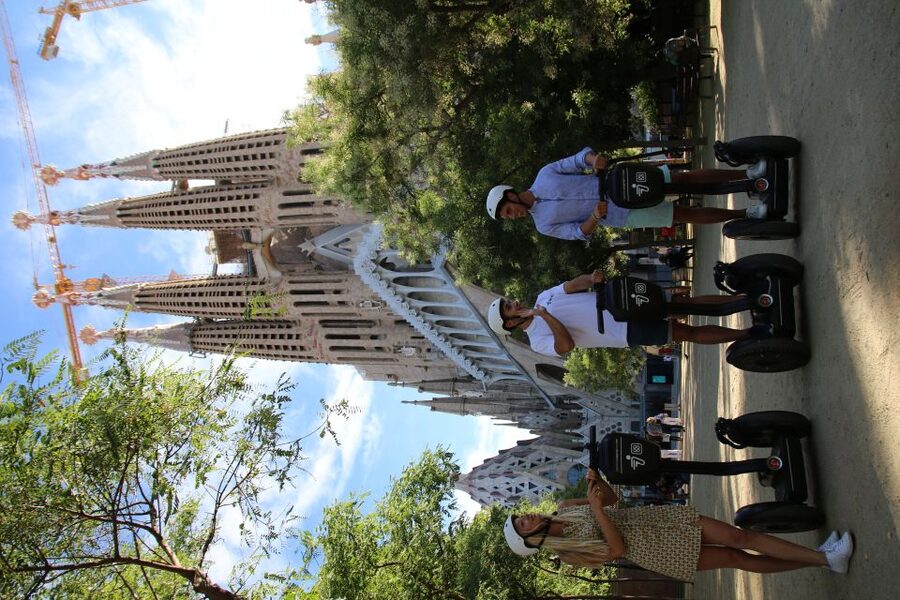
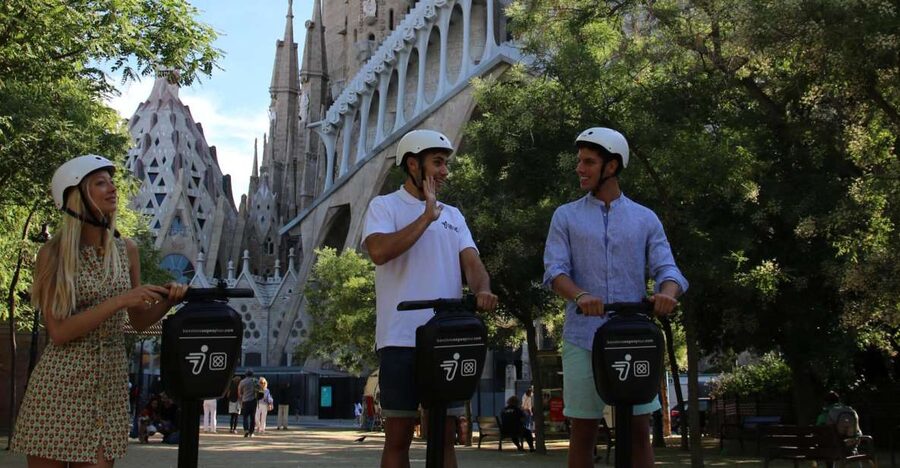
The ride to the Sagrada Família is the tour’s biggest payoff. Even before you reach the church, its towers begin to dominate the view. The building is still unfinished, which is part of its identity and part of the ongoing discussion around Gaudí’s work.
You get a photo stop, guided sightseeing, and about 15 minutes of free time in the neighborhood. That is enough to walk around the exterior, take in the towers, and listen to an explanation of the church’s design. It is not enough for a full interior visit or a detailed study of every façade.
That distinction matters. If you want to go inside Sagrada Família, reserve a separate timed admission for another part of your trip. This Segway tour gives you orientation and exterior access, not an interior church tour.
I like the stop because it places the building in the city rather than treating it as a standalone attraction. After seeing the smaller houses on Passeig de Gràcia, the scale of Sagrada Família feels even more dramatic. You also have a chance to pause, since much of the rest of the tour keeps moving.
The neighborhood can be crowded, and the Segway is not ideal for lingering in the densest pedestrian areas. Listen carefully when the guide explains where to stop and park the machines. The best photos will usually come from stepping away from the immediate entrance area and looking up at the full façade.
La Monumental adds a different chapter
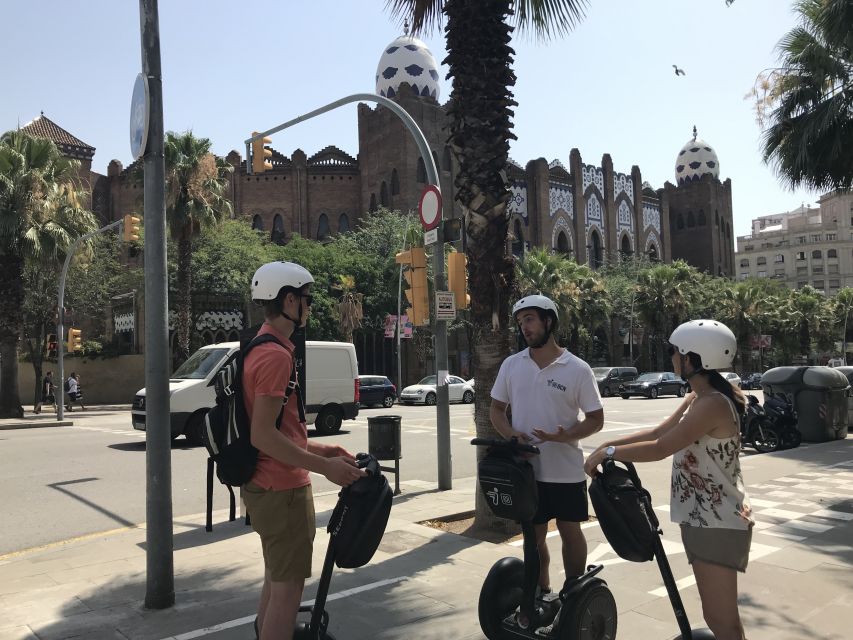
La Monumental is an unexpected stop on a Gaudí-focused route. The former bullring was the last arena in Barcelona where bullfights took place before the Catalan parliament banned them.
Its ornate exterior and rounded form offer a change from Modernisme houses. More important, the stop connects architecture with changing public values. Barcelona’s buildings are not frozen decorations. Their uses change as laws, tastes, and local attitudes change.
You will see the arena from outside and hear about its place in the city. It is a short stop, but it gives the tour a little historical variety and prevents the outing from becoming a parade of luxury homes.
Gràcia shows the city before it became Barcelona
The trip to Vila de Gràcia is one of the most human parts of the route. Gràcia began as a separate municipality in the 17th century and remained independent until Barcelona annexed it in 1897. That past still shapes its streets and buildings.
At Plaça de la Vila de Gràcia, you see the former city hall, La Casa de la Vila de Gràcia, and the district’s distinctive bell tower. The square offers a useful pause from the monumental avenues of Eixample.
Gràcia is known for low buildings, small lanes, local shops, restaurants, and art galleries. It feels more neighborhood-sized than Passeig de Gràcia, and the route gives you a glimpse of the young, bohemian side of Barcelona without requiring a separate afternoon visit.
This stop also shows why a Segway can be useful. You cover enough ground to reach a district that sits beyond the core tourist route, then return to the starting point without spending the rest of the day on foot. The visit is brief, so use your free moments to look at the square and note places you may want to revisit later.
What the guides add to the ride
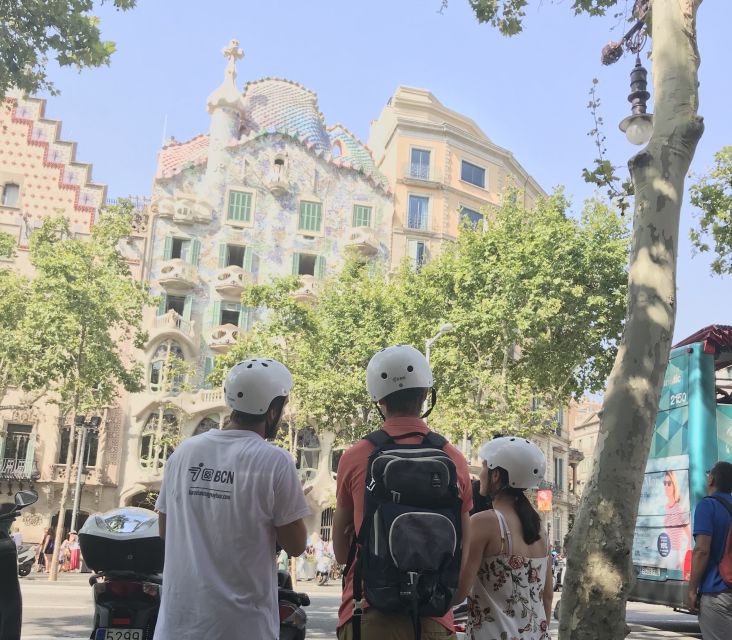
The strongest part of this outing may be the guide. The machine gets you from place to place, but the guide explains what you are seeing and keeps the group safe.
Alex has been praised for offering suggestions about places to eat and visit during the rest of a Barcelona stay. Edwin has been noted for clear training, good pacing, and insight into the city. Stephan received praise for taking time to discuss each building, while Maria was appreciated for explaining local culture and watching the group carefully.
Those details point to what you should expect from a good guide here: practical instruction, architecture explained in plain language, and steady attention to traffic and pedestrians. The tour is available in Dutch, English, French, German, Italian, Portuguese, Russian, and Spanish, so check the available language before booking.
Groups are kept to two to six people per guide. Larger parties are split into smaller units with several guides. That helps, though it does not remove the need to stay close and follow directions.
Price, pace, and practical value
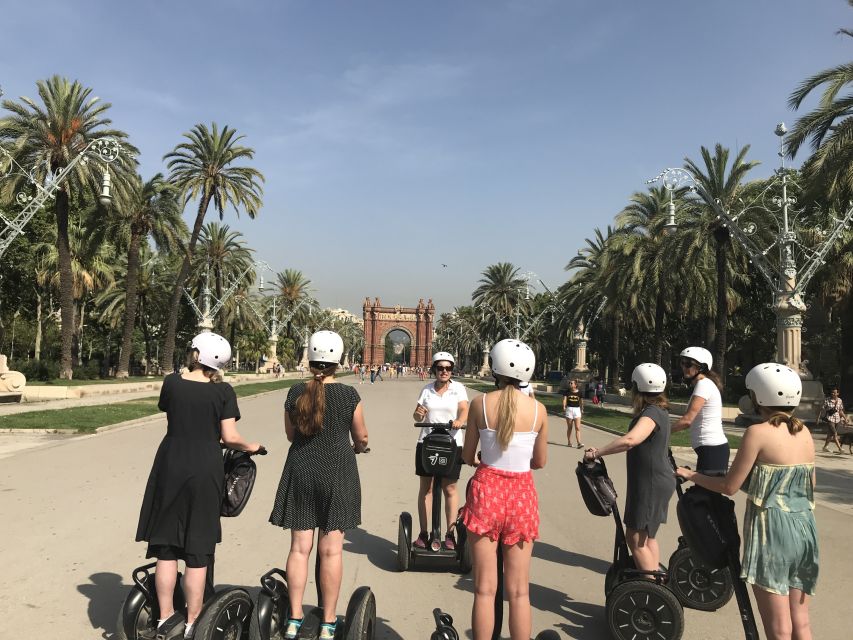
At $42 per person, this is a reasonable price for a 2.5-hour guided outing that includes the Segway, helmet, training, safety equipment, insurance, and one drink. You are paying not just for transport, but for a compact architecture lesson and a guide who handles the route.
The value is strongest if you have limited time, enjoy trying an unusual form of transport, or want to cover Eixample and Gràcia in one morning or afternoon. It is less valuable if your priority is going inside every major building. The route focuses on exteriors and neighborhood context.
The tour includes free cancellation up to 24 hours in advance and a reserve-now, pay-later option. Starting times vary, so check availability before planning other timed visits.
Wear comfortable clothes and sturdy shoes. In winter, warm waterproof clothing and gloves are recommended. The ride can be harder on your knees than you expect, and one rider specifically found it a little tough in that respect.
Barcelona can be sunny, crowded, and full of uneven transitions between riding areas and pedestrian zones. Bring patience. You will get more from the tour if you treat it as a guided city ride rather than a race to collect photographs.
Who should book this Barcelona Segway tour
I would choose this tour for first-time visitors who want a fast introduction to Gaudí and Catalan Modernism. It also suits people with only a short stay, families with participants aged 16 or older, and anyone who prefers seeing a city from the street instead of spending hours inside museums.
It is particularly good for architecture fans who want comparisons. Gaudí’s Casa Milà, Casa Batlló, and Sagrada Família become more interesting when placed beside Casa Amatller, Casa de les Punxes, and Casa Fuster.
I would skip it if you have mobility limitations, are pregnant, dislike balancing devices, or feel nervous around city traffic. Participants must be at least 16, at least 110 centimeters tall, and weigh from 35 to 120 kilograms. Younger participants may join on high-end electric bicycles at discounted rates.
Should you book it?
Book this tour if you want to see Barcelona’s major modernist façades, reach Gràcia, and cover a lot of ground without a long walking slog. The small groups, careful instruction, multilingual guides, and $42 price make it a strong introduction to the city.
Do not book it expecting interior access to Sagrada Família, Casa Milà, or Casa Batlló. Think of this as a lively exterior tour with wheels, useful context, and a chance to spot places you can explore later. If that matches your plan, it is a smart first-day activity.
FAQ
Where does the Barcelona Gaudí Segway tour start?
Meet your guide at the activity provider’s office at Passeig de Lluís Companys 10, near the Arc de Triomf.
How long does the tour last?
The tour lasts 2.5 hours.
How much does the tour cost?
The listed price is $42 per person.
Which Barcelona neighborhoods does the tour visit?
The route covers the Eixample district and Vila de Gràcia, with stops near major modernist buildings and the Sagrada Família.
Does the tour go inside Sagrada Família?
No. The tour includes guided sightseeing, photos, and free time in the Sagrada Família neighborhood, but interior admission is not included.
What equipment is included?
You receive a Segway i2, helmet, safety equipment, training, insurance, and one drink.
What languages are available?
Guides are available in Dutch, English, French, German, Italian, Portuguese, Russian, and Spanish.
How old must you be to ride a Segway?
Participants must be at least 16 years old. Younger participants can join on high-end electric bicycles at discounted rates.
Can I cancel the booking?
You can cancel up to 24 hours in advance for a full refund. The reserve-now, pay-later option lets you book without paying at the time of reservation.
Just added in Barcelona
- Self-Guided Audio Tour-The Surrealist Barcelona of Dalí and Gaudí★ 3.5 · 8 reviews
- Visit to the Modernist houses of the Americans★ 5.0 · 2 reviews
- Roman & Gotic & Gaudi in Barcelona: private walking tour★ 4.5 · 2 reviews
- Barcelona Gaudi Tour: Sagrada Familia, Casa Batllo & Casa Mila★ 5.0 · 4 reviews
- Barcelona Street Escape: Gaudi and the Hidden Treasure★ 5.0 · 17 reviews
- Sagrada Familia Private Tour – Unlock the mysteries of Gaudi★ 5.0 · 10 reviews
- Gaudi’s Casa Batlló and La Pedrera with Chocolate Tasting★ 5.0 · 5 reviews
- Gaudí & Catalan Modernism Private Walking Tour★ 5.0 · 11 reviews
Gaudí Tours, compared.
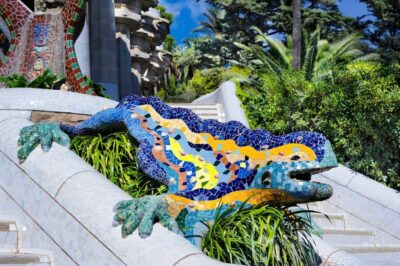
Park Güell and Gaudí House Museum Entry Ticket
Read our review →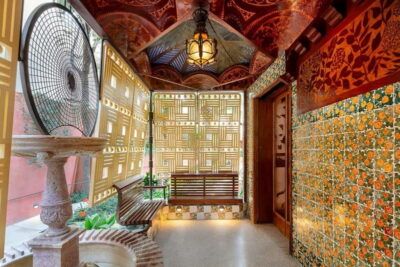
Gaudi’s Casa Vicens Skip-the-Line Entrance Ticket
Read our review →
Gaudí’s Park Güell Tour with Fast-Track Ticket
Read our review →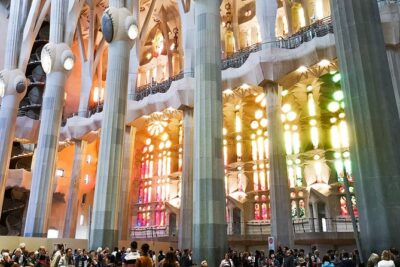
Sagrada Familia & Gaudi Tour Private or Small Group with Tickets
Read our review →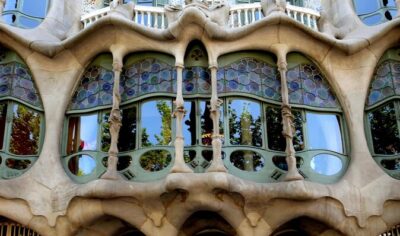
Complete Gaudi Tour: Casa Batllo, Park Guell & Sagrada Familia
Read our review →
Park Güell: Guided Tour with Optional Gaudí Experience Entry
Read our review →
Barcelona e-Bike Tour: Gaudí & Old Town Small Group
Read our review →
Ramblas, Old Town, Gothic and Gaudi Architecture Walking Tour
Read our review →Browse the lists this tour appears in