
REVIEW · WASHINGTON DC ARCHITECTURE TOURS
Historic Georgetown Architectural Walking Tour
Georgetown rewards slow walking. This two-hour tour gives you a useful introduction to the neighborhood, from the C&O Canal and Old Stone House to Georgetown University and the Potomac waterfront. I like the small group size, capped at 20 people, and the way the route mixes grand homes with less obvious places such as Pomander Walk, the Exorcist Steps, and the old Volta Laboratory.
I also like the guide-led storytelling. Guides such as Brian, Kim, Caroline, Sam, Christine, and Ellery have been praised for making the history clear, friendly, and entertaining. The main drawback is that the tour covers about two miles in two hours, so it is not ideal if you need frequent rest stops or want to spend a long time inside each site.
- Canal-side beginning: Learn how the C&O Canal tied Georgetown to trade along the Potomac.
- Architecture with human stories: See homes linked to political figures, newspaper editors, and Jacqueline Kennedy.
- A broad route: The walk connects the canal, Georgetown University, historic streets, and the waterfront.
- Small-group format: A maximum of 20 people allows more room for questions and personal attention.
- Strong guest approval: The tour carries a 4.9 rating from 77 reviews, with 97 percent recommending it.
- Useful morning timing: The 10am start leaves your afternoon open for museums, shopping, or a relaxed meal.
Starting beside Baked & Wired at 10am
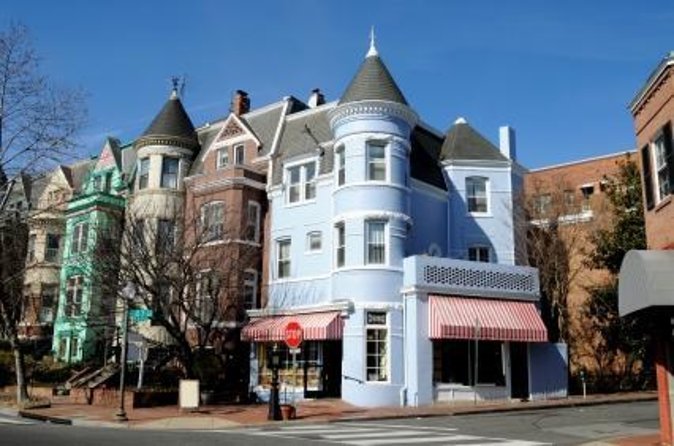
The tour begins outside Baked & Wired at 1052 Thomas Jefferson Street NW. This is a practical meeting point in Georgetown, especially if you want coffee or a pastry before setting off. The shop is known as a local favorite for coffee and desserts, so you can arrive a few minutes early and begin the morning with a snack.
From here, your guide gathers the group and sets the scene for Georgetown. The tour is offered in English, and your mobile ticket keeps the meeting process simple. Confirmation is provided when you book.
The 10am start works well for a first full day in Georgetown. You get the cooler part of the morning for walking, and the tour ends around noon at Georgetown Waterfront Park. You can then stay in the area for lunch, browse Cady’s Alley, or continue on your own.
The group can include up to 20 people. That is not an intimate private walk, but it is still small enough for a guide to answer questions and keep the group together without the feel of a large bus tour.
The C&O Canal explains Georgetown’s purpose
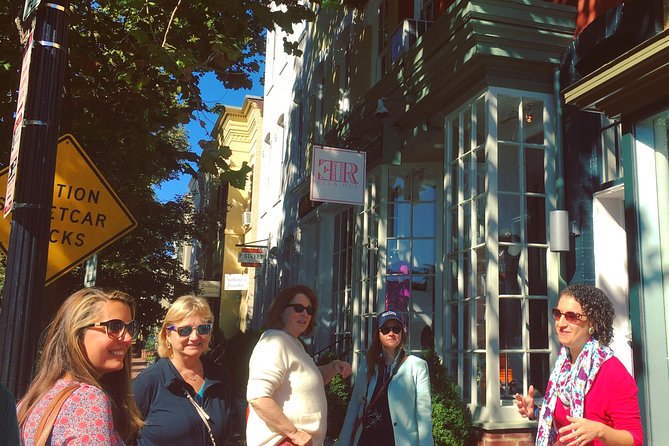
The first major subject is the Chesapeake and Ohio Canal. The canal once connected communities along the Potomac River with markets and supplies, helping Georgetown function as a working port and commercial center.
This is an important opening because Georgetown can look like a polished shopping district today. The canal helps you see an older version of the neighborhood, one shaped by goods, labor, boats, warehouses, and river trade. I like this kind of introduction because it gives the later houses and streets a reason to exist.
The canal section also provides a clear sense of place. Instead of beginning with a list of famous names, the guide starts with the forces that helped build Georgetown. You begin to understand why this part of Washington developed differently from the federal city farther east.
The walking pace is described as leisurely, but you should still expect steady movement. The entire route covers roughly two miles, or 3.2 kilometers, over about two hours.
More walking tours in the USA:
- The Official Art Deco Walking Tour by The Miami Design Preservation League
★ 5.0 · 1,580 reviews - Chicago in a Day: Food, History & Architecture Walking Tour
★ 5.0 · 1,153 reviews - Miami South Beach Art Deco Walking Tour
★ 5.0 · 1,039 reviews
Old Stone House and Georgetown’s quieter streets
One early stop is the Old Stone House, described as the oldest building in Washington, DC. The tour includes a look inside, with no admission charge listed for this stop.
The building offers a useful contrast to Georgetown’s grander residences. Rather than focusing only on wealthy owners and famous politicians, it gives the walk a sense of everyday age and survival. This is one of the places where the tour shifts away from the main commercial street and into the neighborhood.
That change of pace matters. Georgetown is best understood away from the busiest shopping blocks, where brick lanes, modest structures, churches, and private homes reveal more of its character. Your guide uses these streets to connect architecture with the people who lived and worked here.
You should not expect a long museum visit. The stop is brief, listed at about five minutes. Its value is in the context and the chance to see the building as part of a larger neighborhood story.
Mansions, churches, and stories along Wisconsin Avenue
The next part moves through cobblestone streets and past homes linked with prominent Washington figures. The route includes discussion of Jacqueline Kennedy and Ben Bradlee, along with stately churches and large private residences.
The Laird-Dunlop House and Newton D. Baker House are among the historic homes discussed. You also hear about the Lydia English Seminary School for Girls, a boarding school that served wealthy families. These stops help explain how Georgetown’s social world developed and what kind of education and domestic life were valued by its upper-class residents.
The Grafton Tyler Double House adds another architectural detail to the walk. Its name hints at a building designed as two homes in one structure, a reminder that Georgetown’s historic streets are not made up only of isolated mansions. The buildings reflect different ways of arranging family, status, and space.
Christ Episcopal Church and the Hyde-Addison School add civic and community history. Together, these sites keep the tour from becoming only a parade of impressive houses. You see places tied to religion, education, and neighborhood life.
The route also reaches the Yellow Tavern, sometimes called the White Horse Tavern. This is one of the tour’s more colorful stops, with a past described as formerly salacious. It adds a bit of scandal to the architecture and keeps the storytelling from feeling too formal.
Pomander Walk and the West Village
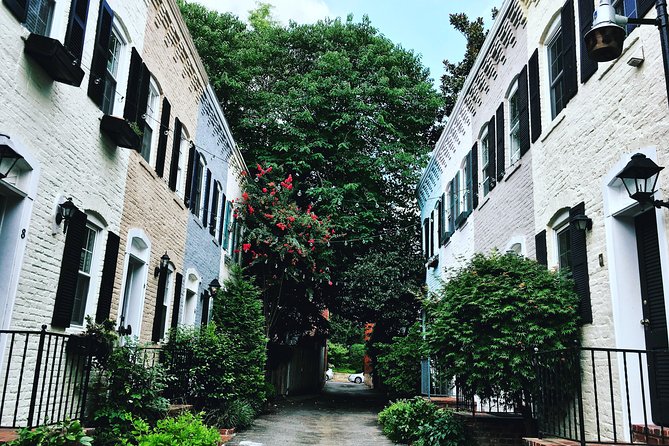
After crossing Wisconsin Avenue, the tour explores Georgetown’s west side. Pomander Walk is one of the most visually distinctive parts of the route, with small pastel-colored row houses grouped along a narrow walk.
This is the sort of place that is easy to miss if you only follow a shopping map. Its compact homes and unusual colors provide a sharp contrast to Georgetown’s larger brick houses and formal avenues. It also gives you a good reason to pay attention to scale. Georgetown’s appeal comes partly from the way grand and modest buildings sit close together.
A tour guide adds value here by explaining what you are seeing rather than simply pointing at attractive façades. The route is described as having more history than pure architectural analysis, so architecture fans should set their expectations accordingly. You will see many building styles and hear how they relate to past residents, but this is not a technical architecture seminar.
That balance suits most first-time visitors. You get enough design information to notice details, while the personal stories keep the walk moving.
More history tours in the USA:
- Charleston’s Best Highlights: History, Culture & Architecture
★ 5.0 · 422 reviews - Palm Springs Modernism Architecture & History Bike Tour
★ 5.0 · 359 reviews - Charleston: History and Architecture Guided Walking Tour
★ 4.8 · 349 reviews - Historic Georgetown: History, Gossip, & Architecture Walking Tour
★ 5.0 · 321 reviews
Volta Laboratory and the academic side of Georgetown
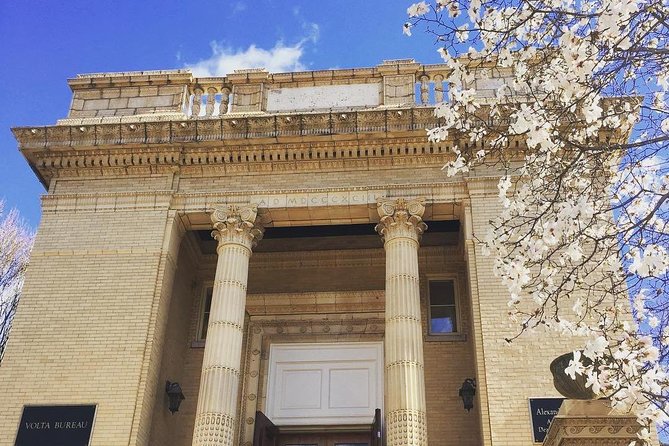
The route then turns toward places connected with education and invention. Alexander Graham Bell founded Volta Laboratory in Georgetown, and the tour points out this important scientific connection.
The mention of Volta Laboratory broadens the tour beyond political families and old houses. Georgetown’s past also includes experimentation, new technology, and institutions that shaped American public life. It is a useful reminder that historic neighborhoods are not frozen scenes. They were places where people studied, worked, argued, invented, and built careers.
The walk continues toward Georgetown Preparatory School and Georgetown University. Healy Hall and the university library are key sights in this section. The university gives the neighborhood a different energy and a strong academic identity.
Healy Hall, in particular, provides one of the route’s major architectural views. The university section also helps you understand why Georgetown feels like both a historic residential district and a student town. The contrast becomes especially clear at The Tombs, a well-known campus nightlife spot.
I like the way this portion gives the tour a change of rhythm. You move from private homes and old churches into an active academic setting, then continue toward the former streetcar depot known as the Car Barn.
The Car Barn, Exorcist Steps, and a memorable finish
The Georgetown Car Barn is a renovated streetcar depot. Its presence points to another stage in the neighborhood’s development, when streetcars helped connect Georgetown with other parts of Washington.
The route also includes the Exorcist Steps. These steep stairs are familiar from the film connection mentioned by several people who enjoyed the walk. They add a pop-culture detail to a tour otherwise focused on architecture, commerce, education, and local history.
You should treat the steps as part of the physical challenge of the route. The overall walk is described as moderate, and the tour requires a moderate level of fitness. If stairs are difficult for you, this is an important point to consider before booking.
The route continues toward the Francis Scott Key Memorial, Cady’s Alley, and Georgetown Waterfront Park. The memorial connects the neighborhood to the writer of The Star-Spangled Banner, while Cady’s Alley brings you back to Georgetown’s commercial and design-oriented side.
The final stop is the waterfront at 3303 Water Street NW. Ending beside the Potomac is a sensible choice. After two hours of streets, houses, canals, and university buildings, the open riverfront gives you room to pause and decide what to explore next.
How much history and architecture do you get?
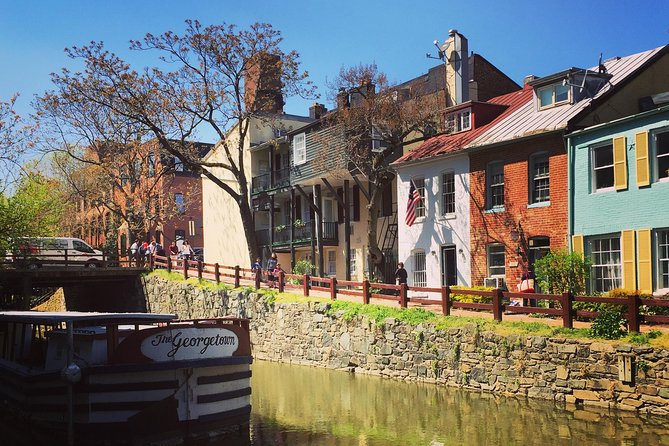
The title places architecture first, but the experience appears to lean more toward history, personalities, and local stories. You will see many notable buildings, including the Laird-Dunlop House, Newton D. Baker House, Grafton Tyler Double House, Healy Hall, and the Car Barn.
Still, the strongest part is likely the connection between buildings and people. Jacqueline Kennedy’s Georgetown home, the feud between two tobacco merchants, the school for upper-class girls, and Bell’s laboratory all give the streets a human scale.
That storytelling approach was praised repeatedly. Brian was singled out for clear history and a lively account of Georgetown and Washington. Sam was described as engaging, while Christine was praised for patience and useful local suggestions. Ellery was noted for an entertaining presentation style, and Caroline was appreciated for adding local color.
The variety of guides means the exact personality of your walk can differ. That is normal for a small operator with several guides, but the consistent praise for friendliness, clarity, and humor is encouraging.
Is the $48 price fair?
At $48 per person, this is not the cheapest way to walk around Georgetown. You can explore the streets and waterfront without paying anything. The question is what you get for the fee.
You are paying for two hours of narration, a planned route, local interpretation, and the chance to connect a long list of sights into one understandable story. If you arrive with little knowledge of Georgetown, the orientation can save time and help you notice details you might otherwise pass.
The value is strongest if you enjoy history but do not want a formal lecture. The tour adds context to places that are free to see, and the small group makes it easier to ask questions than on a large coach excursion.
The value is weaker if you prefer to set your own pace, linger at every building, or take long breaks for photographs. The itinerary includes many sights, but several are viewed from the street and discussed rather than visited for extended periods.
The high 4.9 rating from 77 reviews and 97 percent recommendation rate support the idea that most people find the experience worthwhile. I would see the fee as reasonable for a first visit, especially if you want a strong introduction before exploring the neighborhood on your own.
Who will enjoy this Georgetown walk?
I would recommend the tour to first-time visitors who want a clear introduction to Georgetown without spending half a day on a formal sightseeing program. It also suits families with older children and teenagers who can manage two miles of walking and appreciate stories about inventors, schools, famous residents, movies, and old scandals.
History fans should enjoy the mix of political figures, commerce, education, and local personalities. Architecture fans will find plenty to look at, but should remember that the guide appears to focus more on historical meaning than on detailed building analysis.
The tour can also work well for people who have visited Georgetown before. One person who had been to the neighborhood many times still learned a great deal on a first guided visit. A guide can turn familiar streets into a more connected experience.
I would be cautious about booking if you need a very slow pace, frequent seating, or extensive interior visits. The group walks steadily, covers a good distance, and includes stairs.
Practical details before you book
The meeting point is outside Baked & Wired at 1052 Thomas Jefferson Street NW. The tour starts at 10am and ends at Georgetown Waterfront Park, 3303 Water Street NW.
The experience is offered in English and includes a mobile ticket and a local guide. Service animals are allowed, and the meeting area is near public transportation.
Free cancellation is available up to 24 hours before the start time for a full refund. Changes or cancellations made less than 24 hours ahead are not accepted for a refund. The tour requires a minimum number of participants, so an operator cancellation for that reason comes with the option of another date or a full refund.
Wear comfortable shoes and be ready for about two miles on city streets, cobblestones, and stairs. You may also want to plan a meal or waterfront stop after noon, since the ending location gives you an easy place to continue your Georgetown visit.
Should you book the Historic Georgetown Architectural Walking Tour?
Book it if you want stories, orientation, and a steady route through Georgetown’s many eras. The canal, Old Stone House, historic homes, Pomander Walk, university buildings, Exorcist Steps, and waterfront create a well-rounded morning.
The best reason to choose it is the guide. The repeated praise for Brian, Kim, Caroline, Sam, Christine, and Ellery points to a tour built around clear narration and an approachable style. You will likely come away with more than a collection of pretty buildings. You will understand how trade, education, invention, politics, and local personalities shaped the neighborhood.
Skip it if you would rather wander alone or spend the morning inside individual sites. For most first-time visitors who can comfortably walk two miles, $48 is a fair price for a focused introduction and a useful starting point for exploring Georgetown on your own.
FAQ
How long is the Historic Georgetown Architectural Walking Tour?
The tour lasts approximately two hours.
How much walking is involved?
You should expect about two miles, or 3.2 kilometers, of walking during the tour.
Where does the tour begin?
The meeting point is outside Baked & Wired at 1052 Thomas Jefferson Street NW, Washington, DC 20007.
What time does the tour start?
The tour begins at 10am.
Where does the tour end?
The tour ends at Georgetown Waterfront Park, at 3303 Water Street NW.
Is the tour offered in English?
Yes. The tour is offered in English.
How many people can join the tour?
The maximum group size is 20 people.
Can I cancel for a full refund?
Yes. You can cancel at least 24 hours before the start time for a full refund. Cancellations or changes made less than 24 hours before the tour are not refunded.
Just added in the USA
- Wilmington History and Architecture Tour★ 4.8 · 18 reviews
- New Orleans : Garden District Architecture Walking tour★ 4.8 · 5 reviews
- Washington DC: Dupont Circle & Embassy Row Architecture Tour★ 5.0 · 6 reviews
- Washington, DC: Georgetown Architecture Walking Tour★ 5.0 · 8 reviews
- Tulsa: Art Deco Walking Tour of Tulsa★ 5.0 · 8 reviews
- Private Colonial Williamsburg Architectural Tour★ 5.0 · 5 reviews
- Monuments and Memorials Architectural Walking Tour★ 5.0 · 17 reviews
- Castle to Capitol: Museums of the National Mall Architecture Tour★ 4.5 · 9 reviews
Washington DC Architecture Tours, compared.
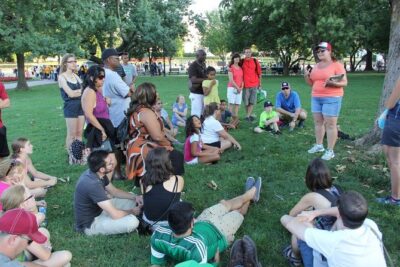
Historic Georgetown: History, Gossip, & Architecture Walking Tour
Read our review →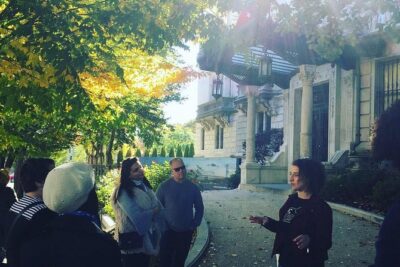
Dupont Circle and Embassy Row Architectural Walking Tour
Read our review →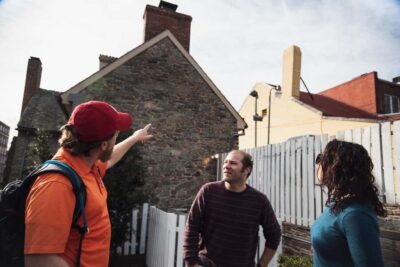
DC: Georgetown History & Architecture Tour with Local Guide
Read our review →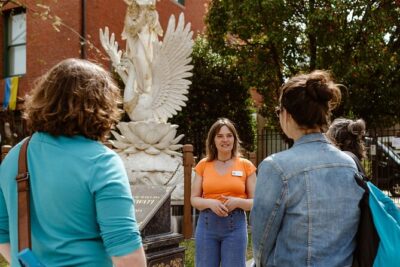
Embassy Row: Architecture, Mansions & International Intrigue
Read our review →

Monuments and Memorials Architectural Walking Tour
Read our review →
Castle to Capitol: Museums of the National Mall Architecture Tour
Read our review →Embassy Row: Architecture, Mansions & International Intrigue
Read our review →Browse the lists this tour appears in