
REVIEW · NEW YORK CITY ARCHITECTURE TOURS
Chelsea Galleries and High Line; Art, Architecture and History
Art meets old rail lines here. This two-hour private walk pairs the High Line with two Chelsea exhibitions, giving you a useful look at New York’s art scene from both the street and the gallery wall. I like the mix of contemporary art and architecture, and I like that your own guide can pause for questions instead of rushing a fixed group through the district.
The strongest guides appear to be artists or art educators, with Maya, Shahar, and Daniel receiving especially warm praise for their explanations and gallery choices. The main concern is crowd control: a large group can make the High Line feel tight, and one group found that pauses on a narrow section blocked other park users. At about $50 per person, preparation and clear communication matter.
What makes this Chelsea walk worth considering
- Two Chelsea exhibitions are included, so the tour moves beyond outdoor sightseeing and gives you time with actual gallery art.
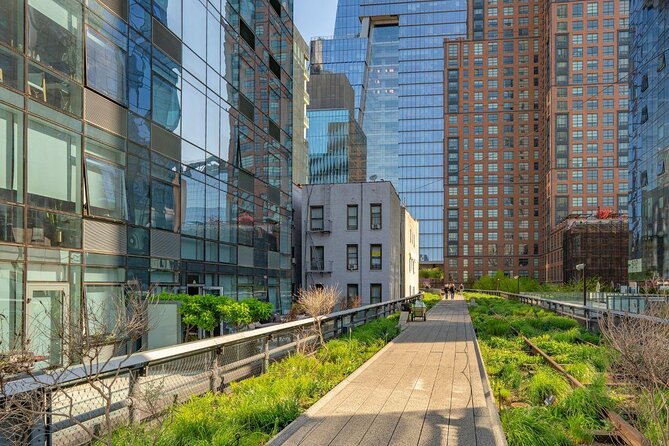
- The High Line is covered from south to north, including its public art, design, history, and views over 10th Avenue.
- Maya, Shahar, and Daniel have all guided this experience, with praise for their explanations, gallery choices, and friendly manner.
- The tour is private for your group, making it easier to ask questions and shape the conversation around your interests.
- The route ends at 10th Avenue and West 30th Street, near the High Line’s notable sculptural viewing area and the Mercado Little Spain entrance.
- It runs Tuesday through Saturday, from 10:00 a.m. to 5:00 p.m., and takes about two hours.
Starting at 812 Washington Street
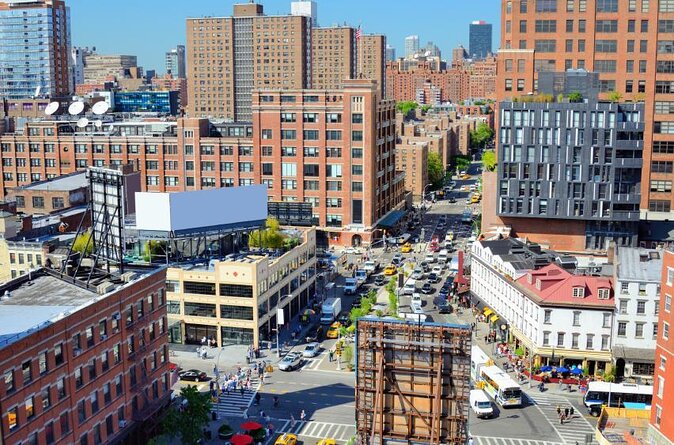
The tour begins at 812 Washington Street, near the southern end of the High Line in Chelsea. This is a useful starting point because you begin with the neighborhood’s older industrial character before walking north into a district filled with galleries, new buildings, and public art.
The route goes from the southern point of the High Line to the northern point. That direction gives the walk a clear shape: you start with the rail line’s story and early park sections, then move toward newer architecture and the final 10th Avenue view.
You receive a mobile ticket, and the tour is offered in English. Confirmation is sent within 48 hours of booking, subject to availability. Since the meeting point is close to public transportation, you do not need to arrange a special transfer just to reach the start.
The private format is one of the better features. You are not sharing the guide with a random audience, and you can ask for clarification when a work or architectural detail is unfamiliar. That matters on an art walk, where the best part is often the question you did not know you wanted to ask.
More museum visits in New York City:
- Barcelona: Park Güell and Gaudí House Museum Entry Ticket
★ 4.5 · 6,326 reviews - Private Edo-Tokyo Open Air Architectural Museum Tour
★ 4.8 · 15 reviews - Castle to Capitol: Museums of the National Mall Architecture Tour
★ 4.5 · 9 reviews
The High Line as public art space
The High Line is not treated simply as an elevated park or photo stop. The guide points out selected works along the promenade and explains the artists and the work process behind them.
That approach helps you look at public art with more care. Instead of seeing a sculpture as a colorful object in the path, you get a framework for thinking about its scale, placement, materials, and relationship to the people moving around it.
The art section is also a good match for visitors who do not usually visit galleries. Outdoor works are less formal. You can talk, ask basic questions, and look at the piece from several angles without the quiet pressure of a museum room.
You should expect the exact works to depend on what is installed during your visit. The experience promises selected pieces and two exhibitions, but it does not name a fixed list of artists or galleries. That flexibility is useful in a changing art district, though it means you cannot plan around one particular show.
Photography is encouraged in the sense that the High Line offers many strong settings for art and sculpture. Still, the route is a public walkway, not a private photo session. If the guide stops on a narrow section, the group needs to leave room for people passing through.
The High Line’s unusual origin story
The history portion explains how an abandoned elevated railroad was nearly demolished and how two young men began a public campaign to save it in the early 2000s.
Their idea was not simply to preserve old tracks. They proposed turning the rail structure into a public park. That decision changed the way the area could be understood: an unused piece of transportation infrastructure became a place for walking, plants, art, and city views.
This story gives the park more meaning than a string of scenic overlooks. You see how public spaces can depend on local action, political pressure, and a willingness to imagine an old structure in a new way.
The historical discussion is likely to appeal most to you if you enjoy urban change. It links the High Line to the larger story of Chelsea’s transformation, but the tour does not promise a full neighborhood history course. The focus stays on the rail line and its conversion into a public park.
Architecture from the elevated path
As you walk, the guide points out contemporary buildings that represent current architectural thinking. The High Line itself becomes part of the discussion, with attention to its design and planting scheme.
The elevated viewpoint makes this especially useful. From street level, a building can appear as one more tall facade. From the High Line, you can look across, up, and down, comparing older structures with newer construction while seeing how the park threads through them.
The guide also discusses the design of the High Line and its setting. That helps explain why the route feels different from an ordinary sidewalk. The old rail alignment determines the path, while the park’s planting and public art create changing scenes along the walk.
Do not expect a technical architecture lecture filled with measurements and specialist terms. This is a guided introduction, designed to help you notice the buildings and public design around you. I see that as a strength for most visitors, though architecture students may want a more detailed specialist tour.
More history tours in New York City:
- Tribeca Architecture And History Walking Tour
★ 5.0 · 141 reviews - New York City: Flatiron Food, History, and Architecture Tour
★ 4.8 · 43 reviews - TriBeCa Architecture & History Walking Tour
★ 5.0 · 37 reviews - The Story Behind NY’s Evolving Skyline An Architectural Journey Through History
★ 5.0 · 18 reviews
Two Chelsea galleries beneath the High Line
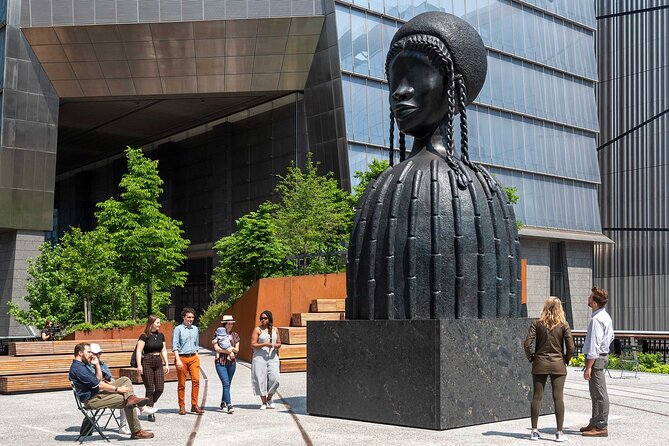
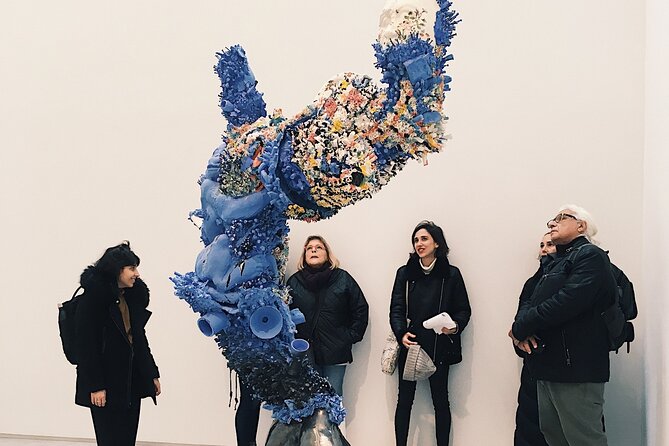
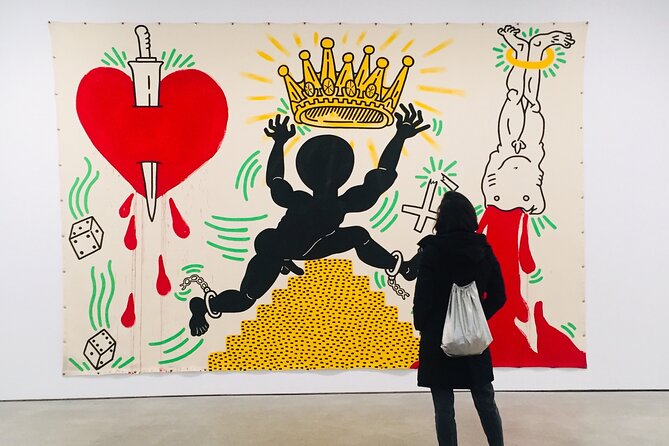
The Chelsea gallery district sits under and around the High Line, so the tour moves naturally between the elevated park and indoor exhibitions. You visit two selected art shows, with the guide explaining the ideas and works on display.
This is where the tour gains much of its value. The High Line gives you outdoor art, architecture, and city views. The galleries give you a quieter place to focus on contemporary work without the distractions of traffic, crowds, and changing weather.
The selections have included different types of art rather than one narrow style. That variety is helpful if your group has mixed tastes. You may find one exhibition immediately accessible and another more challenging, but the guide’s job is to give you enough context to discuss both.
The strongest part of the gallery visits appears to be the explanations. Maya is praised for intelligent insights and for creating a safe, welcoming atmosphere in which people felt comfortable asking questions. Daniel is also praised for thoughtful explanations and for offering additional New York suggestions. Shahar received particular approval for covering art, architecture, and history with a pleasant manner.
The galleries are not presented as a shopping stop. The point is to learn how to look at current art and understand why different works are shown in a professional exhibition setting. If you want a list of famous masterpieces, this is not the right outing. If you want a guided introduction to Chelsea’s contemporary scene, it makes better sense.
Ending at 10th Avenue and West 30th Street
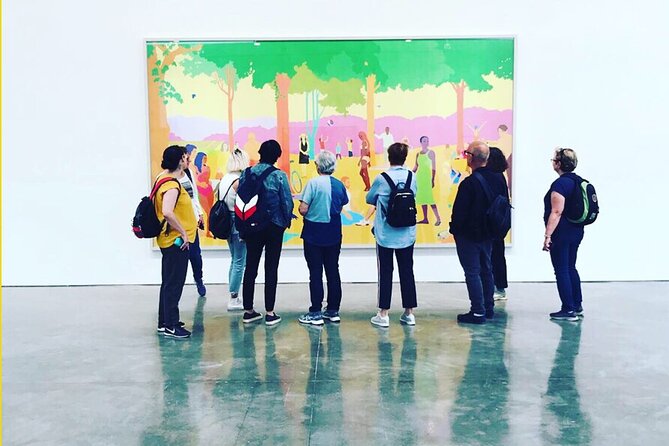
The tour finishes near 10th Avenue and West 30th Street, next to the Mercado Little Spain entrance. This northern end gives you a final view over 10th Avenue and the High Line’s most impressive sculptural project, according to the tour description.
Ending here is practical. You finish near a major city thoroughfare, with access to public transportation and the wider Hudson Yards area. You can continue exploring, find food, or simply stop and look back over the route.
The final view also provides a natural conclusion. You have moved from the High Line’s southern entrance through public art and architecture, heard how the railroad became a park, visited Chelsea galleries, and ended with a large city-facing work.
The exact feel of this stop will depend on the day and the number of people on the High Line. The elevated park can be crowded, especially on weekends. If you want clean photographs, keep your expectations flexible and be ready to wait for a clear moment.
How the private format changes the experience
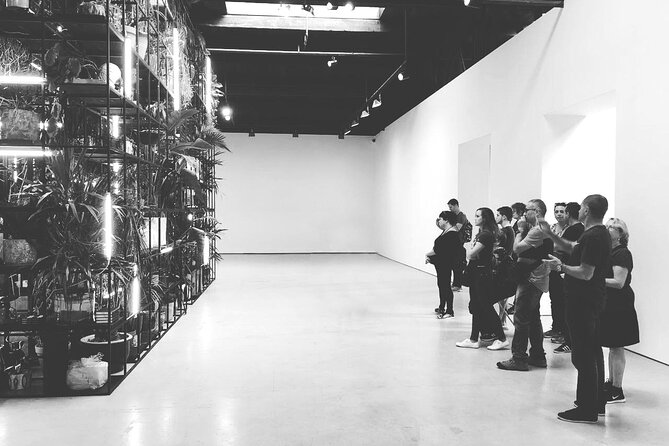
The activity is described as private, meaning only your group participates. That is a major advantage for families, couples, friends, or colleagues who want a conversation suited to their pace.
You can ask about an artist, request more detail on architecture, or spend less time on a subject that does not interest your group. The guides are described as professional artists or art educators, and the best comments about Maya, Shahar, and Daniel focus on their ability to explain ideas clearly.
Private does not always mean small. One group had 20 people, and that size created problems with sound, traffic, and stopping on the narrow High Line. A group that large may need to stay close to the guide and listen carefully.
The same group suggested a headphone system. That is a fair consideration if you are booking for a large party. Gallery acoustics can be difficult, and city noise can make a soft-spoken guide hard to hear. Ask about group size and audio arrangements before booking if this matters to you.
A guide once needed to use a phone rather than an iPad to show related images. That is not a major problem for a tour focused on the art in front of you, but it does underline a useful point: the experience depends heavily on guide preparation and presentation.
Timing, weather, and value at about $50
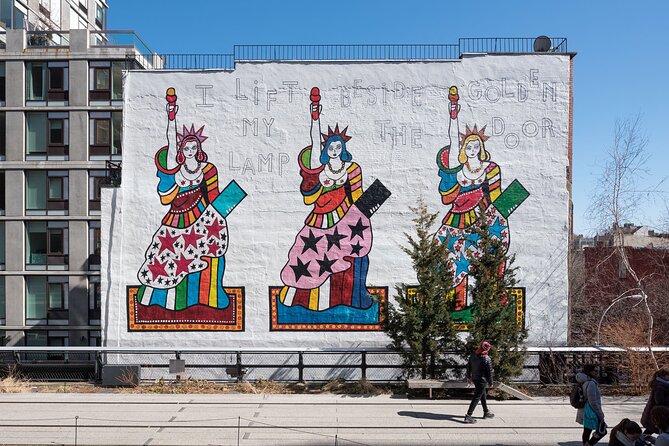
The tour lasts approximately two hours. That is enough time for a focused introduction to the High Line and two galleries, but not enough for a slow museum-style visit or a broad survey of all Chelsea art spaces.
At the cited price of about $50 per person, I would judge the value by the guide rather than by the walking distance. The High Line is free to visit on your own. You are paying for interpretation, access to selected exhibitions, and a conversation that connects art, buildings, urban history, and the park’s design.
That can be a fair price if you want help making sense of contemporary art. It is less attractive if you only want a walk with scenic photographs, since you can visit the High Line independently.
Weather matters. The experience requires good weather and may be rescheduled or refunded if poor conditions cause a cancellation. Bring a flexible attitude when booking, especially if this is tied to a short New York visit.
You can cancel for a full refund up to 24 hours before the start time. Changes made less than 24 hours ahead are not accepted, and late cancellations are not refunded. The tour also requires a minimum number of participants, so a cancellation for that reason may lead to a new date, another experience, or a full refund.
Who will get the most from this walk
I would recommend this tour to you if you want more than a checklist of New York sights. It suits adults, older children, and families who enjoy asking questions and looking at art together.
It also works well for first-time gallery visitors. You do not need a background in contemporary art. The guide’s explanations give you a way into works that might otherwise seem puzzling or too abstract.
The experience may be especially appealing to Hebrew speakers looking for a comfortable art-focused outing, though the official tour language is English. Confirm language arrangements directly if that is important for your group.
You should think twice if you dislike walking, outdoor crowds, or discussion-based tours. The schedule is active, and the value comes from listening and looking rather than from a long list of attractions.
Service animals are allowed, and the activity is near public transportation. Most people can participate, though the information provided does not spell out every surface, stair, or seating detail. Contact the provider with specific mobility questions before booking.
My verdict on the Chelsea Galleries and High Line tour
I like this experience because it connects four parts of New York that are often visited separately: public art, modern buildings, urban history, and Chelsea galleries. The guide-led format gives the High Line a purpose beyond taking photographs, while the gallery stops keep the walk from becoming only an outdoor sightseeing route.
The main risk is group management. A large party can be hard to hear and may inconvenience other people on the High Line. The quality also depends on the individual guide, though Maya, Shahar, and Daniel have each been praised for clear explanations, thoughtful selections, and a friendly atmosphere.
Book it if you want an art lesson wrapped inside a city walk, especially if you are curious about contemporary work and prefer to ask questions as you go. Skip it if you only want the High Line itself, or if you expect a silent, highly technical gallery tour with a fixed list of famous artists.
FAQ
How long does the Chelsea Galleries and High Line tour last?
The tour lasts approximately two hours.
Where does the tour begin?
It begins at 812 Washington Street, New York, near the southern end of the High Line.
Where does the tour finish?
It ends at 10th Avenue and West 30th Street, next to the Mercado Little Spain entrance.
What does the tour include?
The experience covers public art on the High Line, contemporary architecture, the history of the rail line and its conversion into a park, two Chelsea art exhibitions, and a city view over 10th Avenue.
Is this a private tour?
Yes. Only your group participates in the private activity.
What language is offered?
The tour is offered in English.
When does the tour operate?
It operates Tuesday through Saturday, between 10:00 a.m. and 5:00 p.m., during the stated operating period.
Can I cancel for a refund?
Yes. You can cancel at least 24 hours before the start time for a full refund. Cancellations or changes made less than 24 hours before the start time are not accepted for a refund. If poor weather or an insufficient number of participants causes cancellation, you will be offered another date or experience, or a full refund.
Just added in New York City
- Race to the Sky: NYC Architecture Tour With SUMMIT One Ticket★ 5.0 · 3 reviews
- Chelsea and the High Line NYC Architecture Walking Tour★ 5.0 · 6 reviews
- Private Flatiron Food, History and Architecture Tour★ 5.0 · 8 reviews
- New York Soho and the Village Art and Architecture Tour★ 5.0 · 4 reviews
- New York Upper West Side Art and Architecture Tour★ 5.0 · 4 reviews
- New York Upper East Side Art and Architecture Tour★ 5.0 · 3 reviews
- New York Midtown South Art and Architecture Tour★ 5.0 · 2 reviews
- The Story Behind NY’s Evolving Skyline An Architectural Journey Through History★ 5.0 · 18 reviews
New York City Architecture Tours, compared.


Around Manhattan Official NYC Architecture Cruise
Read our review →
Art Deco and Architecture Midtown Landmarks Tour
Read our review →
New York City The Official Rockefeller Center Tour
Read our review →
Browse the lists this tour appears in