
REVIEW · MUNICH ARCHITECTURE TOURS
Munich Your Way: Private Tour with Architect & Guide
Munich rewards curious walkers. This private experience is interesting because Philipp, an architect and certified city guide, shapes the outing around what you want to see, from Wittelsbach history and Gothic churches to street art, Art Nouveau, food markets, and the Isar. I especially like the personal questionnaire before the tour and the chance to make a spray-painted or watercolor souvenir. The main consideration is that private transportation and public transit are not included, so the far-flung stops require some planning.
I also like the range of choices. You can focus on Munich’s old center, follow Kandinsky and Thomas Mann through Schwabing, or spend time around Bahnwärter Thiel and Alte Utting. The small private format means your group can ask questions and adjust the pace, though the 2.5 to 3.5 hour window is not long enough to explore every suggested area in depth.
Key points to know before booking
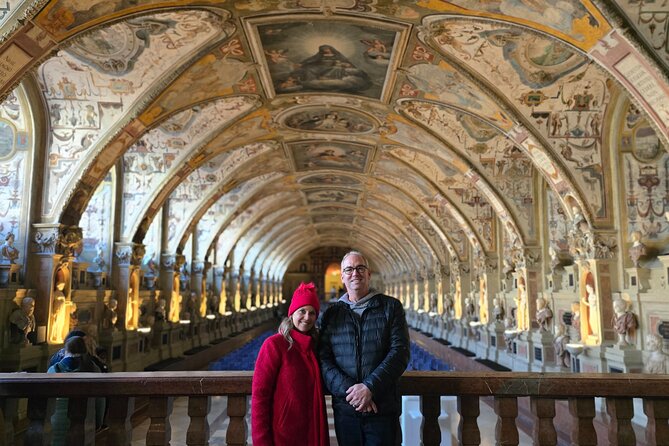
- Philipp brings architecture and local history together: His background gives you more than dates and names. Buildings, streets, royal power, art movements, and modern urban culture all connect.
- The tour is shaped around your interests: A questionnaire helps set the direction before you meet, which is useful if you have already seen Munich’s main sights.
- The old town is only one part of the experience: Marienplatz and the Frauenkirche can be paired with Schwabing, street art, the Isar, or Nymphenburg Palace.
- The creative stops are unusually hands-on: In Schwabing, you can create your own postcard with spray paint or watercolors.
- Transportation is not included: Pickup is offered, but private and public transportation costs are excluded. Ask how your chosen route will work before setting off.
- The price works best for a group: At $314.56 for up to 15 people, the per-person value improves quickly with several people together.
Starting at Marienplatz, Munich’s historic center
The tour begins at Fischbrunnen, Marienplatz 8, in the middle of Munich’s old town. This is a sensible meeting point because the square brings together several important threads of the city: trade, royal rule, religion, and civic power.
Philipp begins with the story of salt, once called white gold, which helped Munich grow through trade. That simple detail gives the square useful context. You are not just looking at a handsome plaza. You are seeing the place where commerce helped shape the city’s success.
The Old and New Town Halls frame Marienplatz with a grand civic presence. In the center, the Mariensäule, or Column of St. Mary, opens a path into Bavaria’s political past and the rise of its first Prince-Elector. I like this kind of explanation because it connects one monument to a wider change in how Bavaria was ruled.
From here, the route can include St. Peter’s Church, known locally as Alter Peter. It is the oldest church in Munich’s historic center and offers another layer of the city’s story. The nearby Viktualienmarkt adds a more everyday side of Munich, with local food specialties and a lively market setting.
One practical point matters here: the listed stop descriptions give only about 10 minutes at Marienplatz, St. Peter’s, and the Frauenkirche. That is enough for a focused introduction, but not for a leisurely market meal, a full church visit, or a tower climb. If food or church interiors matter most to you, say so in the questionnaire.
More private tours in Germany:
- Private Taxi Tour City East & West History and Architecture 3-4h
★ 5.0 · 42 reviews - Private walking Tour: Berlin Architecture Tour
★ 5.0 · 14 reviews - Lübeck: Private Historical and Architectural Walking Tour
★ 4.5 · 6 reviews
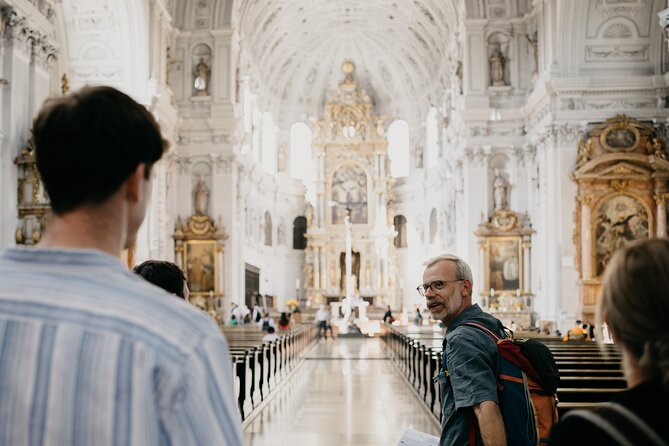
The Frauenkirche and Munich’s medieval symbols
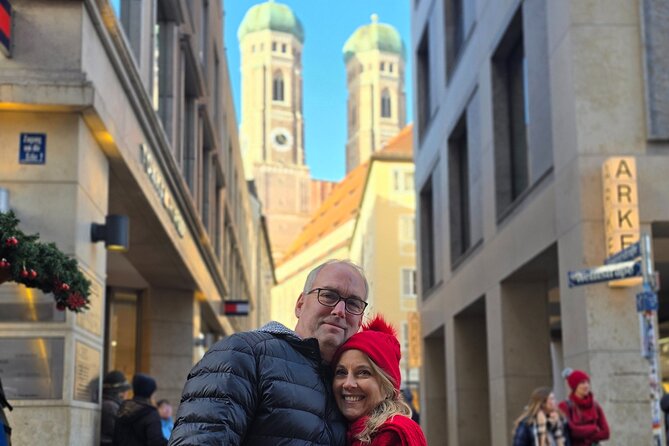
The Frauenkirche is Munich’s most recognizable historic building. Its twin towers rise to nearly 100 meters, making the church a useful landmark even before you learn its story.
Built in the 15th century, the church reflects the influence of the Wittelsbach family during the late Middle Ages. Philipp can help you read the building not only as a Gothic church, but also as a statement of dynastic power.
Inside, the devil’s footprint adds a memorable bit of medieval folklore. It is the sort of small detail that makes a short stop stick in your mind. The story also offers a glimpse into the fears and beliefs that shaped daily life centuries ago.
The site has an older layer too. Beneath the present structure was a Romanesque chapel dating from the 13th century. I appreciate that this kind of detail keeps the focus on change over time. Munich was not built in one clean period. Older sacred spaces gave way to newer ones as the city and its ruling family grew.
Because the church stop is brief, you should not expect a full architectural lecture on every feature. The value here is the connection between the building, medieval belief, and Bavarian royal power.
Fünf Höfe, where shopping meets modern design
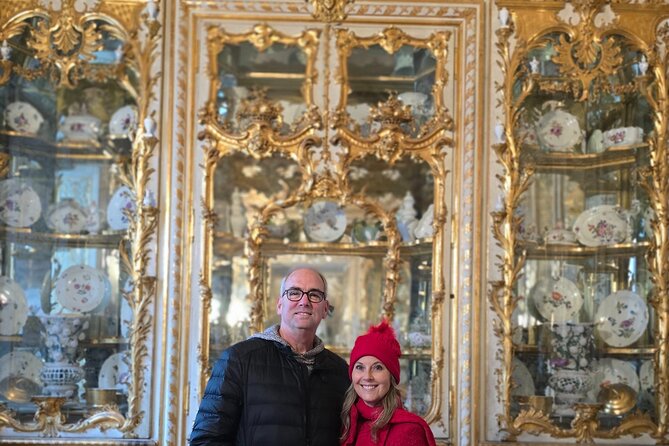
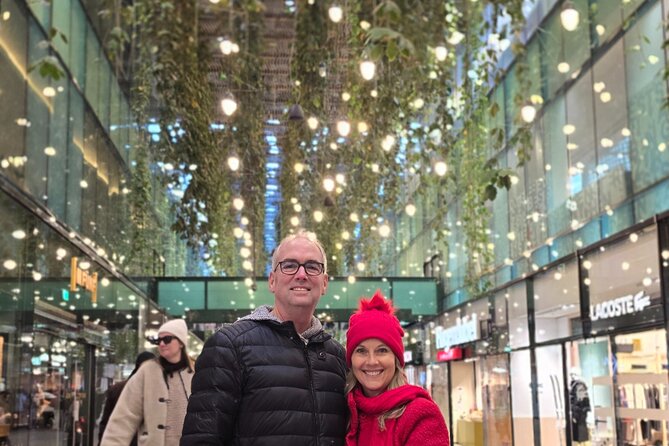
Fünf Höfe, or Five Courts, offers a sharp change from the medieval center. This elegant shopping arcade combines boutiques, art, light, and contemporary architecture in a compact setting.
The complex was designed by the Swiss firm Herzog & de Meuron. Its most unusual feature is a large indoor living art installation that blends plants, light, and design. You can enjoy it even if shopping is not on your list. The point is the relationship between commerce and architecture.
I would give this stop extra attention if you like modern buildings. It shows how Munich continues to reshape old central spaces rather than leaving the city frozen in its past.
The trade-off is simple. Fünf Höfe is not a conventional museum, and the experience depends on your interest in design, retail spaces, and public art. It may feel less important if your priority is royal history or historic interiors.
Schwabing, Kandinsky, Thomas Mann, and Jugendstil façades
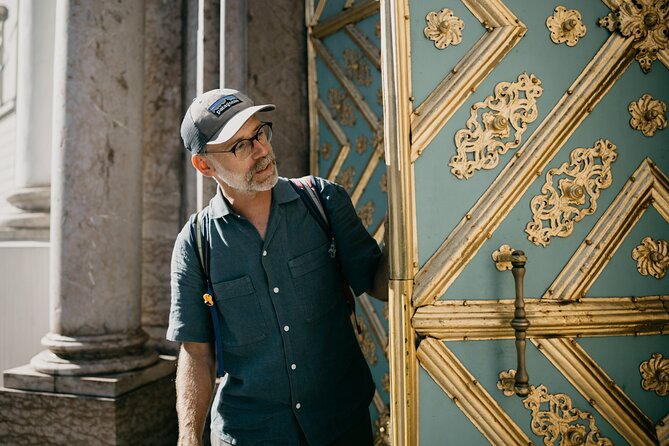
Schwabing brings art and literature into the route. The district was associated with Wassily Kandinsky, co-founder of the Blauer Reiter expressionist movement, and Thomas Mann, the Nobel Prize-winning writer.
The neighborhood is also known for German Art Nouveau, called Jugendstil. Look for colorful façades, organic lines, and playful details. A guide with architectural training can help you notice features you might otherwise pass without a second glance.
This is one of the most personal parts of the experience. Rather than simply pointing out buildings, Philipp includes a hands-on activity. You can make a postcard inspired by the façades you have seen, using spray paint or a watercolor set. It gives you a small souvenir tied to your own observations, not a generic item from a shop.
The Schwabing section is listed at about 30 minutes. That allows for a short walk and the creative activity, but it will not cover every artistic connection in the district. If Kandinsky, Jugendstil, or literary Munich is your main interest, ask for Schwabing to receive a larger share of the time.
A few more architecture tours in Germany worth a look
- Düsseldorf: Guided City Architecture Walking Tour
★ 4.6 · 61 reviews - Potsdam: Guided Walking Tour of UNESCO Site and Architecture
★ 4.7 · 49 reviews - Lübeck: Architecture and Local Craft Private Guided Tour
★ 4.0 · 6 reviews - Berlin: Guided Architectural Walking Tour of Hansaviertel
★ 4.9 · 5 reviews
Bahnwärter Thiel and the creative south of Munich
The most unusual part of the route is around Bahnwärter Thiel. Here, street art and alternative culture take over a former industrial setting. Graffiti-covered shipping containers, the Wall of Fame, artist spaces, food stands, flea markets, music, and a nightclub create a very different mood from Marienplatz.
Bahnwärter Thiel works best for people who want to see present-day Munich, not only its palaces and churches. It is a place where artists, musicians, and local groups use an unconventional setting for cultural activity.
Nearby, the old excursion steamboat Alte Utting sits on a bridge and now operates as an unusual beer garden with food stalls, a café, and sunset views. It is the kind of place many independent visitors would miss without a local connection. The setting is odd in the best way: a boat where you do not expect a boat, with Munich spread around it.
The route can also include Dreimühlenviertel, a district connected to three former water mills and Munich’s rafting past. Little Venice, the café Gans Woanders, and the Isar add smaller-scale sights to the outing.
The Isar itself was reshaped in 2009 into a more natural river setting. That gives this section a useful environmental angle. You see how the city can make room for a wilder river corridor instead of treating the water only as a channel through town.
This portion is listed at about one hour, making it the longest individual stop. Even so, Bahnwärter Thiel, Alte Utting, Dreimühlenviertel, Little Venice, Gans Woanders, and the Isar cannot all be explored fully in a short visit. I would choose two or three priorities rather than trying to collect every stop.
Nymphenburg Palace and Bavaria’s royal world
Nymphenburg Palace offers the grandest historical setting in the experience. The palace began as a 17th-century celebration of the long-awaited birth of an heir to the Bavarian throne. Its Baroque scale and Rococo decoration show how royal family events could shape an entire complex.
The grounds combine formal Baroque gardens with English-style elements. Four pavilions add smaller architectural highlights around the estate. The canal also recalls the royal fascination with water, leisure, and display. Members of the court hunted, played an early form of golf, and traveled by gondola.
Inside, the Rococo Stone Hall is a major draw. A young Amadeus Mozart once performed there for the royal family, giving the room a direct connection to European musical history. The Gallery of Beauties, assembled by King Ludwig I, adds another view of court life and royal taste.
Nymphenburg is listed as a 10-minute stop, and admission is not included. That timing is enough for a quick look or an explanation from outside, but not for a proper palace visit and garden walk. I would treat Nymphenburg as a special focus only if you can confirm that the schedule and transport suit a longer visit.
The palace is also separated from the central meeting point. Since transportation is excluded, you need to ask in advance how this part will be reached and whether it fits the route you choose.
How the personal format changes the experience
Before the tour, you receive a short questionnaire. This is more important than it sounds. Munich offers several very different experiences, and a private guide can waste time if the route is not set around your interests.
You might ask for:
- Royal history and the Wittelsbach dynasty
- Gothic, Baroque, Rococo, or Art Nouveau architecture
- Kandinsky, the Blauer Reiter, or Thomas Mann
- Street art and alternative culture
- Markets and local food
- The Isar and the English Garden
- Nymphenburg Palace and court life
Philipp’s architecture background is especially useful when you want to compare periods. In one outing, you may move from a medieval church to Herzog & de Meuron’s contemporary design, then on to Jugendstil façades and repurposed industrial art spaces.
The private setup also lets you ask for practical help. One solo guest specifically praised Philipp for helping with public transportation as well as sharing stories about Munich. That is valuable in a city where the best sights are spread across different neighborhoods.
The group limit is up to 15 people. That makes the tour workable for a family, a group of friends, or a larger private party. For one or two people, the total price feels much higher per person, so the value depends on how much you care about a tailored route and direct access to a guide.
Timing, transport, and what the price means
The experience lasts about 2.5 to 3.5 hours. The shorter end works best for a focused old-town walk. The longer end gives you more room for a neighborhood such as Schwabing or the Bahnwärter Thiel area.
At $314.56 per group, the price is not low for a solo outing. For a group of 10, however, it comes to roughly $31.46 per person. At the maximum group size, it is roughly $20.97 per person. The larger your party, the stronger the value becomes.
The price includes Philipp’s guiding and the materials for your spray-paint or watercolor souvenir. It does not include private transportation, public transportation, or admission to Nymphenburg Palace.
Pickup is offered, but that does not mean transport is included. I would confirm the pickup point, the intended route, and any transit costs before the day of the tour. This is particularly important if you want to combine central Munich with Schwabing, Bahnwärter Thiel, or Nymphenburg.
The tour ends back at the meeting point, Fischbrunnen at Marienplatz. Since the route can include locations outside the old center, ask how the return works when selecting a custom plan.
Who will get the most from this Munich tour?
I would recommend this experience to you if you want more than a standard checklist of Munich sights. It suits people who like asking questions, comparing buildings, and connecting famous places with less expected corners of the city.
It is a strong choice for:
- Architecture fans who want both historic and modern design
- Repeat visitors who have already seen the main square
- Families or friends who want a private route
- Art lovers interested in Kandinsky, Jugendstil, or street art
- Groups looking for a guide who can adjust the pace
- Visitors who appreciate local help with public transport and city orientation
It may be less suitable if you want a long palace visit, a full food tour, or an exhaustive old-town history walk. The experience offers many possibilities, but the time is limited. The best results come from choosing a clear theme before you arrive.
Should you book Munich Your Way?
Book it if you want Philipp’s personal approach and the freedom to connect Munich’s royal past with its creative present. His strongest qualities are his architecture and history background, his willingness to shape the route, and his practical help with getting around.
For the best value, bring a group and decide on two or three priorities. For example, combine Marienplatz, the Frauenkirche, and Schwabing, or focus on Bahnwärter Thiel, Alte Utting, and the Isar. Trying to include every listed area may leave each stop feeling rushed.
I would skip it only if you prefer a fixed group itinerary with transport and entrance fees already bundled in. For everyone else, this is a flexible way to see Munich through both its famous monuments and its more surprising local corners.
Cancellation is free up to 24 hours before the start time. Service animals are allowed, the tour is near public transportation, and most people can participate.
FAQ
Where does the Munich tour begin?
It begins at Fischbrunnen, Marienplatz 8, 80331 Munich, Germany.
Where does the tour end?
The experience ends back at the meeting point in Marienplatz.
How long does the tour last?
The approximate duration is 2 hours 30 minutes to 3 hours 30 minutes.
Is transportation included?
No. Private transportation and public transportation are not included. Pickup is offered, so you should confirm the transport plan for your selected route.
Is Nymphenburg Palace admission included?
No. Admission to Nymphenburg Palace is not included.
How many people can join the private tour?
The private tour is available for groups of up to 15 people, and only your group participates.
Just added in Germany
- Hidden Architectural Gems of Munich (Max. 16 guests)★ 5.0 · 2 reviews
- Architectural Frankfurt: Private Tour with a Local Expert★ 5.0 · 2 reviews
- Architectural Berlin: Private Tour with a Local Expert★ 4.0 · 3 reviews
- Private Taxi Tour of City East History and Architecture 2-3h★ 5.0 · 2 reviews
- Berlin Architecture/River Spree Full Day Photography Tour★ 5.0 · 2 reviews
- Lübeck: Private Historical and Architectural Walking Tour★ 4.5 · 6 reviews
- Lübeck: Architecture and Local Craft Private Guided Tour★ 4.0 · 6 reviews
- Dessau: Radtour Bauhaus – Junkers – Gartenreich★ 5.0 · 2 reviews
Munich Architecture Tours, compared.
Munich 3-Hour Segway Tour: Nazi Munich & Royal Architecture
Read our review →
Hidden Architectural Gems of Munich (Max. 16 guests)
Read our review →
500 Years of Munich Architecture (Max. 16 Guests)
Read our review →
Private Munich Tour for History Buffs with Architectural Gems and WWII sites
Read our review →Hidden Architectural Gems of Munich (Max. 16 guests)
Read our review →Browse the lists this tour appears in