
REVIEW · GOTHIC QUARTER TOURS
Mumbai heritage walk- Story of Gothic and Art Deco buildings
Mumbai tells its story in stone. This three-hour walk links the city’s Gothic and Art Deco landmarks, from grand CST to Eros Cinema, while explaining how Mumbai grew into a major trading center. I like the small group of up to 15 and the way the route covers both famous buildings and less obvious details. I also like that snacks are included, a welcome touch during a long city walk.
The main consideration is that most buildings are viewed from outside. You only enter the lobby at David Sassoon Library, and the tour involves steady walking between stops. Still, the guide, Pankaj, earns especially strong praise for his friendly manner, clear explanations, and entertaining stories about Mumbai’s past.
Key points about Mumbai’s Gothic and Art Deco walk
- Two architectural eras in one route: See Victorian Gothic landmarks beside 20th-century Art Deco buildings.
- Eight central Mumbai stops: The walk runs from Chhatrapati Shivaji Terminus to the Prince of Wales Museum, now called Chhatrapati Shivaji Maharaj Vastu Sangrahalaya.
- Pankaj is a major strength: His storytelling connects buildings with people, trade, religion, education, and city life.
- A small group makes a difference: With a maximum of 15 people, it should be easier to hear explanations and ask questions.
- Snacks are included: This adds a practical break to a three-hour walk.
- The route suits first-time and repeat visitors: Even if you have seen central Mumbai before, the architectural stories can change how you read the streets.
Why this walk helps you read Mumbai

Mumbai can look like a collection of grand Victorian buildings, crowded streets, cinemas, offices, and apartment blocks. This tour gives that mixture a clear thread. You follow the city’s growth through architecture, beginning with the Gothic style favored during the British colonial period and moving toward the sleek, geometric Art Deco style of the 20th century.
That shift matters. The buildings are not just pretty backdrops for photographs. They point to changing wealth, technology, public life, education, and ideas about modern living. The tour also explains how Mumbai became a major trading center, giving the architecture a useful economic and social setting.
I especially like the contrast between the ornate Chhatrapati Shivaji Terminus and the more polished lines of Eros Cinema and Empress Court. You get two very different ideas of progress within a few hours. One uses towers, arches, decoration, and symbolic figures. The other favors curved forms, horizontal lines, and a modern urban image.
The route is also practical for visitors with limited time. It starts at Chhatrapati Shivaji Terminus in the Fort area and ends near the Chhatrapati Shivaji Maharaj Vastu Sangrahalaya. Both points are in central Mumbai and near public transportation, so the walk can fit into a wider day of sightseeing.
More Gothic Quarter walks in India:
- Victorian Gothic Heritage Quarter and Art Deco Walking Tour
★ 4.9 · 14 reviews - Victorian Gothic Heritage Quarter and Art Deco Walking Tour
★ 4.5 · 13 reviews - Ramblas, Old Town, Gothic and Gaudi Architecture Walking Tour
★ 5.0 · 723 reviews
Starting with the grand Chhatrapati Shivaji Terminus
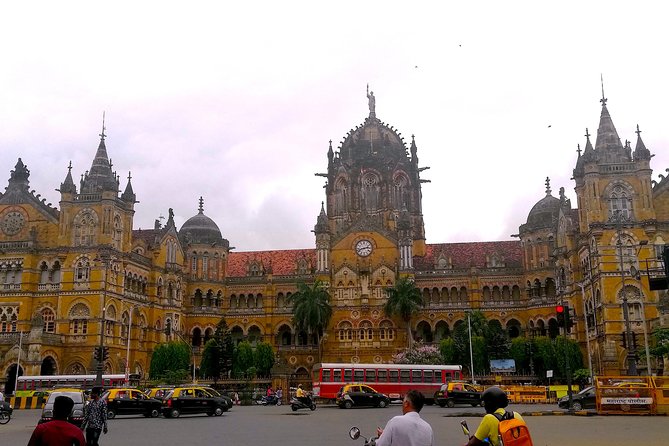
The first stop is Chhatrapati Shivaji Terminus, usually called CST. You spend about 30 minutes here, with admission included at this stop.
CST is one of India’s finest examples of Victorian Gothic Revival architecture. Its design combines European Gothic features with Indian decorative ideas, which makes it more than a copy of a British railway building. The mixture reflects the way colonial architecture in Mumbai adapted to its setting.
This is a smart place to begin. A railway station is closely tied to the city’s growth, trade, migration, and daily movement, so the building gives the guide a natural way to explain Mumbai’s development. You are not simply looking at a façade. You are learning why such a large and decorated station mattered to a growing commercial city.
Allow yourself time to look upward. Gothic buildings reward attention to towers, arches, stone detail, and vertical lines. A guide can point out elements that are easy to miss when you are focused only on the overall size of the building.
Eros Cinema and the Art Deco idea
From CST, the walk moves toward Eros Cinema, seen from outside for about 30 minutes. Admission is not included, and the tour does not take you inside.
Eros is a good introduction to Mumbai’s Art Deco architecture. Its shape has been compared to a wedding cake because the building rises in tiers and finishes with a semi-circular tower. That description is useful because it gives you an easy visual clue. Look for the stepped form, the rounded upper section, and the sense of movement created by the building’s curved lines.
The stop also shows how architecture changed with the arrival of cinema culture and modern entertainment. Art Deco was not only a style for private homes. It became part of the public face of a changing city.
The limitation is simple: you are looking from the street. If you hoped to see the cinema interior, this tour will not provide that. Still, the exterior is the point here, and the guide’s explanation helps you recognize similar buildings elsewhere in Mumbai.
Empress Court and the meaning of Art Deco status
Empress Court receives about 15 minutes. Again, you see it from outside.
This residential Art Deco building gives the walk a useful change of scale. Eros Cinema represents public entertainment, while Empress Court shows how modern architectural style entered private life. The discussion focuses on how living in an Art Deco building became a sign of wealth and social status.
That detail adds meaning to what might otherwise look like another attractive apartment building. Architecture can tell you who had access to new forms of comfort, design, and prestige. You begin to see Art Deco not just as decoration, but as part of Mumbai’s social story.
This is one of the shorter stops, so expect a focused explanation rather than a long visit. If you enjoy architecture, use the time to compare Empress Court with Eros. The two buildings help you notice how the style worked in different settings.
More Art Deco tours in India:
- The Official Art Deco Walking Tour by The Miami Design Preservation League
★ 5.0 · 1,580 reviews - Miami South Beach Art Deco Walking Tour
★ 5.0 · 1,039 reviews - Miami Beach Food and Art Deco Walking Tour
★ 4.5 · 245 reviews - Guided 10am Morning Art Deco Walk From Napier Art Deco Trust
★ 4.5 · 167 reviews
Bombay High Court and its symbolic figures
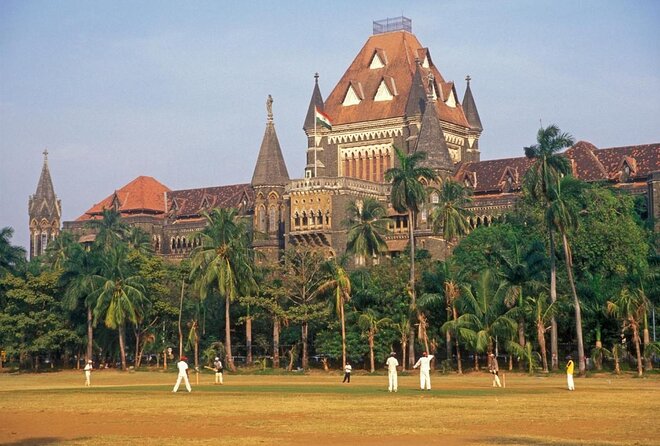
The Bombay High Court is viewed from outside during another 30-minute stop. It is a fine Gothic building, with the heavy stonework, pointed forms, and vertical emphasis you expect from the style.
The guide draws attention to the statues of Justice and Mercy on top of the building. These figures give the architecture a moral message, not just a decorative one. They also provide a good example of how public buildings used sculpture and symbolism to communicate their purpose.
This part of the walk is valuable if you like buildings with stories attached to individual features. Instead of hearing only the name and date of a landmark, you get a reason to look closely at its upper sections and ask what the designers wanted people to understand.
As with several stops, there is no interior visit. The court is an active institution, so the tour remains outside. Bring your attention to the roofline and details above street level.
Rajabai Clock Tower, Mumbai’s Big Ben
The Rajabai Clock Tower receives about 30 minutes. It is sometimes described as the Big Ben of Mumbai, a comparison that gives you an immediate sense of its role as a city landmark.
The story connected with the tower is particularly memorable. Its financing helped a visually challenged mother of the patron hear the chimes and keep her fasts punctually. That personal detail gives the monument an emotional dimension. It links a large civic structure with one family’s religious practice and daily routine.
This is the sort of story that makes a guided walk worthwhile. You might photograph the tower on your own, but you are less likely to know why it was funded or how its chimes mattered to the patron’s mother.
The tower is viewed as part of the exterior walk, not as an interior climb or building visit. Even so, 30 minutes gives the guide enough time to explain its place among Mumbai’s major Gothic landmarks.
David Sassoon Library and its lobby

The David Sassoon Library and Reading Room gets about 20 minutes. This Gothic structure was built by David Sassoon, a Jewish banker, as a library and reading room.
You can see the building from the lobby, but only members are allowed farther inside. That restriction is important to understand before booking. This is not a full library tour, but the lobby still gives you a closer look than the street-only stops.
The library adds another layer to the city’s story. Mumbai’s development depended on commerce, but also on education, reading, and public institutions. A reading room supported the intellectual life of the city, and the building’s Gothic design gave that purpose a formal setting.
I would pay attention here to the balance between function and appearance. The building was made for study, yet it was also designed to express dignity and importance. That combination appears often in Mumbai’s older civic and educational architecture.
Elphinstone College and famous alumni
Elphinstone College is a shorter 15-minute stop, appreciated from outside. Its Gothic design continues the architectural theme established at the High Court, the clock tower, and David Sassoon Library.
The building’s educational story is just as important as its façade. Its alumni include Bal Gangadhar Tilak, Dr. B. R. Ambedkar, and Jamshedji Tata. Those names connect the college with political thought, social change, and Indian industry.
This stop works best when you listen for the link between buildings and institutions. A college is not only a decorated structure. It is part of the city’s public life, and its alumni help explain why Mumbai became an important center for education and national debate.
Because the visit lasts about 15 minutes and remains outside, do not expect an extended campus tour. It is a compact stop, but the names associated with the college give it real weight.
Ending at the Prince of Wales Museum
The final stop is the Chhatrapati Shivaji Maharaj Vastu Sangrahalaya, formerly known as the Prince of Wales Museum. You spend about 10 minutes here, viewing its heritage building from outside.
The museum’s building has an unusual past. It was earlier used as a military hospital for the Children’s Welfare Exhibition. That detail shows how historic buildings can change roles over time, while still remaining part of the city’s public identity.
Ending here makes sense. The museum is a major cultural landmark, and its location provides a natural finish near other attractions in the Fort area. If you want to visit the museum itself, you would need to arrange that separately, since this walk focuses on the exterior.
The short stop is enough to identify the building and hear its background, but not enough for a museum visit. Think of it as a final architectural note rather than the main event.
What Pankaj adds to the experience
The clearest strength of this walk is the guide. Pankaj is praised for being friendly, helpful, enthusiastic, and well informed about both architecture and Mumbai’s past.
That combination matters. A guide who knows only architectural labels can make a walk feel dry. Pankaj’s approach, as described through the experience, connects buildings with entertaining stories and practical explanations. He also answers questions, which is useful when you want more than a prepared speech.
One particularly good sign is that the walk works for repeat visitors as well as first-time visitors. If you have already passed CST, the High Court, or the Art Deco buildings, a strong guide can show you details and connections you missed before.
The group limit of 15 supports this style. It is small enough for a more personal feel, though it is not a private tour. You should have a better chance of hearing the guide and asking questions than you would in a large coach group.
Is $35 a fair price?
At $35 per person, this is not the cheapest way to look at Mumbai’s architecture. You can walk through central Mumbai independently for little or no cost. The value comes from the explanation, the route planning, the stories, the small group, and the included snacks.
I think the price is reasonable if architecture and urban history are central to your visit. You are covering eight significant sites over three hours, including two major styles and several institutions tied to Mumbai’s growth. You also avoid spending your limited time guessing which buildings matter and why.
The value is weaker if you mainly want interior access. Most stops are exterior views, and the David Sassoon Library visit reaches only the lobby. You are paying for interpretation and context, not for entry into a series of attractions.
The mobile ticket and free cancellation up to 24 hours before the start add flexibility. If poor weather cancels the walk, you are offered another date or a full refund. Since the experience requires good weather, check the forecast and wear practical walking shoes.
Who should book this walk?
I would recommend it most strongly to architecture fans, history buffs, photographers who want better context, and first-time visitors trying to understand central Mumbai. It also suits repeat visitors who feel they have seen the buildings but not understood their stories.
The walk may be less suitable if you dislike outdoor sightseeing, need frequent indoor breaks, or want to tour building interiors. The route lasts about three hours, includes steady walking, and features several outside stops.
Snacks are provided, but no specific type is given, so do not book this as a food tour. The main subject is architecture, with refreshments as a helpful extra.
My booking advice
Book this tour if you want Mumbai’s grand buildings to make sense as part of one city story. The strongest reasons are the mix of Gothic and Art Deco, the manageable group size, and Pankaj’s ability to connect architecture with people and events.
Skip it if your main goal is interior access or a relaxed sightseeing outing with little walking. For $35, you are buying a guided lesson in Mumbai’s built identity. For the right audience, that is a good deal, especially early in your visit when the rest of the city will benefit from the context.
FAQ
How long does the Mumbai heritage walk last?
The walk lasts approximately three hours.
How much does the tour cost?
The listed price is $35 per person.
Where does the tour begin?
It begins at Chhatrapati Shivaji Maharaj Terminus in the CST area of Fort, Mumbai.
Where does the tour end?
It ends at Chhatrapati Shivaji Maharaj Vastu Sangrahalaya, formerly called the Prince of Wales Museum, at 159-161 Mahatma Gandhi Road, Lion Gate, Fort, Mumbai.
How many people can join the tour?
The experience has a maximum group size of 15 travelers.
Is the tour available with a mobile ticket?
Yes. A mobile ticket is available.
Which buildings are included?
The route includes Chhatrapati Shivaji Terminus, Eros Cinema, Empress Court, Bombay High Court, Rajabai Clock Tower, David Sassoon Library and Reading Room, Elphinstone College, and Chhatrapati Shivaji Maharaj Vastu Sangrahalaya.
Can you enter all the buildings?
No. Most buildings are viewed from outside. At David Sassoon Library, you can see the lobby, but only members are allowed inside.
Are snacks included?
Yes. Snacks are provided during the walk.
Can you cancel for a full refund?
Yes. You can cancel at least 24 hours before the experience starts for a full refund. Cancellations made less than 24 hours in advance are not refunded.
More history tours in India
- The Hipster Chandigarh Architecture History Tour
★ 5.0 · 54 reviews - Jaipur City Heritage and Architecture Tour
★ 5.0 · 32 reviews - Chicago in a Day: Food, History & Architecture Walking Tour
★ 5.0 · 1,153 reviews - Charleston’s Best Highlights: History, Culture & Architecture
★ 5.0 · 422 reviews
More walking tours in India
- British Architecture Walk, an immersive walking tour in Chennai
★ 5.0 · 60 reviews - British Architecture Walk in Chennai by Wonder tours
★ 5.0 · 10 reviews - Goa Walking tour: History, Culture, Art and architecture
★ 4.5 · 2 reviews - Lecce: Baroque Architecture and Underground Walking Tour
★ 4.6 · 1,248 reviews
Just added in India
- Victorian Gothic Heritage Quarter and Art Deco Walking Tour★ 4.9 · 14 reviews
- New Delhi: Mughal’s architecture tour with transfers★ 4.0 · 7 reviews
- Victorian Gothic Heritage Quarter and Art Deco Walking Tour★ 4.5 · 13 reviews
- 2 day tour from Mumbai to architectural wonder of Mandu★ 5.0 · 2 reviews
- Goa Walking tour: History, Culture, Art and architecture★ 4.5 · 2 reviews
- British Architecture Walk in Chennai by Wonder tours★ 5.0 · 10 reviews
- South India Tour- Temple Architecture and Backwaters★ 5.0 · 7 reviews
- Day trip from Bangalore to Lepakshi for Temple architecture & paintings★ 5.0 · 15 reviews
Gothic Quarter Tours, compared.

Ramblas, Old Town, Gothic and Gaudi Architecture Walking Tour
Read our review →
Barcelona 1.5h Private Old Town, Gothic & Ramblas Walking Tour
Read our review →
Gothic Quarter & Gaudí’s Treasures Small-Group Tour
Read our review →

Barcelona in One Day: Gaudí, Gothic Quarter &Tapas (Private Tour)
Read our review →
Victorian Gothic Heritage Quarter and Art Deco Walking Tour
Read our review →Victorian Gothic Heritage Quarter and Art Deco Walking Tour
Read our review →
Browse the lists this tour appears in